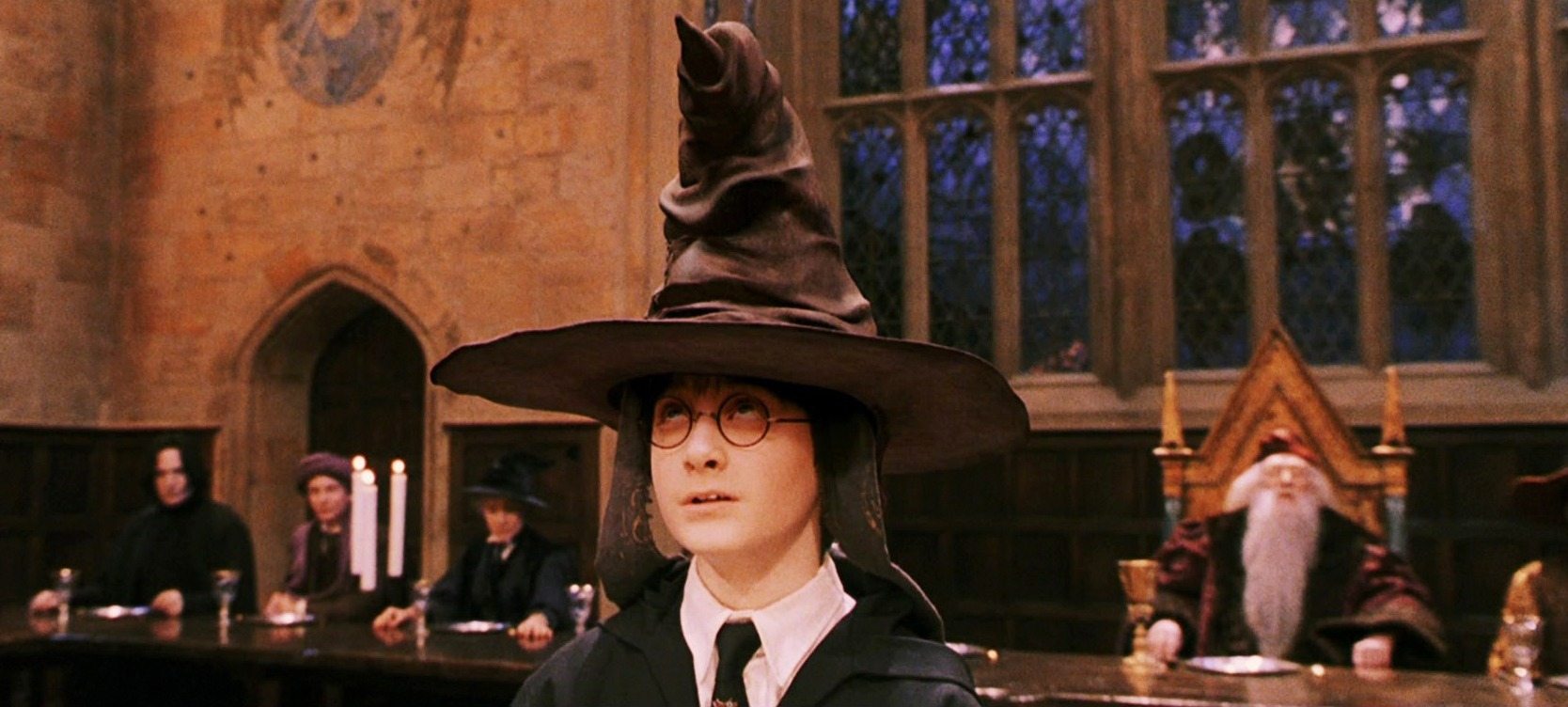
The Sorting Hat Is The True Villain Of ‘Harry Potter’

sorting hat

There’s no doubt that the Harry Potter series of books and movies have a clear protagonist and antagonist. From the first page, the stage is set for a years-long conflict between the growing Harry Potter and the power-hungry Voldemort. The very catalyst of this story happens away from page and screen, when Harry becomes “the boy who lived,” but the effects of this crucial moment ripple throughout the entire series.

It’s obvious that Voldemort is a bad person and rarely sympathetic. He murders recklessly and selfishly. He unites dark wizards under a bigoted cause to elevate purebloods. But not enough is said about the environment that made a person like Voldemort happen. We can blame Voldemort’s actions on Voldemort himself, but his values came from somewhere else.

Further, there’s a reason he’s able to grab so much power in such a short amount of time. His power in the literal sense draws in followers, yes, but these people also believe in Voldemort’s vision as feverishly as he does, and we shouldn’t be that surprised by this. The wizarding world is incredibly conducive to having a latent streak of division among its people.

And it all starts with Hogwarts.

sorting hat

There are four houses in Hogwarts, each based on one of the four founders. And each founder has a somewhat simplistic personality trait assigned to each house at first glance: Slytherins are ambitious, Ravenclaws are curious, Gryffindors are brave, and Hufflepuffs are patient. In truth, each founder had some overlap of these qualities, based on the short glimpses we occasionally get into their lives. There’s a reason why these four people were able to come together under one vision, despite some fallout with Salazar Slytherin later on. Each of these traits were more like driving forces in their lives, aided by other characteristics, not conflicted by.

In theory, a four-house system is a competent way to organize the school into appropriate, productive factions. But it has inherent problems that lead to how and why someone like Voldemort can happen, Slytherin or no. It’s not because Slytherins are inherently “evil,” but rather that the school cultivates and fosters aggressive division amongst the students, who are too young to even have established personalities. As a result, they become “who they are” through intense competition and disdain for others who are different.

And this falls on the Sorting Hat, a sentient, magical object who seems to also realize this in Book 5, despite making no effort to do something about it, aside from singing a lofty song about unity that falls on deaf ears. The stranger truth is that the Sorting Hat also admits to some students that their choice gets taken into account, placing the burden of a life’s identity on the mood of an eleven-year-old, whose knowledge of each house is usually based on their immature understanding and influence from family.

sorting hat

This results in what we see throughout the series: divisiveness, paranoia, and close-mindedness. Even a Gryffindor like Ron treats S.P.E.W. (Hermione’s elf rights campaign) as a total joke, because he buys into the self-contained bigotry that the wizards seem content in. It’s no wonder the Slytherins (a group I would be sorted into, undoubtedly) hold so much contempt for the other houses. They’re often accosted and labeled for their mistakes, while other renegades from Gryffindor, Ravenclaw, and Hufflepuff are hardly ever chided for theirs.

Let’s not forget that the last two headmasters of Hogwarts (McGonagall and Dumbledore) were Gryffindors (Armando Dippet might have been, as well). For a long time, both the Deputy Headmistress and Headmaster were from one house, which is a clear sign of lopsided power, not unity. The Sorting Hat even belonged to Godric Gryffindor, which is also indicative of corruption, though unprovable.

There’s something to be said about encouraging children with limited understanding of who they are to spend most of their time with kids who are exactly like them. Though this is somewhat offset by allowing two houses to share a class, tensions are still razor sharp thanks to institutional competition that becomes the focus of each year, rather than a way to incentivize hard work. In practice, the House Cup actually drives students to either cheating to victory or holding passive aggressive angst against other students that never really subsides.

On the one hand, we do see at least a semblance of unity among the adults. In fact, we can only speculate on the house affinity for many adult wizards, like Amelia Bones and Cornelius Fudge, which makes it seem like that past Hogwarts grudges are eventually forgotten by the time wizards finish coming of age. Voldemort’s main lackey is technically a Gryffindor, after all.

For the professors at Hogwarts, we see a lot of loyalty among the staff that crosses house lines, and an unspoken desire for fairness, despite bias. But this seems more like an accident than what we would expect from reality, like with how Slytherin students have a preconceived disdain for Hagrid (a Gryffindor). Snape, of course, regularly mistreats Gryffindor students (especially Neville) and favors Slytherins, even when they’re at their most vile. In what world does that not have a purely negative affect on these kids as they enter adulthood?

sorting hat

There seems to be no concern for this, either. The Slytherins were sent to the dungeons during the battle of Hogwarts, mostly because some automatically sided with Voldemort. Yet there’s no indication that efforts were made to resolve this after the fact. Harry Potter and the Cursed Child is apparently considered canon (unfortunately), and the events of the story make it clear that absolutely no effort is being made to correct the errors of the past. When Albus lets himself sort into Slytherin, his anger toward Harry only grows over the course of a few years. It’s not logical, of course. Only grounded in how damaging it can be to isolate kids and provoke distrust in differences.

And again, it all comes back to the Sorting Hat, the only character with the power to change any of this, as well as the only character who really acknowledges that a problem exists. His passivity, in a lot of ways, has contributed to never-ending aggression between people with prepubescent temperaments. He’s the true villain of Harry Potter, in that most of the issues the characters face can be traced back to the flawed rearing system that he knowingly allows to continue. As the (seemingly) only objective force at Hogwarts, he could easily do something about everyone else’s apparent blindness to Hogwarts’s archaic provisions, but instead, he is indifferent to them.

His songs are catchy, though.


Thanks for reading this. Seriously. You can subscribe to my posts by clicking “Follow” in the right sidebar. 

Or just say hello on Twitter: @JonNegroni


Yes, Ron Weasley Could Secretly Predict The Future In ‘Harry Potter’

ron

Too many people don’t get how great Ron Weasley is. Well, the people who only watch Harry Potter movies, at least.

He’s fiercely loyal, incredibly grounded, and sharp enough to beat both Harry and Hermione at chess. He’s an understated character at times—sometimes grumpy and quick to anger. But he’s also the life of the Potter trinity, and for good reason.

But that’s enough anti-Ron shaming. There’s another grain of the character that often gets lost in the conversation. Yes, Harry’s signature spell is the Disarming Charm and Hermoine is fantastic at potions, Transfiguration, and being embarrassingly book smart. But what’s Ron’s hidden talent?

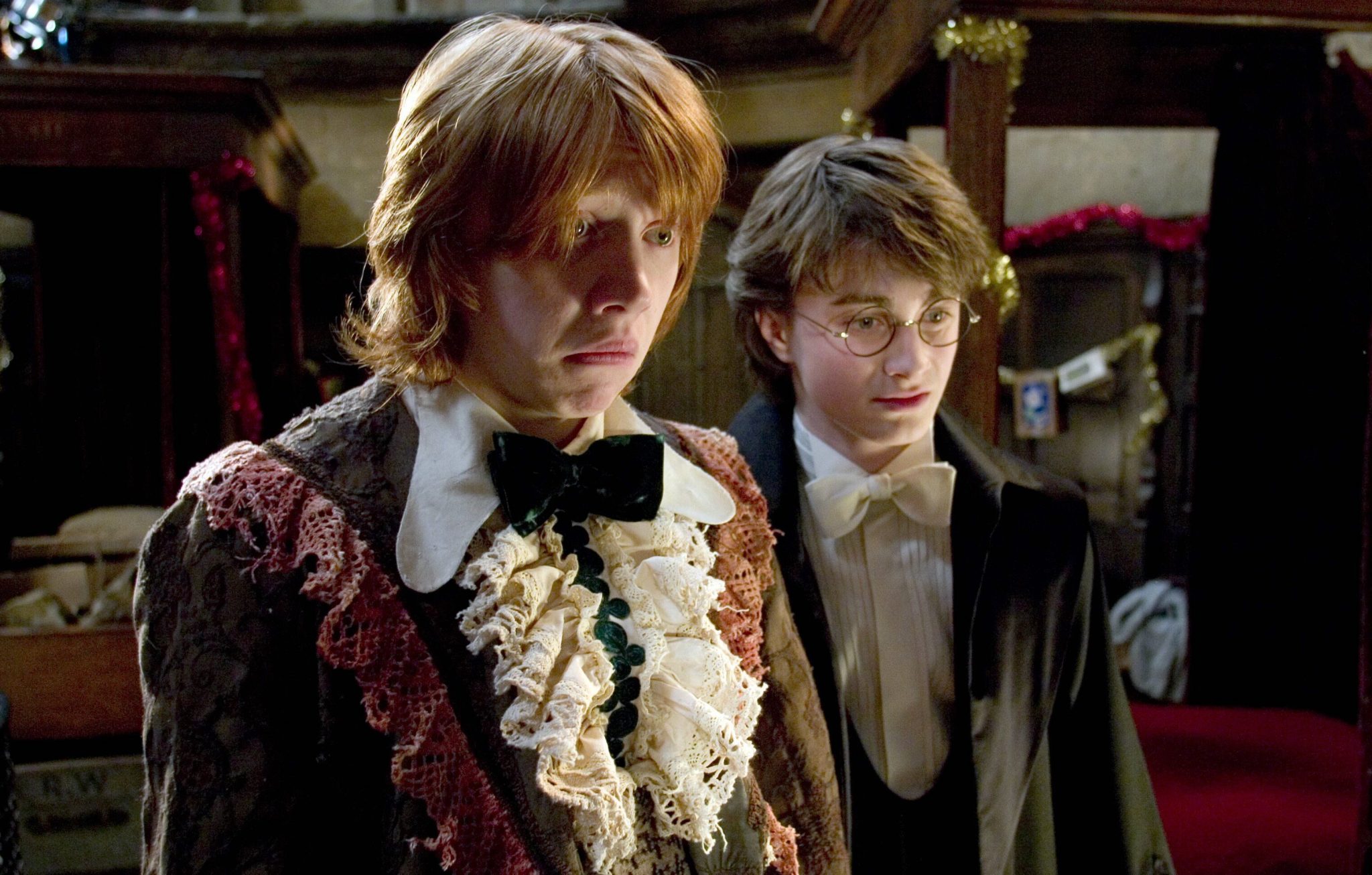
You know…besides fashion…

ron

OK, fine, his mother gave him that dress. But Dumbledore help us, Rupert Grint pulls that look off.

True, the books and even one of the movies gets it across that Ron’s a competent Quidditch player (at least when he’s not bogged down emotionally). But going further, he’s actually adept at predicting the future, and the books quietly provide this insight throughout.

I actually came across this interesting revelation on Quora, where Jakub Handlíř outlined this convincing theory:

Book 2 – (about why Riddle received the award for special services to the school): “Maybe he got thirty O.W.L.s or saved a teacher from the giant squid. Maybe he murdered Myrtle” – Riddle truly murdered her and in a roundabout way truly received price for it.

Book 3 – In his first attempt at reading tea leaves, he predicted that Harry would receive “a windfall, unexpected gold” – Harry received gold as a prize for winning the tournament (book 4) and inheritance from Sirius (book 6).

Book 4 – to Harry when doing housework for Trelawney: “Why don’t you get stabbed in the back by someone you thought was a friend?” – Harry is truly later betrayed by his best friend (Ron) both in book 4 and book 7. 

Book 4 – when discussing Crouch sr. disappearance in the Forbidden Forest and Snape’s involvement in it: “Not unless he can turn himself into a bat or something,” said Harry…“Wouldn’t put it past him,” Ron muttered. – Snape gains ability to fly in book 7 while using a bat-like wings.

I couldn’t agree more, and I would add that this is exactly why Divination was given so much attention by Rowling throughout the books, despite Hermoine dismissing the class early on. Of course, Ron jokes with Harry all the time about their fake predictions, but as noted above, he was actually pretty good without realizing it. With the tea leaves, he even predicts that he will one day work for the ministry.

Agree? Disagree? Have more evidence of Ron being a secret prophet? Sound off below.


Thanks for reading this. To get updates on my theories, books, and giveaways, join my mailing list.

Or just say hey on Twitter: @JonNegroni


We’re Still Suffering From How Bad ‘High School Musical’ Was

high school musical

For many, High School Musical was the first real signal of a true shift in Disney Channel programming. By 2006, the once plucky, experimental network had found more success in streamlined sitcoms like That’s So Raven and Suite Life of Zack and Cody than they had ever found with previous shows. This, of course paved the way for a persistent, familiar formula seen in almost all subsequent Disney Channel features, even to this day.

You might find this formula to be a good thing. Perhaps you enjoy the shows currently broadcasted on that channel, or you might be neutral at best. I’m not going to try to change your mind, but suffice to say that the numerous people who have a distaste for what the channel has become are both wrong and right.

Disney Channel shows have always been great for their time. If you look back at some of their supposedly best projects, you’ll find that they haven’t aged well at all and are actually a lot worse than you remember. Time does that sort of thing. But what I’m arguing is that even in 2006, Disney’s first smash hit movie was a terribly harmful film, and for many reasons.

Put more simply, High School Musical was and probably still is the worst thing ever produced by the Disney Channel. Not in terms of quality and production value, but certainly when it comes to how the Disney Channel Original Movie impacted the countless people who’ve watched it over the last 10 years. How it shaped its fans, for example.

high school musical

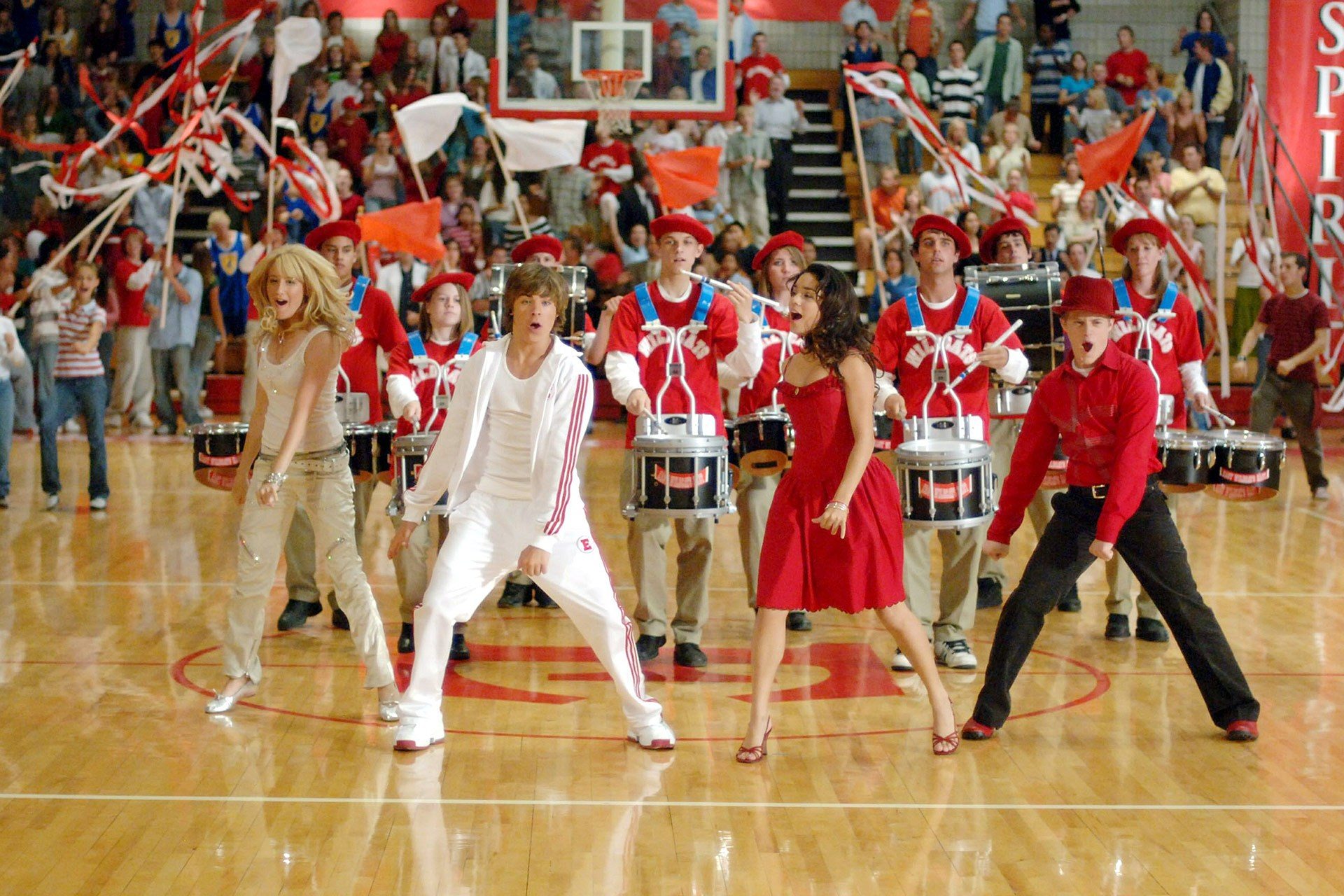
This is hard to argue, for sure, because on its surface, High School Musical doesn’t seem all that bad, right? The names of the songs say it all: Start something new! Get your head in the game! We’re all in this together.

Yet the titles of each song send a different message in the subtext. And watching the movie as a whole, you’ll start to see that a specific, alarming set of beliefs are being pushed onto these characters. Let’s back up and recap the film.

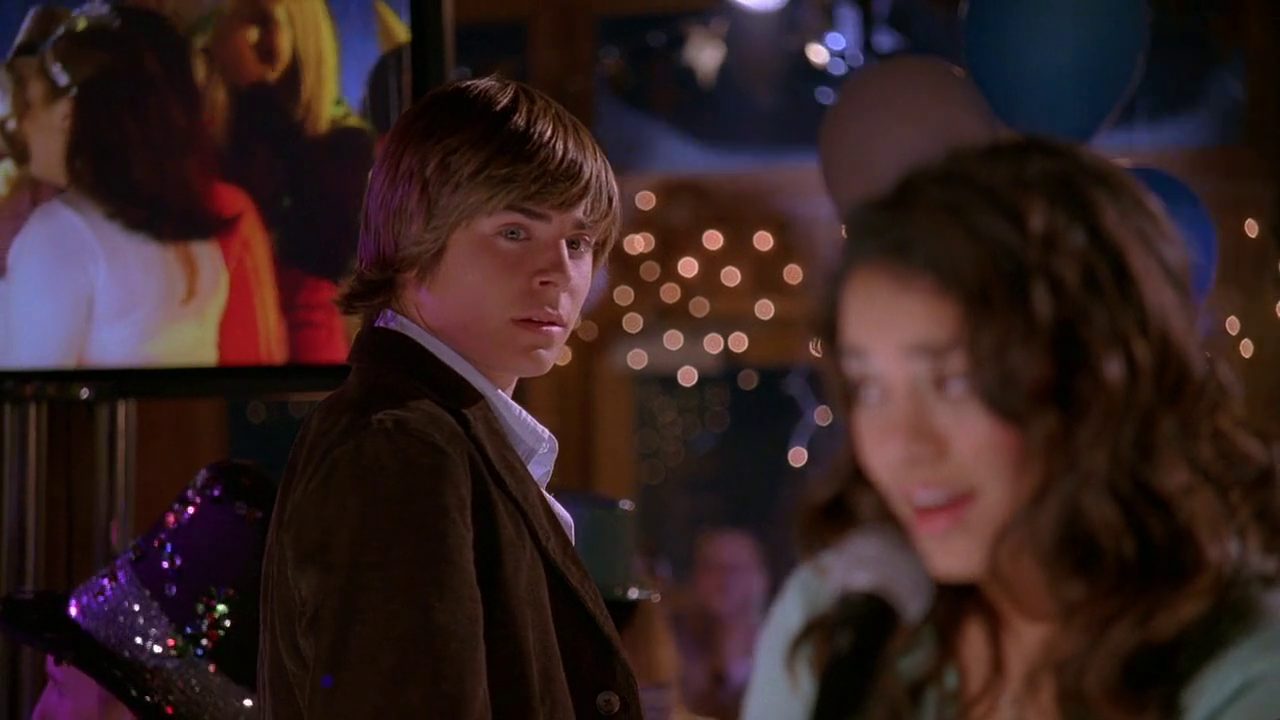
The movie begins by introducing us to Troy Bolton (played by Zac Efron) and Gabriella Montez (played by Vanessa Hudgens) just as they’re getting introduced to each other during holiday break. They have a song number meet-cute before going their separate ways, only to meet again at the start of a new semester because it miraculously turns out that Gabriella is now attending the same high school as Troy…even though they met by coincidence somewhere else.

If this sounds at all familiar, that’s because High School Musical was originally meant to be a remake/sequel of Grease in the late 90s, featuring the children of the original movie’s characters. I’m not joking. They couldn’t get the rights figured out, so Disney Channel ultimately decided to turn the script into one of their original movies made for television, with “High School Musical” as the working title. Apparently, they couldn’t come up with something better to name the darn thing, and the rest is history.

high school musical

Anyway, Troy and Gabriella both realize that they belong to different cliques: Troy is the basketball jock and Gabriella is the math nerd. But their bond through music becomes a quasi-reimagining of Romeo and Juliet, where their respective social circles clash over the future of these star-crossed lovers. Well, not really. The romance between Troy and Gabriella is persistently muted, with them often changing the subject to music instead of their own “relationship.”

That’s not necessarily a bad thing — in fact, it’s probably for the best — because it allows for more interesting drama between Troy and Gabriella, who have a decent amount of chemistry together to make the “we’re friends but want to be more” thing work fine. What really poisons this film is the introduction of the titular musical.

Troy and Gabriella decide to try out for the school musical. More specifically, the lead roles. The problem is that the school already has built-in performers who’ve starred in every production. And naturally, they’re the villains of this movie. Sharpay (played by Ashley Tisdale) and Ryan (played by Lucas Grabeel) are exceptionally talented, and for good reason. They’ve trained for years and actually want to turn their passion for theater into a career someday.

But it turns out that Troy and Gabriella, who barely even want to be in the musical and have no acting experience, are both selected for callbacks. Even though they were late to the audition in the first place, by the way. It’s a decision that rightfully upsets Sharpay and Ryan, who have no conceivable idea why outsiders have skipped them over for what is essentially their most critical time to stand out in the industry. All because they can sing about as well as Sharpay and Ryan. And even that is arguable.

high school musical

The real reason Troy and Gabriella are selected is because of their chemistry when no one is watching. They’re late for their audition, so the drama teacher exerts her one moment of clarity by telling them they don’t deserve a role when they can’t respect the rules. Later, she listens in on them practicing a song and decides that earns them a callback. You know, despite the fact that neither of them performed when the pressure was on, which is what they’ll actually have to prove they can handle when on stage for real.

Their casting has nothing to do with how technically proficient they are at singing and acting. The worst thing about this is that neither character purports to have any interest whatsoever in theater beyond the attention ascribed to it. Allegedly, it’s because they simply love to sing, but that’s nonsense within the context of the film. Instead of having to work for the roles and pay their dues, the barely proficient are rewarded with what they really want: popularity.

And that is why High School Musical is actually harmful. The movie positions Sharpay and Ryan as sore losers without any real sympathy. Sharpay in particular goes to cartoonishly evil lengths to prevent the protagonists from even getting to their callbacks, just to ensure that the audience doesn’t root for her by mistake. This is a character who is supposed to be good at acting, yet the only skill she seems to have is concocting evil plans to make the audience hate her.

high school musical

The movie tries to say something about how you can be more than your designated clique, which is a great message, but the execution misses the mark completely. Sharpay and Ryan claim to be more upset over the fact that someone has entered the “theater clique,” rather than the more obvious pandering that’s going on with the drama teacher. And the students obsess over kids hanging out with other kids who are different, which is hardly a problem in any school. Yes, there are cliques, but there’s no widespread panic when a jock tries out for a musical or dates a girl with good grades.

And when the film finally tries to resolve the conflict between Sharpay/Ryan and Troy/Gabrielle, it comes down to Sharpay having a rapid change of heart that is shoehorned into the final scene. Sharpay never apologizes. Gabriella never apologizes. The film never tries to lend credence to why she acted so harshly in the first place. It just ends. Is it no wonder Sharpay essentially “resets” her attitude toward them with each subsequent movie, even fawning over Troy during the first sequel?

The ending song says “we’re all in this together to make our dreams come true.” OK, but only Troy and Gabriella’s dreams, which have only been a thing for a few weeks. The movie tells its viewers that a select group of people can and should be the best at everything, even when they’re actually not. The protagonists win everything. A superior movie could explore actual consequences for when teenagers stretch themselves thin and create anxiety for themselves, but not High School Musical. You’re guaranteed a victory just for trying. Even though Troy and Gabriella barely deserved to be understudies, they get to be the stars, win their championships, and smugly dance it off in the very end.

high school musical

The actual dialogue between Troy and Gabriella in the ending scene:

Gabriella: “Congratulations, Wildcat!”

Troy: “What about your team?!”

Gabriella: “We won, too!” 

This is why High School Musical was successful. It wasn’t just the manufactured-to-be-catchy song numbers. It definitely wasn’t the real message of the movie. It was how the movie made its viewers feel, and wrongly at that. The movie convinced many young children who aren’t in high school that simply trying without working earns them the same rewards as the people who actually have legitimate dreams and work hard for them.

For Troy and Gabriella, singing is a hobby, maybe, but nothing they’re at all serious about. The movie positions their plight above the characters who actually have dreams to turn music into a lifestyle (the ones who truly need these roles to get into the right schools), and the script demands them to be manipulative and evil in order to trick viewers into rooting for the privileged brats. It also clamors that high school is a mystical place where a select group of kids are so good at everything, their only real problems are choosing which thing they’re going to be best at.

In this movie, they choose everything. And the whole school worships them for it.

high school musical

There is a way to turn these concepts into a good movie. There’s room for an honest exploration of how the quick ascent of the privileged few can create sharp enemies. And there’s even a good story behind the idea of popular kids getting more popular, paralleling nicely with the concept of the rich getting richer. Shame on us for ever expecting something so useful, I suppose.

I wish I could ignore High School Musical and simply let it be. People like it, and I never have. But there’s something truly exploitative and lasting about what it tries to tell its audience in a way that’s simply ugly and perverse. It’s also allowed Disney Channel to get away with similar storytelling in other shows over the years, resulting in a channel that is currently so embedded in watered-down celebrity-obsessed pop culture, the children who watch it stand little chance of getting by unscathed.


Thanks for reading this. Seriously. You can subscribe to my posts by clicking “Follow” in the right sidebar. 

Or just say hello on Twitter: @JonNegroni

The Pixar Theory: How ‘Finding Dory’ Fits In The Pixar Universe

finding dory pixar theory

Don’t cry mommy…don’t cry.

Here’s the deal. A few years ago, I proposed a theory that makes the case for how and why every Pixar movie from Toy Story to WALL-E exists in a shared universe with a single, overarching narrative. The case I make is fueled by easter eggs, cameos, story themes, and other clues that make up what I call The Pixar Theory (link above).

Since I wrote the original theory and turned it into a book, I’ve also added “chapters” that talk about Inside Out and The Good Dinosaur, just last year. And now we’ve come to the 2016 release, Finding Dory.

I’ll give you the normal rundown below, but first a tease. Would you believe me if I told you that the Toy Story movies have an incredibly strong connection with this movie? Well, we’ll get to that.

THE SET UP

finding dory pixar theory

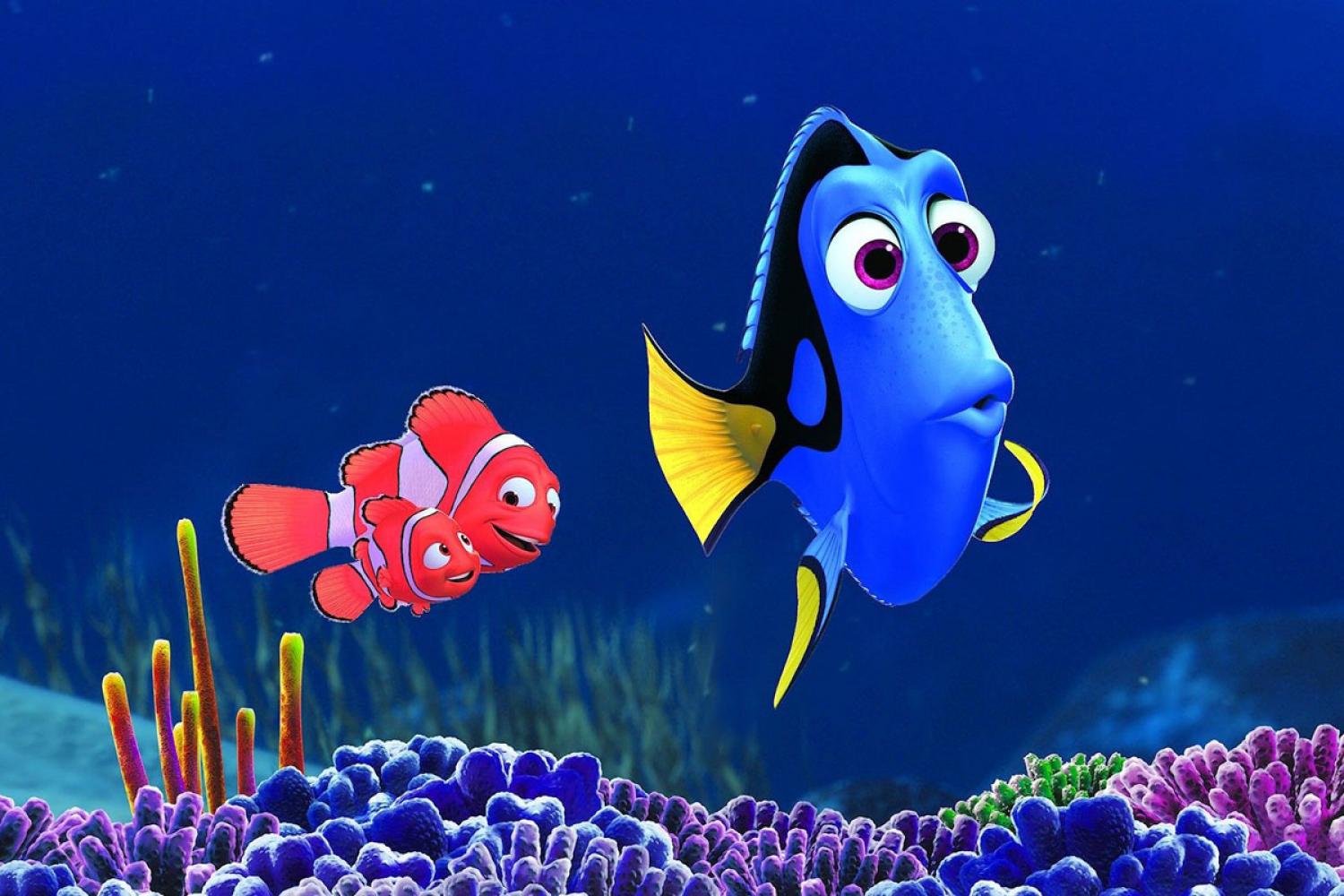
It took Pixar 13 years, but they finally made a sequel to one of their most beloved films, Finding Nemo. In that movie, a clown fish named Marlin crosses the ocean in search of his son, and he’s aided by the quirky and forgetful blue tang, Dory.

The sequel kicks off a year later, when Dory suddenly remembers a clue related to her family, whom she lost as a very young child—er—fish. So Marlin and Nemo help Dory cross the ocean once again to find them, only this time, they have to brave the horrors outside of the ocean, in a marine institute that rehabilitates fish and has its own aquarium exhibits.

First, let’s talk briefly about how Finding Nemo fits into the theory, because for obvious reasons, that will inform a lot of what we can uncover with the sequel.

FINDING FINDING NEMO

This was actually one of the shortest chapters of the book, mostly because the connections in Finding Nemo are very speculative and work to enhance other animal-centric films like Ratatouille. Interestingly, I do speak in length about Dory in that chapter, because she is a character who represents the mysterious intelligence animals in Pixar movies seem to possess, leading all the way to movies like Monsters Inc., which imagines a world where animals run the world as monsters.

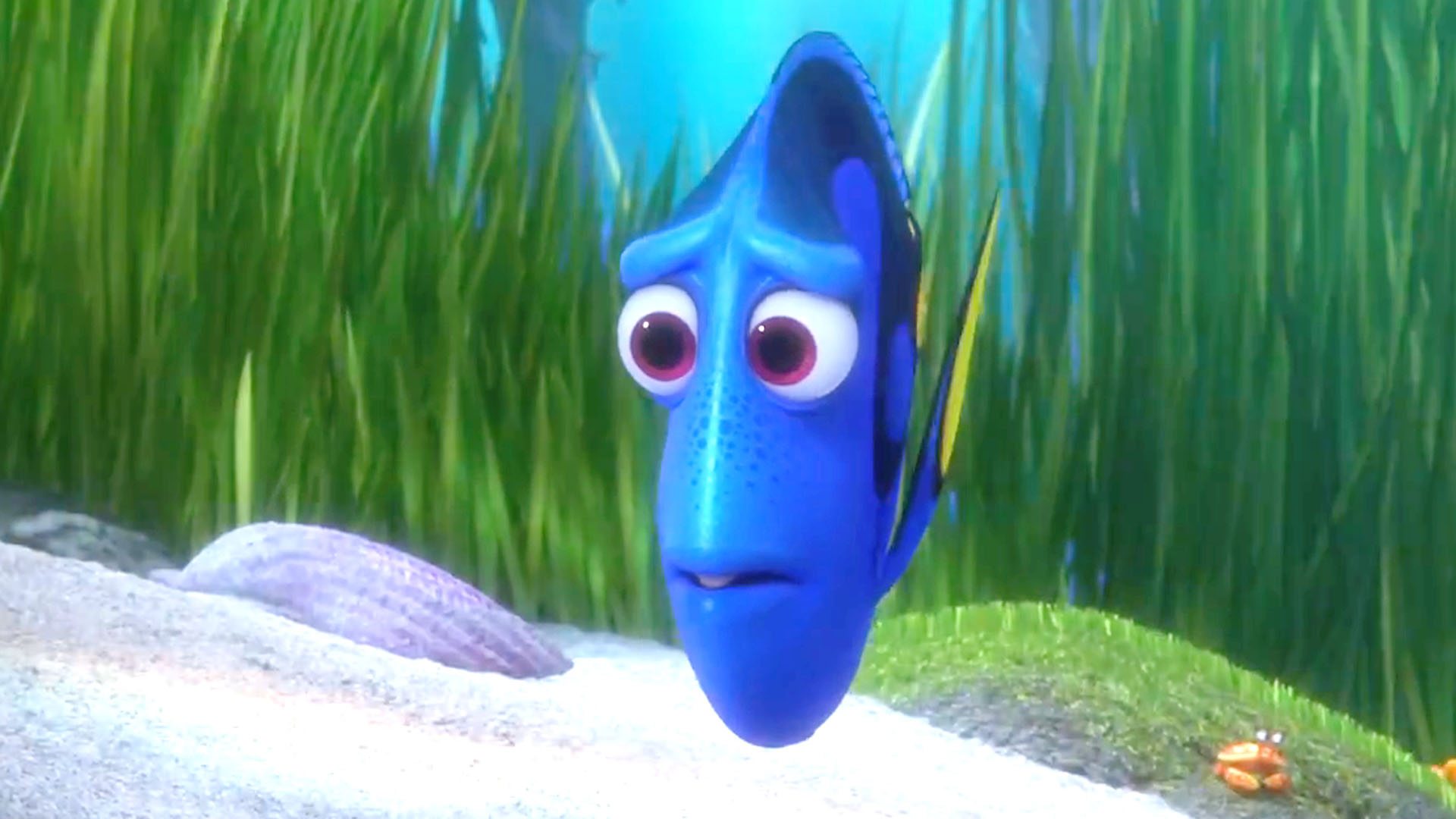
Dory has very unique abilities that other fish like her simply don’t possess. She can read, for one thing, and “speak whale.” We’ll get to why that really is, later, because Finding Dory sheds plenty of light on where this all comes from.

finding dory pixar theory

I also speak on how Finding Nemo goes out of its way to create animosity between the fish of the ocean and the humans, paving the way for an increasingly connected community of animals who will do whatever it takes to get away from wherever the humans are. Humans steal Nemo and threaten his life, keep the Tank Gang imprisoned in the dentist’s office, and then capture Dory in a fishing net. It’s proven in the movie that humans are actually the biggest threat to creatures of the ocean.

But in the end, the fish rally against humans once and for all, thanks in no small part to Nemo’s leadership when he convinces a horde of them to break the human’s fishing net so they can escape.

WHAT ABOUT FINDING DORY?

Warning: spoilers for Finding Dory from here on out. Be sure to watch the movie before going any further unless you want to be spoiled.

Humans are still terrible in the story of Finding Dory, but not always directly. True, they capture Dory almost as soon as she reaches the kelp forest next to the marine institute. But Dory herself doesn’t seem to fear or hate them. She, just like most other characters, is pretty indifferent to the humans.

finding dory pixar theory

Hank the octopus, on the other hand, is very antagonistic toward the marine institute workers, always escaping and finding ways to avoid them at all costs. This is made even clearer when his worst nightmare is realized at the “touch pool,” where children descend their fingers upon the fish to the tune of a horror movie.

Imagine the scene from Toy Story 3 when the toys first encounter the caterpillar room. All of the savvy toys are hiding because they know children are coming to make their lives a living riptide. Well, that’s basically what happens here, and this fear of humans isn’t just comic relief. It’s kind of terrifying, and it’s even a little entertaining considering a Toy Story connection coming later…

It’s no wonder that by the end of the movie, all of the fish from the institute hark to the words of Sigourney Weaver and “release” themselves into the ocean. To them, freeing themselves of humans is their version of a happy ending.

THE DEAL WITH DORY…AGAIN

So what makes Dory so “special,” and just what in the ocean does that have to do with the Pixar Theory? Well, don’t forget that the growing intelligence of animals in movies like RatatouilleUpA Bug’s Life, and even The Good Dinosaur all lead up to the inevitable reality where oversized animals who look like monsters solely inhabit the future world devoid of humans (only for them to go back in time to harvest the energy-filled screams of children in order to sustain their world further because, and you guessed it, humans are batteries).

finding dory pixar theory

Like in Inside Out, Pixar hits us over the head with the idea that humans give off an energy that sparks life into everyday objects like toys, cars, and even our own emotions. So how did Dory become the way she is?

It’s revealed in Finding Dory that she was born in captivity. So she grew up constantly surrounded by humans and signs from the exhibits that she’s able to remember throughout the film, explaining how she was able to learn to read. Peach the starfish from Finding Nemo is another fish who has the rare ability to read, and even she explains that she was brought to the tank from eBay.

The idea is that when animals become entrenched in human fixtures and attention, they are able to expand their personalities and capabilities. Though Dory suffers from a very serious disability with short-term memory loss, she’s able to cope by forming connections in a very human way. This explains why fish are so quick to help her with whatever problem she’s facing, no questions asked.

We see the same sort of thing with Remy from Ratatouille, who becomes the greatest chef in France only after his experiences in the human world. Simply put, humans and animals have a lot to gain and learn from each other.

IS THAT IT?

finding dory pixar theory

Nope. There’s also a subtle but unforgettable moment in the movie that hints a connection with Toy Story. Here it goes.

About halfway through the movie, Marlin and Nemo find themselves in a fish tank outside of a gift shop, and there’s a single, plastic fish toy moving around them. It prods Marlin over and over again, and then eventually when they’re trying to figure a way out, they notice that the fish is tapping the glass all of a sudden pointing directly at the exact path they need to take in order to escape (a stream of geysers that will carry them over to the tide pool).

The idea is that the toy fish is, you guessed it, alive, and it’s trying to help Nemo and Marlin without revealing itself because it has to play dead with so many people around watching them. This is a great connection to the relationship we see in Toy Story 2 between Woody and Buster, who form a bond and friendship together. Here, the toy just seems anxious to show Marlin and Nemo exactly what they need to do so they can find their friend.

In other words, Pixar is amazing.

ANYTHING ELSE?

finding dory pixar theory

As always, there are ample easter eggs and references to other movies to find throughout, including the A113 callout that shows up toward the end of the movie on a license plate (again, just like Toy Story).

Also, Sigourney Weaver’s voice is heard throughout the marine park announcing the exhibits. This will be familiar to fans of Andrew Stanton’s other Pixar movie, WALL-E, which also features Weaver’s voice as the sound of a computer on the Axiom. Makes sense that in the Pixar universe, Sigourney Weaver’s voice is the most trusted when it comes to soothing, computer-controlled announcements.

Remember Darla from Finding Nemo? You can see the same photo of her holding the dead fish in the marine institute that her uncle has all the way in Australia. This means the marine institute has a clear connection to the P. Sherman, who also loves to work by the sea. It could even mean that in the one year since losing all of his fish in the tank, he decided to devote his life to studying aquatic life in California, a dream somewhat preluded in the fact that he scuba dived far into the ocean just to take photos, eventually leading to him taking Nemo.

finding dory pixar theory

And here’s a spookier reference that hints the rise of BnL, the corporation that will eventually burn all the trash into toxic air. In the picture below (bottom right), you can spot a WALL-E calendar, referencing the robots that will one day (try) to clean the Earth.

It’s telling that in a movie where there is a ton of garbage piling up in the water just outside the marine institute, robots as advanced as WALL-E are already being prototyped.

finding dory pixar theory

The Luxo Ball and Pizza Planet truck make their scheduled appearances, as well. You can see the Luxo Ball in the clutter of toys in the Kid Zone, and the Pizza Planet truck is one of the underwater vehicles found during the squid scene.

Be sure to add what you find in your own viewings via the comments.

Another quick thing, though, is that for whatever reason, Pixar seems to really hate birds unless they’re in a short like with Piper, or they’re named Nigel. Like the seagulls from Finding Nemo and the instinctual predator bird from A Bug’s Life, there are half-brained birds all over the place in Finding Dory, including one named Becky who will still find a way to capture your heart, I guess.

WHAT’S NEXT?

pixar theory

Sadly, it will be a year before we get any new Pixar movies, with Cars 3 set to release June 16, 2017. Though a lot of people may not be very excited about yet another Cars sequel, they can still take solace in knowing that the studio is releasing Coco, an original non-sequel coming out that same year in November, based on the Mexican holiday Día de Muertos.

The film has already begun animation as of April, and the premise follows a 12-year-old boy named Miguel who tries to uncover a “generations-old” mystery. The current synopsis is:

“Coco is the celebration of a lifetime, where the discovery of a generations-old mystery leads to a most extraordinary and surprising family reunion.”

Also, we have Toy Story 4 and Incredibles 2 to look forward to in the next few years, including a rumored slate of about four non-sequels Pixar is working on that are due to come out over the next decade.

All of these movies are months and years away, so until they release, I’ll be here conspiring.

Want even more?

  • First, be sure to check out the book, The Pixar Theory, available on paperback and ebook via Kindle, Barnes and Noble, iBooks, or just a PDF. This will cover the entire theory and every movie in the Pixar universe, updated from the 2013 blog post.
  • Parts 2 and 3 of the The Pixar Theory cover the latest movies that have come out since the book was published. So you can check out Part 2, Inside Out, as well as Part 3, The Good Dinosaur via the links.
  • Want to talk about all of this stuff with tons of other Pixar Detectives? You can start all of the conversations you want in the comments for this post, or join the ongoing discussions in the original blog post, here.
  • Last but hopefully not least, you can read my free Pixar Theory serial novel, The Pixar Detective, which was completed last spring. It tells a new story that shows off the grand narrative of all the Pixar movies with original characters, familiar faces, and a mystery that ties them all together.

Thanks for reading this. To get updates on my theories, books, and giveaways, join my mailing list.

Or just say hey on Twitter: @JonNegroni


Snarcasm: The Villain of ‘Incredibles 2’ Is Going to Be Dash, I Guess

incredibles 2 villain

Snark + Sarcasm = what you’re about to read.

“Hey Jon,” said the Internet.

“Yes?”

“Check out this Incredibles 2 fan theory.”

“Uh, OK. Is it a copy-paste job of some random Reddit posting that is now on Buzzfeed?”

“No.”

“Cool. So, what’s the—”

“It’s on MTV.com.”

makes dial-up noises

Professional Reddit user and MTV writer Stacey “don’t tell me you don’t want her job” Grant recently put out this gem:

This Incredibles 2 Fan Theory Suggests a Beloved Character Could Actually Be a Villain.

incredibles 2 villain

Now, I don’t have any problem with speculating future movie plots and suggesting potential villains for sequels. Just as long as you give good reasons for why you think the story will turn out the way you play it out in your head. I’ve done this in the past for saying that a revived Tadashi-turned-Sunfire would make for an excellent villain in Big Hero 7, but in that case, I backed it up with reasonable evidence for why it would make sense for the story that is begun in Big Hero 6.

What you’re about to read isn’t really a case for why Dash is going to be the villain in Incredibles 2. It’s barely more than a wild guess.

The Incredibles 2 won’t be in theaters for another three years, but the fan theories are already starting to emerge with Dashiell speed.

Dashiell who? Do you mean Parr? Do you mean “Dash’s speed?”

The most recent one comes from Reddit user Professor_Wonder.

Until next week’s fan theory by w33d_sm0k3r91.

Inspired after rewatching The Incredibles, this fan theory says who the villain will be for the animated sequel. (It definitely won’t be Syndrome, thanks to that whole cape/jet turbine fiasco.)

Oh, Stacey, you slay me.

According to Professor_Wonder, the villain isn’t going to be some brand new character, but instead be someone from the first film, someone we know and love: Dashiell “Dash” Parr.

This is a weird interpretation of the Redditor’s original post. He wasn’t saying it as if he’s some insider trying to crack the code while trying to pay attention during his meeting with the Illuminati.

incredibles 2 villain

He was just exercising a neat idea he had, certainly not to get attention or have people take his speculation seriously beyond “Oh, that’s cool, maybe.”

FOR STARTERS, DASH IS SUPER POWERFUL, WHICH IS ALSO HIS DOWNFALL.

Says who? Pretty sure having a cape is the only downfall we see much of in these movies so far.

Professor_Wonder points out how the Parr family’s oldest son “is always going to be told to [rein] in his superpower.”

Right…

Remember at the end of The Incredibles when Bob and Helen Parr had to keep reminding their son to slow down and get his super speed under control?

Yeah, it was right before the part where he listened to them without making a big deal out of it because he knows he could win the race easily.

incredibles 2 villain

Kids are impulsive,

Where’s the emojii that makes a “shocked” face?!

and teenagers are definitely no better on that front.

incredibles 2 villain

Tell us more about teenagers, MTV.

Growing up, how many times did you do the complete opposite of what your parents wanted you to do?

Which means Dash could be a compelling character, but a villain? You’re going to need more than a Green Acres diatribe about growing up to reverse the typical coming of age trope we know Brad Bird is a fan of.

MOREOVER, HE RECEIVED POSITIVE REINFORCEMENT WHEN HE ACTED OUT IN SCHOOL.

But you just said that the problem would be that he does the opposite of what his parents want him to do. If you’re concerned about his parents being enablers, then that’s a totally different issue.

After using his powers to put a tack on the teacher’s chair without being noticed (well, almost), his normally melancholy dad perked up and actually smiled and laughed.

What a terrible…father? If anything, this is a positive sign that he gets different types of support from his parents.

True, his mom wasn’t having it, but Dash paid more attention to his dad’s reaction than to his mom’s.

OK, that’s fine and all, but these are just normal behaviors of young kids, not future villains of superhero movies (not that you can’t craft a good origin story out of something mundane, it’s just that you need more to go off of than “look at this imperfect character with imperfect surroundings”).

Professor_Wonder stated, “Dash is able to garner some positive attention by doing something negative.”

Is there anything inherently “negative” or dastardly about a harmless school prank? His father is reinforcing a positive thing, which is Dash feeling free to use his powers from time to time and embracing who he really is. This is seen in the end of the film as you referenced earlier when they allow him to go out for sports.

incredibles 2 villain

It’s not like Mr. Incredible got excited about Dash robbing a grocery store or doing anything else illegal. He was glad that his son was just being a kid and having fun with his abilities.

BASICALLY, MIXING DASH’S TEENAGE IMPULSES WITH HIS DESIRE TO BE NOTICED IS A RECIPE FOR DISASTER.

Dash isn’t Kylo Ren. Plenty of superheroes are impulsive teenagers who want to be noticed. But they’re still ingrained with decency that makes them heroes. Dash is already that type of character, so assuming his hormones are going to turn him to some dark side is random, not something to be expected.

It’s the same with normal teenagers. How many tough acting kids do you know who would never harm a fly? If anything, Dash’s arc would make more sense if it positioned him as a hothead superhero who does good things for the wrong reasons, causing unintended consequences. Think Speedball from Marvel’s Civil War comics.

Why did Buddy Pine become supervillain Syndrome? The main reason was because he desperately wanted to be Mr. Incredible’s sidekick, and the superhero promptly shut him down.

OK…but this is a totally different—

Buddy was a teen who impulsively felt like he needed to defeat bad guys like Bomb Voyage, but he didn’t give himself a chance to stop and think about the best way to handle the situation.

OK, but it was also about his feeling inferior to the real superheroes because he lacked powers. That’s kind of irrelevant to—

Instead, he dove in and took action, which ultimately backfired.

Sigh, yes, fine.

His plan of impressing Mr. Incredible and getting his attention failed.

Sure, but that’s probably because it was based on an inherently unhealthy relationship.

incredibles 2 villain

Buddy tried to force himself into Mr. Incredible’s life as his ward, but you can’t just transfer that dynamic onto Dash, who’s his real son.

TBH, it’s not totally out there to think the same kind of thing could easily happen to Dash as well.

OMG, well, yeah, it kind of is for two big reasons. 1) Buddy and Dash are completely different characters with completely different motivations, abilities, and connections to the main plot. 2) Brad Bird is pretty good at making movies, so it would be very odd for him to replicate the Syndrome origin story for someone like Dash, who is already a character with an established personality.

Like they say, history tends to repeat itself.

And like they also say, familiarity breeds contempt.

I don’t want to harp on the Redditor at all, as I said earlier. His full post (which Stacey omits over half of) has interesting ideas in it that are worth a read if you’re interested. It involves a way to present Dash as a character who carries on the subplot from the first film involving Edna’s super suits, and even though it’s probably just wild speculation, it’s ten times more interesting than boiling it all down to those darn teenage kids pulling an Anakin.


Hey! If you’ve come across a silly article that deserves the Snarcasm treatment, send it my way via Twitter or the comments below!

I’m Jon and thanks for reading this. You can subscribe to my posts by clicking “Follow” in the right sidebar. Or just say hey on Twitter! @JonNegroni

Why Fan Theories Aren’t Always The Worst

fan theories worst

On this week’s podcast, the Now Conspiring team goes through the main headlines of the week with some movie news, and our main segment covers the clickbait nature of fan theories, and how we can grapple with the fact that a lot of people hate them.

QUESTION OF THE WEEK: How do you know when a fan theory is good (or not so good)? In other words, what’s your “test” for evaluating a worthwhile fan theory?

Go on…Why Fan Theories Aren’t Always The Worst

Snarcasm: Aladdin and Beauty and the Beast and the Migraine

http://www.eonline.com/news/738362/this-disney-theory-about-beauty-and-the-beast-and-aladdin-will-blow-your-mind

Snarcasm is rapidly becoming the let’s poke fun at terrible fan theories every week – show. And of course, I’m totally fine with that considering the wealth of terrible fan theories that are out there waiting to be snarcasmed.

But this entry is different in that it highlights a unique trend in fan theories I haven’t harped on yet: the dreaded repost.

What is a repost, you ask (all six of you?) Well, a repost is when you resurrect content that was already incredibly popular at one point. Like a funny image, hilarious video, or fan theory that Aladdin exists in the same universe as Beauty and the Beast.

“But Jon!” you ask, “You repost theories all the time. Is this Snarcasm secretly about you?”

Well, here’s the difference between what I’ve done in the past and what constitutes as a “repost.” See, if you’re going to resurrect content and then pretend it’s new, you should at least add something to it. Build on it. Do something. But half the time, these reposts are just retreads that make The Force Awakens look like Tree of Life.

aladdin beauty and the beast

Who is the perpetrator of the repost in question? That would be Julia Hays from E! Online, who essentially runs their “we can do Buzzfeed, too” desk. She unearths everything from The Best Oprah Winfrey Gifs of All Time to Does Watching High School Musical for the First Time Alter Your Attraction to Zac Efron? 

Both of those are actual, real-life articles.

Recently, Hays published this gem:

This Disney Theory About Beauty and the Beast and Aladdin Will Blow Your Mind

buzz

“Hello?”

“Julia, it’s the editor. We need you to find a way to make this headline twice as derivative as the most derivative headline ever seen on the Internet.”

“OK, googling Looper dot come now.”

click

Now, some of you may have never heard about this Beauty and the Beast/Aladdin theory, which is why this article exists. But at the same time, it should at least be mentioned that this theory has existed for years, yet E! is portraying this as some sort of turning point in history.

Don’t believe me? Just watch.

| Prepare to have your world come crashing down,

Your headline already got me there.

| there is a Disney theory that’s sure to upend everything you thought you knew.

So, everything I thought I knew…Culture. History. Politics. The meaning of love. Why “Be like Bill” was popular for three days.

| There is nothing the Internet loves more than finding crazy theories about the movies we love.

Hays links to a separate E! article that dives into “13 Crazy Theories About…” eh, it’s really long. Half of the theories boil down to “they were dead at the end” or that Jack from Titanic is a time traveler because you deserve that.

| No matter how many times we re-watch Disney and Pixar classics, there will always be Tumblr accounts digging into the cameos and references we may have missed.

Why hire journalists when Tumblr does all the work for you?

Also, here’s something wildly entertaining I discovered while writing this Snarcasm. So above, “Pixar classics” links to another E! article that doesn’t have anything to do with Pixar classics, as it refers to that fan theory about how TangledFrozen, and Little Mermaid are connected for some reason no one understands.

But that’s not all.

In that article, they criticize my fan theory about Andy’s mom from Toy Story 2 being Jessie’s original owner. Quote: Fan theories are a dime a dozen on the Internet. Most we don’t care about (oh, Jessie from Toy Story may have been Andy’s mom’s toy? OK?),

That links to an EW.com article that references me personally.

Yes, this is real. E! Online thinks my fan theory is garbage. The same E! Online that thinks Sandy drowns in the beginning of Grease, Sid being the garbage man in Toy Story 3 is “subtle,” and Peter Pan is the angel of death (all in that “13 fan theories” article I referenced earlier). Because yes, you deserve that.

So here’s all I have to say to E! Online about that: neat.

| This Tumblr theory (which was brought to our attention via Someecards), 

I couldn’t make this up if I tried.

| …points to a connection between Beauty and the Beast (1991) and Aladdin (1992) that most fans probably never noticed.

Is that why people have been pointing this out since 1993? This was debated even before the Internet was widely available.

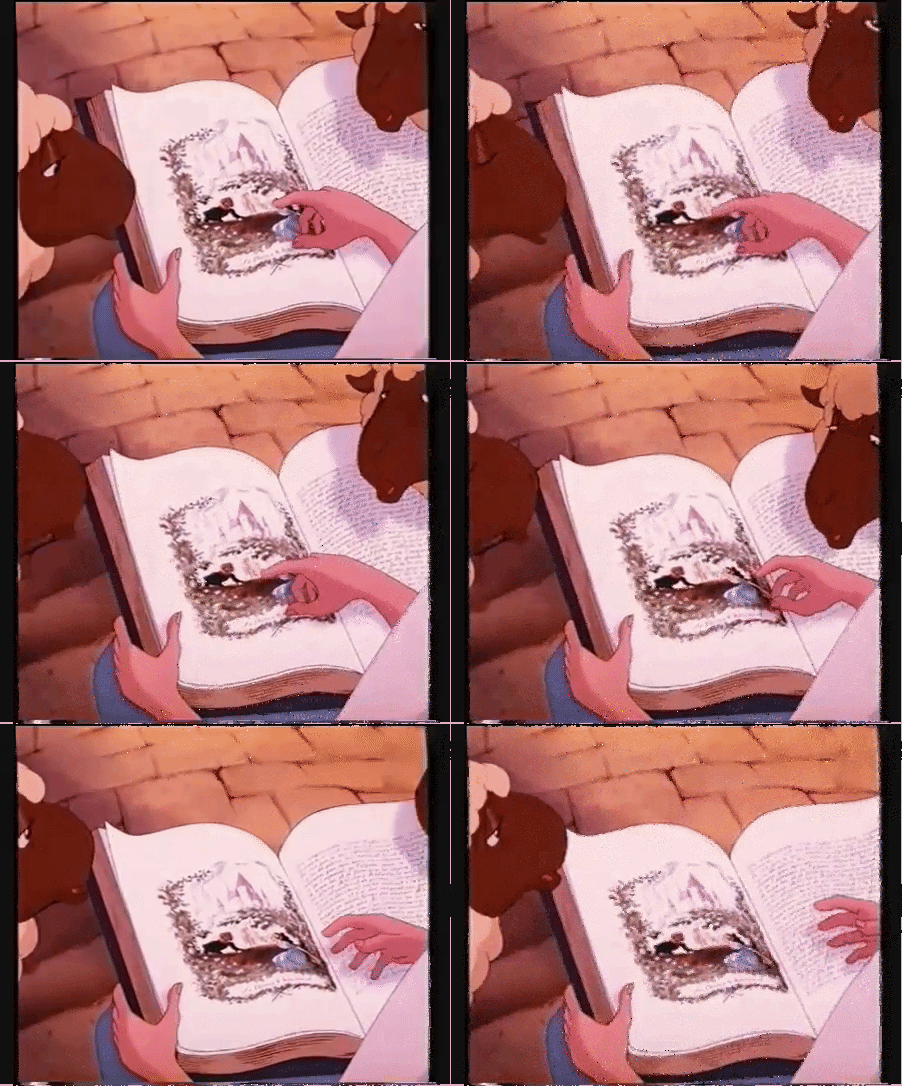
| It’s in a seemingly innocuous scene in Beauty and the Beast when Belle visits a local bookstore to return a book she borrowed. Is this just a scene to show the viewer that Belle’s an intellectual? No, there is so much more.

Yeah, yeah, that’s cute and all, but is that really the point of the scene? Last I checked, we knew she was a reader at this point. That scene merely showed that she was yearning for something more through her books, and that she’s kind enough to warrant a special gesture from the owner who lets her keep the book.

So, yeah, so much more.

Next, Hays actually just sticks the entire Tumblr post in the article. She doesn’t even set it up. It just appears out of nowhe-

aladdin beauty beast

Alright. A few things we need to discuss.

I’ve been asked about this theory around a dozen times, so I’ve looked into it plenty. And honestly, I don’t find it all that convincing. The gist here is that Beauty and the Beast is narratively hinting at Aladdin, a movie that came out a year later.

This makes some sense, as Disney is known to put little nods in here and there in its movies. And in a way, it’s cute to think that Aladdin is a book that Belle loves to read.

The problem? The plot points Belle references don’t really align with Aladdin when you actually give it some thought.

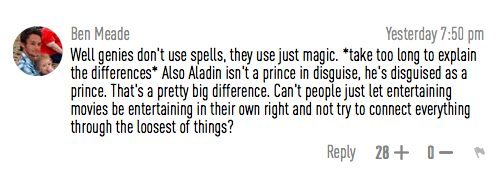
Daring sword fights? There really aren’t many at all. It’s mostly Aladdin running away all the time. Magic spells? The genie grants wishes, not “magic spells.” And that’s such a generic line, you can apply it to nearly any other Disney movie that has magic in it. Finally, Aladdin isn’t a prince in disguise, because he’s not a prince. He’s in disguise as a prince, and there’s a clear difference.

For that reason, I think this theory holds enough merit for debate, but it’s mostly weak.

| Belle’s favorite book describes the plot of AladdinFar off places? Agrabah.

 Ah, I forgot that one. But still, what Disney movie doesn’t occur in a far off place?

| Daring sword fights? Heck, even Abu the Monkey wields a sword at one point.

True, but Abu doesn’t even use it. It’s not a fight because the guards take out their swords and Abu runs off. How is that even daring?

Magic spells? Genie, ding ding ding!

And then Hays turned into a bell for some reason?

| And a prince in disguise? Prince Ali has an entire musical number, baby girl.

Semantics, baby girl. He’s a street rat in disguise. And it makes more sense that Belle is referencing a fairy tale land, like the ones where princes disguise themselves as common folk in order to save the damsel in distress. But I understand if you’re unfamiliar with information that is read in books.

| We don’t discover Prince Ali’s true identity until the third act of the film Aladdin.

What? We know who Aladdin is the entire time. I’m guessing she’s referring to Jasmine, perhaps? Even then, that occurs halfway through the film, not in the final act. But it’s complicated because there are two reveals: one where she discovers he’s the street rat from before, and then the reveal that he’s not a real prince.

Even then, here’s what Belle actually says: “Here’s where she meets prince charming. But she won’t discover that it’s him until chapter three.”

I get where Tumblr is coming from, but there are a lot of problems here. Aladdin is not prince charming. He’s not even a prince. And Belle is saying she won’t discover he’s a real prince until chapter three, but that’s the exact opposite of what happens in Aladdin.

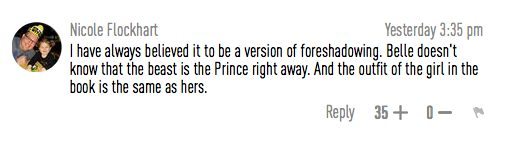
See, the book is more widely accepted to be a form of foreshadowing. Belle doesn’t know the Beast is actually prince charming (she references this same line in the song, Something There). She’s taken to a far off place, there’s a magic spell, etc.

| Granted, the book itself that Belle is reading shows artwork that could also represent other Disney films with similar plots.

That’s one way to put it. The other way to put it is: Oh, well the book shows an entirely unrelated story going on that bears no resemblance to Aladdin whatsoever

aladdin beauty and the beast

That’s a castle. And a forest. And a white guy. And a white girl in a blue dress. You know, all the things that aren’t in Aladdin.

| Beauty and the Beast and Sleeping Beauty feature similar elements.

And here’s where my migraine kicks in.

| Beauty and the Beast has a distant castle in the woods, Gaston fighting the beast with a sword, a magical rose and a castle under a spell, and Belle doesn’t know the prince thing about Beast until later in the film. So, perhaps some foreshadowing?

Yup. Hays is altering this “mind blowing” theory that is supposed to upend your take on the Disney universe with the convention that pretty much everyone already knows about. “Mind blown” alright.

And at the same time, she’s pointing out that Sleeping Beauty has visual elements similar to standard fairy tales. You had to read E! to figure that out.

| Sleeping Beauty, as well, deals with far off places and magical spells.

There are no daring sword fights or princes in disguise, but don’t let logic get in the way of a waste of your time.

| Aurora doesn’t know Prince Phillip is royalty at first, despite his hella princely looking outfit.

There are so many things wrong with this sentence, my migraine just fused with the Tylenol I just took, and they are now working together to pass me out slowly for my own good.

Aurora not knowing who Prince Phillip is doesn’t mean he’s in disguise. This is simple reading comprehension, people. And let’s just disregard that the word hella made its way to an article—actually, no that makes sense considering where we are right now.

| Plus, Phillip battles the evil Maleficent with a sword.

That’s not…no, that’s not a sword fight, Hays. A sword fight is when two people with swords fight each other. Why is this happening?

| Our hearts still trust the Tumblr investigation behind Aladdin, but like a Netflix documentary, we’re trying to give you all the facts.

All the facts? These were facts you were writing about? Because so far, you’ve posted a few Tumblr gifs and arguments that boil down to, this is similar to this. See?! 

| Post YOUR theory in the comments below!

Fine. Let’s see what the trusted E! community had to say about this “theory.”

aladdin beauty and the beastWhew, not off to a great start.

aladdin beauty and the beast

Hear, hear. Or is it here, here?

aladdin beauty and the beast

aladdin beauty and the beast

I’m so proud of you, Internet comment section.

Hey! If you’ve come across a silly article that deserves the Snarcasm treatment, send it my way via Twitter or the comments below!

I’m Jon and thanks for reading this. You can subscribe to my posts by clicking “Follow” in the right sidebar. Or just say hey on Twitter! @JonNegroni