The Lost City of Z, Rey’s Parents, And American Gods — Cinemaholics

This week’s episode of Cinemaholics kicks off with some big movie news leading up to our main segment: Who are Rey’s parents in Star Wars? Then we do a featured review for The Lost City of Z, the latest film from director James Gray.

Next, we spent some time digging into The Get Down Part 2 on Netflix and American Gods Season 1 on Starz. Enjoy the show!

EMAIL US YOUR FEEDBACK & QUESTIONS: cinemaholicspodcast [at] gmail.com 

Go on…The Lost City of Z, Rey’s Parents, And American Gods — Cinemaholics

The LIGHTSABER Theory: Rey Is Not A Skywalker, Solo, Or Kenobi

The lightsaber is the key.

Ever since the release of Star Wars: The Force Awakens in December 2015, fans have speculated endlessly on the back story of Rey, debating multiple theories that point to who her parents are and why she’s so strong in the Force.

You’ve done it. I’ve done it. We’ve all had something to say on this matter because we all know that the second movie in this trilogy, The Last Jedi, will contain “the twist” that defines the new generation of Star Wars, in the same way The Empire Strikes Back did for fans in 1980.

That said, J.J. Abrams has given us a lot to go on when it comes to explaining Rey’s back story. But even if you don’t believe his comments that Rey’s parents don’t appear in The Force Awakens, there’s ample evidence within the movie itself to support that her parents are not Skywalkers, Solos, or Kenobis. And they’re certainly not anything related to Palpatine because that would be far too complicated for these movies to explain.

But Force Awakens does leave plenty of clues for us to put together that will make more sense in The Last Jedi, coming this December. And it all ladders up to what I call The LIGHTSABER Theory. This is the comprehensive theory that outlines how Star Wars: The Force Awakens reveals the most important details about Rey’s origins all by itself.

lightsaber theory

The LIGHTSABER Theory is simple: everything we need to know about Rey and her parents can be surmised by understanding the role of Luke’s first lightsaber, a macguffin that was at one point the main plot device in Force Awakens. Years ago, before the release of Episode VII, Lucasfilm hinted that the story of the movie would hinge on Rey and her friends trying to keep Luke’s lightsaber out of Kylo Ren’s hands. All we knew of Kylo at the time was that he sought Sith relics, especially related to Vader, but they cut most of this out of the final film, perhaps to make the big twist less obvious.

In fact, you can see a blatant hint of this in one of the first teasers for Force Awakens when it’s shown that a lightsaber is being handed to Leia. Eventually, the lightsaber hot potato was diminished a great deal by Abrams (or the producers) and later replaced with our heroes trying to find Luke Skywalker through use of BB-8’s map, but there are still hints of the lightsaber’s ownership struggle, like when Kylo Ren demands Rey give him Luke’s lightsaber on Starkiller Base. “That lightsaber doesn’t belong to you.”

When you watch Force Awakens, you’ll probably notice that it’s unclear what Han, Leia, and Maz know about Rey’s origins. All of their conversations about Rey are cut short for the audience, hinting that they know exactly who she is, but we don’t get to know yet. Many fans claim this as evidence that Rey is related to another character in the franchise, but that’s almost certainly not the case.

Before we dive deep into the crux of The LIGHTSABER Theory, let’s cover a few important details that you might have missed on your first viewing of the movie.

1. Lor San Tekka (played by Max Von Sydow) seems connected to Rey somehow.

lightsaber theory

The fact that Lor San Tekka’s village, which is part of the “Church of the Force,” is so close to Rey’s salvage town is too coincidental to ignore. In fact, it strongly suggests that Lor San Tekka was an Obi-Wan Kenobi-esque character in Force Awakens, watching Rey from afar. His strong connection to Luke Skywalker, as revealed in the canon novels, is a crucial piece of evidence for believing Rey’s identity is known and understood by Luke’s inner circle.

It’s also a bit suspicious that the Millennium Falcon is also within close proximity to Rey, but that’s a theory for another day. For now, we can try to believe it was really stolen, though I think there’s ample evidence to suggest that whoever dropped Rey off on Jakku has a serious connection to the Millennium Falcon.

2. Han, Leia, and Maz know who Rey is, but not at first.

lightsaber theory

When Han Solo first runs into Rey, he clearly doesn’t recognize her. In fact, he assures her and Finn that they can “be on their way” once they’ve dealt with the smugglers on the freighter. But after spending some time with Rey, it’s easy to notice that he’s slowly realizing who she is.

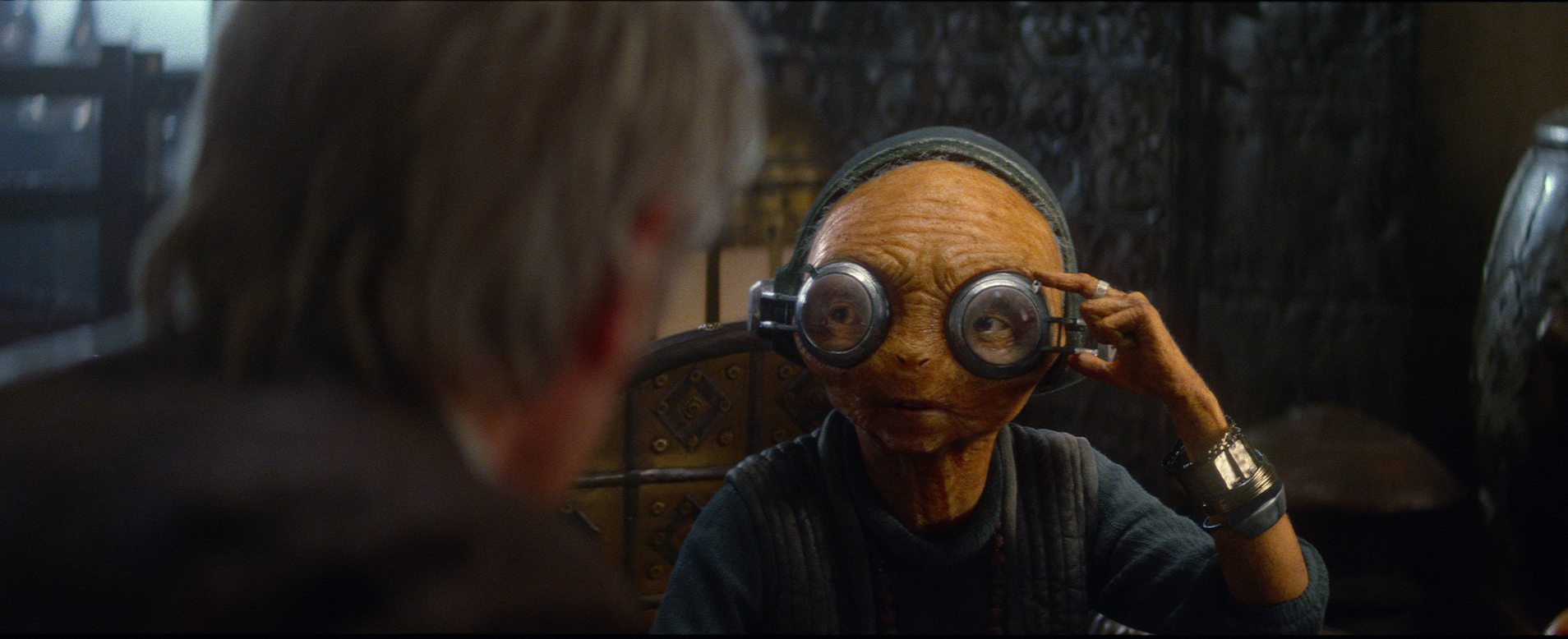
This is supported by how conversations between Han and Maz and Leia that are about Rey are all offscreen. Maz asks Han “Who’s the girl?” as soon as they’re alone, so clearly Maz can discern that Rey is somehow special, and we know Han has told Maz something crucial about Rey’s identity because the next we see of Maz, she’s trying to convince Rey to take Luke’s lightsaber and learn about the Force.

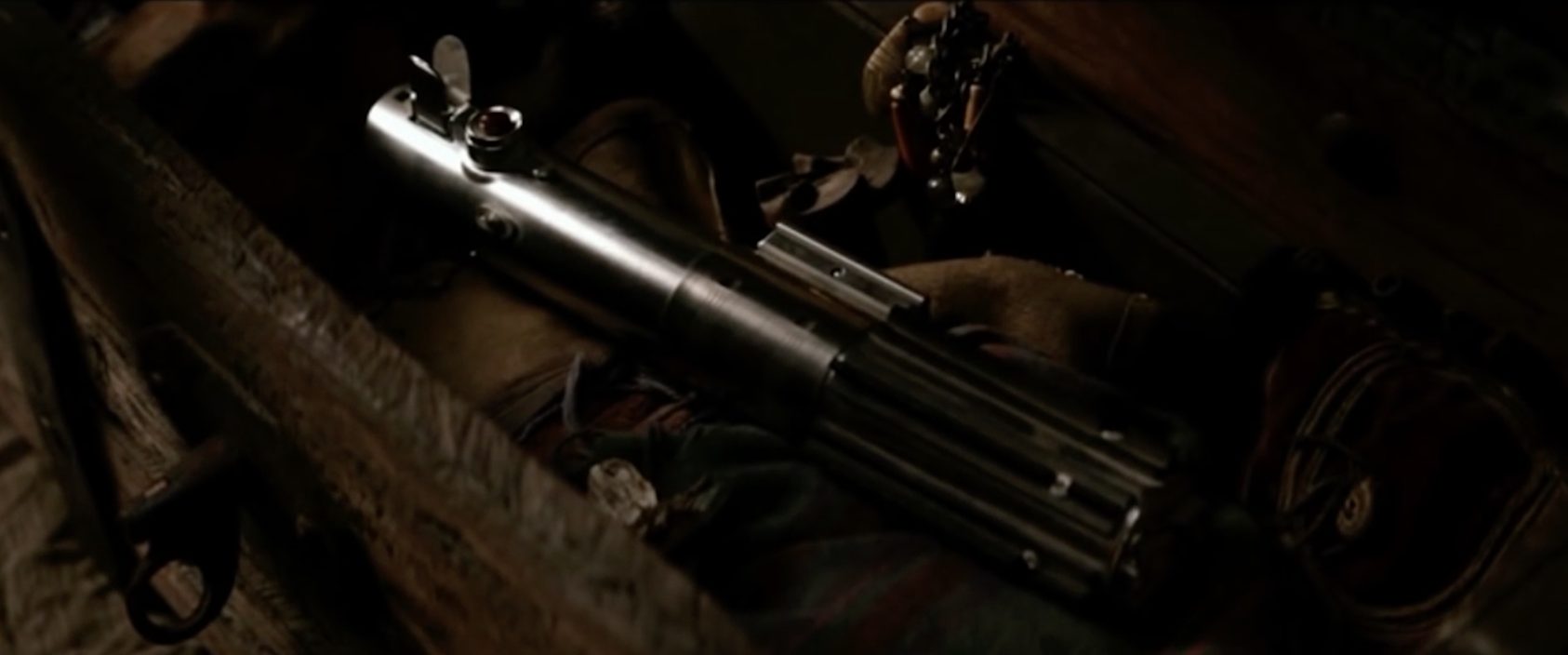
In fact, that entire scene of Rey stumbling across the lightsaber feels like an orchestration. Like Maz purposefully put the lightsaber in a place where Rey could feel the Force guiding her. When Rey goes to find the lightsaber, the door even opens for her. There’s no way Maz would just leave such a valuable relic unguarded, beneath a cantina filled with outlaws, no less. She wanted Rey to get the lightsaber because of something Han told her. Which is why she’s there as soon as Rey finishes her Force flashback, or “Forceback” as Abrams calls it.

This flashback essentially completes the puzzle, or at least the most important parts we can know. After watching it, you can figure out who Rey is, why she was left on Jakku, and who it was that left her. This is the crux of The LIGHTSABER Theory. When Rey has her flashback, she’s taken through several moments in time that appear random, but they’re actually not.

3. The “Forceback”

lightsaber theory

The first scene is a shot of Cloud City, where Luke fought Darth Vader in The Empire Strikes Back. This was confirmed by Abrams, who has said that they actually wanted to show some of the fight itself but then chose to make it more eery by illuminating an empty hallway. Fair enough.

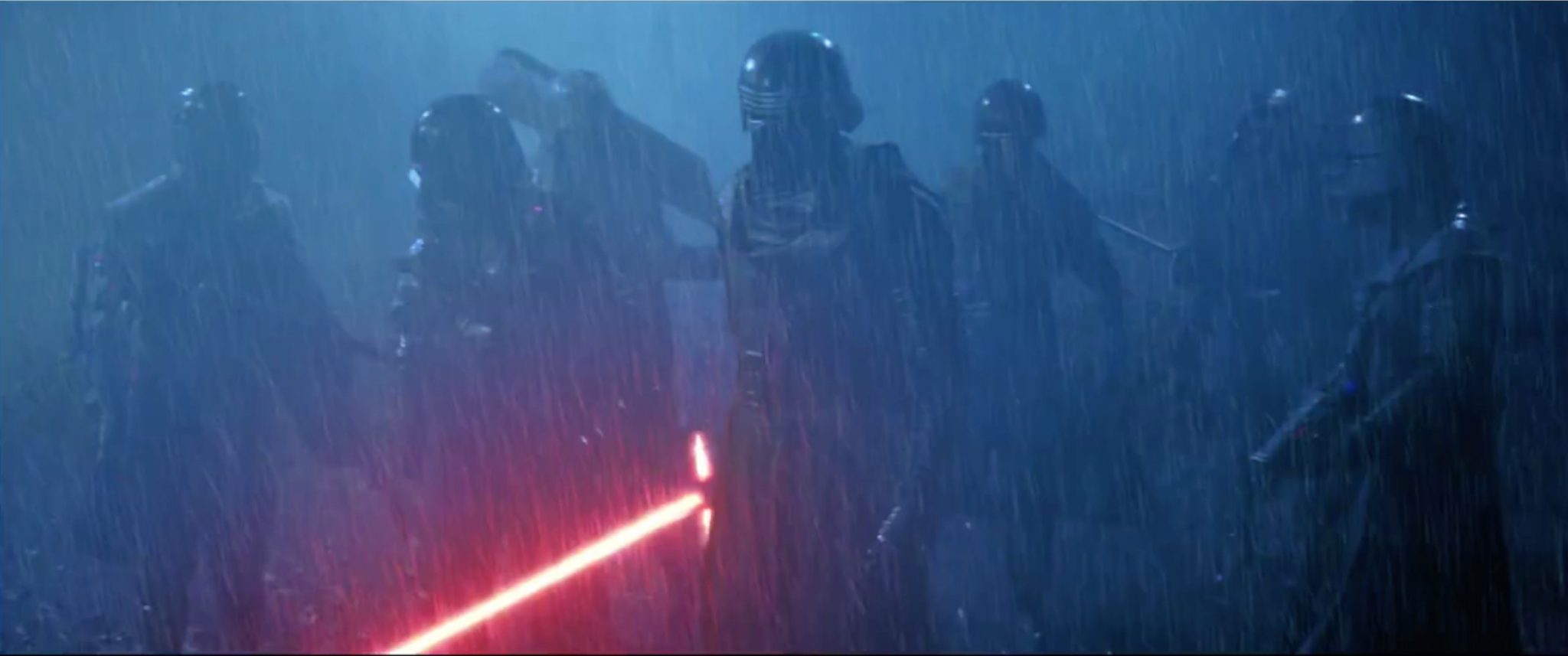
Then there’s a crash, and Rey finds herself in front of Luke and R2-D2 by a fire, and we hear Luke scream “Nooooo” from when he learned Darth Vader was his father. Then the scene changes to the Knights of Ren and Kylo himself (if that is Kylo) standing around a group of bodies, presumably the next generation of Jedi trained by Luke. Someone goes to attack Rey, or whoever was there instead of Rey, but he’s killed by Kylo.

Then we see a young Rey getting left behind on Jakku with Unkar as an unknown ship flies away, a ship by the way that looks a lot like the one we see as concept art for Rey’s family’s ship, but let’s just assume that’s a coincidence. Finally, we get a glimpse of the future, when Rey confronts Kylo Ren on Starkiller Base. And we hear Obi-Wan Kenobi calling out to Rey. These are her first steps.

What do all of these scenes have in common? It’s pretty obvious, actually.The lightsaber. It ties them all together, and we’re seeing a sequence of events in chronological order. In each of these scenes, the lightsaber is present and something significant happens to it.

lightsaber theory

First, Luke loses it during his fight with Vader. Then, Luke presumably finds it again with R2D2, supported by how he and Lor San Tekka sought out Jedi relics together. I believe finding the lightsaber again is one of the triggers for Ben Solo’s turn to the dark side, and we’re seeing the aftermath of the Jedi Massacre as hinted in The Last Jedi teaser. We know Luke had to seek out the lightsaber himself because Rey finds the lightsaber in the same chest Obi-Wan had. Only Luke would know about that relic.

And then there’s the rain scene. The blue lightsaber must have changed ownership to Ben Solo at this point, but when he became Kylo Ren, sometime after the worst of the Jedi Massacre. In each of these scenes, the lightsaber is the key. That’s how we know who dropped Rey off on Jakku.

It was Luke Skywalker. The lightsaber had to be present when we see her being left on Jakku. And Rey even says this when Maz pressures her moments later, telling her that who she’s waiting for isn’t coming back. Maz then says someone else could come back, and Rey says, “Luke.” Rey actually realizes that Luke left her on Jakku at this point, but she didn’t know it was him. She thought Luke was a myth and that her family would come back to get her, which is what Luke must have told her. The red herring is that we think she wants the person who left her to come back, but really, she just wants answers. She wants to know what happened to her parents.

lightsaber theory

I strongly believe based on the movie that one or both of Rey’s parents were Luke’s Jedi apprentices and that they’re among the bodies we see in front of the Knights of Ren. An alternate way to interpret this is that Luke ends up giving the lightsaber to Rey’s father or mother, believing them to be the rightful heir to the Jedi and angering Ben Solo because Luke doesn’t trust him to carry on the legacy. This would be huge for a villain who’s been set up to revere his grandfather. Luke might even suspect Ben is slowly being seduced to the Dark Side by Snoke as he picks his successor.

The Knights of Ren scene shows us how Luke gets the lightsaber back during the massacre. I believe Luke has been defeated at this point in the scene, as evidenced by what appears to be Kylo Ren holding Luke’s green lightsaber. Then we see Kylo killing one of his own men who is about to attack Luke, but Kylo kills him, perhaps because he doesn’t want Luke to die just yet, or at all.

After surviving this encounter, Luke leaves Rey on Jakku to protect her from the First Order and Kylo Ren, who might suspect another Force sensitive is around. Han, Leia, and Maz would know about Rey because of her parents, but they’re not as familiar with her as Luke is. This would explain why Kylo seems to find Rey so familiar, yet he clearly doesn’t know who she is when he talks to Supreme Leader Snoke.

lightsaber theory

And this even explains why Kylo gets so angry, especially about Rey using that particular lightsaber, which he recognizes the first time he sees it. He wants to be like Vader, and Anakin’s lightsaber is his key to getting there. This would serve as the real source of conflict between Kylo and Rey. Kylo believes himself to be the rightful heir to Darth Vader by blood, but Rey is his natural enemy because she is heir to Luke Skywalker by the sacrifice of her parents, Luke’s true successor(s).

Why do we hear Obi-Wan in the flashback, then? It’s not because Rey’s parents are somehow connected to him. They don’t have to be. Remember, Obi-Wan gave Luke that lightsaber in the first place. And he has the ability to appear as a Force Ghost, calling out to Rey as a way to pass the proverbial torch on to her.

This adds a whole new layer of significance to some of the ending scenes, and overall, it makes The Force Awakens a better movie. Han told Leia about Rey, as we see in her conversation with Finn. So when Rey comes back after Han Solo’s death, she and Leia hug, even though the audience doesn’t realize they know each other. But they do. At this point, Rey knows that Luke dropped her off on Jakku and that Leia has lost Han. When they see each other, they grieve together as if they know one another.

lightsaber theory

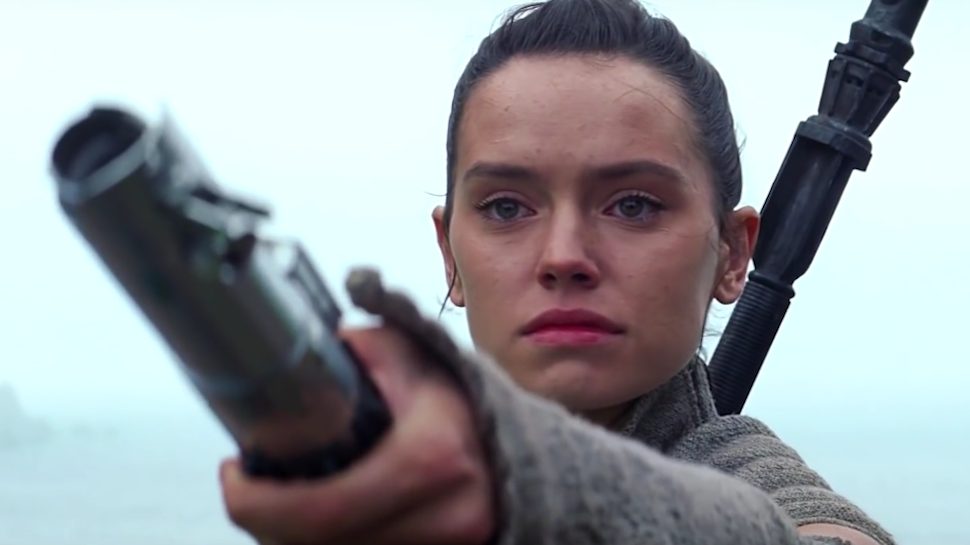
And this also adds new meaning to the final shot of Rey offering the lightsaber back to Luke. It’s a full circle moment for her to remind Luke who he is, who she is, and how the Force has brought them together again. We see Luke’s slow realization of this, as he puts the pieces together himself, and we’ll likely start The Last Jedi with Rey convincing Luke to train her. The big twist will be Rey realizing that her parents were killed and that they were Jedi (or one of them was), and Luke’s decision to leave her on Jakku was rooted in his desire to end the Jedi.

It’s also possible that one parent died by Kylo’s hands while another died on Jakku, where Rey might have been raised alongside the Church of the Force. Perhaps one of her parents is someone who used to live there. Luke could have found Rey with a dead parent, wondering where the other might be, then choosing to leave Rey with Unkar by trading the Millennium Falcon (theory for another day), rather than let her explore the Force among its worshipers. But she’s still close enough for Lor San Tekka to keep an eye on her.

At that point, Luke might have given the lightsaber to Maz, or someone else who would eventually get it to her. We can tell from Maz’s bond with Han Solo and Chewbacca that she’s someone the original heroes trust, and she’d be a less obvious suspect for Kylo Ren to go after when searching for the lightsaber.

lightsaber theory

When we finally see The Last Jedi, I believe we’ll learn about Luke’s dissatisfaction with the Jedi order. Perhaps he sought out the temple in order to find out where he went wrong with Ben, only to realize that the Jedi order has always had its flaws, and maybe it’s best just to let the order die, disregarding Lor San Tekka’s wish that the Jedi come back to bring balance to the Force.

Until Rey comes along and starts to question Luke’s shift into being neutral. She could be the literal ray of hope for the light side, even redefining it for a new generation, in part because she learns about the legacy of her parents and decides that she wants to follow in their footsteps and take their place as Luke’s successor. A new Skywalker who isn’t one by blood, but rather, merit. She’s not strong in the Force because she was trained at a young age and had her memories wiped or something, it’s because she’s the result of a new legacy and step forward for the Star Wars saga.

And that’s The LIGHTSABER Theory.

There are still a lot of pressing questions to be answered, like where the Knights of Ren rain scene takes place and who was killed there, for example. And I highly doubt I’ve guessed everything exactly right. Part of me does still buy into the idea that Rey had her memory erased via Jedi Mind Trick, but touching the lightsaber “awakened” her, explaining how she was able to use the Force so well all of a sudden—the idea is that she was trained as a Jedi and had her mind wiped, which is why she doesn’t know much about herself and her name “Rey” may actually be fake.

All that said, I sincerely believe that this theory points fans in the right direction. It uses evidence from within the text of the movie, so it’s simple enough for younger viewers to get it in a pinch.

The Force Awakens preps us for knowing that the lightsaber is important and that a lot of Jedi died. There doesn’t have to be a complicated explanation, but rather a rethinking of what we were shown and why were shown it. Rey doesn’t have to come from nothing. In fact, that’s already being set up in how Finn might become a Jedi from nothing.

Rey has a unique legacy that is both new for the Star Wars universe and still connected to the original characters in a simple, believable way that will make perfect sense when revealed in Episode VIII.


Thanks for reading this. To get updates on my theories, books, and giveaways, join my Mailing List.

Or just say hey on Twitter: @JonNegroni


Star Wars: The Force Awakens Isn’t Really A Remake Of A New Hope

force awakens

Every so often, a fan theory comes along to remind us how good fan theories can actually be when the work and time is put into them. Less than a year ago, EC Henry composed what I believe to be a masterful breakdown of The Force Awakens that (dare I say it) makes the movie just a little bit better.

Is Star Wars: The Force Awakens a remake of the original Star Wars (A New Hope)? I’ve always considered the movie to borrow voraciously from that original film, while also lifting plenty from the other two parts of the trilogy. But many reviewers like myself have talked ourselves breathless about how TFA features yet another “droid on the run” story with Death Stars, cantinas, and a modest chosen one.

But in EC Henry’s video essay below, the case is made that TFA is really a “creative remix” of the original trilogy, and there’s a strikingly good reason for this that might shed light on the future of the entire franchise. I’ll unpack the theory below (with some of my own observations), but here’s the quick 3-minute breakdown.

As EC Henry points out, nearly all of the similarities between TFA and A New Hope occur in the first act of both movies. BB-8’s story is parallel to R2D2’s, and we’re on a barren planet that slowly reveals our hero, Rey, who is reminiscent of Luke in some ways.

The Millennium Falcon departing Jakku, followed by meeting Han Solo and Chewbacca, is where the first act in TFA ends (roughly), which mirrors the end of the first act in A New Hope, when Luke meets Han and departs Tatooine aboard the same ship. Henry also implies that Greedo and Han’s antagonism is mirrored with Han’s confrontation with the mercenaries aboard the freighter.

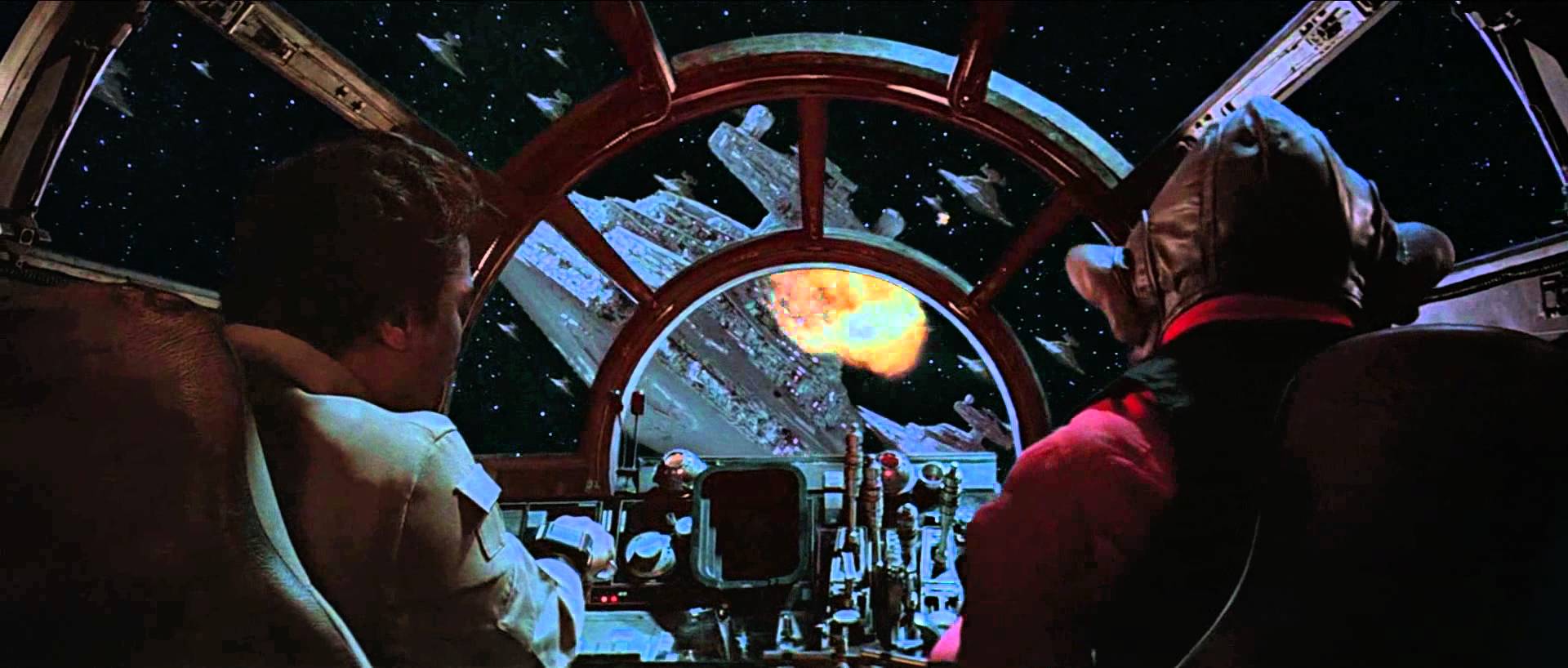
At this point, TFA’s second act starts to mirror the second half of The Empire Strikes Back. There’s a monster-in-space encounter (Rathtars in place of the asteroid worm) followed by Han deciding to visit an old friend (Maz Kanata as a fill-in for Lando Calrissian). We also see Kylo contacting Snoke in the same way Vader contacts Palpatine.

To save for time, TFA converges the Luke/Dagobah subplot with the Cloud City subplot. Rey goes to a mysterious planet and learns more about her origins and destiny with Maz pulling double duty as a fill-in for Yoda. And just like in Empire, the villains show up to wreck things. Rey is defeated by Kylo Ren (a la Luke and Vader’s first fight) and is captured, similar to how Han is taken away by Boba Fett.

force awakens

From here, TFA mirrors the third act of Return of the Jedi. The Rebels/Resistance meet to discuss their rescue plan and discover “another Deathstar.” The story breaks in two with ground forces on Starkiller Base trying to break down the shields and Rogue Squadron attacking from space, just as the Battle of Endor had two fronts. There’s an epic lightsaber battle happening as the space assault reaches its climax, with the Jedi using fury to overwhelm the Sith (Rey slicing Kylo is quite similar to Luke taking down Vader).

As Henry also points out, there are exceptions to this where small elements of the original trilogy are mirrored throughout (the catwalk scene, for example), but there certainly seems to be a primary structure in place that combines all of the movies in a coherent way. But what’s the point? Why would Lucasfilm do a creative remix like this at all?

The expectations for TFA were always going to be astronomically high, so the strategy here makes some sense. Add all of the nostalgic fan service to TFA as a tribute in order to gain credibility for this new trilogy, so the next two movies can unfold in more creatively bold ways that aren’t enslaved to the source material. Put more simply: they started with a look at the past and ended with a strong look toward the future.

And in one strange way, TFA is basically the movie George Lucas intended to make in the 1970s. Rather than a trilogy, he envisioned the entire arc of Star Wars to be told in a single movie. TFA essentially fulfills that vision and authorial intent, so as someone who had a lot of problems with the film, I’m finding myself appreciating it more for what it manages to accomplish in light of what couldn’t have been done 40 years ago.

Did I miss anything? Add some of your own observations below. And if you like this essay, be sure to subscribe to EC Henry’s channel, and consider supporting him on Patreon for more great videos.


Thanks for reading this. Seriously. You can subscribe to my posts by clicking “Follow” in the right sidebar. 

Or just say hello on Twitter: @@jonnegroni

Snarcasm: The Cars in ‘Cars’ Aren’t Really Cars. Obviously.

cars

Snark + Sarcasm = what you’re about to read

I’ve always liked MatPat’s “The Film Theorists” videos, because they’re entertaining, fun, and have a great energy. For that reason, I don’t usually criticize their theories, but that’s all about to change.

One of MatPat’s latest videos involves Cars, and it directly calls out my timeline for Pixar movies, assuming they all share the same universe. This was embarrassing on my end because Mat worked off of old Pixar Theory material without fully researching how it’s changed over the years, so his new theory about Cars is…well…let’s just say it could use some Snarcasm.

Oh, and here’s an important note. If you want to check out the better version of this “cars are alive” theory, check out the video SuperCarlinBros already did for it seven months ago…which MatPat doesn’t reference at all or give credit to in his video. And…well, he should have.

The Cars in the Cars Movie AREN’T CARS!

I don’t know if I’m ready for this.

Are the Cars in Cars really cars?

{Raises hand}

I mean sure, it’s the title of the movie.

[Raises hand more}

and they look and behave like cars

{hand floats away}

I mean they have eyes and tongues

Right. So there’s no way they’re cars with eyes and tongues. Eh, yeah that’s weird, but we’ll get to that.

How does a society of cars come to be in the first place?

Well, the Pixar Theory states that—

What are these creatures? I am 100% confident I figured it out.

Like I was saying. I outlined all of this in my book about how—

what started as a simple, stupid question led me down the rabbit hole of this bizarre car-themed universe, and the answers I found will upend everything you thought you knew about Mater and the gang.

Mat then cuts to an image of my Pixar Theory Timeline. Well, the old one at least. See when this video first came out, a lot of people asked me what I thought, and I felt guilty for not updating the timeline since I did the book, which is a small reason why Mat ends up working off of old information (we’ll get to that).

See, the theory itself was certainly at its most plot-holey when I did the first draft of the timeline in 2013. I haven’t even updated it with the newer movies. To rectify this, there’s a new timeline in place of the old one, but as you can tell, the damage is done.

and the details I find here pose some interesting questions about that infamous Pixar Theory

Infamous?

a theory that you all have wanted me to cover for quite a long time

Spoiler alert: MatPat is working on his own “mega” Pixar Theory. Well…bring it on?

it probably merits taking a second to acquaint you with that Pixar Theory. A theory that started with, as far as I can tell, online movie blogger Jon Negroni.

Hey.

which aims to unite all the Pixar movies to not just the same universe, but also come up with a cohesive timeline of events where one movie leads to the next, leads to the next.

Mat shows an image of the actual blog post for the theory itself, which begins by telling you that the theory has been updated. So why didn’t Mat “start up his search engines” then?

He does go on to talk about how he won’t be getting into the “nitty gritty” of the theory, but offers an example of how Buy n Large plays into multiple movies.

now the reason I wanted to start talking about this today is because I have a few problems with the Pixar Theory timeline. 

So Mat then goes on to recite some big elements of the theory that, again, are ancient history. And he gets some basic stuff wrong, like this:

that’s why you don’t see humans or animals in either car movie

Except we do, actually. We see the birds from For the Birds (a Pixar short) in the first Cars.

this whole Pixar Theory is an interesting explanation, but there are a lot of assumptions

So why didn’t you research the updated one? And spoiler alert: his entire theory is nothing but assumptions, starting with Mat’s assertion that they aren’t sentient machines brought to life like the toys from Toy Story.

The cars are actually organic creatures. Living creatures with the car body of the top exoskeleton, but containing some sort of internal organs. A soft and squishy inside like the center of a Tootsie Roll pop.

I get it. So Mat took all of the clever revelations SuperCarlinBros already figured out months ago…then made it worse. Neat.

First, they breathe oxygen. 

And they also drink oil. And we see they have engines multiple times in the movie. How does that make them organic?

See, Mat goes on to point out how the cars must be organic because they basically act like humans. They eat “food” and one car wears an underwater “breather” like in spy movies. I contend that they do this because they think they’re the humans who owned them. Multiple Pixar movies point out that human emotion (a la Monsters Inc.) is the source of energy that can bring inanimate objects to life (like in Brave and Toy Story). And in movies like WALL-E, we see that the life of these machines is sustained by interactions with human belongings, like the movie Hello Dolly that WALL-E watches all the time.

I’m sorry I have to keep saying this, but Mat is completely missing this stuff because he didn’t even seem to look for it. And now we have to suffer through what is at best an amusing sideshow full of weird body horror jokes.

Mat then goes on to say that because of a “studio stories” video by Pixar, this is all confirmed in addition to McQueen having the hiccups in a “Tales from Radiator Springs” short. He quickly cuts in and out of a quote that McQueen can’t open his doors because “that’s where his brains are.”

they have a brain! A giant, pink, pulsating brain hidden behind those car windows!

Nope.

This is terribly misleading because Mat leaves out the fact that this same animator was trying to think of ways to make Lightning capable of producing a map to Sally. He mentions that using the doors wouldn’t make sense conceptually because that’s where his “brains” would be. He also proposed that maybe a monkey drove the car and showed the map, and many more examples that are nonsensical.

So none of this comes close to confirming anything about cars having organs. Rather, it’s just an animator discussing the challenges of making the Cars world a believable one that isn’t gross or creepy. That includes avoiding this kind of “brain” implication in the first place.

so it would appear that the cars are actual living creatures and not just some highly advanced driverless cars.

“Appear” is a strong word. If anything, there’s far more evidence that the cars are, in fact highly advanced driverless cars compared to this idea that they’re animals. But Mat ignores all of that inconvenient evidence so he can champion his own theory.

Like I said before. Bring it on.

there’s an actual evolutionary chain present throughout these films. 

Go on.

[In Cars 2] we see birds. Except they’re not actually birds. They’re actually mini planes. 

Oh boy.

In another of the Tales from Radiator Springs animated shorts, you get VW beetle beetles. Tiny cars with insect wings.

Which is why the theory states that the cars work off of an unreliable narrator. Which means that to them, organic creatures on Earth look like cars to them, but elsewhere we see real birds, and we know from WALL-E and A Bug’s Life that birds and insects are still around in this post-apocalyptic wasteland.

Have you noticed that for a Pixar theory about Pixar movies, Mat doesn’t seem to include a lot of the other Pixar movies?

Mat goes on to talk about how the alien stuff from “Mater’s Tall Tales” is totally real rather than…a tall tale. And their tires being independent from their bodies must “prove” his theory rather than support the idea that they are, in fact, machines with tires. Good stuff.

these are living creatures with internal organs that are protected by a car-like exoskeleton.

Did they grow this exoskeleton themselves? And where do their engines (which we see) come from?

and with multiple differentiated animal-like species that have evolved over time from literal boats, planes, and cranes to bug-like and bird-like animals

But The Pixar Theory has too many assumptions? And my main problem with this is that Mat goes into zero detail over how and why machines would suddenly turn into bugs and insects. Or why the personified cars don’t. He just drops that evolution part in and moves on. You know, like in the original Pixar Theory!

In short, when you look at all of this evidence, there is only one possible conclusion:

Mat put as little effort as possible into tackling the Pixar Theory? Because this is just sloppy, and a bit uninspired.

the cars in Cars aren’t really cars at all, but are much more likely a highly evolved form of insect.

Remember kids: “this whole Pixar Theory is an interesting explanation, but there are a lot of assumptions.”

Mat’s entire argument here is that because cars have a metal “skin”, that must mean they’re evolved from insects, which (whoa!) also have an exoskeleton. Ignoring literally everything about science that has ever been known about how insects, you know, have evolved and are composed biologically.

Remember when Mat said, “Oh they have brains! Confirmed!” Well, he even shows diagrams of insects that don’t have brains (or eyes or tongues or teeth) like what he describes, yet that doesn’t matter because this is my life now.

I get it. The Pixar Theory is about having fun, not being scientifically accurate. But this is just weird for the sake of it and not at all informative of what the theory’s really about: telling a grander story behind all of the movies and characters.

the cars aren’t cars! They’re insects!

I mean come on, does anyone else think Mat is just spoofing at this point? He literally has to say “The cars aren’t cars.”

that does some really interesting things for the Pixar Theory

At best, it ruins the Pixar Theory and undermines everything we actually know about the Cars movies.

First and foremost, it removes Cars from the era of humans

Thus making it completely implausible. The point of Cars is that the machines are brought to life through memories of humans. Taking that out to make room for some random insect nonsense adds literally nothing to the theory. It only takes away evidence that brings everything about the machines together for what happens in Monsters Inc.

that sort of evolution is going to take a really long time, so get it away from the WALL-Es, Nemos, and Incredibles of the world.

So then what’s the point? And how would human civilization be what it is in the Cars universe if this was so far in the future? Where are the monsters? Why are the cars remembering events from the 20th Century, like the Piston Cup? If they’re so far removed from the Pixar timeline, why even suggest that the timeline is even purposeful?

but surprisingly enough, we do happen to have one film in Pixar’s lineup that does follow super intelligent bugs in their quest for survival

What about the birds? If we’re bringing A Bug’s Life into this, then you also have to point out that the birds are primal and “dumb” compared to the insects.

in a world where there are remnants of human society but you see no humans present

But we do know they’re still around because one insect had his wings clipped by a kid.

what I propose to you is that Cars isn’t so much its own entity, but rather A Bug’s Life 2, 3, and coming up on 4. The natural progression of insects evolving and taking over the planet Earth. 

So insects naturally evolve…into cars? That explains the millions of years established by the Pixar timeline (starting with Good Dinosaur) where they, you know, didn’t evolve into cars. But don’t worry, because all of these theory holes will be solved (maybe!) next time.

and with that we have the first puzzle pieces in place as we all start to build our own Film Theorists approved mega Pixar Theory!

Go for it. Seriously. These are your movies too. Just don’t be surprised when the Snarcasm rolls around, because if you’re going to build off of my initial ideas and timeline without fully looking into them for your own purposes, plus rip off another YouTuber’s theories without giving them any credit for it, then this is a Pixar Theory war. 


Thanks for reading this. Seriously. You can subscribe to my posts by clicking “Follow” in the right sidebar. 

Or just say hello on Twitter: @JonNegroni


Snarcasm: Carl From ‘Up’ Is Insane And So Are You

up

Snark + Sarcasm = what you’re about to read

Word of warning: if you tag me in a tweet promoting a fan theory you “wrote,” then expect the Snarcasm treatment in the most lighthearted way possible .

So here’s the background. Two years ago, SuperCarlinBros did a fan theory video about Pixar’s Up that proposed Carl Fredricksen is “insane” for reasons that sound anything but. It’s an amusing video from a couple of good friends of mine, which is why it’s strange to see the theory popping up again…from someone else.

Jonathan Sim, a different writer, tagged me in his own write-up for a theory he didn’t write, but instead rewrote with credit to the SuperCarlinBros. Now that this is in written form and it’s coming out while this column is a thing, we get to dive into why the “Insane Carl Theory” is…well, to say it’s insane is giving it at least a little credit.

What if I told you that Carl Fredericksen was actually insane and this movie was a figment of his imagination?

I’d tell you that it’s spelled “Fredricksen.” Then I’d tell you that at least 20 million “fan theorists” have been speculating that any given piece of fiction is “in someone’s head” since Descarte.

So, we start off this theory with that scene in Up where Carl assaults a man with his cane.

It’s a walker with tennis balls, but alright.

This is assault and battery as the man is later seen with blood on his forehead. And we later see Carl in a courtroom. And they sentence him to…a nursing home?

We’re not about to have a discussion about legal precedent are we—

Doesn’t it seem strange that this old man has committed what can be considered third degree assault and battery and his sentence is a nursing home?

Well, no, if we use our thinking caps. As you state, this is third degree battery, which is a misdemeanor. As in, not a felony. Most states will either put you in jail for 30 days and/or make you pay a $500 fine. Depends on the judge, though.

Now, let’s look at the situation Carl is in. This is, by all reasonable accounts, his first offense ever. In addition, a huge corporation has a clear stake in getting him out of his house. So we can surmise from the wordless court scene that BnL’s lawyers have arranged to make a deal that forces Carl to stay at a retirement home so that they can bulldoze his house. We even hear from the police officer in the next scene say that Carl doesn’t seem like a “public menace,” likely referencing the arguments made to kick him out.

You could also consider that Carl doesn’t have the money to pay the fine (he’s a balloon salesman, after all), but the state would rather put him in a retirement home than jail because of his age and the fact that he lives alone. This seems like a pretty logical ruling from a judge who has to sentence an old man without a criminal record.

I mean, he should honestly just receive a jail sentence or something like that. But a nursing home is not legitimate.

Let’s not pretend nursing homes don’t exist as punishments.

So, Carl actually was sentenced to a prison.

Wait, what? No he wasn’t?

And when this happened, he had lost everything. He lost his wife, his freedom, and now, he loses his mental health.

Um…no? The police officer told him that the retirement folks would pick him up in the morning. Where exactly does his mental health collapse for you? And why are you convinced he’s gone insane in the first place, just because he’s sad? Is that your only criteria?

What Carl then does next is absolutely impossible: he lifts up his house with balloons.

At this point, that seems way more plausible than what you’re suggesting.

Well, first off, that would mean he was a really bad balloon salesman.

Oh, I get it. Jonathan is just joking with us. Right?

Right?

Second, according to production notes from the film,

No, no, no, hold up and don’t you dare switch the topic. Carl is a bad balloon salesman? How does that…what? Because…he has a bunch of balloons? That means he’s bad…at selling them..but he’s retired…

WHO ARE YOU?

So, in one night, we’re expected to believe Carl had the stamina and physical ability to fill that many balloons with helium?

No, we’re expected to believe he already had those balloons ready to inflate and finish tying up, secretly. Remember, he and Ellie were planning on taking the house to Paradise Falls, hence the drawing of the house…on Paradise Falls. But they never did because she got sick, and the point of this next scene is to show that Carl’s willing to embark on the adventure they always dreamed of, but he’s not really alone because Ellie is the house and—

Oh sorry, you were saying?

He can’t even walk down the stairs without his machine.

Right. That means all the other times he’s running around and attacking construction workers were all a hoax. Which part of the movie is “in his head” again?

And not only that, but lifting a house with 10,297 balloons is not possible.

Neither is having a head shaped like a perfect rectangle, but you don’t question that for some reason.

Up co-director Pete Docter recently told Ballooning magazine

Recently? You mean in 2009?

that technician Pixar estimated

Who is technician Pixar?

it would take 23.5 million party balloons to lift a 1,800-square-foot house like Carl’s.

The funny thing is that in this same article, they point out that if the house did have enough balloons to lift the house, it would shoot off like a rocket rather than leisurely float away. So Pete Docter’s idea here never would have worked in the real world, but they went with it anyway because they like to dream big. Which doesn’t mean Carl’s dreaming big, an argument that Jonathan (both of them) haven’t even gotten to defending yet.

And then, when he is on his way there, he finds a child on his doorstep.

Thank goodness for babiesovernight.com.

He and Ellie never got to have children in their lives, and this crazy dream sequence (or you can call it heaven if you want) is giving him everything that he didn’t have before.

Let’s break this down. First, Jonathan just sneaks in yet another fan theory about Up that suggests Carl is dead the whole time. Which has been debunked by almost everybody because it’s such an overused fan theory that no one cares anymore.

Second, why would Carl be dreaming of a kid he’s already met? And that he hates? And if the kid represents what he wants in life, why does he try to get rid of the kid throughout the entire movie?

Carl and Ellie grew up loving adventurers and exploring and this kid shows up at the door, who loves adventuring and exploring and would be an ideal, perfect child for Carl and Ellie. 

Thanks, IMDB.

But that’s not the main reason why I don’t buy this.

Don’t buy what? You don’t believe what you just said?

See, Russell said that he saw a snipe (a type of bird) and chased it under his porch. However, that was when Carl lifted up his house and he remained on the house.

You don’t see Russell either, but you know he’s still there. Also, you know, birds fly.

I don’t see how it would be possible to get under that porch, and when he noticed the house lifting up, why would his immediate response be to grab on? It doesn’t make sense, and therefore, Carl’s mind is simply creating this vision for him.

Russell didn’t “grab on,” he clearly was hiding in fright. We don’t see him because the filmmakers wanted to keep his presence a surprise. We would have been distracted if Russell had been shown. This is a plot hole in the movie, not a definitive piece of evidence that Carl is imagining the whole movie.

The only kid that gets into Carl’s house is the kid that somehow knows how to get from the United States to South America, navigating with a house he’s not familiar with steering.

He uses his GPS to navigate. And he’s steering a floating house, not a B52. Movie logic aside, the nonsensical premise of Up is deliberate. To suggest that it’s all a fabrication is pointless,  because the movie is already a fabrication.

There is a scene in which Carl tries to drop Russell into the street by suspending him with a rope while about six stories off the ground. Carl then drops Russell into the street by accident, but in the next scene, he shows up in Carl’s house again, completely unharmed without a single scratch.

Jonathan…did you watch the movie? Because…Jonathan, if you watched the movie you’d know that this happened IN AN ACTUAL DREAM SEQUENCE CARL WAS HAVING.

See, Carl was considering dropping off Russell, but he DREAMED the scenario and realized it would harm Russell.

And we also have the character of Kevin.

Oh, don’t you even dare bring Kevin into this.

when we first meet Ellie as a child, we can’t really tell whether or not she is a male or female.

Yes you can? True, she’s a tomboy and it might not be immediately clear to everyone, but it doesn’t take long.

Russell names the bird Kevin (a male name), but we find out at the end of the movie that she is a female, as she gives birth.

You’re not about to say Ellie is the bird, are you? She’s already the house, mate.

To add on, Kevin can have kids, but Ellie had a miscarriage.

(Voice of Buzz Lightyear) Themes! Themes everywhere!

And right when Carl lands in Paradise Falls, he meets his childhood hero: Charles Muntz.

…who is the inspiration for why Carl wants to go to Paradise Falls in the first place.

Muntz is 92 years old during the main events of the film and though there are people who live up to 92 years old, he cannot be this impressive.

Why not? We see him struggle in his fight with Carl later on, so it’s not like he’s the pinnacle of health. Wouldn’t a life of living off the land make him hardier?

Anyway, it doesn’t matter because a dropped plot point of the movie is that Muntz’s age was slowed down by Kevin’s eggs, explaining how he’s still alive at such an old age.

He is living in the jungle with no healthcare, no way to treat any possible diseases, and not a lot of food.

OK, this is actually offensive. You do realize that people in other countries who have no modern medicine are still able to live a long time, right? And he lives on a zeppelin with tons of food shown onscreen, because his dogs take care of him.

And there is also the fact that when Carl points out a skeleton of a giant Somalian leopard tortoise, Muntz says, “I found it on safari with Roosevelt.

Here we go.

There are two likely Roosevelts that he was talking about: Franklin D. Roosevelt and Theodore Roosevelt.

To even suggest it was FDR is laughable, but go on.

Now, Theodore Roosevelt wouldn’t really make sense because Muntz was born in 1911 and Roosevelt died in 1919. That would mean that the oldest he could have been while hanging out with Roosevelt is eight years old and apparently, Roosevelt was going on safari and cheating at gin rummy games with eight year old kids.

Technically, Charles could have been a child on safari exaggerating his role. And kids are certainly capable of playing card games. But the more likely explanation is that Charles went on safari with Roosevelt’s son, Kermit Roosevelt, who was also an adventurer who actually went on African safaris.

OK, now hopefully Jonathan will reveal all of the evidence pertaining to Carl’s mental health by—

This means Carl was either insane, or, as other theories have said, he could have died and this may simply be his ascend to heaven. Russell, Kevin, and Dug are all just in his imagination.

That’s it? That’s the whole thing? This entire fan theory is just one argument over and over again: the movie is a bit silly, so that means it’s a dream.

This isn’t a fan theory, it’s a fan guess. And not a good one at that. There’s nothing about how Carl does actually have some clear psychological problems with thinking his wife is a house and how his attachments clearly blind him to reality over the course of the film. But rather than address anything like that, Jonathan just tells us it’s all a dream because movies aren’t real. Or something.

So in a way, doesn’t this mean we’re all insane for believing them?


Thanks for reading this. Seriously. You can subscribe to my posts by clicking “Follow” in the right sidebar. 

Or just say hello on Twitter: @JonNegroni


How ‘Moana’ Finally Settled The Disney Princess Debate

disney princess

Disney’s Moana was a fantastic animated musical, and one of the main reasons why has to do with its handling of the female protagonist, Moana herself.

The animation studio was essentially founded on the cornerstone of the “princess” being a driving force of fairy tale movies, which eventually evolved into increasingly more diverse types of stories. Specifically, Snow White laid the groundwork as one of the best films of all time (animated or otherwise), as well Disney’s first feature film. And they later built upon this with Cinderella and Sleeping Beauty as smart ways to repeat Snow White‘s massive success.

This ended up being a saving grace for Disney after multiple near-catastrophes with bad box office, animator strikes, and so on, though Walt still believed in experimenting with non-princess movies like Peter PanPinocchioDumbo, and of course, Mary Poppins.

Long after his death in 1966, the Disney Princess transformed from an idea to an actual media franchise worth an insane amount of money and indicative of Disney’s influence over generations of children. In the early 2000s, it became an official thing, combining the classic Disney princesses of the old days with recent heroines of the 90s renaissance. And the criteria, at the time, was confusing to say the least.

disney princess

Obviously, Snow White, Cinderella, and Aurora were “inducted” into the official Disney Princess brand. Joining them was Ariel from The Little Mermaid, another obvious choice though different in the sense that she’s royalty of an underwater culture. Then Belle from Beauty and the Beast, who doesn’t technically become a princess until the very end of the movie.

Jasmine from Aladdin was another obvious choice, though striking because she was the first Disney princess to be nonwhite, and she’s more of a supporting character than a lead protagonist. Jasmine was followed up by two consecutive nonwhite Disney princesses, though: Pocahontas and Mulan. Though Tinker Bell from Peter Pan was technically a Disney Princess for a short time before getting replaced by Tiana and becoming a home video sensation.

They didn’t include Nala or Kiara from Lion King, which seems to be because animals simply don’t qualify. Same goes for Esmerelda from Hunchback of Notre Dame because she’s technically a gypsy, Megara from Hercules, and Jane from Tarzan. The first “modern” princess was Tiana from Princess and the Frog, then Rapunzel from Tangled was added as the first CG character. And the last Disney Princess in the official sense is Merida from Brave, a Pixar movie rather than a Walt Disney Animation one.

disney princess

These are the “official” Disney princesses, but that hasn’t stopped many other fans from considering the wider breadth of characters to fit the bill. Simply because the criteria isn’t always consistent (like with Tinker Bell and Mulan not being royalty). Eventually, Anna from Frozen will be added along with Moana, but no one really believes their status as princesses is held back until Disney slaps their own label on it and has their clique running around Disney World.

A lot of this might sound a bit silly and inconsequential, but there are actually heated debates held by…some…who argue over which Disney female characters are “allowed” to be called Disney princesses. And this is a big deal, in part, because countless kids look to the mainstream Disney princesses as a representation of themselves in these movies. Parents want their kids to have positive role models, and the Disney princesses, like it or not, are a major cultural force in that regard.

The more recent Disney princess from CG animated films definitely fit the more literal interpretation of what’s become such a pervasive line of business for these animated films. But Moana subtly settles this debate, I believe, once and for all. It points out that the semantics don’t matter, really, as Disney seems intent on including future princesses as it sees fit.

moana

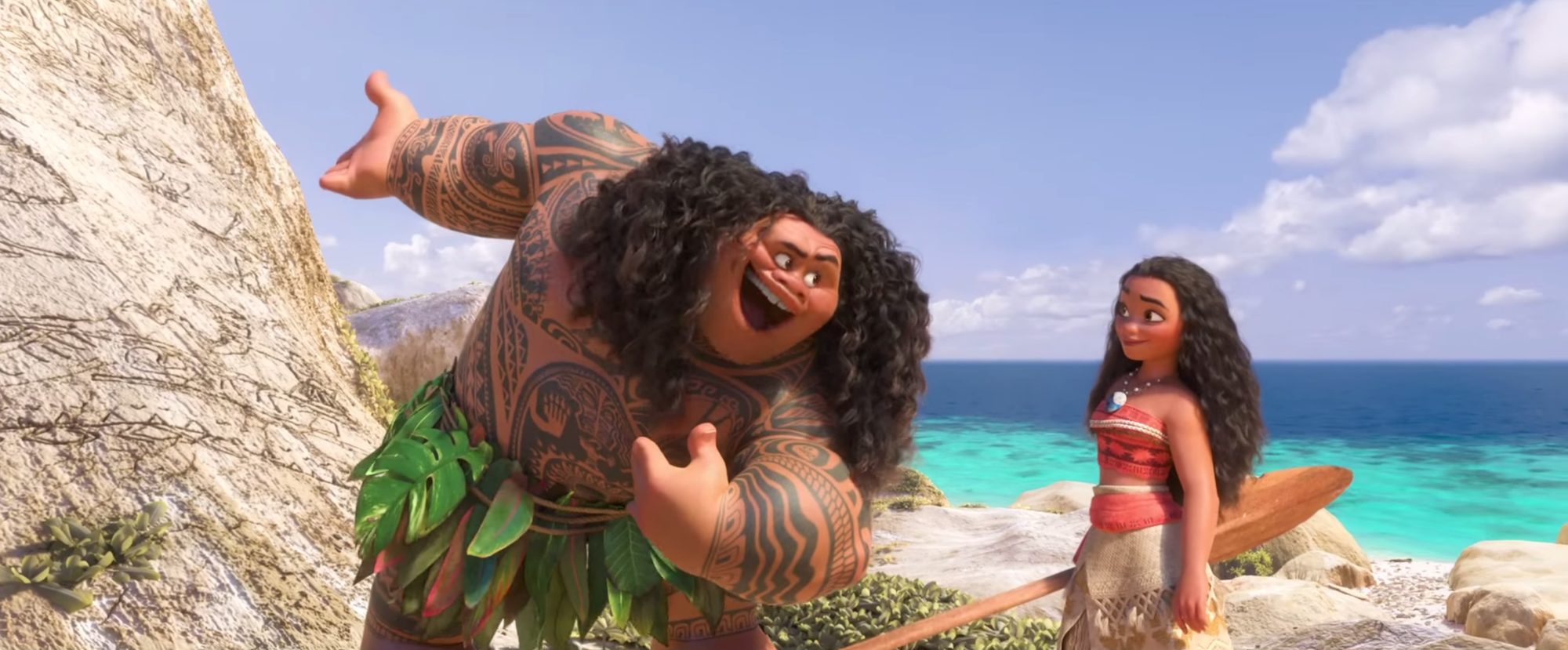
The pivotal line between Maui and Moana is what specifically points this out. Maui tells Moana she is a “princess,” but she denies this because she’s actually the daughter of a Chief (the literal view). But Maui banters back with self-awareness on the writers’ part:

“If you wear a dress and have an animal sidekick, then you’re a princess.” 

What he really seems to be saying here is that it doesn’t really matter. What makes these characters “princesses” has very little to do with royal bloodlines and more with the tropes that Disney infuses in its protagonists and supporting characters. A dress and an animal sidekick are incredibly broad. so Disney can in effect say from here on out that there’s no reason to overthink this merchandising franchise they’re so clearly benefiting from.

And that’s fine because it allows Disney to incorporate as many different cultures, hair colors, and clothing styles as they can with their princess characters, but not at the expense of the story making sense. Or worse, always falling back on traditional princess tales instead of doing something as “culturealistic” as Moana and Mulan.

moana

Moving forward, I like to think that this line by Maui was allowed in the movie because they’re acknowledging how limiting it is to hold back the Disney Princess inclusivity for the sake of being so literal. It’s not relevant how these characters look on a family tree, but rather that they’re interesting characters who follow a consistent aesthetic and type of storytelling that’s proven incredibly successful for Disney since the 30s. Maybe one day, it won’t even be questioned whether or not a Disney princess is one because she wears a dress, especially if you consider the fact that they included Merida, a princess who is usually shown with her bow and arrow rather than a bucket of glitter.

But one thing’s for certain. The best Disney princess is obviously Lilo.


Thanks for reading this. To get updates on my theories, books, and giveaways, join my Mailing List.

Or just say hey on Twitter: @JonNegroni


For Now, Rey From ‘Star Wars: The Force Awakens’ Is Not A Great Character

rey

No one can deny that Star Wars: The Force Awakens was a huge win for Lucasfilm and Disney. It delivered on years of cautious hype with a solid movie that made an egregious amount of money for the studio.

Fans loved it. The critics loved it. Even the harshest criticisms lobbed at the movie (like a plot eerily similar to previous Star Wars films) are typically considered nitpicks, not deal breakers.

Warning: this post contains spoilers for Star Wars: The Force Awakens

A lot of this has to do with how TFA pleased both fans of the old movies and fans of what could happen next. Han Solo had a substantial role, along with Chewbacca and Princess Leia. And future movies promise to expand Luke’s story even further. But TFA also unveiled the next generation of Star Wars, and rightly so. Topped off with one character in particular who seems to be on everyone’s mind when talking about their favorite character in the movie: Rey.

Well, who is Rey?

rey

A lot of the discussion around TFA, which I’ve taken part in quite a bit myself, centers around who Rey really is within the context of the Star Wars mythology. Most people are convinced she just has to be connected to someone we know, whether it be the Skywalkers, Solos, or even Jyn Erso from the upcoming anthology movie, Rogue One. For a lot of fans, it isn’t enough to speculate that she could be wholly new, and that’s mostly because TFA suggests many times through dialogue and specific story moments that this might not be the case. Specifically, Rey touches Luke’s lightsaber and immediately envisions the past and future places connected to the Skywalker relic, even hearing Obi-Wan address her by name.

These secrets are likely to be uncovered in next year’s sequel and beyond, so I want to get away from all the theories (aside from how obvious it seems to me that Supreme Leader Snoke is Ezra from Star Wars Rebels) and settle on just one question about Rey: is she really a great character?

She’s likable, obviously, and we can list off plenty of traits that make her fun and entertaining to watch. But is she a well-written character…or a boring one?

I suspect most people reading this believe the former. And that’s probably because it’s wrong to say Rey is boring. The film’s most thrilling moments certainly revolve around her and how she reacts to various problems around her. She starts off as an incredibly resourceful person and becomes increasingly competent over the course of the film, which is pretty common for a lot of exciting characters we like in all types of stories.

So before we go any further…

What makes a character “great” in the first place?

rey

Evaluating a character’s quality is definitely subjective, but we can choose acceptable criteria to make a case for why any given character is good or bad. The key is to weigh that criteria against the context of the movie. 007, for example, is supposed to be a character who undergoes very little character change (at least, before the Craig movies), even though we expect most of our protagonists to go on some sort of dramatic, life-changing journey, where the climax involves that character making a personal choice or discovery that wins the day.

For that reason, some people consider 007 to be a weak character who’s still pretty fun to watch, because the movie surrounding him focuses more on how thrilling it is to observe someone competent solving tough problems in an interesting way. Other prominent protagonists, like Bruce Wayne, are considered great characters because they do undergo great character change that connects with their backstory, the antagonist, and how it all comes together in the climax. It’s this cohesion in storytelling that makes for a compelling character, rather than a somewhat average one.

So it is for Rey, from TFA. She undergoes a character change, to be certain, but what holds her back from being a great character is the fact that her motivations, backstory, relationships, and climactic choice are scattered, poorly-defined, and often contradictory, as we’ll get into. Most of these problems are because of the storytelling, of course, not Ridley’s performance or, as it bears repeating:

Not being “boring” doesn’t make a character great.
rey

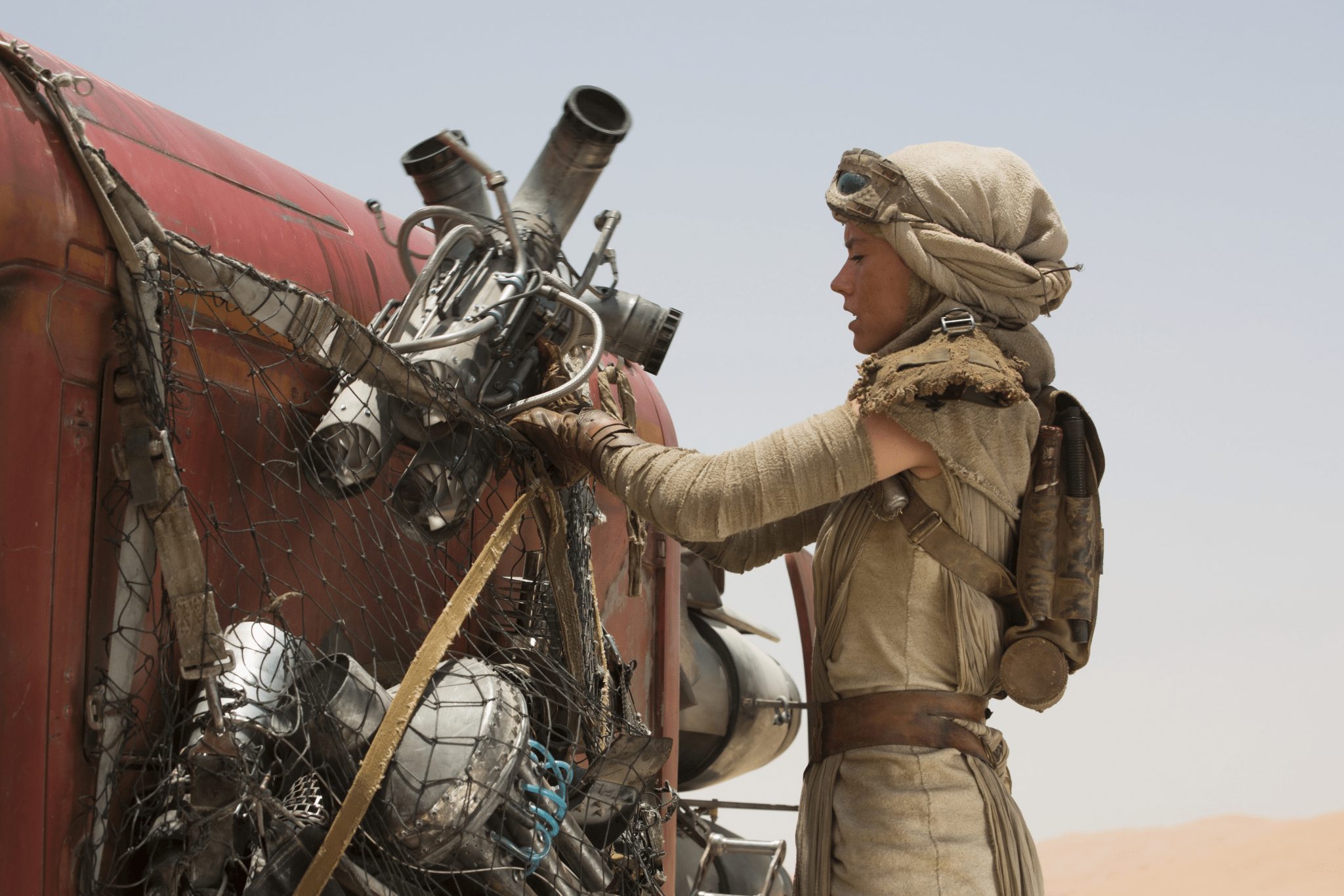
From the moment she’s introduced, it’s clear that Rey can take care of herself quite easily, and she’s naturally talented at a lot of relevant things that become natural obstacles as the movie goes on. It’s not boring because we enjoy watching a well-rounded character solve problems that reference their backstory, which TFA pulls off pretty early on. For example, she figures out how to fly the Millennium Falcon rather quickly and even fixes things Han Solo can’t, not just because the plot demands it, but because she’s spent her life scavenging old ships on Jakku and presumably knows how they work.

The same applies to a lot of skills Rey picks up over the movie. She becomes adept at using complicated Force moves without any training, and that includes the mind trick, resisting Kylo’s influence, and summoning the lightsaber out of the snow. In fact, there’s little reason to believe she’s actually observed anyone doing the things she learns how to do on her own. She’s just good at it because…she’s good at it.

And that’s not a bad thing. Not all by itself.

We can reason why she’s good at fighting, certainly, and how she manages to just barely defeat an injured Kylo Ren (even though she was losing for most of the fight). And like other movies with equally tough characters like Furiosa from Mad Max, the movie doesn’t spend time trying to explain why Rey is capable. You accept it because the main character of a movie should be unrealistically talented. It would be a bore, otherwise.

Why Rey is Rey.

rey

It’s probably safe to say that Rey is the way she is because Lawrence Kasdan wanted her to differ greatly from Luke Skywalker, a noticeably more whiny and doe-eyed character by comparison. In the original trilogy, Luke struggled a lot on his path to becoming a Jedi. In the first film, he only has one meaningful encounter with the Force, and it’s the climax of the movie. He famously turns off the targeting computer and finally trusts in the Force to destroy the Death Star. It’s a great moment because it’s the end result of a character journey that started with a simple fascination in something mysterious.

Kasdan went another route with Rey in order to shake things up, but I’m not sure if it’s quite as well thought out, as much as I appreciate the intent. Rey is an awesome role model for kids because she’s strong, bold, and unrestrained by outdated gender stereotypes (which the movie goes out of its way to address, perhaps for the sake of the audience).

She makes for a good audience surrogate, same as Luke, because she’s spent so much of her life away from the current events of the Star Wars universe, though the movie doesn’t treat her as a fish-out-of-water type who spends most of the movie discovering new things and asking questions.

Unfortunately, though, Rey is mostly a character of don’tsAs if the writers crafted her in a reactionary way, not a thoughtful one, obsessed with ensuring she wasn’t just another Luke, just another cliche, or just another helpless “chosen one” who relies on others until the very last moment. This isn’t a criticism, necessarily, but it can explain why some people walk away from her character feeling somewhat cold, even though they like the idea of Rey and what she truly represents for the future of Star Wars (someone different and full of potential).

But there’s another major problem.

Rey is too incomplete, and she shouldn’t be.
rey

It’s hard for me to admit this, but there’s not much substance to Rey’s journey as a scavenger turned would-be Padawan. Her character change amounts to the secrets of her past that prevent her from wanting to fully commit to adventure with newfound family. This would make for a great story if these secrets were at least somewhat teased to let us understand why Rey was abandoned, or why she’s so eager to reconnect with the people of her past, rather than feel the appropriate resentment for them.

Instead of these types of revelations, TFA relies on references from previous movies and hints of what’s to come in order to fill in the blanks, and Rey’s story gets somewhat lost in the shuffle of supporting characters and cameos, which is dangerous for your lead character. At no point do we understand why she has affection for her family because she never really talks about them, and the movie doesn’t either. It’s a hollow motivation, as a result, especially since Rey is supposed to be our eyes and ears throughout the movie, at least when Finn isn’t.

And all of this is hurt by the fact that we already have to make guesses for why Rey is a good person, too, because her circumstances suggest she shouldn’t be quite so righteous. The obvious answer seems to be that she does remember life before being dropped on Jakku, which is a life that might have been full of love and warmth that shaped her. We need that context to understand the character now, but it was set aside for franchise purposes, and we instead had to focus on the growing excellence of Rey in the present.

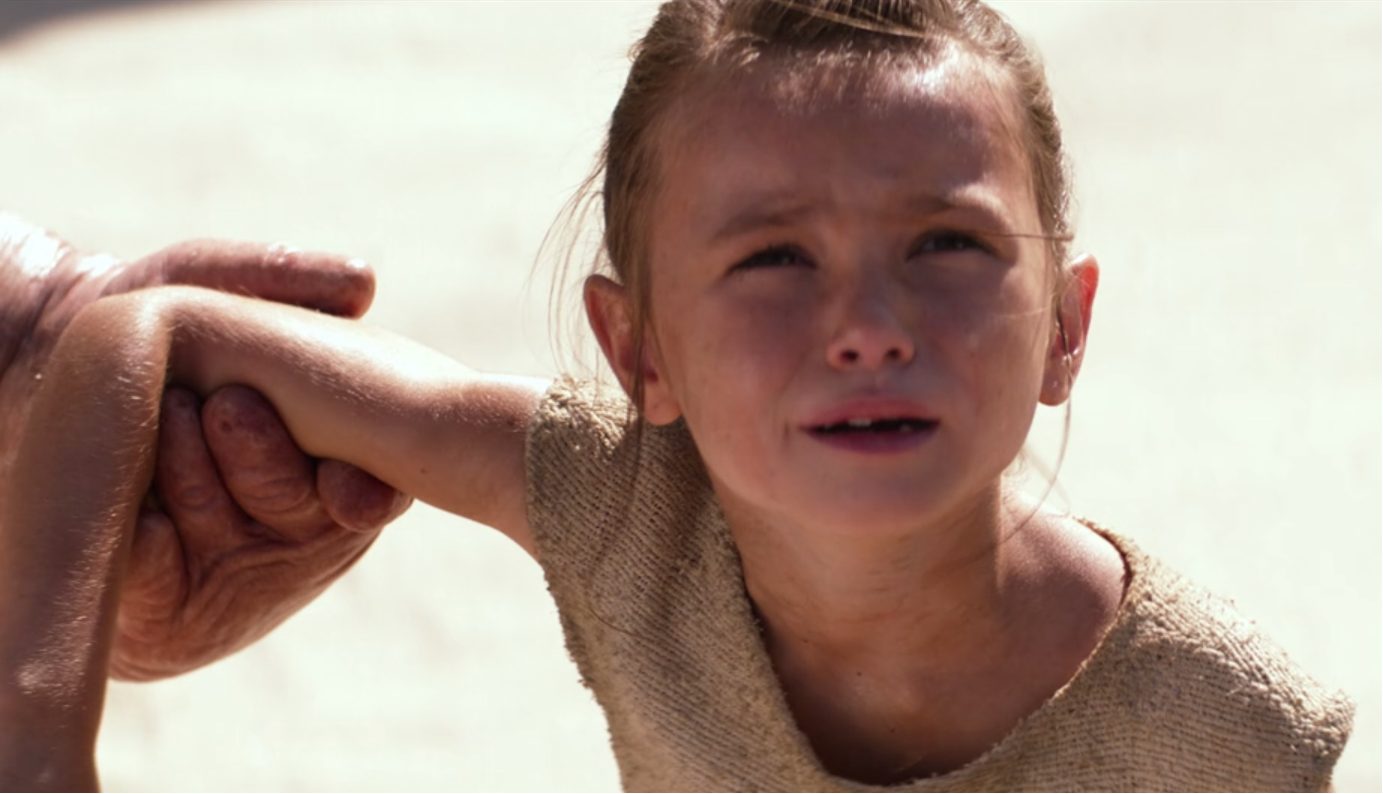
Again, it’s just fine for a lead character of any movie to be unrealistically exceptional. Harry Potter is a good example of this, but mostly because that story centers around Potter’s unwillingness to be noted as extraordinary, due to the pain of that fame being associated with the loss of his parents. Rey puts on a tough front, in comparison, and we never get that moment of vulnerability aside from flashbacks that briefly display a snapshot of how she was abandoned, with nothing close to an explanation or exploration of these ideas.

Back to Harry Potter, it was good for those books to not tell us everything all at once, but at least in that story, we understood the basics: Harry Potter is the boy who lived, famous for ending Voldemort’s rise to power. There’s nothing comparable to that in TFA, aside from the overt: the Force has awakened through Rey for unknown reasons.

Come on, not even short stories are that thin.

With Rey, we only know that she was abandoned as a child and is somehow a “Force” of nature. Characters briefly suggest that they know who she is or question who she is, but nothing is made of her place in the universe, which I think is a misguided plan. The filmmakers want us to endlessly speculate and come up with theories, but the end result is that none of these theories feel right. Because we have very little information to go on.

Rey will probably be a “great” character later. Maybe.

rey

This is probably enough for some fans, but not for me. I like Rey because of Daisy Ridley’s performance, her iconic look, and how different she seems. But I can’t say she’s a well-written character because there’s just too much lacking for the sake of teasing future movies. If it takes a sequel to change my mind on this, then that’s a tragedy of storytelling.

We didn’t need three movies to relate with Luke Skywalker or understand his motivations. Yes, he evolved over the trilogy, but in one movie, we were able to wrap our heads around his values and the stakes of this universe. There was already an ultimate antagonist tied to his journey, as well—a seemingly insurmountable danger that he needed to face one day. TFA holds back a lot of these details, like what the First Order really is and the relationship between Rey, the Resistance, the Republic, and so on.

The sad thing is that it only takes a basic shuffling of information to get Rey’s arc on the right track. Unlike Luke, Rey appears to have had a more isolated and less loving childhood, which is why she doesn’t trust easily in the first act, at least for a time. This entire character trait is eventually dropped as the movie brings her together with Finn, Han Solo, and Chewie, whom she forms quick bonds with (more on that, later).

Going even further, it’s strange that Kylo trying to probe her mind doesn’t seem to evoke true bitterness from her, even though it’s a clear violation of her independent personality. The movie instead sets up dramatic weight by killing off Han Solo right in front of her, which is undercut by her initial reaction to run away again (a smart move, nonetheless).

Rey is flawed, but the movie forgets that.

rey

I’m convinced that a movie can be great when the main character starts off capable and only gets better. But they need relevant character flaws to make the journey interesting and believable. Rey’s flaws are purely superficial and reactionary, saved only by a fluid performance from Ridley. She shows genuine fear during dangerous situations, and there’s clear self-doubt on her face as she gets to know the galaxy and eventually runs away from her destiny (the Force).

In short, she’s definitely reckless, and the odd thing is that movie rewards this flaw more often than it brings upon real consequences (like when she tries to help Han and accidentally frees the Rathtars, which ends up working better than her initial plan). When Rey acts before thinking, it almost always works out for her, save for when Kylo initially knocks her out in the ending forest scene, before she acts recklessly again and starts to fight him. And she uses this flaw to ultimately beat him, going after him without any meditation or introspection, just her own willingness to exude the Force.

The problem is that flaws like these only work when they run counter to a character’s key strengths. Otherwise, it feels like the character is unrealistically protected by the writers, when they should instead come off as vulnerable with room to grow. In the case of Rey’s recklessness, they’re one in the same because she benefits a lot from acting without thinking throughout the movie, so the climax doesn’t present any sort of personal challenge for her to grapple with. Fortunately, this isn’t the only major flaw we see with Rey. The other more prominent one is her loneliness.

Rey grew up alone and had to fight for everything she has, living day-to-day in a merciless existence. We like her because she’s still very human after all this, showing she has an innate righteousness, down to when she decides to help BB-8, rather than sell him off for food. But this pivotal moment (Rey choosing to help people) isn’t rounded out well by her flaw of feeling lonely and wanting to reconnect with her true family. It’s really only the beginning of an interesting character arc that the movie forgets about, or at the very least decides to put off until the sequel.

Specifically, she contradicts her flaw of loneliness constantly throughout the movie, because she’s quick to help others in lieu of remaining on Jakku to wait for her family. There’s a conflict, certainly, between the attachment she has for her new friends and the unseen family she sometimes references. There’s no “turning off the targeting computer” moment for Rey because she never really makes this choice in earnest. She’s captured and eventually tries to run away again, only to get hunted by Kylo before ultimately defeating him. There’s no personal challenge she has to overcome, aside from embracing the Force, which she had already done well before the battle with Kylo.

The main point, though, is that despite the fact that Rey has interesting, even intriguing character flaws, the movie fails to serve up a story that actually puts them to the test against the things she’s good at. There’s a kernel of a rounded out character here, where her independence should clash with her decision to rely on others, including the Force, but we see too much of the opposite occurring as well.

The fact is, Rey’s character doesn’t make much sense.

rey

It’s these exact contradictions that makes Rey seem less compelling than she should. Ditching the base instead of getting revenge for Han’s death lines up nicely with the Rey we met in the first act, who looks out for herself first and foremost. But the entire middle of the movie sets her up as someone who wants to help and make sacrifices, especially against her own interests, until an encounter with the lightsaber convinces her to run off yet again, because all of a sudden she wants no part of what’s happening…even though right before that, she pleads with Finn to help the Resistance, rather than flee.

If the movie was following an intelligent trajectory, then this would mean Rey’s final test would be to stand up to Kylo instead of running way, which the movie almost does, but actually too late. She and Finn flee into the forest, until Kylo finds them. Then Rey stands up to him, calling him a murderer for killing his own father. She tries to fight with a blaster, but Kylo stops her easily. Then she stands up to him again to save Finn, only this time using the Force.

This is the problem. The movie wants Rey to have the same “turn off the trajectory computer” moment that Luke Skywalker has in A New Hope, even though this character development doesn’t fit in with the rest of the movie. The only moment she hesitates to use the Force is when she touches Luke’s lightsaber, but it’s not established why she’d be averse to using the Force at all (only speculation). Then it “awakens” in her, and she uses it with full confidence and without hesitation. So her grabbing the lightsaber in the forest falls completely flat as a dramatic moment (just a “cool” one), and it’s a result of intertextual plotting instead of meaningful character writing.

Her victory over Kylo should have been a battle of willpower, because that is how their characters were set up over the course of the film, with Kylo having the training, but none of the mental discipline, while Rey has the exact opposite. She should have won by outsmarting him, because that would have been surprising and developed from previous learning. There’s even an entire scene that shows just how much more competent she is than him mentally, but the movie tries to posit that she wins simply because of a stronger connection the Force, which is an unnecessary and yes, boring, path to victory.

And all of this can be so easily fixed that it’s painful to point any of it out. For example, when Rey performs the mind trick on the stormtrooper, it would be far more dramatic and compelling if she sensed it might be wrong for her to do this, as someone who detests being controlled and manipulated might hate the idea of using the Force. That would certainly set up why she would hesitate to use it as a weapon at all, until finally accepting who she is in order to save Finn and eventually seek out Luke.

Instead, Rey jumps at the chance to use the Force to get inside someone’s head so she can escape, and it makes for weak character development and a missed opportunity based on what’s already present in the script. In fact, it’s really just confusing because there’s no mention of this ability throughout the movie to create context for how Rey knows what the mind trick even is. The movie simply has her fail two times and then get it exactly right (a running theme in the movie), though to the film’s credit, they masked this well by subverting the scene into something humorous.

Wrapping Up

rey

I don’t hate this movie, and I certainly don’t hate any these characters (some of them being far worse than Rey for similar reasons). But Rey is too cool a character concept for such a lopsided script.

Abrams has always been great at concepting characters that people like and want to get behind, but he’s often struggled at setting up believable paths for them to go on (see Lost). I have to believe that the fascination we have for Rey—especially concerning those final moments between her and Luke—have more to do with empty cliffhanger teasing and less to do with a natural evolution of a truly great character.

Is she a good character? I certainly think there’s room to suggest that based on the various positives noted above. And it’s off-base to call her a bad character simply for not being close to perfect. But the incomplete nature of her arc leads me to believe she’s inconsistent and incomplete at the moment, which is a travesty. I believe she should be more than great. She should and hopefully will be revolutionary.


Thanks for reading this. Seriously. You can subscribe to my posts by clicking “Follow” in the right sidebar. 

Or just say hello on Twitter: @JonNegroni