Pixar’s ‘Luca’ – Brand New Story Details, Theories, and More

I’ll be honest. Until now, I’ve been pretty uninterested in Luca, the next Pixar film. It’s due to release this June, but we still don’t know much about Enrico Casarosa’s first feature film. That changed dramatically this week with the release of an exclusive preview in Empire magazine. It includes a new screenshot along with some exciting new details surrounding the story, characters, and inspiration for the setting.

I discussed all these new developments and more during the latest live stream of Jon In Theory, which you can view above. Enjoy the stream, and be sure to subscribe and ring the bell so you can watch these videos live. Would love for you to say hello via the live chat!

Pixar Theory: Do ‘Soul’ and ‘Coco’ Have the Same Afterlife?

At first glance, Soul and Coco seem to have two wildly different interpretations of how the afterlife works in Pixar movies. So on the latest episode of Jon In Theory, I examine how these movies might share way more ideas and world building than you might expect.

Special thanks to all the new subscribers we’ve gotten over the last week. And also user NPH&g for inspiring the topic for today’s show. If you’d like to join in on the fun, simply hit the notification bell for this channel. That way, you’ll know immediately when I’m going live. Hope to see you in the live chat for tomorrow’s stream.

‘Soul’ Theory: Does 22 Become Riley From ‘Inside Out’? (No)

WARNING: Spoilers for Pixar’s Soul

Yesterday, I did a longer stream covering some of the critical backlash to Soul, which you can check out here. And toward the end, someone in the live chat asked me if I think 22 (voiced by Tina Fey in Soul) might’ve become Riley from Inside Out after being born. So today I decided to devote a full live stream to covering this theory, which apparently debuted on Reddit and/or Twitter. I cover some of the arguments being made for the theory, and then dive into the reasons I think this one just doesn’t work at all. Plus, some positive speculation on who 22 could reasonably be tied to down the road.

Toward the end of the stream, I lightly touch on some early thoughts I have about how Soul fits into the overall theory. Plus, I go over the three “types” of fan theories that are out there. Hope you all enjoy this one.

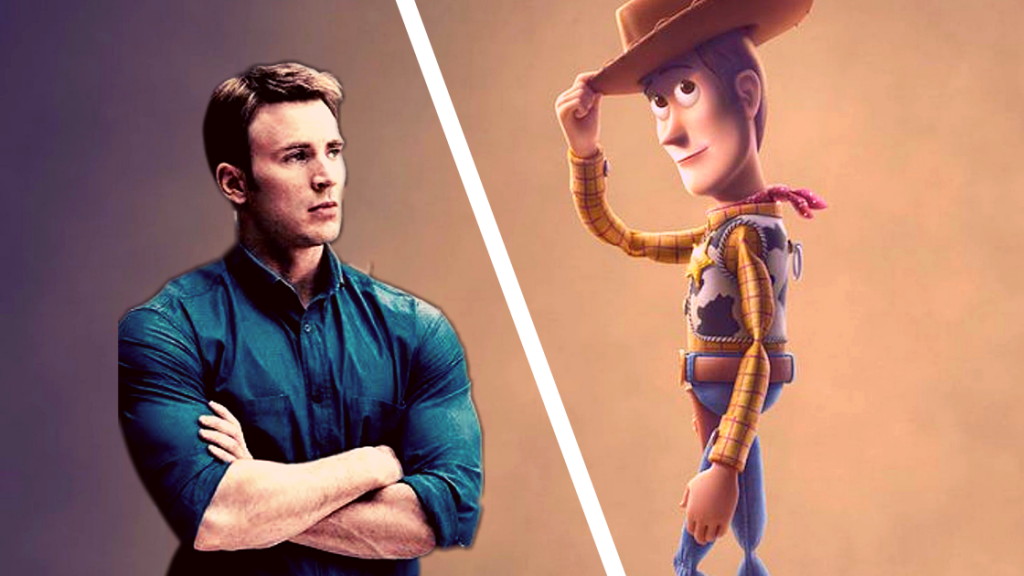
So, ‘Toy Story 4’ and ‘Avengers: Endgame’ Have the Same Ending

toy story avengers

This post contains spoilers for Toy Story 4 and Avengers: Endgame…obviously.

At the end of Avengers: Endgame, one of the series protagonists chooses to end a long career of service to his community of friends and allies — including a longtime rival known for having multitudes of gadgets — after fulfilling one last mission in order to finally renew a life with the woman he loves, whom he thought was lost to him forever, thus saying goodbye to his old life and bestowing an old-fashioned symbol of his heroism and leadership upon someone who isn’t a white male.

[Actual Footage Not Found]

OK. And?

At the end of Toy Story 4, one of the series protagonists chooses to end a long career of service to his community of friends and allies — including a longtime rival known for having multitudes of gadgets — after fulfilling one last mission in order to finally renew a life with the woman he loves, whom he thought was lost to him forever, thus saying goodbye to his old life and bestowing an old-fashioned symbol of his heroism and leadership upon someone who isn’t a white male.

It’s Been a Long, Long, Time.

Let’s break that down in case you don’t believe me.

At the end of [Avengers: Endgame/Toy Story 4], one of the series protagonists [Steve Rogers/Woody Pride] chooses to end a long career of service [being an Avenger/being Andy’s favorite toy] to his community of friends and allies — including a longtime rival known for having multitudes of gadgets — [Iron Man and the Avengers/Buzz and the other toys] after fulfilling one last mission [saving half of all existence/saving Forky]…

…in order to finally renew a life with the woman he loves [becoming lost in time in order to be with Peggy Carter/becoming a lost toy in order to be with Bo Peep], whom he thought was lost to him forever [his main duty to save the world forced them apart/his main duty to be there for Andy forced them apart]…

…thus saying goodbye to his old life [serving the needs of the world/serving the needs of a kid] and bestowing an old-fashioned symbol of his heroism and leadership [the Captain America Shield/the Sheriff Woody badge] upon someone who isn’t a white male [Sam Wilson the Falcon/Jessie the Yodeling Cowgirl].

Toy Story 4 and Avengers: Endgame released in theaters within two months of each other.


Snarcasm: This WALL-E Theory Makes So Much Sense That It Doesn’t

wall-e theory

Snarcasm is an editorial column I do when I read something so upsetting, I have to publish something snarky and sarcastic about it. Thanks for indulging, and definitely take everything you’re about to read incredibly seriously.

Hi. Fan theories are both the best and the worst. Kind of like people! But you can’t say the same about Pixar’s WALL-E, a triumph of animated cinema about the reckless, capitalist dangers of mankind passively wreaking havoc on the environ—

“Sinister WALL-E fan theory will change the way you watch the sweet Pixar film forever”

Oh, OK. I forgot we were watching this “sweet Pixar film” all wrong. How, exactly, was WALL-E some sort of overtly nice and go-lucky tale, considering all the dystopian apocalyptic subject matter?

Go on…Snarcasm: This WALL-E Theory Makes So Much Sense That It Doesn’t

‘Moana’ Is Basically ‘The Little Mermaid’ In Reverse

moana theory

Time for another Moana theory.

A while back, someone on Tumblr wrote a fan theory about Disney movies (shocker), and it’s actually worth consideration (other shocker). The idea is that Disney’s Moana is almost a perfect inverse of Disney’s The Little Mermaid, and let’s not forget that both films were directed by the same duo: Ron Clements and John Musker.

What do we mean by these two movies being the same, but also not at all? Well, it’s not a perfect theory in practice, but it does say something interesting about how creative teams can recycle old ideas in ways that still feel new. You can watch this entire Little Mermaid / Moana theory as a video on Screen Junkies News, or keep reading to get my personal take.

From the video:

Tumblr user Intergalactic-Ashkenazi noticed something strange about Moana. Basically, it’s the same story as The Little Mermaid, except every detail is flipped.

Now it’s certainly not every detail, but you can easily cherry pick a few compelling examples. And there are enough of them to argue that this Moana theory is at least somewhat intentional.

Moana and Ariel are both daughters of overbearing, powerful leaders.

I almost reacted, “Well, aren’t most Disney princess movies?” But that’s actually not the case when you think about it. Pocahontas comes close, but most other Disney “father characters” that are even around range in personalities from silly (Aladdin) to wise (The Lion King).

The video doesn’t directly mention this, but the immediate “reverse” for King Triton and Chief Tui is that one fears the land and the other fears the sea. Also, one is mortal and the other has a wicked trident.

But where Ariel is a sea-bound princess longing to venture onto land, Moana is a landlocked princess longing to venture on the sea.

Counterpoint: the directors copied their own homework but made enough changes to keep it from looking obvious.

Ariel goes to a “big scary ocean lady” who turns out to be evil.

Turns out? I don’t think anyone expected Ursula to be good, but I guess the point is that to Ariel, she seemed good, which only makes Ariel continue to look like an outright moron. The best inverse is probably how Moana turns out to be a way better protagonist.

While Moana goes to a “big scary land lady” who turns out to be good.

At first, I thought the idea was that Maui is the inverse of Ursula, but instead it’s saying that Te Kā fits the bill, which I think is correct. If you go further with this, you can say that Moana seeks out a man for help finding the female villain, while Ariel seeks out the female villain for help finding a man. Or something.

Both movies have a magical necklace with a spiral engraved on it. In The Little Mermaid it belongs to the villain, while in Moana it belongs to the hero.

This one’s slightly more of a stretch because the whole “reverse” thing seems selective at this point. On the one hand, the spirals on both objects actually seem to be the reverse of each other (different placement and one’s a shell while the other resembles a wave). And one’s a macguffin while the other is more of a “power.” On the other hand…was the “heart” in Moana ever a necklace? And is green the inverse of…yellow?

I’m officially overthinking this.

The Little Mermaid has a “small good crab,” where Moana has a “big evil crab.”

The video of course shows Sebastian from The Little Mermaid side-by-side with Tamatoa, the crab who sings “Shiny.” This matches up perfectly. Moana theory saved.

In [The Little Mermaid] a human sings about eating the crab. While in [Moana] the crab sings about eating a human.

You could also argue that Clements and Musker are big fans of dramatic irony that spans across their movies. Both theories are probably correct, and some good evidence for this one in particular is the fact that Tamatoa actually makes a joke about how a crab described like Sebastian is more likable than him in a scene after the end credits.

Moana returns to her people and leads them to a new life on the sea. Where Ariel leaves her ocean family for a new life on land.

Also, Moana has no love interest. In fact, you can read this easily as a shuffling of tropes just as easily as you would some big conspiracy. Moana’s mentor, Maui, is a god, while Ariel’s mentor, Sebastian, is the crab. Ariel’s father is the god, the Kakamora are…things…and so on.

But perhaps the most important detail…

What? What is it? What is this clincher?!

The Little Mermaid sings on a rock, while in Moana the Rock sings to her.

I’ll admit, I laughed out loud at this, but only after having a miniature personal crisis of faith. And that’s the Little Mermaid is basically the reverse of Moana theory. Chime in with your own examples of how this theory holds up (or doesn’t) in the suggestion box below.


Thanks for reading this. To get updates on my theories, books, and giveaways, join my Mailing List.

Or just say hey on Twitter: @JonNegroni


Guardians of the Galaxy Vol. 2 Theory: Why EGO Killed [Spoilers]

This theory about Guardians of the Galaxy Vol. 2 contains spoilers (obviously). But it will still be here when you’re done watching the movie, hopefully. This theory is available as a video (above) or as a transcription (below). 

Guardians of the Galaxy Vol. 2 was, in my opinion, a fantastic follow-up to one of Marvel’s best movies and much better than the usual MCU sequel. But there is one aspect of the movie that has been driving me and plenty of other fans crazy with confusion, and that has to do with Ego the Living Planet, portrayed in his human form by Kurt Russell.

As you may recall, we find out in the movie that Ego is Peter Quill’s biological father, and the two share genetics that allow them to channel a powerful godlike energy. At first, Peter is thrilled about the truth of his parentage, being promised to help Ego carve out a new world of their making. But he’s instantly broken from Ego’s spell when told the full, sinister story.

Go on…Guardians of the Galaxy Vol. 2 Theory: Why EGO Killed [Spoilers]