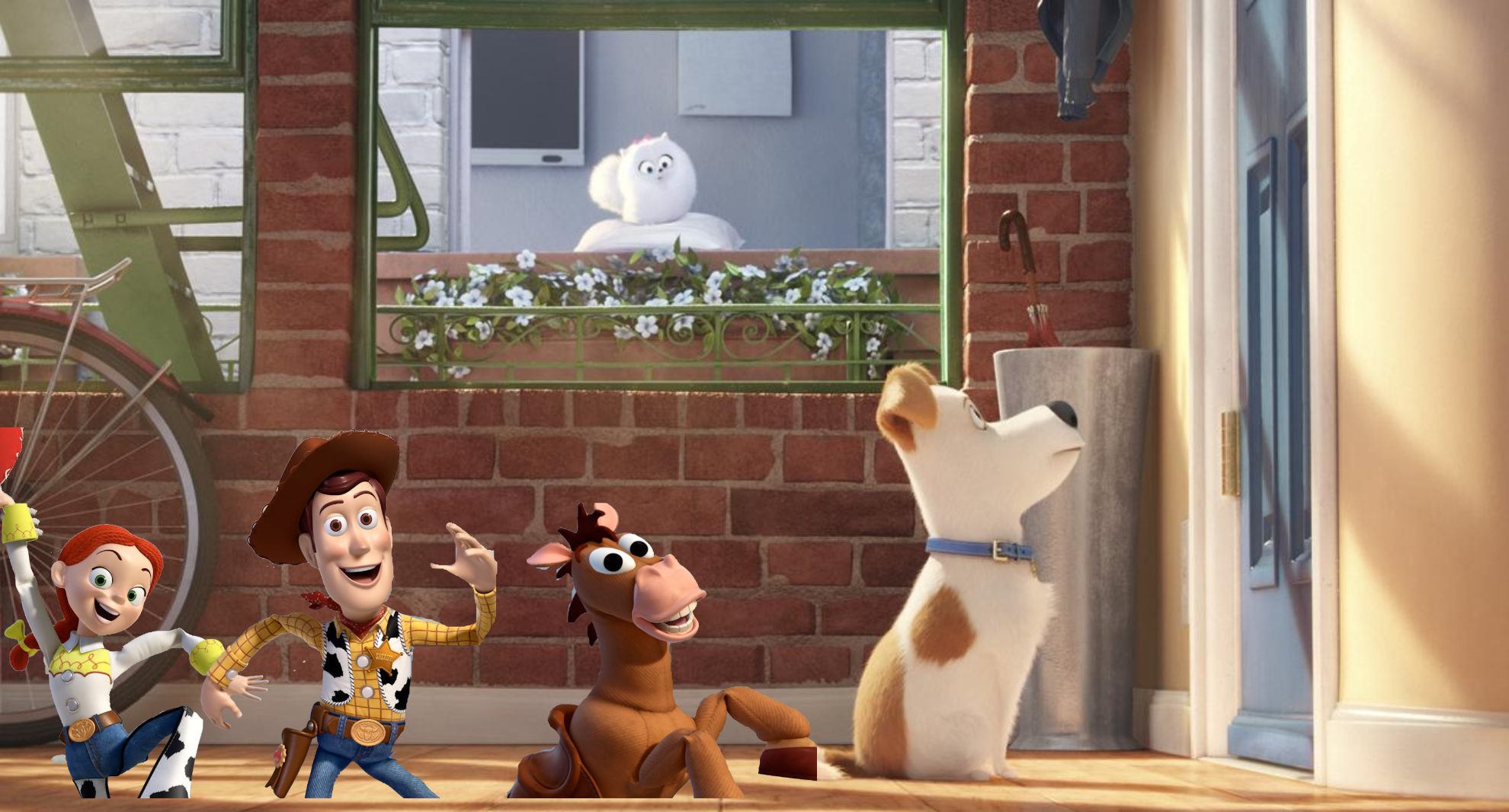
You’ve probably seen a teaser or two for Illumination Entertainment’s upcoming franchise starter, The Secret Life of Pets. The movie is essentially about what dogs, cats, and other pets are up to when their owners aren’t around.
Sound familiar?
Look, I didn’t dare make this comparison last summer when the first teaser released. That version of the movie was intriguing, as it featured a variety of animals getting caught up in humorous situations in different environments somewhat connected by an apartment building.
Then the trailer dropped, revealing the actual plot of Pets. And to be honest, it doesn’t look nearly as interesting thanks to its incessant borrowing from Pixar’s first feature film, Toy Story.
What do pets do when their owners aren’t around? This is a generic premise that movies have been using for decades, not just Toy Story. That said, a handful of movies have already tackled the pets aspect of that story (the live-action Cats vs. Dogs immediately comes to mind), but I’m not opposed to a different studio trying something new with the concept. After all, Toy Story can easily be compared to The Brave Little Toaster, and who hasn’t compared The Walking Dead to Toy Story?
But then…well, here’s the trailer:
Like Toy Story, we have a pre-established society where pets call the shots. On top of that, we have a main character named Max who is used to getting all of the attention from his owner, exactly like Woody and Andy’s relationship in Toy Story.
The inciting incident appears to be the adoption of a new pet who steals the attention away from the favorite, who is Max in this case. Then the two of them get “lost” and have to find their way home, resolving their differences along the way. I won’t be surprised if getting neutered will be spun as the new “YOU ARE A TOY!” line.
The plot also borrows a key structure from Toy Story 2, in that the remaining pets go on a mission to the city in order to find their lost friend. Gidget’s speech sounds remarkably reminiscent of Buzz’s rallying of the toys to find Woody.
Sure, there are some inventive gags in this trailer, including the poodle’s System of a Down obsession. But then you have the tired jokes where dogs get easily distracted by animals, circa Dug in Up.
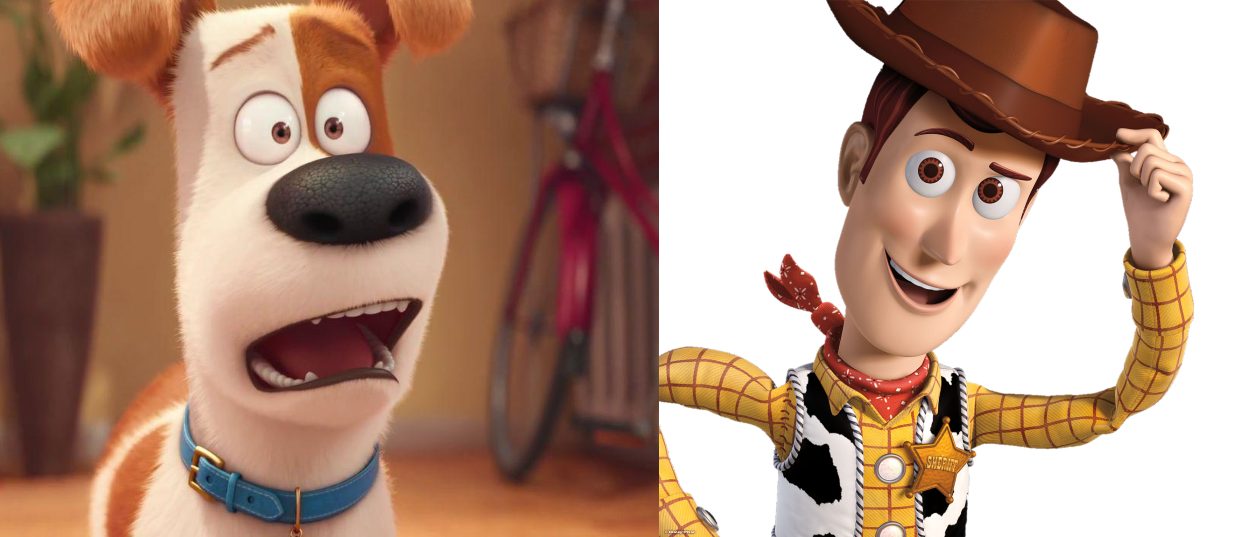
And I haven’t even mentioned the visual similarities. Take Maxfor example. His colors are nearly identical to Woody, from the brown and white to the black, red, and gold.
The design of the “new” dog and Buzz Lightyear are different, but the scope is still there. This new dog is a lot bigger than Max, which is a visual representation of how Max feels around him. The same emotion was captured by Buzz’s space-cool features.
And these aren’t the only characters who are weirdly similar. Gidget, a side character who seems to be the close friend/love interest, shares a similar voice and style as Bo Peep.
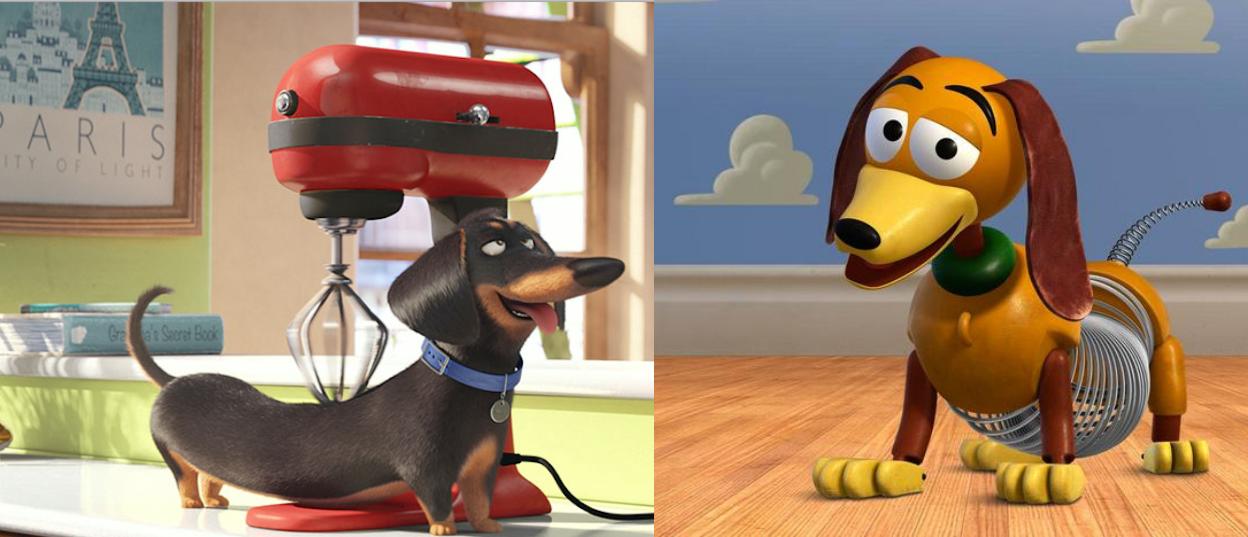
In fact, all of the side characters have a reasonable counterpart when it comes to tone and basic visuals.
And that’s still not the end of it. Not only does the plot share a lot of basic similarities, even some of the scenes are ripped straight out of Toy Story:
There’s the bunny, Snowball, who is voiced by Kevin Hart. And from what I can tell, he feels like a fresh(er) character inspired from the Penguins of Madagascar. But his character arc looks a lot like Sid’s in Toy Story. He frees Max and Duke from a cage, then tells them that they belong to him. He’s also maniacal and appears to be sadistic.
Actually, the bunny could more easily be compared to Lotso from Toy Story 3. Both characters are cute on the outside, yet are slowly revealed to be monstrous villains. They both bail out the main characters when they’re in trouble (Lotso provides a new way of life for the toys, and Snowball rescues Max and Duke from Animal Control), only to thrust the heroes into an even worse scenario.
Of course, thoughtful borrowing can lead to great movies. That said, when your work is this derivative in so many ways, it calls the quality of the entire film into question.
I have no doubt that Pets will have some clever jokes and memorable characters. Despite my public disdain for the Despicable Me franchise, I have high hopes for directors Chris Renaud and Yarrow Cheney, who are returning to cement Illumination Entertainment as one of the top animation companies (Eh, who am I kidding? Minions is a billion dollar franchise. They’re already at that point).
But while the movie will cater to the same people who still think the Minions are adorable, I am losing hope in Illumination’s ability to deliver a remarkable story, or anything that will last the test of time for a reason beyond genius marketing ploys.
I’m Jon and thanks for reading this. You can subscribe to my posts by clicking “Follow” in the right sidebar. Or just say hey on Twitter! @JonNegroni
Since the release of my new book, The Pixar Theory, I honestly haven’t given much thought to expanding these Pixar-related connections because…vacation.
So, I’m back and here’s something potentially interesting for you to seek your teeth into. A few weeks ago, a regular visitor to the site (cheers, @ThomastheBrainEngine), brought me some interesting evidence of toys being “self-aware” in Monsters Inc, a la Toy Story.
In Toy Story, we learn that toys are sentient. They move around on their own when we’re not watching, and their entire lives revolve around the children who love them.
One of the main tenets of my theory, which tries to unite the Pixar movies, is that toys are alive because in the Pixar universe, human imagination is like a battery, and it gives life to ordinary things (maybe even cars).
I argue that this is the same concept as monsters powering their society with the energy of children in Monsters Inc. But despite a few cameos (like Jessie and the Luxo ball), there’s nothing tangible linking Toy Story and Monsters Inc, especially if you consider Jessie’s appearance in Monsters Inc., to only be an easter egg, not a hint to something more.
But ThomastheBrainEngine presented a fascinating thought that I had not yet considered: what if we do see evidence that the world of Monsters Inc. has sentient toys?
So I looked into this, and the evidence is solid, believe it or not. And it all hinges on the movie’s first scene.
Mr. Bile, can you tell me what you did wrong?
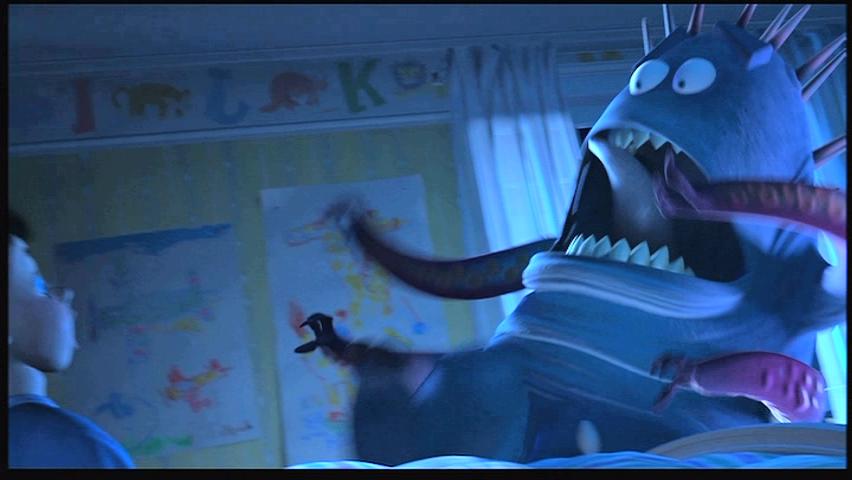
This opening sequence introduces us to the basic mechanics of how monsters scare children. The monster, Mr. Bile (Phlegm), sneaks into a child’s room and attempts to scare him, but the kid wakes up and sees him. We see that Mr. Bile is actually more scared of the child than vice versa, and he trips and falls for comedic effect.
This, of course, is a simulation. A demonstration of how not to scare a child, so that the movie can cut to Sulley, our main character, who is the best scarer at Monsters Incorporated. The simulation we just watched was at the factory, and it’s our set up for everything that happens next in the movie (notably, that the worst thing you can do is let in a child by leaving the door open).
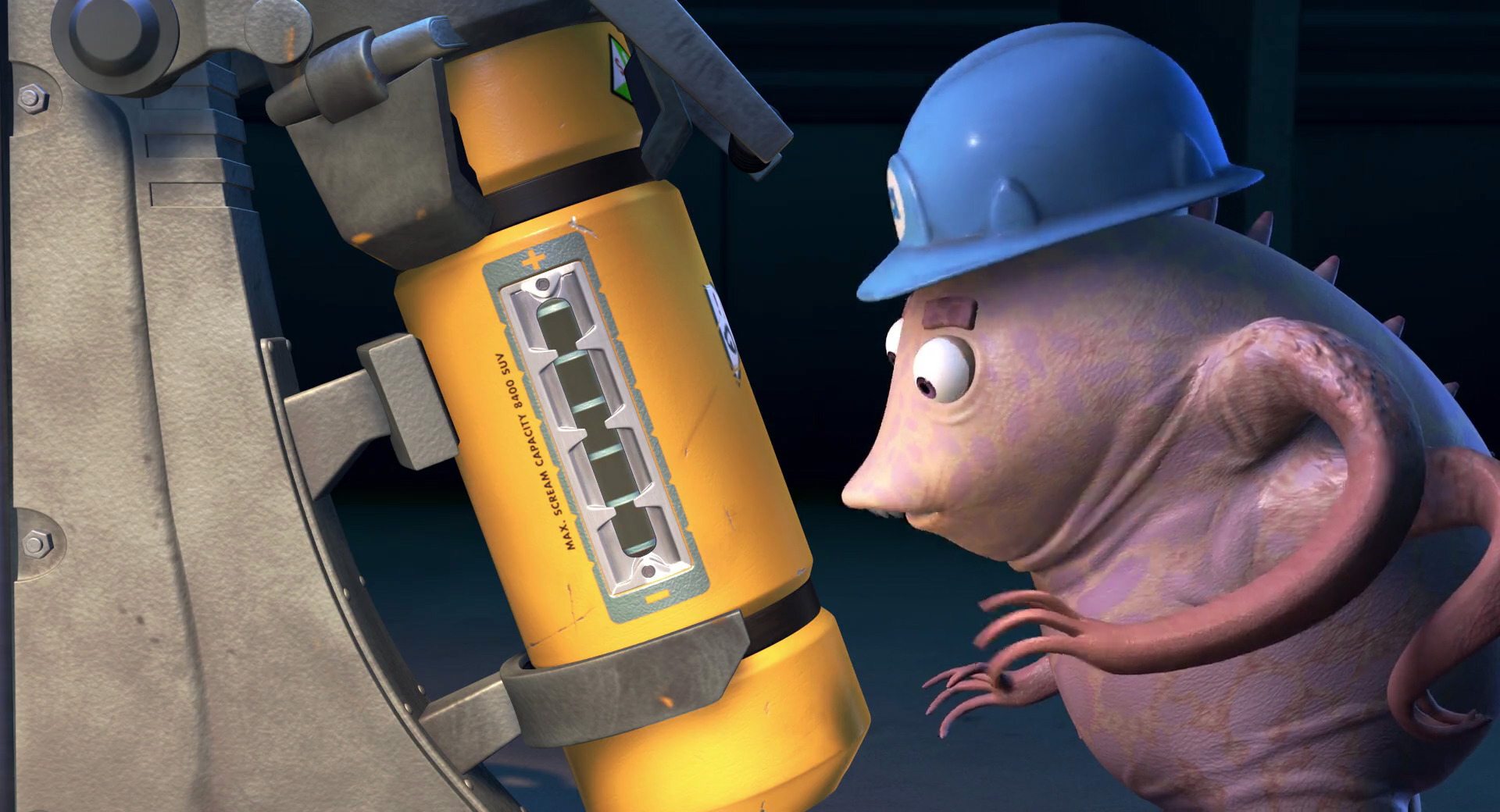
Something that has bugged a lot of people, including myself, is a major goof (or series of goofs) that transpires during the simulation. When Mr. Bile walks in, we get a clear shot of the room’s layout and where everything is located. The soccer ball is under the bed, the toy train and its tracks are at the foot of the bed, and one of the books near the window hangs over the edge.
But as the scene changes, everything moves around. The soccer ball inexplicably moves to the side of the bed. It’s in a totally different location, and it eventually shows up again at the foot of the bed, where the train tracks have disappeared. Instead, there’s a bunch of jax in its place. Mr. Bile steps back on the soccer ball and falls on the jax (see above) like we’re watching a better version of Home Alone 3. We even see that the books on the toy box have moved a little bit, but they return to their original spot toward the end of the scene.
The soccer ball is now under the bed again.
It’s nitpicking, but I’ve always been annoyed by how overtly obvious these goofs are. I’ve sat through a dailies session at Pixar, where the director and a group of animators will scrutinize every single aspect of what’s on the screen. Even for a movie that was made in Pixar’s early days, it’s strange to think that they could make so many continuity errors in just a couple of minutes, and the movie’s first few minutes at that.
Granted, these goofs happen all the time, and some are caught too late in the game to be considered worth the effort of fixing them. But they’re usually separated and scarce, not gathered in a cluster.
So, what if this entire scene wasn’t a goof at all? What if we were meant to see them?They’re certainly hard to miss, after all.
The idea is that the toys moved on their own because the rules of Toy Story bleed into Monsters Inc. Part of any good simulation would be to make sure monsters are prepared for anything that could happen. If toys are able to come alive and possibly protect their sleeping owner from an invader, then it makes perfect sense for these simulations to include these variables.
Without those toys interfering, Mr. Bile probably would have been able to successfully leave the room and escape before the child could get up and go through that door. So part of the simulation could be to move the toys around, like they would in a real situation, in a way that conspires against the monster pulling off a scare. In this case, that meant moving the ball to where he would fall on a bunch of conveniently placed jacks that weren’t there in the first place.
It’s definitely possible, at least. The monsters controlling the simulation are creating atmospheric effects (the curtain moving like wind is blowing it, the child moving around in reaction to realtime events). If toys could move, too, then the monsters could simulate that experience.
Would toys really do this, though?
I don’t think it’s a stretch based on what we’ve seen in Toy Story. Woody breaks the rules and unites Sid’s toys against him just to get back to Andy. He goes to incredible lengths to make Andy happy, so I’m pretty sure he’d also go pretty far to protect Andy from a terrifying monster.
It might not happen every time with every kid who has toys, but it could happen enough to warrant a response from Monsters Inc. When you watch Monsters University, you see that the higher ups are teaching the monsters tons of useful tips and facts about this profession, ranging from how the doors work to how monsters can adapt to any given situation.
They have to prepare the monsters to be so stealthy, not even the toys know they’re there (which is possible, since we see that the toys do sleep when Woody has that nightmare in the first movie).
This also solves another major inconsistency that was brought on by Monsters University. If monsters have to go to college to get jobs as professional scarers, then why is Mr. Bile having such a hard time? And why is he doing this, anyway, if he has experience and a college education?
Well, if you watch Monsters University again, you probably won’t notice any of these instances of toys getting in the way. And that’s probably because introducing them as a variable is when you get into the expert mode of scaring. This would make scaring so hard for monsters that it wouldn’t be a critical point of the simulator until you actually got the job, explaining why Mr. Bile is sort of talented, but he ends up falling on his face, despite the rigorous standards of professional scaring established by Dean Hardscrabble in MU.
Weirdly, Phlegm was good enough to hide this with a sweater.
To sum up, I think this evidence is pretty strong, mostly because those goofs I pointed out just seem overwhelmingly obvious. It is possible that the monsters controlling the simulation could be moving the toys around from the control room just to make things harder for Mr. Bile, not because toys are expected to come alive. But that just seems sort of harsh.
Mr. Bile walked into that room and surveyed everything as he was trained. Mixing things up for no good reason in a scenario that wouldn’t possible happen just to make things harder undermines how the monsters are trained in Monsters University. It’s like testing high school students on a different subject with information you never taught them—OK, wait, that happens all the time.
Let me know if you’re convinced or unconvinced and we can hash it out in the comments. If you’re interested in the Pixar Theory (that is, how all the movies may be connected and why) enough to read an entire book about it with all of the clues and arguments I’ve collected over the past few years, don’t forget to check out my book, which is available now in print and as an e-book on Amazon, Barnes and Noble, etc.
I’m Jon and thanks for reading this. You can subscribe to my posts by clicking “Follow” in the right sidebar. Or just say hey on Twitter! @JonNegroni
Scrubs is one of my favorite shows of all time. During college, I watched every season on repeat until I saw every episode at least 100 times. And that was before the days of Netflix.
Even though my Scrubs bingeing is extremely economical now thanks to the advent of streaming, I still revisit those old DVDs on occasion and jump back into the lives of John “J.D.” Dorian and his lifetime friends at Sacred Heart Hospital. I even watch Season 9 when I’m in the right mood.
So you’d think that after all this time, I’d have some sort of mind-blowing fan theory or revelation naturally generated from my obsession, but it’s quite the opposite. The show manages to be pretty airtight on its themes and messages, mostly because we spend most of our time inside J.D.’s head. There’s little left to the imagination.
But there do happen to be longstanding questions that Scrubs has never truly resolved, except they have, actually. There’s the matter of the Janitor, who you may recognize as Mike from ABC’s “The Middle.” He’s an enigma throughout the series, to the point where the writers initially intended for him to be a figment of J.D.’s imagination (they changed their mind by Season 2).
Yeah, he gets married and finds meaning in his life or something. But we never really find out his name. Throughout the series, he’s only referred to as “The Janitor,” and the mystery behind his name becomes a running gag all the way through the Season 8 finale. He finally reveals his name to J.D. as “Glen Matthews” in the finale.
Case closed, right?
WRONG.
Right after he reveals his name, Janitor is referred to as “Tommy” by an orderly. This implies that he was lying to J.D., which isn’t a stretch at all because that’s what the Janitor does. He consistently fabricates stories and facts about his life that are blatantly false and reveal his pathological lying.
So what is the Janitor’s name? Does he have one?
The answer is yes, and it’s depressingly simple, really. In “My Friend the Doctor” (S3E8), J.D. finds out that the Janitor played a character in the real-life movie, The Fugitive (you know, the Harrison Ford movie from the 90s).
This information alone lets us know that the Janitor’s real name must correspond with the actor who played his character in The Fugitive. So his name is Neil Flynn, the actual name of the actor who portrays him.
Case closed, right?
WRONG.
Look, I’m certainly not the first person to pick up on all this. Scrubs fans have been assuming the Janitor is Neil Flynn for over a decade. That’s why Bill Lawrence, the creator of Scrubs, took to Facebook and Twitter to decry those theories and say the following:
What does this mean? How is his name Glen, if his name is Neil in The Fugitive?
One argument is that he lied about his name to the casting director in the movie, so his real name ISN’T Neil Flynn after all. It really is Glen.
Case closed, right?
You serious?
Bill Lawrence want us to believe that the Janitor told J.D. the truth (for once). This is because the episode “My Finale” was meant to be the series finale, so it would make sense for the Janitor to close this chapter with one final moment of honesty.
There’s just one problem. The Janitor reveals one episode later that he never really thought J.D. was leaving. Scrubs was revamped into a semi-spinoff for Season 9 that focused mainly on a med school built for Sacred Heart, and J.D. only showed up for a few episodes.
In the first episode, Turk reveals to J.D. that the Janitor didn’t really think J.D. had left. Of course, Turk has to insist that J.D. is really gone, which causes the Janitor to hand him his mop and leave Sacred Heart…forever. No one there saw or heard from the Janitor again.
If the Janitor thought J.D. was really coming back, then why would he tell the doctor his name? Because of Season 9, I have to conclude that Lawrence lied to us, Janitor-style.
So is his name Neil Flynn? Let’s revisit 2009 for a second. Season 9 of Scrubs got started in December. And another show got started that fall. The pilot episode of The Middle premiered on ABC, starring…Neil Flynn.
What if the whole point of that first scene in Season 9 was to point us to the potential fact that The Middle stars the Janitor, who happens to be Neil Flynn. And that’s why he disappeared from the show altogether, instead of following J.D. to his new job. He revisited his acting career to portray a guy who has everything the Janitor wanted throughout the series: a family in the Midwest.
In the episode, “My Own Worst Enemy,” the Janitor reveals that his obsession with J.D. has prevented him from doing what he really wants to do: start a family. The day after J.D. leaves, the Janitor does too and finally pursues that dream. A year later, he’s on ABC starring as the loving father of a humble family. After all, the Janitor loves to lie. Becoming an actor is the perfect job for someone who likes to make up stories.
Don’t bother trying to tell me that’s not the case, Bill Lawrence.
And hey, if you don’t believe me and think this article is a waste of time, then don’t worry. Here’s a chart showing every girl name Dr. Cox called J.D. categorized by season:
Thanks for reading this. To get updates on my theories, books, and giveaways, join my mailing list.
The Pixar Theory, or “Grand Unifying Theory of Pixar movies” if you want to be more intense, is a fan theory I wrote in 2013 about how every single feature film made by Pixar Animation Studios is intentionally set in the same universe. Or unintentionally, if you believe in miracles.
Dan O’Brien
I was inspired by an episode of the Web Series, “After Hours,” on Cracked.com. In the episode written by Dan O’Brien, the After Hours crew discusses, at length, how a few of the Pixar movies may secretly be about the apocalypse. They address Toy Story, WALL-E, and Cars before giving up because they can’t find a way to connect the films any further.
So I took that as a challenge.
Over the following year, I developed my own theory on how all the movies connect, and the results have been surprisingly epic. People from all over the world have read the theory, and many of you have been having ongoing discussions in the comments that go way beyond anything I first imagined (trust me, I read all of them).
Now, two years later, it’s time to see where we’re at as we welcome a new Pixar movie to the world: Inside Out.
First, it’s important to point out that the theory itself has changed dramatically over the years. A lot of people have called out flaws and underdeveloped points of the theory that make it fall apart for them. I’ve read the feedback and spent the last two years writing a book that fully fleshes out my original theory. It addresses pretty much every major complaint and issue that “debunkers” have thrown at it. And it does this in about ten chapters.
Every chapter follows a specific movie (some are lumped in together, like the Cars franchise). I talk about the context of the movie as it relates to this theory, where it fits in the grand timeline, and how each movie contributes to the idea that these movies exist in the same narrative. And yes, I go way beyond the easter eggs.
But let’s get back to the main task at hand. Let’s talk about how Inside Out masterfully fits within the idea that all of these Pixar films are connected. What you’re about to read is set up like how I wrote the chapters for my book, so if you like what you read, then that may be a sign that the book is for you. Consider this your sample chapter, if you will.
Obviously, many spoilers are ahead, so read at your own risk. I highly recommend that you watch the movie at least once before reading this, especially since it’s pretty fantastic. You’ve been warned.
THE SET UP.
Inside Out is the story of a young girl struggling to grow up, seen through the eyes of her emotions as literal beings. Yes, Pixar made a movie where feelings have feelings.
The movie opens with the birth of Riley Andersen. The first thing you may notice is that she shares the same last name as Bonnie Anderson from Toy Story 3 and the subsequent shorts based on that movie. That may tempt you into believing that Riley and Bonnie are connected somehow, but that’s definitely not the case since their names aren’t spelled the same way.
For context, Pixar named Bonnie after two people: Bonnie Hunt (a frequent voice actor for the Pixar films) and Darla K. Anderson, the producer of Toy Story 3. Darla actually has easter eggs for her name dating all the way back to A Bug’s Life, where you can catch her first name on a box in “Bug City.”
Anyway, we learn early on that Riley grew up in Minnesota, but her family moves to San Francisco when she’s 11 years old. Now it’s true that Bonnie lives in Tri County, around the corner from Andy, and Tri-County does take place in the Bay Area of California. But that’s really just a coincidence. Riley’s family never mentions that they have relatives around, and they only moved to San Francisco for her dad’s job. For that reason, all signs point to this being a coincidence.
WHEN DOES THE MOVIE TAKE PLACE?
Moving on, we get to know Riley through a montage of her early life. When we get to the point where she’s 11, it appears to be modern day. Much of the technology we see throughout the movie — like a Skype surrogate that closely resembles the one used by Trixie in Toy Story 3 and the presence of smartphones — point to this being a film set in 2015.
That means Riley was born in either 2003 or 2004, depending on her exact birthday. Interestingly, that would mean the movie opens during the same year as Finding Nemo.
We also know that this has to be some time after 2007, which is when Ratatouille takes place. In fact, Inside Out actually confirms that Ratatouille takes place in 2007 instead of 2004, which is a conundrum I ran into while writing the book. It’s all based on the blurry date seen on Gusteau’s will and…eh, don’t worry, it’s not important.
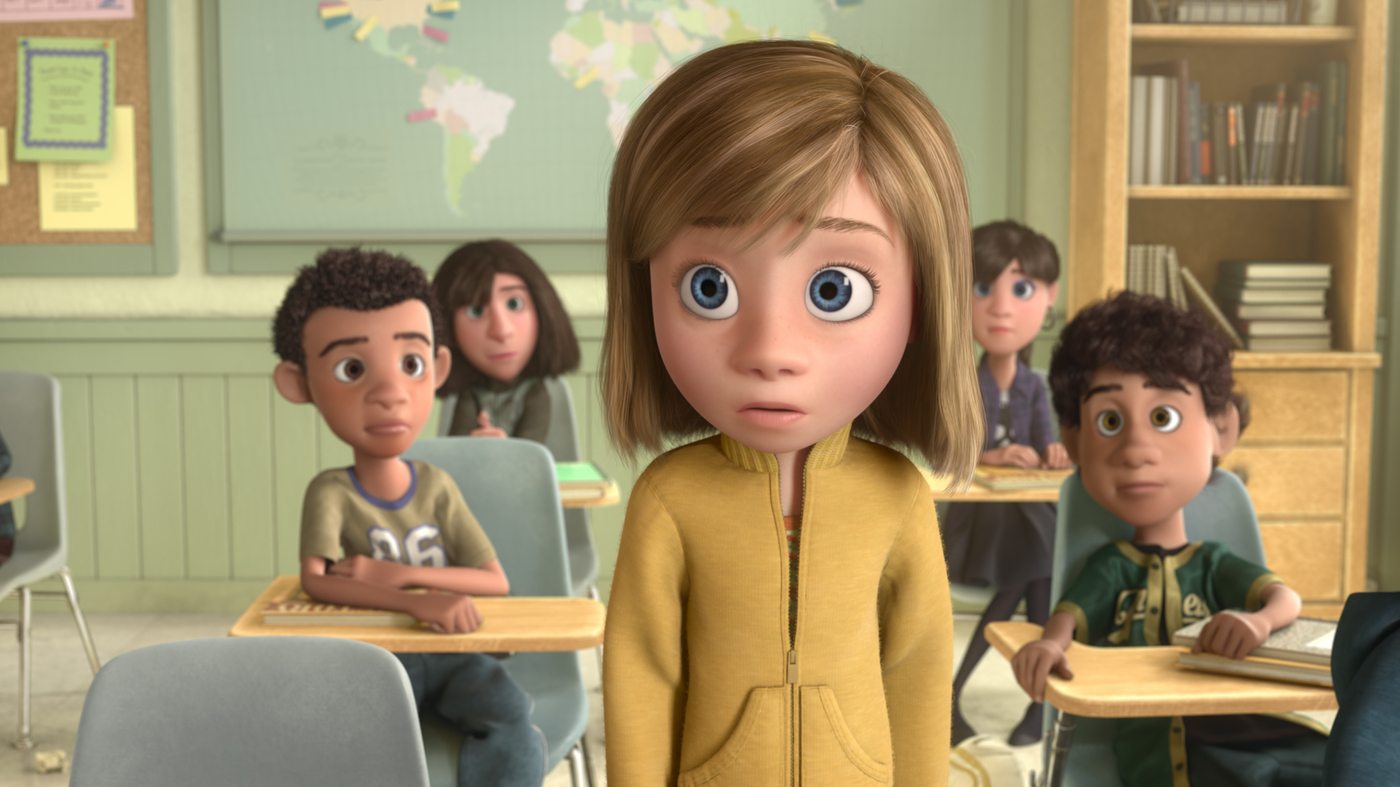
Anyway, the reason we know that this is some time after Ratatouille is because you can see Colette Tatou on the cover of a magazine in a blink-and-you’ll-miss-it easter egg. Judging by the prestige of this magazine, Colette has done well for herself during her years learning from Remy and working at La Ratatouille, the bistro she started with him and Linguini.
After all, why would she be on the cover a magazine before her adventures in Ratatouille? Before she met Linguini, she was just a hardworking chef trying to build a career at a failing restaurant. I find it much more plausible that she’s created a name for herself under the tutelage of the best chef in France.
(DONALD GLOVER VOICE) MY EMOTIONS!
So as we get to know Riley in the film’s early montage, we meet her emotions. The film immediately takes us inside her head, where we watch Joy, Sadness, Disgust, Fear, and Anger team up to influence Riley’s actions. They work in “Headquarters” (get it?) and use a mysterious console to control Riley’s decisions.
When an emotion manages to elicit a meaningful experience in real life, a memory is generated and sent to Riley’s long term memory. If it’s a specifically powerful experience, then it will create a core memory that will stay in Headquarters.
It’s somewhat confusing, but Pixar does a great job of explaining this better than I can. They use subtle techniques and cleverness to make the inside of Riley’s head immediately unique, while also incredibly believable.
For example, the memories are shaped like “marbles” because without them, Riley would lose her marbles.
This is a fun movie.
The plot of Inside Out focuses on Riley being uprooted to a new home in San Fransisco and how this negatively affects her emotions. She misses her friends, never sees her dad anymore because of his new job, and feels pressured to just “be happy” all the time. This causes her to repress her sadness, which eventually causes even more problems.
CONNECTIONS AND MISFIRES…
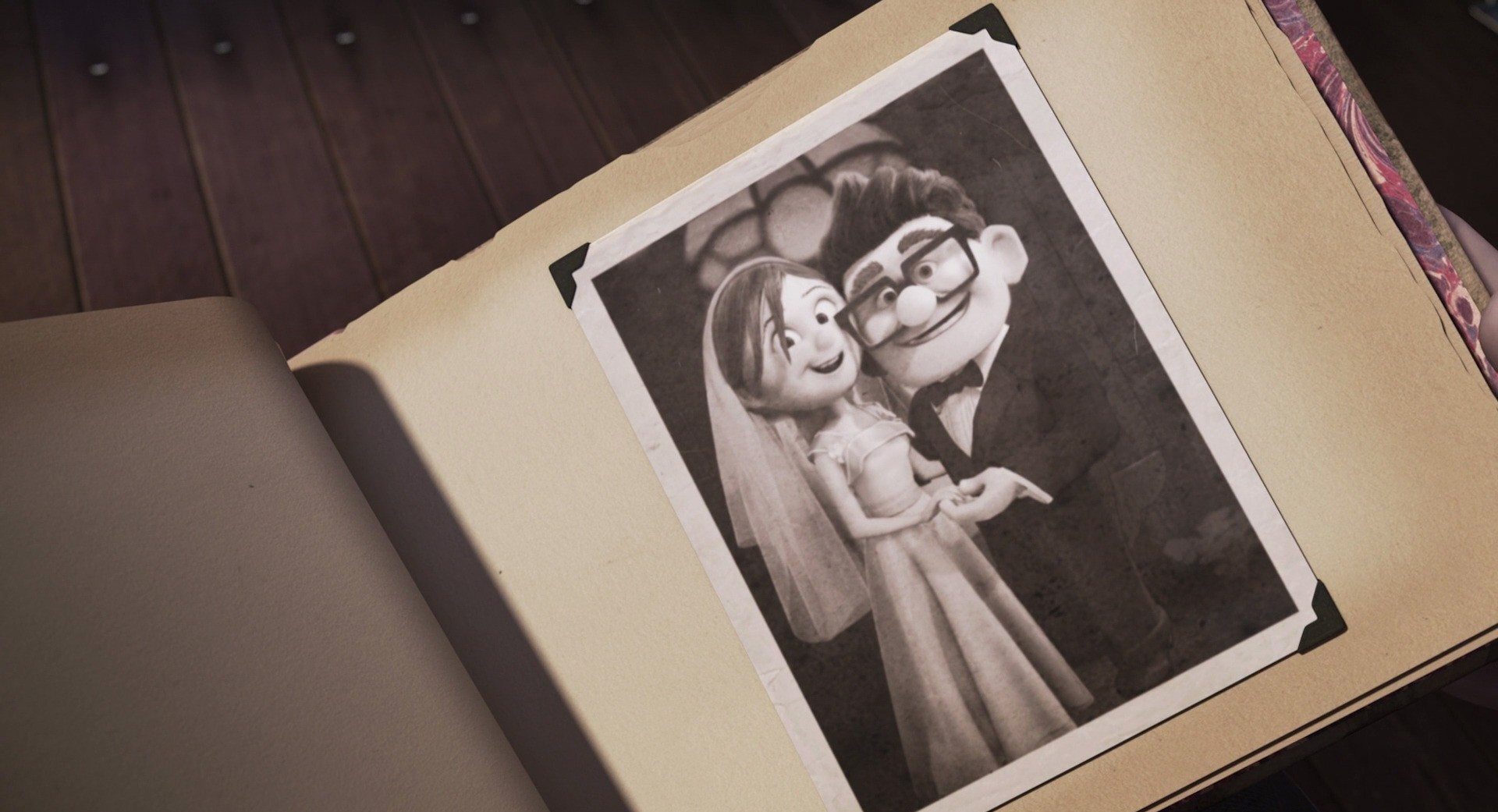
There’s another fun cameo during this part of the movie. We see a rat that looks a lot like Remy, which is just a fun reminder that Pixar animation transcends the multiple stories they tell. And we also see memories that feature other Pixar characters. You can see Carl and Ellie’s wedding from Up for example.
A good reason for that could be that Riley saw a tape of this wedding at some point, though that would have to be a very old home movie. It could be a picture, since we see a camera in the first frame of that scene in Up. In that case, Riley could have seen that picture and imagined the wedding herself. This has led a lot of people to think that Riley could somehow be related to Carl and Ellie, which would be quite a stretch.
That’s because Carl and Ellie sadly never had kids, so Riley would have to be a distant relative. If she knows about the wedding, then she’s probably met some of this family, but we know in those early scenes of Inside Out that Riley is visiting California for the first time. She thought the Golden Gate bridge was actually golden, after all.
You could argue that people from this family went to Minnesota to visit her, but I’m not really convinced. Personally, I don’t think we’re able to know just yet, though one theory I have is that she had a teacher or friend’s parent who is somehow connected to Carl and Ellie. A future Pixar movie may shed light on this.
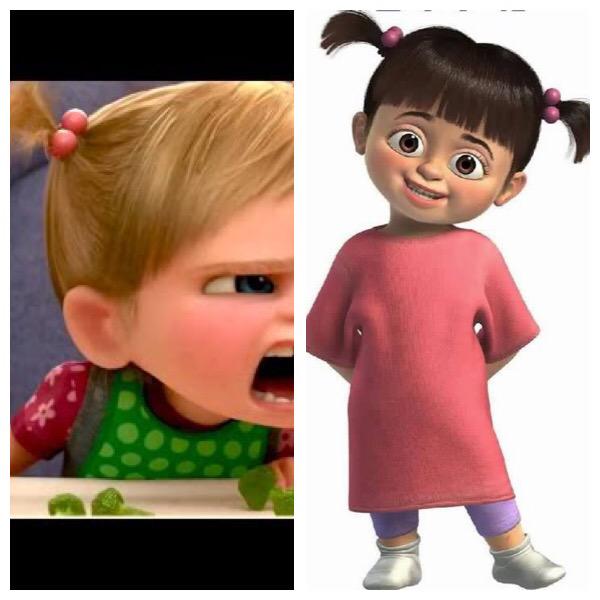
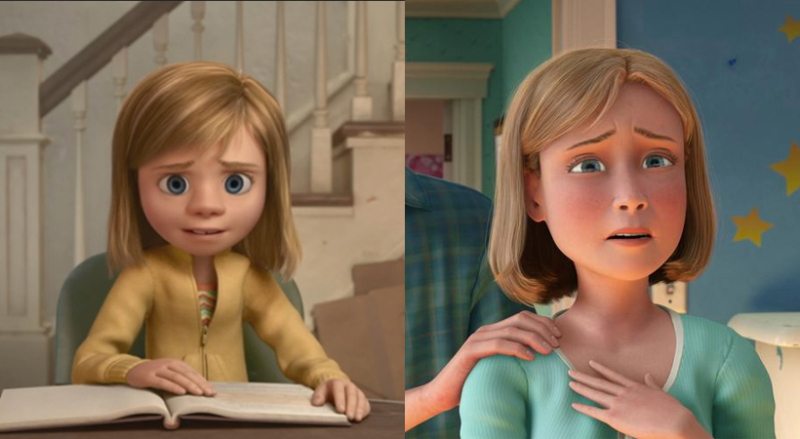
Some people even want to believe that Riley is Boo from Monsters Inc.,or Andy’s mom. Seriously. Look, Riley is Riley. She’s not anyone else, and trying to force these connections is missing the point. For example, the primary reason people think Riley is Boo is because when she’s shown as a toddler, she’s wearing the same hair tie/scrunchy thing that Boo wears in Monsters Inc.
They both even have pig tails. If you’re fixated on them being one in the same, then you miss the cooler reveal, which is that Riley was growing up around the same time as Boo (Monsters Inc., takes place in the early 2000s), so of course that style and those hair ties were popular.
As for Riley being Andy’s mom…I mean that’s way too much of a stretch, even for a limo.
Besides the eyes, nose, time period, and basic facial structure, they’re exactly alike! Sigh.
HUMANS ARE BATTERIES…
A main theme of the Pixar Theory is the idea that humans emit this strange energy that we see all throughout the films. In Monsters Inc., we learn that the laughter of a child can be harvested as energy for a society of creatures that mysteriously know how to use it. In The Incredibles, this energy is seen tangibly through the exploits of super-powered humans who can do amazing things.
Part of my Pixar Theory (the updated version) is that humans power the toys in Toy Story because they’re built to collect energy by the machines from The Incredibles. The book goes more into detail, but the basic idea is that the machines know how to use human energy as a battery, which carries on as a strategy all the way to the future, when monsters have to go back in time through doors to access this energy because no humans are left thanks to WALL-E.
But all this time, I’ve wondered why Pixar seems so infatuated with this idea of imagination being a raw power. And Inside Out addresses this pretty head on. The whole premise of the movie is that our emotions (as seen in Monsters Inc.,) are what truly power our actions. And the most powerful emotion for a child is Joy, as seen by Joy being the de facto leader of Riley’s emotions. Most of Riley’s memories are positive, and this is because Joy is inherently a strong emotion for many children.
The monsters of Monsters Inc, use fear, which can be another strong emotion for some kids, to power their society, but they eventually learn that laughter from joy is far more effective. And why is that? Well, Inside Out explains that joy is one of the first emotions we experience. Joy, the character, is a literal light source. She’s fast, tough, and clever. And she’ll do anything to make Riley happy. The other emotions in comparison are much more passive.
A lingering question in Monsters Inc., is why adults are so difficult to scare. Inside Out sort of answers that by showing how the inside of adults’ minds work. They’re more emotionally balanced, for example, so you don’t see one emotion overpowering the others. When we see inside the heads of Riley’s parents, the emotions don’t bicker like they do in Riley’s head. Instead, they all work together to accomplish the same goal.
But that’s not all. No, no, no. There’s something even better hiding in the dark of this movie that serves as the biggest “Aha!” moment I’ve had since I carefully re-watched Brave and Monsters Inc., back to back.
And it has to do with this guy, Bing Bong.
BING BONG! BING BONG!
Bing Bong is Riley’s imaginary friend. Joy and Sadness meet him halfway through the movie, and he helps them navigate Riley’s mind as they try to return to Headquarters. When Riley was three, Bing Bong was her best friend. He’s part cat, part elephant, and part dolphin. He’s made of cotton candy and, naturally, cries candy. He even has a wagon that can fly when powered by songs…
(humans=batteries).
So what’s the big deal? Why is he important?
Simple. Bing Bong is an imaginary friend, yes. But he’s based on a monster. Riley’s monster from when she was three.
At the end of Monsters Inc., Sulley and Mike decide to make kids laugh instead of scream because it generates more energy and is less messed up. We even see Mike go through a door and perform standup comedy for a child.
But wouldn’t this leave a kid feeling traumatized? Imagine a monster coming through your door, making you laugh, and then disappearing forever. This would make no sense unless…children perceive these new monsters as their imaginary friends.
Bing Bong was a monster who went through Riley’s door and made her laugh when she was three. We know that monsters have animal characteristics, explaining his part-cat/part-elephant appearance. And of course Riley thinks he’s made of cotton candy. Why else would he be pink? I’d even argue that he makes dolphin noises to make Riley laugh, causing her to think he’s part dolphin, too.
This all makes perfect sense if we’re to believe that well-adjusted kids in Pixar movies grew up meeting monsters in their rooms late at night. And it’s further helped by the fact that in Riley’s subconscious, she’s afraid of clowns, not monsters.
And think of it this way. Isn’t it pretty easy to picture Bing Bong living in Monstropolis?
I have plenty more to say about all of this, but those are the major points. If you want to keep digging, you can read another exploration I did of this movie that goes somewhat more into detail. The gist of it is that Bing Bong is life.
There are more easter eggs for the movie listed at the bottom, but that’s the basic rundown of how Inside Out fits into the Pixar Theory. If you think of something interesting to add or have a compelling question to ask, fire away! Just please…don’t ask if Big Hero 6, a Disney movie, should be in the Pixar Theory…
Ready for more?
The conspiring doesn’t end here. Check out my other Pixar Theory posts from infinity to beyond:
The Pixar Theory – the full book available on paperback and ebook via Kindle, Barnes and Noble, iBooks, or just a PDF. This will cover the entire theory and every movie in the Pixar universe, updated from what you just read.
There’s a globe in Riley’s classroom that has been shown in every single Toy Story film.
Some of the cars in San Francisco have bumper stickers from the Pixar movie, Cars.
Bing Bong disturbs a cloud person in Imaginationland, and he looks a lot like the cloud from the Pixar short, “Partly Cloudy.”
Also in Imaginationland, you can see a board game with a picture of Nemo that says “Find Me.”
One of Riley’s classmates wears a camo shirt with Toy Story characters on it. Well, their silhouettes, at least. It even looks like Arlo from The Good Dinosaur is on there as well. There’s even a popular girl at the school with a skull t-shirt in the same fashion as Sid’s from Toy Story, just in a different color. The 90s are making a comeback!
A banner in Riley’s hockey rink showcases a team from Tri-County, which is the setting for Toy Story. I explain this easter egg further in a different article.
Blink and you’ll miss a “For the Birds” cameo during Riley’s road trip to San Francisco in the beginning of the movie. It’s just like their appearance in Cars.
As always, the animators included ample A113 references. I’ve heard there’s more than one, but the only one I saw personally was A113 as the number of Riley’s classroom.
If you look closely at Riley’s Chinese takeout box, you’ll notice it has the same design as the one from A Bug’s Life (pictured below). Those familiar with the theory know that this could be because the same restaurant exists in both movies, so naturally there’d still be remnants of these takeout boxes hundreds of years later during Flik and the gang’s adventures.
Thanks for reading this. To get updates on my theories, books, and giveaways, join my mailing list.
This week on the podcast, we review Mad Max: Fury Road and Pitch Perfect 2. Now that I think about it, we never tried to determine which movie is better. Maybe it’s obvious.
Have you ever seen Pixar’s WALL-E? No? Then go watch that, come back, and let’s discuss something somewhat troubling about this film.
There are a lot of movies that you can point to and say that the protagonists (i.e. heroes of the film) actually do more harm than good. There are some movies with tragic endings that would have been just fine if the protagonist had done nothing at all.
And I think WALL-E accidentally does the same thing, and not for the reason you may be thinking.
Let’s recap the story. WALL-E is set 800 years in the future. In this universe, Earth becomes incredibly overpopulated by the year 2105, with 200 billion humans contributing to an environmental disaster for obvious reasons.
In response, a world-dominating organization called Buy n Large (BnL) pledges to clean up the mess, though it’s heavily implied it’s mostly their fault, and they send all humans to space on executive cruise ships called “starliners.” But after only five years, BnL decides to abandon the planet completely because the air has become toxic.
Side note: Soon, my book on The Pixar Theory will be coming out, and it’s packed with theories that concern this movie and BnL in general. What you’re about to read is something that didn’t make it into the final draft, so BONUS!
Anyway, humans remain in space unbothered for 700 years, which is when the movie’s plot begins with WALL-E. When a probe named EVE arrives to find hospitable life, WALL-E falls in adorable robot love with her, and when she returns to deliver the plant-life she found, WALL-E frantically follows her.
WALL-E ends up on Axiom, one of many starliners running in a lifestyle “loop.” The humans there have been raised from birth to support and trust BnL and it’s routines for their entire lives. The robots satisfy all of their needs, and life is pretty much perfect in their minds, even though they do nothing for themselves.
It’s a strange setup because you’d think the people on Axiom would grow bored and feel stifled, but in contrast, they seem completely intent, until WALL-E arrives and causes a chain of events that leads to their return to Earth.
This brings me to the main point: The people of Axiom are incredibly nice, well-functioning people.
Not once do you see a human on Axiom acting spoiled or rude. Instead, they’re incredibly polite, especially when they meet WALL-E for the first time. John and Mary are two great examples. They’re not used to robots having a personality, and when they meet WALL-E, they are very positive and nice to him. You’d think they’d treat him terribly, but instead they befriend him and get eerily excited when they see him again.
The humans we see have friends, romantic relationships, and excellent living accommodations. The screens they view everything through are translucent, so they have no shame in letting other people see what they’re working on.
Even life expectancy isn’t a problem. When we see the panel of past Axiom captains, you can see that all of them live well over 100 years.
When the current captain of the ship becomes enamored with Earth, he appears to have the joy of a child. He’s incredibly optimistic, and in many ways, one of the central heroes of the film when it comes down to it.
In some of the final scenes, we see the humans showing a lot of empathy for WALL-E and EVE, even though most have them have no idea what’s going on. They cheer for the captain when he’s fighting Auto, and John and Mary don’t hesitate to risk their lives for the babies falling down the platform.
What caused humans to be thisnice?
Well, BnL apparently did. The society created by this “loop” of never-ending pleasure created a culture of interestingly polite humans, contrary to the spoiled rich kid syndrome you’d expect to see.
So was what WALL-E did for them…for the best?
If he had never followed EVE, the humans would sill be on the Axiom, but when the movie closes, the humans have returned to Earth. It’s depressing, but history repeats itself. Though we see shots of life rebuilding itself peacefully, won’t humans just make the same mistakes again and damage Earth completely this time?
It’s tricky because the movie is clever about how it makes you hate BnL, despite it being the invention of the very humans we sympathize with. Pixar overtly makes the conditions of the Axiom both horrific and enticing at the same time, but few people walk away from it thinking the humans made a mistake.
From a storytelling perspective, it’s genius on Pixar’s part. They present the humans in a way that makes us want the best for them. If they had made the humans spoiled and insufferable, we wouldn’t care about them as much as we do by the end.
But the weird side-effect of this characterization is that Pixar is unintentionally saying that BnL’s methods created a better society than the one we already have. We know it’s better because Pixar is intentionally saying the society we have is what caused the problems emphasized in the film.
So, here’s the question: Were the humans better off living in a society that made them the best they could be personally and socially? Or is living on Earth too important to ignore? I’m not convinced either way, to be honest.
Sure, the effects of gravity make you a blob dependent on a chair, but then again, it’s an awesome chair.
In Axiom’s society, there’s no crime from what we see. Everyone has their needs met. There’s likely no poverty, racial injustice, or food shortages. It’s utopia, but we think it sucks because the people aren’t skinny. Isn’t that a little messed up when you think about it?
Still, the captain makes a good point when he says, “I don’t want to survive, I want to live!”
But does everyone on Axiom want that, or is it just the result of one man who wants to impulse buy something he read about on the Internet? It’s hard to say.
Of course, I’m not saying Axiom would be the best for me or you. We’re accustomed to bike rides, trampolines, and Taylor Swift concerts. But if you told me there was a way to solve all of Earth’s problems in exchange for a few extra pounds, I’d have a hard time saying no.
Thanks for reading this. To get updates on my theories, books, and giveaways, join my mailing list.
Not caught up yet to this chapter? Check out our Table of Contentsto get all caught up.
It’s here! And I don’t think you’re going to be disappointed. Chapter 23 is…well a special chapter. I don’t want to say anything else, but I really doubt any of you are ready for it (I know I wasn’t, and I wrote the thing).
This week’s chapter is titled “And Beyond.” As you’re reading over the point of view sections and following the new story developments, I challenge you to take this title to heart. What does it mean? Why are these events being intertwined for this chapter? Do this, and I think you’ll gain more from the chapter than you would otherwise.
But I’m getting ahead of myself! We’re getting close to the halfway point for the end of the series, but I still have a lot more story to share with you. I do hope you enjoy.
Previously, on The Pixar Detective!
Stevin, Wallaby, Sadie, and Mr. Sumner have joined a mysterious explorer named Kevin Sohn on a dirigible that is traveling to France. Their mission is to discover what Mary was up to in the days leading to her disappearance.
Elsewhere, Robert Best is on his way to unite a group of misfits known as the Unforgivables. As you may recall, Robert is an Alumni with Pixar University, the same organization that Alec Azam worked for. Now that he’s up against supers, he and his partner Rey (also known as Mirage) must now rely on these “Unforgivables” to help them track down and defeat Kevin Sohn, who they refer to as “the poacher.”
Of course, Dark Sadie and Dark Logan, the brainwashed supers controlled by BnL, are still hunting Stevin and his friends. Will they ever catch up in time? Find out!
You can use the prompt on the sidebar to subscribe for updates, or just follow me and Kayla on Twitter to stay connected – @JonNegroni – @KaylaTheSavage
Thanks for reading! What did you think of Chapter 23?