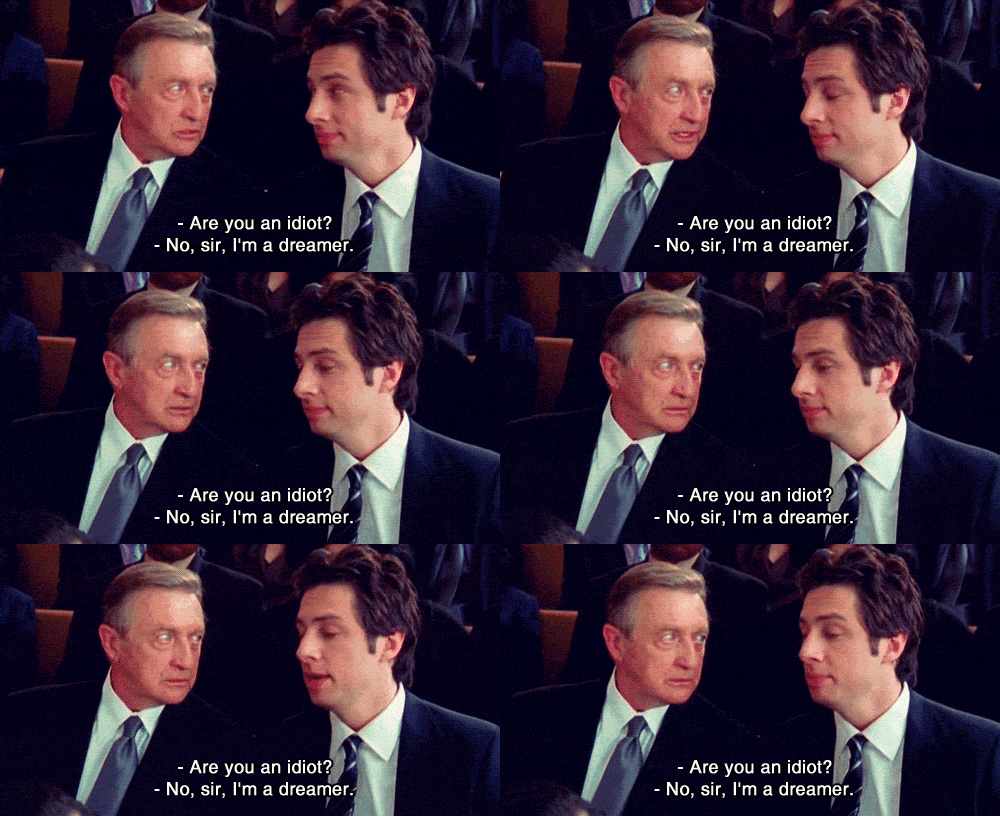
Scrubs is one of my favorite shows of all time. During college, I watched every season on repeat until I saw every episode at least 100 times. And that was before the days of Netflix.
Even though my Scrubs bingeing is extremely economical now thanks to the advent of streaming, I still revisit those old DVDs on occasion and jump back into the lives of John “J.D.” Dorian and his lifetime friends at Sacred Heart Hospital. I even watch Season 9 when I’m in the right mood.
So you’d think that after all this time, I’d have some sort of mind-blowing fan theory or revelation naturally generated from my obsession, but it’s quite the opposite. The show manages to be pretty airtight on its themes and messages, mostly because we spend most of our time inside J.D.’s head. There’s little left to the imagination.
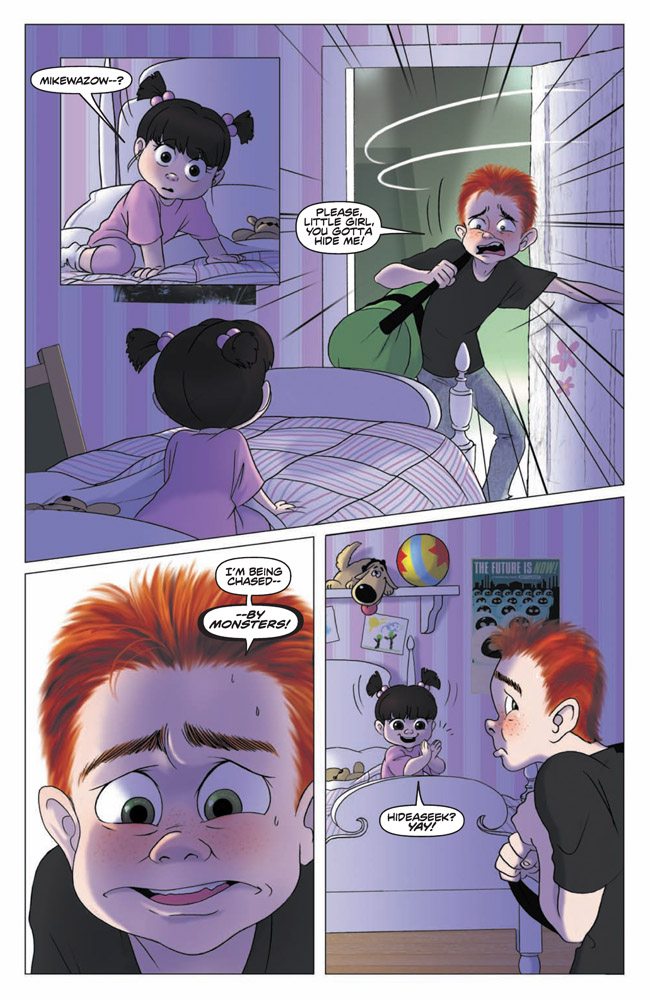
But there do happen to be longstanding questions that Scrubs has never truly resolved, except they have, actually. There’s the matter of the Janitor, who you may recognize as Mike from ABC’s “The Middle.” He’s an enigma throughout the series, to the point where the writers initially intended for him to be a figment of J.D.’s imagination (they changed their mind by Season 2).
Yeah, he gets married and finds meaning in his life or something. But we never really find out his name. Throughout the series, he’s only referred to as “The Janitor,” and the mystery behind his name becomes a running gag all the way through the Season 8 finale. He finally reveals his name to J.D. as “Glen Matthews” in the finale.
Case closed, right?
WRONG.
Right after he reveals his name, Janitor is referred to as “Tommy” by an orderly. This implies that he was lying to J.D., which isn’t a stretch at all because that’s what the Janitor does. He consistently fabricates stories and facts about his life that are blatantly false and reveal his pathological lying.
So what is the Janitor’s name? Does he have one?
The answer is yes, and it’s depressingly simple, really. In “My Friend the Doctor” (S3E8), J.D. finds out that the Janitor played a character in the real-life movie, The Fugitive (you know, the Harrison Ford movie from the 90s).
This information alone lets us know that the Janitor’s real name must correspond with the actor who played his character in The Fugitive. So his name is Neil Flynn, the actual name of the actor who portrays him.
Case closed, right?
WRONG.
Look, I’m certainly not the first person to pick up on all this. Scrubs fans have been assuming the Janitor is Neil Flynn for over a decade. That’s why Bill Lawrence, the creator of Scrubs, took to Facebook and Twitter to decry those theories and say the following:
What does this mean? How is his name Glen, if his name is Neil in The Fugitive?
One argument is that he lied about his name to the casting director in the movie, so his real name ISN’T Neil Flynn after all. It really is Glen.
Case closed, right?
You serious?
Bill Lawrence want us to believe that the Janitor told J.D. the truth (for once). This is because the episode “My Finale” was meant to be the series finale, so it would make sense for the Janitor to close this chapter with one final moment of honesty.
There’s just one problem. The Janitor reveals one episode later that he never really thought J.D. was leaving. Scrubs was revamped into a semi-spinoff for Season 9 that focused mainly on a med school built for Sacred Heart, and J.D. only showed up for a few episodes.
In the first episode, Turk reveals to J.D. that the Janitor didn’t really think J.D. had left. Of course, Turk has to insist that J.D. is really gone, which causes the Janitor to hand him his mop and leave Sacred Heart…forever. No one there saw or heard from the Janitor again.
If the Janitor thought J.D. was really coming back, then why would he tell the doctor his name? Because of Season 9, I have to conclude that Lawrence lied to us, Janitor-style.
So is his name Neil Flynn? Let’s revisit 2009 for a second. Season 9 of Scrubs got started in December. And another show got started that fall. The pilot episode of The Middle premiered on ABC, starring…Neil Flynn.
What if the whole point of that first scene in Season 9 was to point us to the potential fact that The Middle stars the Janitor, who happens to be Neil Flynn. And that’s why he disappeared from the show altogether, instead of following J.D. to his new job. He revisited his acting career to portray a guy who has everything the Janitor wanted throughout the series: a family in the Midwest.
In the episode, “My Own Worst Enemy,” the Janitor reveals that his obsession with J.D. has prevented him from doing what he really wants to do: start a family. The day after J.D. leaves, the Janitor does too and finally pursues that dream. A year later, he’s on ABC starring as the loving father of a humble family. After all, the Janitor loves to lie. Becoming an actor is the perfect job for someone who likes to make up stories.
Don’t bother trying to tell me that’s not the case, Bill Lawrence.
And hey, if you don’t believe me and think this article is a waste of time, then don’t worry. Here’s a chart showing every girl name Dr. Cox called J.D. categorized by season:
Thanks for reading this. To get updates on my theories, books, and giveaways, join my mailing list.
The Pixar Theory, or “Grand Unifying Theory of Pixar movies” if you want to be more intense, is a fan theory I wrote in 2013 about how every single feature film made by Pixar Animation Studios is intentionally set in the same universe. Or unintentionally, if you believe in miracles.
Dan O’Brien
I was inspired by an episode of the Web Series, “After Hours,” on Cracked.com. In the episode written by Dan O’Brien, the After Hours crew discusses, at length, how a few of the Pixar movies may secretly be about the apocalypse. They address Toy Story, WALL-E, and Cars before giving up because they can’t find a way to connect the films any further.
So I took that as a challenge.
Over the following year, I developed my own theory on how all the movies connect, and the results have been surprisingly epic. People from all over the world have read the theory, and many of you have been having ongoing discussions in the comments that go way beyond anything I first imagined (trust me, I read all of them).
Now, two years later, it’s time to see where we’re at as we welcome a new Pixar movie to the world: Inside Out.
First, it’s important to point out that the theory itself has changed dramatically over the years. A lot of people have called out flaws and underdeveloped points of the theory that make it fall apart for them. I’ve read the feedback and spent the last two years writing a book that fully fleshes out my original theory. It addresses pretty much every major complaint and issue that “debunkers” have thrown at it. And it does this in about ten chapters.
Every chapter follows a specific movie (some are lumped in together, like the Cars franchise). I talk about the context of the movie as it relates to this theory, where it fits in the grand timeline, and how each movie contributes to the idea that these movies exist in the same narrative. And yes, I go way beyond the easter eggs.
But let’s get back to the main task at hand. Let’s talk about how Inside Out masterfully fits within the idea that all of these Pixar films are connected. What you’re about to read is set up like how I wrote the chapters for my book, so if you like what you read, then that may be a sign that the book is for you. Consider this your sample chapter, if you will.
Obviously, many spoilers are ahead, so read at your own risk. I highly recommend that you watch the movie at least once before reading this, especially since it’s pretty fantastic. You’ve been warned.
THE SET UP.
Inside Out is the story of a young girl struggling to grow up, seen through the eyes of her emotions as literal beings. Yes, Pixar made a movie where feelings have feelings.
The movie opens with the birth of Riley Andersen. The first thing you may notice is that she shares the same last name as Bonnie Anderson from Toy Story 3 and the subsequent shorts based on that movie. That may tempt you into believing that Riley and Bonnie are connected somehow, but that’s definitely not the case since their names aren’t spelled the same way.
For context, Pixar named Bonnie after two people: Bonnie Hunt (a frequent voice actor for the Pixar films) and Darla K. Anderson, the producer of Toy Story 3. Darla actually has easter eggs for her name dating all the way back to A Bug’s Life, where you can catch her first name on a box in “Bug City.”
Anyway, we learn early on that Riley grew up in Minnesota, but her family moves to San Francisco when she’s 11 years old. Now it’s true that Bonnie lives in Tri County, around the corner from Andy, and Tri-County does take place in the Bay Area of California. But that’s really just a coincidence. Riley’s family never mentions that they have relatives around, and they only moved to San Francisco for her dad’s job. For that reason, all signs point to this being a coincidence.
WHEN DOES THE MOVIE TAKE PLACE?
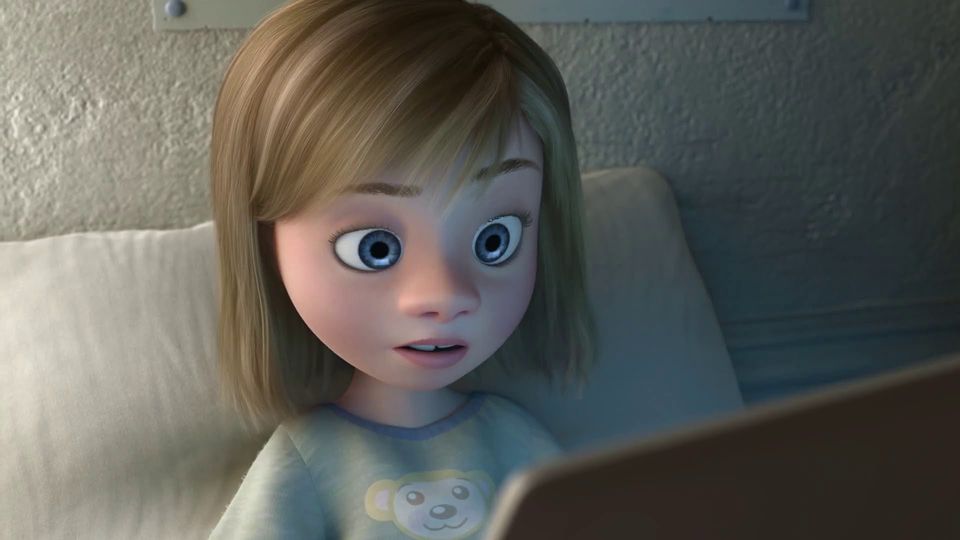
Moving on, we get to know Riley through a montage of her early life. When we get to the point where she’s 11, it appears to be modern day. Much of the technology we see throughout the movie — like a Skype surrogate that closely resembles the one used by Trixie in Toy Story 3 and the presence of smartphones — point to this being a film set in 2015.
That means Riley was born in either 2003 or 2004, depending on her exact birthday. Interestingly, that would mean the movie opens during the same year as Finding Nemo.
We also know that this has to be some time after 2007, which is when Ratatouille takes place. In fact, Inside Out actually confirms that Ratatouille takes place in 2007 instead of 2004, which is a conundrum I ran into while writing the book. It’s all based on the blurry date seen on Gusteau’s will and…eh, don’t worry, it’s not important.
Anyway, the reason we know that this is some time after Ratatouille is because you can see Colette Tatou on the cover of a magazine in a blink-and-you’ll-miss-it easter egg. Judging by the prestige of this magazine, Colette has done well for herself during her years learning from Remy and working at La Ratatouille, the bistro she started with him and Linguini.
After all, why would she be on the cover a magazine before her adventures in Ratatouille? Before she met Linguini, she was just a hardworking chef trying to build a career at a failing restaurant. I find it much more plausible that she’s created a name for herself under the tutelage of the best chef in France.
(DONALD GLOVER VOICE) MY EMOTIONS!
So as we get to know Riley in the film’s early montage, we meet her emotions. The film immediately takes us inside her head, where we watch Joy, Sadness, Disgust, Fear, and Anger team up to influence Riley’s actions. They work in “Headquarters” (get it?) and use a mysterious console to control Riley’s decisions.
When an emotion manages to elicit a meaningful experience in real life, a memory is generated and sent to Riley’s long term memory. If it’s a specifically powerful experience, then it will create a core memory that will stay in Headquarters.
It’s somewhat confusing, but Pixar does a great job of explaining this better than I can. They use subtle techniques and cleverness to make the inside of Riley’s head immediately unique, while also incredibly believable.
For example, the memories are shaped like “marbles” because without them, Riley would lose her marbles.
This is a fun movie.
The plot of Inside Out focuses on Riley being uprooted to a new home in San Fransisco and how this negatively affects her emotions. She misses her friends, never sees her dad anymore because of his new job, and feels pressured to just “be happy” all the time. This causes her to repress her sadness, which eventually causes even more problems.
CONNECTIONS AND MISFIRES…
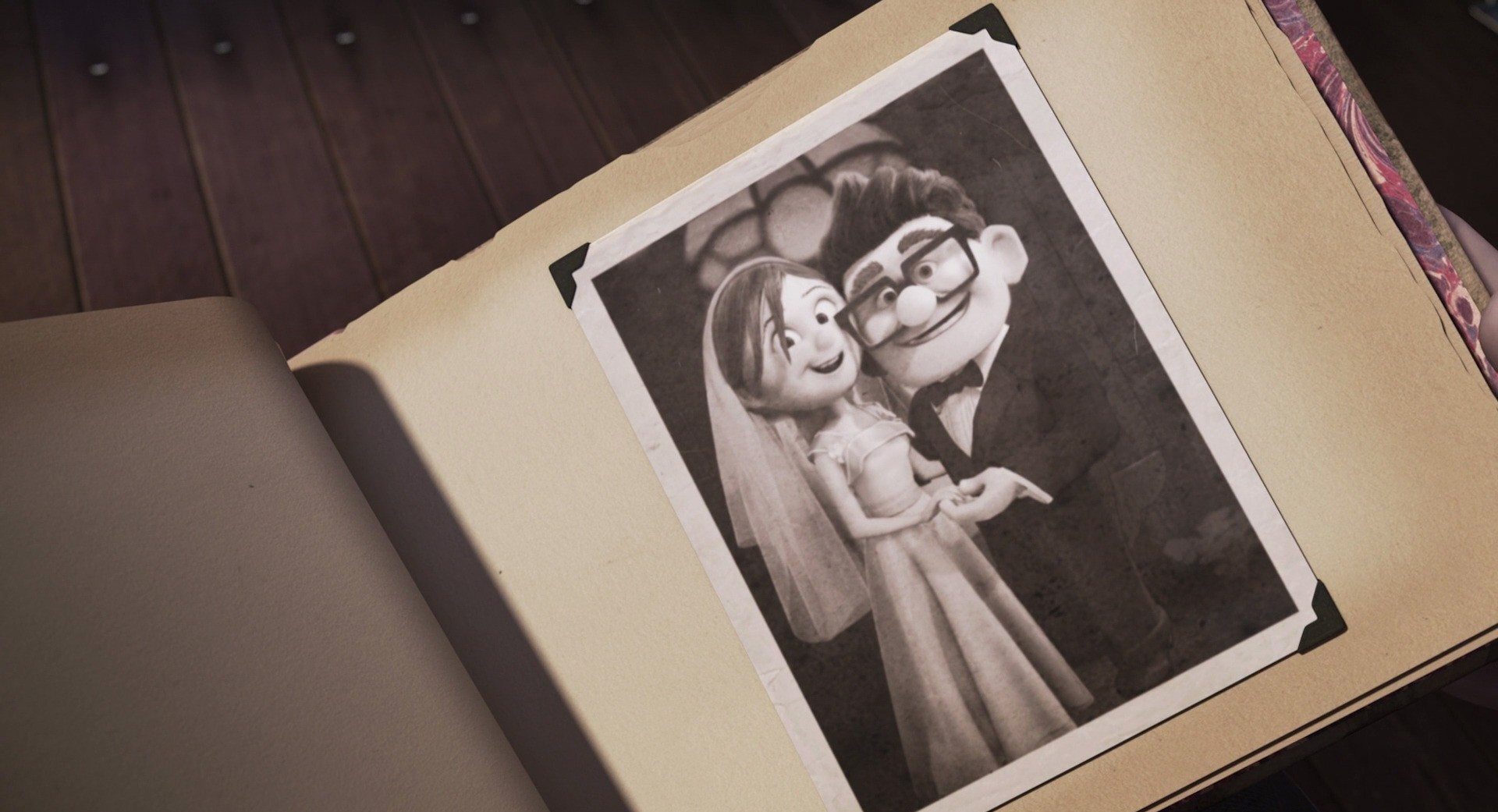
There’s another fun cameo during this part of the movie. We see a rat that looks a lot like Remy, which is just a fun reminder that Pixar animation transcends the multiple stories they tell. And we also see memories that feature other Pixar characters. You can see Carl and Ellie’s wedding from Up for example.
A good reason for that could be that Riley saw a tape of this wedding at some point, though that would have to be a very old home movie. It could be a picture, since we see a camera in the first frame of that scene in Up. In that case, Riley could have seen that picture and imagined the wedding herself. This has led a lot of people to think that Riley could somehow be related to Carl and Ellie, which would be quite a stretch.
That’s because Carl and Ellie sadly never had kids, so Riley would have to be a distant relative. If she knows about the wedding, then she’s probably met some of this family, but we know in those early scenes of Inside Out that Riley is visiting California for the first time. She thought the Golden Gate bridge was actually golden, after all.
You could argue that people from this family went to Minnesota to visit her, but I’m not really convinced. Personally, I don’t think we’re able to know just yet, though one theory I have is that she had a teacher or friend’s parent who is somehow connected to Carl and Ellie. A future Pixar movie may shed light on this.
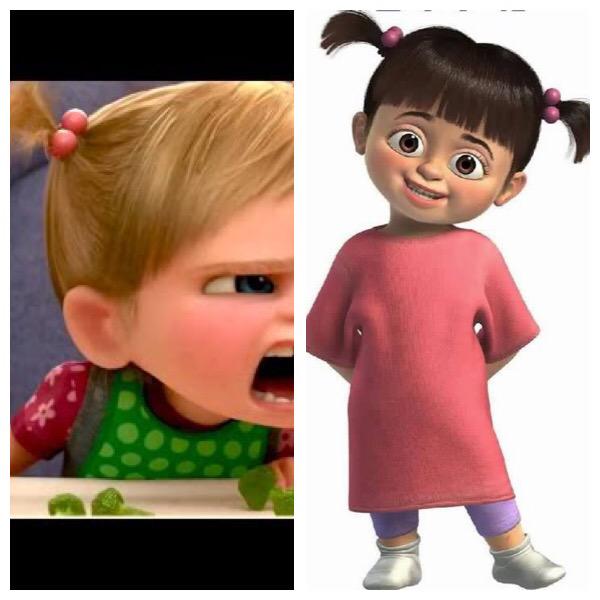
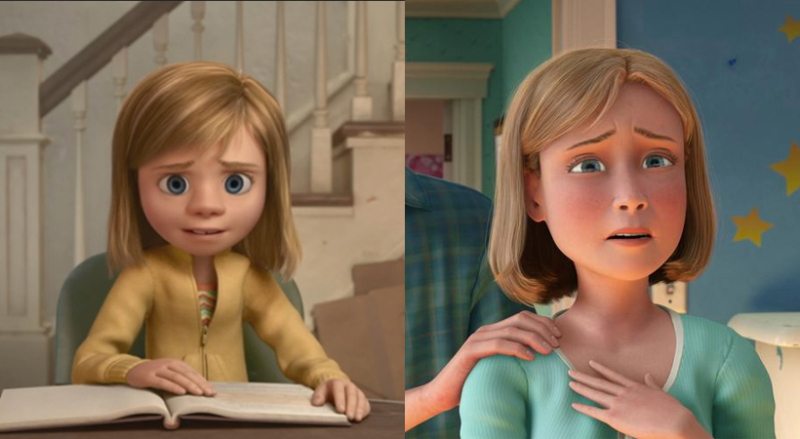
Some people even want to believe that Riley is Boo from Monsters Inc.,or Andy’s mom. Seriously. Look, Riley is Riley. She’s not anyone else, and trying to force these connections is missing the point. For example, the primary reason people think Riley is Boo is because when she’s shown as a toddler, she’s wearing the same hair tie/scrunchy thing that Boo wears in Monsters Inc.
They both even have pig tails. If you’re fixated on them being one in the same, then you miss the cooler reveal, which is that Riley was growing up around the same time as Boo (Monsters Inc., takes place in the early 2000s), so of course that style and those hair ties were popular.
As for Riley being Andy’s mom…I mean that’s way too much of a stretch, even for a limo.
Besides the eyes, nose, time period, and basic facial structure, they’re exactly alike! Sigh.
HUMANS ARE BATTERIES…
A main theme of the Pixar Theory is the idea that humans emit this strange energy that we see all throughout the films. In Monsters Inc., we learn that the laughter of a child can be harvested as energy for a society of creatures that mysteriously know how to use it. In The Incredibles, this energy is seen tangibly through the exploits of super-powered humans who can do amazing things.
Part of my Pixar Theory (the updated version) is that humans power the toys in Toy Story because they’re built to collect energy by the machines from The Incredibles. The book goes more into detail, but the basic idea is that the machines know how to use human energy as a battery, which carries on as a strategy all the way to the future, when monsters have to go back in time through doors to access this energy because no humans are left thanks to WALL-E.
But all this time, I’ve wondered why Pixar seems so infatuated with this idea of imagination being a raw power. And Inside Out addresses this pretty head on. The whole premise of the movie is that our emotions (as seen in Monsters Inc.,) are what truly power our actions. And the most powerful emotion for a child is Joy, as seen by Joy being the de facto leader of Riley’s emotions. Most of Riley’s memories are positive, and this is because Joy is inherently a strong emotion for many children.
The monsters of Monsters Inc, use fear, which can be another strong emotion for some kids, to power their society, but they eventually learn that laughter from joy is far more effective. And why is that? Well, Inside Out explains that joy is one of the first emotions we experience. Joy, the character, is a literal light source. She’s fast, tough, and clever. And she’ll do anything to make Riley happy. The other emotions in comparison are much more passive.
A lingering question in Monsters Inc., is why adults are so difficult to scare. Inside Out sort of answers that by showing how the inside of adults’ minds work. They’re more emotionally balanced, for example, so you don’t see one emotion overpowering the others. When we see inside the heads of Riley’s parents, the emotions don’t bicker like they do in Riley’s head. Instead, they all work together to accomplish the same goal.
But that’s not all. No, no, no. There’s something even better hiding in the dark of this movie that serves as the biggest “Aha!” moment I’ve had since I carefully re-watched Brave and Monsters Inc., back to back.
And it has to do with this guy, Bing Bong.
BING BONG! BING BONG!
Bing Bong is Riley’s imaginary friend. Joy and Sadness meet him halfway through the movie, and he helps them navigate Riley’s mind as they try to return to Headquarters. When Riley was three, Bing Bong was her best friend. He’s part cat, part elephant, and part dolphin. He’s made of cotton candy and, naturally, cries candy. He even has a wagon that can fly when powered by songs…
(humans=batteries).
So what’s the big deal? Why is he important?
Simple. Bing Bong is an imaginary friend, yes. But he’s based on a monster. Riley’s monster from when she was three.
At the end of Monsters Inc., Sulley and Mike decide to make kids laugh instead of scream because it generates more energy and is less messed up. We even see Mike go through a door and perform standup comedy for a child.
But wouldn’t this leave a kid feeling traumatized? Imagine a monster coming through your door, making you laugh, and then disappearing forever. This would make no sense unless…children perceive these new monsters as their imaginary friends.
Bing Bong was a monster who went through Riley’s door and made her laugh when she was three. We know that monsters have animal characteristics, explaining his part-cat/part-elephant appearance. And of course Riley thinks he’s made of cotton candy. Why else would he be pink? I’d even argue that he makes dolphin noises to make Riley laugh, causing her to think he’s part dolphin, too.
This all makes perfect sense if we’re to believe that well-adjusted kids in Pixar movies grew up meeting monsters in their rooms late at night. And it’s further helped by the fact that in Riley’s subconscious, she’s afraid of clowns, not monsters.
And think of it this way. Isn’t it pretty easy to picture Bing Bong living in Monstropolis?
I have plenty more to say about all of this, but those are the major points. If you want to keep digging, you can read another exploration I did of this movie that goes somewhat more into detail. The gist of it is that Bing Bong is life.
There are more easter eggs for the movie listed at the bottom, but that’s the basic rundown of how Inside Out fits into the Pixar Theory. If you think of something interesting to add or have a compelling question to ask, fire away! Just please…don’t ask if Big Hero 6, a Disney movie, should be in the Pixar Theory…
Ready for more?
The conspiring doesn’t end here. Check out my other Pixar Theory posts from infinity to beyond:
The Pixar Theory – the full book available on paperback and ebook via Kindle, Barnes and Noble, iBooks, or just a PDF. This will cover the entire theory and every movie in the Pixar universe, updated from what you just read.
There’s a globe in Riley’s classroom that has been shown in every single Toy Story film.
Some of the cars in San Francisco have bumper stickers from the Pixar movie, Cars.
Bing Bong disturbs a cloud person in Imaginationland, and he looks a lot like the cloud from the Pixar short, “Partly Cloudy.”
Also in Imaginationland, you can see a board game with a picture of Nemo that says “Find Me.”
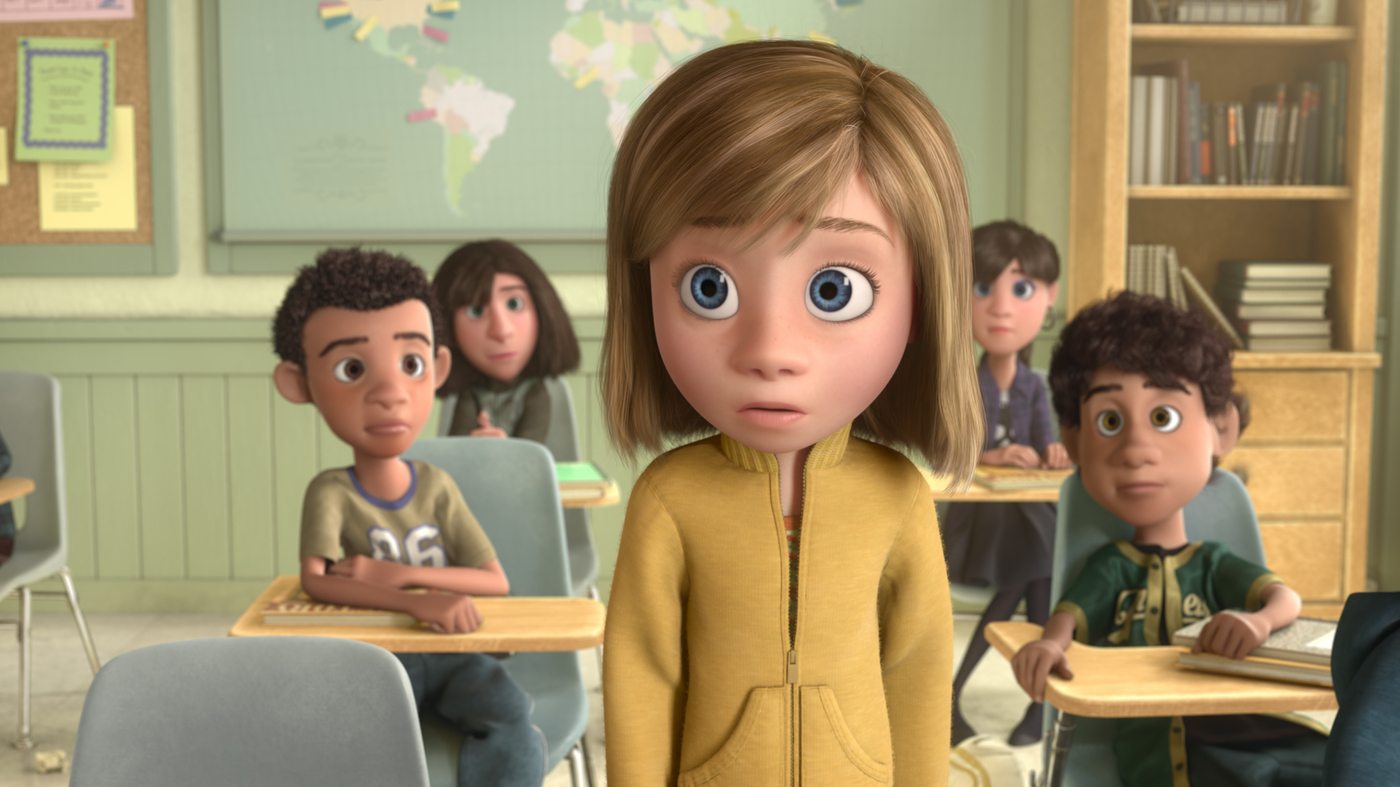
One of Riley’s classmates wears a camo shirt with Toy Story characters on it. Well, their silhouettes, at least. It even looks like Arlo from The Good Dinosaur is on there as well. There’s even a popular girl at the school with a skull t-shirt in the same fashion as Sid’s from Toy Story, just in a different color. The 90s are making a comeback!
A banner in Riley’s hockey rink showcases a team from Tri-County, which is the setting for Toy Story. I explain this easter egg further in a different article.
Blink and you’ll miss a “For the Birds” cameo during Riley’s road trip to San Francisco in the beginning of the movie. It’s just like their appearance in Cars.
As always, the animators included ample A113 references. I’ve heard there’s more than one, but the only one I saw personally was A113 as the number of Riley’s classroom.
If you look closely at Riley’s Chinese takeout box, you’ll notice it has the same design as the one from A Bug’s Life (pictured below). Those familiar with the theory know that this could be because the same restaurant exists in both movies, so naturally there’d still be remnants of these takeout boxes hundreds of years later during Flik and the gang’s adventures.
Thanks for reading this. To get updates on my theories, books, and giveaways, join my mailing list.
(Not caught up yet to this chapter? Check out our Table of Contentsto get up to speed!)
The Pixar Detective started last April, and the final chapters are now underway. The conclusion is in motion, and I’m not entirely sure how you guys are going to react. Will you like how the story ends? Will we walk away from this project feeling satisfied with what’s been done here?
(Not caught up yet to this chapter? Check out our Table of Contentsto get up to speed!)
Hey detectives! Time for another round of your favorite Pixar-centric serial novel (I hope). We’re really winding down to the last stretch of this story, so you can expect the next few chapters to be the most epic of the series to date.
I love it when Marvel creates new and interesting female characters that represent a twist in established universes. In recent years, they’ve written some incredible stories with these new superheroes (and villains).
And this year, Marvel announced an all-star team up of heroines led by She-Hulk. The core lineup consists of Dazzler, Medusa, Singularity, and Nico Minoru. Though there are plenty more Marvel favorites that will make appearances, as you can see from the cover below.
Now, I’m a big fan of Teen Titans, the D.C. storylines surrounding the younger counterparts to bigger heroes. I’m not a comic-book writer, and I don’t want to be constrained to the Marvel Cinematic Universe. So I propose a killer animated TV series that puts “Teen Titans Go” to shame. I would call it, Teen Avengers.
Yeah, I know. Original.
This new lineup would have to be a shakeup of relatively new characters and new twists on older characters. I would take tremendous liberties with the source material to make it happen, but I think you’ll like the end result if you open your mind. So here’s my dream lineup without context:
Sharon Carter, Thor, Ms. Marvel, Abyss and Spider-Woman (AKA Spider-Gwen).
OK, let’s get the context started.
In order for this team to make sense, I have to walk you through the actual story I have in mind. Don’t worry, we’ll just stick with the cliff notes, though keep in mind that this would be an alternate reality in which everyone’s age would be younger than what’s established.
Let’s begin!
INTRO
The series would open on Mars, and we’d be introduced to Abyss and her brother Ex Nihilo. An “Aleph” has helped them terraform Mars into a hospitable planet as their guide. They’re members of The Garden, a group of creation avatars that go to worlds and “plant seeds” to make them better worlds. Those “seeds” usually result in planets being completely wiped out, and The Garden now has Earth in its sights.
Abyss (left); Ex Nihilo (right)
Abyss and Ex Nihilo have unique powers in the comics. Abyss has mind manipulation, while Ex Nihilo is more of a powerhouse. Their plan is to terraform Earth by wiping out its inhabitants. The image above shows you a pretty good snapshot of their motivations.
FAN GIRL
In the next scene, we see a teenage girl typing on a computer in New Jersey. She’s Kamala Khan, who will eventually become Ms. Marvel. She writes fan fiction about the Avengers and is a huge fan of this world’s Captain Marvel (Carol Danvers).
Kamala goes to a party and tries to fit in, but she has a panic attack after coming in contact with a strange boy. He follows her home and reveals that he is Alaris, an Inhuman in disguise. He tells Kamala that she’s a descendant of the Inhumans, and she passes out in shock.
She dreams of Captain Marvel, who asks her, “Who do you want to be?” Kamala replies, “I want to be you.” She awakens with strange powers and is unable to control them.
AGENT CARTER
We’d then shift to the S.H.I.E.L.D. Helicarrier, where Sharon Carter (niece of Peggy Carter from Captain America and Agent Carter) is working. They’re flying over New Jersey, where Inhuman activity has been detected. Sharon is in her late teens at this point, so she wants to prove herself to the director, Maria Hill. So she leaves the Helicarrier alone and uses her sleuth skills to find the Inhuman without starting a fight.
SIBLING RIVALRY
Meanwhile, Abyss and Ex Nihilo have nearly arrived on Earth. Ex Nihilo tells Abyss that their plan will be to transform creatures into better creatures, starting with the most troubled. He points to a person in New Jersey who is struggling to control her powers. Abyss reluctantly agrees to pursue this, though she regards in how beautiful the planet already is.
WITH GREAT POWER
In New Jersey, Kamala tries to go through her day, but her powers are becoming more chaotic. Finally, she accidentally causes a car accident and her fists enlarge. Everywhere Kamala goes, she makes a mess, and now police are trying to subdue her. Of course, their bullets don’t work.
Sharon Carter arrives, unarmed, and tries to calm Kamala down. It almost works, as Kamala tells Gwen her name and they connect for a second, until someone swoops in and covers Kamala in webbing.
A girl in a white costume comes in and complains she had to come here all the way from Queens. It’s Spider-Gwen, the alternate version of Spider-Man, in which Gwen Stacey is bit by a radioactive spider instead of Peter Parker.
A battle ensues, and it’s somewhat an even match. Sharon keeps trying to stop the fighting, but Kamala feels too threatened to back down. Finally, Abyss and Ex Nihilo arrive. Ex Nihilo defeats all of them easily and takes Kamala with him, despite Abyss’s please that she’s just a kid.
ASSEMBLE!
S.H.I.E.L.D. arrives and takes Gwen into custody, while Sharon tries to explain herself. On the Helicarrier, Sharon tries to explain to Maria Hill and the rest of command what happened, but none of them know who these strange creatures are that took Kamala. Sharon brings up the nature of Ex Nihilo’s divine powers, which convinces Maria to “make a call.”
Later, Sharon meets with Spider-Gwen, who is being held for questioning. She asks Gwen who she is and where she got her powers, but Gwen’s not interesting in sharing any origin stories. She just wants to get out of there and save Kamala, now realizing she was wrong to be so aggressive. Sharon tells them to let Gwen free so Maria and decide what to do with her, and then the entire ship quakes. Something has arrived on the hull.
They go to the top to find an Asgardian getting to her feet. It’s Thor (the female version whose identity is a secret for now). Maria Hill called her to assist with this situation. They explain that Abyss and Ex Nihilo are from The Garden, powerful creatures who wipe out worlds to make them better. Asgard rules that Midgard (Earth) is under their protection from The Garden, and Thor has been sent to solve the matter.
TBD…
I could keep going, but you see where this is going, right? Abyss will ultimately betray her brother, Ex Nihilo and help Gwen, Thor, Kamala, and Sharon defeat him. Stopping The Garden ties each character together in their own S.H.I.E.L.D. sanctioned team up, which would make Sharon Carter their leader.
My reasoning behind each character’s inclusion is pretty simple. They all bring something different to the table, and they each represent core universes in Marvel pantheon, with the sad exception of Iron Man and Hulk’s worlds. But that could be remedied.
Sharon Carter represents the justice and strong leadership of Captain America, though not in name. Thor is the walking Deus Ex Machina. Spider-Woman (or Silk if we want to be liberal with the source material) is the quirky science whiz with tons of potential. Abyss is the former villain that people aren’t as familiar with, making her role dynamic over time. And Ms. Marvel is the wildcard. She represents us trying to figure this new world out that we’ve just been introduced to. She is, after all, a super fan writing fan fiction.
What do you think of my story idea? Send me your questions, comments, corrections, and suggestions!
Thanks for reading! If you like this blog, you can subscribe for weekly updates by clicking the “Subscribe” button on the right sidebar. Or just follow me on Twitter for the latest updates – @JonNegroni
Hey faithful readers! We are seriously winding down on this series, aren’t we? We’re already four chapters away from the epic conclusion of The Pixar Detective, but for some reason, I still feel like we just started this thing.
At any rate, we have an awesome chapter to show you guys this week! It’s loaded with a lot of heavy surprises, which I know has sort of been the theme for the last few chapters. I hope it lives up to your expectations (but hey, at least the artwork is awesome).
Every once in a while, someone manages to create a pretty convincing fan theory about the Pixar movies. Most of the time, these theories are pretty lackluster, but Jonathan Carlin of “SuperCarlinBrothers” has recently come up with a great theory you might believe in.
Now, if you enjoy my theories and speculations on this site, then I have little doubt you’ll enjoy Carlin’s work on YouTube. We’ve shared multiple theories from each other on our own platforms over the years, and he’s certainly one of the most entertaining vloggers out there when it comes to fan theories.
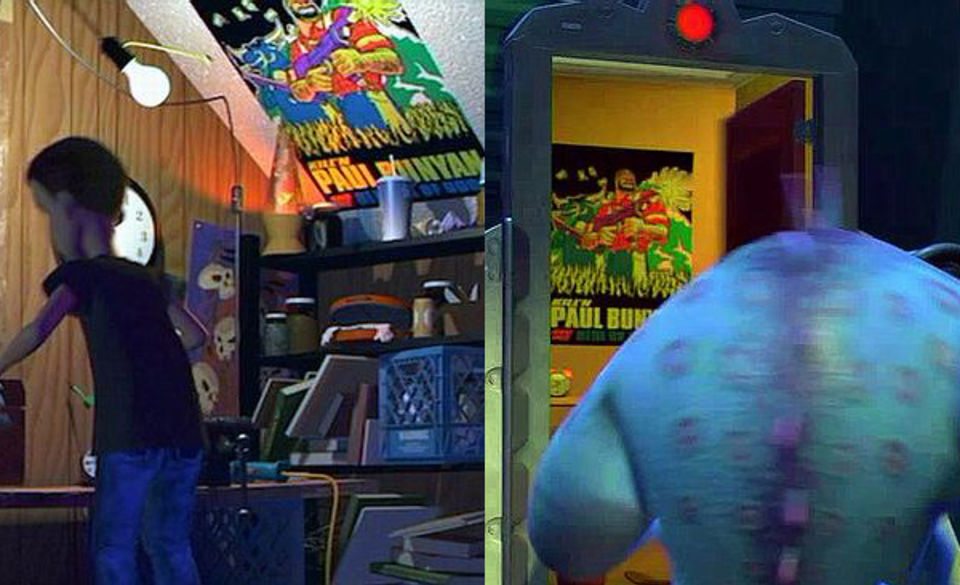
SCB himself points out that in Toy Story 3, we see a young girl who looks like she could be “Boo” (real name is Mary) because they look alike, though it’s not 100% certain. He also makes a connection between a poster we see in Monsters Inc. inside a child’s room and the same poster being on Sid’s wall in Toy Story.
As you can see, though, the posters aren’t situated the same way, and the monster we’re seeing has just been scared by a young girl, not a sadistic kid like Sid. For that reason, I think this is just an easter egg and NOT an indication that this was Sid’s monster.
Next, SCB points out that the movies sort of collide in a comic book series called Monsters Inc: Laugh Factory. Published in 2009, this 4-part series is about what happened after the events of Monsters Inc. Interestingly, a kid who looks like Sid Phillips (minus the skull t-shirt) shows up.
You can actually see several easter eggs in Boo’s room, here. And that’s kind of the point. Laugh Factory is filled with tons of references to other Pixar movies, as this was written by Paul Benjamin, a comic book writer for Marvel (not Pixar).
Keep in mind that Disney bought Marvel in 2009, likely explaining why this comic book series came about. For that reason and several others (including blatant continuity errors), I don’t actually consider these stories canon. They’re very over-the-top and portray situations and overt nods to other Pixar movies that don’t fit the framework of what Pixar has made themselves. Still, it’s a very interesting comic book series you can check out here.
Now on to the crux of SCB’s proposed theory. Could Andy have a monster of his own? Monsters Inc. takes place in 2001, which is 6 years after the events of Toy Story and Toy Story 2 (which takes place the summer following the first movie’s ending Christmas scene).
Monsters have been scaring kids for centuries, as we know from Monsters University revealing that the school was founded in 1313. So if the movies are connected, then it’s reasonable to assume that Andy could be one of the children assigned a monster.
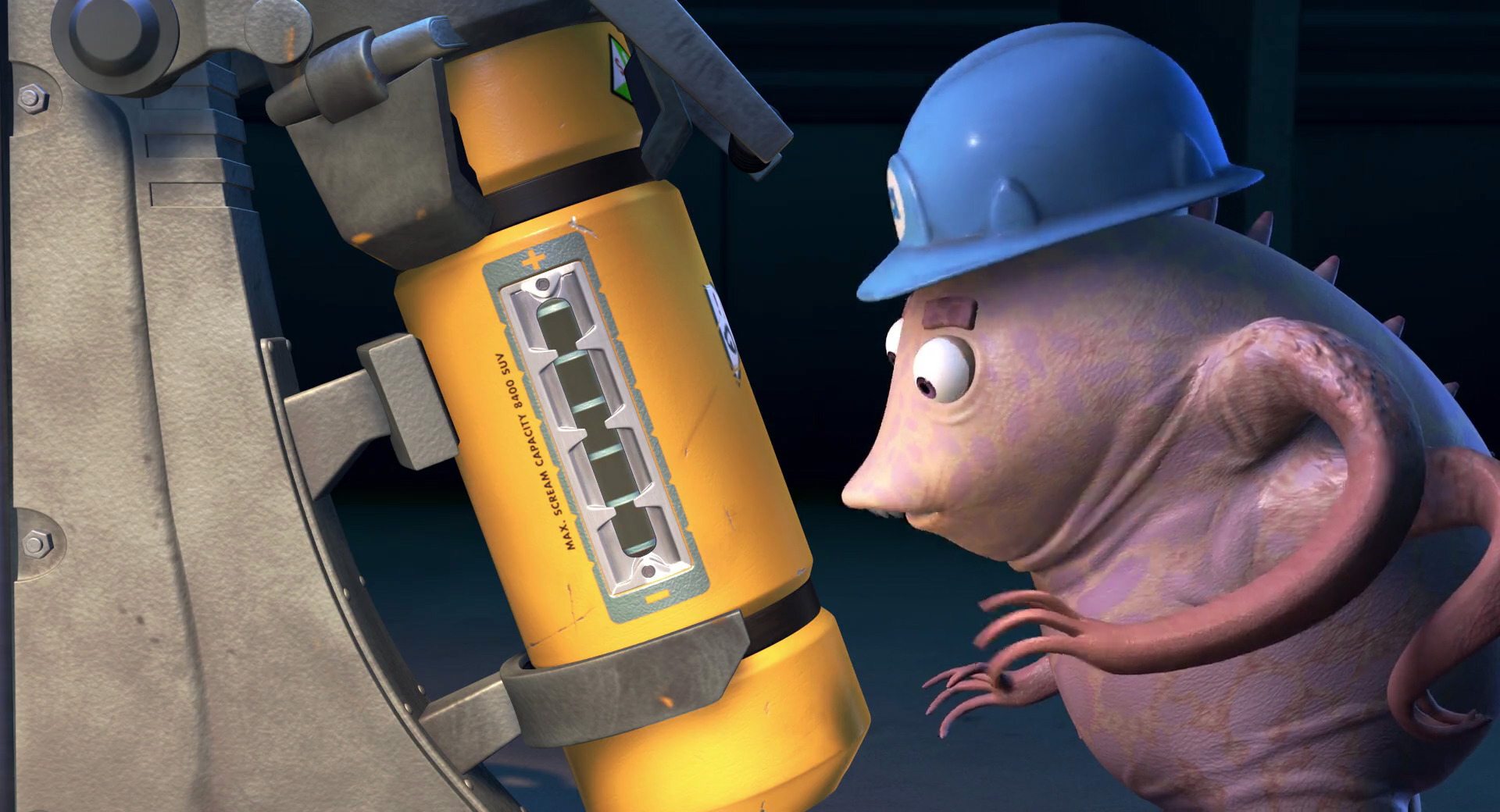
In Monsters Inc., I always found it weird that there are commercials and advertisements for what is essentially a power plant. Why would Waternoose be so concerned about awareness?
Monsters Inc. doesn’t sell anything.
Well, it would seem that Waternoose is concerned with recruiting new scarers. The university trains these monsters to make them the best, but as we saw in Monsters University, Sulley was able to climb the ranks without an education, possibly explaining why Waternoose is interested in hiring recruits anywhere he can find them.
This all leads me to believe that there are lots of children, but not enough scarers. The problem they have is getting enough energy from the kids they scare (because kids are harder to scare these days), but another solution is to hire more scarers to scare even more kids. Scary.
That also explains why kidnapping children was such an appealing solution to Waternoose. If he can’t keep up with demand, then stealing the kids outright can give him enough energy to last years.
Though Roz tells Mike and Sulley that they’ve been onto the kidnappings for quite some time, it’s doubtful that Andy as a kid in 1996 was ever stolen. There’s just no evidence or reason to believe that.
Back to SCB’s theory. He argues that Andy’s closet door looks remarkably similar to a door seen in Monsters University (though he couldn’t find the same door in Monsters Inc.) Specifically, this door from a promo reel on the Monsters University website matches Andy’s door.
The doorknobs even match up because on this side of the closet, the doorknob should be on the right because the one on Andy’s closet door is on the left.
SCB argues that this evidence — in tandem with Randall practicing his camouflage with wallpaper from Andy’s room — proves that Randall is Andy’s monster.
Unfortunately, I don’t agree.
The issue is that Monsters University takes place years before Randall becomes a full-time scarer (he’s just a freshman at the start of the movie). If this is Andy’s door, then that just means Andy had some other monster while Randall was still in school.
That also gives a more logical explanation for the wallpaper thing. Sure, Randall has it as practice, but that doesn’t mean he’s scared a kid with that same wallpaper. It probably just belongs to Monsters Inc. in the same way they have the practice rooms for scaring. Why and how would Randall have this for his own personal use unless he got it from the company?
I think it makes way more sense for the wallpaper to be passed down because it belonged to a kid who moved, giving them an opportunity to collect it and use it for practice. That may even be why the university has this door in the first place. It’s not being used anymore.
Of course, who else would need wallpaper to camouflage themselves against? It’s not like everyone can be stealthy like Randall. Well, I’d say the simple explanation is that Monsters Inc. builds its practice rooms from real rooms, and Randall and his assistant are using wallpaper from these rooms for their specialized training.
Here’s a question that’s bothered me for a while: How much time passes between Monsters University and Monsters Inc.?
This is a question of age, to be sure. In the original movie, Mike and Sulley appear to be grown, well-established adults. From their voice actors, you’d assume they’re in their late 30s or early 40s.
After watching Monsters University, however, you can tell that their voices are basically the same. Mike is in a relationship with Celia not long after he and Sulley get their dream jobs, and neither of them seem settled down romantically. I’d honestly argue they’re really in their mid-20s, which supports the idea that Monsters University occurs during or after Andy’s move in 1995.
SCB also brings up the “Newt Crossing” sticker on Andy’s door in Toy Story 3 as evidence that Andy remembers Randall coming through his closet. But I don’t find that very convincing because why would Andy plaster something that scared him on his closet? I’m more inclined to believe that it really is just a reference to the Newt movie that never came about.
I really enjoy this theory, but I don’t think it’s complete. SCB is certainly on to something, and I definitely want to believe a monster we’ve seen has an old scare card for Andy somewhere. But for now, we can only guess.
Thanks for reading! If you like this blog, you can subscribe for weekly updates by clicking the “Subscribe” button on the right sidebar. Or just follow me on Twitter for the latest updates – @JonNegroni