Forget a Sequel, ‘Hancock’ Should Just Be a TV Series

Remember that Will Smith movie from 2008 about a homeless superhero who’s bad at being a superhero?

Well, Hancock is likely getting its long-awaited sequel soon, despite how “meh” the original was after the first hour. In fact, I speculated on what I would love to see from a Hancock follow up two years ago, and young Jon Negroni simply argued that the hero, Hancock, deserves his own superhero team. And you know what? I stand by how fun that sounds.

HANCOCK

Except now I believe the Hancock story should be reimagined as a series, perhaps with a new cast. You can blame the success of streaming hits like Daredevil and House of Cards for getting me on the Netflix content bandwagon.

The interesting thing about Hancock is that it isn’t a superhero adaptation. It’s actually based on a story dreamed up by Vincent Ngo, a writer/producer who came up with the character of Hancock back in the mid-1990s.

Of course, stalls in development kept the film in limbo for over a decade, but this world of fallen angels being reluctant superheroes is still ripe for exploitation. And thanks to Hancock‘s somewhat bittersweet ending, a reboot/refresh sounds very appealing to fans like me.

HANCOCK

See, the movie itself was pretty fun up until the third act, when it rushed its “serious” plot with a weird twist and underpowered finale. But imagine how much more entertaining the origin of Hancock would be if it was given a full season of episodes to build up its lore with the same comedic timing and exciting action sequences.

If I was in the writer’s room, I’d prefer Ngo’s original take on the story, where Hancock has a stronger relationship with Aaron, the young son of Ray and Mary. It’s a more interesting dynamic that doesn’t need the weird sexual tension built between Hancock and Mary to drive the plot. Instead, you have a broken, lonely man with powers slowly becoming a hero alongside a kid who adores him. Now that sounds like a TV show premise worth pitching.

When you rewatch Hancock, you’ll notice that his motivations for going along with Ray’s “PR rebranding” are pretty weak when you think about it too much. Hancock suddenly decides he wants people to like him, seemingly out of nowhere. But it makes way more sense if Hancock builds a realistic friendship with Aaron, which eventually leads him to discovering the truth behind his powers.

HANCOCK

In other words: more Hancock and Aaron. Less weird love triangle stuff. Oh, and more action.

Now imagine all of that stretched out over 13 episodes of a grisly weirdo learning how to be super. And then contrast this concept with the over saturation of comic book movies and TV shows about people who fight crime because it’s the right thing to do.

You know, while Hancock just does it because shrug whatever.

I love the idea of a Hancock series, especially with a new cast and refreshed plot that can deviate from what we saw in the movie by actually including real villains (not just a bunch of bank robbers).

As for casting…well, you can decide that for yourselves in the comments.


Thanks for reading! If you like this blog, you can subscribe for weekly updates by clicking the “Subscribe” button on the right sidebar. Or just follow me on Twitter for the latest updates – @JonNegroni
 

The Pixar Detective: Chapter 25

chapter 25 pixar detective

Hey awesome readers! Your favorite band of Pixar universe-traversing heroes are BACK for another chapter of…well, you know.

We’re halfway through the final book of The Pixar Detective, which is certainly a bittersweet moment. Hopefully, the contents of this chapter will put you at ease, as it answers a few questions you guys have certainly been asking, though that just means there are more questions coming up!

Go on…The Pixar Detective: Chapter 25

Retronalysis: What You Missed About Ultron In ‘Avengers: Age of Ultron’

OK, I’m sure not all of you missed this. If you caught it and feel offended, then…I don’t know, that’s something you need to work out on your own.

I’ve already reviewed the film in length, so if you haven’t seen Age of Ultron yet and want to avoid even mild spoilers, you can check out my spoiler-free review and come back here when you see the film for yourself. Long story short: it’s a good movie worthy of its place as an Avengers sequel.

While I enjoyed the film, I had a few complaints in regards to some of the character and narrative development. Specifically, I disliked how “rushed” the first act was in terms of establishing Ultron as a villain. When you watch the movie, you’ll notice that we sort of jump into this plot (which isn’t heavily related to the opening scenes) with Tony Stark suddenly revealing to Bruce Banner that they can create an artificial intelligence.

avengers age of ultron

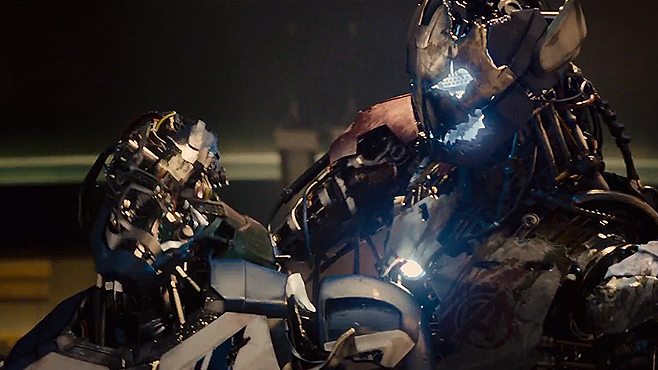
After a brief montage (seriously, a montage), they succeed in using the gem inside Loki’s scepter to create an A.I., though they leave before realizing Ultron has been created. I’ll spare you the details on what happens next in case you haven’t seen the movie yet, but the short version is that Ultron as a villain is born over the course of about ten minutes.

I didn’t like this because I felt like such a crucial part of what makes Ultron, well, Ultron was glossed over for the sake of getting right to the action. A noble goal, but for a movie that’s 2.5 hours long, I would have preferred just a few more scenes to familiarize us with Ultron’s motivations. Honestly, though, this is all nitpicking, especially since the 3-hour long director’s cut will likely fill in the blanks in a more satisfying way.

Now on to what you may have missed. See, I’ve been thinking a lot about Ultron’s personality over the last few days. As a villain, he has a compelling spark to his tone and delivery that makes him seem more like a misguided anti-hero instead of an instrument of pure evil.

avengers age of ultron

I realized that this is explained in a very subtle way near the beginning of the movie. Ultron was essentially created by Tony Stark and Bruce Banner. They’re like his parents, and in an amazing way, Ultron inherited the best and worst traits of these parents.

Ultron is sarcastic, impatient, and brilliant. Much like Tony Stark. He’s also prone to violent outbursts, like Bruce Banner. Most of all, Ultron has a specific vision for the world (like his fathers) and has the strength and will to carry it out. The only problem seems to be something that is later fulfilled by a character I won’t spoil.

Obviously, this is intentional on the part of Joss Whedon and his team of writers. When crafting Ultron as a character, it must have seemed perfectly natural for them to borrow from established characters, so we would familiarize ourselves with Ultron quickly and immediately feel threatened by his claim on the world. The father-son dynamic is reflected several times in the movie later on, of course, as Tony banters with Ultron over the fact that he’s his maker.

avengers age of ultron

This film would have been so much better, in my opinion, if they had just given Ultron a little more room to breathe in this way, so more audience members could catch that he’s a product of this world created by the Avengers (not just the literal Avengers themselves). After all, facing themselves is a sizable threat that the Avengers would (and did) have to face, even though the movie sort of sidetracked in that regard.

Now, in case you were hoping for some easter eggs, I can at least give you a few morsels to chew on. I didn’t notice as much as some other Marvel fans, but I did catch something related to Tony Stark and J.A.R.V.I.S.

When Tony has to find another program to help him fight Ultron, we see him settle on “FRIDAY.” In the comics, Tony uses FRIDAY as his virtual personal assistant, and she is very similar to Ultron in that she’s like his child. Remember that Ultron wasn’t actually invented by Tony in the comics, so Marvel was clearly introducing FRIDAY as a subtle nod to the origin story they gave to Ultron.

avengers age of ultron

I’ll have to watch the movie again, but I’ve also heard that Jocasta’s name can be seen around the same time Tony grabs the FRIDAY program. I can’t confirm this yet, but that would be an interesting easter egg considering Jocasta was created by Ultron to serve as his robot girlfriend (though she later becomes an Avenger).

That’s all I have for you guys. Hope you enjoy (or enjoyed) Avengers: Age of Ultron. Again, if you want my full review on the movie or just want to know my thoughts on it, you can check that out here.  

The Pixar Detective: Chapter 24

(Not caught up yet to this chapter? Check out our Table of Contents to get up to speed!)

Hey readers, it’s time for an all-new chapter of The Pixar Detective! I hope you’re mentally prepared because I’m not.

So this week’s chapter is titled “Anyone Can’t Cook,” and no, that’s not a typo. I’m curious how many of you will catch what a lot of this chapter really means, so once you’re done reading, be sure to share your theories and speculations in the comments!

chapter 24 pixar detective

And as always, don’t forget to thank our brilliant illustrator, Kayla Savage, for bringing this week’s chapter to life. She certainly doesn’t get enough credit for how great the story has developed. We’re both pretty sad, of course, that the novel is nearing it’s end, but we’re excited nonetheless about future projects!

Let’s get started.

Previously, on the Pixar Detective!

Stevin, Sadie, Sumner, and Wallaby are on their way to France in search of a “hidden wonder” that may lead them to where Mary has been taken. They’re joined by the mysterious Kevin, who flies the zeppelin, “The Spirit of Adventure.”

But not everyone is happy about this alliance. Kevin is also known as “The Poacher,” and a dangerous man named Robert Best is after him. To even the odds, he’s recruited a team of specialists known as “The Unforgivables,” descendants or former accomplices of past criminals tagged and bagged by Pixar University. Will they foil Stevin’s plans for finding Mary?

Click here to read Chapter 24: “Anyone Can’t Cook.”

Ready for more? Click here to read Chapter 25. You can use the prompt on the sidebar to subscribe for updates, or just follow me and Kayla on Twitter to stay connected – @JonNegroni – @KaylaTheSavage

Thanks for reading! What did you think of Chapter 24?

The Humans of ‘WALL-E’ Were Probably Better Off Without Him

Have you ever seen Pixar’s WALL-E? No? Then go watch that, come back, and let’s discuss something somewhat troubling about this film.

There are a lot of movies that you can point to and say that the protagonists (i.e. heroes of the film) actually do more harm than good. There are some movies with tragic endings that would have been just fine if the protagonist had done nothing at all.

And I think WALL-E accidentally does the same thing, and not for the reason you may be thinking.

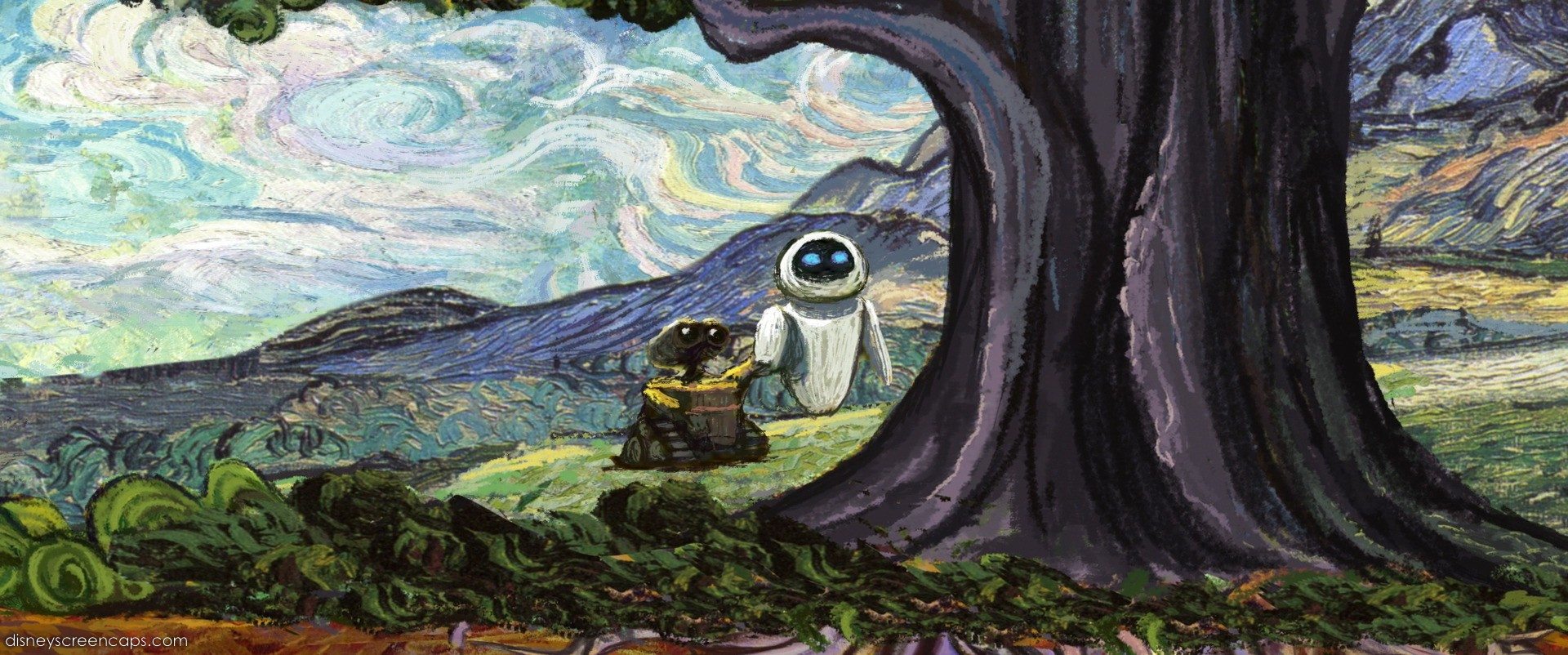
wall-e theory

Let’s recap the story. WALL-E is set 800 years in the future. In this universe, Earth becomes incredibly overpopulated by the year 2105, with 200 billion humans contributing to an environmental disaster for obvious reasons.

In response, a world-dominating organization called Buy n Large (BnL) pledges to clean up the mess, though it’s heavily implied it’s mostly their fault, and they send all humans to space on executive cruise ships called “starliners.” But after only five years, BnL decides to abandon the planet completely because the air has become toxic.

Side note: Soon, my book on The Pixar Theory will be coming out, and it’s packed with theories that concern this movie and BnL in general. What you’re about to read is something that didn’t make it into the final draft, so BONUS!

wall-e theory

Anyway, humans remain in space unbothered for 700 years, which is when the movie’s plot begins with WALL-E. When a probe named EVE arrives to find hospitable life, WALL-E falls in adorable robot love with her, and when she returns to deliver the plant-life she found, WALL-E frantically follows her.

WALL-E ends up on Axiom, one of many starliners running in a lifestyle “loop.” The humans there have been raised from birth to support and trust BnL and it’s routines for their entire lives. The robots satisfy all of their needs, and life is pretty much perfect in their minds, even though they do nothing for themselves.

It’s a strange setup because you’d think the people on Axiom would grow bored and feel stifled, but in contrast, they seem completely intent, until WALL-E arrives and causes a chain of events that leads to their return to Earth.

wall-e theory


This brings me to the main point: The people of Axiom are incredibly nice, well-functioning people.

Not once do you see a human on Axiom acting spoiled or rude. Instead, they’re incredibly polite, especially when they meet WALL-E for the first time. John and Mary are two great examples. They’re not used to robots having a personality, and when they meet WALL-E, they are very positive and nice to him. You’d think they’d treat him terribly, but instead they befriend him and get eerily excited when they see him again.

The humans we see have friends, romantic relationships, and excellent living accommodations. The screens they view everything through are translucent, so they have no shame in letting other people see what they’re working on.

wall-e theory

Even life expectancy isn’t a problem. When we see the panel of past Axiom captains, you can see that all of them live well over 100 years.

When the current captain of the ship becomes enamored with Earth, he appears to have the joy of a child. He’s incredibly optimistic, and in many ways, one of the central heroes of the film when it comes down to it.

In some of the final scenes, we see the humans showing a lot of empathy for WALL-E and EVE, even though most have them have no idea what’s going on. They cheer for the captain when he’s fighting Auto, and John and Mary don’t hesitate to risk their lives for the babies falling down the platform.

wall-e theory

What caused humans to be this nice?

Well, BnL apparently did. The society created by this “loop” of never-ending pleasure created a culture of interestingly polite humans, contrary to the spoiled rich kid syndrome you’d expect to see.

So was what WALL-E did for them…for the best?

If he had never followed EVE, the humans would sill be on the Axiom, but when the movie closes, the humans have returned to Earth. It’s depressing, but history repeats itself. Though we see shots of life rebuilding itself peacefully, won’t humans just make the same mistakes again and damage Earth completely this time?

wall-e theory

It’s tricky because the movie is clever about how it makes you hate BnL, despite it being the invention of the very humans we sympathize with. Pixar overtly makes the conditions of the Axiom both horrific and enticing at the same time, but few people walk away from it thinking the humans made a mistake.

From a storytelling perspective, it’s genius on Pixar’s part. They present the humans in a way that makes us want the best for them. If they had made the humans spoiled and insufferable, we wouldn’t care about them as much as we do by the end.

But the weird side-effect of this characterization is that Pixar is unintentionally saying that BnL’s methods created a better society than the one we already have. We know it’s better because Pixar is intentionally saying the society we have is what caused the problems emphasized in the film.

wall-e theory

So, here’s the question: Were the humans better off living in a society that made them the best they could be personally and socially? Or is living on Earth too important to ignore? I’m not convinced either way, to be honest.

Sure, the effects of gravity make you a blob dependent on a chair, but then again, it’s an awesome chair.

In Axiom’s society, there’s no crime from what we see. Everyone has their needs met. There’s likely no poverty, racial injustice, or food shortages. It’s utopia, but we think it sucks because the people aren’t skinny. Isn’t that a little messed up when you think about it?

wall-e theory

Still, the captain makes a good point when he says, “I don’t want to survive, I want to live!”

But does everyone on Axiom want that, or is it just the result of one man who wants to impulse buy something he read about on the Internet? It’s hard to say.

Of course, I’m not saying Axiom would be the best for me or you. We’re accustomed to bike rides, trampolines, and Taylor Swift concerts. But if you told me there was a way to solve all of Earth’s problems in exchange for a few extra pounds, I’d have a hard time saying no.


Thanks for reading this. To get updates on my theories, books, and giveaways, join my mailing list.

Or just say hey on Twitter: @JonNegroni

The Pixar Detective: Chapter 23

Not caught up yet to this chapter? Check out our Table of Contents to get all caught up.

It’s here! And I don’t think you’re going to be disappointed. Chapter 23 is…well a special chapter. I don’t want to say anything else, but I really doubt any of you are ready for it (I know I wasn’t, and I wrote the thing).

pixar detective chapter 23

This week’s chapter is titled “And Beyond.” As you’re reading over the point of view sections and following the new story developments, I challenge you to take this title to heart. What does it mean? Why are these events being intertwined for this chapter? Do this, and I think you’ll gain more from the chapter than you would otherwise.

But I’m getting ahead of myself! We’re getting close to the halfway point for the end of the series, but I still have a lot more story to share with you. I do hope you enjoy.

Previously, on The Pixar Detective!

Stevin, Wallaby, Sadie, and Mr. Sumner have joined a mysterious explorer named Kevin Sohn on a dirigible that is traveling to France. Their mission is to discover what Mary was up to in the days leading to her disappearance.

Elsewhere, Robert Best is on his way to unite a group of misfits known as the Unforgivables. As you may recall, Robert is an Alumni with Pixar University, the same organization that Alec Azam worked for. Now that he’s up against supers, he and his partner Rey (also known as Mirage) must now rely on these “Unforgivables” to help them track down and defeat Kevin Sohn, who they refer to as “the poacher.”

Of course, Dark Sadie and Dark Logan, the brainwashed supers controlled by BnL, are still hunting Stevin and his friends. Will they ever catch up in time? Find out!

Click here to read Chapter 23: “And Beyond.”


Ready for more? Visit the Table of Contents to read Chapter 24.

You can use the prompt on the sidebar to subscribe for updates, or just follow me and Kayla on Twitter to stay connected – @JonNegroni – @KaylaTheSavage

Thanks for reading! What did you think of Chapter 23?

What ‘Fairly Oddparents’ Has Secretly Been Trying to Tell Us For Years

Over the last few weeks, you may have noticed I haven’t come out with any feature posts, and the reason is simple. I’ve been spending all of my time trying to understand the purpose of The Fairly Oddparents, aside from it being a funny show back in its heyday.

During my research, if that’s what you want to call it, I realized that the show taught me way more about life than I ever gave it credit for. While it’s no “Boy Meets World,” this show was far more relevant than I ever realized.

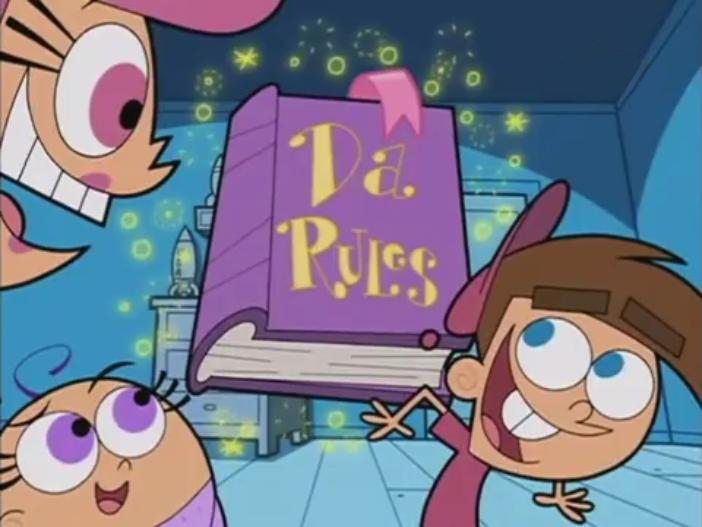
fairly oddparents

So I wrote an article, which came out today, about just that. You can read “20 Lessons We Didn’t Know We Learned From ‘The Fairly Oddparents'” on Moviepilot, where I cover some funny teaching moments from the show. But the fun doesn’t stop there.

See, I came across something pretty subtle while combing through the TFO narrative, and it’s this: You don’t really grow up until you figure out how to properly deal with your problems.

One thing that bothers me about TFO (and it probably bothers you, too) is that Timmy Turner learns the same lesson every single week. This lesson is that you can’t just wish your problems away. Every time you do, you end up creating more problems. And even in a world where you get everything you want, there are still rules, terms and conditions that will hold you back.

fairly oddparents

Which brings me to the true purpose of The Fairly Oddparents. It’s not simply to give us a show where we can laugh at the misfortunes of a ten-year-old boy who has the world at his fingertips. It’s to show us that the fairy godparents aren’t really there to just give Timmy whatever he wants.

Instead, the whole point of giving Timmy fairy godparents is to teach him that he doesn’t need them. In fact, the very first episode of the main show is about Timmy wishing that he was grown up, instead of just…well growing up the normal way.

In the pilot, Cosmo and Wanda say they want to help Timmy by granting him wishes, and I still think it’s true. But the point is clearly to help Timmy understand that he doesn’t really need magic to solve his problems. After all, in that same pilot episode, Timmy uses his wishes to abuse and torture Vicky, making him just as bad as her.

fairly oddparents

As the series progresses, we watch Timmy consistently use magic to make his life better, but it never turns out quite as he expected. And the show won’t end (for real) until Timmy decides to figure life out on his own, rather than rely on magical godparents to preserve his childhood.

To some of you, this may seem obvious. Of course, that’s the point of the show, right? The fairies are just temporary companions meant to help Timmy with frankly temporary problems. It’s no wonder, then, that the show doesn’t occur when Timmy is going through puberty. It really has to take place during the last years of true childhood, because after that, Timmy won’t need them anymore.

fairly oddparents

We even see this play out to some extent during Channel Chasers,” when Timmy starts to age quickly at the very end. We see him as a teenager for the first time, and as the years progress, he forgets all about Cosmo and Wanda. By default, we think that’s just because adults can’t fathom fairy godparents, but it’s the opposite. The fairies are there to make sure Timmy stops needing them, so he can get to a place where he’s ready to face life’s challenges on his own.

For these reasons, I’ll always look back fondly on the 2001-2006 run of the show, which is certainly when it was at its prime. These days, there’s a baby and a dog, or something. I’m not really sure and don’t care to find out.

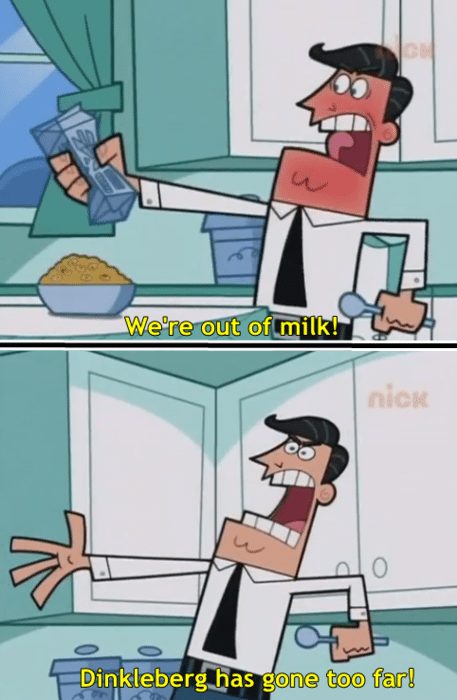
Before I go, here’s one thing about the show you may not know. The truth of Dinkleberg’s name and why Timmy’s dad hates him so much.

The Dinkleberg family name is a reference to D.I.N.K., which is an acronym for “Dual Income No Kids.” Hence, the Dinklebergs have an enormous amount of wealth that makes Timmy’s dad so envious.

fairly oddparents


Thanks for reading this. To get updates on my theories, books, and giveaways, join my mailing list.

Or just say hey on Twitter: @JonNegroni