‘Cars 3’ Review: A Surprisingly Good Sports Drama, But With Cars

Is Pixar’s Cars franchise worth another lap with Cars 3

One of the stark differences between the Cars movies and many of the other Pixar films is that there’s no explicit purpose for its own high concept…except to sell toys. There’s no real commentary on what it means to be a car or own one, and audiences are instead given a “human” comedy that replaces the characters with cartoon sketches simply for visual and experiential distinction.

Even Zootopia, a Disney film that appears to do the same with animals, allows its story to be controlled and guided by the real implications of a society governed by anthropomorphized animals in order to say something relevant about humans. Pixar’s magic has been to get away from that type of storytelling with films like Toy Story, which commit to the real differences between the plight of toys and the separate experience of being a human.

Go on…‘Cars 3’ Review: A Surprisingly Good Sports Drama, But With Cars

‘It Comes At Night’ Tries Way Too Hard To Make You Think It’s A Horror Movie

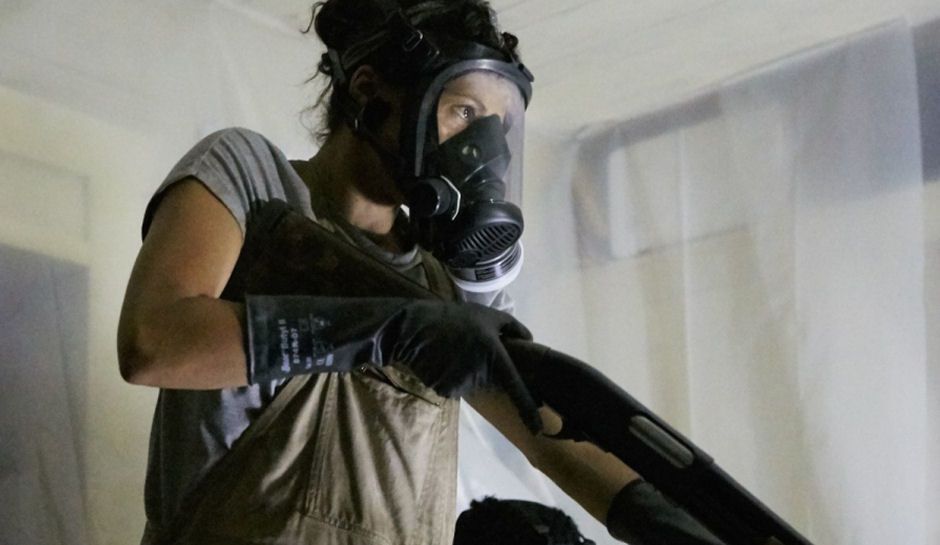
It Comes At Night

It Comes At Night is yet another horror film from A24 that promises to wrap viewers up in an atmospheric resurgence of creepy tales that rely less on jump scares and more on pure dread. Unfortunately, It Comes At Night falls slightly short of both.

 Any film that can transport me into a creepy setting I haven’t thought of in a while, even for a few short moments, is enough to praise the director for pulling off one of the horror genre’s greatest challenges. Trey Edward Shults (Krisha) wrote and direct It Comes At Night, which mostly delivers on what I love the most about these movies. I felt like I was alone in the dark of the woods, or the flashlight brazed wooden hallways of the main house. The fact that this film is centered around a lone survivalist family living in a large house in the woods while an undefined virus wipes out humanity in the nearby cities is just a bonus.

Joel Edgerton plays Paul, the patriarch with the keys to the house wrapped safely around his neck, making the rules for his wife and son and taking as few risks as possible to ensure their safety. Shults mines a lot of symbolism and relatability out of this simple premise, especially when a new young family shows up and is allowed to share the house with Paul, Sarah, and Travis. The growing paranoia that inevitably becomes a boiling point between the two families is wonderfully set up and established, in no small part thanks to Travis’s frequent nightmare sequences that serve as mini-prophecies that effectively delay the climax.

Only when the climax does come, it’s revealed that the entire movie is essentially a misdirect. Though some in the audience will welcome this, if only because they were too caught up in the real movie in front of them, many more will feel let down by quite a few things. The title, It Comes At Night, is an intentional prank. Though it can be stretched to fit what’s truly to come, you’ll feel less convinced as Shults places extraneous scenes of suggestive catastrophe that receive no payoff within their own terms.

It Comes At Night

It’s almost impressive how overstuffed the film feels anyway with its ambiguous visual storytelling, a highlight at times, while maddening the next. At one moment, you might be trying to understand the significance of the red door, the only way in and out of the house. Is it meant to invoke Passover, or some type of paradox in how it means “Welcome?” The film doesn’t offer its own stance and instead  rushes to an equally ambiguous ending that at first glance leaves many questions unanswered.

For this reason, It Comes At Night feels like a mandate to give it multiple viewings and a wide array of interpretation for the full effect. Though I never felt at any point during the runtime that this is the main draw, deservedly. What could have been an unconventional post-apocalypse narrative drenched in nihilism instead comes off as one of the Walking Dead episodes that tries to be more meaningful than it really is. It’s a passable (albeit beautiful) thriller infatuated with horror, while never bothering to commit.

Grade: B


Thanks for reading this. To get updates on my theories, books, and giveaways, join my Mailing List.

Or just say hey on Twitter: @JonNegroni


‘Wonder Woman’ Boldly Enters The No Man’s Land Of Superhero Movies

wonder woman

Wonder Woman is the long-awaited blockbuster superhero flick featuring the world’s most famous superheroine. It’s also a much-needed palate-cleanser for DC and Warner Bros’ shared universe movies. But in a lot of ways, Wonder Woman herself carries far more important burdens than the woes of a franchise.

The studios that make comic-book movies have had a serious problem with delivering female-centric movies. It took 75 years to bring Wonder Woman, one of the most iconic superheroes of all time, to the big screen, long after Catwoman, Elektra, and even Supergirl in the 80s.

In all that time, we’ve had numerous Superman and Batman films, three Spider-Man continuities, and a slew of lesser-known characters like Spawn, Steel, and even Jonah Hex on the big screen before Diana Prince, who has long been relegated to enjoyable TV shows and animated movies.

But no longer. Following up on her tremendous screen presence in the otherwise malignant Batman v Superman: Dawn of Justice, Gal Gadot returns as the sword-and-shield clad force of agency, this time with a backstory that carefully steps around the comics in many ways, while still playing tribute to the character’s best traits.

Go on…‘Wonder Woman’ Boldly Enters The No Man’s Land Of Superhero Movies

‘Pirates of the Caribbean’ Should Probably Abandon Ship After ‘Dead Men Tell No Tales’

Pirates of the Caribbean

Pirates of the Caribbean: Dead Men Tell No Tales is the fifth entry in Disney’s theme park attraction turned film franchise. Sadly, this new entry isn’t just missing Gore Verbinski’s keen direction that made the initial trilogy a smash hit. It’s also missing the basic elements of good storytelling.

Anyone who tells you that Dead Men Tell No Tales is a “retread” of the earlier Pirates films is ignoring the fact that this new story about undead pirates chasing the infamous Jack Sparrow and his love interest sidekicks across the sea is actually quite original in how utterly boring the whole thing is.

Go on…‘Pirates of the Caribbean’ Should Probably Abandon Ship After ‘Dead Men Tell No Tales’

Review: ‘King Arthur: Legend of the Sword’ Has The Makings Of A Decent Director’s Cut

King Arthur

King Arthur: Legend of the Sword reimagines the Arthurian legend himself as a UFC fighter trapped in a God of War video game trying to be an episode of Game of Thrones. If that doesn’t sound at all appealing to you, then perhaps the studio can re-cut this mess for you again.

Every generation gets its own rendition of the King Arthur myth, and they’re almost always perfectly reminiscent of the times they’re brought in. If Antoine Fuqua’s King Arthur was meant to capture the “gritty realism” phenomenon playing out in 2004, then Guy Ritchie’s Legend of the Sword is the inevitable backlash.

Set in an alternate mythic version of England where calendars and historical context hold no meaning, Legend of the Sword once again tells a version of the story about a born king named Arthur (played by Charlie Hunnam) who pulls the titular sword out of the stone. But rather than unite England as its new king, he has to do battle with the current king instead (his Shakespearean uncle, played by Jude Law) in an already united England. Aptly timed with 2017 England’s own political events featuring a “resistance,” Arthur forms a budding group of rebels who hatch schemes against their mage tyrant.

Considering the wealth of lore, subtext, and fantasy surrounding the multiple iterations of the King Arthur story, this new film is somehow one of the most simplistic in its myth. Arthur has daddy issues, he’s plagued by terrible memories, and he has to somehow defeat his evil uncle who wants to take over the world. His only moments of endearment come in small bursts of camaraderie found in a consistently entertaining cast of side characters. Djimon Hounsou, Aidan Gillen, and Tom Wu are clear highlights, though the rebels’ resident and nameless mage played by Àstrid Bergès-Frisbey is severely underwritten.

King Arthur

Not to say anyone in this film has anything close to a coherent character arc, unless it’s a vapid one in perfect servitude to the life and times of Arthur and his cut-scene sword. In order to enjoy Legend of the Sword, the audience has to be fully onboard with Ritchie’s vague, dreamlike blockbuster version of a narrative that repeats cutaway exposition editing that was unique several decades ago about three more times than what would have been effective.

Ritchie does play around with some welcome shortcuts in place of the typical montage—Arthur’s early life as a boy turned brothel manager is particularly engaging—but virtually nothing else in this movie contains anything new or interesting to say, reeking of studio interference that creeps into the script until the third act comes charging along to undo all of the goodwill mustered by the first half.

That’s why there’s probably a cult classic hiding somewhere on the cutting room floor of Legend of the Sword that plays closer to whatever Ritchie must have truly had in mind. This is a final production that has clearly been tampered with, both in its editing and script. Or Ritchie simply needs to go back to smaller projects where he can do more with less.

Grade: C+

Extra credits:

  • This is the first in a planned set of six movies. But it’s projected to bomb at the box office, so don’t expect to see Merlin or Lancelot marching into the Ritchieverse anytime soon.
  • Somehow, Merlin is the best Arthurian piece of entertainment in the last ten years.
  • Ripped off all of the wrong parts of Lord of the Rings, though to be fair, Legend of the Sword works well as a ballad, rather than a straightforward narrative. There’s even a moment in the movie where I thought a movie trailer had suddenly been spliced in.
  • Charlie Hunnam and Aidan Gillen get a few funny moments in what is their first work together since Queer as Folk.
  • At least it’s better than Legend of Tarzan.

Thanks for reading this. To get updates on my theories, books, and giveaways, join my mailing list.

Or just say hey on Twitter: @JonNegroni

Review: ‘Guardians of the Galaxy Vol. 2’ Doesn’t Really Care What You Think

guardians 2 review

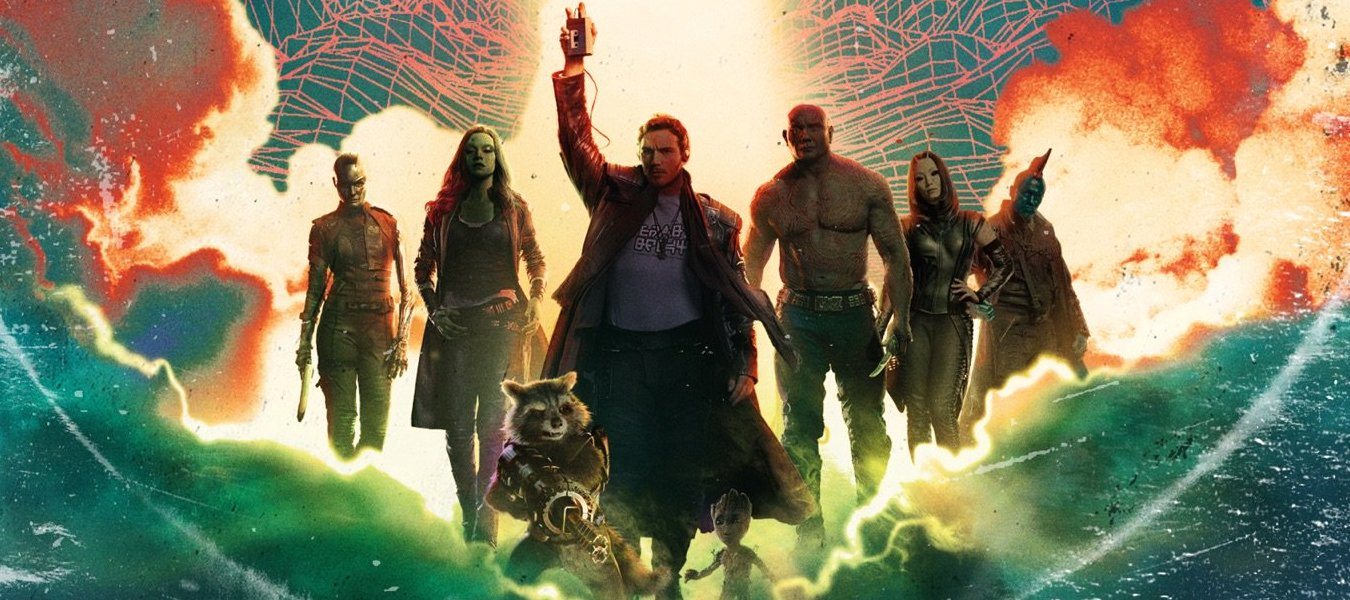
Guardians of the Galaxy Vol. 2 picks up right where its predecessor left off both story-wise and in regard to its timeline. Just a few months or so after the a-holes saved the galaxy and became a family, Peter Quill, Drax, Gamora, Rocket, and Groot embark on a new adventure that does something most sequels don’t really do. Rather than go bigger and double down on beloved set pieces of the first film, Guardians of the Galaxy Vol. 2 goes smaller and more introspective.

Comparisons will undoubtedly be made to the first two Star Wars movies. The first Guardians was a rollicking space adventure that lampooned the hero’s journey (specifically the “chosen one” trope) and won a lot of hearts through surprise in its ensemble storytelling. It was A New Hope, but for a new generation. In the same way, director and writer James Gunn clearly crafted this follow-up to be Empire Strikes Back, but not really in terms of being “the dark one” where everything goes wrong so the third movie can wrap things up. No, Vol. 2 is very much a standalone sequel, as Dave Schilling poignantly put it in his review.

The story this time around follows the Guardians of the Galaxy taking on a big mercenary job for a group of gold-skinned “conceited douchebags,” capitalizing on their newfound fame as “one-time galaxy savers.” Thanks to some mischief from Rocket, however, the team is chased through a dangerous asteroid field (one of many clear homages to Empire that’s played for laughs) and forced to crash on a nearby planet.

The team splits up at that point (Empire, again) and gets hounded by some old favorites from the previous movie. Yondu and his Ravagers are after the Guardians again and Nebula has Gamora-sized tunnel vision, looking to settle their sibling rivalry over one last fight to the death. There are some other big developments, including Peter’s own struggle with some planet-sized daddy issues that were hinted at during the end of the first film, and there’s a subtler twist going on with Drax, who has become the de-facto heart of the crew in surprising ways, pairing up with newcomer “empath” Mantis for some of the film’s best moments.

guardians 2 review

In some ways, Vol. 2 is as much a paradox of space opera as it is a parody of it. The heroes of the film go to far fewer locations, the main threat of the film is more ambiguous this time around, and even the mixtape has been altered as a plot device. In the first Guardians, “Awesome Mix” was a clever musical tool used to illustrate moments when the team would gel together and prepare for their best moments. It was loud, fun, lively, and reflective of the movie’s tone. The music in this film truly acts as a “B-side” with some tracks that are less familiar, but also deeper. Gunn has crafted a personal story that departs from a lot of what fans loved about the first film by giving them something they might not have known they wanted.

For some, that will amount to major criticism over Vol. 2 being a massive departure from much of what worked in the first film. Yes, the humor is still there in force, but in almost every other respect, Vol. 2 tries hard to make you feel something new about these characters, the universe they inhabit, and what you’re generally looking at. I’m not sure space have ever looked so beautiful the way Gunn and his team see it, rivaling Doctor Strange for sheer insanity in its colorful vignettes of time and space. The paradox, though, is in how these characters are ultimately simpler than the intricate comic-lore heavy environment they inhabit, just as this story tends to be at times, for the better.

That’s probably Vol. 2‘s greatest asset. It exists solely to exist on its own terms, not as a crowd-pleaser or recapturing of previous success. Despite releasing in May, it still aims to be an “August movie.” It does what most sequels should aspire to accomplish in the same situation, especially when following one of Marvel’s best films, period. Vol. 2 is technically a better film and a must-watch for Marvel fans, but more importantly, it’s a great example of how successful a film can be when put in the loving hands of a trusted visionary who doesn’t really care what detractors may think.

Grade: B+

Extra Credits:

  • There are something like five “extra” scenes during the credits and then one at the very end. Some are pure fun while others are fantastic hints at big Marvel movies to come. The credits themselves are also good fun.
  • I didn’t speak much on Baby Groot, but that’s really just because he’s fittingly used as pure comic relief. It makes sense considering Baby Groot actually has the mind of a toddler, and any story arc they might have tried to force on the character would have felt forced and wasteful.
  • I also didn’t get into any of the film’s major flaws, and that’s honestly because they’re mostly nitpicks. The second act, for example, drags a bit and some of the twists are entirely too predictable. But it all still works enough to recommend.
  • I didn’t get a chance to list any of the cast above, so here they are: Chris Pratt as Peter Quill, Zoe Saldana as Gamora, Dave Bautista as Drax the Destroyer, Vin Diesel as Baby Groot, Bradley Cooper as Rocket, Michael Rooker as Yondu Udonta, Karen Gillan as Nebula, Pom Klementieff as Mantis, Kurt Russell as Ego, Elizabeth Debicki as Ayesha, Chris Sullivan as Taserface, Sean Gunn as Kraglin, and Sylvester Stallone as Stakar Ogord.

Thanks for reading this. To get updates on my theories, books, and giveaways, join my mailing list.

Or just say hey on Twitter: @JonNegroni

‘The Circle’ Is Broken In More Ways Than One

The Circle

In The Circle, our world of disruptive technology from social media to search engines has been conveniently consolidated into one uber-corporation called, you guessed it, The Circle, a simple name for what is strangely a shallow, unimaginative invention representative of what our near-future might be ruled by. Sharing through technology. Although…isn’t that already a reality?

Rather than take us through the implications of our world’s current affair with technology, the fictitious Circle and its inner leaders want to remove all privacy from the world in an effort to create true transparency. If you’re wondering “why” they want to do that, well, this movie clearly wasn’t made for your curious mind. “Sharing is caring” the employees echo to their leader, Eamonn Bailey (Tom Hanks), who advocates a master plan that has all of the absurdity of a 70s paranoia thriller without any of the logic or intelligence.

Go on…‘The Circle’ Is Broken In More Ways Than One