Review: ‘Alice Through the Looking Glass’ Is Weird For All the Wrong Reasons

alice looking glass review

When I saw the first live-action film, Alice in Wonderland, I found the whole thing sort of…OK.

It wasn’t very good or anything, but the 3D at the time was so stunning, and the effects so magical, it was easy to overlook how off-putting it was to see Alice being transposed as a fantasy hero, complete with a boring, unrelated side plot in the real world.

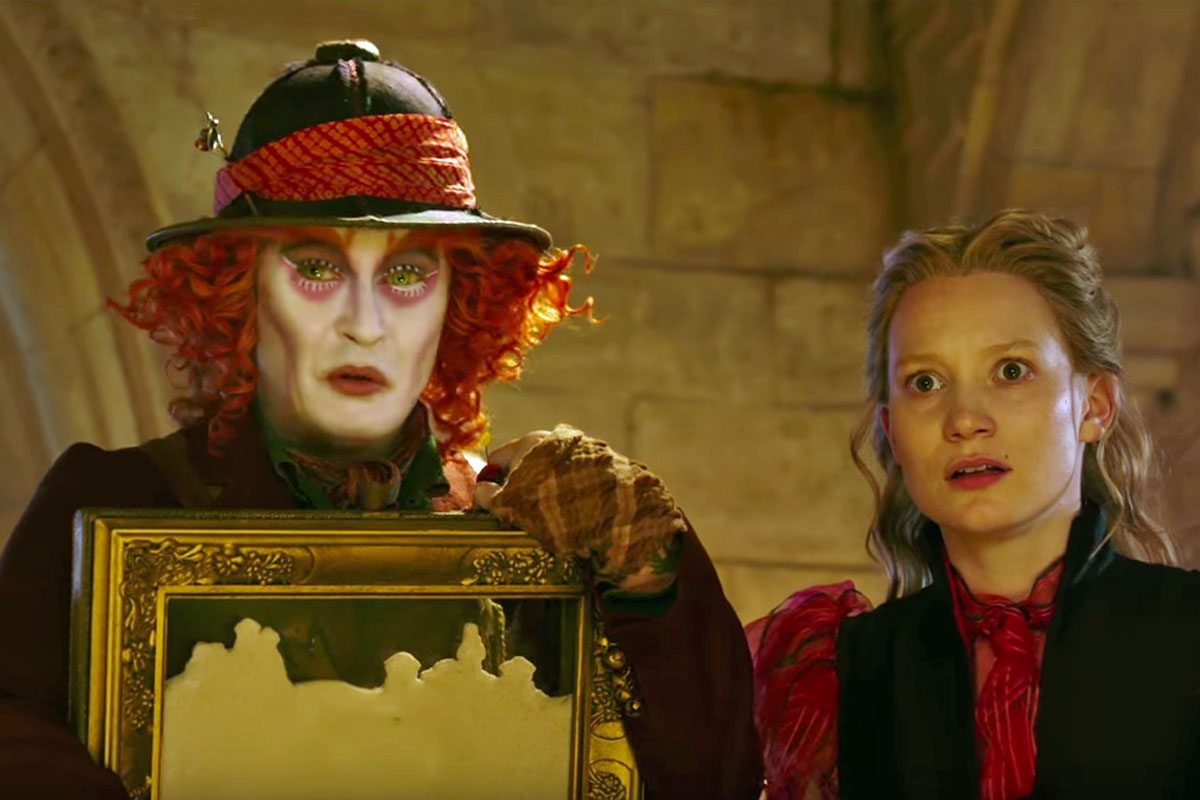
Over half a decade later, her adventures continue, though not much has changed to the film’s detriment. It seems Disney learned from all the wrong takeaways in that first film’s success, namely how important the Mad Hatter deserves to be in his role thanks to the fact that Johnny Depp is playing him.

Below are my lingering thoughts on the film, but my full review and breakdown is available here.

I suspect that the only people who will care for this sequel are strict fans of Burton’s 2010 interpretation. And I suspect even further that those fans will be mixed on Looking Glass for the most part. Unless you have a sadist passion for seeing the Mad Hatter and Alice embarking on elaborate adventures in Wonderland just for the sake of it, then this entire film will ring as hollow as the 3D.
alice looking glass review

In the review I linked above, I go into detail over why the story and purpose of Looking Glass is atrocious to the point of my stamping it a very low grade (lower than the “C” I would grade Alice in Wonderland). But I glossed over points about the visuals and how the film measures up to the books.

As far as the books go, I’m not very disappointed with how they’ve been adapted, if only because it’s probably impossible for anyone to adapt them faithfully. Carroll wrote them to be veiled absurdist stories that criticized the Victorian Era, so a more modern interpretation suffers a herculean task: how can you use wordplay to capture the spirit of the original while also applying the Carroll effect to current events? If any filmmaker was able to do this successfully, they’d have a masterpiece on their hands. But for obvious reasons, that will probably never happen, at least anytime soon.

When it comes to the CGI, I have little doubt that this will be a splitting point between fans and critics. Some of the actual design and movement of these characters is solid, even compelling at times. My main issue with them is that the existence of the green screen was all too apparent throughout the film, thanks to bizarre hiccups in lighting that contradicted the faces of the characters with their backgrounds. Why some are heralding this as a visual treat on par with this year’s Jungle Book completely baffles me, but for whatever reason, I’ll probably be the minority opinion on that front.

alice looking glass review

So chances are that you’ll enjoy the visuals and hopefully overlook the massive narrative issues that doomed this film for critics like me. Otherwise, you’re probably better off scouring for other, better adaptions of Looking Glass, including the somewhat decent 1998 movie with Kate Beckinsale.

Grade: D


I’m Jon and thanks for reading this. You can subscribe to my posts by clicking “Follow” in the right sidebar. Or just say hey on Twitter! @JonNegroni

Second Opinion: ‘Days of Future Past’ Is a Good, But Not Great X-Men Film

days of future past opinion

Days of Future Past was quite the success story when it finished its run in 2014, amid competition from Captain America: Winter Soldier and Amazing Spider-Man 2 in what was quite the crowded spring for comic-book movies, only to be upended by Guardians of the Galaxy that August.

Fans were divided on whether or not the film would actually work with time traveling in the mix, yet that very plot device is what enabled some of the film’s best moments, like seeing the previous generation of X-Men stars exist in the same universe as the fresher, more upbeat cast introduced in First Class. Because of this and a certain character named Quicksilver, DOFP was a huge hit with both audiences and critics, gaining almost double the average worldwide box office for X-Men films and getting the highest overall ratings.

And yet it’s probably not the best X-Men film, perhaps tying for second with First Class and submitting to the superior X2, if only because that film had the luxury of being a continuation of a solid pilot movie, as well as a more complete feature.

Like X2, DOFP’s biggest strength is its lack of having to tell another origin story. It’s a seamless continuation of two movies: X-Men: First Class and The Wolverine (or Last Stand, perhaps), making this the first X-Men sequel to feel like a comic-book movie, rather than a movie based on comic-book characters. It worked for Marvel’s slate of films, and it worked well here for X-Men, as well.

days of future past opinion

But also like Marvel, DOFP suffers from having a severe barrier to entry, preventing most newcomers from being able to jump in and start watching. Because of the complexity set forth by multiple soft reboots thanks to non-starters such as Last Stand and Origins: Wolverine, DOFP requires a full viewing of almost all of its films dating back to 2000 in order for viewers to have a complete picture of the “what” and “who” that makes up this film.

You can arguably get away with skipping the first X-Men, but then you wouldn’t understand the implication of Rogue’s actions in the subsequent two films. Skipping The Wolverine robs of you a crucial end-credits sequence that explains what goes completely unexplained in DOFP concerning the reappearance of two major characters presumed either dead or powerless. And even Origins: Wolverine lends some context to…well, never mind about that one.

Take a look at the complexity of the set up alone: In the future, Sentinels have all but rid the world of mutants, creating an apocalyptic wasteland in the process. So Shadowcat, reprised by Ellen Paige, uses a new power to send Wolverine’s consciousness back in time to 1973 to prevent a series of events that leads to the creation of the murderous sentinels, starting with Mystique’s mission to assassinate their creator, Bolivar Trask.

For invested fans, DOFP works on every level because there’s enough familiarity to fuel the drama that parallels between the past, with characters from First Class, and the dystopian future battled out with the cast of the first trilogy of movies. But most of the fun truly lies in the main plot occurring in 1973, as the movie feels most at home combining stunning special effects sequences with historical fiction, and doing it even better than First Class for that matter.

days of future past opinion

The main problem is that you spend more time trying to understand where everything exists in this movie than you do trying to analyze and think about the story. Little of the drama between characters is appreciated or slowed down to be appreciated, traded instead for a series of “big” moments compounding on each other in order to get to the finish line, which involves a sweeping retcon of previous X-Men flops.

Like First ClassDays of Future Past is certainly a good movie. It’s just not very great because it has to pave the way for something better, later. When it first came out, many fans were worried about getting their hopes up to high because director Bryan Singer had an almost impossible task set before him. But it’s clear that the task was to make a good film out of a complicated premise, rather than something amazing that manages to stand out and convert new fans into the X-Men universe.

Second Opinion Grade: B


I’m Jon and thanks for reading this. You can subscribe to my posts by clicking “Follow” in the right sidebar. Or just say hey on Twitter! @JonNegroni

Review: ‘The Nice Guys’ Is a Perfectly Acceptable Shane Black Movie, But Not Much More

the nice guys review

Set in 1977 Los Angeles, The Nice Guys begins its buddy crime comedy with an impossibly insane inciting incident. Just as a young boy (probably about director and writer Shane Black’s age during these years) opens a dirty magazine to ogle a famous porn star, the famous porn star herself crashes through his house, narrowly missing him. He goes to assess the damage and promptly covers her up during her final moments.

To put it simply, this is a film that embraces the absurd and dues ex machina of it all in order to get its point across, which varies from scene to scene. And while there’s no thread that neatly connects a lot of the bigger moments in this story about two private investigators who unravel a Hollywood porno conspiracy, a lot of the gags and character moments are flat out impressive and refreshing.

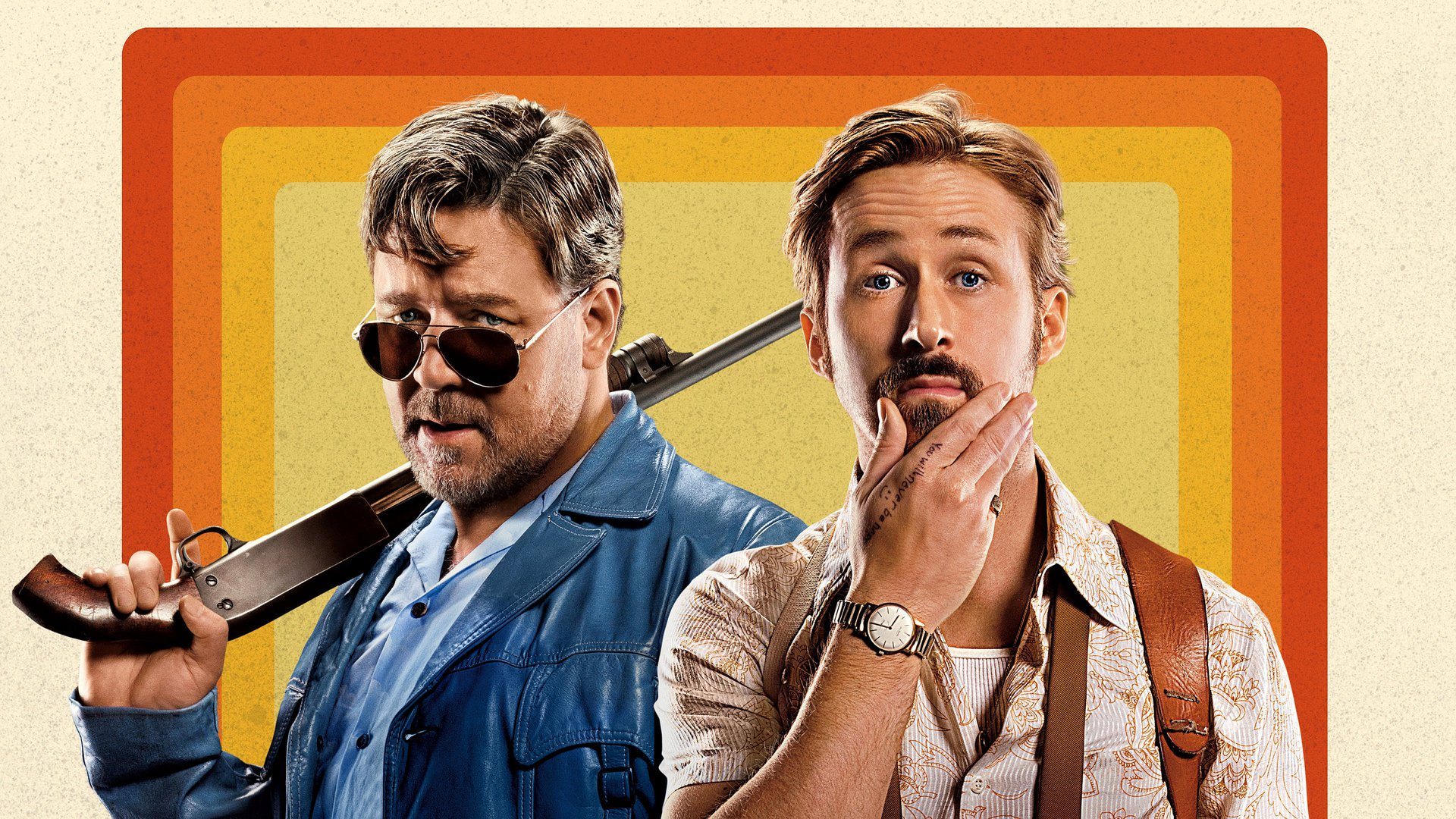
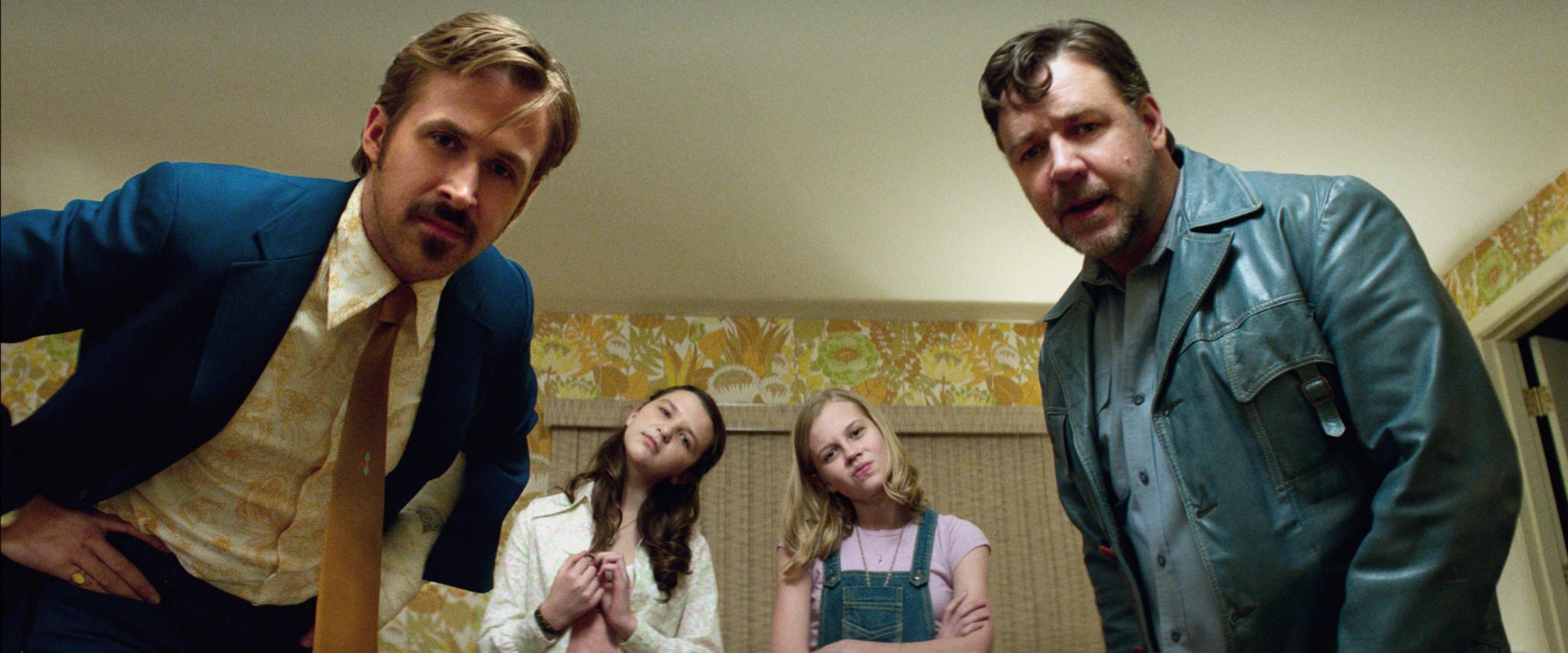
And you couldn’t ask for better actors to fill these roles. Russell Crowe plays Healy, the no-nonsense muscle. Ryan Gosling plays Holland March, a bumbling demigod of survival. And Holland’s wise-talking daughter, Holly, is played by Angourie Rice, whom you’ll certainly be seeing more of out of Hollywood.

the nice guys review

Originally intended to be a pilot for a TV series heavily inspired by “The Rockford Files” (which is clear throughout the film with its many loving references to that 70s show), The Nice Guys was converted to film when it was clear that the pilot had too many issues.

And some of these problems seem to have carried over to the final product, which is a story that is sorely lacking of a rewrite that addresses many of the plot contrivances and shallow characterization for anyone outside the “big three,” and perhaps an unlikely villain who emerges past the halfway mark.

But Gosling, Crowe, and Rice were made to fill the screen together, in what is one of the best displays of onscreen chemistry all year, along with some of the best jokes. Gosling gives his all in a hilarious performance that mixes surprisingly violent physical comedy with laser-focused comedic timing. Not all of the jokes in The Nice Guys land quite as well as they were probably intended, but the duds are few to find. In fact, the film’s best joke is probably the fact that it’s a film about Hollywood that was actually filmed in Georgia.

the nice guys review

For most fans of Lethal Weapon and especially Kiss Kiss Bang Bang, as well anyone keen to pick up on the mountains of 70s pop culture references, this film will be a godsend and probably your favorite movie of the year. But for everyone else, it does the job at a deeply discounted rate.

Grade: B

Extra Credits:

  • I prefer the 60s when it comes to 20th Century decades.
  • Russell Crowe seemed quite in his element alongside Gosling, especially during the funnier moments. With a better edited script, the likely sequel to The Nice Guys could be one of the best movies in years. That’s how much more of these characters I want to see.
  • Kim Basinger really fits in with the era of this movie. But not in a good way.
  • I forgot to mention some of the action of this movie, which is fantastic for the most part. The only scenes that fell flat were the ones in the third act, and that’s only because the entirety of that act is a bit of a mess. The film essentially peaks at the elevator scene.
  • If you’re someone who obsesses over, Why wouldn’t that character do X, Y, and Z, then you might have a bad time.

I’m Jon and thanks for reading this. You can subscribe to my posts by clicking “Follow” in the right sidebar. Or just say hey on Twitter! @JonNegroni
Review: ‘Money Monster’ Is Almost, But Not Quite, a Buy

money monster review

Films about Wall Street, greed, and the likely combination of the two have always been reserved for a certain type of moviegoer. Mostly the ones who care enough to understand the differences between the DOW and the NASDAQ, for example.

Last year’s The Big Short might have started a new trend, though, when it comes to films about how “big money” affects everyone, not just rich stockbrokers. And if that film was a prototype for how a complicated financial crisis could be better explained to outsiders or newcomers, then Money Monster feels like its made-for-TV spinoff.

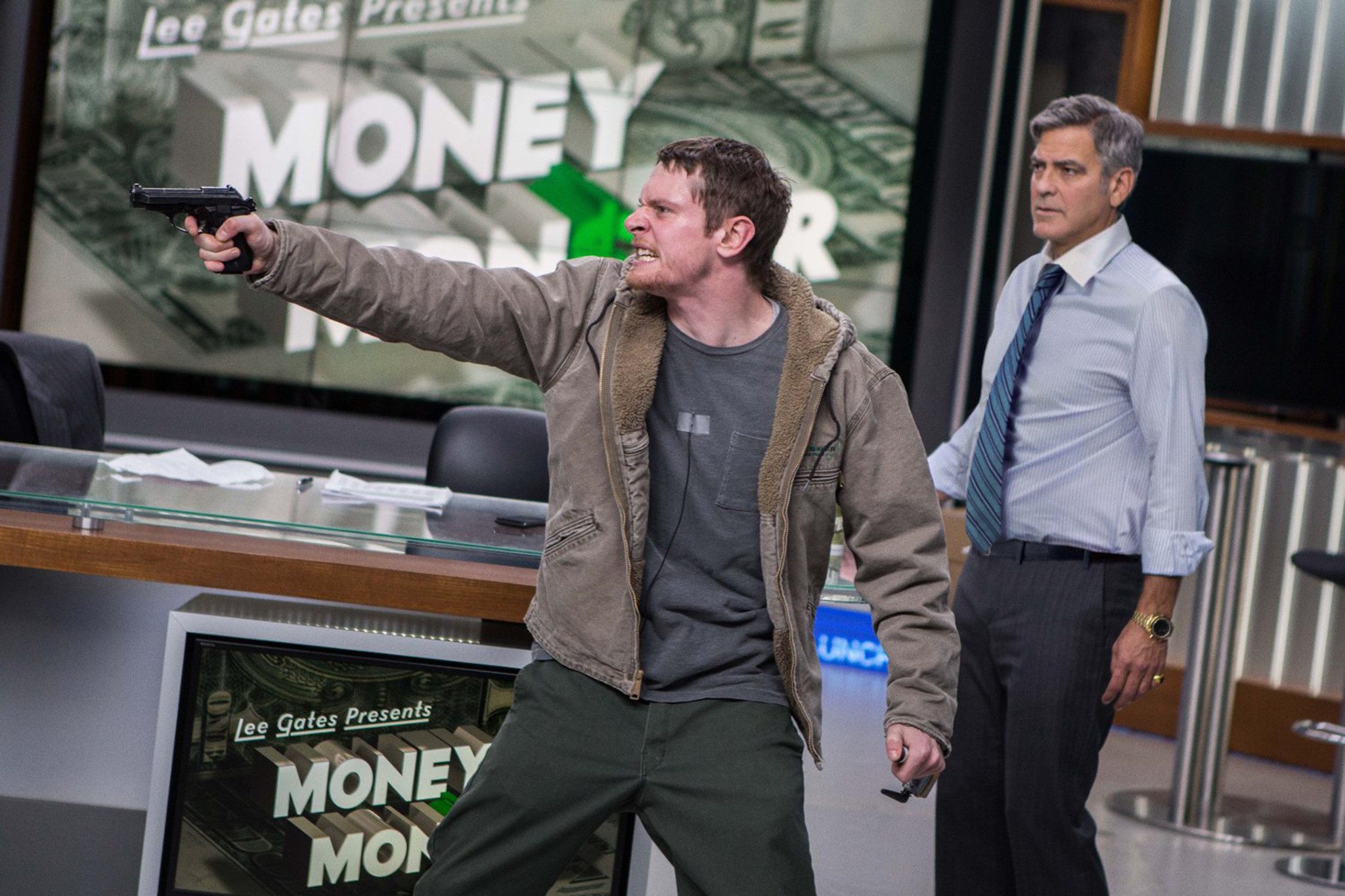
That’s not to disparage the movie, outright, but simply illustrate the downsizing in scale and entertainment value. To hook viewers, Money Monster begins as a hostage thriller, when a disgruntled victim of a bad call (played by Unbroken star, Jack O’Connell) hijacks a live Mad Money TV show clone hosted by George Clooney playing George Clooney if he had Jim Cramer’s job.

But as a whole, Money Monster wants to be about more than a singular man in search of answers while his finger is on a trigger, ready to set the studio to explode on live TV. It tries hard to place universal attention on the millions of people we didn’t really see on The Big Short. The ones who lost big when they bet big.

money monster review

The movie even transitions its multi-camera editing to ample shots of normal people reacting normally and nonchalant to what is frankly a terrifying situation occurring down the street. The intention is to drive home the point that people care little about the details of where their digitized money goes, but it falls flat about the seventh time the viewer (who has so far been hooked into a competent psychological showdown) is shown seemingly random scenes of hackers across the world playing video games while all of this goes down.

It’s these dramatic and abundant tonal shifts that weaken what could have otherwise been an effective, even moving film carried well by Julia Roberts, who plays the director in charge of keeping the cameras running per the gunman’s demands. The three-way-tug between her, O’Connell, and Clooney is easily Money Monster at its most interesting and somewhat unique. It’s just a shame that director Jodie Foster felt the need to cram quasi-relevant pop culture and news junkie references all over this film to drive home a point that could have been made with much less.

Grade: C+

Extra Credits:

  • Despite the low grade, I still think this movie is worth seeing for a lot of people. They just have to put up with a lot of eye-rolling fake news clips and Vine references while waiting for the good stuff the movie does provide (eventually).
  • I have a soft spot for Jack O’Connell, mostly due to his lightning-in-a-bottle performance as Cook in Skins. It’s almost a problem for me because I can’t unhear his British accent.
  • I didn’t say much about George Clooney for the same reason I didn’t in Tomorrowland or most of his other movies. The guy knows that at this point, he’s best at his most familiar. Though I’m craving an artistic renaissance from him, because we all know his talent didn’t stop at Up in the Air.
  • The above goes double for Giancarlo Esposito, who plays the one-note police captain.
  • I forgot to mention that this movie’s attempts at humor land about half the time. And when it doesn’t work, it really doesn’t work.
  • I’m going to rate Money Monster a SELL. Or however a C+ translates.

I’m Jon and thanks for reading this. You can subscribe to my posts by clicking “Follow” in the right sidebar. Or just say hey on Twitter! @JonNegroni
Review: ‘Captain America: Civil War’ Is a New Kind of Marvel Movie

review captain america civil war

The villains of the Marvel Cinematic Universe have always struggled, with few exceptions, to entertain on the same level as the heroes. Most of the time, the antagonists are simply bigger, less interesting versions of the hero, complete with a similar skill set. Iron Man set this off with Obadiah Stain, followed by Hulk’s Rampage, Ant-Man’s Yellowjacket, and others.

Civil War has its own uninteresting villain in Daniel Bruhl’s anarchist take on Baron Zemo, but he’s about as central to this film’s emotional center as Ant-Man. His side-villainy aside, Civil War shines because there is no clear antagonist, except for the one Captain America and Iron Man see in each other.

This is a tricky line to balance for plots such as this, because both sides of the conflict require convincing arguments to split audiences believably. For some, it will be irresistible to root for the pragmatic “fall in line” philosophy Tony Stark has grown into since 2008, and it’s one of the most impressive multi-film story arcs of all time considering its movement over the years.

review captain america civil war

While others will see Captain America’s “choice at all costs” dogma to be the more appealing, mostly because his rebellion against Stark and others is what drives the film’s story (it’s his name in the title, after all).

Civil War is the definition of a film that relies on its franchise nature to deliver its most resonant messages. The loneliness Steve Rogers carries as a man out of time is what justifies a frankly stupefying mission to save a man who doesn’t appear to be worth the trouble. But Bucky Barnes (AKA Winter Soldier) is the only connection Rogers has left to his old life, though he admits that even in those days, he couldn’t seem to fit in. And the events of Winter Soldier have already proven to Rogers that answering to a bureaucratic authority is how true empires (like Hydra) are formed.

This is all undercut by Tony Stark’s march against the threats that have popped up time and time again during the course of the Marvel Cinematic Universe. As Vision coldly reasons at one point, “Our strength invites challenge.”

review captain america civil war

And this is a movie where that strength is seen ten-fold, quite literally. The titular face-off is as satisfying as the marketing has been trying to sell you on, thanks to Marvel’s willingness to weave in a large number of subplots that any normal screenwriter would weep at the sight of. Directors Anthony and Joe Russo are complemented well by screenwriters Christopher Markus and Stephen McFeely, and they successfully make Civil War feel just as much a natural progression of the Captain America movies as it does a true Avengers sequel. And for some, it will be the Avengers sequel they expected from last year’s Age of Ultron.

The action itself is superb, in that it’s plainly obvious that the characters’ abilities were consistently considered when these scenes were written and directed. Captain America uses his shield in inventive ways, but Black Panther and Winter Soldier use vibranium in fighting styles that are unique to them. Spider-Man is a youthful powerhouse who stops often to chat, and Ant-Man lets himself get shot through the air on one of Hawkeye’s arrows.

These moments of simple creativity are what spark life into the long running time, in between moments of intense parkour and admittedly overlong fight sequences that have predictable outcomes. The script itself is tight, save for a few editing tricks that keep the laws of physics glossy, and almost none of the CGI is noticeable enough to lower the stakes of each set piece.

review captain america civil war

All this said, Civil War doesn’t expand the storytelling of the MCU in new ways, but it is a new kind of Marvel movie, in that balances subplots and seeds for future movies in a more graceful way than ever, forcing the viewer to catch up instead of the other way around (exactly like a comic book).

This works in Civil War because it also builds upon what people already love about these characters, their personalities, and how these movies hold them all together. And if that’s the only criteria in which you’re judging the film, then you’ll walk away thinking it’s about perfect.

Grade: A-

Extra Credits:

  • Tom Holland and Chadwick Boseman pull off something amazing by making both Spider-Man and Black Panther so instantly lovable. Their solo movies can’t come fast enough.
  • Which side are you on? Personally, I’m team Cap all the way, which is apparently the wrong side if you ask anyone else I saw this movie with.
  • I love this movie, but not quite as much as the first Avengers. But I can certainly see many people calling this one their favorite of the MCU for years to come.
  • This movie is very similar to Age of Ultron, actually, which I graded the same. Because like UltronCivil War refines the established strengths of its predecessor (Winter Soldier in this case) and gives us more to love based on what already worked before. Heck, I actually gave Winter Soldier an A- as well.
  • I was disappointed by Don Cheadle’s limited screen time this time around, especially compared to some of the other main Avengers. That said, I can’t say that about anyone else in this movie, which is an achievement all in itself.

I’m Jon and thanks for reading this. You can subscribe to my posts by clicking “Follow” in the right sidebar. Or just say hey on Twitter! @JonNegroni

Second Opinion: ‘Prince of Persia’ Could Have Been Something Special

prince of persia opinion

Directed by Mike Newell (who also directed Harry Potter and the Goblet of Fire and some other fantasy films), Prince of Persia: The Sands of Time came out in 2010 as one of the later attempts to revitalize (or just vitalize) the trend of adapting popular video games into movies.

When this film was on the horizon, a lot of gamers were ready to love it, because unlike a lot of other ill-fated adaptations, everyone agreed that Prince of Persia was a game that lent itself nicely to the feature film treatment. Even better, this was a game franchise that had already been successfully reinvented many times since the 80s.

That said, Prince of Persia: The Sands of Time was intended to be a film adaptation of the 2003 hit video game of the same name. But that didn’t really happen. Instead, Jerry Bruckheimer produced a film that deviated heavily from its video game source material, maintaining only the most superficial aspects of the game that define its identity.

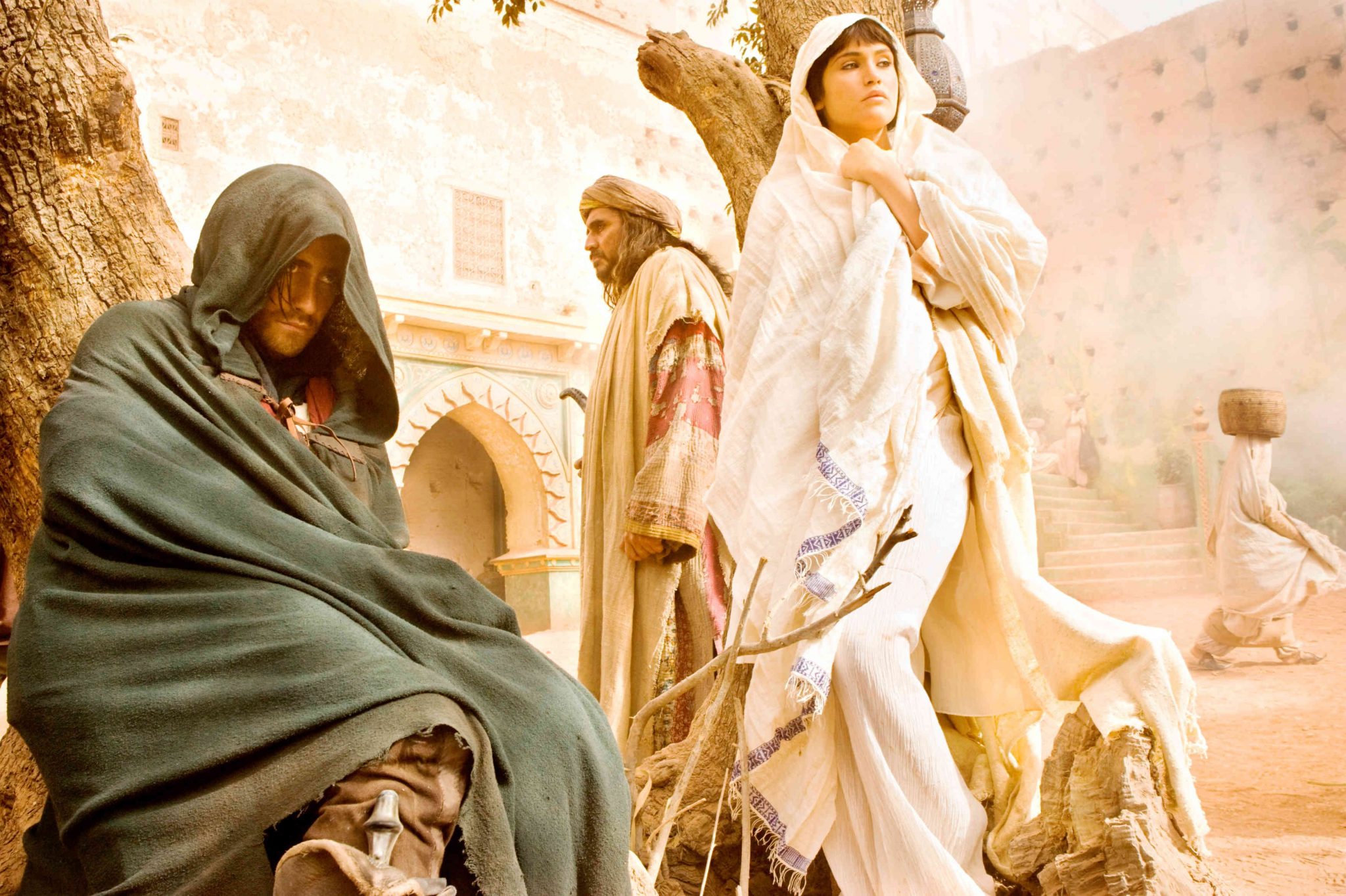
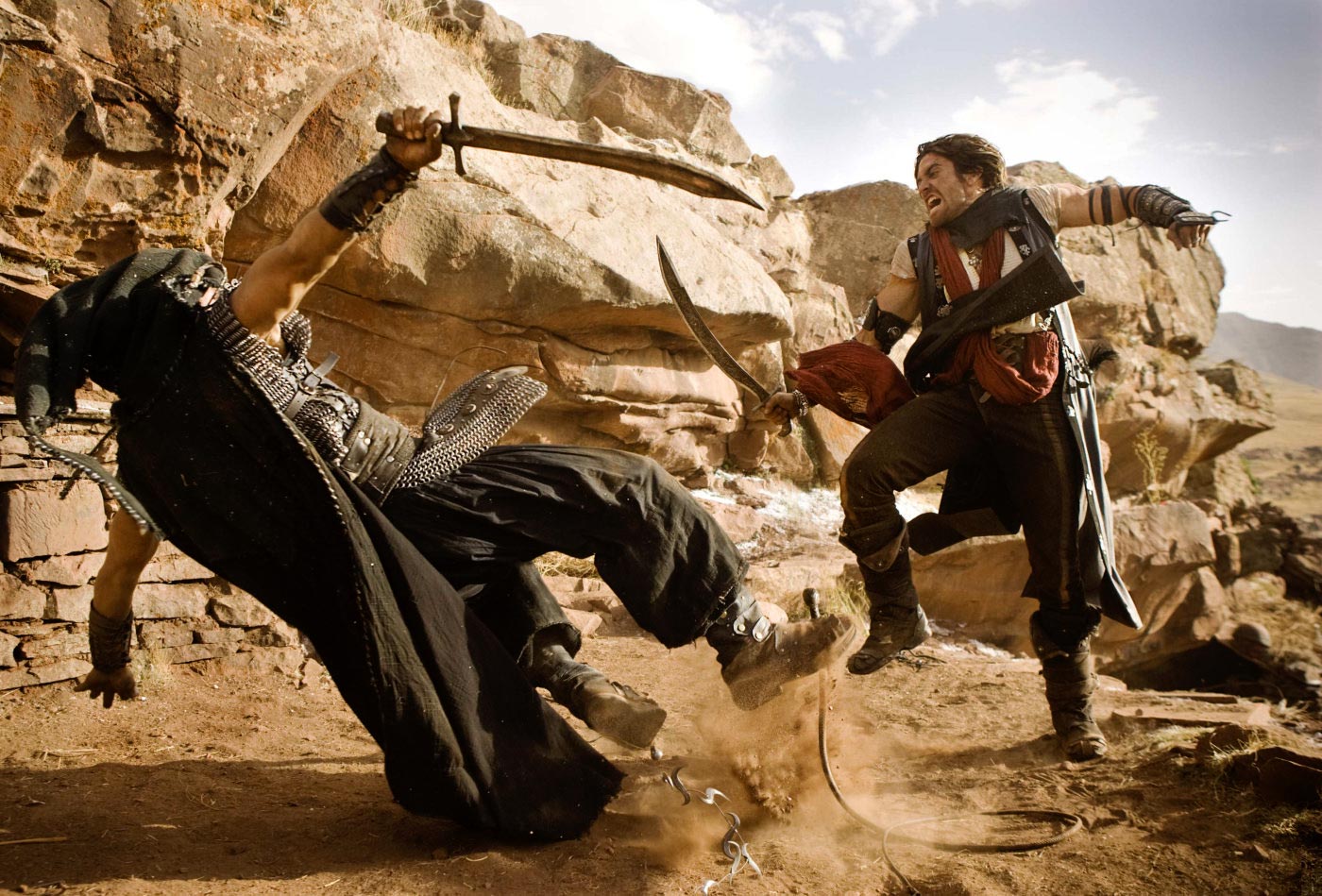
Yes, the main character has the power (somewhat) to turn back time with a dagger, though it’s hardly used in this movie. And he’s a quick-moving prince living in a Persian empire who must team up with a feisty princess (played well here by Gemma Arterton). But rather than adapt the more thrilling aspects of this character, who loses his family in the night due to the villainous treachery of their sorcerer advisor amidst a castle magicked to all hell, Prince of Persia (the movie) focuses on traditional swashbuckling adventure akin to Bruckheimer’s work in Pirates of the Caribbean.

prince of persia opinion

This isn’t inherently a bad thing, as long as you’re able to buy into a British-accent Jake Gyllenhaal playing someone who lives as Persian royalty after being adopted as a street orphan. The adventure boils down to the prince being framed for treason and then trying to prevent a magical sandstorm that will wipe out everyone in the world, which is a far cry from the more singular, human adventure in the games where only a kingdom is at stake.

For all of the fun Prince of Persia tries to have, its main problem is lacking any sort of identity that it could have easily gleaned from its source material. A generic plot and world-ending villainy are even less interesting when none of the characters (even Gemma Arterton, Alfred Molina, and Ben Kingsley) have nothing interesting to say beyond their simplistic motivations.

There are bright spots whenever the film shows off some now-dated parkour reminiscent of the games, but even the Dagger of Time, a powerful plot device in and of itself, is relegated to B-movie time travel plots we’ve seen before, rather than the effect that reversing mistakes at will can have on a person trying to do the right thing.

Unfortunately, the movie never really gets that interesting, but it also manages to stay light and entertaining throughout. Like National Treasure to a lesser degree, Sands of Time is full of breezy action with likable enough characters thrown into the chaos. But even its own special effects are hard to swallow, since even basic rooftop antics are enhanced with CGI for the sake of spectacle, and it was just as noticeable 6 years ago as it is now.

prince of persia opinion

Getting down to it, the major problem with Sands of Time has nothing to do with it being an imperfect movie. Plenty of enjoyable adventure films have glaring flaws that you forgive because you love being in this world that’s been created for you. Sands of Time lacks this type of setting, with characters whose chosen names could have used more debate, a historical backdrop devoid of awe (Secret Guardian Temple, anyone?), and an uninspired…well, everything else.

Second Opinion Grade: C-


I’m Jon and thanks for reading this. You can subscribe to my posts by clicking “Follow” in the right sidebar. Or just say hey on Twitter! @JonNegroni
Unopinionated: ‘Birdman’ Was a Good Movie, And That’s OK

birdman unpopular opinion

Every Tuesday, I examine an unpopular opinion in film and argue against it. This week: Why do so many people hate Birdman despite its huge success? 

There are a lot of ways to dislike a film, and sometimes for the worst reasons. So is the case with Birdman, the 2014 dark comedy that won the Academy Award for Best Picture over the likes of Boyhood and Whiplash (my personal favorite film of that year).

The film has been widely praised as a return to greatness for its star, Michael Keaton, as well as the cementing of Alejandro Iñárritu as one of Hollywood’s premiere filmmakers, just as long as he keeps signing Emmanuel Lubezki’s checks.

Like with most movies that achieve high praise among critics, Birdman’s detractors are quite vocal about their distaste for the film’s supposedly undeserved success. And since seeing the film myself in theaters, I’ve been one of those harsher critics.

birdman unpopular opinion

But Birdman isn’t a terrible movie. It’s above average, I would argue, and its resonance with film buffs as a great film, or even a work of art, has plenty of merit for the same reasons all of Iñárritu’s films achieve critical success. Technically speaking, the film is quite masterful.

Birdman centers around an aging actor named Riggan, who once played the superhero, “Birman,” and has yet to find gratification beyond that peak fame he acquired. It’s an obvious parallel to Keaton’s true life, as he of course portrayed Batman in the 1989 Tim Burton film that inspired the majority of that character’s evolution in film, television, and even video games.

To prove he is an actor who transcends the schlock that made him famous, Riggan directs, writes, and stars in a Broadway show adaptation of Raymond Carver’s What We Talk About When We Talk About Love. The title alone is a clear dig into the type of love that fans heave onto their heroes, and this is played out in a satisfying way as we constantly see people stopping Riggan to take a photo, while he stands there unamused. Even when teenagers admit to not even recognizing him, proving that indifference really is the true opposite of love.

This is a film that makes its audience feel clever for catching these clues and making snide remarks about the current state of the superhero genre. Yet so much of it is loud and on the nose, including a fantastic scene where Riggan tells off a Broadway critic for all of the reasons most of us haven’t even bothered to articulate. In fact, the same criticisms he lobs at her apply nicely to Birdman itself.

birdman unpopular opinion

But is anything within Birdman really all that smart? Viewers don’t have to work hard to grasp the film’s deepest themes, and the camera itself even holds your hand by never violating its one-take structure and giving you a specific sense of where everything is laid out. Optimistically, this is an enjoyable trick that shows off the best of Iñárritu and Lubezki’s ability to enliven even the most mundane sets (some of them being gross to even look at), but for some, it comes off as a magic trick, in that finding out the illusion sort of spoils the fun.

But this is no reason to dismiss Birdman, for the same reason you put up with a brilliant friend who acts pretentious from time to time. There’s value in watching an imperfect character study that allows itself to get swallowed in the creative process, which we see with Riggan and his co-stars as they wander backstage with a never-ending purpose. Though it doesn’t amount to anything reasonably profound in the end, Birdman feels like a film that doesn’t even care about its own ending. It’s a show off in the best way possible.

And Birdman is among a long list of films that tackle the existential crises of fame. It’s just a shame that the unique and crafty questions it brings up aren’t answered in an equally compelling way. Without getting into spoilers, its resolution comes straight from the Hollywood playbook of rushed ex machina, and an ambiguous ending does little to assuage this. But the ride itself is still pretty satisfying as long as you don’t take it too seriously.

Grade: B


I’m Jon and thanks for reading this. You can subscribe to my posts by clicking “Follow” in the right sidebar. Or just say hey on Twitter! @JonNegroni