Unopinionated: ‘Man of Steel’ Isn’t the Superman Movie We Asked For

esman of steel unpopular opinion

Every week, readers send me their unpopular opinions, and on Unopinionated, I explain why they’re unpopular in the first place.

From my inbox: “Man of Steel is a lot better than people give it credit for. In fact, it’s pretty much flawless.” – Shadan

The first “can’t put my finger on it” issue with Man of Steel is its identity crisis. Is it a space opera or a superhero movie? While some of the best superhero movies attempt to mix genres (the spy thriller undertones of Captain America: The Winter Soldier are a fine example), Man of Steel fails to commit fully to its aesthetic, bouncing themes and ideas around without any sort of thread that connects them.

Make a better world than ours, Kal. – Lara Lor-Van

This is partly because Man of Steel spends most of its long running time explaining what Kryptonians are, rather than who they are. And this of course carries over to Superman himself, who is so embedded in mainstream culture at this point that any sort of follow up has to sell him in a unique way in order to be effective.

The structure is overtly reminiscent of Batman Begins, and for good reason. Nolan’s 2005 rebirth of the Batman film franchise led to WB’s critical and financial smash hit, The Dark Knight, oft cited as the best superhero movie of all time. It makes sense that the studio would want to retell Superman’s origins with the same kind of flashback-focused narrative that combines backstory with the drama of the hero’s first journey.

In Batman Begins, however, there’s a clear vision that unites these flashbacks with present day, mostly because Christopher Nolan had creative authority. In Man of Steel, which was helmed by Zack Snyder, it’s clear that some parts of the film had separate influences. To put it bluntly, it’s jarring to jump from a Zack Snyder sci-fi movie to a Christopher Nolan origin story (with some vague Dragonball Z aesthetics thrown in during the final act).

man of steel unpopular opinion

Henry Cavill as Clark Kent is a double-edged sword of satisfaction. He absolutely looks the part, and his early wanderings in the movie are a highlight. Watching him show restraint in the face of overwhelming opposition (only to sacrifice the mystery in order to be a hero) is both a clever and unique way to make sense out of why he wants to be Superman in the first place.

Aside from this, Clark Kent is a character with very little to do, and even fewer critical decisions to make (which is why it feels bizarre when he does finally do something surprising). Instead, he merely reacts to everything around him as he scrambles from plot point to plot point. True, the script tries to add depth to his character with carefully worded interactions between him and the supporting cast, but they’re offset by impossibly moronic character decisions, notably with Jonathan Kent’s guidance and ultimate sacrifice that makes very little sense constructively.

People are afraid of what they don’t understand. – Jonathan Kent

Clark Kent is presented as a blank character who has more symbolism thrust upon him than any of the humanity (or Kryptonianity) that would make such symbolism feel substantial. Before the movie has a chance to actually go somewhere with Clark’s future and motivations, an all-out brawl erupts that monopolizes the final act, undercutting most of the thought-provoking ideas that would have justified the movie’s exposition. By the time the end credits start rolling, the audience is left with a titular character who is actually quite boring.

man of steel

Some of this could have been forgivable if Man of Steel had better handled its Lois Lane, which is likely the levity-filled saving grace of the first few Superman films. Unfortunately, the chemistry between Amy Adams’ Lois and Cavill’s Superman stumbles around in order to feel a little less forced than it deserves. The characters exchange few lines before major reveals (and out-of-context romance) take place, which could have been a novel idea if the film had offered more weight to these crucial moments.

Despite all of this, Man of Steel is not a terrible movie. In fact, it succeeds in many ways that its predecessors fell short. It gracefully omits typical Superman lore (Lex Luthor, kryptonite, etc.) in order to put attention on a unique narrative, complete with an awe-inspiring reimagining of Krypton. The action scenes are certainly eye-catching, discounting the egregious IHOP product placement and overly extended set pieces.

But overall, much of what Man of Steel offers in terms of themes, characters, and plot simply doesn’t mix with the established mythos of Superman. This wouldn’t be a problem, of course, if the movie wasn’t trying to tackle the most recognizable superhero of all time.

Hi, Lois Lane. Welcome to The Planet. – Lois

A gritty, more realistic take on Batman made sense because the character himself is already  somewhat grounded, making his internal struggle as endearing as it is believable. To replicate this, Snyder doubled down on how Superman is essentially Earth’s “messiah,” an enduring (and obvious) interpretation of the source material. The problem is that this isn’t what people actually love about the character, despite how fundamental the Jesus story is to Clark Kent. What people love about Superman lies elsewhere, far removed from a 33-year old Superman posing on a figurative cross in outer space. That kind of Superman is, for lack of a word already mentioned in this review, boring.

Simply put, Snyder’s Superman is a messiah, a son, a hero, and a wanderer. But strangely enough, he’s never a character. Not an interesting one, at least. And that’s all anyone was asking for.

Grade: C


Do you have an unpopular opinion you want challenged? Let me know in the comments and I’ll take it on in a future Unopinionated article. Or you can email nowconspiring@gmail.com

I’m Jon and thanks for reading this. You can subscribe to my posts by clicking “Follow” in the right sidebar. Or just say hey on Twitter! @JonNegroni


Review: ‘Allegiant’ Doubles Down On the Worst Aspects of ‘The Divergent Series’

allegiant review

At first glance, Allegiant seems like an attractive step forward for the somewhat stale YA dystopia trope. It eschews the clunky “Part 2” title in favor of a final movie that will receive a new name altogether (Ascendant). And for a book series that has as many structural problems as Divergent, any change to the source material is welcome.

Unfortunately, Allegiant is just a bigger and more chaotic copy of the first two Divergent movies, narrowing in on many of the themes and plot dynamics that have repeated themselves constantly (seriously, how many characters in these movies need to switch sides for no apparent reason just to move the plot forward?)

Now that the factions of Chicago have rid themselves of the malignant Erudite, two sides have risen up to take control: the Allegiant, made up of the people who want to return the city back to five factions; and the factionless, who want to rid the city of this system altogether.

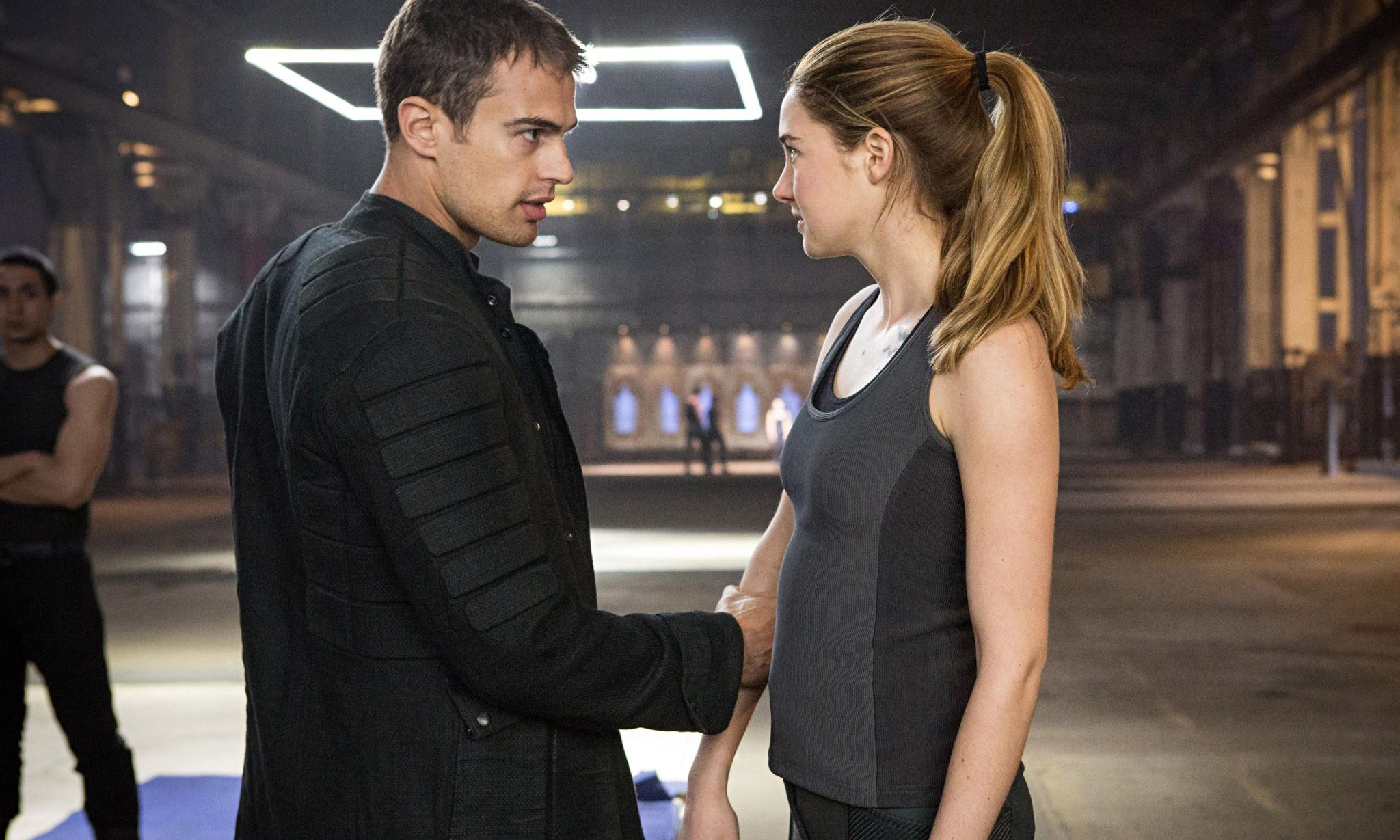
Rather than pay any sort of attention to the obvious war brewing, Tris (played here by a static Shailene Woodley) and Four (Theo James carrying most of this film’s better moments) gather their friends in order to escape the city in search of the people who put them there in the first place. Eventually, they come across an organization they learn is experimenting on Chicago in order to create a perfect human society. As expected, this comes at a cost that not everyone part of “Team Tris” is on board with.

allegiant review

What kept the first Divergent somewhat breezy and passable was its simplistic plot. You could explain in a few sentences who the main character was and what she wanted. With Allegiant, it’s exhausting trying to understand who any of these characters are, what they actually want, and what needs to be done. This is partly because the movie fails on almost every level when it comes to defining these characters’ motivations.

There is no clear motive behind the conflicts that occur between the various factions ranging from the Allegiant all the way to the Bureau. Exposition is provided of course, but the acting is so stiff and wooden, this dialogue sounds like more white noise piled on all of the nonsense spoken before it. The movie talks at the audience endlessly, but you never get a sense that the these characters are believably communicating with each other.

Four and Peter are notable exceptions, as usual. Their characters seem to have at least some coherent story arc that makes for some interesting drama. Shailene Woodley is mostly pushed to this side this time around, being forced to react tirelessly to the rantings of the Bureau’s leader, David (played by Jeff Daniels).

Some interesting sci-fi elements provide at least a little imagination to this dull, uneventful prologue to the final chapter, but even the production value seems to be slipping from the previous movies. Many of the effects look unfinished, and the attention to detail has never been so obviously lacking. Early on, a character is shot in the head at point blank range. A second later, we see his body dragged with the back of his head in plain view. There’s no indication whatsoever that he was shot.

Odd continuity errors plague Allegiant throughout, and they’re emphasized by an apparent desire to stretch the movie’s running time with pointless, lingering shots of characters either gawking at each other or staring at mundane landscapes. Strange, considering the film feels 30 minutes longer at just a minute past 2 hours.

allegiant review

It’s a shame because there are corners of this series that could allude to some interesting discussions. There’s much to be said about how trying to control the very emotions and genetics of human beings could be manipulated in order to build a peaceful society. But Allegiant lends no moral ambiguity to the villains of this film, instead forcing mindless acts of villainy coupled with repetitive betrayals in order to justify the direction of the plot. As expected, even the younger target audience is a bit too intelligent to get fooled by the artificial recipe of this unimpressive sequel.

Grade: D-

Extra Credits:

  • It’s no secret that I carry a lot of disdain for this franchise, as well as the book trilogy. Still, I can’t believe I expected more from a premise that boils down to someone being too special for a personality test.
  • Not even the camerawork gets a pass. At one point, the camera zooms in on a characters’ face and then abruptly shifts to a medium shot. It’s amateurish to the point of disbelief.
  • Shailene Woodley can, and has, done so much better. Here’s hoping she makes enough money from this franchise so she can go back to films that have craft.
  • Director Robert Schwentke won’t be directing the final Divergent film (he also did Insurgent). I’m glad because after this and R.I.P.D., Schwentke could use another Red.

Unopinionated: ‘Divergent’ Isn’t Terrible, But that Doesn’t Mean It’s Good.

Divergent terrible good

You’re different. You don’t fit into a category. They can’t control you. They call it Divergent. You can’t let them find out about you. (Tori speaking to Tris).

Every week, readers send me their unpopular opinions, and on Unopinionated, I explain why they’re unpopular in the first place.

From my inbox: “Here’s an unpopular opinion. Divergent is better than Hunger Games. There, I said it.” – Katie

Comparing these two films is obvious, mostly because Lions Gate Entertainment practically begged fans of Hunger Games to show up for their next young adult dystopia franchise in 2014. Based on a best-selling trilogy by Veronica Roth, Divergent is arguably better than the source material, but that’s not saying much.

The premise of Divergent is pretty much where the trouble starts. Years after an apocalyptic event nearly levels the world, a somewhat rebuilt Chicago has become home to a new, simplified caste system unapologetically inconsistent with nouns and adjectives.

The Amity faction is made up of happy farmers who live outside the city, Erudite holds the city’s intellectuals, Candor are honest and determine the law, Abnegation are selfless and drive the government, and Dauntless are the brave soldiers who protect everyone.

The future belongs to those who know where they belong. -Jeanine

Divergent terrible good

All people are born into a faction that characterizes one of these personality traits in which they’re most dominant, and when they come of age, these adolescents can choose to join another faction after taking what amounts to a personality test.

This is all fairly reminiscent of the Sorting Hat in Harry Potter, but while that more mystical and even mysterious element of the Hogwarts house system was more of an aside to the central plot, Divergentattempts to build an entire narrative around how our personalities divide us. While not a bad concept in theory, it’s immediately overwrought by a plot that never moves on from its initial principle, which isn’t even that interesting to begin with.

The main character, Tris (played by Shailene Woodley in her breakout role), craves a life beyond the plain Abnegation, the faction she was born into. She gets her wish when she discovers she’s “divergent,” meaning she fits into too many factions.

In other words, she’s too special because no one gets her. As if.

Don’t try and define me. – Tris

Tris joins Dauntless, much to everyone’s surprise, fueling the only narrative within Divergent that has some meaningful entertainment. A step up from typical High School movies, Tris has to overcome her literal fears in order to survive fitting into a group of young adults she previously had nothing in common with. All while dodging the inconvenience of her status as a divergent, making her a target if the secret gets out.

There are genuine thrills and absorbing moments to be had while watching Tris bond with the recruits and mainstays of the more free-wheeling Dauntless, especially within the commentary of a city trying to rebuild itself with harsher rules and regulations.

Divergent terrible good

But the payoff is too familiar and derivative to contribute anything meaningful to dystopian epics for this age range. Rather than provide something novel to Tris’s character and how she fits into a new world, the film jerks backward to make this about oppressive, authoritarian adults messing up everything.

Having a “chosen one” in any given story is a quick way to ramp up the mediocrity in storytelling. Harry Potter cleverly sidesteps this by shifting focus to how special the villain is, making him an equally important shade of the titular boy wizard. Hunger Games turns this trope on its head by making the “chosen one” special only in the eyes of the masses being manipulated into war, a far more interesting culture point.

Fear does something strange to people like Al. But not you. Fear doesn’t shut you down, it wakes you up. – Four

But Divergent has nothing interesting to give its “chosen one” except that she has too many dominant personality traits. There’s nothing else to Tris’s character that shapes her decisions and struggles to move through the plot. She’s simply special because the script demands it, and this is too obvious for most moviegoers.

On the other hand, it’s not clear that denser lore would have improved anything. The world of Divergent is already stuffed with uninspired naming conventions and quirks that beat the moviegoer over the head with reminders that they’re watching a movie created for kids.

Grade: C+

Fans of the books have plenty to love in Divergent, as it’s a streamlined improvement over the schlock writing that inspired it. And it certainly has some entertaining moments that keep the story moving. But at this point, fans of the genre have plenty of options superior to an empty psychology lecture.


Do you have an unpopular opinion you want challenged? Let me know in the comments and I’ll take it on in a future Unopinionated article. Or you can email nowconspiring@gmail.com

I’m Jon and thanks for reading this. You can subscribe to my posts by clicking “Follow” in the right sidebar. Or just say hey on Twitter! @JonNegroni

Ten Cloverfield Names

10 cloverfield lane podcast

This week on Now Conspiring, we review 10 Cloverfield LaneBrothers Grimsby, and Spider-man’s new suit. We also chat in length about the new Game of Thrones trailer for Season 6.

QUESTION OF THE WEEK: What do you think the next “Cloverfield” movie should be about?

Go on…Ten Cloverfield Names

Review: 10 Cloverfield Lane Explores Clever New Ways to Build a Franchise

10 cloverfield lane review

10 Cloverfield Lane is built on a premise that goes beyond itself: what if you could watch a sequel to a movie without knowing anything about it?

The news of this semi-followup to the found-footage monster movie Cloverfield only dropped this past January. Scant and frankly uninformative marketing materials and trailers have done little to paint what 10 Cloverfield Lane truly is as a film, and that’s for a best. This is a movie that relies heavily on how you engage with its story and characters, and that’s much easier when you have no idea what they’re going to do next.

In other words, it’s a fantastic thriller that also happens to be brimming with surprises. If you haven’t seen the movie yet and want to have the same “pure” experience I had, then I strongly suggest you stop reading this review now.

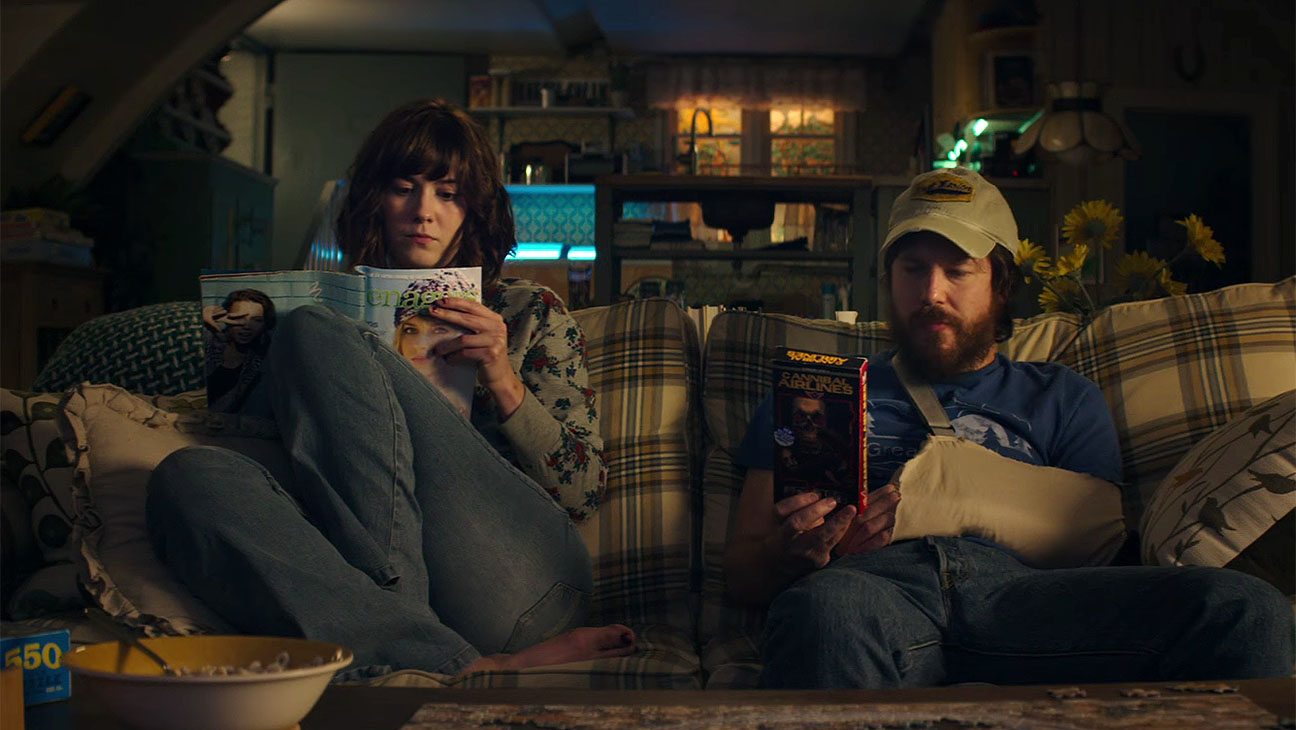
While the original Cloverfield centered on a city-wide disaster, this sequel (if you want to call it that) is mostly contained within a small, underground bunker. After crashing her car, Michelle (played by Mary Elizabeth Winstead) is saved by an ex-navy farmer named Howard (John Goodman). He takes her to his shelter just as an attack from “who knows where” renders the air completely toxic. They’re joined by Emmet, the hired hand who helped build the bunker (John Gallagher Jr). Unlike Michelle, he saw the chaos unfold and fought his way in just as Howard was shutting the door for good.

10 cloverfield lane review

From there, 10 Cloverfield Lane explores the deep tension between three claustrophobic characters. Michelle is convinced something is afoot, despite Emmet’s confidence that the world really has ended. They’re both terrified and somewhat perplexed by Howard’s eccentric behavior, and their dynamic serve as a sort of surreal take on the “suburban” family.

The moving parts of this film are just as diverse. There are ample scares and tense moments, but the movie also contains a good amount of humor carried by Goodman’s mesmerizing performance as the unpredictable conspiracy theorist. And the characters frequently find themselves having genuine breakthroughs with each other emotionally, adding even more weight to the overt symbolism that is their three-person family trapped under unusual circumstances.

Winstead as Michelle is terrific throughout, always thinking on her feet and fighting solutions just as quick as she causes the problems she finds herself in. Lesser films would be content to leave Michelle to a reactionary state, letting luck dictate her development. Instead, she is as quick to action as any other character, further generating the tension for this film’s best scenes, including a chilling board game session.

Right after seeing this film, many will solely talk about the ending, which is both the weakest and strongest aspect of the movie. It’s strong when it comes to ambition and unbridled entertainment, but it ultimately holds the film back from being one cohesive narrative. There’s something to be said of a moment being too surreal to work as an ending, even if it’s done well. And there’s something about the tail end of the final act that doesn’t feel quite right when held up against the rest of what is otherwise a killer experience.

Grade: B+

10 cloverfield lane review

Extra Credits:

  • This is a movie that I think a lot of people (including myself) will love in spite of its flaws. It’s just so tightly written and full of big moments that stick with you long after the credits.
  • This is a fantastic directorial debut for Dan Trachtenberg. Granted, he had a lot of help from J.J. Abrams and it shows, but I’m definitely excited for his sophomore attempt.
  • There’s a reason John Goodman’s “Howard” is written so well. Damien Chazelle from Whiplash (my favorite movie of 2014) co-wrote the screenplay along with Josh Campbell and Matthew Stuecken.
  • Finally, Mary Elizabeth Winstead is getting great roles again. She’s one of the most underutilized talents period. In this film, she goes toe to toe with John Goodman at his best and doesn’t bat an eye.
  • Speaking of Goodman, I haven’t had this much fun watching him onscreen since his stint on Community. Or even Big Lebowski. At his age, it’s great he’s still delivering superb performances.
  • Ah, the mystery box strikes again.


Snarcasm: Only Smart People Realize ‘Zootopia’ is a Bad Movie

zootopia bad

Snark + Sarcasm = what you’re about to read.

I think it’s important for people to remember that Rotten Tomatoes is just one of many useful metrics for evaluating a film you want to see. When we take it too seriously, we end up arguing over arbitrary numbers and percentages, rather than the details within a movie that actually matter.

Then someone writes a terrible review for Zootopia for the sole purpose of getting some attention.

“But Jon,” you say softly, “this reviewer in question might hate Zootopia for good reasons. What’s wrong with an opinion?”

“Nothing,” I respond to you with comforting glee. In fact, there are some great pieces out there already showcasing reasonable criticisms for Zootopia that other critics (even me) have glossed over. That said, there’s one other “bad” review for this movie that makes some decent points, though it’s written by a film critic who gave Annie (2014) 3.5 stars out of 4. So, yeah, I’d take that review with a speck of a grain of salt.

The review we’re going to Snarcasm today goes beyond some of the worst reviews I’ve ever attempted to share with you all. Everything, down to even the headline, is layered in nonsense, and we’re talking Gods of Egypt-level nonsense.

And it’s probably not a coincidence that this review came several days after all of the positive write-ups for Zootopia. But that’s none of my business.

Writing for The Globe and Mail, film critic Kate Taylor writes:

Zootopia: Fun for kids, but adults may think twice about movie’s message

That’s right! Instead of being blindly accepted without a second thought, adults are actually questioning important subject matter after watching a childrens’ film! The horror!

In Disney’s new animated feature Zootopia all the animals wear clothes and walk on their hind legs.

There’s nothing to complain about here, but I do want to point out how much I miss that comma after “Zootopia.”

zootopia bad

That makes the gazelle a particularly tall and lanky creature. A minor character, she’s a pop singer voiced by Shakira;

You’re going to kick things off with a barely tertiary character? Um, OK. That seems odd, but I guess it’s just a sentence. She’s probably about to move on to what the film’s actually about—

she sports gracefully tapering antlers with a tousled blond mane nesting fetchingly between them; she wears a miniskirt and a spangly red crop top.

Uh.

OK.

Are we done throwing adjectives at an unimportant character? It’s not like we can actually make a deranged conclusion about the film based on “tapering antlers.”

Yes, the elegant gazelle has been sexualized.

Wow. That’s…wow.

So Kate Taylor has a weird problem with animals looking like humans. Good thing she was chosen to review this movie.

Anthropomorphization is tricky territory although, God knows, Disney has lots of anodyne experience going all the way back to that cheery little mouse who first appeared in Steamboat Willie in 1928.

Kate, what are you even talking about right now? Anthropomorphization stopped being “tricky territory” at least 50 years ago. How is this your version of a hot button issue in a film about racism?!

Still, Zootopia takes the cultural practice of posing animals as human characters to queasy new heights.

So Kate is apparently uncomfortable seeing animals act like humans. I’m guessing she doesn’t have an Instagram account. Or neighbors. Or a sidewalk. Or Animal Planet. Or YouTube.

Perhaps I’m being ignorant, but it’s just bizarre to me that anyone would feel “queasy” watching something so established in our culture of entertainment. Sure, it may not be your favorite trope, but why on earth does such sanitized fiction make you uncomfortable at all?

Apparently, in the countryside, animals live in their original habitats surrounded by their own species and familiar neighbours:

That’s not “apparent.” It’s just what is.

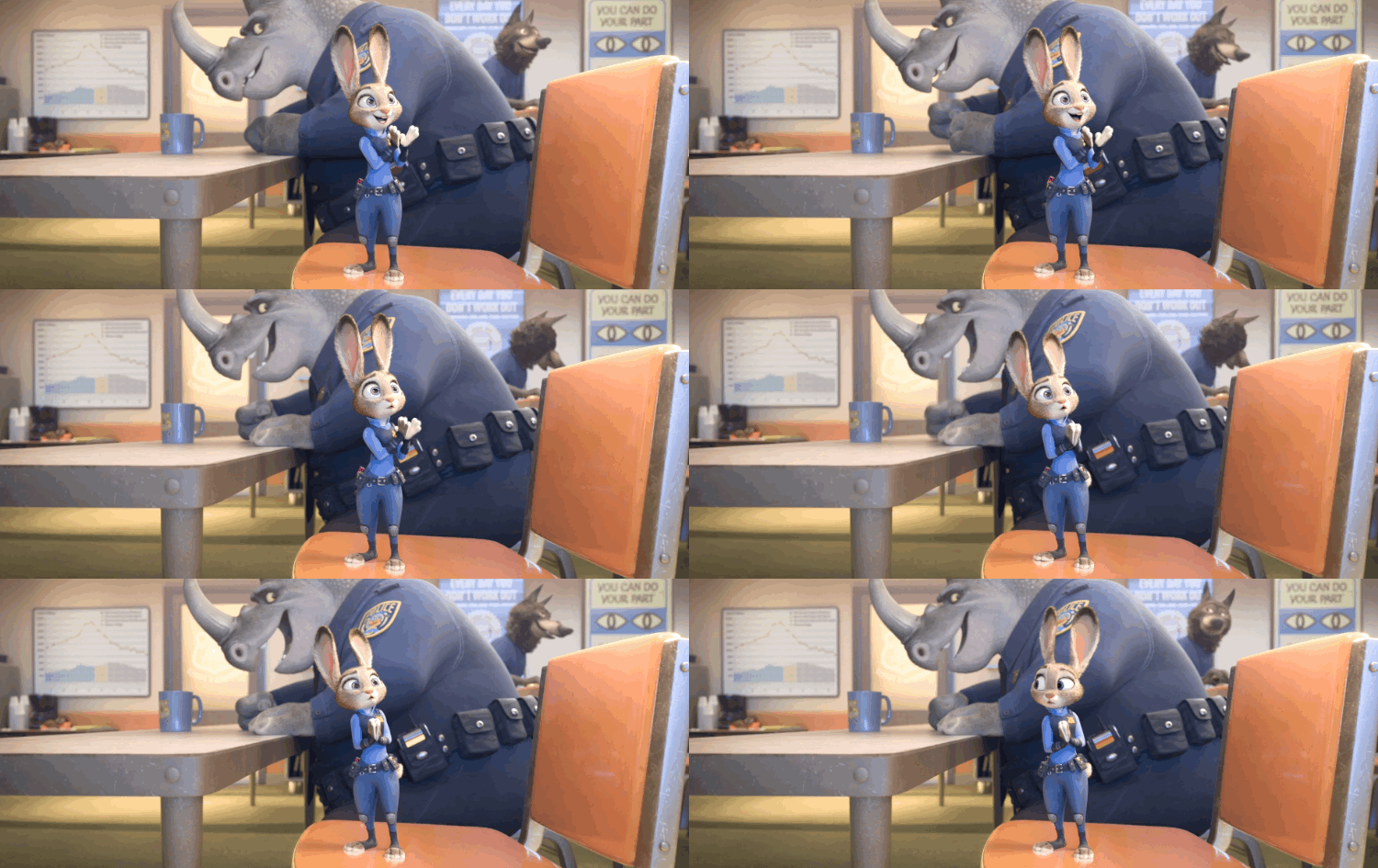
Judy, a character cloyingly drawn with Kewpie doll eyes by the animators but firmly voiced by Ginnifer Goodwin, aspires to be a police officer and moves to Zootopia, where she is hired onto a force staffed by elephants, wolves and bears under a “mammal inclusion initiative.” In other words, she’s a girl in a man’s world.

OK, gender dynamics are somewhat parallel to what’s going on in Zootopia, but it’s strange that Kate brings this issue up instead of the obvious elephant in the room (who was a girl).

zootopia bad

Judy is directly held back because she’s a bunny, not because she’s a woman. While it’s fair to bring up how gender discrimination is similar to what we see in Zootopia, it’s certainly not the intended focus.

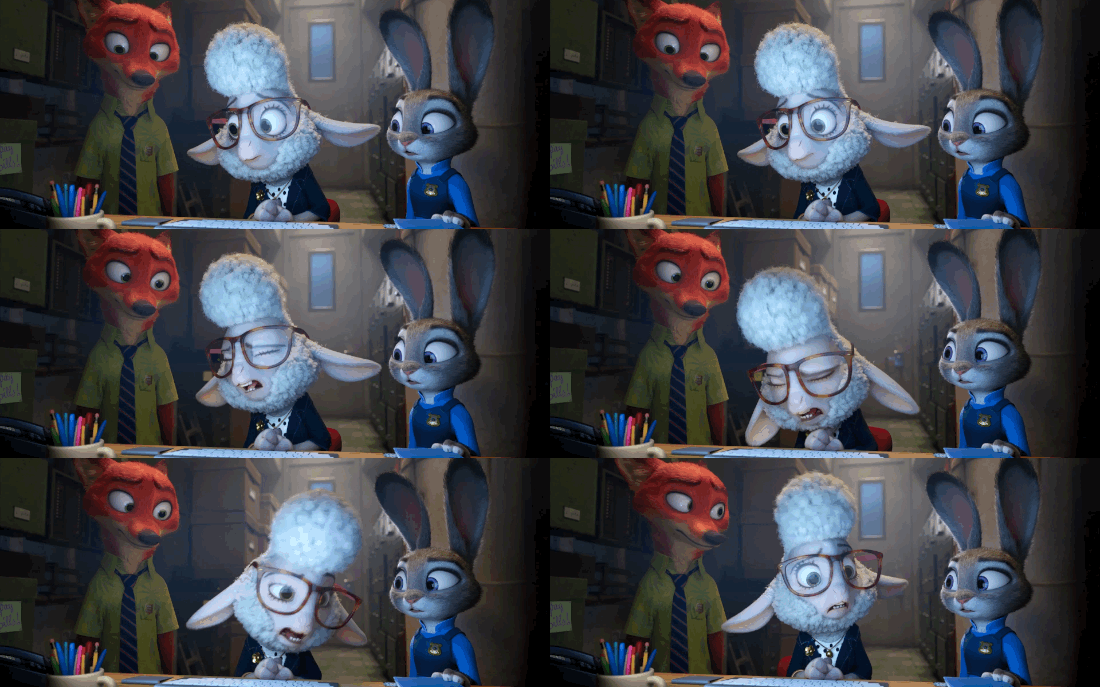
The chief (a water buffalo impressively created by Idris Elba) promptly assigns her to parking duty, but she soon breaks out and teams up with a wily fox (an irrepressible performance from Jason Bateman)

Idris Elba voiced the character. He didn’t “create” it. And if you’re just saying he brought the character to life, then you should just say that. Also, I don’t think you understand what irrepressible means, because Jason Bateman’s performance here is anything but.

I don’t imagine environmentalists would approve of a movie that suggests wild animals are at their best when tamed,

This is nonsense. The animals aren’t being tamed. They tame themselves in the same way humans do in order to cultivate society. How moronic do you think environmentalists are that they wouldn’t get the difference?

The premise of Zootopia is that these creatures have evolved past the point where they need to kill each other for survival, which is a great metaphor for how human civilization has been developed. Of course animals are at their best when they’re not at each other’s throats!

but it’s the social anxieties behind Zootopia’s message of animal harmony that make me uneasy.

Good! The best movies challenge and convict us. Do you only care for movies that cater directly to your sentimentalities?

But as Zootopia busily tells the kids not to stereotype different groups and to love everybody, it creates a city in which some creatures fear that others are inherently savage.

Is this really happening? Kate, that’s the entire point of the movie. Zootopia is teaching these lessons within the context of a city where racism exists. If the city itself was perfect and free of conflict, then the message would ring completely hollow.

That’s a pretty close match for both America’s historic racism and its new Islamophobia.

Yeah, Kate. Again, that was kind of the point, but you’re phrasing it as if this is somehow a flaw, instead of just an obvious fact.

And, leaving aside amusing jokes about the wolves trying desperately to contain a group howl or sloths working as bureaucrats, animal behaviour is a troubling metaphor for cultural diversity.

So far, everything you’ve said to build up to this point runs contrary to the idea that animal behavior is a troubling metaphor for anything. You’ve specifically said not even a sentence ago that it matches American society closely. Does that mean the problem is that it’s too good of a metaphor? Because if so, your vague issue with this film doesn’t have much to do with the actual film.

Especially that weird thing about the gazelles. Are you just never going to get to that?

After all, preying on smaller or slower creatures is how many real animals eat; wolves are potentially savage and mice can’t really live happily with them.

And this is the part where everyone reading this review realizes that the critic has absolutely no interest in actually reviewing the movie. The crux of Taylor’s “uneasiness” boils down to minutiae: a barely explored aspect of the world building that has absolutely nothing to do with the actual story.

In fact, it makes more sense than not that Kate Taylor fell asleep in the first ten seconds and then woke up once in the middle and nodded off again. Because the entire first scene explains how animals evolved to the point where they didn’t need to make distinctions between prey and predator. They could just find alternate means of living in order to have harmony.

zootopia bad

But because Kate can’t use her imagination and think of what these creatures could do otherwise, there’s something wrong with the film. Let me try to imagine how Kate could have such a bizarre understanding of this movie….Nope, nothing.

And how much animal harmony does the sprawling Zootopia team of multiple directors and writers really envisage?

Really? You couldn’t just say “envision?”

Oh, and to answer your question, a lot. Like that’s the entire point of that 5 minute opening sequence where we watch how all of these animals live in disparate sectors of the city, along with pretty much everything else from that point forward.

In fact, it’s clear to everyone but those of you who were sleeping that the directors and writers spent countless hours making this world come to life in a way that represents a united city of animals that was made by animals.

It was only when the sexy gazelle appeared in a final image of the animal kingdom united in song that I noted the very few couples in the film – Judy’s bunny parents and an otter whose husband has gone missing – and began to wonder about the deepening friendship between Judy the female bunny and Nick the male fox. But let’s not go there.

Yeah, what a terrible movie! Instead of needlessly focusing on a forced romance, it gave us a story  that was good enough to stand on its own with characters who had enough believable chemistry to sidestep a boring love dynamic!

What a nightmare!

To be fair, I’m not entirely sure that’s what Kate is getting at, but at this point, I have no idea what she’s even rambling about.

Highly familiar with the pluralist message that Zootopia delivers, the children for whom the film is largely intended are unlikely to be troubled by anything they see here.

Those pedestrian children are so pedestrian, you see.

Thinking parents, however, may think twice.

In other words, “Only smart people like me understand how “bad” this movie is. And if you don’t agree, you’re a CHILD!”

Guys, this has to be the worst professional film review I’ve read since…perhaps ever. There’s no real analysis here, just a few lopsided assertions that don’t even strengthen her premise. She ignores the visuals, the characters, the writing, and pretty much anything about this movie that would inform her readers whether or not it’s worth their time.

zootopia bad

She talks more about the gazelle with two lines of dialogue than the main characters. And when she does bring up the main characters, she complains (I guess?) that they aren’t in a relationship.

Instead of actually reviewing Zootopia, she digs on one bizarre hangup she has that doesn’t even slight the movie, mostly because she barely explains why anything she mentions is a real flaw. She just cites another example that reads more like an adjective-filled soundbite and then moves on.

This is not a review. It’s barely even a rant. It’s just a lazy, incoherent opinion with a grade at the bottom.


Thanks for reading this. To get updates on my theories, books, and giveaways, join my mailing list.

Or just say hey on Twitter: @JonNegroni


Retronalysis: Sacha Baron Cohen is the Only Great Thing About ‘Borat’

sacha baron cohen borat

At first glance, it’s easy to dismiss Borat: Cultural Learnings of America for Make Benefit Glorious Nation of Kazakhstan as an important movie because of its popularity (as well as the length of that subtitle). Not that anything is wrong with being popular, it’s just tempting in hindsight to attribute the movie’s success more to controversy, rather than the movie being as funny as it is.

What originated as an afterthought to Cohen’s more popular character at the time, Ali G, “Borat” as a character found huge success on the big screen as an eccentric reporter who acts in character around real people. Most of what makes Borat funny is the give and take between Cohen and his real-time American costars, who think he really is an offensive man from Kazakhstan (much to that country’s disdain).

In 2006, it was still unpopular to satire perceived greatness of America (Newsroom wouldn’t upend this accepted belief for several years). Yet Borat struck a chord with audiences on both sides of the political spectrum for how accessible its jokes were without polarizing one side. Then again, you don’t have to be either conservative or liberal to think stuffing Pamela Anderson in a wedding sack is funny.

And that’s perhaps because the embarrassment of Americans on the street aspect of the film is joined by some more neutral observations of blue-collar folk. The fact that these people are sometimes polite to a fault when dealing with foreigners says just as much about America as what they get offended by.

sacha baron cohen borat

Cohen himself does some of his best work here, and just off the success of his character in one of Will Farrell’s best films, Talladega Nights. His performance and commitment to his persona is obviously impressive, but that’s not even mentioning the rapid-fire wit he brings to the movie, even during some of the staged scenes.

Because of this, I find it nearly impossible to peg the movie’s genius on any one thing. The jokes are hilarious, but in the least impressive way. Cohen is a smarter actor here than I think he gets credit for, but that might only be a result of how dumb everything is around him.

Without much of a plot to bring into the discussion, that just leaves the concept itself to decide whether or not Borat truly is one of the most essential comedies of the new millennium. Based on that criteria, I hesitate to make that assumption, especially considering how lackluster Cohen’s followups have been since. While it’s unfair to judge Borat on any of his other films, it’s still helpful to hold them up as proof that Borat isn’t quite the masterpiece we thought it would be ten years ago.

Grade: B

I won’t be catching Brothers Grimsby (or just Grimsby) this weekend, but we’ll no doubt cover the movie in this week’s podcast. Since The Dictator, I’ve all but given up on Cohen’s comedy, despite the fact that the man is one of the smartest comedians out there if you’re not judging this by his work alone.


Thanks for reading this! You can subscribe to my posts by clicking “Follow” in the right sidebar. Or just say hey on Twitter: @JonNegroni