The Pixar Theory: How The Good Dinosaur Fits In Pixar’s Universe

the good dinosaur pixar theory

The Storm provides.

In 2013, I wrote the first draft of The Pixar Theory, an essay that makes the case for how and why every Pixar movie takes place within a shared universe.

Just this past year, I published a book that finalized this draft into a more convincing and fleshed out read that you can check out here, but you can get a decent idea of what we’re talking about by reading the original article. Just keep in mind that much of what I wrote in that first blog post has been changed and improved on over the years.

Also this year, I posted how Inside Out (Pixar’s other 2015 movie) fits into the Pixar Theory, which you can check out here for even more context.

Yeah, I know it’s a lot of reading. As we talk about The Good Dinosaur below, I’ll do my best to add refreshers from past articles, so you don’t have to keep clicking around.

Needless to say, this post contains a lot of spoilers for The Good Dinosaur, so if you haven’t watched it yet and don’t want it spoiled for you, then check back later after you’ve had a chance to see the movie. You’ve been warned. 

That said, it’s time to address a question I’ve been getting for over two years now…

THE BIG QUESTION

Does The Good Dinosaur take place in the same universe as ever other Pixar movie? Including Toy StoryFinding Nemo, and even Cars?

the good dinosaur pixar theory

We’re going to address that question and then some. But first, let’s talk about something possibly more important. Let’s talk about what The Good Dinosaur contributes to the shared Pixar universe, beyond how it potentially “fits in.”

In other words, we’re going to talk about how The Good Dinosaur makes the Pixar Universe Theory better.

For one thing, it actually answers some major questions I’ve been asking since day one of putting this theory together. And I know plenty of people have wondered this too:

WHERE DOES “MAGIC” COME FROM?

If you’re at all familiar with this theory, then you’re plenty aware of how magic plays a mysterious role in the shared universe of Pixar. But one thing I’ve never fully understood is where it’s supposed to come from in a world where animals can cook and toys can talk.

I’ve claimed in the past that the wisps of Brave are where this magic originated, or at least point to magic tying in with nature somehow. I’ve also posited that wood is a source of magic, which is certainly evident given how doors have dimension-defying capabilities in multiple Pixar movies, including Monsters Inc, and Brave.

the good dinosaur pixar theory

Humans can use magic from what we’ve seen, or at least some type of it. In my book, I argue that the supers from The Incredibles received their powers through government experiments in order to be spies (at first), which would explain why they seem to have military experience and backgrounds in espionage.

But it’s unclear how technology could make a person fly. It’s unclear how Boo from Monsters Inc., could harness the magic of a door and travel through time. It’s unclear how humans of the distant future could find a magic tree with fruit that could transform them into animalistic monsters (a tidbit from the Monsters Inc., DVD).

But with The Good Dinosaur, we finally have a suitable theory for where this magic comes from, as well as a proper starting point for the Pixar Universe.

THE SET UP

The film opens 65 millions years in the past, when dinosaurs still roamed the Earth. The opening scene clearly shows us a world like the real one you and I live in, where animals eat from the ground and have primitive senses.

In reality, it’s believed by many that an extinction-level event is what caused the disappearance of the dinosaurs as we know them today. A predominant theory is that an asteroid wiped all of these creatures out, long before mammals like humans ever came to be.

the good dinosaur pixar theory

Pixar accepts this premise and turns it on its head by proposing a world where there is no extinction of the dinosaurs because the asteroid misses Earth entirely. Millions of years later, dinosaurs are still the dominant species on a very different-looking planet, while humans are just now arriving on the scene.

One thing I love about The Good Dinosaur, by the way, is how the film doesn’t rely on any exposition to illustrate what’s taken place since the asteroid missed Earth. We just see an apatosaurus family tending to their farm. Right off the bat, we learn that dinosaurs have become the most intelligent creatures in this world, able to provide shelter, fences, and resources for themselves and other creatures.

They’re smart. They use their appendages in unique ways to ensure their survival. It’s a simple reimagining, but it’s effective. And it parallels nicely with what we’ve come to expect from future animals in the Pixar Universe, notably Remy from Ratatouille, an animal who manages to become a better chef than any other human (in Paris, at least).

So right away, The Good Dinosaur hammers the point that when left to their own devices, animals can become just as intelligent as humans, as we also see in A Bug’s Life with Flik’s inventions and ingenuity ensuring the survival of his entire community.

In the same way, the apatosaurus family of The Good Dinosaur relies on the harvesting of food to get them through a harsh winter. Arlo, the main character, is the youngest of three siblings to the apatosaurus parents who run the farm. To “earn his mark,” Arlo is given the responsibility of catching a feral critter who keeps stealing their food.

the good dinosaur pixar theory

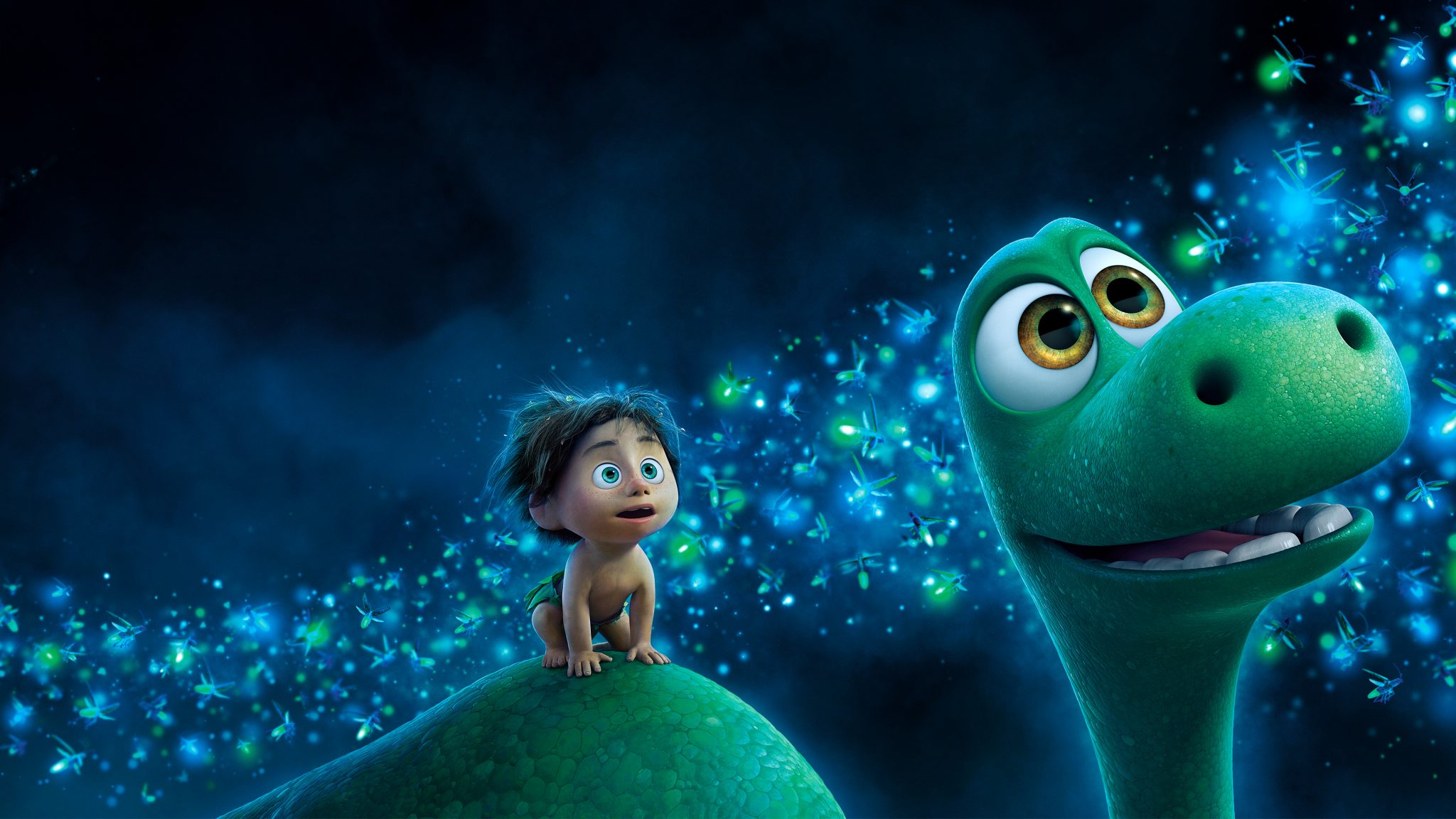
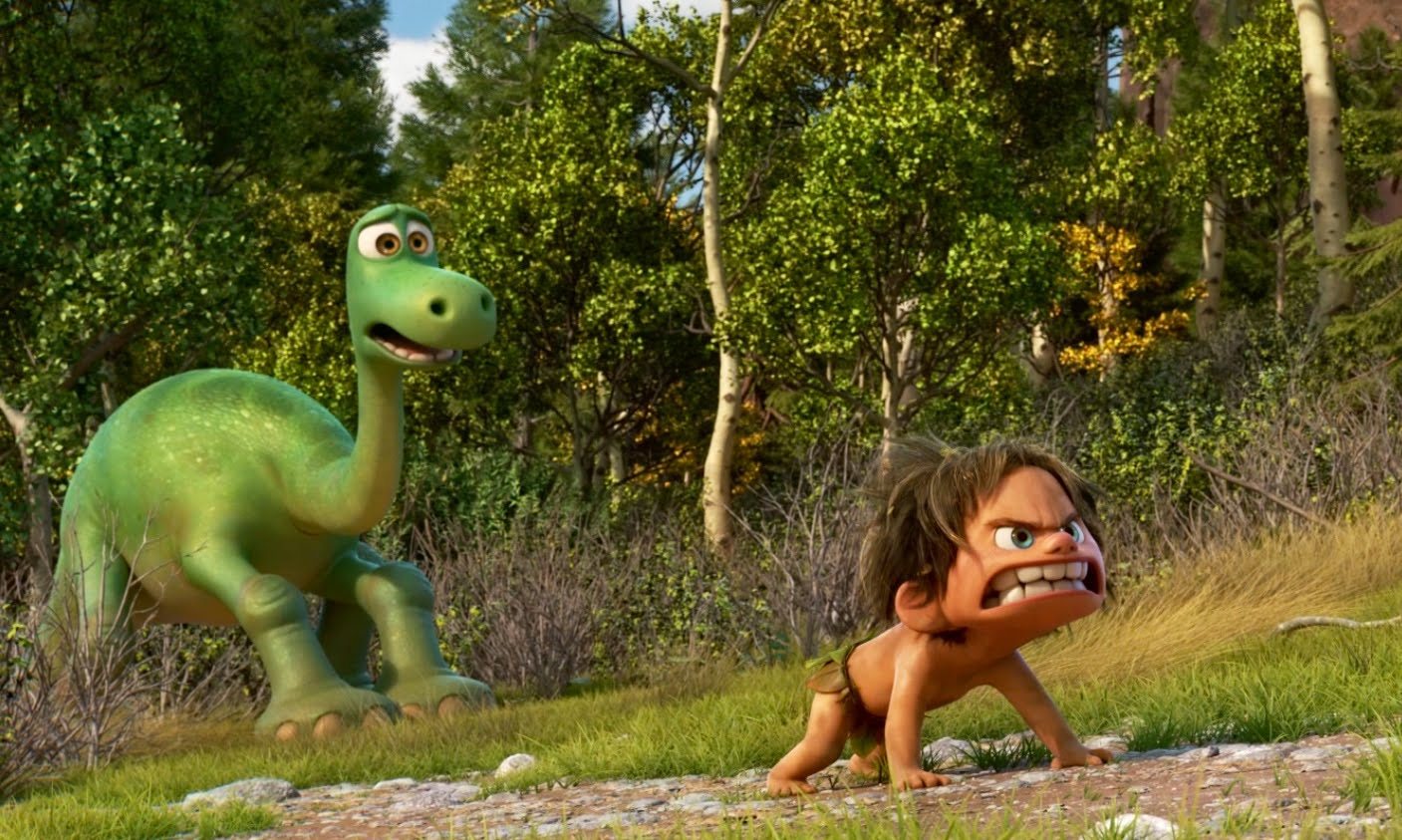
We eventually learn that this critter is what we know as a human. He’s a small, wolf-like boy who doesn’t appear to have his own language beyond grunts, and Arlo adopts him has his pet after the two get washed away by the river, far from home.

From there, the movie shows us their long journey home, and a lot happens over the course of these few weeks. We learn quickly that this part of the world suffers from frequent storms, some of them looking like typhoons. Later, it’s evident that very few dinosaurs are around, despite the fact that they’re the most intelligent species around.

We see a few dinosaurs along the way, but only in small groups, rather than herds. Towns and settlements are apparently scarce, but still alluded to. And every dino is obsessed with survival.

Forrest, the Styracosaurs, chooses to live in the wilderness under the protection of the creatures he carries around with him. This is played off as a joke, mostly, but it shows just how harsh life is in this world for reasons that are left to the imagination.

the good dinosaur pixar theory

It’s also telling that Forrest is just as fearful as Arlo, and with good reason. There’s not much food around, and though these dinosaurs are smart, some are being born with an innate (possibly learned) sense of fear.

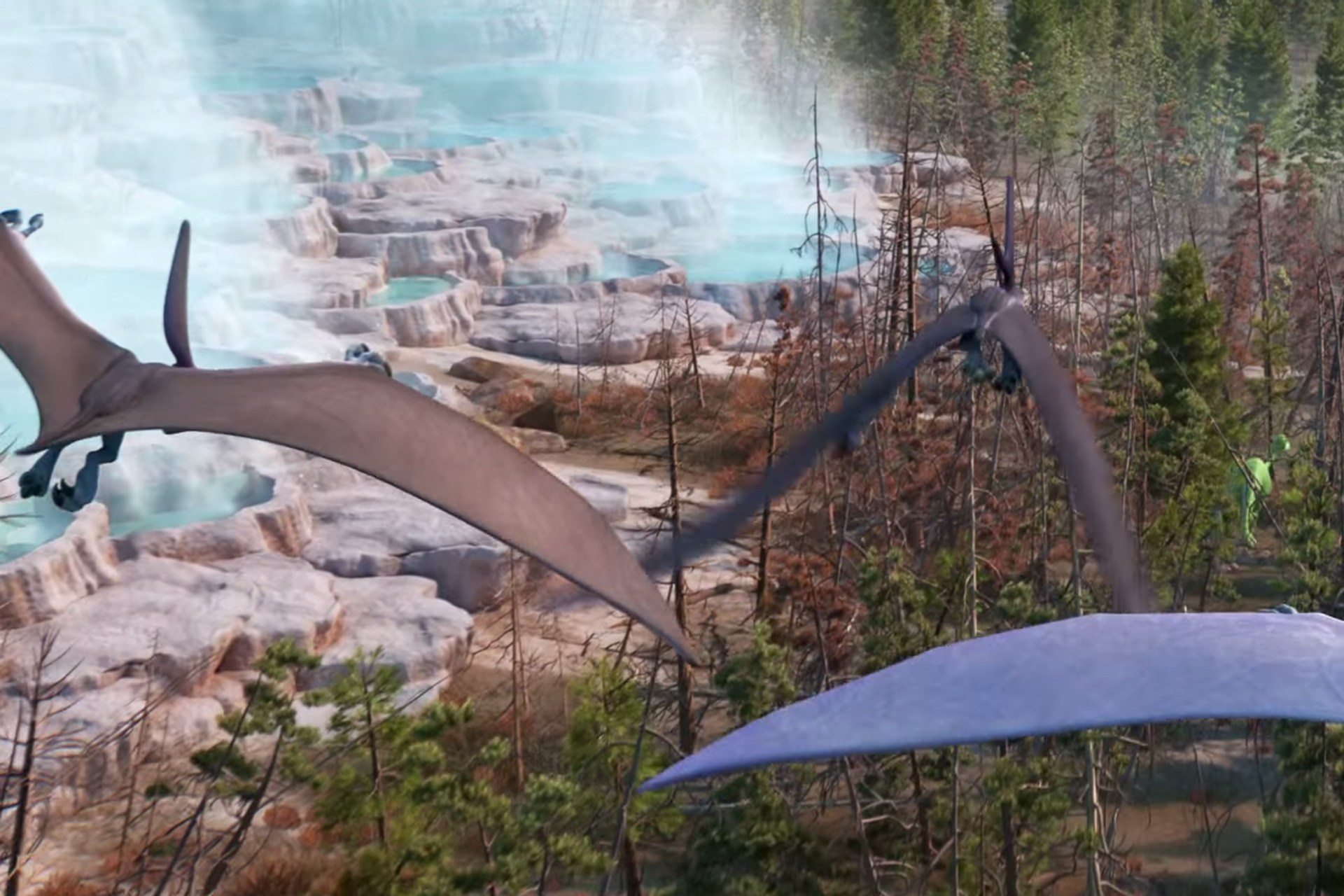
We certainly get a feel for how scarce resources are by the time we meet the hybrid Nyctosaurus gang, led by Thunderclap. I say hybrid because like the other dinosaurs in this film, they have many traits that have evolved from the fossils we have on these creatures. In fact, every creature in Thunderclap’s gang is a different species.

These flying creatures are a “search and rescue” team who scavenge the helpless creatures traumatized by the frequent storms. “The ‘Storm’ provides” is not just a weird catchphrase for these beasts—it’s their religion. They worship the storm for giving them much-needed food.

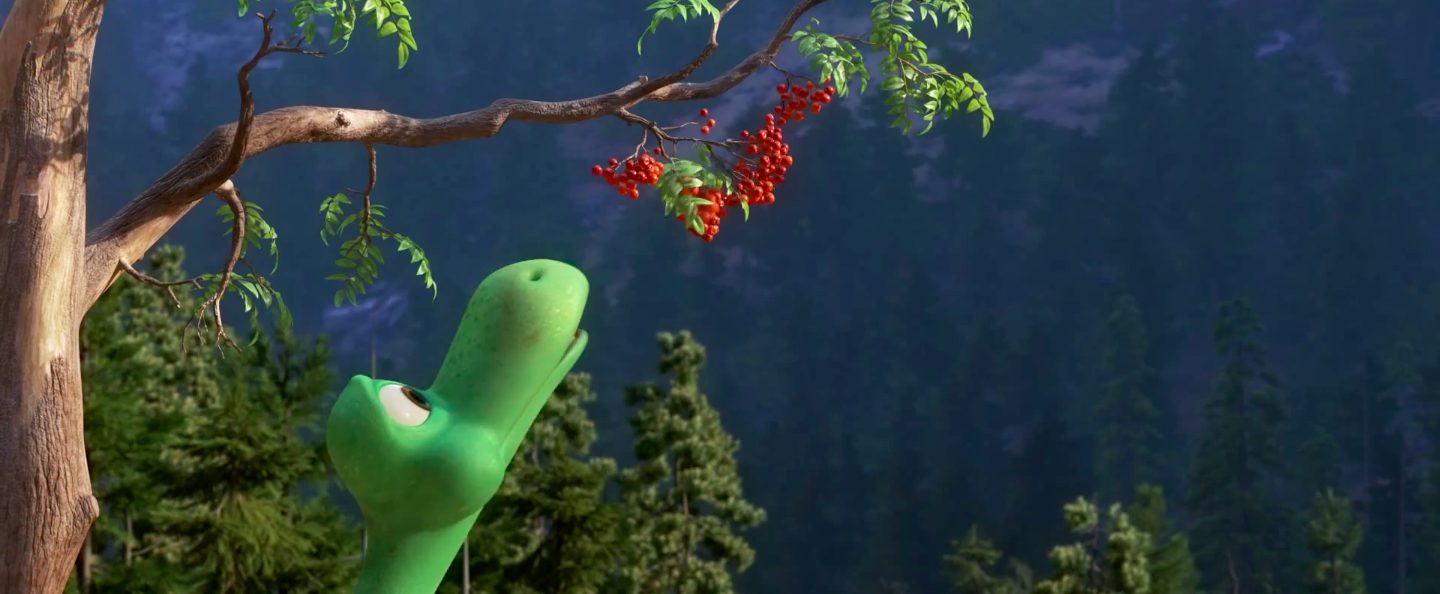
Isn’t it strange that Arlo got sick from eating plants that weren’t fruits like berries and corn? Millions of years earlier, we saw dinosaurs eating grass just fine, so what changed?
the good dinosaur pixar theory

Before we get to that, it’s important to point out how the T-Rex family manages to survive. They have to raise and take care of a bison herd by themselves in order to have enough food, often fighting off vicious raptors desperate for their food. And the T-Rexes are constantly on the move, which probably has something to do with how the environment is too volatile for them to settle down anywhere, as well as the fact that they have to find enough food to feed their food.

WHY?

If dinosaurs have been evolving for millions of years, then why are they having such a hard time, now? In the opening scene, there are many dinosaurs all eating together without a care in the world, so something big had to happen between those good times and the bleak world we’re introduced to countless years later.

Well, I think it’s pretty simple. These dinosaurs are living in a “post-apocalypse” of their own civilization. At one point, they probably had plentiful resources to sustain a massive population, much like you’d expect. But what we see is a shifted environment. The lush jungles filled with edible plants that we know existed millions of years ago have vanished by the time we meet Arlo, just as they would have if the asteroid had hit Earth.
the good dinosaur pixar theory


Simply put, the world slowly became less optimal for the dinosaurs to roam, which the movie goes out of its way to illustrate. Arlo’s family is on the brink of running out of food because rival creatures like the mammals (AKA humans) are stealing their food and thriving in this new environment. These storms are a product of this change, as the world gradually corrects the imbalance of reptiles and mammals caused by the lack of an extinction-level event.

And many years later, the same “correction” will happen between man and another new species: machine.

In other words, Pixar loves cycles. And the Pixar Universe is as cyclical as they come. It’s actually pretty amazing how a simple movie like The Good Dinosaur offers such a close parallel to stories they’ve already told, Pixar Theory or no.

WHAT ABOUT THE OTHER PIXAR MOVIES?

If The Good Dinosaur exists in the same timeline as movies like The Incredibles and Finding Nemo, then where’s the evidence of those movies being a result of this alternate universe where dinosaurs ruled the Earth much longer than planned?

What about fossils? Certainly, the Pixar movies would exist in a world where the fossil record is drastically different. What about these strange creatures in The Good Dinosaur that don’t look like any animals we’re aware of, like the dreaded cluckers?

Well, that’s where Up comes in.

the good dinosaur pixar theory

Early on in Up, we see that the famous explorer Charles Muntz has found a place in South America filled with plants and animals “undiscovered by science.” That place is Paradise Falls (or, “The Lost World” as the narrator puts it).

And what is the prize creature that Muntz discovers? It’s no dinosaur. It’s a bird (Kevin). And this is a bird that bears resemblance to the bizarre makeup of the “prehistoric” birds and raptor-hybrids we see in The Good Dinosaur, who have originated from this alternate universe where evolution was never halted.

And that’s not where the weirdness ends. Cut from Up is the explanation for why Charles Muntz is still spry and healthy, despite being much older than 80-year-old Carl Fredericksen. According to Pixar, Muntz found Kevin’s eggs, which somehow have the ability to slow down the aging process (my book covers this in more detail, but that’s the gist).

So Kevin’s existence, as well as this rare, superhuman ability, finally has an explanation. Somehow, the longer evolution of these strange creatures brought about magic  or at least something that resembles magic — that can eventually be harnessed by humans in various ways. After all, what is it really that makes those dogs in Up talk? And is it any surprise that Muntz comes across Kevin’s existence in the 1930s, not long before the sudden rise of supers with strange abilities?

the good dinosaur pixar theory

Remember: The Incredibles takes place in an alternate version of the 1950s and 60s. Mr. Incredible was very young or even born around the same time Charles Muntz was uncovering what could be “magic” properties. This could even serve as an explanation for why academia suddenly turned on Muntz, shaming him for what we know weren’t fraudulent discoveries. Perhaps this was a ploy to keep his research hidden from the world, explaining why only Americans are shown to have powers in The Incredibles.

Sometimes I get goosebumps when these things fit together a little too nicely.

OK, what about the strange animals mentioned earlier? Well, when we explore the dirigible in Up, Muntz shows off his collection of these strange creatures that are so rare, Muntz doesn’t expect Carl to know what they are.

They range from giant turtles and other aquatic life to hybrid mammal/dinosaurs that are reminiscent of Forrest from The Good Dinosaur. And we can now deduce that in the Pixar Universe, many of these creatures existed closer together in time, explaining why they’re displayed as a group.

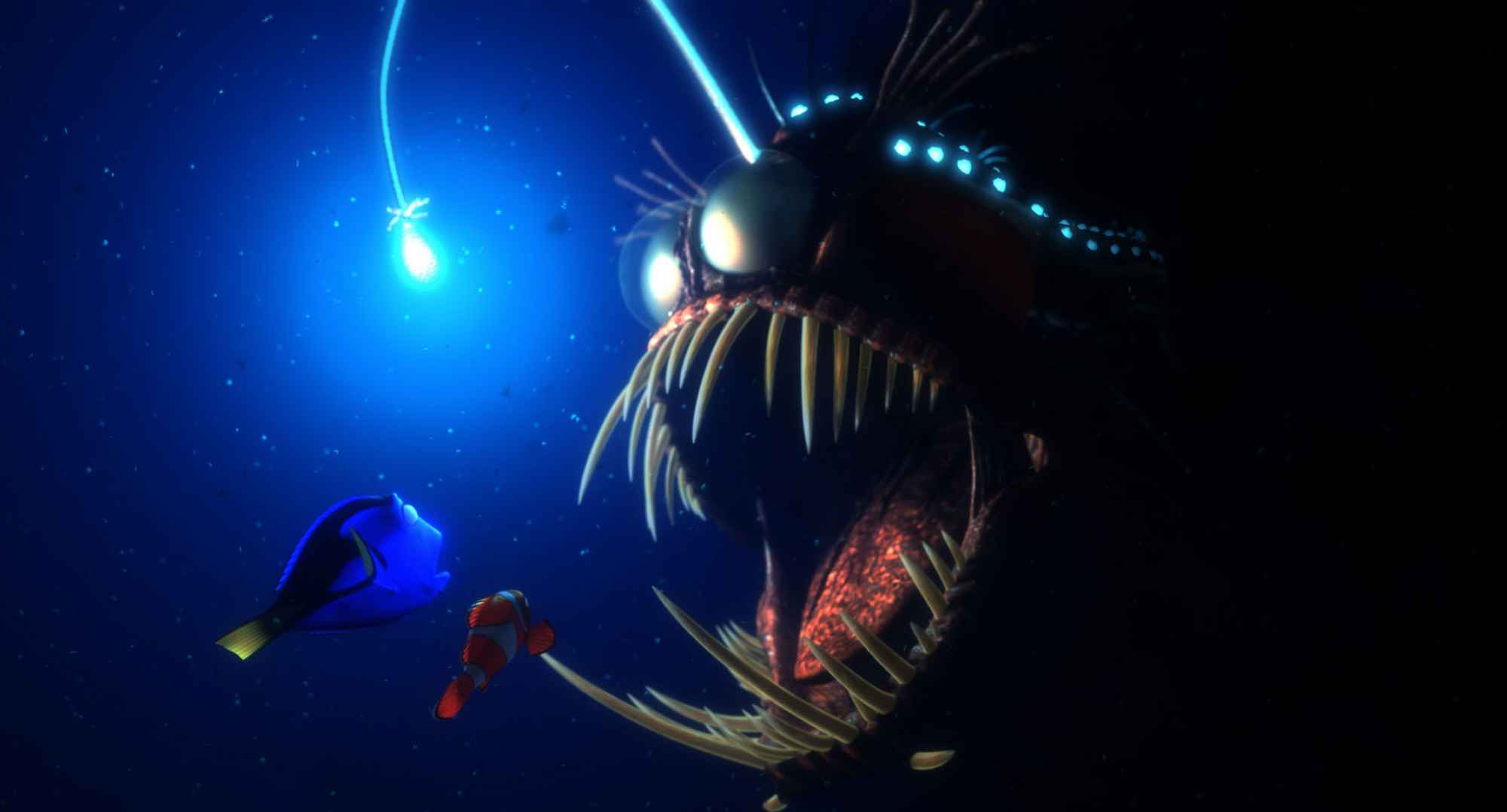
Side note: One of the reasons I’ve waited to add all of this to the Pixar Theory is because I’m still researching how these creatures connect to other movies, including the angler fish that looks just like the one we see in Finding Nemo.
the good dinosaur pixar theory

So the exotic creatures from The Good Dinosaur apparently exist across multiple Pixar movies, and the absence of an extinction-level event seemingly provides an explanation for why animals have become so intelligent by the time we get to movies like Ratatouille.  And the movie even provides some hints as to why magic exists in the Pixar Universe, and we now know why said universe is alternate to our own.

Is that it?

Ha, no.

FOSSILS AND FUELS.

Oil. It’s something that Axelrod from Cars 2 addresses as the very thing we get from fossils, which he specifically defines as “dead dinosaurs.” But for whatever reason, the world runs out of oil in the Pixar Universe much sooner than we would by today’s standards.

Drilling the way we are today, there’s probably 50-100 years of oil left, which obviously excludes methods that dig much deeper. So really, we’re just running low on cheap oil.

In Cars 2, the sentient cars are running out of oil, entirely. And this makes sense for two major reasons:

  1. Mankind has a 200 billion population by 2105 (according to WALL-E)
  2. There’s less oil on Earth because (whoops!) dinosaurs died out more gradually.

Fossil fuels bring life to us from dead organisms, and we get a lot of it from extinction-events that compact them for easier extraction through drilling (for the record, my knowledge on this topic goes about as far as Armageddon).

Without the asteroid, fossil fuels are a bust.

the good dinosaur pixar theory

In The Incredibles, technology has progressed more rapidly by the 1950s, likely because scientists are seeking solutions to this energy crisis. Syndrome finds a way to harness zero-point energy, and “human” energy will be extracted by toys and eventually monsters indefinitely. The absence of other energy options like fossil fuels might provide an explanation for why human energy is so important in the Pixar Universe.

Yet in WALL-E, mankind lives in a loop for hundreds of years aboard starliners like the Axiom. They harness solar energy with advanced technology that allows them to avoid the laws of entropy (and you can argue that the machines are also kept alive by the humans themselves).

All this points to a world that figured out (much faster) that it needs an alternative to fossil fuels, which is why humanity is still around hundreds of years after the cars die out.

THE LEGACY OF DINOCO.
the good dinosaur pixar theory

So in the Pixar Universe, dinosaurs eventually die out because the world changes without them. But they’re remembered, nonetheless, mostly because humans have passed down their memories of the once predominant species.

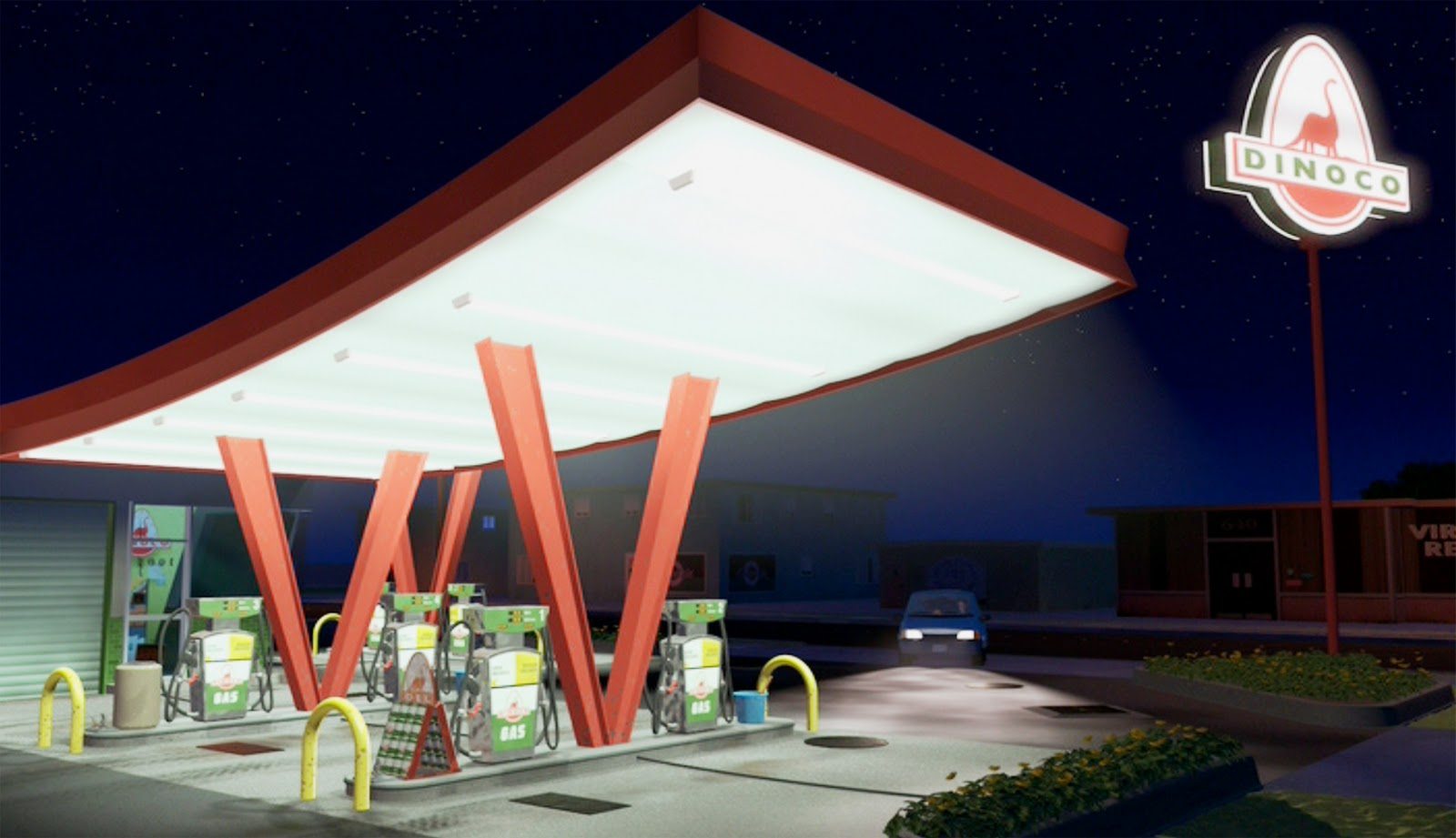
By the time we get to “modern Pixar,” there are companies like Dinoco that use these forerunners as their logo. Toys like Rex and Trixie get played with, just as they would in our world. There are even statues in Inside Out that look like dinosaurs we see in the movie.

the good dinosaur pixar theory

The major difference is that in The Good Dinosaur, there’s a specific “passing of the torch” moment between Arlo and Spot. The symbolism is actually tragic in a way, as we see Arlo giving Spot over to a human family willing to adopt him. Unlike Spot, these humans wear furs instead of leaves and alternate between walking on all fours and standing upright, even teaching Spot how to do it by guiding him. This moment crystalizes the rise of mankind in contrast to the dinosaurs, who are quite literally on their last legs.

After all, Arlo will return to his farm and eke out a pretty humble existence as a herbivore. His family will barely survive, as his mother tells him bluntly early in the movie. Meanwhile, humans are already hunting and living off of the newer resources tailor-made for mammals. Pixar could have easily left these implications out, but instead they shine a light on the important role mankind will take up as the world continues to change.

That said, I suspect there are more mysteries to solve here. We have millions of years of history between The Good Dinosaur and Brave, so you can expect brand new narratives to rise out of those films as the studio continues to deliver excellent movies more than worthy of our time.

WRAPPING UP.

the good dinosaur pixar theory

That’s the long version of how The Good Dinosaur fits within the narrative of The Pixar TheoryBut I hope you’ve also gotten some insight into why it’s so important to the theory, in a way that not even Inside Out was able to accomplish, though it also was quite enlightening.

With The Good Dinosaur, we have firm answers for some of the biggest questions many have come across when digging into this theory. It gives us a reason why everything in Pixar movies is so different and set apart from reality. It alludes to the mysteries of magic with a little help from Up, further providing connections I didn’t think we’d ever get.

And we even got Dreamcrusher.

I hope you enjoyed the movie itself as much as I did. My full review is also available in case you’re not already tired of reading, which you can check out here. You’ve probably noticed by now that I’m absolutely in love with The Good Dinosaur, and the review expands more on all of that.

As for the easter eggs, this movie has proven to be quite the challenge when it comes to finding the elusive Pizza Planet Truck and A113. Peter Sohn (director of the movie) confirmed they’re in there somewhere, albeit in clever ways similar to how Brave managed it. I haven’t caught them yet, but I’ve heard the truck shows up as either a rock formation or an optical illusion from the positioning of several rocks and debris. Be sure to share your findings.

Let me know your thoughts, ideas, and rebuttals in the comments, and I’ll do my best to clear anything up!

Ready for more?

The conspiring doesn’t end here. Check out my other Pixar Theory posts from infinity to beyond:

  • The Pixar Theory – the full book available on paperback and ebook via Kindle, Barnes and Noble, iBooks, or just a PDF. This will cover the entire theory and every movie in the Pixar universe, updated from what you just read.
Thanks for reading this. To get updates on my theories, books, and giveaways, join my mailing list.

Or just say hey on Twitter: @JonNegroni

Over a Decade Later, Samurai Jack is Back (on Toonami)

Screen Shot 2015-12-02 at 10.36.58 AM

Cartoon Network teased us with a short video today announcing the soon return of an animated series we thought had been forgotten: Samurai Jack.

Genndy Tartakovsky, creator of the series, is attached to what’s being called “a new season for the epic story,” which will premiere on the mostly anime-filled Toonami block.

As for the video itself, we only get a glimpse of what’s to come. The figure in the video is presumably Jack himself, outfitted with new armor along with his signature sword. Aku, his demon rival, is also seen in the background sporting his flaming eyebrows and deadly stare. It’s enough to bring me right back to the original style and flourish I loved from the original run.

Samurai Jack ran on Cartoon Network from 2001 to 2004 before being unceremoniously cancelled, despite any resolution to the show’s singular narrative. Growing up in feudal Japan, the newly-minted samurai (later known as Jack) took on the shape-shifting demon, Aku, in a battle for the entire world. Nearly defeated, Aku threw Jack through a time portal, transporting him thousands of years into the future.

Jack had to use his legendary sword and grit to survive this war-torn wasteland filled with dangerous machines, aliens, and mythological foes on his way to finally confronting Aku again in this new world. Unfortunately, that battle never happened.

In 2016, we may finally get the ending we’ve been waiting over a decade for. And would it be asking too much for some sort of theatrical release? Yeah? OK, just pretend I didn’t ask for that.

Which Is Better? Arrow vs. The Flash

the flash arrow better

“Which is Better?” is a new editorial series that dares to compare the best of pretty much everything. In this rundown, I’ll break down everything from story to characters in an attempt to declare which of these superhero shows is truly better. 

Back when it was still The WB Television Network, The CW aired a superhero origin series for Superman, which you probably remember as Smallville. It was a great show in its early seasons (its prime), but it faltered over the years due to its own popularity and unwillingness to end. Essentially, things got too complicated, important characters became throwaways…it was a forgettable mess by the time it finished.

But Smallville did set the standard for modern live-action DC Comics shows. It introduced an entire generation of non-comic readers to Green Arrow, prompting the CW to move forward with a new show/remake dedicated to just that character.

You can thank a lot of the creative vision and ambition behind Arrow and other DC shows to Greg Berlanti, who got his start working on Dawson’s Creek (the similarities between these two shows are unmistakable). Though Berlanti has helped produced some major duds, including the Green Lantern movie in 2011, the director/writer/producer has found great success crafting a DC Comics television universe that has branched off into The Flash and the upcoming Legends of Tomorrow. He’s even the executive producer of CBS’s own DC Comics show, Supergirl.

which is better arrow flash

But the main shows we’re talking about today are truer rivals. They’ve crossed over many times, and The Flash was even introduced within an episode of Arrow. And although Arrow has been around since 2012, The Flash is already in its second season, giving us enough time to properly compare what stands out for each series.

So…which is better? (shoutout to user Tonio0064 for suggesting this entry).

It’s a hard question, and from what I’ve observed, The Flash has been considered by critics and audiences to be superior, despite how young it is. Another thing to consider is that a lot of what’s great about The Flash was pioneered by the teams who worked on Arrow, which suffered a bit from some clunky seasons trying to figure out what kind of show it had to be.

I’ve had a great time watching both shows, so I’ll be breaking down their merits in order to figure out which one really is better. But let’s be clear. Neither have failed this city.

BEST LEAD

which is better arrow flash

Both shows have titular main characters, so having a good lead has been critical to their success. Fortunately for Arrow and The Flash, Stephen Amell and Grant Gustin have done a fantastic job as Oliver Queen and Barry Allen, respectively.

They both walk a fine line between doing the comics justice, but also bringing something new to the character that non-comic fans can relate to. Oliver Queen is traditionally a hero known for being more of a left-wing robin hood type looking out for the little guy, but Amell’s take is more of a tortured warrior who fights for the greater good (at least for now).

Grant Gustin pulls off a Barry Allen with fewer wisecracks but more charm as a confident speedster with a heart of gold. And both of these characters work with larger teams instead of on their own, which is a more suitable format for television.

This is a close call, and I really like both characters. But if I had to choose one who goes just a little further with the character, then I have to pick Flash. Amell is a great actor, but he’s a bit more one-note and sullen compared to Gustin, who just seems to be having a lot more fun with his show.

Point goes to The Flash.

BEST SUPPORTING CAST

which is better arrow flash

In other words, Cisco or Felicity?

One of the most fun aspects of Arrow is how well the show has evolved its side characters. Diggle, Felicity, Thea, and even Laurel have grown into interesting characters who add more to the show than they distract from.

At the same time, though, the show often struggles with what their roles are. Specifically, Thea, Laurel, Roy, Quentin, and Sarah of all people have been hit-or-miss over the years, with Roy even leaving the show Teen Wolf-style.

The Flash, on the other hand, does more with less. Even if you compare second seasons to second seasons, Team Flash just seems to have a better sense of identity. Caitlin looks out for Barry’s health, Cisco makes the cool gadgets and decides on bad guy names, Wells comes up with the plans, Joe keeps everyone in check, and Iris is the unattainable love interest (though her character is slowly getting better than that).

This is a result of The Flash learning and avoiding the mistakes of Arrow, which gives them almost an unfair advantage. But the show still manages to learn and apply what’s worked in the past, and that’s no easy feat in the world of network television.

Point goes to The Flash.

BEST VILLAINS

which is better arrow flash

Arrow was lacking a compelling list of villains early in its first season. The enemies ranged from Nolan-verse archetypes to greedy businessmen, not the intriguing assassins and warlords that would populate future episodes. Even Merlyn was a bit underwhelming, despite his arch-villain clout.

The Flash found easy ways to introduce villains with one major event causing their arrival. The particle accelerator gave Barry and many of the villains their powers, making it Barry’s job to round them up (with the exception of foes like Captain Cold).

You’d think that would give The Flash an advantage, but this is something I don’t love about the series. For one thing, it’s a little too reminiscent of Static Shock, the animated series from the early 2000s that used very similar story elements to explain the sudden arrival of foes Static could contend with.

The major villains of The Flash have certainly been interesting in their own right, but not very unique or diverse. Sure, it’s still early, but Reverse Flash and Zoom are really just rival speedsters. Arrow did the same with Merlyn, a rival archer, but at least in its second season, it introduced two new villains who felt drastically more imposing. What made Deathstroke so great, for example, was how his story had been teased from the first season, and the “why” behind his villainy was more satisfying than Eobard Thawne’s mostly uncomplicated treachery.

I like the villains from The Flash, but I’m much more invested in the villains of Arrow, especially Floyd Lawton. Point goes to Arrow.

BEST STORY

which is better arrow flash

Included in this analysis is storytelling. Which show delivers the best experience in terms of drama and character development?

Arrow had a very promising premise in its first season that gave it the steam it needed to survive. Oliver Queen returned from presumed death after five years. While trying to readjust to his life and friends (including the ex-girlfriend he cheated on with her sister who died under his watch), Oliver took up a crusade as a vigilante, trying to redeem his city with the skills he learned while on a mysterious island.

This initial story worked well because we also saw flashbacks to the island that explained how Oliver survived and became “the vigilante.” By the time we reached the third season, however, the flashbacks quickly became pointless, feeling more like fodder for lackluster B plots. There’s a good one every now and again, but for me, these have been pretty skippable.

In contrast, The Flash utilizes “secret endings” at the end of each episode that shed light on a bigger mystery. Who is Harrison Wells, really? Who is the Reverse Flash? Who is Zoom? Strange I’m mentioning it again, but this is something Teen Wolf has excelled at in a grander sense, using mysteries you actually care about to keep you tuning in.

But does that really make the story better? No, and that’s a good thing. These mysteries are accessories to what make The Flash a fun watch, not the entire hook. I’m fine with waiting to find out which character is who because I enjoy Barry Allen’s journey as a superhero. It’s simpler than Arrow, for sure, and I like that because Flash is a less serious character, so when there’s drama, it feels more genuine when mixed with the comic relief.

This is another close call, but I have to give it to The Flash. While it may lack a narrative that hooks you in immediately, it provides a fleshed out universe that feels more fun to sink your teeth into.

VERDICT

which is better arrow flash

Well, I guess the critics are right. The Flash is better than Arrow, but it’s a closer match than I think some people realize. In everything we discussed, Arrow had many bright spots that elevate it above The Flash in some respects, especially when it comes to villains.

But overall, The Flash has benefitted from being more refined from the get-go, which is a testament to the work put in to make this show the best it could possibly be. We owe plenty of gratitude to Arrow for paving the way, but it’s honest to point out that it’s not the best, at least for now.

Agree? Disagree? Sound off in the comments.


Thanks for reading this. To get updates on my theories, books, and giveaways, join my mailing list.

Or just say hey on Twitter: @JonNegroni

‘The Good Dinosaur’ Review: Finding Dino

the good dinosaur review

(You can read my full review here. Below is the shortened version).

The Good Dinosaur was directed by Peter Sohn and stars (the voices of) Jeffrey Wright, Frances McDormand, Sam Elliot, Raymond Ochoa, and Jack Bright.

What if the dinosaurs had never been wiped out by an asteroid? According to Pixar, this would have led to dinosaurs eventually becoming the dominant species on Earth. The movie opens in what appears to be Wyoming or Montana, millions of years after the asteroid failed to wipe out all dinosaurs and supposedly before the Ice Age, perhaps.

There’s no exposition beyond this. We meet an Apatosaurus family that operates a farm almost like humans would, and the film gets rolling from there. Throughout this movie, you’ll come across these little moments that remind you how new this world is. Things operate differently, and there’s some clever imagination woven into the rules of this alternate universe.

the good dinosaur review

The main plot of the movie involves a young Apatosaurus named Arlo, who gets separated from his farm after getting washed away by a river. He’s incredibly fearful, and it’s led to some awful tragedies in his life, so this adventure is his opportunity to make his mark on the world and prove himself. To do this, he unwittingly befriends and essentially tames a human he names Spot.

Their journey is exciting and wrought with tension and real danger. Creatures die without warning. Arlo gets hurt a lot. And everything feels authentic, which is probably made better by how beautiful the photorealistic environments are. They’re worth the price of admission alone.

This is also a very funny movie, which is a saving grace from some of the more perilous moments that weight it down. And even though not every element about The Good Dinosaur is perfect, it’s the combination of what it does well that impresses. It’s soundtrack elevates the atmosphere. The softness of the voice acting helps the humor feel earned. The gorgeous visuals highlight how authentic the movie feels, which I’ve already stated.

It’s really the harmony of The Good Dinosaur that puts it above every other movie I’ve seen this year. Even Pixar’s other offering this year, Inside Out, just didn’t feel this cohesive and in sync.

Grade A+

the good dinosaur review

As of November, this is my favorite movie of the year, and it happens to be third movie of 2015 that I’ve given an A+. In my opinion, The Good Dinosaur is one of Pixar’s best films period, mostly because it pushes the studio in new directions that excite me for what they have in stored next. If you’re a fan of their work, then this is a film you should not miss.

Extra Credits

  • No cameos or easter eggs from what I can tell. I didn’t even spot A113. Honestly, this was probably for the best. The simplicity of The Good Dinosaur was one of the things I liked the most about it.
  • Shortly after writing my full review, I noticed that most critics disagree with my assessment on this one, and I have a feeling that many people will prefer Inside Out out of the two. That’s fine, of course, but my opinion remains. I walked into this movie not knowing how anyone would perceive it, and it’s stuck with me ever since. Simply put, I hope you enjoy it as much as I did.
  • It gets an A+, but it’s not perfect. One aspect of the movie in particular, the rustlers, was pretty underwhelming and uninspired. I’d also note that the third act trips a little bit, but is ultimately saved by a sequence I won’t spoil.
  • Does it fit in the Pixar Theory? I’ve thought about this plenty, and I’ll certainly have a post coming out soon covering this. But the short answer is: well, yeah.

For a more in-depth look at this movie, come back this Sunday for the Now Conspiring podcast, where we’ll discuss this and other new releases.

I’m Jon and thanks for reading this. You can subscribe to my posts by clicking “Follow” in the right sidebar. Or just say hey on Twitter! @JonNegroni

Review: ‘The Hunger Games — Mockingjay, Part 2’

hunger games mockingjay review

Directed by Francis Lawrence, Mockingjay, Part 2 is the fourth and final installment of the The Hunger Games movie franchise, which kicked off in 2012.

I’ve read all three books by Suzanne Collins, but I happen to prefer the film adaptations made by Lionsgate. I think the books were incredibly flawed, both with tone and how certain plot lines lined up. The movies share some of the problems, but they also fix a lot of issues I had with Mockingjay, which was the third and in my opinion, weakest book.

Of course, this is the second half of a two-parter, and certainly the stronger entry compared to last year’s Mockingjay, Part 1. A lot of the complaints I had for that last movie was how painfully slow it was trying to stretch half of a short book into two hours. But if you stuck with MP1, then you’re going to feel satisfaction after MP2, which is pretty much all action and climax.

A lot of things work in MP2 that have worked throughout all of these movies. The locations are beautiful, the camerawork is nearly flawless, and there are brushes of wow-moments and creativity that set this story apart from other dystopia offerings. At this point, Panem feels like a real place with believable characters, and this movie excels with its incredible supporting cast, including the late Philip Seymour Hoffman.

hunger games mockingjay review

But a major weakness in MP2 happens to be the under-utilization of these side characters, who are quite literally brushed to the side in favor of Katniss and her friends. And while I love what Jennifer Lawerence has done with this character overall throughout the series, I can’t help but feel a little underwhelmed with her character’s arc, which is really a criticism toward the books.

In MP2, the story is that Katniss is more of a mythical symbol, rather than a dynamic force who can create real change. And the entire movie is her struggle against the leaders of the rebellion that she can do more than just rally the troops with some propaganda videos. But her singular drive to assassinate Snow eventually becomes tiring, especially as her allies drop like flies, perhaps needlessly.

That’s the point, I suppose. And the highest praise I can give MP2 is how brazen it is with its themes, presenting the rebellion as evil and asking real questions about how war can undermine the good intentions behind a movement. You forget quickly that only two movies ago, the Capitol was perceived as an unstoppable force, mercilessly killing any opposition. By the end of MP2, you’ll wonder what it was all for, and that’s an achievement for a movie aimed at the young adult audience.

hunger games mockingly review

Grade: B+

Paired with Part 1, this is a satisfying conclusion in more ways than one, because it manages to elevate was a disappointing book for many fans like myself. The performances are solid, if not a little underused, and not a moment of it is boring.

For a more in-depth look at this movie, come back this Sunday for the Now Conspiring podcast, where we’ll discuss this and other new releases.

I’m Jon and thanks for reading this. You can subscribe to my posts by clicking “Follow” in the right sidebar. Or just say hey on Twitter! @JonNegroni

Snarcasm: The ‘Star Wars’ Prequels Were The Best Movies All Along

Star Wars prequels

Snarcasm is a weekly series where I encounter and try to understand the worst articles on the Internet. This week, I take on my fellow millennials who’ll say anything for a click. 

OK, we already talked about Star Wars a few weeks ago, but that was more about Piers Morgan and how irrelevant his film commentary is. That said, a similarly contentious article about the revered Star Wars saga was recently dropped on my doorstep with “It’s a trap!” scribbled across the label.

Writing for Toronto Star, Ian Gormely presents his case for why we may have been a little too harsh with the Star Wars prequels. Of course, that means his headline is…

Why the Star Wars prequels are better than the originals

And they say clickbait doesn’t write itself.

Now to be fair, the subhead is a little less sensational:

A generation of fans who grew up with the more recent trilogy make a compelling case that those are the superior films.

*shrugs*

Alright, you have an element of an interesting think piece here because younger viewers like me gave the prequels a pass, which is arguably similar to how older fans forgave the original trilogy for its ample flaws. I don’t agree, but it’s a worthwhile argument.

Then the article starts.

The prequels never stood a chance.

Right. One of the most anticipated films of the last 20 years never stood a chance. And yet the hype surrounding The Phantom Menace was astronomical, more so than this year’s The Force Awakens (because hey, we’ve learned the hard way not to get our hopes up).

The prequels very much stood a chance. People over the age of 15 just didn’t like them.

Hampered by two decades’ worth of expectations and hype, George Lucas’s deep dive back into the Star Wars universe was destined to disappoint.

I’m sure Ian would have said the same thing about The Empire Strikes Back if it had been terrible.

Star Wars (awkwardly retitled Star Wars Episode IV: A New Hope when Lucas rereleased it in 1997) and its sequels were generation-defining movies.

Awkwardly? I grew up in this time period, too, and I don’t remember having an issue with the naming conventions. And if they had kept the name “Star Warsfor just the fourth movie, that would have been way more awkward.

Also, why even bring that up?

When Star Wars Episode I: The Phantom Menace arrived in May 1999 fans were met with a film that was visually (computer-generated effects) and tonally (it was aimed at kids) miles away from their beloved originals.

When he says aimed at kids, he’s implying that the movie was mostly aimed at kids. Which isn’t true at all if you remember any scene from The Phantom Menace about trade negotiations, political squabbling, and multiple Jedi blathering instead of fighting until the last ten minutes.

And just to be clear, I enjoyed The Phantom Menace as much as I did Revenge of the Sith. I think they’re decent, even average movies. Their mediocrity is all the more depressing, of course, when you compare them with the original trilogy. Attack of the Clones is the only Star Wars film (in my opinion) that gets a failing grade.

 Subsequent prequels, Episode II: Attack of the Clones and Episode III: Revenge of the Sith, moved closer to Lucas’s originals, but many fans felt betrayed. This wasn’t their Star Wars.

He’s framing this argument as if Lucas was some sort of visionary trying to create something different, but those pesky fanboys were just too afraid of change. The problem, obviously, was that this change we got in the prequels was filled with annoying issues that even kids pretty much shrugged at.

Granted, we loved the prequels as kids. At the time, they were beautiful spectacles that forced us to wade through hackneyed plots to get to the stylized action. But not once did I ever consider them better than the original trilogy, solely because they were designed to be depressing departures, while the rest of the saga was filled with…well, hope.

J.J. Abrams’ upcoming seventh film, Episode VII: the Force Awakens, will reportedly hew closer in style to the original trilogy. 

Reportedly? Why did this blog spam suddenly remember it’s on a news publication?

But here’s the rub: a lot of people went to see The Phantom Menace — it made a billion dollars at the box office. Now in their 20s, this generation of Star Wars fan grew up not knowing a world without digital effects or Jar Jar Binks.

You know, unless we watched Quentin Tarantino movies instead.

To get a better sense of how they view the Star Wars universe we asked three deeply passionate fans to share their thoughts on the prequels.

Nice prank, Ian! For a second, I thought you were going to crowdsource your opinionated article with anecdotes instead of arguments—

Stuart (do you really want to know his last name? Isn’t privacy a thing in cases like this?)

Current Age: 26, which means he was 10 when Phantom Menace was released in 1999.

Why is this happening?

I’m going to leave out the heaps of personal data Ian dishes out for this guy, including his inclusion of (and I’m not joking) working for Virgin Radio.

I loved Darth Maul. The final lightsaber battle, that was the best lightsaber fight I’d ever seen.

Really? Because even my 8-year-old self still preferred Luke’s freakout in Return of the Jedi. Different strokes, but perhaps you loved that lightsaber battle more because the rest of the movie was so forgettable? Maybe?

Fans of the old series were looking for that nostalgia that they could relive. When the Phantom Menace came out, that’s when I think I was getting the experience that my dad and his generation had when the originals came out.

The problem is you think you had the same experience, but you’ll never know. And that’s fine. It’s great that you enjoyed these movies, but how can you compare that with someone’s else’s experience with a different movie during a different era? It would be like me telling my grandmother that seeing Get Hard was the equivalent of her going to see Gone With The Wind on opening night.

Ian’s next conveniently positive anecdote comes from someone who was 6 when The Phantom Menace came out (I wonder why we aren’t talking about Attack of the Clones at all?)

If you look at Star Wars as an epic Grecian tragedy, (the prequels) contextualize the original trilogy so well. It actually lends the original trilogy a lot more power when you know the history behind it

At times, this happens, sure. Notably in Revenge of the Sith when we get some solid scenes of Anakin getting seduced by the dark side. But come on, that’s a fraction of the whole film, which was mostly nonsense dialogue, deadpan characters, needless explanations of things that were better left to our imaginations, and sand, everywhere.

The worlds, the designs and the sci-fi concepts they introduce (in Attack of the Clones) are the best in all of Star Wars.

No.

No, they are not.

No reasonable fan with a straight face can say that the worlds of Attack of the Clones — Coruscant (which we’d already seen before), Tattooine (which we’d already seen before), Naboo (which we’d already seen before), and an asteroid field (which we’d already seen before) — were superior to anything in the other films, including the prequels.

Scrap those rehashed locations and you’re left with the green screen that is Kamino and Geonosis, which was basically Tattooine with mountains and a CGI factory.

Simply put, saying Attack of The Clones has the best worlds and designs is like claiming Chappie is a better Neill Blomkamp movie than District 9.

They made the political parts of The Phantom Menace that people hated, the political intrigue, actually interesting.

Oh really? I wonder how many people can tell me (without looking it up) why Jango Fett was trying to assassinate Senator Amidala. Or how Palpatine specifically got his emergency powers. Or why the clones were working for Jango, but ended up in the hands of the Republic by the very end. Or why Dooku betrayed the Jedi. Or what Anakin’s deal is with SAND EVERYWHERE, HE’S FROM A SAND WORLD SO HE SHOULD BE USED TO IT.

Sorry. Unresolved issues.

Star Wars was an adventure story and now they give it scope. It’s more than a ragtag team trying to take on the whole world. It almost becomes a political thriller.

Now we’re just throwing words into sentences and calling them paragraphs, people.

A ragtag team? Of a girl, her stalker, and two droids who offer nothing to the plot but are only there because we remember them from other movies? Or were you referring to Obi-Wan and…um…that fat alien from the diner? Oh, those dang misfits!

Ian provides more anecdotes, and what’s funny about them is that these guys completely admit the elements of the prequels are terrible. One guy notes “the crappy love story,” but justifies it by saying people were invested and had to see what’s next. You know, like clickbait.

And that’s it! Ian ends the article…there. No conclusion…hmmm…comments are closed, that’s interesting…

I guess I missed the part where Ian and his friends actually make a case for why the prequels are better than the original trilogy. Or bring up specific things about the original trilogy. All I read was a laundry list of subjective observations and straw grasping for the sake of getting attention. That’s the Snarcasm guarantee.

Guys, I’m not trying to hate on anyone who loves the prequels. I get it. They can be guilty pleasures because we saw them at an age when all we wanted to see on the big screen was a cacophony of lightsaber fights and epic space battles. And the prequels absolutely delivered on that.

But let’s not kid ourselves, pun intended. The prequels were fan service, but for the lowest common denominator. They were the Fast and Furious movies in space, except they were intended to be more compelling, which makes them all the more cringeworthy. I don’t mind re-watching them and appreciating decent moments throughout, but you’re never going to convince true fans of any age that they’re better than what we got with the original trilogy.

And please don’t watch Chappie

Hey! If you’ve come across a silly article that deserves the snarcasm treatment, send it my way via Twitter or the comments below!

I’m Jon and thanks for reading this. You can subscribe to my posts by clicking “Follow” in the right sidebar. Or just say hey on Twitter! @JonNegroni


Which Is Better? The Office vs. Community

community the office

“Which is Better?” is a new editorial series that dares to compare the best of pretty much everything. In this rundown, I’ll break down everything from story to characters in an attempt to declare which of these modern classics is truly better. 

The last decade has been an excellent time for television comedy, much more so than anything we’ve seen on the big screen. And I argue that The Office is the show that kicked everything off when it premiered in 2004.

Not only did it introduce a brand new format for network comedy (at least in America), it ushered in Steve Carell as a mainstream comedian and launched the careers of Mindy Kaling, John Krasinski, Rainn Wilson, and even Ed Helms.

The influence of The Office is undeniable, and it will be remembered as a classic sitcom for years to come. But what I want to know is if it’s better than another show that started on NBC. That show is Community.

Of course, you might think this is a weird comparison. And I did consider Parks and Recreation as a more suitable competitor due to their similarities in both production and status. But to be honest, Community was a show that managed to captivate audiences in a way The Office never did, which is why I think it’s more useful and even interesting to compare one of the most widely recognizable sitcoms of all time with one of the least recognizable, but still beloved, sitcoms of all time.

the office community

In a way, these shows can be considered polar opposites (Community even mocked the mockumentary episode format twice during its run). The Office represents a resistance to change, as do its characters. Everyone wears suits, they work for a paper company, and each of the characters is further along in age.

Community was always a leaner, more youthful show that grew with the times since its pilot in 2009. It was a show that clicked with online viewers the most because it was more of an “Internet” show in both tone and delivery. While The Office lasted nine seasons as a network powerhouse due to the swath of ages it could appeal to.

So, which is better? In order to find out, I’ll be breaking down each aspect of the show and awarding points to the winner.

First, let’s talk about…

BEST LEAD

community the office

There might be some debate on this, but the de facto lead actor for The Office is undeniably Steve Carell as Michael Scott. Granted, he departed the show after seven seasons, but Community also suffered cast shakeups like this that almost ruined the show.

In Community, the lead actor is a little clearer, at least at first. Joel McHale as Jeff Winger was the lead of the first season, to be sure, but a fun twist in Community is that each season presents a different actor as its focus, similar to how the original Teen Titans on Cartoon Network gave each character their own main plot each season.

But to keep things simple, we can reasonably assign Jeff Winger as Community‘s “main” lead if that makes any sense. In a way, though, that’s not good for Community.

Jeff is a great character. He’s well-rounded, provides some of the wittiest lines in the series, and serves as a foil to your expectations in a lead actor. But Michael Scott simply wins in each of these categories, sometimes by a pretty huge margin.

community the office

Like Jeff, Michael Scott is a lovable douchebag, but many of his best scenes aren’t reliant on his supporting cast, unlike Jeff Winger. Steve Carell just has better timing, and his character delivers some huge laughs. He’s also a fresher character that took a lot of people by surprise when the show started.

Jeff does evolve in some unique ways, but when Community starts, he’s a character we’ve all seen before (which is referenced in the show itself). And even the Jeff we get later on just doesn’t hold a candle to Michael Scott.

I’m going to have to give this one to The Office.

BEST ENSEMBLE

the office community

One of my favorite things about The Office was how its mundane cast managed to offer a surprising amount of depth parallel to the lead. You watched the show to see what Michael Scott would do next, but your heart was in the supporting cast, mainly Jim and Pam.

The major downside, though, is that the magic of the supporting cast certainly waned over the years. Storylines between many of these characters failed to get better, and when the show lost Michael Scott, viewers flocked in droves. It’s almost like Michael Scott was too good of a lead for the rest of the cast to lose.

In comparison, Community also had major issues with cast members, notably Chevy Chase as Pierce. By the end of the fourth season, the show was in shambles after losing its creator, Dan Harmon, as well, and we thought the show would finish on a very poor note.

But if you look at the show as a whole, the ensemble of Community was far more consistent than The Office. These characters do rely on each other quite a bit for the best laughs (Troy and Abed in the morning), but that’s not a downside. And even when the fifth season saw the midway departure of Donald Glover, the show managed to pick up the pieces and move on gracefully, much better than The Office in my opinion.

community the office

I think this is because Community simply had better, more realized characters. They were all relatable because they were at a starting point in their lives, and their outcast status is a good reflection of the show overall. The cast in The Office was always set in their ways, so you got more humor from laughing at them, than with them. You were never that excited to go on a sales call with Andy Bernard, but you were thrilled to go on a blanket fort adventure with Troy and Abed.

For me, Community has the better ensemble, hands down.

BEST JOKES

the office community

We’re talking about comedies, so it only makes sense to figure out which one has the best sense of humor. This is a little tough because these shows present their comedic situations in very different ways.

The Office, for the most part, relied on talking heads and “Michael Scottisms” to carry the humor forward, though it also used a lot of cringe moments as well. I was never a big fan of these, but I will give The Office credit for having excellent writing in nearly every season.

Community was also a funny show, but it relied much more on reference humor and parodies. On the one hand, this was a different and refreshing form of comedy that helped cement the show’s cult status. At the time, no other show on network television was doing something this creative with Dungeons and Dragons, claymation, or video game characters.

I can remember a lot of jokes from each show, and I don’t think one is obviously better than the other overall. But I’m going to give this one to The Office because even during its worst season (the eighth), it still managed to provide some great laughs. Community had an abysmal season four that was gracefully short, but incredibly flat on humor.

The point goes to The Office.

BEST STORY

the office community

The story setups for these shows are drastically different from each other, but they’re also similar in a few ways.

The Office starts in the middle of things with characters who already know each other. Its inciting event, downsizing, is resolved pretty early on, and the rest of the show is more of a series of “micro stories” that don’t connect much season to season.

Community also starts in the middle, but much earlier in the middle. When the show begins, the characters have been in the same class for a little while, and they’re just getting to know each other. Unlike The Office, there are clear goals for each character, beyond who’s in love with who.

Jeff wants to become a lawyer again, Annie wants to redeem herself, Shirley wants to start her own business, Pierce wants to have a family, Troy wants to find purpose, Abed wants to understand people better, and Britta wants to prove she can make a difference.

the office community

In The Office, we have far less compelling, and somewhat depressing, stories for everyone. Michael wants everyone to like him, Dwight wants Michael’s job, Jim wants to date Pam, Pam wants to be happy, Oscar wants to get through the day, Kevin wants to become increasingly dumb over the years for no apparent reason, Angela wants everyone to adhere to her values, and so on.

Everyone is sort of just living for the moment, but not much else. And I’d argue it’s pretty difficult, even after nine seasons, to pinpoint the motivations for each character.

What makes Community excel is how much heart it has in its seasons, and that comes from well-written storylines that stick with you. As much fun as it was to wonder who Michael was going to date next or how Jim and Pam would deal with having a baby, I cared more about Jeff’s destiny as a lawyer, the darkest timeline, and how they could save Greendale from Chang.

I have to give this one to Community.

Alright, it’s a tie, so this next one takes it all!

BEST FORMAT

the office community

The Office is a mockumentary, which means it makes you think its characters are being candidly filmed at all times. It helps the writers tremendously, because they can streamline character reactions without making you wonder what they’re thinking. They just say what they think about the episode’s events by talking to the camera one-on-one.

This helps create a solid pace and rhythm for the show, but it has its downsides. Because the format is so rigid, the jokes have to be delivered in the same way every time. Jim always shrugs at the camera. Michael says something insane in his office. Dwight overreacts to something, and someone comments about it in a later interview. This gets pretty stale after a while.

Another downside is that you rarely get to wonder what’s going on in the head of each character because it’s spoon fed to you. To be fair, they didn’t let this happen much in the first two seasons when it came to Jim and Pam’s storyline, as they wouldn’t dare admit their flirtation to the camera. But once this longing was fulfilled, the show started to dumb down a bit.

the office community

Community uses a traditional single-camera setup, which means each scene is shot independently. So the show is a little snappier and relies on a lot of quick edits to move its story along. The nice thing about this is that it forces some great performances out of every character, but there are still some downsides.

The show had a habit of juggling one too many storylines, so the pacing wasn’t always on par with a show like The Office. And like The Office, its simpler setup still elicited some joke repetition. But I have to point out that Community solved this problem early on, ditching its more traditional format in the first season to be zanier and wackier in the second.

That’s actually the beauty of Community and what makes it a blast to watch over and over again. Each season is a self-contained show in a way, but it’s all cohesive. And I think this is because overall, the show had much more freedom to do whatever it wanted. So yes, we got a show done in the style of Law and Order, a two-episode paintball fight, and an homage to chaos theory.

If we’re going to talk about a format that brought out some of the best moments between each show, then Community wins by a small margin. The Office was important, and it was definitely memorable. But its popularity ultimately softened it, while Community‘s simpler format and small expectations allowed it to do huge things that we should have gotten from The Office.

the office community

It’s a tough a call, but the final point goes to the winner, Community.

While The Office is certainly a classic, elements of it are somewhat lacking. But Community manages to have an edge when it comes to story, the ensemble, and format, making it the superior show in my opinion. I won’t deny that The Office is a little funnier and has a better lead, but Community is the show I’ll be returning to more often than not as the years go by.

But hey, that’s just my opinion. Which show do you think is better? Be sure to sound off in the comments.

Extra Credits: 

  • A category I left out was “Jim and Pam” or “Troy and Abed?” If you know me even a little, then you know where I land on this. Just keep in mind that one show had the sense to dial one of these pairings back.
  • Forgot to bring up that Community‘s pilot aired right after The Office, which is how I watched the show for the first time. Full circle, I guess?
  • Sadly, I couldn’t think of a way to weave the dean in, except to point out that Community did a great job of brining side characters into the fold. The Office did the same with Daryl, but for me, my heart will always belong with Dean Pelton.

I’m Jon and thanks for reading this. You can subscribe to my posts by clicking “Follow” in the right sidebar. Or just say hey on Twitter! @JonNegroni