Snarcasm: ‘Moana’ Is Formulaic Once You Ignore All Of Its Originality

moana

Snark + Sarcasm = what you’re about to read

I correctly predicted that Zootopia would beat out Moana for Best Animated Feature at the Oscars this year. Not because Zootopia deserves it, but because I know an Academy Award winner when I see it, borrowing from the same universe where a socially relevant movie like Spotlight will outshine the crowd-pleasing favorite for Best Picture. Only in this case, Zootopia happens to be a favorite among many Disney fans, as well.

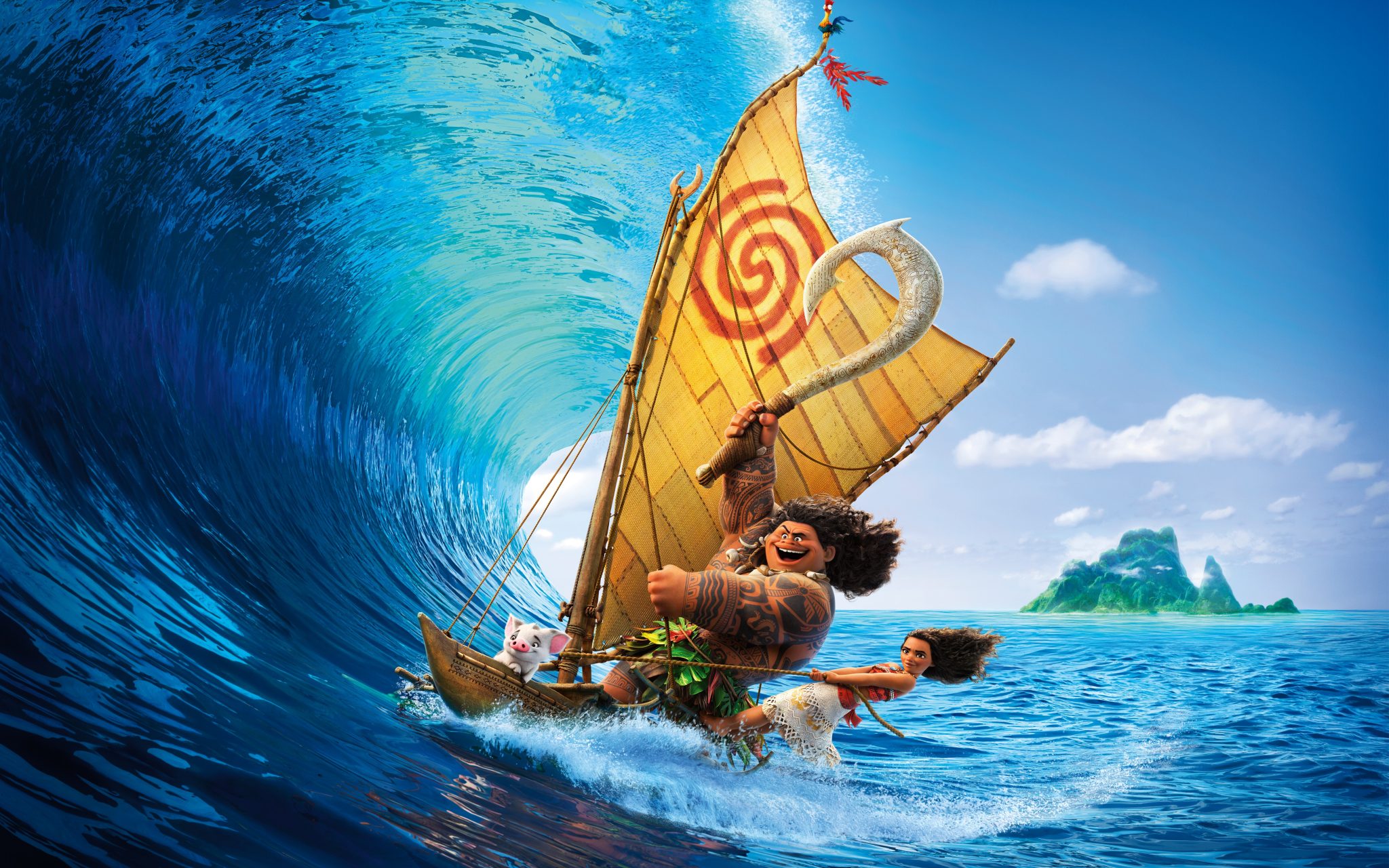
My issue with all this is less an attack against Zootopia and more a lament for how under-appreciated Moana is as both a movie and one that happens to be made by Disney. If you slapped the same movie with the logo of any other animation house, it would deservedly be hailed as a new classic and breath of fresh air. But as we’ll get to in a minute, Moana is dragged down by baggage it didn’t ask for, and in many ways, went out of its way to defy.

Why? Because film critics can be a bit lazy. They see something that sort of resembles something else and jump at the chance to make a comparison, usually knocking the film down because of their pseudo-intellectual word associations and cultural references, as if film borrowing inspiration is something to be ashamed of. This is a persistent annoyance with reviews for animated films because nearly 80 years after Snow White and the Seven Dwarfs, some critics are still refusing to take the art form seriously. Seriously.

Thankfully, most critics do appreciate good animated movies and approach them fairly. Of course, there were a small amount of unfavorable reviews for Moana in November, but most of them were perfectly fine for what the reviewer was trying to accomplish, which was a basic interpretation of their own subjective take on the film. But one in particular caught my Snarcastic attention, not because it was badly written or as outrageous as what I usually bring up in this column, but because it’s so tragically misguided in its bias. It’s also a summation of the criticism received by many who did like Moana overall.

Writing for Sight and Sound, Vadim Rizov writes, “Disney’s Hawaiian folk fable paddles safe waters.

Hey, did I mention the other thing that really bugs me about a lot of critics? It’s the wordplay headlines. Just the wordplay headlines.

Disney’s big-ticket seafaring saga lets rip with its computer animation, but sails the same old storyline.

To Rizov’s credit, he really does go into detail over what makes Moana a technical achievement in animation, so let’s focus on his main argument, that Moana is same-old, same-old for Disney.

In a way, that’s true. A young “princess” is the heroine, and she has to go on an adventure to save her village. Of course, most movies can be boiled down to a well-established plot structure, but we forgive it because of everything else that happens on top of the familiar “good vs. evil” and “buddy cop” tropes that show up again and again. Let’s see why Rizov disagrees.

Moana is an animated film of the subgenre codified at the start of the ‘Disney Renaissance’ by 1989’s The Little Mermaid.

Oh no. He’s not about to compare Moana to Little Mermaid is—

Both films are co-directed by Ron Clements and John Musker, and start from the same premise:

Sighing intensifies.

a young woman next in line to be queen/chief

OK, hold on. Ariel from Little Mermaid was not next in line to be queen, and in fact, Triton never even implies that her future has anything to do with running the kingdom. Rizov even has to point out here the difference between “queen” and “chief,” which is already a false comparison of the two movies in order to argue that Moana is somehow formulaic. But let’s keep going.

chafes at the for-safety’s-sake boundaries imposed on her.

Two huge differences you leave out, Rizov. First, Moana actually accepts these boundaries over the course of the first number, which chronicles how she chooses responsibility and duty over her own personal desires. It’s only later out of necessity that she challenges this authority, but it’s a far cry from the rebellious personality had by Ariel, who was going behind her father’s back in perpetuity before the movie started.

The second difference is that Triton’s hatred of humans is never really justified in a way that makes sense. Why are the aquatic folk so scared of humans? These rules come off as very authoritarian, which makes sense for a 1989 movie. But Moana actually presents a believable case for why the chief is so against their people (not just her) venturing beyond the reef. He’s given a backstory, and the script treats Moana’s father as a complex character, even though you somewhat root against him.

But Rizov would have you believe, “Nope! Same as Little Mermaid!”

her father…insists his people don’t venture past the coral reef. It’s as inevitable as her journey of self-discovery and vindication that, in between musical numbers, Moana will have reason to leave and prove herself.

Eh, more or less. And I see why Rizov is simplifying this in order to avoid an over-explanation. But it’s unfair to boil down Moana’s motivations to self-discovery, when it ignores how the first act effectively explains why she wants to “prove herself.” And it’s compelling, not just inevitable. For one thing, she’s energized by how her ancestors were voyagers, and part of her motivation to leave is to restore her people’s culture, in addition to answering the call to help her people that is set up earlier when she’s learning the ropes in becoming chief.

Rizov goes on to praise the movie a bit for not being as racist as Aladdin, bring up the weird controversy over Maui’s weight for some reason, and gush over how pretty the movie’s water and hair is. Eventually, he brings up the music and points out some of the clever lyrics.

But no matter who wrote the songs, there was always going to be a line about listening to your ‘inner voice’ – it’s pretty much Disney company policy.

I also shudder at the simplistic plot device that is “listening to your heart.” Disney popularized it, to be sure, but what’s so depressingly absurd about Rizov’s assessment here is how he missed the part where Moana blatantly defies this boring cliche.

First, I want to point out that one of my favorite things about Moana is the music, because Lin-Manuel Miranda and the other writers did a fantastic job using each song to lend the story a lot of complexity and depth (seriously). In “How Far I’ll Go,” Moana spends the entire song declaring her situation and moral conflict that will define the film. That what she wants consistently clashes with what is expected of her, while she pontificates the benefits of “playing along” and how that will work out better for everyone but her, only for the “voice inside” to make her question if this is truly what’s best for her people.

The inner voice is recalled throughout the film, but it’s foreshadowed in the first number, when Moana’s grandmother tells her exactly what that inner voice means and why it’s important. She tells Moana that if her inner voice essentially spurs her to action, that means the voice is “Who you are.” Later, in “I Am Moana,” her grandmother again starts to sing this part, but then asks Moana to answer if she knows who she is. This contrasts with the film’s other repeated theme of understanding “where you are” (the name of that first song). Moana answers her grandmother by saying that she’s defined by where she comes from, what she’s doing, and where she’ll go. Not her inner voice. Her inner voice is simply her.

These are complicated ideas that appear formulaic when you just tune out at the mere mention of “the voice inside,” but following the music leads you to a completely different understanding of what the writers were going for. Moana isn’t another a “follow your heart” diatribe, it’s an attempt to better explore what it means to make decisions about what you’ll do with your life based on your circumstances and instincts. It makes the case for balancing these two struggling concepts and carving out your own path by being fair and honest with yourself and the people around you.

If that’s Disney’s company policy, I’m game for seeing another animated movie tackle a trope so competently.

All of these affirmational bromides are a regrettable staple of the late Disney corpus, and while they coincide nicely with the recent boom in self-proclaimed ‘empowerment ballads’, they do little to actually raise the spirits.

Translation: I didn’t feel particularly empowered, so there’s no way you did.

for all the technical skill on display, this feels as inessential and disposable as any Shrek or Ice Age, only with ostensibly loftier pretensions. 

First of all, only the Shrek sequels (after the second) are disposable. To say that Shrek is inessential is obvious, forgetful nonsense. Second, to compare Moana to Ice Age is so off the mark, I have to believe Rizov did a spit take when he realized that nearly every single critic in the world completely disagrees with him.

Now, I’m not here to tell you that Moana is somehow a lot better than you realize. It’s a personal film for a lot of people, myself included, and I believe it has more than enough merit to be regarded with high praise outside of water and hair effects (which are gorgeous, don’t get me wrong). It’s still my favorite movie of 2016, Oscar or no, and that’s only being strengthened by repeated viewings.

Thanks for reading this. Seriously. You can subscribe to my posts by clicking “Follow” in the right sidebar. 

Or just say hello on Twitter: @JonNegroni


‘Get Out’ Is A Great Horror Mystery With A Conscience

Get Out

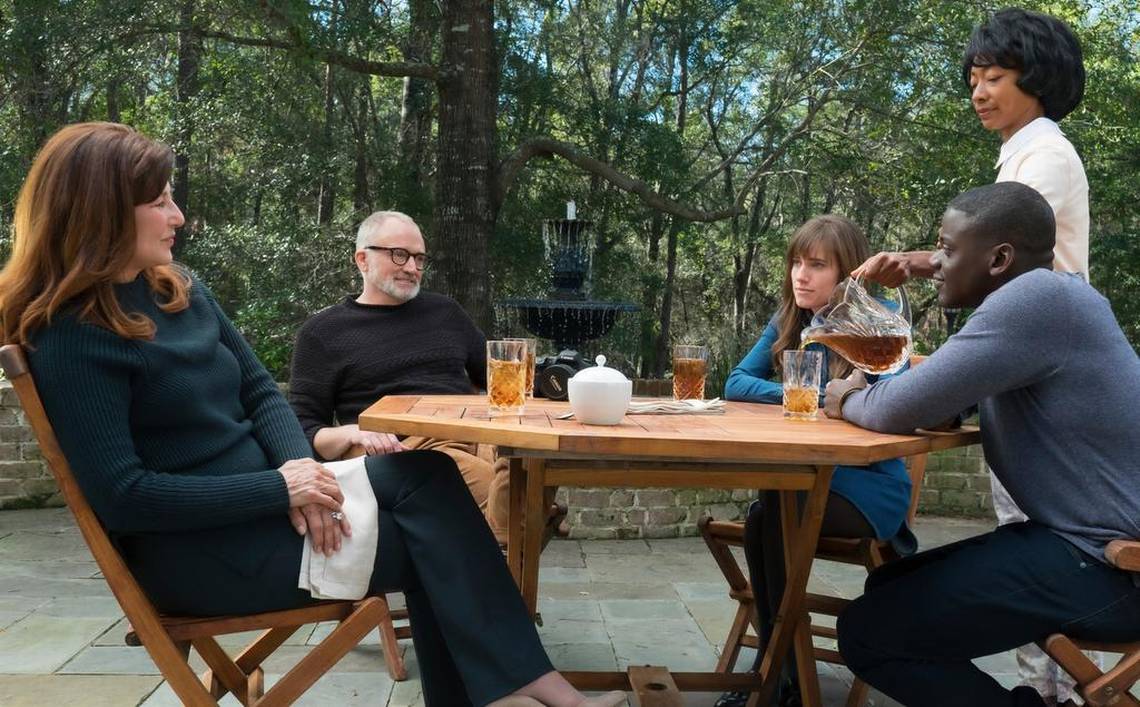
Get Out opens with a simple (and frightening) tone, then splinters off into competing genres of horror, mystery, and even comedy. And not necessarily in that order. Directed and written by Jordan Peele in his directorial debut, Get Out centers around Chris, a straight-talking young black man (Daniel Kaluuya) who goes to meet his white girlfriend’s liberal, well-to-do family.

Take out some of those adjectives, and you can see how easy it is to set a mood of discomfort there for Chris, who suspects from the first night that not all is what it seems. Is it paranoia, social commentary, or a strange mix of both? Get Out proposes the latter, and that’s probably why most moviegoers will have a great time with it.

As shown in the trailers, the first red flag for Chris as he visits this film’s version of the White House is the family’s set of bizarrely-behaved housekeepers, each one a black person working for the Armitage family, played by Bradley Whitford and Catherine Keener. Chris’s girlfriend Rose (played by Allison Williams) insists that her family, while a bit tone-deaf, is certainly not racist. She’s the first to rise to Chris’s defense during most of the early encounters that convince the audience they’re watching a relevant piece of film with clear echoes of Black Lives Matter commentary, from a police encounter that singles Chris out for no reason to a dinner party where the guests ogle Chris’s appearance.

It all leads to some unconventional and even wacky horror and intrigue, but one with a refreshingly balanced perspective. Peele, who gained inspiration from Night of the Living Dead and The Stepford Wives, transforms the sensibilities of those genre flicks into something almost original in its craft and definitely in what it has to say about a theme I won’t dare spoil. The film is meant to be uncomfortable for multiple demographics for multiple reasons, and it doesn’t hurt that behind it all is a competently made film with tight pacing and consistent thrills. It’s not quite as scary or unsettling as some of the genre’s fans might want or expect, but it’s certainly ahead of the curve in its psychological horror.

Get Out

And weirdly enough, it’s also funny when it needs to be, though more as comedy relief than as deliberate comedy. That goes back to how the pacing allows steady breathers for a savvy audience, especially the handful who will be far more aware of what’s going to happen before some of the characters do. Of course, everything gets a little more serious toward the very end of the movie, but it’s all noticeably less impressive than some of the more subtle workings that precede it, a common issue with mainstream horror that Get Out gets somewhat of a pass on because it’s so incredibly satisfying in its own way.

Get Out could have easily been an aggressive take on modern prejudice and race relations that goes after easy targets, perhaps because that’s what audiences are so accustomed to. In the other direction, it could have come off as preachy and dismissive. Instead, it’s scary for all the right reasons.

Grade: A-

Extra Credits:

  • Sorry, no Key cameos. But that’s definitely for the best in this case.
  • I appreciate a movie as willfully short as this one, just 103 minutes and filmed entirely in Alabama.
  • Blumhouse Productions is behind this film, no surprise. Between this and enabling Shyamalan to make a horror comeback, Blumhouse has become somewhat of a cinematic universe for misfit directors.
  • Rated R for violence, bloody images, and language including sexual references.
  • Jordan Peele got the idea for this movie during the 2008 election, when it was being discussed whether or not an African American or a woman was more deserving to be president. According to Peele, that was the “seed” from which Get Out was born.

    Thanks for reading this. Seriously. You can subscribe to my posts by clicking “Follow” in the right sidebar. 

    Or just say hello on Twitter: @JonNegroni


‘The Great Wall’ Is A Middling Mashup Of Western And Eastern Tropes

the great wall

It’s not often that a film does so well to fall right in the middle, where the good and bad of its parts come together to represent one, halfway decent blockbuster for a very specific crowd.

That crowd is the group of moviegoers who might crave a Chinese produced movie that’s been written by Western storytellers, an idea that’s a lot better in theory than it is in practice, as evidenced but what was clearly a film designed by the committee to fully utilize a global box office. What if the Great Wall of China, a true wonder of human history, was built as a mythical shield against ancient aliens with a hive mind?

The Great Wall unfolds from there as an elaborate love letter to medieval Chinese ingenuity (indeed, the weapons and tactics of the film’s primary military is the true star, not Matt Damon or Jing Tian). It’s just too bad that they lumped in a passable script featuring a weightless performance from Damon himself.

Go on…‘The Great Wall’ Is A Middling Mashup Of Western And Eastern Tropes

‘The Lego Batman Movie’ Has More Jokes Than It Does Laughs

lego batman movie

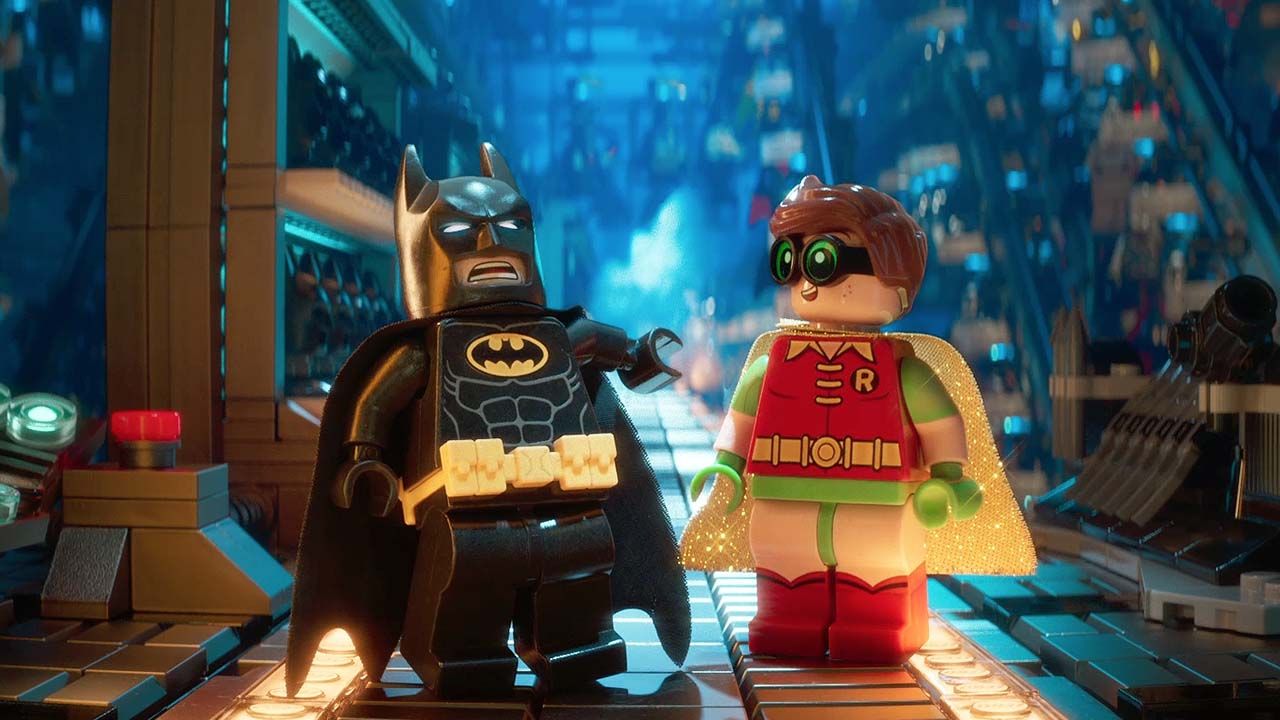
If Deadpool could parody the entire superhero genre, why not create a Batman movie that parodies the massive, long-running Batman mythology? It’s a smart, timely idea to build a monument to the decades of trivia regarding one of the most iconic superheroes (and characters) of all time, and as a followup to the hilarious and self-aware Lego Movie, which is ultimately a more thoughtful attempt to woo both kids and audiences.

Within the story of Lego Batman Movie, the titular character (voiced by Will Arnett) is as much a pop culture phenomenon as he is in real life, singing songs about how incredible he is and lavishly surrounding himself with gadgets and vehicles that best represent his own ego. But Batman is lonely, too, for reasons that might confound the same viewers who do manage to get all the references being tossed and visually planted.

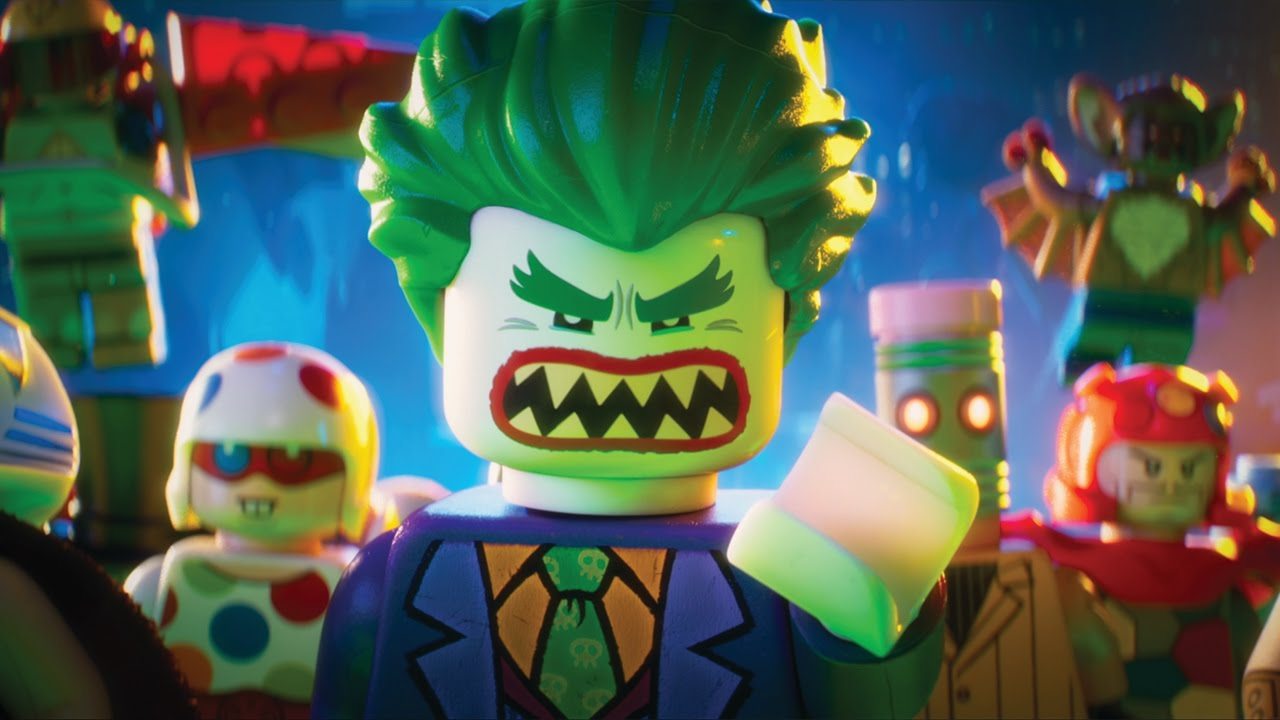
See in this “universe,” Batman has never had a Robin, Batgirl, or otherwise. He’s a member of the Justice League (sort of?), and the movie wants to suggest that his symbiotic relationship with Joker is an interesting parody of romantic comedies (helped by frequent references to actual romcoms Batman enjoys in private).

It’s all written in a sloppy, haphazard way, because the viewers who will get the most out of the mountains of jokes and references will also wonder how all of this can simultaneously coexist with a Robin/Batgirl origin story, especially as there are loads of winks to previous Batman films (with those characters) being in the same mythology as this movie. In other words, it’s confusing, distracting, and hard to ignore, even for a movie that doesn’t ask you to take any of this seriously until it does.

lego batman movie

The film’s primary message is that Batman needs to learn how to work with others as a team, and the path for him to get there is utter chaos. Entire scenes are mismatched in pace and tone, frequently stopping the action completely every few minutes or so to repeat (sometimes verbatim) the themes and messages of the movie, just in case the kids didn’t understand how hard it is for Batman to have…friends?

As a result, Batman ends up learning the same lesson multiple times, sometimes pontificating the same ideas a scene later. It seems the writers (there were many) didn’t have sufficient time or freedom to edit the script because they also wanted to maintain the jokes they came up with to suit those scenes, so Lego Batman Movie comes off as a first draft riddled in mayhem and some interesting ideas, which will make it hard for audiences to feel less than overwhelmed by the frenetic references, action, and set pieces that turn on a dime.

The saving grace, however, is the fact that most of these jokes are humorous, especially if you’re a batfan. The ratio of goofy “kids will get this” jokes with the “inside jokes” that go over their head seems purposefully imbalanced, making Lego Batman Movie more a product of its time rather than a lasting comedic film. Perhaps only the first 10 or 15 minutes represent the best Lego Batman Movie has to offer as both a parody and an accessible comedy, akin to something like Spaceballs or, yes, Lego Movie.

But for the rest of the runtime, the film lobs more jokes than you can keep up with in order to satisfy everyone who won’t get the last joke. Unlike Deadpool, that critical mass of humor isn’t paced quite as well, so the laughs won’t be quite as abundant as the attempts to earn them. And that’s no good when you consider that the rest of the movie’s ideas about Batman’s loneliness and teamwork are too shallow and over-explained for audiences to care when the snarky inside trivia dries up years from now.

Grade: B- 


Thanks for reading this. Seriously. You can subscribe to my posts by clicking “Follow” in the right sidebar. 

Or just say hello on Twitter: @JonNegroni


‘Batman v Superman’ Is Better Than ‘Civil War’ Because Whatever – Snarcasm

batman v superman

Snark + sarcasm = what you’re about to read

Hey superhero fans and all-time purveyors of basic logic! I’ve got a twister for you. Did you know that  with just a few baseless assertions and false equivalency arguments, you can decide for everyone else that a truly terrible movie is better than a pretty good one?

Welcome the internet! And also the inner workings of this summer’s ultimate contrarian, Donnia, who wrote this little number on Fansided:

Batman v Superman Is Actually A Better Movie Than Civil War

You heard it here first. And for good reason.

Now, I’m all for taking a close, critical look at Captain America: Civil War, an entertaining film that doesn’t fully succeed at being anything extraordinary beyond what we’ve already seen of the MCU. It’s pretty good and an easy recommend, but it can be picked apart just as easily as any other Marvel film.

Batman v Superman, on the other hand, is a glorious misfire as one of recent film history’s most obvious examples of style over substance. Still, the movie has its fans who declare it to be an underrated masterpiece, in some part (I suspect) because they’re displacing the earned love they have for DC onto this neat-looking, but thematically hollow, fan film by Zack Snyder. It’s not without its high points (a great Batman aside from sociopathic tendencies and pretty much everything Gal Gadot does aside from opening emails). But to say it’s better than Civil War is a such a non-starter piece of hot-take nonsense, I can’t wait to share it with you.

Despite what many think, Captain America: Civil War really isn’t a good movie,

“Sorry legions of people who have the exact opposite opinion, including film critics, fans, and experts in this industry. I’m smarter than you!”

but Batman v Superman: Dawn of Justice is.

I’ll give Donnia some credit here for at least eliminating the pretense that she considers film analysis subjective.

That’s right, folks: you read the title correctly.

Yup, so sit back and breathe in the “pretty much clickbait.”

If you dare to have this unpopular opinion, you’re sure to be bombarded with reasons as to why Captain America: Civil War is apparently the better film

Right, it’s almost as if people use reasons to articulate their observations. Next you’re going to get mad at them using examples and evidence.

But the truth is that both of these movies hit the same beats to the same effect but for some reason, Civil War is praised for it while Batman v Superman is criticized. And the question is: why?

False premise alert! Donnia is putting opinions into our heads, claiming that the reason people disliked Batman v Superman as a set up, not an execution. Which means if I liked Mission Impossible: Rogue Nation but disliked Spy Kids 3D, then obviously it was because I have a double standard for the genre. Obviously.

I enjoyed Batman v Superman.

You don’t say.

When critics panned the movie for being poorly edited, poorly paced and basically a massive failure of a superhero film, I was discouraged to say the least.

You shouldn’t be, and for one simple reason: Liking a bad movie is fine. People do it all the time. That’s why they’re called guilty pleasures.

I couldn’t put my finger on it, but I knew there was something strange about the film when I first saw it. It wasn’t a bad feeling, but I knew that the film didn’t feel like what a superhero film usually feels like.

Was this before or after Jesse Eisenberg shoved a Jolly Rancher into an old dude’s mouth?

It didn’t look like it either, and that’s when it hit me—Batman v Superman didn’t follow the formulaic superhero narrative that we’re used to seeing.

False premise alert! Donnia is slipping into a quick, no-big-deal conclusion that we’re apparently used to seeing formulaic superhero narratives in our movies. This is important because instead of establishing this as a problem, she jumps ahead to the part where Batman v Superman solves it. Tell us more!

we all know that the MCU has and will continue to release a million movies and we flock to see all of them.

Everyone is terrible, yeah.

The MCU follows a very specific blueprint, as if it’s not obvious by this point.

“So obvious, I don’t need to spell it out. I’m just right.”

Yeah, so, all movies follow blueprints, especially franchises. If you’re criticizing Marvel movies for having some common ambiguous…thing…then you have to say the same for Star Wars always involving Skywalkers or Indiana Jones always being about historical adventures (yawn!)

 the problem occurs when a movie like Batman v Superman comes along and is very different than what we’re used to seeing.

Being different isn’t always better, and Civil War is actually a great example of that. Despite what you may think, Donnia, that movie isn’t a lot like any of the other Marvel movies. In fact, plenty of Marvel movies have been completely different from each other. Iron Man was an action comedy, Thor was a fantasy adventure, Captain America was a pulpy period action piece followed by a 70s-esque spy thriller in its sequel, Guardians of the Galaxy was a space opera comedy, and Ant-Man was a superhero heist movie.

And then there’s Civil War, which was a superhero teamup fight movie where the bad guy (spoiler alert) actually wins in the end. So how is Civil War formulaic again?

We’ve unknowingly set expectations for what we think a superhero movie should be that we reject when one tries to be different.

Nope. We just reject bad movies. Simply being different isn’t enough merit to warrant getting a pass, for the same reason a lot of people wanted to write off Ant-Man long before it was released because it was being heralded as something different.

And how exactly is Batman v Superman all that different from typical superhero movies, aside from having Snyder’s particular visual flair we’ve seen many times since 300?

Batman v Superman isn’t poorly edited or paced, it intentionally edited to be like a comic book.

Pack it up, everyone, the medium has officially stopped being the message.

Look, there’s nothing wrong with trying to make a movie match the experience of a comic book story. It’s been done successfully in the past with movies like Scott Pilgrim vs. The World, and done quite poorly with movies like Batman and Robin.

Pointing out that what they were going for was interesting in and of itself doesn’t negate the problem, which is that editing a movie too much like a scatterbrained paperback is a bad idea, mostly because comics usually have built in context continuity and are able to be digested in short bursts that rely on dramatized set pieces.

Movies are different, especially if they’re aiming to be over 3 hours long. They require cohesive visual editing that allow viewers to soak in the narrative and appreciate the characters, because unlike a comic, everything moves. And there’s sound. When you remove that cohesive visual editing, the “spectacles” onscreen that would look great on a comic ring hollow on the big screen.

 It was a radically experimental decision, and it did feel strange at first but once I realized what the film was doing, I loved it. How can I put a movie down for trying something different in an industry that always does the same thing?

Easily! For doing it poorly. Remember when I said style over substance? Yeah, I wasn’t just throwing around a cliche aimlessly for once. That directly applies here.

A common complaint about Batman v Superman is the “Martha” scene. That scene is just so horrible and laughable to many people and I don’t understand how they can mock that scene when the exact same thing happens ten minutes into Civil War. 

False…everything alert!

Bruce loses focus because Clark says his mother’s name and Steve loses focus because Crossbones says Bucky’s name.

And then Steve and Crossbones become best friends for life! Right?

Obviously the context of their names being said are different—

“But that huge difference in the scenes is not important or anything unless it makes my point stronger. Obviously.”

Look, the whole “Martha” thing has been talked to death in length elsewhere and on this very site, and honestly, I’m quite done with it. The main issue at this point is that this scene is so badly executed, everyone mocks it and willingly ignores the author’s intent. That’s a sign something went wrong here.

Another complaint towards Batman v Superman is the Doomsday fight…By taking the fight to an uninhabited island they’re preventing mass death.

That’s not the complaint at all. The complaint is more an aside (and not even one of the movie’s most annoying flaws) regarding how ham-fisted the line is when they say, “Oh, and that island is inhabited! WINK WINK.” We point it out because it’s moments like these that take the viewer out of the movie, because you consistently have to be told by the filmmakers that this isn’t Man of Steel. Oh, how I wish this movie had been Man of Steel.

Civil War does the same thing when Cap’s team and Iron Man’s team fight in an empty airport and destroy it in the process. So why does Batman v Superman get criticized for the line that a government official makes when he says that he island is uninhabited but no one says a word when it’s stated that Tony evacuated the airport so that they could have their showdown?

Is this a real question? Because they evacuated the airport. It was a decision that made sense because they don’t want people to get hurt. With Doomsday, they practically flashed this on the screen as, “Oh, what a coincidence that Doomsday wants to duke it out on an abandoned island that’s abandoned because whatever. Now you can’t complain! Wait, I’m not supposed to say that part of the line that’s scribbled on the script in red ink?”

I don’t have a problem with how either movie handled these scenes but I can’t help but to feel some animosity towards Civil War because audiences and critics are so willing to give the film a pass for doing same thing that they criticized Batman v Superman for.

Which is Better: ‘Zootopia’ or ‘Moana?’ – The Pixar Detectives

Both Disney films have been nominated for Best Animated Feature in the upcoming Oscars, but which one will and win? And probably more importantly, which should win?

Kayla Savage and myself took to Super News and discussed live. We answered all of your burning comments, as always, and as a special bonus this week, we’re offering a second giveaway prize for those of you who can’t make it live! To enter for consideration, go to Super News on Facebook and leave a comment now. The drawing ends soon.

We’ll be off next Wednesday, so I’m planning to do a different video coming out at around the same time. See you then, and don’t forget to check out The Pixar Detectives live every Wednesday at 7:00 p.m. (Pacific) to hang out with us and talk about Disney and Pixar!

Also as a bonus (and because of the strong reaction to last week’s live stream), be sure to check out the latest video from SuperCarlinBros below, where they also chat about Disney allegedly “confirming” the Pixar Theory. Enjoy!


Thanks for reading this. Seriously. You can subscribe to my posts by clicking “Follow” in the right sidebar. 

Or just say hello on Twitter: @JonNegroni


‘Split’ Is Weirdly Slow And Infuriating Schlock, Even For Shyamalan

split

M. Night Shyamalan is typically a director of methodical, inhumane dialogue and stuttering set pieces, but his best films also center around wild premises that pay off in narratively satisfying fashion. It’s unnerving to watch his last film, The Visit, unravel in its final act, but unlike that startling return to form, Split suffers from pretentious, overbearing writing that wishes it deserved James McAvoy’s brilliant method acting.

Like VisitSplit is mostly a dark comedy, only its central figures are nowhere near as a relational or intriguing when the jokes and twists start flying.  Anya Taylor-Joy (last year’s The Witch) plays Casey, a repressed teenager whose main direction is to stare wide-eyed at the camera as the audience waits for suitable harmonics or dramatic tension to build up (it rarely does).

Like many details in this film, Casey is the anti-10 Cloverfield Lane — that movie was a room horror with an ideal sense of location, characters who exhibit entertaining and thoughtful behavior, and a story that actually treats the audience as careful thinkers. Split has exactly none of this, though both films do have the same type of “Oh, so that’s what this movie is” type of ending, only at least 10 Cloverfield Lane had the decency to end on a set piece instead of a ham-fisted teaser.

Casey and a few other teenagers of little consequence are abducted by a man with Dissociative Identity Disorder (DID), a type of split personality brought on by trauma. The film treats this as some narrative flourish, but Barry/Dennis/Patricia/Hedwig and others played by James McAvoy (his second film where he plays a character with multiple personalities) are quite unsurprising and telegraphed in their actions throughout. Only three “personalities” take up much of the story, and they mostly consist of these characters repeating the same scenes over and over again, but with slightly different context.

Dennis is a neat freak, Patricia is calulcating, and Hedwig is naive. What should have taken a handful of story beats to establish is repeated ad nasuem as the audience predicts every step of this slog, consistently wishing for explanations to character decisions and what this movie even is when they should be appreciating the stylistic horror groove Split musters.

split

At the very least, Shyamalan employs one of his best tricks, a commitment to B-horror that matches every movement of his camera, wielded gracefully by Michael Gioulakis (the cinematographer for the far superior It Follows). He has a real sense of what he wants Split to communicate in its movement, framing, and set design. For that, Split is still basically watchable, and there is at least one well-executed scare that earns its place.

If only the writing and directing of Split would allow this film to be what it truly wants to be: a B-movie  horror that expands on an interesting premise in goofy, yet creepy ways. But it’s the way the film butchers its interpretation of DID and mental health in general that falls so flat it actually becomes offensive in its absurdity, building up Casey as an intersecting example of trauma in her own right, but not in any way that reasonably connects with the film’s core messages or how it culminates in the finale. I’m sure it sounded quite compelling in Shyamalan’s own head, but his pretension is that the substance is at all meaningful or contributory to what people who actually suffer from these mental health problems go through, and the way he punctuates all of this is disastrously played for laughs.

All that said, I can easily see how some fans of Shyamalan’s work might have a bit of fun with this film, overall. It’s nowhere near as a terrible as Happening or After Earth, but it’s likely a notch below The Village and Signs. It has confidence and a full commitment from McAvoy, who acts his heart out in  a performance that manages to be both unsettling and memorable, which is far more than what Split demands from him.

Grade: C

Extra Credits:

  • Shyamalan has admitted that shooting Split was the hardest in his career. Which makes sense considering its also his longest film yet.
  • Joaquin Phoenix nearly landed the main role, but he bowed out due to scheduling problems.
  • You’ll notice from the opening credits that this is another collaboration between Shyamalan and Jason Blum. And it likely won’t be the last.
  • Three words: Shyamalan Cinematic Universe. Three more words: Don’t you dare.

Thanks for reading this. Seriously. You can subscribe to my posts by clicking “Follow” in the right sidebar. 

Or just say hello on Twitter: @JonNegroni