Second Opinion: Seriously, ‘Interstellar’ Is Worth Another Watch

interstellar

Christopher Nolan’s ambitious sci-fi space epic Interstellar has proven itself to be a very contentious topic of discussion among hardcore moviegoers (and Nolan fans). And in the three years since its release and after Nolan’s newest film Dunkirk, the debate has only gotten more divisive.

Some liked it, some (including Jon Negroni himself) didn’t, some were indifferent, etc. Despite all this debate, Interstellar has managed to gain a surprisingly devoted following, many of them (like myself) even more impressed the second time watching it.

As the title of this article suggests, I remain a staunch defender of Interstellar. Yes, it definitely has flaws, but there’s still a lot to love. When I first saw the movie, however, I was sad to say that I didn’t like it much. I found it boring and confusing, and it just kind of left me disappointed. It wasn’t until the recent release of Dunkirk that I decided to give it another shot, along with some other Nolan movies, to gain a fresher perspective.

I was amazed by how much I loved Interstellar the second time.

I almost didn’t think I was watching the same movie, and I eventually came to the conclusion that time was the key factor here. It had been over two years since I first saw the film, so I had actually forgotten a lot of what had happened, weirdly enough. I did remember most of the actual plot thanks to a combination of my disjointed memory and some of the online discussions I had observed over the years, so I pretty much knew the basic premise going in, which I think made for a much more complete experience. An emotional one.

In fact, the emotion of it all is what surprised me the most watching Interstellar the second time. The personal story of the characters, the beautiful imagery, and the score by Hans Zimmer all worked together to sell me on humanity being at stake. I truly felt like time was running out and that every second was important. The relativity scene and the docking sequence stick out as being especially tense and heavy, making for some decent thrills among the more conceptual material.

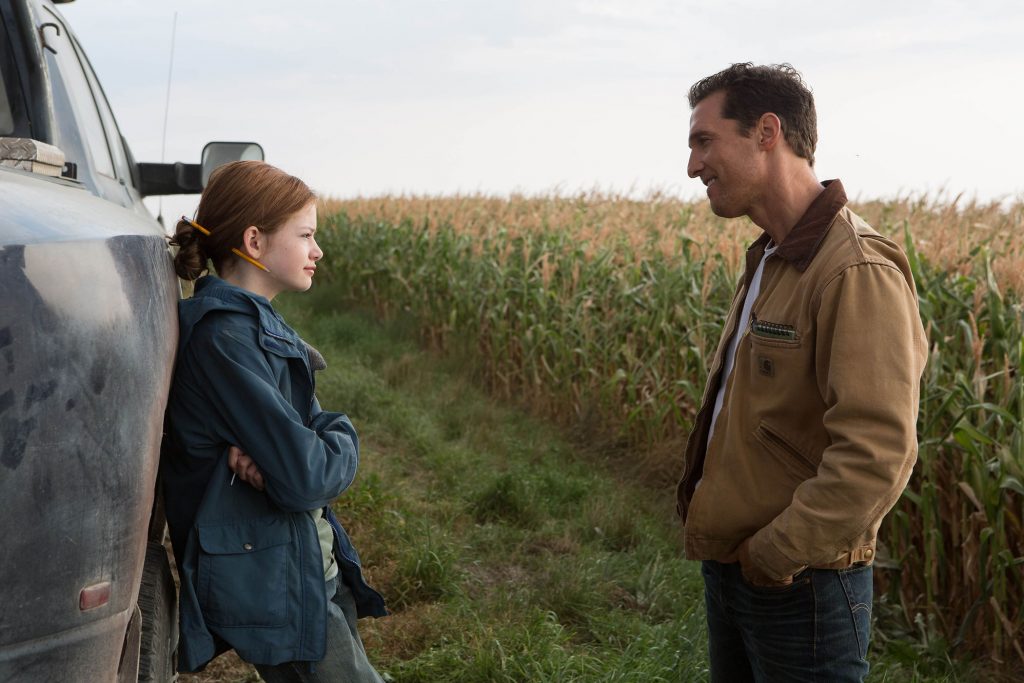
On top of all that, I was impressed by how Nolan balanced all this heaviness with a very unique story about a father and his daughter. Although Cooper (Matthew McConaughey) and Murph (Mackenzie Foy and Jessica Chastain) don’t have a lot of screen time together, the connection between them managed to be as potent as it needed to be, even across time and space (a point the movie directly addresses, of course).
interstellar

That said, I attribute this successful character relationship to the editing by Lee Smith. He cut these scarce scenes together in just the right way for them to display the mutual care between Cooper and Murph and how they can’t seem to move on, even though it may be in their best interest to do so. The performances by McConaughey, Foy, and Chastain obviously help too. They’re able to convey the pain of leaving a loved one behind in a very convincing way, and I was excited to see where the story was going even though I already knew the ending. That’s not easy to pull off.

But what I liked the most while rewatching Interstellar was the overall message I must have missed the first time around. It might be a hackneyed thing to say, but I was impressed by what I think Nolan was getting at with a recurring motif in the movie in the form of Professor Brand (Michael Caine) repeating these lines from a Dylan Thomas poem:

“Do not go gentle into that good night; Old age should burn and rave at close of day. Rage, rage against the dying of the light.”

First, recall the premise of the movie: humanity is on the verge of extinction and/or famine as a result of a second dust bowl destroying the world’s resources. You get the sense early on that most people have basically accepted their fate and are just trying to have as good a time as possible before it all slowly ends.

What I think Professor Brand, and by extension Christopher Nolan, is getting at with the poem is that we shouldn’t just give up on life. We possess the intelligence, the potential, and the technology to resist the natural order of things, and we should use our humanity wisely. Just because we can. Why not fulfill our potential as intelligent beings?

It’s this kind of compelling philosophy that makes me love science fiction as a genre.

Despite all of the praise I’ve given it, I still don’t think Interstellar is a perfect movie. Most of my flaws stem from pure filmmaking aspects. For instance, I think the shifts in tone between intellect and emotion can be very jarring at times, and some scenes can be a little too wordy and bogged down in exposition.

interstellar

I think there are numerous wasted characters, as well, most notably Dr. Amelia Brand (Anne Hathaway) and Dr. Mann (Matt Damon). They’re both a bit underwritten and don’t have as clear motivations as you’d expect from the rest of the script. Plus, Dr. Mann is a little on-the-nose in that one scene I don’t think I have to spell out.

Also, and this is painful to say, the ending is…perfunctory. I think most people agree the story wraps up sappy and with little apparent thought put into the broader implications of the whole enterprise. I don’t want to accuse the studio of meddling, but it really seems like someone put something into the movie at the last minute in an attempt to make the film more accessible. Who knows?

Problems aside, I’m happy to say I finally got my money’s worth after almost three years. If there’s anything I would like you to take away from this belated review, it can be found right in the title. Maybe Interstellar is worth another try. Coming from the perspective of someone who came around after just one rewatch, I think there could be more to it than you originally imagined.

Second Opinion Grade: B+


Snarcasm: Lady Bird Is Far From Perfect, So It’s Bad

Lady Bird

Warning: the post you are unfortunately about to read is filled with snark and sarcasm, known to many of you as Snarcasm. Please refrain from taking anything said here seriously, because as usual, none of it actually matters at all.

Those of us who put an extraordinary amount of hopes and dreams into Rotten Tomatoes had our hearts crushed recently. You see, a movie can only be good if an arbitrary percentage of arbitrarily chosen tastemakers arbitrarily place said movie on an arbitrarily designed spectrum. And so it is for Lady Bird, one of the most successful indie films of all time and until the release of Paddington 2, the best reviewed of all time according to a website that brings vegetables into a literal equation.

What soiled the 100% rating for Lady Bird on said vegetable counter platform? Well, none other than someone you’ve never heard of. Cole Smithey rated the film a gentleman’s C+, just barely putting the film under a “fresh” rating for Rotten Tomatoes.

What does this mean? Not much, except that we now have a chance to roll our eyes at someone’s alleged opinion. Surely, this is an honest review and not one designed to draw attention to an unrecognizable website few would bother to read a review from unless it was the sole contrarian in a sea of praise and released weeks and weeks after every other critic published their review. Surely.

Go on…Snarcasm: Lady Bird Is Far From Perfect, So It’s Bad

The Shape of Water: The Past is the Key to the Future

the shape of water

Watching The Shape of Water, I expected a wholly original story based on a simple premise. A woman falls in love with a merman. Instead, Guillermo del Toro’s film has a surprisingly familiar set of themes and ideas. Its originality lies in how it blends three core messages for the viewer to internalize.

The first message: the past is the key to the future. This scaly, unpredictable creature found in the Amazon is implied to be an ancient force of nature far removed from the technological advances of 60s Baltimore. Yet every character wants to use this creature as a device for unlocking the future. A competitive future. A future of scientific discoveries. Even a future of artistic expression.

The second message: the people who will unlock the future are the silent. The unseen. The meek will indeed inherit the earth. Finally, the third message: love is the purest way to unlock the future, bringing about our greatest talents. Love is our purpose.

Go on…The Shape of Water: The Past is the Key to the Future

Last Flag Flying: When Loving Country is as Easy as Hating It

last flag flying

We’re dependent on the government. We’re dependent on the military. We’re dependent on our soldiers. So when you put your faith and trust into the very entities that hold the key to your survival, it stings all the more when you experience the ugly side of America and war. Especially if you’re a soldier.

Richard Linklater has directed some of my favorite films of all time, so I didn’t hesitate to catch a viewing of his new film Last Flag Flying. It’s a spiritual sequel to The Last Detail, in that it tells a simple road trip story about three aging Vietnam War veterans in 2003.

One of those veterans (“Doc,” played by Steve Carrell) has recently lost his son to the horrors of the Iraq War. His fellow former marines (Sal, played by Bryan Cranston and Mueller, played by Laurence Fishburne) embark on a quest to help Doc bury his son at home in New Hampshire instead of at Arlington Cemetery in Washington D.C.

“I’m not going to bury a marine,” Doc says. “I’m just going to bury my son.” If that sounds unpatriotic to you, then Last Flag Flying has you on its allegorical mind.

Go on…Last Flag Flying: When Loving Country is as Easy as Hating It

Lady Bird: Understanding What Makes A Film Good

Lady Bird

Our lives are a string of incidental situations, or events. Some of these events are caused by other events. Many events are indistinguishable from coincidence. They appear chaotic and might as well be.

I found myself thinking a lot about structured chaos while watching Lady Bird. It was only after the credits rolled that I clicked with director/writer Greta Gerwig’s “point,” so to speak. That she desired to bring about meaningful change in Lady Bird’s life through both choice and conflict. Not much else.

There’s a reason why critics adore this movie. And I also suspect there will be some general audiences who disagree with the praise. This is because there are some among even the most fervent filmgoers who measure the quality of a film by its trappings. The dialogue. The cinematography. The performances. These are all important, of course, but they don’t amount to much removed from what the events onscreen  mean. Understanding this is the first step to “getting” objective film criticism as a whole. Even if you don’t necessarily agree with it.

Go on…Lady Bird: Understanding What Makes A Film Good

Three Billboards outside Ebbing, Missouri: A Film Better Than Its Title

Three

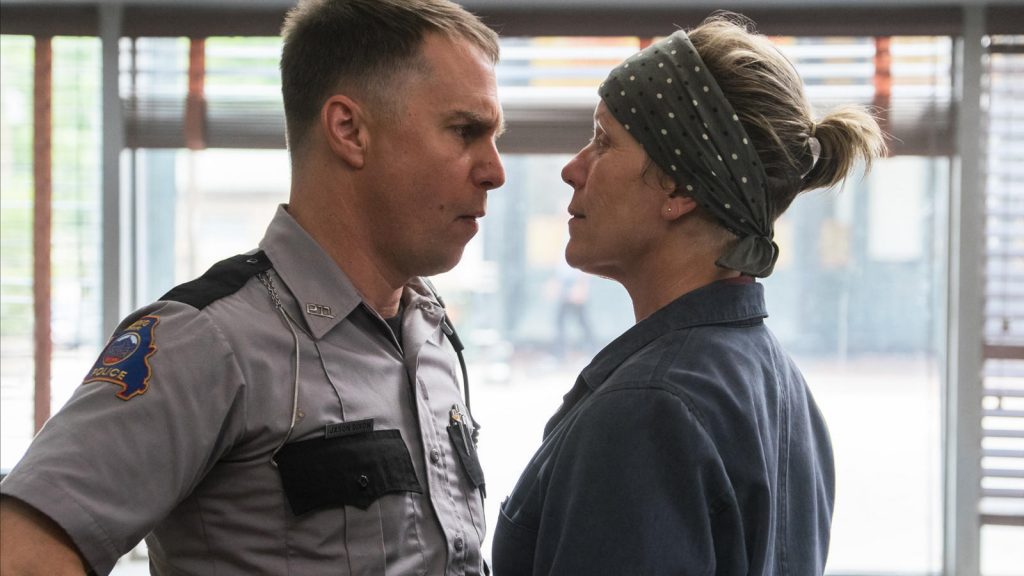
Three Billboards outside Ebbing, Missouri is the actual name of a prestige film in 2017. Naming movies is hard, no?

On the one hand, this title reminds me of the suggestive power found in names of short stories. A lot of contemporary short stories have this stylistic flair, like a recent one I enjoyed called The Shape of the Darkness As It Overtakes Us by Dimas Ilaw. For whatever reason, short stories lend themselves nicely to intriguing “sentence titles,” while novels and movies typically go for the short punch. Just as look at Disney and Pixar: TangledFrozenUpCoco.

In a strange way, Three Billboards is like a short story. It’s a dark comedy you’ll hear heavy praise about in the coming awards season due to its perfected dialogue written by director Martin McDonagh and how much of a thrill it is to watch Frances McDormand process anger in a movie about flawed people desperate for justice. But like a short story, Three Billboards feels intended to pass you by without offering resolution. It’s niche. It’s focused. And it’s not concerned with what you think about it.

Go on…Three Billboards outside Ebbing, Missouri: A Film Better Than Its Title

A Short Review of ‘Blade Runner 2049’

blade runner 2049

I’m excited to dig into Blade Runner 2049 throughout the entire weekend, notably on the Cinemaholics podcast coming out Sunday. But for now, I’ve written some short, spoiler-free thoughts about the film just a day after seeing it.

In general, I’ve been moving away from the standard film reviews you’ve seen on this site since it launched in 2012, mainly because my long form writing has been dedicated elsewhere. And honestly, I find it just as fun and fulfilling to share my immediate thoughts on a film with all of you on Twitter.

For many of you who don’t use Twitter, however, here’s my take on Blade Runner 2049 and whether or not you should take the time to see it.

Go on…A Short Review of ‘Blade Runner 2049’