Unopinionated: ‘Birdman’ Was a Good Movie, And That’s OK

birdman unpopular opinion

Every Tuesday, I examine an unpopular opinion in film and argue against it. This week: Why do so many people hate Birdman despite its huge success? 

There are a lot of ways to dislike a film, and sometimes for the worst reasons. So is the case with Birdman, the 2014 dark comedy that won the Academy Award for Best Picture over the likes of Boyhood and Whiplash (my personal favorite film of that year).

The film has been widely praised as a return to greatness for its star, Michael Keaton, as well as the cementing of Alejandro Iñárritu as one of Hollywood’s premiere filmmakers, just as long as he keeps signing Emmanuel Lubezki’s checks.

Like with most movies that achieve high praise among critics, Birdman’s detractors are quite vocal about their distaste for the film’s supposedly undeserved success. And since seeing the film myself in theaters, I’ve been one of those harsher critics.

birdman unpopular opinion

But Birdman isn’t a terrible movie. It’s above average, I would argue, and its resonance with film buffs as a great film, or even a work of art, has plenty of merit for the same reasons all of Iñárritu’s films achieve critical success. Technically speaking, the film is quite masterful.

Birdman centers around an aging actor named Riggan, who once played the superhero, “Birman,” and has yet to find gratification beyond that peak fame he acquired. It’s an obvious parallel to Keaton’s true life, as he of course portrayed Batman in the 1989 Tim Burton film that inspired the majority of that character’s evolution in film, television, and even video games.

To prove he is an actor who transcends the schlock that made him famous, Riggan directs, writes, and stars in a Broadway show adaptation of Raymond Carver’s What We Talk About When We Talk About Love. The title alone is a clear dig into the type of love that fans heave onto their heroes, and this is played out in a satisfying way as we constantly see people stopping Riggan to take a photo, while he stands there unamused. Even when teenagers admit to not even recognizing him, proving that indifference really is the true opposite of love.

This is a film that makes its audience feel clever for catching these clues and making snide remarks about the current state of the superhero genre. Yet so much of it is loud and on the nose, including a fantastic scene where Riggan tells off a Broadway critic for all of the reasons most of us haven’t even bothered to articulate. In fact, the same criticisms he lobs at her apply nicely to Birdman itself.

birdman unpopular opinion

But is anything within Birdman really all that smart? Viewers don’t have to work hard to grasp the film’s deepest themes, and the camera itself even holds your hand by never violating its one-take structure and giving you a specific sense of where everything is laid out. Optimistically, this is an enjoyable trick that shows off the best of Iñárritu and Lubezki’s ability to enliven even the most mundane sets (some of them being gross to even look at), but for some, it comes off as a magic trick, in that finding out the illusion sort of spoils the fun.

But this is no reason to dismiss Birdman, for the same reason you put up with a brilliant friend who acts pretentious from time to time. There’s value in watching an imperfect character study that allows itself to get swallowed in the creative process, which we see with Riggan and his co-stars as they wander backstage with a never-ending purpose. Though it doesn’t amount to anything reasonably profound in the end, Birdman feels like a film that doesn’t even care about its own ending. It’s a show off in the best way possible.

And Birdman is among a long list of films that tackle the existential crises of fame. It’s just a shame that the unique and crafty questions it brings up aren’t answered in an equally compelling way. Without getting into spoilers, its resolution comes straight from the Hollywood playbook of rushed ex machina, and an ambiguous ending does little to assuage this. But the ride itself is still pretty satisfying as long as you don’t take it too seriously.

Grade: B


I’m Jon and thanks for reading this. You can subscribe to my posts by clicking “Follow” in the right sidebar. Or just say hey on Twitter! @JonNegroni

Unopinionated: ‘The Dark Knight Rises’ Is Better Than What You May Remember

dark knight rises unpopular opinion

Every week, readers send me their unpopular opinions, and on Unopinionated, I explain why they’re unpopular in the first place.

From my inbox: “Sad to see you hating Batman v Superman, when The Dark Knight Rises has to be one of the worst Batman films of all time. That’s not an unpopular opinion, it’s just fact.” – Cheyenne

It’s interesting how quickly some have turned on The Dark Knight Rises (TDKR), a powerfully ambitious film that is quite easy to unpack for various flaws and plot holes that we’ve all come to expect from Christopher Nolan’s brand of filmmaking.

Not that this is an excuse. TDKR is absolutely a flawed movie. Part of that might have to do with how it is justifiably compared to its predecessor, The Dark Knight, which has cemented itself as a lasting future classic within the pantheon of superhero movies (despite the fact that it is far removed from what constitutes a typical superhero film).

dark knight rises unpopular opinion

Expectations were always going to be lopsided with TDKR, so it was surprising to see mostly positive reviews surface as the movie was released. As the years have gone on, however, there’s been a quiet movement to shift the consensus of that film to something much less grandiose than the two Batman films it wrapped up.

And I’m among the fans of this movie who wished for a more cohesive film, structurally. TDKR has not one, but two “rebirth” narratives it forces its Bruce Wayne to endure. Multiple time skips, an overabundance of key players, and some familiar beats from TDR are just a few complaints that weaken the overall product of this film, but they don’t even come close to undercutting how potent this conclusion truly was.

You don’t owe these people any more. You’ve given them everything. – Selina Kyle

What the film does spectacularly is stay on target with what Batman Begins set out to do in the first place (and what TDK carried on so superbly). That is, these movies have always been about holding a mirror up to the deepest fears we have about the post-9/11 millennium — the deconstruction of American capitalism through outside forces, terrorist attacks based in nihilism, and highly invasive government tactics — only to show us how ludicrous it is for us to think that one man can save us all.

Of course, we root for him anyway.

dark knight rises unpopular opinion

TDK played with this direct parallel by pitting the “clean” politician, Harvey Dent, against the vigilante secretly known as Bruce Wayne in a love triangle, of all constructs. By TDKR, audiences are convinced that no one man can save Gotham, but perhaps everyone can unite in righteous fear against a force they don’t understand. This, of course, speaks more relevantly to current events of 2016 even more than 2012, when Barack Obama was poised to win his re-election and the Occupy movement was in full swing.

TDKR makes it clear that violence always has a purpose, whether it’s for the sake of violence as illustrated in TDK, or to be a forced resurrection through the events of Batman Begins. There’s a reason Nolan chose to end this trilogy on the shoulders of the League of Assassins, whose seemingly anarchistic goals are based in some eerily sound logic carried over from the first film.

The film actually begins during a time of peace, eight years after the events of TDK. This peace, of course, is based on the lie that Harvey Dent (and his morals) survived his own death. The white knight was chosen over the dark knight, except the dark knight is the one who made this choice possible.

Speak of the devil and he shall appear. – Bane

Forced into exile, Bruce Wayne has spent this time letting others run the city, and even his company, believing once and for all that the city no longer needs a “Batman.” Meanwhile, a new threat named Bane has set a plan into motion that couldn’t be more ambitious: an actual takeover of Gotham City, effectively making it the hostage of a rogue network of fascist mercenaries.

dark knight rises unpopular opinion

Three new faces enter Wayne’s life as this plan takes off, and they couldn’t be more dissimilar. A young cop named John Blake represents the faith Wayne once had in the Batman role. Miranda Tate, a board member of Wayne Enterprises, helps Wayne enact a new plan to create sustainable and clean energy for Gotham. And the wildcard is Selina Kyle, a thief who shifts between wanting to save the world or giving up to profit off of the chaos.

A good part of the film is used exploring what these new characters mean to Bruce Wayne as he embarks on a war against Bane, but also against his own uncertainty and entanglement with the darkness that he hasn’t been able to shake since the Joker came around.

I don’t know why you took the fall for Dent’s murder, but I’m still a believer in the Batman. – John Blake

But it’s truly the more established cast that helps make the spectacle of TDKR worth caring about. Gary Oldman, Michael Caine, and Morgan Freeman all return to reprise their roles as a shade of Bruce Wayne’s standalone mentor. And Christian Bale himself delivers a more compelling, pain-stricken Wayne than even the TDK, but mostly because that movie did the work to set him up.

Dark Knight Rises unpopular opinion

And that’s the biggest advantage TDKR has, and it’s what helps it overcome its various shortcomings. The film is improved by what came before it, and it also improves them, as well. While franchise blockbusters like The Avengers are to be commended for their commitment to world-building, TDKR is to be celebrated for how complete its story is across its three offerings.

Nolan does a splendid job balancing energetic set pieces (the opening hijack scene is a highlight) with what would descend into mindless fantasy, otherwise. And they save TDKR from being devoid of any fun or awe considering how lacking this film actually is of Batman himself.

A hero can be anyone. Even a man doing something as simple and reassuring as putting a coat around a young boy’s shoulders to let him know that the world hadn’t ended. – Batman

But when viewed as a continuation, not a standalone film, these flaws suddenly become less entrenched with the film itself. From start to finish, TDKR works more as an honorable resolution, rather than a climactic high achieved by TDK. Perhaps we wanted something more groundbreaking, or even faithful to the comics that founded this character and how his story ends in our own imaginations. Our expectations aside, TDKR still delivers something that makes sense within itself.

Grade: B+


Do you have an unpopular opinion you want challenged? Let me know in the comments and I’ll take it on in a future Unopinionated article. Or you can email nowconspiring@gmail.com

I’m Jon and thanks for reading this. You can subscribe to my posts by clicking “Follow” in the right sidebar. Or just say hey on Twitter! @JonNegroni

Unopinionated: ‘Man of Steel’ Isn’t the Superman Movie We Asked For

esman of steel unpopular opinion

Every week, readers send me their unpopular opinions, and on Unopinionated, I explain why they’re unpopular in the first place.

From my inbox: “Man of Steel is a lot better than people give it credit for. In fact, it’s pretty much flawless.” – Shadan

The first “can’t put my finger on it” issue with Man of Steel is its identity crisis. Is it a space opera or a superhero movie? While some of the best superhero movies attempt to mix genres (the spy thriller undertones of Captain America: The Winter Soldier are a fine example), Man of Steel fails to commit fully to its aesthetic, bouncing themes and ideas around without any sort of thread that connects them.

Make a better world than ours, Kal. – Lara Lor-Van

This is partly because Man of Steel spends most of its long running time explaining what Kryptonians are, rather than who they are. And this of course carries over to Superman himself, who is so embedded in mainstream culture at this point that any sort of follow up has to sell him in a unique way in order to be effective.

The structure is overtly reminiscent of Batman Begins, and for good reason. Nolan’s 2005 rebirth of the Batman film franchise led to WB’s critical and financial smash hit, The Dark Knight, oft cited as the best superhero movie of all time. It makes sense that the studio would want to retell Superman’s origins with the same kind of flashback-focused narrative that combines backstory with the drama of the hero’s first journey.

In Batman Begins, however, there’s a clear vision that unites these flashbacks with present day, mostly because Christopher Nolan had creative authority. In Man of Steel, which was helmed by Zack Snyder, it’s clear that some parts of the film had separate influences. To put it bluntly, it’s jarring to jump from a Zack Snyder sci-fi movie to a Christopher Nolan origin story (with some vague Dragonball Z aesthetics thrown in during the final act).

man of steel unpopular opinion

Henry Cavill as Clark Kent is a double-edged sword of satisfaction. He absolutely looks the part, and his early wanderings in the movie are a highlight. Watching him show restraint in the face of overwhelming opposition (only to sacrifice the mystery in order to be a hero) is both a clever and unique way to make sense out of why he wants to be Superman in the first place.

Aside from this, Clark Kent is a character with very little to do, and even fewer critical decisions to make (which is why it feels bizarre when he does finally do something surprising). Instead, he merely reacts to everything around him as he scrambles from plot point to plot point. True, the script tries to add depth to his character with carefully worded interactions between him and the supporting cast, but they’re offset by impossibly moronic character decisions, notably with Jonathan Kent’s guidance and ultimate sacrifice that makes very little sense constructively.

People are afraid of what they don’t understand. – Jonathan Kent

Clark Kent is presented as a blank character who has more symbolism thrust upon him than any of the humanity (or Kryptonianity) that would make such symbolism feel substantial. Before the movie has a chance to actually go somewhere with Clark’s future and motivations, an all-out brawl erupts that monopolizes the final act, undercutting most of the thought-provoking ideas that would have justified the movie’s exposition. By the time the end credits start rolling, the audience is left with a titular character who is actually quite boring.

man of steel

Some of this could have been forgivable if Man of Steel had better handled its Lois Lane, which is likely the levity-filled saving grace of the first few Superman films. Unfortunately, the chemistry between Amy Adams’ Lois and Cavill’s Superman stumbles around in order to feel a little less forced than it deserves. The characters exchange few lines before major reveals (and out-of-context romance) take place, which could have been a novel idea if the film had offered more weight to these crucial moments.

Despite all of this, Man of Steel is not a terrible movie. In fact, it succeeds in many ways that its predecessors fell short. It gracefully omits typical Superman lore (Lex Luthor, kryptonite, etc.) in order to put attention on a unique narrative, complete with an awe-inspiring reimagining of Krypton. The action scenes are certainly eye-catching, discounting the egregious IHOP product placement and overly extended set pieces.

But overall, much of what Man of Steel offers in terms of themes, characters, and plot simply doesn’t mix with the established mythos of Superman. This wouldn’t be a problem, of course, if the movie wasn’t trying to tackle the most recognizable superhero of all time.

Hi, Lois Lane. Welcome to The Planet. – Lois

A gritty, more realistic take on Batman made sense because the character himself is already  somewhat grounded, making his internal struggle as endearing as it is believable. To replicate this, Snyder doubled down on how Superman is essentially Earth’s “messiah,” an enduring (and obvious) interpretation of the source material. The problem is that this isn’t what people actually love about the character, despite how fundamental the Jesus story is to Clark Kent. What people love about Superman lies elsewhere, far removed from a 33-year old Superman posing on a figurative cross in outer space. That kind of Superman is, for lack of a word already mentioned in this review, boring.

Simply put, Snyder’s Superman is a messiah, a son, a hero, and a wanderer. But strangely enough, he’s never a character. Not an interesting one, at least. And that’s all anyone was asking for.

Grade: C


Do you have an unpopular opinion you want challenged? Let me know in the comments and I’ll take it on in a future Unopinionated article. Or you can email nowconspiring@gmail.com

I’m Jon and thanks for reading this. You can subscribe to my posts by clicking “Follow” in the right sidebar. Or just say hey on Twitter! @JonNegroni


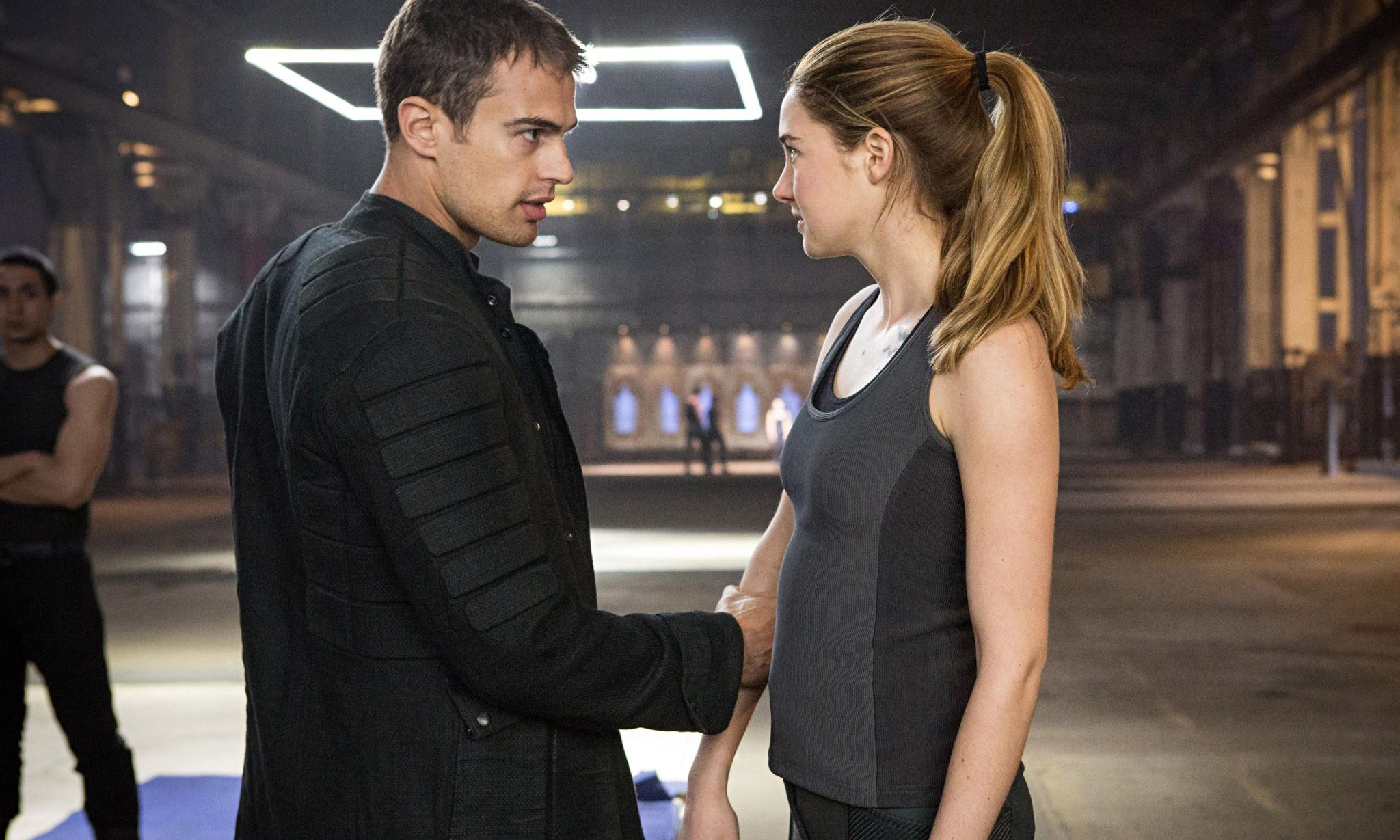
Unopinionated: ‘Divergent’ Isn’t Terrible, But that Doesn’t Mean It’s Good.

Divergent terrible good

You’re different. You don’t fit into a category. They can’t control you. They call it Divergent. You can’t let them find out about you. (Tori speaking to Tris).

Every week, readers send me their unpopular opinions, and on Unopinionated, I explain why they’re unpopular in the first place.

From my inbox: “Here’s an unpopular opinion. Divergent is better than Hunger Games. There, I said it.” – Katie

Comparing these two films is obvious, mostly because Lions Gate Entertainment practically begged fans of Hunger Games to show up for their next young adult dystopia franchise in 2014. Based on a best-selling trilogy by Veronica Roth, Divergent is arguably better than the source material, but that’s not saying much.

The premise of Divergent is pretty much where the trouble starts. Years after an apocalyptic event nearly levels the world, a somewhat rebuilt Chicago has become home to a new, simplified caste system unapologetically inconsistent with nouns and adjectives.

The Amity faction is made up of happy farmers who live outside the city, Erudite holds the city’s intellectuals, Candor are honest and determine the law, Abnegation are selfless and drive the government, and Dauntless are the brave soldiers who protect everyone.

The future belongs to those who know where they belong. -Jeanine

Divergent terrible good

All people are born into a faction that characterizes one of these personality traits in which they’re most dominant, and when they come of age, these adolescents can choose to join another faction after taking what amounts to a personality test.

This is all fairly reminiscent of the Sorting Hat in Harry Potter, but while that more mystical and even mysterious element of the Hogwarts house system was more of an aside to the central plot, Divergentattempts to build an entire narrative around how our personalities divide us. While not a bad concept in theory, it’s immediately overwrought by a plot that never moves on from its initial principle, which isn’t even that interesting to begin with.

The main character, Tris (played by Shailene Woodley in her breakout role), craves a life beyond the plain Abnegation, the faction she was born into. She gets her wish when she discovers she’s “divergent,” meaning she fits into too many factions.

In other words, she’s too special because no one gets her. As if.

Don’t try and define me. – Tris

Tris joins Dauntless, much to everyone’s surprise, fueling the only narrative within Divergent that has some meaningful entertainment. A step up from typical High School movies, Tris has to overcome her literal fears in order to survive fitting into a group of young adults she previously had nothing in common with. All while dodging the inconvenience of her status as a divergent, making her a target if the secret gets out.

There are genuine thrills and absorbing moments to be had while watching Tris bond with the recruits and mainstays of the more free-wheeling Dauntless, especially within the commentary of a city trying to rebuild itself with harsher rules and regulations.

Divergent terrible good

But the payoff is too familiar and derivative to contribute anything meaningful to dystopian epics for this age range. Rather than provide something novel to Tris’s character and how she fits into a new world, the film jerks backward to make this about oppressive, authoritarian adults messing up everything.

Having a “chosen one” in any given story is a quick way to ramp up the mediocrity in storytelling. Harry Potter cleverly sidesteps this by shifting focus to how special the villain is, making him an equally important shade of the titular boy wizard. Hunger Games turns this trope on its head by making the “chosen one” special only in the eyes of the masses being manipulated into war, a far more interesting culture point.

Fear does something strange to people like Al. But not you. Fear doesn’t shut you down, it wakes you up. – Four

But Divergent has nothing interesting to give its “chosen one” except that she has too many dominant personality traits. There’s nothing else to Tris’s character that shapes her decisions and struggles to move through the plot. She’s simply special because the script demands it, and this is too obvious for most moviegoers.

On the other hand, it’s not clear that denser lore would have improved anything. The world of Divergent is already stuffed with uninspired naming conventions and quirks that beat the moviegoer over the head with reminders that they’re watching a movie created for kids.

Grade: C+

Fans of the books have plenty to love in Divergent, as it’s a streamlined improvement over the schlock writing that inspired it. And it certainly has some entertaining moments that keep the story moving. But at this point, fans of the genre have plenty of options superior to an empty psychology lecture.


Do you have an unpopular opinion you want challenged? Let me know in the comments and I’ll take it on in a future Unopinionated article. Or you can email nowconspiring@gmail.com

I’m Jon and thanks for reading this. You can subscribe to my posts by clicking “Follow” in the right sidebar. Or just say hey on Twitter! @JonNegroni

Unopinionated: ‘Inception’ is Leonardo DiCaprio’s Best Movie

inception best movie leonardo dicaprio

At the 88th Academy Awards, Leonardo DiCaprio won his first Oscar for Best Actor. Sadly, he received the long-awaited award for the wrong film.

I’ve written in length about how The Revenant is an achievement in little beyond the uncompromising vision of cinematographer Emmanuel Lubezki. And DiCaprio has deserved this award for superior films, which include Catch Me If You CanThe AviatorInception, and The Wolf of Wall Street.

(I leave out The Departed only because that film, while mostly flawless, lacks a clear lead actor who carries the film.)

We can have a lengthy debate about which of these films are his best, but for the sake of time, I’ll submit that Inception is the clear standout.

Warning: mild spoilers follow for Inception.

Directed by Christopher Nolan, Inception is successful for bringing high-minded ideas to a movie big enough for the big screen. Taking place in a dreamscape where anything can happen, the movie has a unique restraint that is tossed aside at enough moments to make us yearn for it (the line “Dream bigger” uttered by Tom Hardy comes to mind).

inception best movie leonardo dicaprio

The set up for Inception is a slow build, as Nolan masterfully placed thrilling set pieces in a conceivable order that could come tumbling down for an ultimately satisfying final act. Only to finish the movie with a cliffhanger that begs every viewer of the movie to lend their take on what actually took place.

What enticed viewers about Inception in the first place was the promise that they’d see a unique sci-fi heist on par with accessible movies like Ocean’s 11. Yet audiences left feeling more challenged than anticipated, rivaled in part by the philosophical ripple effect The Matrix had on popular culture in 1999.

For that reason, Inception is one of those rare event movies that can be embraced by all matter of movie fans. Lovers of action and spectacle got their fill. Auteurs craving a brilliant performance received DiCaprio and Cotillard’s rush of a tragic romance, and over thinkers (such as myself) were allowed to pick apart the realities of a brand new world with fresh possibilities.

inception best movie leonardo dicaprio

For DiCaprio, Inception is one of his best performances, as he juggles his immoral occupation as a metaphysical master thief with the sympathetic yearning of a dreamer separated from his children. The audience, characterized beautifully by Ellen Paige, is able to uncover DiCaprio’s moral quandaries within the backdrop of the only environments where the actor’s motivations would make clear sense, trading flashbacks for interactive memories.

What makes his character (Cobb) shine is his parallel battle with the rational and irrational, which comes to a head by the final act. Cobb thinks quickly and lives by the logic that has helped him survive fugitive life, but he’s just as vulnerable to the emotional impulses (plagued by his inner ghosts and demons) that undermine every plan he makes.

Much like the gaping businessmen Cobb is infiltrating for hidden secrets, Cobb himself is more or less a character we’re unwrapping as well, and the idea that he must let go of his wife is where the movie’s grandest inception actually takes place, begging the question: could Cobb have really been dreaming the entire time? The answer is up to whoever is asking the question.

(I unpack this entire exercise in length via my What You Missed About Inception article from 2013).

Inception is imaginative, massively entertaining, and hard to stop talking about. It has the dialogue of a visionary who spent a decade writing the script, characters who make the audience feel intelligent and moronic all at once, and an ending that is likely impossible to spoil in a few sentences. It’s a wholly original work of art that is harder to browse for imperfections than nearly anything else, and it is the best film yet of Leo’s career.

Grade: A+


Do you have an unpopular opinion you want challenged? Let me know and I’ll take it on in a future Unopinionated article.

I’m Jon and thanks for reading this. You can subscribe to my posts by clicking “Follow” in the right sidebar. Or just say hey on Twitter! @JonNegroni

Unopinionated: There’s a Reason You Think ‘Avatar’ Is Generic

avatar opinion

Unopinionated is a brand new editorial series where I explore “unpopular opinions” and why they’re unpopular in the first place. This week: loving Avatar is a hard thing to do now more than ever. 

In October, I made a friendly bet with a fellow movie buff who was convinced Star Wars: The Force Awakens would dethrone Avatar as the highest grossing movie of all time. It’s now February and my friend has conceded, seeing as how Star Wars is still roughly $800 million short of the 2009 3D epic and hasn’t even surpassed the #2 spot, Titanic.

Not even adjusting for inflation.

How did I know The Force Awakens would fall short? It wasn’t with all the confidence in the world, just a simple memory of how Avatar took the entire world (namely China) by storm with the introduction of 3D to the mainstream. It was the movie that spurred the release of worldwide theaters just to house the IMAX technology necessary to watch it. For that reason, this was a global movie in which people saw 3D and IMAX for the very first time, hence all of the rereleases that would drive Avatar to an impressive box office take of well over $2.7 billion.

It was obvious to many people like myself that The Force Awakens wouldn’t draw in those same numbers worldwide, but I find it hard to blame anyone for believing a movie as hyped up as the new Star Wars film deserves to perform better than one of the most generic science fiction films in recent memory. Who wouldn’t want such a fun movie starring Han Solo again to do better than a dated rehash of Dances with Wolves?

avatar opinion

That said, an “unpopular opinion” held by many is that Avatar isn’t just an average movie. It’s a terrible film that doesn’t deserve its box office throne. This unpopular opinion was brought to me by fans of The Force Awakens who are simply frustrated with how the numbers turned out, but for my first Unopinionated, I’ve decided to address the fact that Avatar is an average movie, not a bad one.

And to do that, I’ll be addressing three key aspects of the film: the Good, the Bad, and the Meh.

The Good

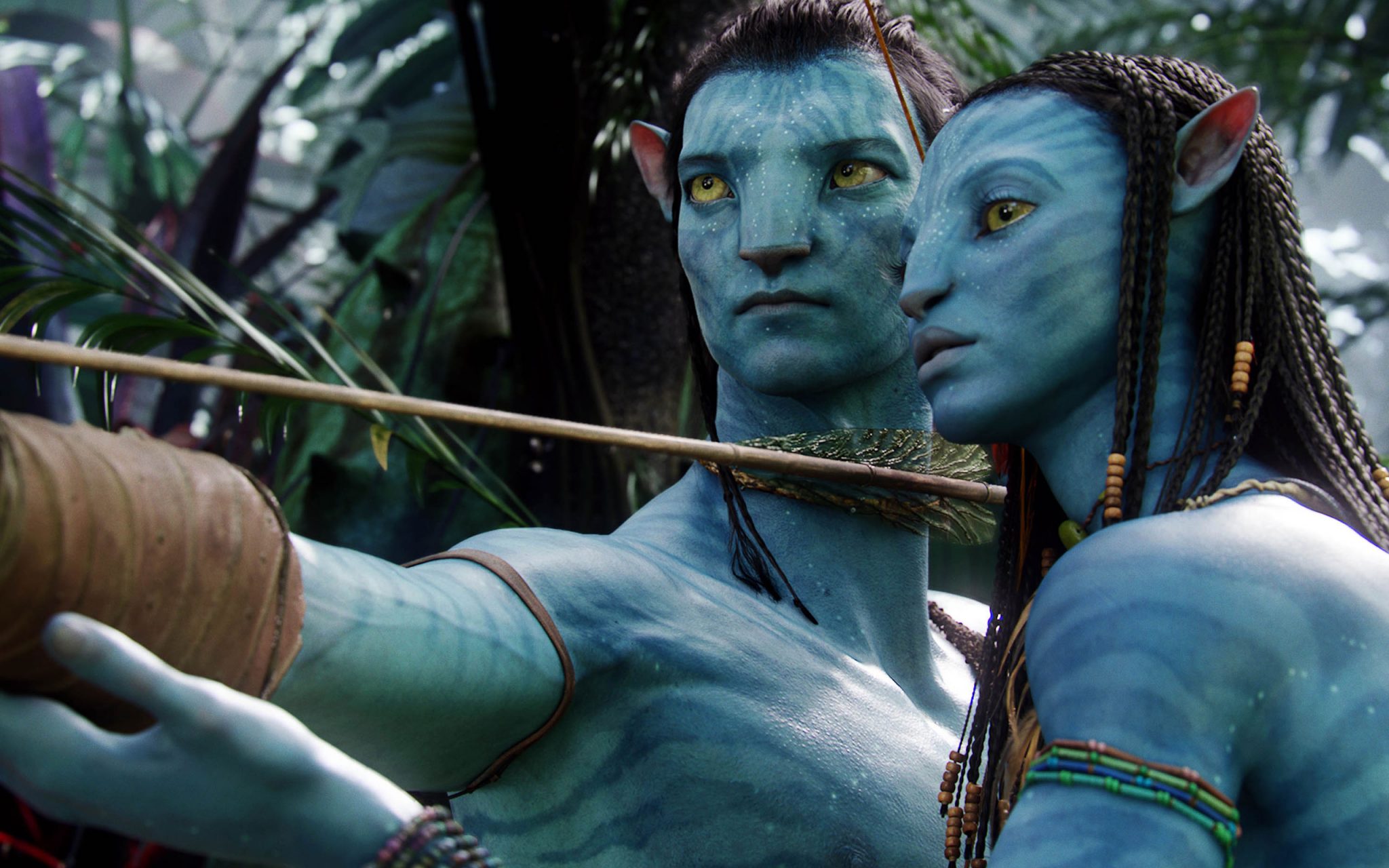
On a visual level, Avatar truly was a remarkable film when most of us saw it in late 2009/early 2010. What the movie does with color depth and digital effects is something 3D movies are still imitating today (and poorly most of the time). While you can’t judge a movie solely on how it looks, you can certainly credit effort where it’s due, and Director James Cameron offered something truly beautiful that pushed the needle forward for how CGI can transcend the “uncanny valley.”

The movie also boasts a wacky creativity for its  fantasy sci-fi setting. The character designs are inspired, the environments are as vibrant as they are subtle, and every application of CGI fits naturally, from the action scenes to the computer animated characters.

This fusion of live-action with computer animation is nothing to scoff at, and for many moviegoers, a by-the-numbers plot is all the film really needed to impress. What Avatar excels at is scope, in that it uses its effects for an impressive feat of world-building that makes its plot far more accessible than it deserves to be.

The Meh

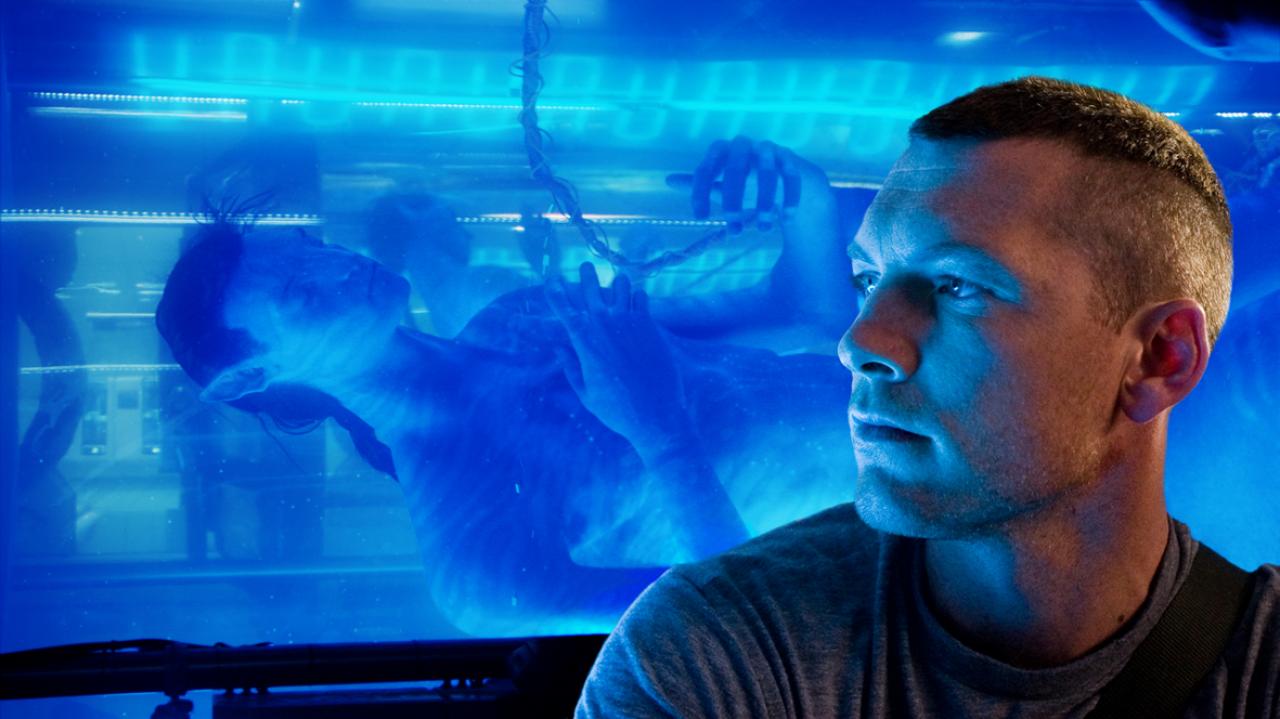
It’s telling that Sam Worthington (the lead actor) has less animation than the characters made by a computer. He’s meant to be a straight man to the wonders of Pandora, but he’s severely lacking of any charisma that compels our interest.

avatar opinion

He’s not terrible, but he’s also not very good. And the same can be said for most of the characters meandering Pandora with their simplistic motivations that don’t boil down to much more than anti-war propaganda even our college professors would fine overbearing.

Which brings us to the main complaint lobbied at Avatar: its plot is too familiar and undemanding when you hold it against the beauty of the movie itself. Like one of the early IMAX offerings that felt more like a test run of what the technology could do, Avatar comes across as if it was purposefully written by amateurs, which is a startling contrast to the detail put into pretty much everything else this movie has to offer.

Cameron remixes many techniques from his previous films in Avatar, such as the forbidden love dynamic of Titanic, the droll narration from Terminator, the space marine aesthetic from Alien, and so on. Any other director would get a pass for this, but because Cameron’s work is so iconic, this mixing and matching is too obvious to be appreciated.

And of course there’s no avoiding how reminiscent Avatar is to Dances with WolvesPocahontas, and pretty much any other film featuring the story of a white man learning the ways of an indigenous tribe.

When it comes to plot and interesting ideas, Avatar doesn’t try anything new, but to the film’s credit, it doesn’t fail outright. We just hated it more at the time because we were disappointed at how close Avatar stuck to a formula, rather than provide the sort of genre twist worthy of such an ambitious film.

The Bad

Honestly, there isn’t much. You can complain that the dialogue and cartoonishly evil villain are draining, but they aren’t atrocious qualities. Avatar mostly plays it safe as a predictable romp on an alien planet, which makes it regrettably average, not bad.

avatar opinion

Yes, the film has its share of haters, and their criticisms are usually valid. But analyzing Avatar as a piece of film requires an honest look at everything it offers, not just the parts that distracted you. Pandora is a well-made paradise of science fiction. The 3D is expertly used to create a sense of immersion that no other movie had yet accomplished in the same way. The entirety of the film’s experience created a sense of awe for its many viewers…dragged down by some unfortunate compromises.

When this movie came out, many people likened it to the first Star Wars, convinced it would capture the imagination of the next generation. I think it’s safe to say that never fully came to pass, mostly because Avatar‘s story was too formulaic to grab viewers at every level. While Star Wars was also a bit cheesy, its rich and interesting characters managed to make up for it. Avatar, on the other hand, only has what will soon be dated visuals and an accompanying footnote to hold itself up as an accomplishment.

Grade: C 

Is there an unpopular opinion you think deserves the Unopinionated treatment? Shoot me your suggestion in the comments.

I’m Jon and thanks for reading this. You can subscribe to my posts by clicking “Follow” in the right sidebar. Or just say hey on Twitter! @JonNegroni