Snark + Sarcasm = what you’re about to read.
Most people aren’t movie aficionados, and most of those people aren’t even sure what the word “aficionado” means. But they do know a good flick when they see it, and more often than not, Pixar churns out some great pieces of entertainment.
Since I’m the most biased person alive to comment on this particular “think”piece about Pixar movies from Indiewire, take everything you read here with no salt at all, because that’s bad for your sodium intake in the first place.
Charles Kenny gets in some choice hits with his write up, “Pixar’s Films Are Average and You Know It.”
Why so salty, Charles? None of us are trying to pull a fast one on you, pal.
Lauded, showered with praise and awards, raking in billions at the box office, and beloved by audiences everywhere.
That’s right, and what better way to cut Pixar down than to start by building them up…with obvious observations and facts?
Seriously, you’ve already proven that Pixar movies are anything but average on every merit above. But I have a feeling you’re about to “explain” why none of those things that matter actually matter, even though they clearly matter.
by digging just a little bit beneath the surface, it’s regrettably obvious that Pixar’s films are far from cutting edge: they’re rather average.
If this article had a mascot, it would be Mr. Peanut with a New Yorker on his lap.
The emperor isn’t wearing any clothes, but everyone believes he’s wearing the
finest robes.
“I bet my third grade analogy makes you feel far from cutting edge, hm?”
Seriously, I can never get enough of these contrarian regurgitations that insist their argument is good because most people will disagree with them. It’s like watching a guy eat asphalt because surely no one believes that’s good because I’m the first to think of it.
This may be hard to accept
Ya, and for good reason.
The argument is based purely on artistic merit and creativity
Believe me, no one is questioning how creative you’re being for making a lot of this nonsense up.
Box office grosses are no indicator
Box office isn’t everything, but it is something. There’s a reason Pixar movies make more and more money, and it’s because they’re a trusted brand. Your argument is that they’re average movies, so why dismiss cultural relevance for the sake of making your argument seem a hair less crazy than it truly is?
Awards are not an impartial form of measurement
No one expects them to be, but we have basic rules of statistics to measure true consensus. We’re talking about people watching hundreds of movies a year consistently praising movies from one particular studio. To dismiss that because awards in and of themselves are a subjective matter should get the award for lamest duck.
Taste is personal and just because you think Pixar’s films are the best doesn’t mean they actually are the best
Who decides, then? You? I really hope not.
The studio does not make bad films
Cars 2 would like to have a word with you.
Snow White and the Seven Dwarfs, The Secret of Kells, and My Neighbor Totoro all lie much closer to generally accepted animated excellence
A few things. First, Snow White and the Seven Dwarfs is a masterpiece and in my opinion, the greatest animated film, period. Secret of Kells is great, and Neighbor Totoro is an eventual classic, but it’s the latter half of this sentiment that raises annoyingly loud alarm bells.
Generally accepted animated excellence? How are these films any more “generally accepted” than Pixar’s high points like Toy Story, Incredibles, Finding Nemo, Ratatouille, WALL-E, Up, and Inside Out? It’s confusing because you can’t seem to decide on what imaginary audience is determining what’s “good” or “bad” when it comes to animated movies. You’ve said it has nothing to do with awards, box office, or personal taste, which leaves us with virtually nothing else.
In contrast to these films, Pixar’s are remarkably safe.
Unlike my intelligence after reading this drivel.
So yeah, we have to believe (now) that when Pixar made a movie about a rat using a human to cook food in Paris, or when they did a whole thing about robots falling in love within the backdrop of an environmental message, or when they made Fantastic Four actually look good, and so on, they were avoiding risk.
On the bright side, people who’ve never actually watched a Pixar movie might agree with you.
They convey a narrowly defined range of themes,
OK, assuming that’s true, you’re evaluating Pixar’s catalogue, not any one movie. By that logic, we can then say Snow White is lesser because Sleeping Beauty and Cinderella also have princesses in them. Welcome to Charles’s world, gang.
they are content to reuse a ‘house style’,
Charles doesn’t elaborate on this (probably because he’s too busy trying on those emperor clothes he was talking about earlier), but my guess is that he’s slapping every Pixar movie with a demerit because their consistently good movies do the same consistently good things. The horror.
and sequels aside (another demerit),
I think Charles invented his grading system after watching Idiocracy.
So yes, Pixar movies are “average” because some Pixar movies are sequels. We won’t even talk about how the Toy Story sequels are highly praised and celebrated because oops! That’s subjective! Didn’t you hear that only Charles’s subjectivity holds any value?
their stories are far from unique to filmmaking as a whole.
We’ll just leave out all of the technological innovations made possible because of Pixar since the late 80s. They get credit for nothing, despite routinely delivering some of the most beautiful visuals and stories of the 21st Century—oops! I’m being darn subjective again!
As a result. no Pixar film has pushed the artistic envelope
I want to meet the person who reads that sentence and actually agrees with it. Pixar has never pushed the artistic envelope? Right, and the Pope is an atheist.
they have appeared to without actually doing so.
The Pope prays, but does that really mean he thinks God is like a real thing? Nahhhhh.
They have not revolutionized animated filmmaking outside of their technology.
“They have not revolutionized animated filmmaking outside of the technology they use to revolutionize animated filmmaking. Trust me.”
What Pixar’s films haven’t done, is inspire others to make a creative leap.
Yeah! Not even Walt Disney Animation Studios….oh wait. Or DreamWorks…oh wait. Or Blue Sky…oh wait.
I love how Charles’s rubric for being “average” has everything to do with him assuming no creative person has ever been inspired by Pixar. And as you can imagine, he says nothing to back this up. Not even an anecdote.
The other problem I’m seeing here is Charles’s narrow criteria for what qualifies as artistic merit. It’s not enough to him that something is competently made and original. Apparently, it also needs to be flamboyant and provocative, but that’s just not what Pixar movies set out to do. But because he’s limiting literally ever other piece of criteria for what makes a film above average, he’s constructing a false narrative that just about anyone can see through.
The Looney Tunes and MGM shorts of the day developed as rapidly as they did because the teams behind them were determined to outdo each other creatively. Today, animated films (and especially CGI ones) do not compete creatively, but rather financially.
Charles, if you really think MGM and Looney Tunes weren’t interesting in getting paid for their work, then there’s literally nothing I can do for you. The idea of relevance and popularity tying into financial success is such a basic concept, I’m at a loss for words. Do you really think that Pixar and DreamWorks aren’t competing creatively? Because even when DreamWorks produces an unimaginative dud like Home, guess what happens? They don’t make money.
But what am I supposed to expect from a guy who thinks Pixar movies are “safe.”
any artistic developments as a result are rather coincidental.
Let’s apply this to any other scenario. I walk into a deli and tell the sandwich guy: “Oh, well you’re only using that brand of salami because it’s 9 cents cheaper than the other brand. And the fact that it tastes so good is just a coincidence.”
He’s either going to roll his eyes at you (like most everyone would) or write an overlong Snarcasm about it (like me). Either way, none of us win.
After all, no studio was inspired to create a CGI film because of Pixar’s artistic genius, they saw a concept that was profitable and wanted a piece of the pie for themselves!
Guys, I think I figured it out. Charles meant to write this as a satire essay for his eight grade history class, but oops! Indiewire got their independent wires crossed and published it by mistake. Happens all the time.
But yeah, the real nonsense here is that Charles makes a sweeping assumption that no studio has ever mimicked Pixar because they genuinely saw something creative that they want to replicate themselves. Either Charles is the NSA incarnate, able to monitor all animated filmmakers instantaneously, or he really needs to get those clicks, guys.
To get to the crunch of the issue,
Uh…no comment, I guess.
you have to consider how Pixar’s films are viewed by the general population.
Except you already said we can’t do that because we isn’t smart enough like you.
Their films appeal to all, and in turn are remarkably popular. This is possible primarily because the films are average.
I bet watching Charles do math in his head is adorable.
OK, so the idea is that if people really like something, it might mean the movie is average, so in your head, that means they’re average. Are we done with this yet?
They do not appeal to anyone in particular,
What? Are we on some sort of contradiction carousel?
Look, I get his point (despite him not explaining it well). He’s trying to say that Pixar movies appeal to everyone on a surface level, but they don’t actually make people think or feel. That’s dead wrong to the point of absurdity, of course, and mostly because he doesn’t use any examples to refute the most basic opinion people have about Pixar movies to the point where there are memes about how the movies are emotional: that they appeal to them in unique, deep ways.
For Charles to downplay all of that because he hasn’t had those experiences is more sad on his part than anything else. It also makes me wonder if he watches these movies while texting the entire time.
Next, Charles uses a quote from Simon Cowell that has nothing to do with Pixar to explain how “average tastes” work. I know I was joking before, but that eighth grade book report theory is just getting more and more plausible. At one point he says that Star Wars is artistically average which is…eh, what’s the point.
Imagine if Pixar released a film with casual abandon of all financial goals.
I love how you seem to know everything about the creative process of some of the world’s most creative people. See, Charles has the gall to claim that these guys are hacks who are only in it for the money. Can we all agree that he can keep that moronic opinion to himself?
At the end of the day, it’s fine to look to Pixar as a model for certain things such as its CGI technology,
CGI technology? I mean I figured out a long time ago that you have no idea what you’re talking about, but this is almost too on the nose.
to look to them as a creative leader and innovator is wrong.
Well, if being “right” is agreeing with a bunch self-righteous, unfounded assertions that waste everyone’s time, then you get an A+, sir.
They do not reside on the cutting edge of feature animation, and to accept such a belief is to drink some very strong Kool-Aid.
Said the guy who probably has no idea what Jonestown is.
Before I go, I’ll leave you with this quote from Charles on a different Indiewire post:
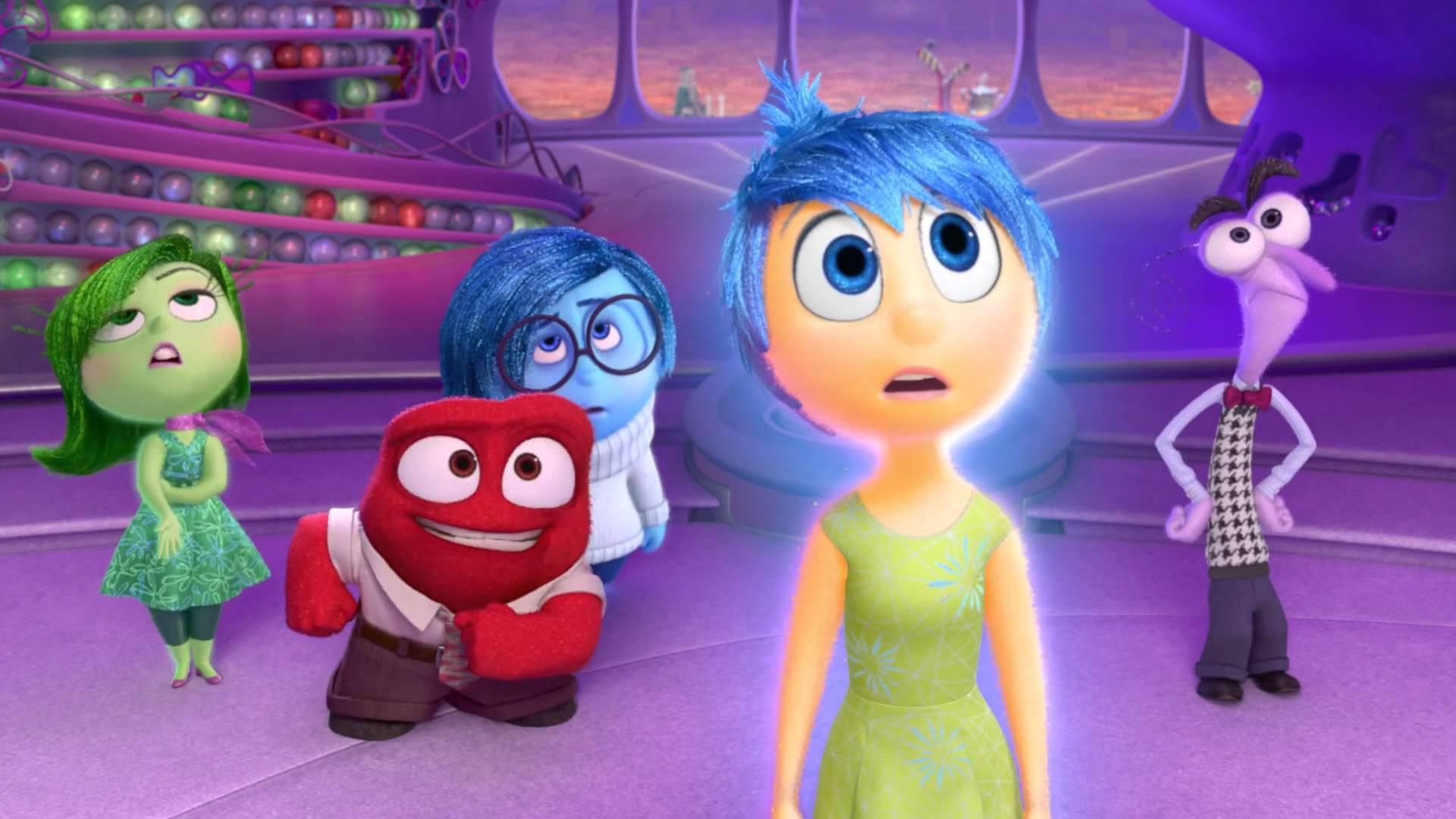
The other Pixar film from last year, Inside Out, blew everyone away with its sheer originality and emotional themes and quickly became a favorite. It is currently sweeping all awards before it and is well on it’s way to the status of a classic film.
Hmmm, well methinks Charles has some explaining to do.
Thanks for reading this. Seriously. You can subscribe to my posts by clicking “Follow” in the right sidebar.
Or just say hello on Twitter: @JonNegroni