Review: ‘The BFG’ Is Big and Friendly, But Maybe Too Giant

Big friendly Giant review

Based on the Roald Dahl book of the same name, The BFG (Big Friendly Giant), probably shares more in common with Zemeckis’s animated rendition of A Christmas Carol with Jim Carrey in 2009.

Both films center around revolutionary visuals (for the time) that emphasize a digitized performance by a great actor — Mark Rylance in BFG‘s case. But both films also stumble in the same ways. They’re both trying to force a small story into something bigger and broader for the big screen.

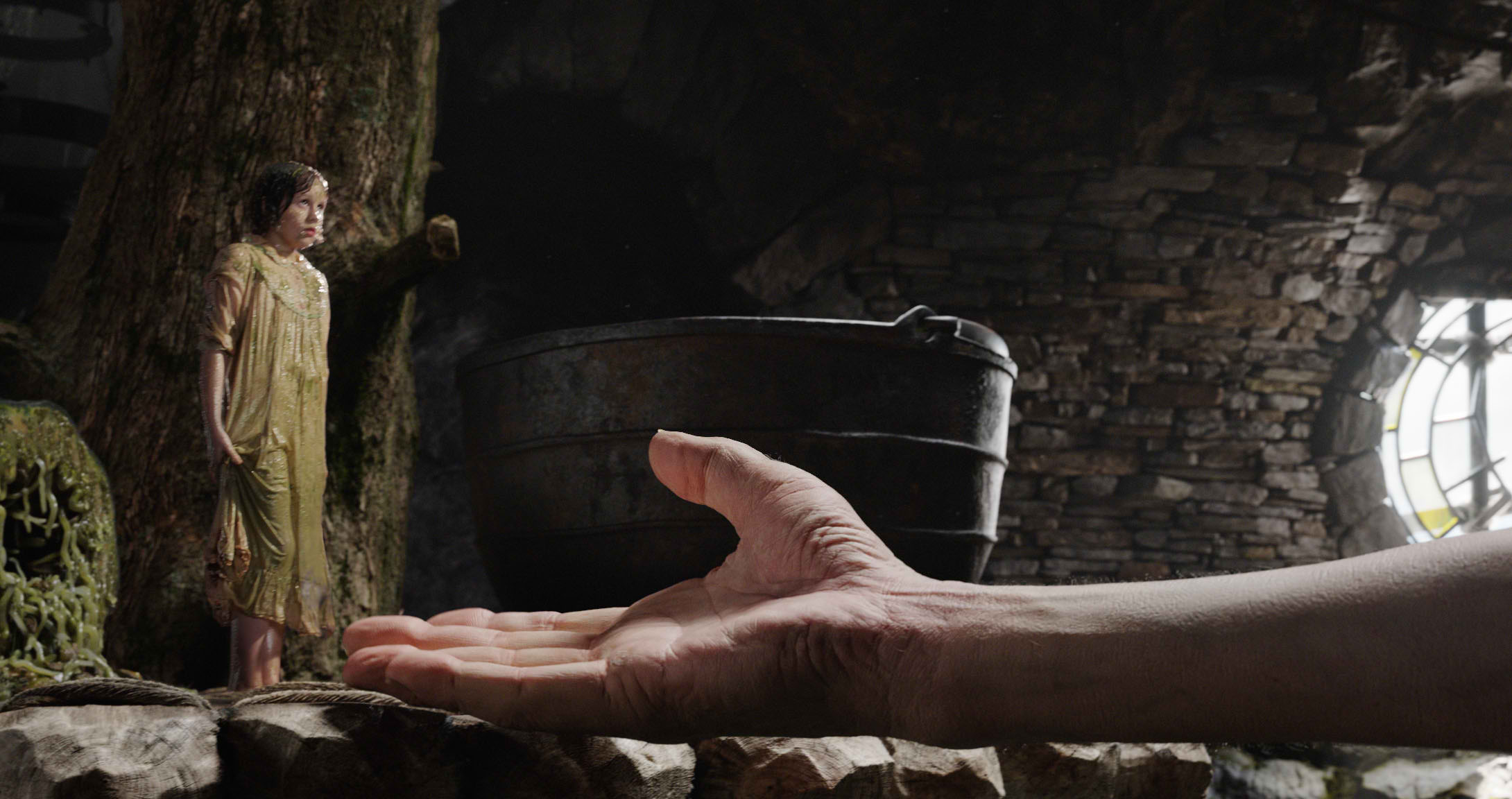
Taking place sometime in the 80s, The BFG starts off with a young orphan girl named Sophie (played by usually-precocious newcomer Ruby Barnhill) who sees a “giant” man sneaking around the foggy streets of London. To prevent her from blabbing his existence, the giant (Mark Rylance) snatches her from her bed and whisks her away to Giant Country, only for her to discover that this fearsome creature is actually the runt of his kind.

The rest of the film focuses on Sophie’s discovery of this side of the world, where dreams can be chased and massive cannibal giants skate across the hills with cars under their feet. At its best points, The BFG fully embraces the charismatic imagination Dahl envisioned with these characters, placing them in amusing set pieces that make us want to dig into their world even further.

Big friendly Giant review

What suffers in this take, though, is the lack of substance with Sophie and the BFG himself. The two form a bond through ambiguous means that seem to be lacking a key scene or two. And so much attention is placed in the spectacle of the film, you walk away having no idea what The BFG is even supposed to be about.

Even a children’s film needs to firmly establish the motivations and desires for every character. But the film is so adherent to Dahl’s ephemeral whimsy, it forgets that a big screen story absolutely needs characters who yearn for something, as well as conflict that is substantial enough to make us care about them by the end. In BFG, everyone is quite reactionary and wooden as soon as the plot comes into play. And that’s not even mentioning the rushed third act, kicked off by a slow and bizarre turn of the plot that feels like another movie, entirely.

Perhaps the saving grace for BFG, which keeps it from being an overall disappointment, is how full of life its world is, made possible by stunning visuals that blend naturally with practical effects. The uncanny valley takes some time to dissipate, but once it fades, you’ll forget that the BFG and Sophie aren’t actually that different in size.

This is also a humorous movie that pulls off some of the best physical comedy of the year, actually earning laughs in a way that would plague most kids’ films that rely on fart jokes and slapstick too often to make an impact. When a joke likes this happens in The BFG, it’s sparing and almost always gets the laugh.

Big friendly Giant review

This isn’t the best of the film adaptations on Dahl’s work (that honor still belongs to Willy Wonka and the Chocolate Factory after all these years), but it’s just as good as James and the Giant Peach and only a notch below something like Matilda. It still has that air of a movie that kids will love because it’s as dark as they are, allowing them to feel as if they’re getting away with something while watching it. For families looking to escape each year into smaller films suitable for their kids, The BFG will probably persevere as a popular choice for years to come.

Grade: B

Extra Credits:

  • There’s a lot of interesting trivia behind this film, which I cover in more detail via next week’s podcast. Suffice to say, Dahl movies are always a fountain of nerdy film facts.
  • This is the first time Spielberg has ever directed a Disney film (his 30th film, ever). And honestly…it kind of shows.
  • This is also the first time since E.T. in 1982 that Spielberg has worked with screenwriter Melissa Mathison, who sadly passed away last year. The film is dedicated to her.
  • It’s a Spielberg film, so of course John Williams did the score.
  •  Disney has made only one other film based on Dahl’s work, and that is James and the Giant Peach from 1996. I have a feeling The BFG will have about the same notoriety.
  • In case you forgot, Mark Rylance was in Bridge of Spies just last year, which was also directed by Spielberg. He won the Oscar for Best Supporting Actor in that film.
  • Disney hardly ever co-produces a film, especially with Walden Media considering their fallout over the Chronicles of Narnia: Prince Caspian fiasco. This is their first time back together since.
  • The BFG enjoys being part of a weird trilogy of Spielberg movies that have acronym titles. E.T. (Extra Terrestrial), A.I. (Artificial Intelligence), BFG (Big Friendly Giant).
  • If you want to catch up on Dahl’s book of the same name, don’t forget to also read the short story he wrote that inspired BFG, which is called “Danny, Champion of the World.”

    I’m Jon and thanks for reading this. You can subscribe to my posts by clicking “Follow” in the right sidebar. Or just say hey on Twitter! @JonNegroni

The Pixar Theory: How ‘Finding Dory’ Fits In The Pixar Universe

finding dory pixar theory

Don’t cry mommy…don’t cry.

Here’s the deal. A few years ago, I proposed a theory that makes the case for how and why every Pixar movie from Toy Story to WALL-E exists in a shared universe with a single, overarching narrative. The case I make is fueled by easter eggs, cameos, story themes, and other clues that make up what I call The Pixar Theory (link above).

Since I wrote the original theory and turned it into a book, I’ve also added “chapters” that talk about Inside Out and The Good Dinosaur, just last year. And now we’ve come to the 2016 release, Finding Dory.

I’ll give you the normal rundown below, but first a tease. Would you believe me if I told you that the Toy Story movies have an incredibly strong connection with this movie? Well, we’ll get to that.

THE SET UP
finding dory pixar theory

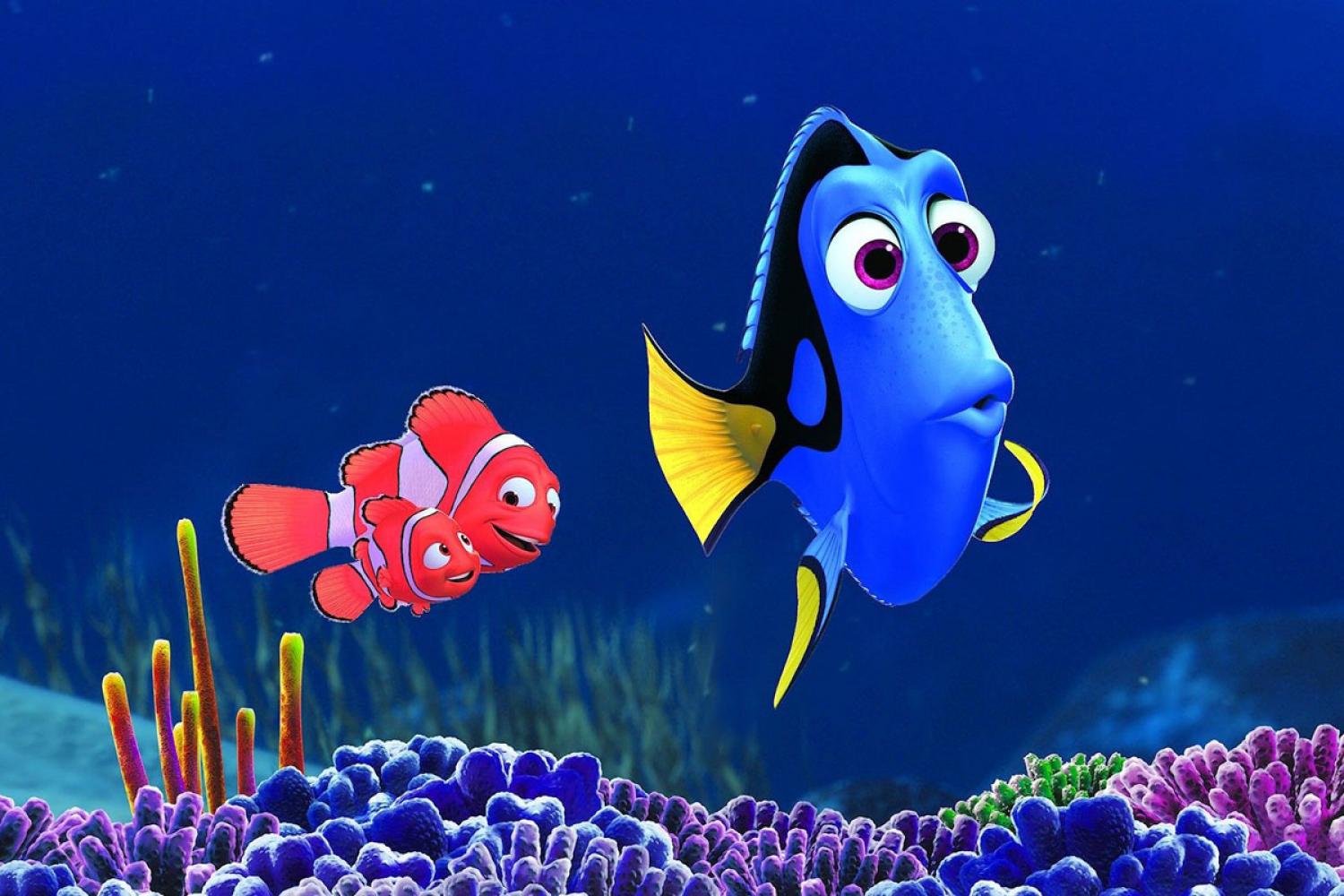
It took Pixar 13 years, but they finally made a sequel to one of their most beloved films, Finding Nemo. In that movie, a clown fish named Marlin crosses the ocean in search of his son, and he’s aided by the quirky and forgetful blue tang, Dory.

The sequel kicks off a year later, when Dory suddenly remembers a clue related to her family, whom she lost as a very young child—er—fish. So Marlin and Nemo help Dory cross the ocean once again to find them, only this time, they have to brave the horrors outside of the ocean, in a marine institute that rehabilitates fish and has its own aquarium exhibits.

First, let’s talk briefly about how Finding Nemo fits into the theory, because for obvious reasons, that will inform a lot of what we can uncover with the sequel.

FINDING FINDING NEMO

This was actually one of the shortest chapters of the book, mostly because the connections in Finding Nemo are very speculative and work to enhance other animal-centric films like Ratatouille. Interestingly, I do speak in length about Dory in that chapter, because she is a character who represents the mysterious intelligence animals in Pixar movies seem to possess, leading all the way to movies like Monsters Inc., which imagines a world where animals run the world as monsters.

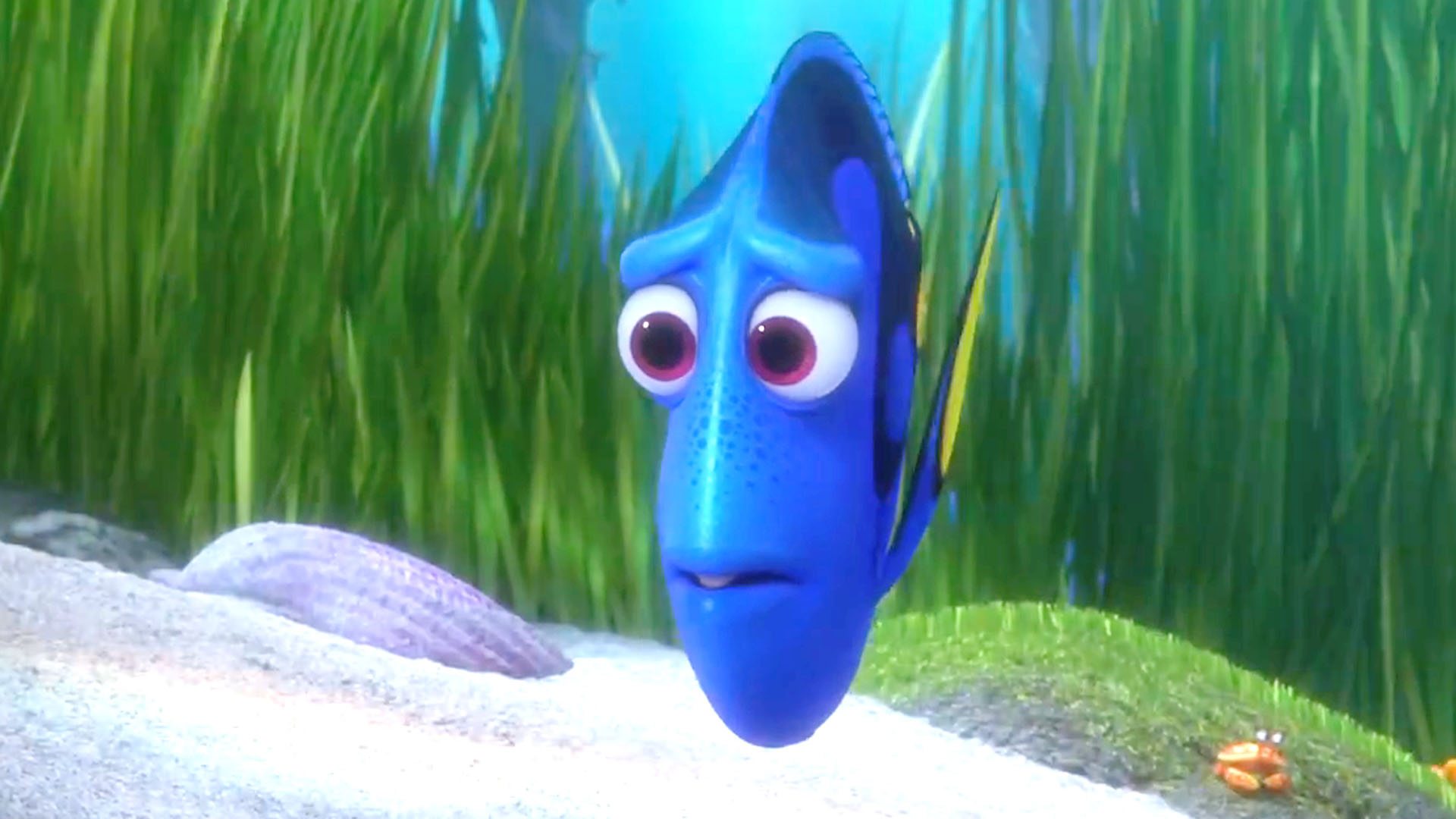
Dory has very unique abilities that other fish like her simply don’t possess. She can read, for one thing, and “speak whale.” We’ll get to why that really is, later, because Finding Dory sheds plenty of light on where this all comes from.

finding dory pixar theory

I also speak on how Finding Nemo goes out of its way to create animosity between the fish of the ocean and the humans, paving the way for an increasingly connected community of animals who will do whatever it takes to get away from wherever the humans are. Humans steal Nemo and threaten his life, keep the Tank Gang imprisoned in the dentist’s office, and then capture Dory in a fishing net. It’s proven in the movie that humans are actually the biggest threat to creatures of the ocean.

But in the end, the fish rally against humans once and for all, thanks in no small part to Nemo’s leadership when he convinces a horde of them to break the human’s fishing net so they can escape.

WHAT ABOUT FINDING DORY?

Warning: spoilers for Finding Dory from here on out. Be sure to watch the movie before going any further unless you want to be spoiled.

Humans are still terrible in the story of Finding Dory, but not always directly. True, they capture Dory almost as soon as she reaches the kelp forest next to the marine institute. But Dory herself doesn’t seem to fear or hate them. She, just like most other characters, is pretty indifferent to the humans.

finding dory pixar theory

Hank the octopus, on the other hand, is very antagonistic toward the marine institute workers, always escaping and finding ways to avoid them at all costs. This is made even clearer when his worst nightmare is realized at the “touch pool,” where children descend their fingers upon the fish to the tune of a horror movie.

Imagine the scene from Toy Story 3 when the toys first encounter the caterpillar room. All of the savvy toys are hiding because they know children are coming to make their lives a living riptide. Well, that’s basically what happens here, and this fear of humans isn’t just comic relief. It’s kind of terrifying, and it’s even a little entertaining considering a Toy Story connection coming later…

It’s no wonder that by the end of the movie, all of the fish from the institute hark to the words of Sigourney Weaver and “release” themselves into the ocean. To them, freeing themselves of humans is their version of a happy ending.

THE DEAL WITH DORY…AGAIN

So what makes Dory so “special,” and just what in the ocean does that have to do with the Pixar Theory? Well, don’t forget that the growing intelligence of animals in movies like RatatouilleUpA Bug’s Life, and even The Good Dinosaur all lead up to the inevitable reality where oversized animals who look like monsters solely inhabit the future world devoid of humans (only for them to go back in time to harvest the energy-filled screams of children in order to sustain their world further because, and you guessed it, humans are batteries).
finding dory pixar theory

Like in Inside Out, Pixar hits us over the head with the idea that humans give off an energy that sparks life into everyday objects like toys, cars, and even our own emotions. So how did Dory become the way she is?

It’s revealed in Finding Dory that she was born in captivity. So she grew up constantly surrounded by humans and signs from the exhibits that she’s able to remember throughout the film, explaining how she was able to learn to read. Peach the starfish from Finding Nemo is another fish who has the rare ability to read, and even she explains that she was brought to the tank from eBay.

The idea is that when animals become entrenched in human fixtures and attention, they are able to expand their personalities and capabilities. Though Dory suffers from a very serious disability with short-term memory loss, she’s able to cope by forming connections in a very human way. This explains why fish are so quick to help her with whatever problem she’s facing, no questions asked.

We see the same sort of thing with Remy from Ratatouille, who becomes the greatest chef in France only after his experiences in the human world. Simply put, humans and animals have a lot to gain and learn from each other.

IS THAT IT?

finding dory pixar theory

Nope. There’s also a subtle but unforgettable moment in the movie that hints a connection with Toy Story. Here it goes.

About halfway through the movie, Marlin and Nemo find themselves in a fish tank outside of a gift shop, and there’s a single, plastic fish toy moving around them. It prods Marlin over and over again, and then eventually when they’re trying to figure a way out, they notice that the fish is tapping the glass all of a sudden pointing directly at the exact path they need to take in order to escape (a stream of geysers that will carry them over to the tide pool).

The idea is that the toy fish is, you guessed it, alive, and it’s trying to help Nemo and Marlin without revealing itself because it has to play dead with so many people around watching them. This is a great connection to the relationship we see in Toy Story 2 between Woody and Buster, who form a bond and friendship together. Here, the toy just seems anxious to show Marlin and Nemo exactly what they need to do so they can find their friend.

In other words, Pixar is amazing.

ANYTHING ELSE?

finding dory pixar theory

As always, there are ample easter eggs and references to other movies to find throughout, including the A113 callout that shows up toward the end of the movie on a license plate (again, just like Toy Story).

Also, Sigourney Weaver’s voice is heard throughout the marine park announcing the exhibits. This will be familiar to fans of Andrew Stanton’s other Pixar movie, WALL-E, which also features Weaver’s voice as the sound of a computer on the Axiom. Makes sense that in the Pixar universe, Sigourney Weaver’s voice is the most trusted when it comes to soothing, computer-controlled announcements.

Remember Darla from Finding Nemo? You can see the same photo of her holding the dead fish in the marine institute that her uncle has all the way in Australia. This means the marine institute has a clear connection to the P. Sherman, who also loves to work by the sea. It could even mean that in the one year since losing all of his fish in the tank, he decided to devote his life to studying aquatic life in California, a dream somewhat preluded in the fact that he scuba dived far into the ocean just to take photos, eventually leading to him taking Nemo.

finding dory pixar theory

And here’s a spookier reference that hints the rise of BnL, the corporation that will eventually burn all the trash into toxic air. In the picture below (bottom right), you can spot a WALL-E calendar, referencing the robots that will one day (try) to clean the Earth.

It’s telling that in a movie where there is a ton of garbage piling up in the water just outside the marine institute, robots as advanced as WALL-E are already being prototyped.

finding dory pixar theory

The Luxo Ball and Pizza Planet truck make their scheduled appearances, as well. You can see the Luxo Ball in the clutter of toys in the Kid Zone, and the Pizza Planet truck is one of the underwater vehicles found during the squid scene.

Be sure to add what you find in your own viewings via the comments.

Another quick thing, though, is that for whatever reason, Pixar seems to really hate birds unless they’re in a short like with Piper, or they’re named Nigel. Like the seagulls from Finding Nemo and the instinctual predator bird from A Bug’s Life, there are half-brained birds all over the place in Finding Dory, including one named Becky who will still find a way to capture your heart, I guess.

WHAT’S NEXT?

pixar theory

Sadly, it will be a year before we get any new Pixar movies, with Cars 3 set to release June 16, 2017. Though a lot of people may not be very excited about yet another Cars sequel, they can still take solace in knowing that the studio is releasing Coco, an original non-sequel coming out that same year in November, based on the Mexican holiday Día de Muertos.

The film has already begun animation as of April, and the premise follows a 12-year-old boy named Miguel who tries to uncover a “generations-old” mystery. The current synopsis is:

“Coco is the celebration of a lifetime, where the discovery of a generations-old mystery leads to a most extraordinary and surprising family reunion.”

Also, we have Toy Story 4 and Incredibles 2 to look forward to in the next few years, including a rumored slate of about four non-sequels Pixar is working on that are due to come out over the next decade.

All of these movies are months and years away, so until they release, I’ll be here conspiring.

Want even more?

  • First, be sure to check out the book, The Pixar Theory, available on paperback and ebook via Kindle, Barnes and Noble, iBooks, or just a PDF. This will cover the entire theory and every movie in the Pixar universe, updated from the 2013 blog post.
  • Parts 2 and 3 of the The Pixar Theory cover the latest movies that have come out since the book was published. So you can check out Part 2, Inside Out, as well as Part 3, The Good Dinosaur via the links.
  • Want to talk about all of this stuff with tons of other Pixar Detectives? You can start all of the conversations you want in the comments for this post, or join the ongoing discussions in the original blog post, here.
  • Last but hopefully not least, you can read my free Pixar Theory serial novel, The Pixar Detective, which was completed last spring. It tells a new story that shows off the grand narrative of all the Pixar movies with original characters, familiar faces, and a mystery that ties them all together.

Thanks for reading this. To get updates on my theories, books, and giveaways, join my mailing list.

Or just say hey on Twitter: @JonNegroni


Now You See Me Conjuring Warcraft

now you see me conjuring warcraft

This week on Now Conspiring (that other movie podcast), we talk about our impressions after seeing The Conjuring 2Now You See Me 2, and Warcraft…one.

We also dig deep into some heavy movie news, trying to make up for missing you guys last week. Consider it our version of an “apology.”

QUESTION OF THE WEEK: Who is an actor you like right now that you used to hate?

Go on…Now You See Me Conjuring Warcraft

Review: ‘The Conjuring 2’ Proves Fiction is Stranger than Truth

the conjuring 2 review

As far as horror movies go, in the sense that they’re supposed to just scare you, James Wan’s The Conjuring is one of the better examples of how excellent the genre can be in the current era of hybrid special effects. And that goes the same for The Conjuring 2, also directed by Wan, which does more to establish a sort of franchise/continuity than almost any other horror series of the last decade, and that even includes the long-running Paranormal Activity movies.

Like its predecessor, The Conjuring 2 perpetuates an alternate timeline of reality where Ed and Lorraine Warren are paranormal investigators who care about people, not the hoax-crazed profiteers most people found the truth of not long after the Amityville incident.

In these movies, they’re heroes who swoop in to solve demonic problems, and thankfully, Conjuring 2 is so well put together as a horror flick, you’ll have an easy time forgetting that you’re watching pure fiction. So, in other words, Conjuring 2 is great horror fiction, even if it does go out of its way at times to be self-aware about Warrens’ reputation.

The movie actually picks up in the middle of the Amityville incident, setting up Ed and Lorraine’s struggle with a demon that supposedly haunted her years later, only to come to a head during the Enfield Haunting from 1977-1979, which is the film’s main story.

the conjuring 2 review

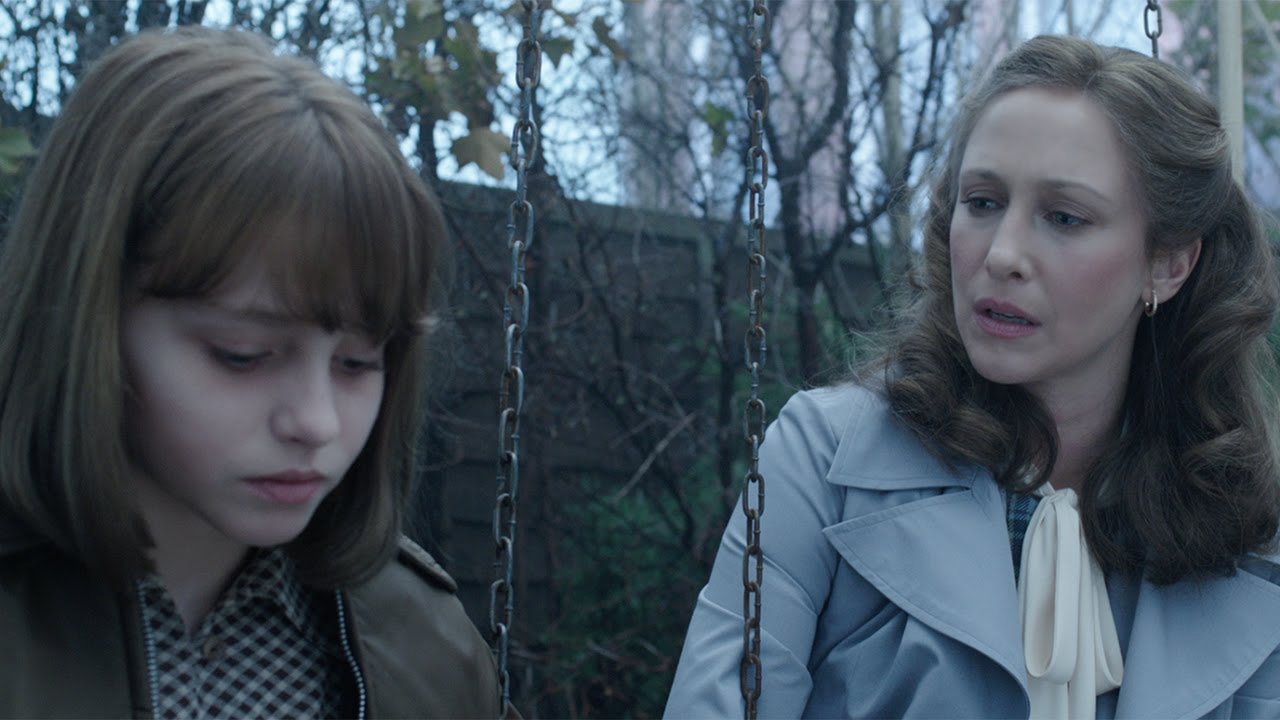
Surprisingly, The Conjuring 2 spends a lot of time fixating on whether or not the Warrens were con artists, regularly pitting them both against skeptics who sound quite similar to the real-life critics from over the years. And much of the film’s third act hinges on whether or not something paranormal is actually going on with the Hodgson family, especially 11-year-old Janet who finds herself being used as a pawn by the alleged spirit in her home.

While this could have been a distracting, even eye-rolling aspect of the movie, Wan pulls it off pretty well by focusing on what he does best as a horror director: excellent (and restrained) jump scares, striking set pieces, and an attention to detail in every location. It’s chilling to see the real photos compared to the ones in this film, which seem too creepy to believe at times.

It’s even weirder how easy it is to root for the Warrens themselves, played again by Patrick Wilson and Vera Farmiga, who add some unexpected heart to a movie that could have easily been very cold and emotionally one-note. This gets into more of how their relationship creates a unique thread between movies, more so than many other sequels and franchises, even outside the horror genre.

Some of this world-building won’t work well for all audiences, though, despite how easy it is to jump into Conjuring 2 without seeing the first film. The problem is that the movie almost crams too much material in its long running time to remain effective for long. Every scene is at least decently scary, but by the end, you’ll feel like some of the best scenes were scattered about instead of built up into one effective thrill ride.

the conjuring 2 review

But this pacing is only a minor complaint considering how well-crafted and executed The Conjuring 2 is as a haunted house story, enough to captivate even the harshest critics of who’ll find it weird that after 40 years, people are still anxious to believe in the Warrens.

Grade: A- 

Extra Credits:

  • If you stick around for the credits, you’ll be treated to the actual audio of the Enfield recordings, juxtaposed with the real-life photos being held alongside stills from the movie.
  • This is one of those rare horror films that has me excited for a sequel.
  • Vera Farmiga, once again, makes this movie a lot better than what it would have been without her.
  • Seriously, there are skeptics all over this movie who call BS on everything you’d expect. It takes lampshading to a whole new level for this film to address it. And honestly, it kind of works in a weird way.
  • This movie is a stunning 133 minutes long.
  • Speaking of Paranormal Activity, I sincerely hope Conjuring never goes that far.

    I’m Jon and thanks for reading this. You can subscribe to my posts by clicking “Follow” in the right sidebar. Or just say hey on Twitter! @JonNegroni


Second Opinion: The Best Trick In ‘The Conjuring’ Was Its Marketing

the conjuring opinion

What would you rather see? A horror film with a “PG13” rating for violence, some nudity, and language? Or a horror film with an “R” rating for being too scary?

This was the main hook for James Wan’s The Conjuring, which served as his spiritual followup to Insidious and perhaps even Saw for sheer inventiveness with the genre. The care he put into crafting a horror film where the horror comes first is probably what set The Conjuring apart for its hit box office run in 2013.

Even the incredibly loose “based on a true story” gimmick is underplayed here, as the movie centers around a couple of the case files of Ed and Lorraine Warren, who were actual paranormal investigators for decades known best for the story that became another well-known film, The Amityville Horror (along with its 2005 remake).

Set in the 70s, The Conjuring goes back in forth between point of view characters. First with the Warren couple (Vera Farmiga and Patrick Wilson) during some introductory exposition concerning the “Annabelle doll” case file, which was intriguing enough to green-light a standalone to release just a year later. The film then pivots to a standard haunted house narrative centered around a family with Ron Livingston and Lilli Taylor as the parents.

the conjuring opinion

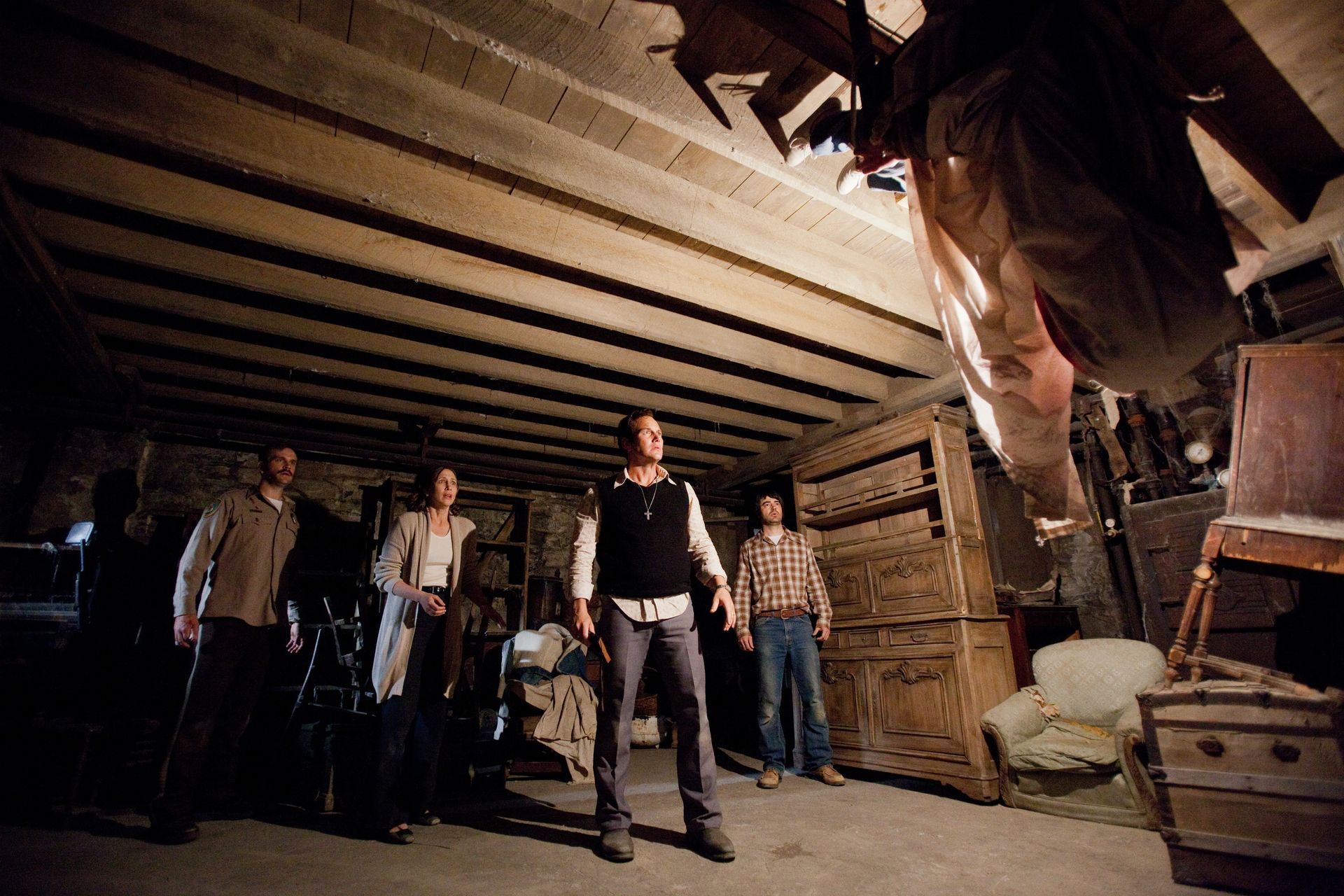
Its the typical horror film fare with sudden noises, creepy atmosphere, and near-misses between ghost and human. But Wan prevents some of this familiarity to feel like fatigue, offering some much needed surprises in the form of his technique, always shifting perspective on the rooms and preventing the specters from getting too much facetime. Instead, we study the reactions of the humans who witness the supernatural for themselves, allowing us to fill in the blanks according to their fine performances.

None of these filming techniques are new when it comes to classic horror, but they’re a breath of fresh, foggy air for modern scare films that have adapted perhaps a little too much to the inviting world of “anything can happen” visual effects that are purely built in a computer. Perhaps it’s easy to accept the throwback nature of Conjuring due to the fact that its set in the 70s and has a slight filter that softens the picture.

While every performance is above grade here, there are some instances of somewhat forced drama used to round out the Warren couple, with lots of added dialogue concerning God’s purpose in their lives and how that will play into their marriage and family. Some of it works to contrast nicely with the chaos that ensues once they decide to aid the central family of The Conjuring, but the nicest thing to say about it is the fact that James Wan does a far better job with atmosphere and pacing than he does with living, breathing characters.

the conjuring opinion

Still, The Conjuring is one of the best horror films in the last few years, and mostly because of its restraint. As a result, the marketing for said movie (while inundated with the annoying Twitter quotes from screenings) was successful because of what it said about the love put into the film’s creation, rather than a forced superlative that would have sounded like white noise for most audiences.

(Second Opinion) Grade: A-


I’m Jon and thanks for reading this. You can subscribe to my posts by clicking “Follow” in the right sidebar. Or just say hey on Twitter! @JonNegroni

Hollywood has a Sequel Problem

hollywood sequel problem

Pamela McClintock via THR: 

Sequel after sequel has disappointed at the box office this year. This weekend’s underpowered opening of Teenage Mutant Ninja Turtles: Out of the Shadows is just the latest example. And that is perplexing and alarming Hollywood studios, which are addicted to turning films of all sizes and genres into ongoing franchises, from comedies to the smallest horror films to tentpoles.

And that’s just one of many examples cased in this article, which include Alice Through the Looking GlassThe Huntsman: Winter’s WarRide Along 2Zoolander 2, Divergent Series: Allegiant even Neighbors 2, and more, which all have suffered huge drops in box office against all of Hollywood’s expectations for how sequels should “work.”

In this list alone, I’ve only bothered to review Alice and Allegiant, mostly because interest in these other movies was waning long before I ever went to a screening. When I choose a film to review, I usually go with the one I think people are actually on the fence about checking out and want to discuss afterward. How much does that say about the fact that we don’t even want to talk about some of these sequels?

TMNT is the exception, and it’s a film I would have reviewed if I had seen the first of the series. But even that franchise is a tough sell for me because the Turtles are such lasting pop culture icons with so many iterations that I don’t think my opinion on said movies will do much to sway people or offer some new insight.

“Sequels of late have fallen on rough times. The tried-and-true formulas and familiar characters and themes that are the cornerstone of the modern sequel have acted as a de facto life insurance policy against box-office failure,” says box-office analyst Paul Dergarabedian. “However, 2016 has proven to be a very tough battleground, and the landscape has been littered with a series of sequels that have come up short, and thus call into question the entire notion of the inherent appeal of non-original, franchise-based content.”

Good.

Review: ‘Popstar: Never Stop Never Stopping’ Is More than Just a Lonely Island Movie

popstar review

It’s unclear how much the world needed a straightforward lampoon of the pop music industry, that is until you watch Popstar: Never Stop Never Stopping, a mockumentary starring Andy Samberg and his fellow Lonely Island performers that picks apart Justin Bieber: Never Say Never, TMZ, reality television, and many other staples of late-2000s/early-20teens/and the present.

So if you’ve seen a rock documentary, perhaps even the wonderful This is Spinal Tap, then you can easily imagine the set up and format of the film, which was directed and written by Lonely Island’s Akiva Schaffer and Jorma Taccone (Samberg also shares a writing credit).

The mockumentary centers around Conner Friel (or his stage name, Conner4real), a massively successful pop star who deals with the highs and lows of fame as he prepares to release his sophomore album, claiming he’s a perfectionist because it just has to sell way more than his first album after splitting from his own version of Destiny’s Child, the Style Boyz (there’s obviously a not-so-subtle One Direction jab thrown in here and there).

popstar review

What follows is a series of well-constructed set pieces that consistently top the humor with each scene. Popstar is a viciously funny movie, for Top 40 fans, Justin Bieber fans, Justin Bieber haters, reality TV fans and haters, and pretty much anyone else somewhat clued in on what the jokes are dismantling.

The pacing works well too, always shifting from scripted “fly on the wall” conversations that move the somewhat predictable (but entertaining) plot along, in between hilarious music numbers that range from stage performances to music videos, including one standout that parodies Macklemore’s “Same Love” by having Conner sing a marriage equality rights song where he reminds the viewers that he’s not gay in every other verse.

popstar review

This film has a lot of humorous moments, rivaling this year’s Deadpool even for how many jokes and references you’re likely to miss on the first viewing. But the majority of them land, and even the weaker scenes, mostly in the third act, are kept in balance by the consistently funny commentary aided by real-life music celebrities who offer deadpan reactions to Conner’s latest media disasters.

Though Popstar doesn’t offer anything that will pull in viewers at large who are mostly uninterested in the subject material (or the Lonely Island brand, for that matter), it’s still a competent entry in a genre that has been severely lacking outside of TV sitcoms. And it even has a fair share of ageless jokes that will be sure to crack your smile, even if you’ve never heard of Taylor Swift, Seal, and the peril of Yelp reviews.

Grade: B+

Extra Credits:

  • One criticism I left out of this review was how generic the main story is, concerning Conner’s “solo act” creating a rift between him and his fellow Style Boyz (played by Schaffer and Taccone). And the reason is because I think the story had to be a little familiar for us to appreciate the parody.
  • I didn’t get to mention one of the film’s best supporting actors, Tim Meadows, who plays Conner’s manager. He gets a lot of screen time in this one, and it’s all well-deserved.
  • “Pitchfork can be a little pretentious.”
  • Judd Apatow was a producer on this film, marking this as his first collaboration with Samberg.
  • Stick around the for the mid-credits scene, which features a last-minute send off to one of the film’s best gags.
  • Think of it this way. Popstar is essentially the Zoolander for the pop music industry.

    I’m Jon and thanks for reading this. You can subscribe to my posts by clicking “Follow” in the right sidebar. Or just say hey on Twitter! @JonNegroni