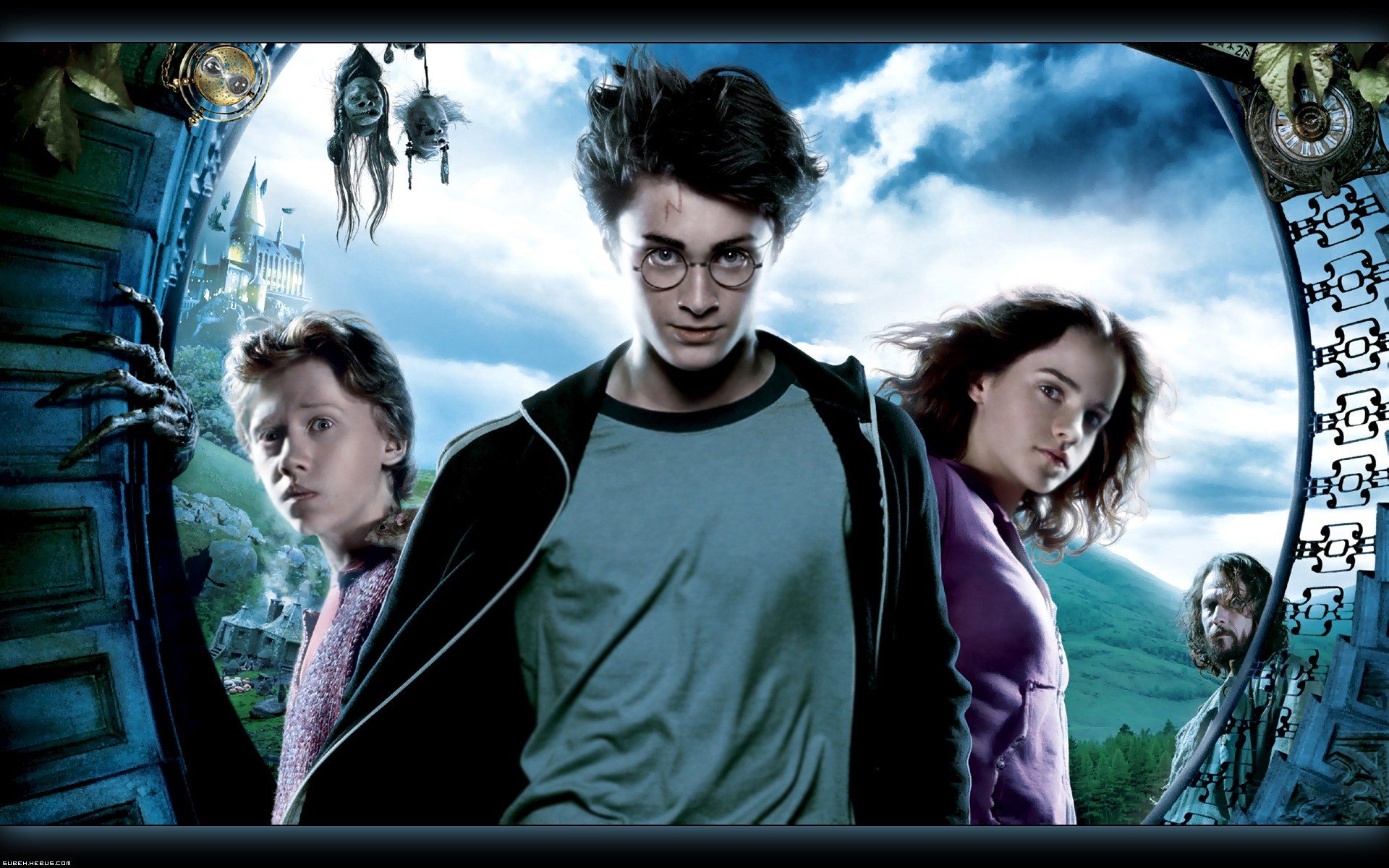
Snarcasm: Harry Potter Has Sucked This Entire Time

harry potter sucks

Snark + Sarcasm = what you’re about to read.

I wasn’t allowed to read the Harry Potter books when I was a child. And as a book-obsessed fourth grader who watched his friends read Prisoner of Azkaban during recess instead of playing four square  with him, this was one of the more sinister things my parents have ever done to me.

For that reason, I’ve never felt a part of the Harry Potter fandom quite in the same way I did with Pokemon, Pixar movies, and other fixtures of my childhood. Yet when I secretly watched my cousin’s DVD of Harry Potter and the Sorcerer’s Stone at age 13, I fell in love without even trying.

Years later, I’ve seen every movie a handful of times and have a very basic knowledge of the Harry Potter mythology. Just this past week I’ve started reading the first book and am about halfway done, but before I join the legions of book fans who evaluate the literary value of the adaptations, I want to speak out just once more as a movie purist (almost).

Which brings us to this week’s Snarcasm, based on a recommendation from the comments last week. In 2013, Witney Seibold of CraveOnline wrote a “troll” piece about Harry Potter just to “piss people off.” He says this outright in the subhead.

It’s decent armor because anyone who disagrees just has to shrug and say, “Well, he announced himself before trolling, so that’s somehow fine.” But we of the Snarcasm know better.

WARNING: Spoilers for the Harry Potter movies from this point forward.

Headline:

Harry Potter SUCKS!

In other news, Lord of the Rings is BASIC! Kendrick Lamar is BAD at Rapping! Expired Milk is DELICIOUS!  And other obviously wrong hot takes.

Look, to say with all-caps that Harry Potter simply “sucks” is just anti-intellectual. And it reeks of sensationalism before we’ve even gotten to the text.

Of course, there’s plenty to criticize with Harry Potter, and an article that attempts to start those debates is welcome. But when your headline and first few paragraphs are nothing but monologuing about how brave you are to say something outlandish and obviously wrong, intellectual integrity goes out the window.

Welcome back to CraveOnline’s Trolling, my dearest readers. This is a series of articles devoted to building up the things most people hate, and tearing down the things most people love.

He forgot the last part of that sentence: for oh-so-delicious clicks.

It is designed to spark thought and debate, and perhaps shake up the complacent geek status quo.

Debate? Sure. Thoughtful debate? Not even close.

A natural byproduct of this series will naturally be outrage and argument, so if you have hateful things to say, I wholly encourage you enter them into the comment section below. Be rough. I can take it.

In other words, there’s nothing valuable about this article. It’s trying to be dismissive in order to get a rise out of you. They believe that joking as trolls is somehow different from annoying, troll behavior. It’s not.

You may feel like going on the attack when I make the following statement: Harry Potter sucks.

“So I’m saying everything aloud to make it better.”

Seriously, this is getting boring. We get it, Witney.

He goes on to explain how it’s been some time since the last Harry Potter film released, and the buzz around the franchise has mostly subsided.

I’m not going to let it go so quietly. Based largely on the Harry Potter movies, I am going to dissect and analyze, in a very general way, what Harry Potter did wrong.

His idea of “dissecting and analyzing” boils down to a 4-argument slideshow that mostly just nitpicks (and not very well). Let’s begin.

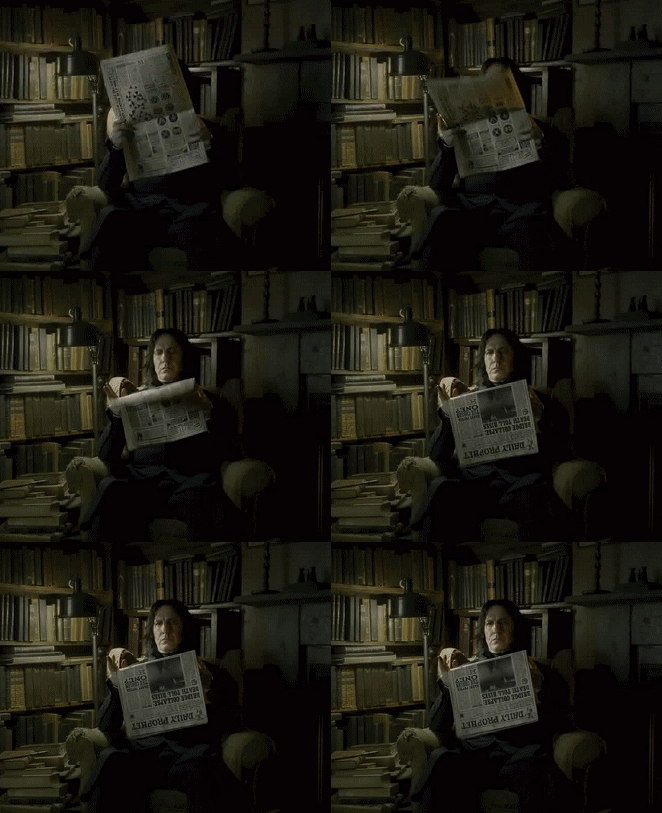
#1 Harry Potter is a Murderer
harry potter sucks

What?!?! That sucks! You’re so right, Witney! The main character killed someone and that NEVER happens in fiction! Burn your books, everyone!

Think of Harry Potter’s story arc.

Well, someone has to.

He starts his saga as a put-upon 11-year-old boy who learns he is has magical powers, and was unexpectedly enrolled in a complex and dazzling school for wizards and witches. While at school, he learns that his parents were murdered by a wicked classmate of theirs, and it’s up to Harry (tracing shades of Hamlet) to avenge their deaths.

This is a lazy summation. Harry Potter is about a boy wizard who tries to prevent a powerful sorcerer from being resurrected. It has about as much in common with Hamlet as the trailer for Good Burger.

As the books and the movies progress, they get increasingly dark and turgid, characters die, and everyone mobilized for a great war with the evil classmate in question.

Evil classmate? At this point, Voldemort is way beyond that sort of modifier.

So the whole point of the story is to watch a sweet-hearted 11-year-old boy be whisked into an enchanting world, only to be primed for combat, to feel hate and fear, to watch loved ones die, and to ultimately commit murder at age 17.

There’s so much wrong with this statement, I’m about to revoke Witney’s Internet discussion license.

“The whole point” of Harry Potter is how friendship and love is more powerful than magic. Some people may have their own interpretations, but Rowling is quite clear about how this is framed. The dark elements of the story exist for two main reasons: to make the power of Harry’s love for his friends more believable and compelling, and because it’s a coming-of-age story set within a magical world. The story has to be dark for it to make any sense.

Harry is not “primed for combat.” He’s primed for defense. And ultimately, his “final” act is sacrifice, not brutally murdering Voldemort. Snape even says to Dumbledore that he’s been setting Harry up for “slaughter” because they both know Voldemort has to kill Harry.

harry potter sucks

Of course, Witney would know this if he paid any real attention to anything that has to do with Harry Potter. Or he’s just conveniently leaving it out because those clicks just look too darn good to pass up.

Aside from that, Harry’s cunning, wit, and luck is what helps him overcome many of the obstacles throughout the movies, and that’s what’s rewarded. His loyalty to Dumbledore in the 5th movie, getting over his angst and loneliness throughout the series, his realization that the government and media aren’t always right, and his acceptance of the burden that is fame and being “the chosen one,” are all key examples.

But no, let’s dumb it down by saying he’s motivated by “hate and fear” because…I’m not even sure where you got this?

This is not fun or magical or dramatic. It’s just dark and sad.

That’s your fault for mischaracterizing the entire story. And even with your own logic, watching characters “die” is actually quite dramatic. 

Harry is no hero.

Despite all of the heroic things he does, like sacrificing his life in the final book.

Hogwarts is no school.

Don’t let those classes and teachers fool you.

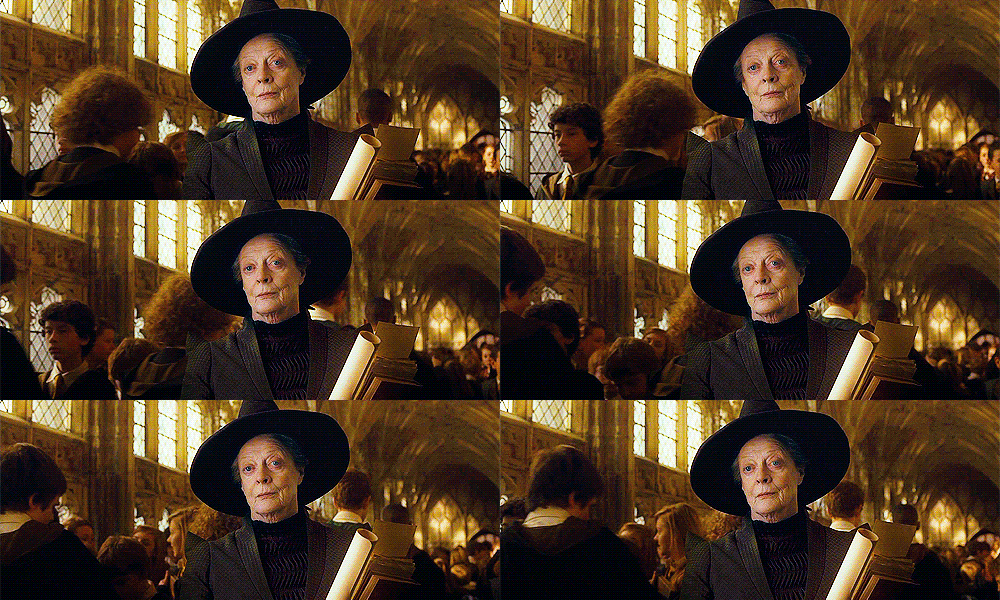
Harry is a brainwashed soldier who was intentionally psychologically damaged by his bootcamp.
harry potter sucks

Brainwashed? Harry spends the majority of these movies rebelling against his teachers and the Ministry of Magic because they don’t believe a thing he says. This argument is completely, bizarrely unfounded, as the students as a whole are consistently punished for taking unnecessary risks, misusing their powers, and being violent.

He may be depicted as heroic, but one can easily see the parallel between Harry and Gomer Pyle from Full Metal Jacket.  

Yes, “one can easily” see a lot of things, like a writer finishing his point with an obviously irrelevant comparison. I hope Witney starts “dissecting and analyzing” soon.

#2 Voldemort is a bad villain.

Now this is a common criticism actually worth debating. I think the Voldemort character is somewhat mishandled in the movies, but overall, his effectiveness as a villain is more subtle than I think people realize.

If our hero doesn’t quite cut the mustard, maybe the villain of the Harry Potter world can pick up the slack. Sadly, Voldemort doesn’t really have much to add to the proceedings either.

Well then pass the ketchup and turn on that there lawyer show.

Let’s take a look at his arc. He was found to be an immensely powerful young lad who was rescued from the Muggle world by Dumbledore, only to eventually flip out and go on a genocidal spree that is never fully explained (at least not in the movies).

Maybe not “fully” explained, but I would argue sufficiently explained. Voldemort very clearly has it out for the non-magic people of the world, as well as anyone who isn’t of pure blood. His arc makes more sense when you put it up against the other villains of the series who are influenced by him. Voldemort is a more understandable figure when you consider the beliefs of the Malfoy family, Severus Snape, and others.

Unfortunately for Witney, that’s too much dissecting and actual analysis for him to keep up with.

Along the way, Voldemort picked up hundreds of disciples who would obey his every command. Why do people follow this guy? He’s a slimy, pale, clearly evil noseless crackpot. 

harry potter sucks

Yeah, I bet he would only be dangerous if he was…hmm…maybe immortal or something? Oh, and super powerful. But since when do people follow leaders with power?

Again, even the most casual HP fans pick up why Voldemort is so influential. Prejudice in the wizard world (which we mostly see in Hogwarts) is a major theme of the movies. Of course someone who wants to capitalize on that prejudice would pick up followers seemingly out of nowhere, especially if he’s killing anyone who tries to stop him.

He has no charisma, no philosophy to sell, and only seems to rule his minions with threats of violence and death.

Even a fourth grader should be shaking their head at this. Voldemort has power and wants to use it to make the dreams of bigoted wizards come true. Respect through fear is also a very real thing, Witney. If an all-powerful wizard who can’t die threatened you to do something, I’m quite sure you’d go along with it.

We are never really given Voldemort’s motivations.

Wrong.

He’s just a bad egg from the start.

Wrong.

Yawn. Bad eggs are not rich or complex, and certainly cannot lend any texture to what is supposed to be the central conflict in the entire Harry Potter film series.

Not joking, guys. I absolutely do not want to know what kind of “texture” Witney is asking for here.

#3 What the Heck is the Function of Hogwarts?

Ah, we’ve arrived at the most common complaint lobbed at Harry Potter, mostly because answering it requires listening comprehension.

Because one of the first things Harry asks in the first movie is what people do after they go to Hogwarts, and guess what? This is answered.

Harry is a wizard, and goes to a wizarding school, which lies hidden in the remote hills of England. He goes there to hone his wizarding skills. He learns to mix magical potions, cast spells, and ride around on broomsticks. This is all very neat and fun and adventurous. But I can’t help but wonder: What exactly does a diploma from Hogwarts offer a young wizard?

If only the movies explained this all the time.

Even if they didn’t, these “fun adventures” are usually very dangerous and frightening, which motivates Harry and his friends to become more powerful. So of course, a diploma is more of a symbol of how these wizards can contend with the dangers of an even more dangerous world outside of Hogwarts.

harry potter sucks

The only other adult wizards in this universe are either shop owners or teachers. Some work for an ill-defined Ministry of Magic, whose function isn’t too clear either. Are those the only choices of employment once you graduate? 

You just said that all of the adult wizards in Harry Potter either run shops or teach. Now you’re saying they work for a mysterious wizard organization that you confess you know nothing about, despite how straightforward the ministry is in these movies.

Seems legit.

That said, we do meet many wizards with specific jobs and roles throughout Harry Potter, and even more are alluded to. Some use magic to keep the wizard world secret, others track down dangerous beasts all over the world, aurors act as magical police, Ron’s dad works with cursed muggle artifacts, and so on.

And this hardly matters, anyway. Rowling decided to keep the focus of Harry Potter on Hogwarts, rather than provide mounds of exposition in order to explain what will happen during a part of Harry’s life that the story doesn’t even explore. We still get clues and inklings of what exists beyond the school, but not so much that it would distract from the main story.

Why is it important to be a powerful wizard if you’re just going to work either as a retail wonk or a government clerk?

Well, Hogwarts doesn’t necessarily train its wizards to be “powerful,” just simply well-versed in magical abilities. Powerful wizards get the jobs I mentioned above, such as how one of the older Weasley brothers studies dragons.

The Hufflepuffs probably do a lot of the government work, I’d imagine.

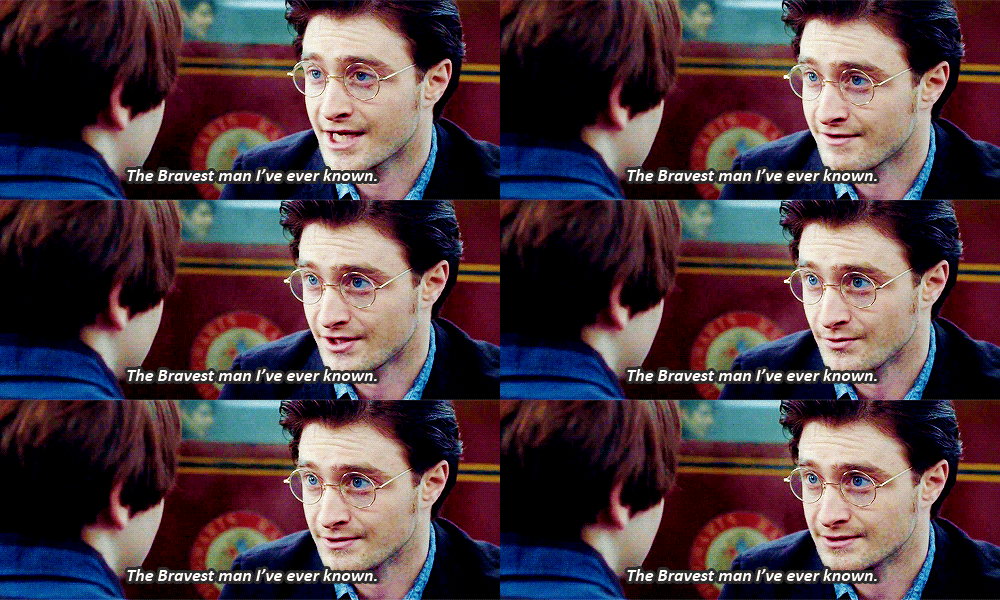
If that’s all Harry has to look forward to, doesn’t his arc seem churlish?

He goes on to become an auror, you walnut.
harry potter sucks

Some of the wizards have no working knowledge of the “normal” world. Hogwarts, then, is painfully backward in their curriculum. Sure, there’s plenty of magic to learn, meaning classes in the sciences may seem a bit unnecessary, but where is the literature? The music? The sex ed? The three R’s? Do any of these kids ever do a single math problem? 

For beings who use magic to do everything, “muggle subjects” are quite unnecessary. This is somewhat alluded to by how amazed the wizards are by muggle things Harry takes for granted. Also, Hogwarts students don’t take any of these magic classes until they’re 11, so the rudiments of math, logic, and reading comprehension are probably focused on during their early education.

I feel bad for English kids who never get to read Shakespeare or Dickens. You learn to move things with your mind, but you never get to read David Copperfield. That’s a bad school.  

Right, let’s feel bad for kids who grow up with magical abilities. They’ll never know the joys of reading Gone Girl and watching Teen Titans Go. You know, unless they do all of that in the summer.

Besides, the wizard world has its own literature and even music more relevant to their culture. Ron mentions how The Tales of Beedle the Bard is a staple of his childhood that Harry and Hermoine compare to Cinderella. As for the rest of these weirdly specific subjects you mention, there’s certainly room for us to imagine that these children aren’t painfully ignorant of them simply because the story doesn’t waste time addressing it.

After all, there’s a reason Rowling doesn’t spend much time showing us what’s actually going on in these classes unless the teacher is doing something absurd.

#4 About Half the Movies are Just Bad

No, about half the movies are just OK. None of them are particularly bad, save for Order of the Phoenix, which is a bit mediocre.

harry potter sucks

That said, how does this mean Harry Potter sucks? This statement suggests Harry Potter only “half” sucks.

You didn’t even go to Hogwarts and you can’t do math…

The films based on the Harry Potter novels begin strong, and then take a dive somewhere around film #3.

A bold suggestion considering the third film is considered by many to be the best. But I’ll wait for you to explain yourself (for some reason).

The fourth is pretty good, actually, but the fifth through the eighth are, well, convoluted and badly filmed.

I really just want to end this Snarcasm right now.

Look, the Harry Potter films are far from perfect. And I have no qualms with anyone who simply dislikes them. But that’s just opinion, not a real analysis.

Here’s what I think, so take that for what it is: the films are consistently solid, with some highs and some lows. You can criticize all of them for many legitimate reasons, such as pointless, convoluted side plots and deus ex machina. But you also have to credit the films for bringing Rowling’s incredibly detailed and rigorous mythology to life. The cast is fantastic and ages well with the movie. The sets and effects provide some remarkable eye candy, especially with the wizard duels. The soundtrack is iconic, which the movie gets full credit for. And many of the performances are well above average.

The movies are perhaps the worst kind of literary adaptation, i.e.: they rely less on telling the story in a fresh way, and more on merely depicting what has already been fleshed out on the page.

This is idiotic hyperbole. The worst kind of literary adaptation is when you subvert the message of the books and make the source material seem worse.

We can agree that the movies mostly play it safe and just try to get the story out, not addressing what a truly good film this story could be. But that’s a fairly forgivable flaw for a studio that was tasked with bringing such a monumentally important book series to the big screen.

This means that the movies are not adaptations, but mere dramatizations of key plot elements from the books.

I’m seriously just repeating myself at this point: Witney, you’re wrong. The majority of everything you say either makes no sense or just comes off as intentionally idiotic.

The pace is too quick, the tone too dark, and the story too complex for most of the movies to work as actual dramas. Important stuff and unimportant stuff whizzes by without any sense of majesty or portent.

Finally, some fair criticisms that I actually, sort of agree with. But these problems are why the movies are not masterpieces. They don’t discount all of the positive aspects of this franchise that make it pretty good, if not great.

harry potter sucks

Is Harry Potter still enchanting and wonderful? For a short while at the beginning, yes. For the first two films, I had no complaints, and found them to be dramatic and fun and dazzling.

Really? Because I would argue Chamber of Secrets is one of the weaker films of the series, and it contains a lot of the complaints you were referencing earlier pertaining to Voldemort’s backstory. But hey, these are just your own words we’re talking about.

The world of Hogwarts and wizards is still a unique and enjoyable place to ponder, built on a complex and intriguing mythology, and seems like the type of place you’d want to visit or even attend for seven years. The series contains many flashes of adventure and fantasy that captured the world like no other fantasy novel. Eventually, though, the Harry Potter series climbed up its own ass and set up camp.

Witney, you’re wrong. The majority of everything you say either makes no sense or just comes off as intentionally idiotic.

 This is one of the laziest “hot takes” I’ve read in a while. It shows only a third-grade understanding of what’s being discussed, the text blatantly aggressive, and it contributes nothing to any real discussion about these films and what they mean.

In other words, it’s vintage 2013 clickbait.


Hey! If you’ve come across a silly article that deserves the Snarcasm treatment, send it my way via Twitter or the comments below!

I’m Jon and thanks for reading this. You can subscribe to my posts by clicking “Follow” in the right sidebar. Or just say hey on Twitter! @JonNegroni

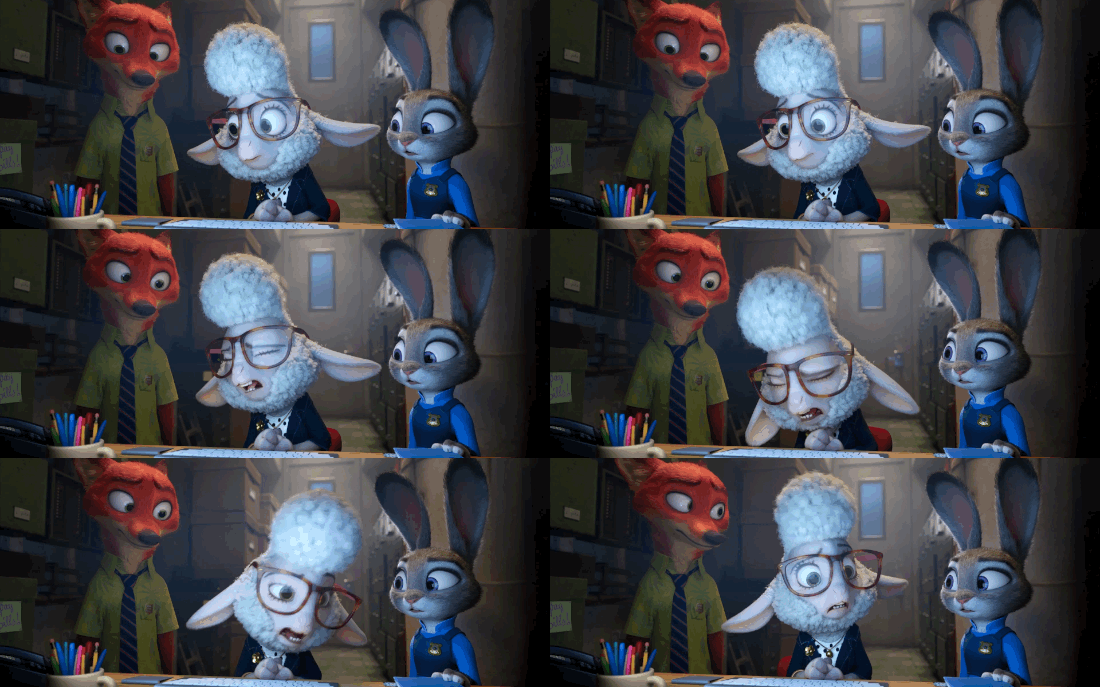
Snarcasm: Only Smart People Realize ‘Zootopia’ is a Bad Movie

zootopia bad

Snark + Sarcasm = what you’re about to read.

I think it’s important for people to remember that Rotten Tomatoes is just one of many useful metrics for evaluating a film you want to see. When we take it too seriously, we end up arguing over arbitrary numbers and percentages, rather than the details within a movie that actually matter.

Then someone writes a terrible review for Zootopia for the sole purpose of getting some attention.

“But Jon,” you say softly, “this reviewer in question might hate Zootopia for good reasons. What’s wrong with an opinion?”

“Nothing,” I respond to you with comforting glee. In fact, there are some great pieces out there already showcasing reasonable criticisms for Zootopia that other critics (even me) have glossed over. That said, there’s one other “bad” review for this movie that makes some decent points, though it’s written by a film critic who gave Annie (2014) 3.5 stars out of 4. So, yeah, I’d take that review with a speck of a grain of salt.

The review we’re going to Snarcasm today goes beyond some of the worst reviews I’ve ever attempted to share with you all. Everything, down to even the headline, is layered in nonsense, and we’re talking Gods of Egypt-level nonsense.

And it’s probably not a coincidence that this review came several days after all of the positive write-ups for Zootopia. But that’s none of my business.

Writing for The Globe and Mail, film critic Kate Taylor writes:

Zootopia: Fun for kids, but adults may think twice about movie’s message

That’s right! Instead of being blindly accepted without a second thought, adults are actually questioning important subject matter after watching a childrens’ film! The horror!

In Disney’s new animated feature Zootopia all the animals wear clothes and walk on their hind legs.

There’s nothing to complain about here, but I do want to point out how much I miss that comma after “Zootopia.”

zootopia bad

That makes the gazelle a particularly tall and lanky creature. A minor character, she’s a pop singer voiced by Shakira;

You’re going to kick things off with a barely tertiary character? Um, OK. That seems odd, but I guess it’s just a sentence. She’s probably about to move on to what the film’s actually about—

she sports gracefully tapering antlers with a tousled blond mane nesting fetchingly between them; she wears a miniskirt and a spangly red crop top.

Uh.

OK.

Are we done throwing adjectives at an unimportant character? It’s not like we can actually make a deranged conclusion about the film based on “tapering antlers.”

Yes, the elegant gazelle has been sexualized.

Wow. That’s…wow.

So Kate Taylor has a weird problem with animals looking like humans. Good thing she was chosen to review this movie.

Anthropomorphization is tricky territory although, God knows, Disney has lots of anodyne experience going all the way back to that cheery little mouse who first appeared in Steamboat Willie in 1928.

Kate, what are you even talking about right now? Anthropomorphization stopped being “tricky territory” at least 50 years ago. How is this your version of a hot button issue in a film about racism?!

Still, Zootopia takes the cultural practice of posing animals as human characters to queasy new heights.

So Kate is apparently uncomfortable seeing animals act like humans. I’m guessing she doesn’t have an Instagram account. Or neighbors. Or a sidewalk. Or Animal Planet. Or YouTube.

Perhaps I’m being ignorant, but it’s just bizarre to me that anyone would feel “queasy” watching something so established in our culture of entertainment. Sure, it may not be your favorite trope, but why on earth does such sanitized fiction make you uncomfortable at all?

Apparently, in the countryside, animals live in their original habitats surrounded by their own species and familiar neighbours:

That’s not “apparent.” It’s just what is.

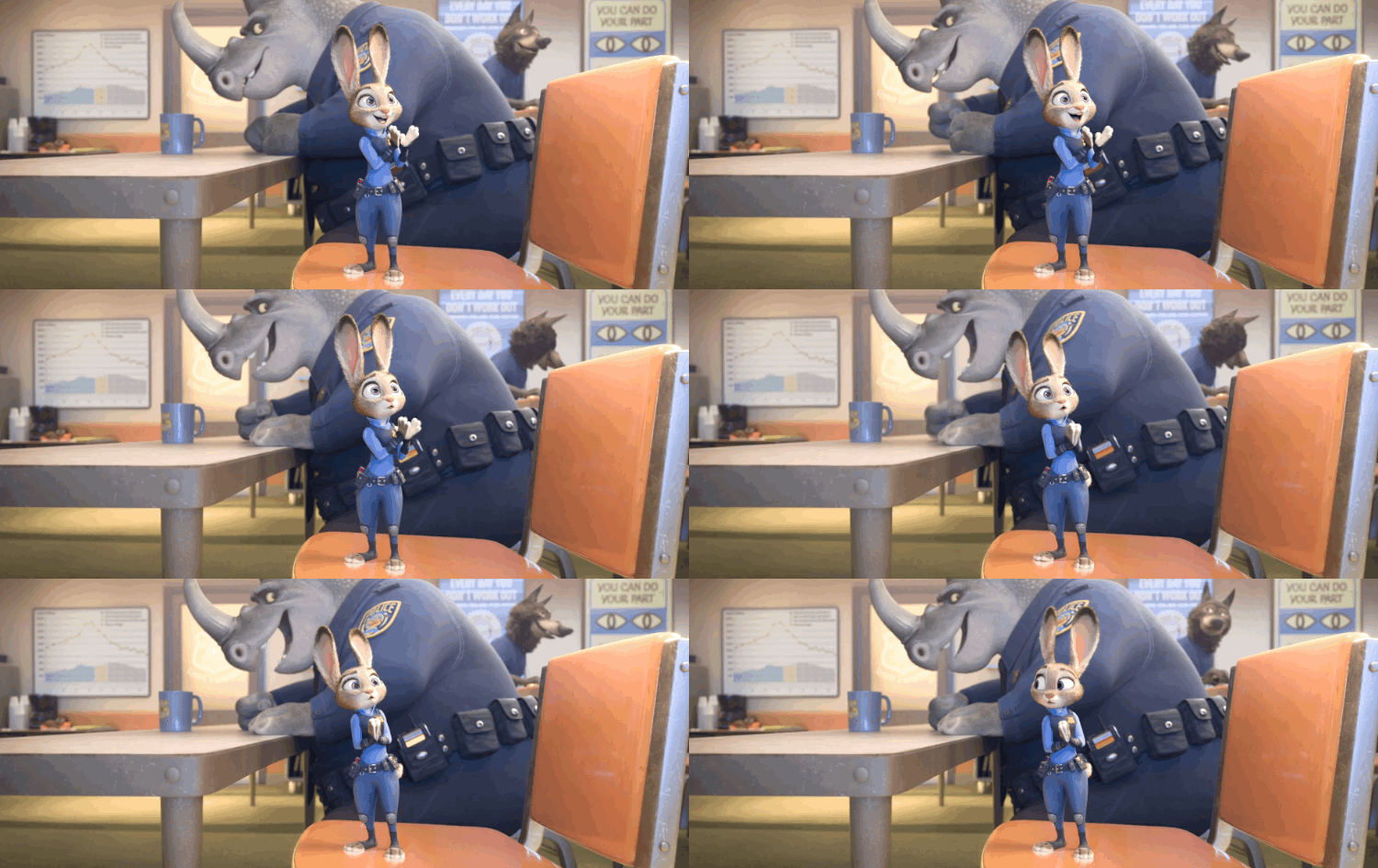
Judy, a character cloyingly drawn with Kewpie doll eyes by the animators but firmly voiced by Ginnifer Goodwin, aspires to be a police officer and moves to Zootopia, where she is hired onto a force staffed by elephants, wolves and bears under a “mammal inclusion initiative.” In other words, she’s a girl in a man’s world.

OK, gender dynamics are somewhat parallel to what’s going on in Zootopia, but it’s strange that Kate brings this issue up instead of the obvious elephant in the room (who was a girl).

zootopia bad

Judy is directly held back because she’s a bunny, not because she’s a woman. While it’s fair to bring up how gender discrimination is similar to what we see in Zootopia, it’s certainly not the intended focus.

The chief (a water buffalo impressively created by Idris Elba) promptly assigns her to parking duty, but she soon breaks out and teams up with a wily fox (an irrepressible performance from Jason Bateman)

Idris Elba voiced the character. He didn’t “create” it. And if you’re just saying he brought the character to life, then you should just say that. Also, I don’t think you understand what irrepressible means, because Jason Bateman’s performance here is anything but.

I don’t imagine environmentalists would approve of a movie that suggests wild animals are at their best when tamed,

This is nonsense. The animals aren’t being tamed. They tame themselves in the same way humans do in order to cultivate society. How moronic do you think environmentalists are that they wouldn’t get the difference?

The premise of Zootopia is that these creatures have evolved past the point where they need to kill each other for survival, which is a great metaphor for how human civilization has been developed. Of course animals are at their best when they’re not at each other’s throats!

but it’s the social anxieties behind Zootopia’s message of animal harmony that make me uneasy.

Good! The best movies challenge and convict us. Do you only care for movies that cater directly to your sentimentalities?

But as Zootopia busily tells the kids not to stereotype different groups and to love everybody, it creates a city in which some creatures fear that others are inherently savage.

Is this really happening? Kate, that’s the entire point of the movie. Zootopia is teaching these lessons within the context of a city where racism exists. If the city itself was perfect and free of conflict, then the message would ring completely hollow.

That’s a pretty close match for both America’s historic racism and its new Islamophobia.

Yeah, Kate. Again, that was kind of the point, but you’re phrasing it as if this is somehow a flaw, instead of just an obvious fact.

And, leaving aside amusing jokes about the wolves trying desperately to contain a group howl or sloths working as bureaucrats, animal behaviour is a troubling metaphor for cultural diversity.

So far, everything you’ve said to build up to this point runs contrary to the idea that animal behavior is a troubling metaphor for anything. You’ve specifically said not even a sentence ago that it matches American society closely. Does that mean the problem is that it’s too good of a metaphor? Because if so, your vague issue with this film doesn’t have much to do with the actual film.

Especially that weird thing about the gazelles. Are you just never going to get to that?

After all, preying on smaller or slower creatures is how many real animals eat; wolves are potentially savage and mice can’t really live happily with them.

And this is the part where everyone reading this review realizes that the critic has absolutely no interest in actually reviewing the movie. The crux of Taylor’s “uneasiness” boils down to minutiae: a barely explored aspect of the world building that has absolutely nothing to do with the actual story.

In fact, it makes more sense than not that Kate Taylor fell asleep in the first ten seconds and then woke up once in the middle and nodded off again. Because the entire first scene explains how animals evolved to the point where they didn’t need to make distinctions between prey and predator. They could just find alternate means of living in order to have harmony.

zootopia bad

But because Kate can’t use her imagination and think of what these creatures could do otherwise, there’s something wrong with the film. Let me try to imagine how Kate could have such a bizarre understanding of this movie….Nope, nothing.

And how much animal harmony does the sprawling Zootopia team of multiple directors and writers really envisage?

Really? You couldn’t just say “envision?”

Oh, and to answer your question, a lot. Like that’s the entire point of that 5 minute opening sequence where we watch how all of these animals live in disparate sectors of the city, along with pretty much everything else from that point forward.

In fact, it’s clear to everyone but those of you who were sleeping that the directors and writers spent countless hours making this world come to life in a way that represents a united city of animals that was made by animals.

It was only when the sexy gazelle appeared in a final image of the animal kingdom united in song that I noted the very few couples in the film – Judy’s bunny parents and an otter whose husband has gone missing – and began to wonder about the deepening friendship between Judy the female bunny and Nick the male fox. But let’s not go there.

Yeah, what a terrible movie! Instead of needlessly focusing on a forced romance, it gave us a story  that was good enough to stand on its own with characters who had enough believable chemistry to sidestep a boring love dynamic!

What a nightmare!

To be fair, I’m not entirely sure that’s what Kate is getting at, but at this point, I have no idea what she’s even rambling about.

Highly familiar with the pluralist message that Zootopia delivers, the children for whom the film is largely intended are unlikely to be troubled by anything they see here.

Those pedestrian children are so pedestrian, you see.

Thinking parents, however, may think twice.

In other words, “Only smart people like me understand how “bad” this movie is. And if you don’t agree, you’re a CHILD!”

Guys, this has to be the worst professional film review I’ve read since…perhaps ever. There’s no real analysis here, just a few lopsided assertions that don’t even strengthen her premise. She ignores the visuals, the characters, the writing, and pretty much anything about this movie that would inform her readers whether or not it’s worth their time.

zootopia bad

She talks more about the gazelle with two lines of dialogue than the main characters. And when she does bring up the main characters, she complains (I guess?) that they aren’t in a relationship.

Instead of actually reviewing Zootopia, she digs on one bizarre hangup she has that doesn’t even slight the movie, mostly because she barely explains why anything she mentions is a real flaw. She just cites another example that reads more like an adjective-filled soundbite and then moves on.

This is not a review. It’s barely even a rant. It’s just a lazy, incoherent opinion with a grade at the bottom.


Thanks for reading this. To get updates on my theories, books, and giveaways, join my mailing list.

Or just say hey on Twitter: @JonNegroni


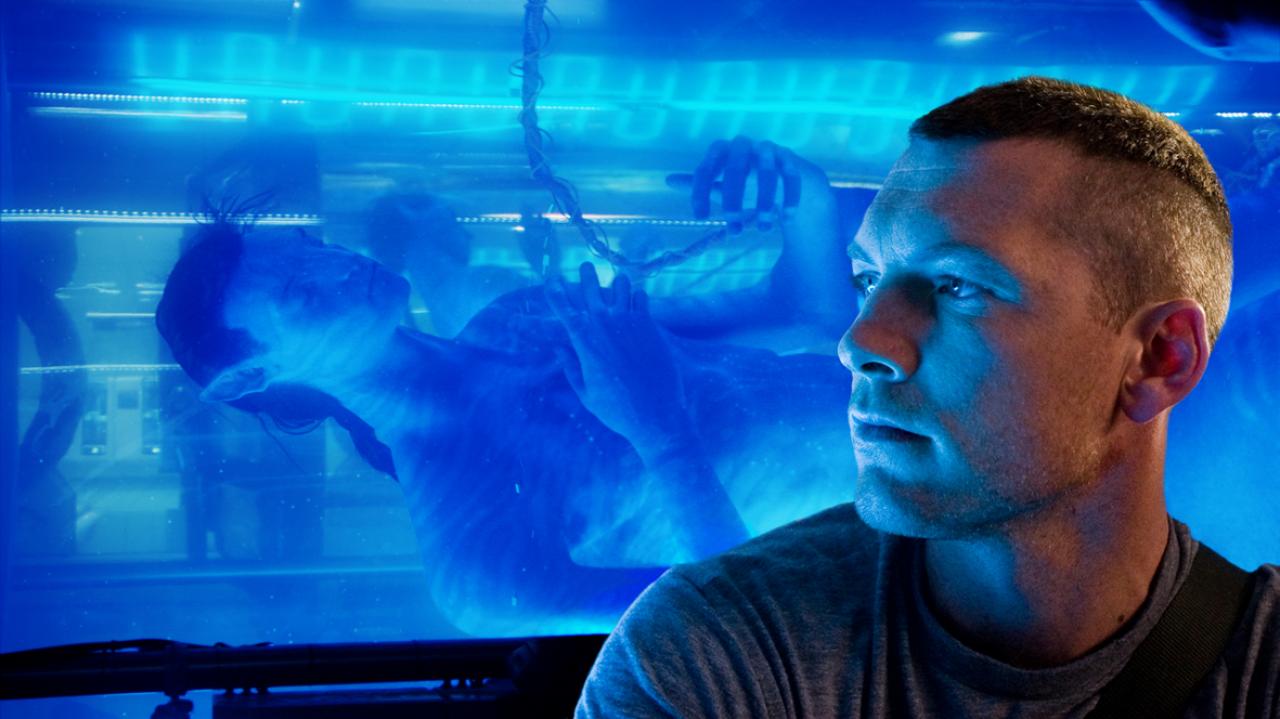
Unopinionated: There’s a Reason You Think ‘Avatar’ Is Generic

avatar opinion

Unopinionated is a brand new editorial series where I explore “unpopular opinions” and why they’re unpopular in the first place. This week: loving Avatar is a hard thing to do now more than ever. 

In October, I made a friendly bet with a fellow movie buff who was convinced Star Wars: The Force Awakens would dethrone Avatar as the highest grossing movie of all time. It’s now February and my friend has conceded, seeing as how Star Wars is still roughly $800 million short of the 2009 3D epic and hasn’t even surpassed the #2 spot, Titanic.

Not even adjusting for inflation.

How did I know The Force Awakens would fall short? It wasn’t with all the confidence in the world, just a simple memory of how Avatar took the entire world (namely China) by storm with the introduction of 3D to the mainstream. It was the movie that spurred the release of worldwide theaters just to house the IMAX technology necessary to watch it. For that reason, this was a global movie in which people saw 3D and IMAX for the very first time, hence all of the rereleases that would drive Avatar to an impressive box office take of well over $2.7 billion.

It was obvious to many people like myself that The Force Awakens wouldn’t draw in those same numbers worldwide, but I find it hard to blame anyone for believing a movie as hyped up as the new Star Wars film deserves to perform better than one of the most generic science fiction films in recent memory. Who wouldn’t want such a fun movie starring Han Solo again to do better than a dated rehash of Dances with Wolves?

avatar opinion

That said, an “unpopular opinion” held by many is that Avatar isn’t just an average movie. It’s a terrible film that doesn’t deserve its box office throne. This unpopular opinion was brought to me by fans of The Force Awakens who are simply frustrated with how the numbers turned out, but for my first Unopinionated, I’ve decided to address the fact that Avatar is an average movie, not a bad one.

And to do that, I’ll be addressing three key aspects of the film: the Good, the Bad, and the Meh.

The Good

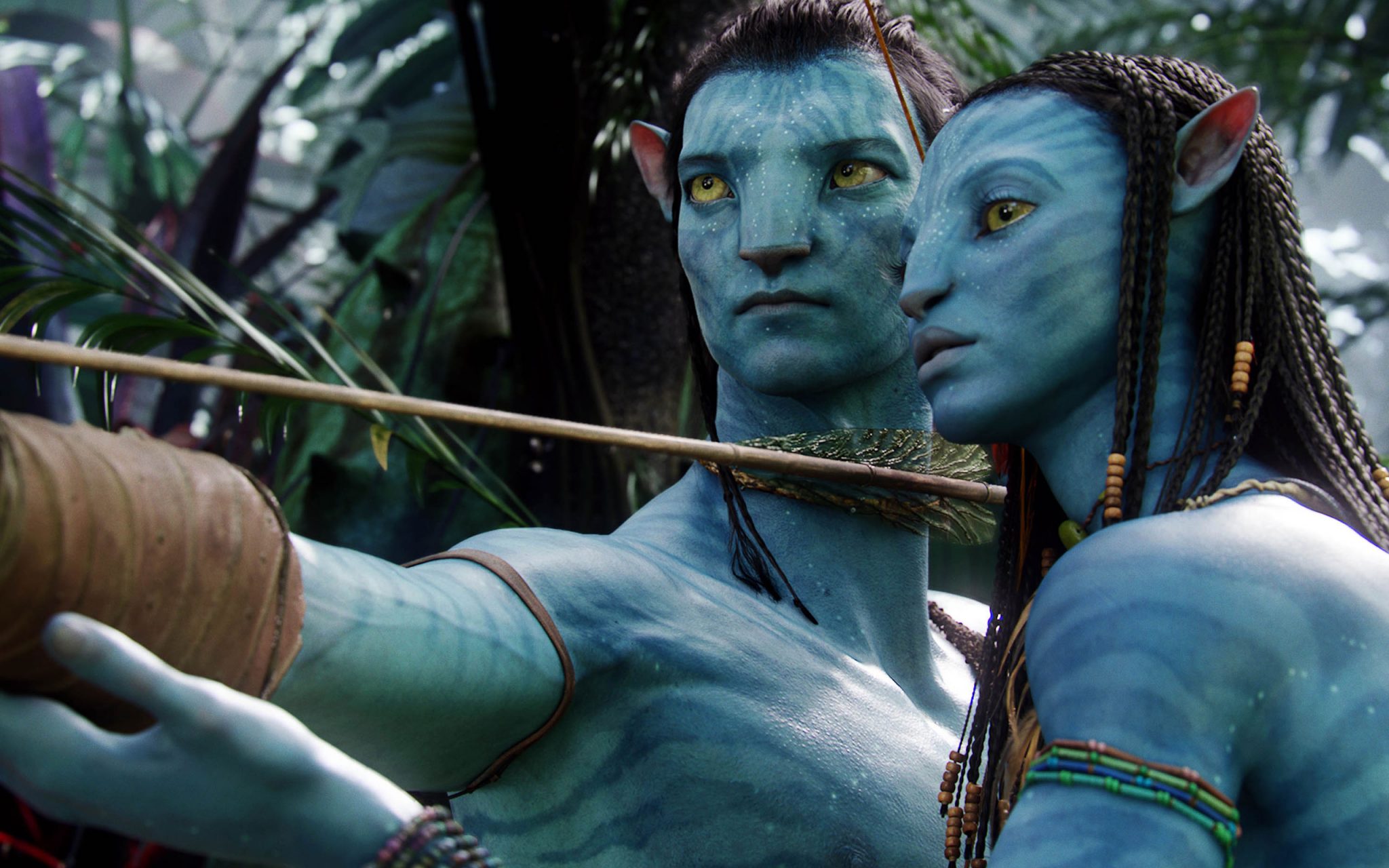
On a visual level, Avatar truly was a remarkable film when most of us saw it in late 2009/early 2010. What the movie does with color depth and digital effects is something 3D movies are still imitating today (and poorly most of the time). While you can’t judge a movie solely on how it looks, you can certainly credit effort where it’s due, and Director James Cameron offered something truly beautiful that pushed the needle forward for how CGI can transcend the “uncanny valley.”

The movie also boasts a wacky creativity for its  fantasy sci-fi setting. The character designs are inspired, the environments are as vibrant as they are subtle, and every application of CGI fits naturally, from the action scenes to the computer animated characters.

This fusion of live-action with computer animation is nothing to scoff at, and for many moviegoers, a by-the-numbers plot is all the film really needed to impress. What Avatar excels at is scope, in that it uses its effects for an impressive feat of world-building that makes its plot far more accessible than it deserves to be.

The Meh

It’s telling that Sam Worthington (the lead actor) has less animation than the characters made by a computer. He’s meant to be a straight man to the wonders of Pandora, but he’s severely lacking of any charisma that compels our interest.

avatar opinion

He’s not terrible, but he’s also not very good. And the same can be said for most of the characters meandering Pandora with their simplistic motivations that don’t boil down to much more than anti-war propaganda even our college professors would fine overbearing.

Which brings us to the main complaint lobbied at Avatar: its plot is too familiar and undemanding when you hold it against the beauty of the movie itself. Like one of the early IMAX offerings that felt more like a test run of what the technology could do, Avatar comes across as if it was purposefully written by amateurs, which is a startling contrast to the detail put into pretty much everything else this movie has to offer.

Cameron remixes many techniques from his previous films in Avatar, such as the forbidden love dynamic of Titanic, the droll narration from Terminator, the space marine aesthetic from Alien, and so on. Any other director would get a pass for this, but because Cameron’s work is so iconic, this mixing and matching is too obvious to be appreciated.

And of course there’s no avoiding how reminiscent Avatar is to Dances with Wolves, Pocahontas, and pretty much any other film featuring the story of a white man learning the ways of an indigenous tribe.

When it comes to plot and interesting ideas, Avatar doesn’t try anything new, but to the film’s credit, it doesn’t fail outright. We just hated it more at the time because we were disappointed at how close Avatar stuck to a formula, rather than provide the sort of genre twist worthy of such an ambitious film.

The Bad

Honestly, there isn’t much. You can complain that the dialogue and cartoonishly evil villain are draining, but they aren’t atrocious qualities. Avatar mostly plays it safe as a predictable romp on an alien planet, which makes it regrettably average, not bad.

avatar opinion

Yes, the film has its share of haters, and their criticisms are usually valid. But analyzing Avatar as a piece of film requires an honest look at everything it offers, not just the parts that distracted you. Pandora is a well-made paradise of science fiction. The 3D is expertly used to create a sense of immersion that no other movie had yet accomplished in the same way. The entirety of the film’s experience created a sense of awe for its many viewers…dragged down by some unfortunate compromises.

When this movie came out, many people likened it to the first Star Wars, convinced it would capture the imagination of the next generation. I think it’s safe to say that never fully came to pass, mostly because Avatar‘s story was too formulaic to grab viewers at every level. While Star Wars was also a bit cheesy, its rich and interesting characters managed to make up for it. Avatar, on the other hand, only has what will soon be dated visuals and an accompanying footnote to hold itself up as an accomplishment.

Grade: C 

Is there an unpopular opinion you think deserves the Unopinionated treatment? Shoot me your suggestion in the comments.

I’m Jon and thanks for reading this. You can subscribe to my posts by clicking “Follow” in the right sidebar. Or just say hey on Twitter! @JonNegroni
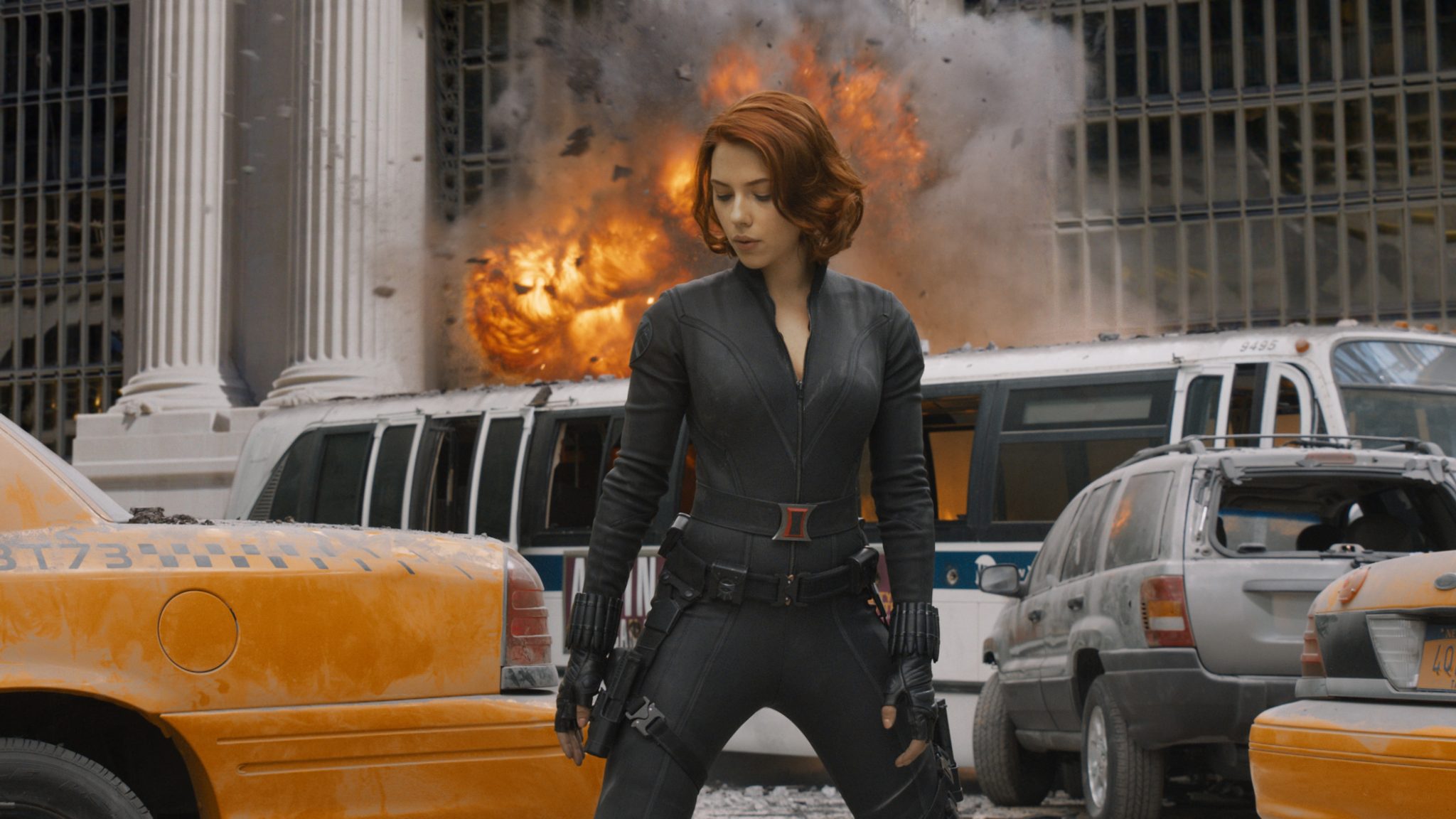
Which is Better? ‘The Avengers’ vs ‘The Avengers: Age of Ultron’

avengers vs age of ultron

Which is Better is a monthly editorial series where I dare to compare the best and worst of everything. This month: Is the first Avengers movie better than its 2015 sequel, or is it the other way around? 

Last year, my friends and I debated this for an episode of my podcast, Now Conspiring. But to be honest, the debate didn’t go anywhere because we all sort of agreed (for once). Now that enough time has passed to let the movie sink in properly, I’ve decided to revisit these two movies and decide for myself.

Granted, a lot of fans of both movies have been debating this since last spring, pointing out every flaw in each movie that could somehow tip their arguments. But it’s unclear whether or not the somewhat lukewarm reception to Age of Ultron was a result of superhero movie fatigue, Marvel fatigue, or something else that may not be a reflection of the movie’s true quality.

If we’re judging by box office, it’s even murkier. At first glance, it may seem that Avengers is better than its sequel because it pulled in $100 million more at the box office, which is a drop in the bucket compared to both movies making roughly $1.5 billion each.

avengers vs age of ultron

But aren’t sequels supposed to be bigger hits than the originals? You’d think that, but it’s actually more common to see diminishing returns depending on the franchise.

Sticking to Marvel superheroes, not a single Spider-Man movie has made as much money domestically as the first one, despite Spider-Man 2 being considered a huge improvement and one of the greatest superhero movies of all time.

Most regard Empire Strikes Back to be the best of the Star Wars films, yet it made $200 million less than A New Hope, not even adjusting for inflation. Let’s not even get started on Return of a Jedi actually failing to net a profit.

So the argument has to come down to the movies themselves, metrics aside. For this week’s Which is Better, I’ll break both movies down on a series of points crucial to what makes a superhero movie great.

Starting with,

BEST STORY

avengers vs age of ultron

Few will argue that The Avengers and Avengers: Age of Ultron (AOU) are wildly different when it comes to plot execution. And for good reason.

Much of the beginning of Avengers centered around exposition that united all of our “mightiest heroes.” It was incredibly entertaining, of course, considering how new it felt to see these characters side by side in one movie.

But the plot was otherwise quite basic: The threat is established, the heroes are brought together to address it, a central action set piece gives them a reason to work together, and they save the day in one final battle. Pretty simple.

AOU had a lot more freedom to be complicated since a lot of that character-building exposition was done in the last film, and also because Avengers was such a monumental hit that the studio was confident people would remember what was going on in their cinematic universe.

So with AOU, we got three villains (sort of), tons of new side characters, and another world domination plot. And that was including many of the new characters introduced in the “Phase 2” of Marvel movies, Guardians of the Galaxy notwithstanding.

In AOU, Tony Stark’s creation was the established threat, but unlike Loki (who was also tied to a main character in a close way), Ultron was a complete unknown to the audience. He arrived on the scene quickly and drove the plot as soon as he showed up.

avengers vs age of ultron

The heroes were already together by this point, so the movie spent more time developing them as they worked to deal with the threat of Ultron. If we’re judging both movies by complexity and character arcs, than AOU surpasses the original in spades.

And that’s because the first Avengers is essentially a party, or a celebration of the fact that Marvel pulled off one of the greatest team-ups in cinematic history. But aside from some quips and other quick dialogue, the characters didn’t progress much from beginning to end. They just decided (again) to do what they’ve already done in their own respective movies: be heroes.

“Saving the day” wasn’t such a black and white solution in AOU, which I found very refreshing. Each Avenger had an agenda, and some sparks of disagreement and strife popped up between these characters, teasing the upcoming Civil War.

This worked because getting invested in characters is what made AOU feel more like a complete story compared to the first Avengers, which was more of a continuation of a running story that didn’t feel all that resolved by the end.

To be fair, AOU having a more complex plot also brought on a ton of narrative issues, many of them being the cause of Joss Whedon having to set up future movies with throwaway scenes that didn’t feel as cohesive. A good example is Thor’s mini-vacation to awaken his new powers, a side adventure that was given hardly any time to be built up or explained well. As I mentioned earlier, Ultron was also rushed as a villain, probably to give more time to the Wakanda references they had to include to set up Black Panther.

So AOU isn’t perfect, but I’d say the good certainly outweighs the bad. The darker tone wasn’t quite as dark as people hoped for, but there was a new sense of tension that actually got a payoff in the end with one of the first key deaths in these movies. And a lot of what doesn’t work that well in AOU is sort of indicative of the same problems existing in the original. We just didn’t harp on them as much back in 2012 because the novelty of the film was so, well, novel.

Both movies have great, enjoyable narratives, but I have to give this point to AOU for being bolder and containing a more dense story, flaws aside.

BEST CHARACTERS

avengers vs age of ultron

I’ll do this one fast. It’s a tie.

As I mentioned earlier, AOU was fantastic at giving us more insight into these characters, which gives it a huge advantage in this debate. Scarlet Witch and Quicksilver are notable exceptions that I give a pass due to the messiness surrounding the rights for those characters.

That said, Avengers pulled off something equally impressive by reintroducing the core team without spoon-feeding us tons of information about them we didn’t need to know. Marvel could have easily decided to treat us like we’re stupid and need a “Previously on” in order to remember who Thor and Captain America are.

To put it simply, both movies do a terrific job at showcasing great characters. The story elements behind these characters are certainly stronger in AOU, but we’ve already evaluated that in the previous section, so it’s a tie.

BEST VILLAIN

avengers vs age of ultron

Loki or Ultron? Oh, who am I kidding…

Everyone (I think) loves Loki. It’s been a running joke for some time that he’s pretty much the only “good” Marvel villain. And for the most part, I actually agree.

He was an effortless scene stealer, in no small part thanks to Tom Hiddleston’s wonderful take on the character. He captured the comic-book villain quite well, while also updating it perfectly for feature films. He was funny, arrogant, and even a little sympathetic. But despite this, he was incredibly threatening, despite not having any “raw” power.

We knew throughout Avengers that Loki wasn’t that strong of a guy. Yet he commanded a ton of presence and was taken incredibly seriously. Using him for the first movie was a perfect choice because he was the perfect villain to contrast the raw power of the Avengers, who were vastly more intimidating when it came to brute strength.

Yet he wasn’t even “smarter” compared to Tony Stark and Bruce Banner. There was just an unspoken mental advantage he was able to hold over the heroes just enough to provoke them into finally stopping him.

Ultron was an attempt to up the ante with a villain who could be strong enough to bring down the Avengers, but they went with giving him an advantage aside from brute strength again.  Not being that powerful himself, Ultron commanded a huge army and could tamper with their technology, even the Internet.

A problem that arose with this was when Scarlet Witch introduced yet another alternative to brute strength with her mind powers. But by the end of AOU, the Avengers do what they always need to do: save the day with their muscles…and lasers and hammers and what not.

An unstoppable villain that could have defeated all of the Avengers with brute strength would have strangely been more refreshing and a unique challenge for our heroes. It’s actually a bit ironic because I’m sure being different was what the writers intended to do. And while Ultron himself was sarcastic and entertaining, I found myself feeling almost nothing when he was discarded.

Best villain goes to The Avengers.

BEST ACTION

avengers vs age of ultron

I’m actually cheating a bit by saying “best action,” because I’m really talking about how these movies work overall as action films. So I’m judging how beautiful they are, set pieces, how the special effects aid the experience, and of course, fight choreography.

That criteria in mind, this is a pretty easy decision. While both films are extremely polished, AOU is the one that stands out when it comes to those moments that define a great action movie.

Like I mentioned earlier, AOU is just more dense. Avengers has three major action scenes, and all of them are incredibly one-note and completely one-upped by the sequel.

For example:

The Avengers starts with a series of minor confrontations between the Avengers themselves. This is done even better in AOU when they’re fighting Tony Stark’s suits after the party, as it’s a surprising action scene that gets the plot started on the right tone.

The second act of Avengers features Hulk on a rampage. AOU one-ups this in a huge way by unleashing Hulk on innocent people, forcing Tony Stark to don the built-up Hulkbuster armor and finally prove a worthy challenge to the overpowered character. This is, in my opinion, the best action scene in the MCU for a laundry list of reasons.

Finally, the original ends with a massive battle where the heroes are vastly outnumbered. And in the end, someone nearly dies. AOU one-ups this by actually killing off a character (albeit not someone as key to the franchise as Tony Stark).

Aside from all that, there’s just a lot more going on in AOU when it comes to the action. I don’t think it’s necessarily prettier, but I’d be hard pressed to find anything about the original that trumps it in this category.

Point goes to Avengers: Age of Ultron.

THE VERDICT

avengers vs age of ultron

Well, it looks like my answer is the same as it was a year ago. I consider Avengers: Age of Ultron to be better than The Avengers. It has a better plot, it maintains what we love about the characters in the original, and it has a more expansive, thrilling set of action scenes.

It wasn’t a landslide, obviously, and to be completely honest, The Avengers is still my favorite out of the two. The experience I had watching it was unlike any other I’ve had in the theater, and it’s filled to the brim with quotes and moments I’ll get nostalgic over for years to come. But I can’t say that I think it’s a better film, overall, even if it has just the right amount of Loki.

Agree? Disagree? Let’s talk about it in the comments. And let me know what you’d like to see compared in the next Which is Better. 

Thanks for reading this! You can subscribe to my posts by clicking “Follow” in the right sidebar. Or just say hey on Twitter: @JonNegroni

Snarcasm: Aladdin and Beauty and the Beast and the Migraine

http://www.eonline.com/news/738362/this-disney-theory-about-beauty-and-the-beast-and-aladdin-will-blow-your-mind

Snarcasm is rapidly becoming the let’s poke fun at terrible fan theories every week – show. And of course, I’m totally fine with that considering the wealth of terrible fan theories that are out there waiting to be snarcasmed.

But this entry is different in that it highlights a unique trend in fan theories I haven’t harped on yet: the dreaded repost.

What is a repost, you ask (all six of you?) Well, a repost is when you resurrect content that was already incredibly popular at one point. Like a funny image, hilarious video, or fan theory that Aladdin exists in the same universe as Beauty and the Beast.

“But Jon!” you ask, “You repost theories all the time. Is this Snarcasm secretly about you?”

Well, here’s the difference between what I’ve done in the past and what constitutes as a “repost.” See, if you’re going to resurrect content and then pretend it’s new, you should at least add something to it. Build on it. Do something. But half the time, these reposts are just retreads that make The Force Awakens look like Tree of Life.

aladdin beauty and the beast

Who is the perpetrator of the repost in question? That would be Julia Hays from E! Online, who essentially runs their “we can do Buzzfeed, too” desk. She unearths everything from The Best Oprah Winfrey Gifs of All Time to Does Watching High School Musical for the First Time Alter Your Attraction to Zac Efron? 

Both of those are actual, real-life articles.

Recently, Hays published this gem:

This Disney Theory About Beauty and the Beast and Aladdin Will Blow Your Mind

buzz

“Hello?”

“Julia, it’s the editor. We need you to find a way to make this headline twice as derivative as the most derivative headline ever seen on the Internet.”

“OK, googling Looper dot come now.”

click

Now, some of you may have never heard about this Beauty and the Beast/Aladdin theory, which is why this article exists. But at the same time, it should at least be mentioned that this theory has existed for years, yet E! is portraying this as some sort of turning point in history.

Don’t believe me? Just watch.

| Prepare to have your world come crashing down,

Your headline already got me there.

| there is a Disney theory that’s sure to upend everything you thought you knew.

So, everything I thought I knew…Culture. History. Politics. The meaning of love. Why “Be like Bill” was popular for three days.

| There is nothing the Internet loves more than finding crazy theories about the movies we love.

Hays links to a separate E! article that dives into “13 Crazy Theories About…” eh, it’s really long. Half of the theories boil down to “they were dead at the end” or that Jack from Titanic is a time traveler because you deserve that.

| No matter how many times we re-watch Disney and Pixar classics, there will always be Tumblr accounts digging into the cameos and references we may have missed.

Why hire journalists when Tumblr does all the work for you?

Also, here’s something wildly entertaining I discovered while writing this Snarcasm. So above, “Pixar classics” links to another E! article that doesn’t have anything to do with Pixar classics, as it refers to that fan theory about how Tangled, Frozen, and Little Mermaid are connected for some reason no one understands.

But that’s not all.

In that article, they criticize my fan theory about Andy’s mom from Toy Story 2 being Jessie’s original owner. Quote: Fan theories are a dime a dozen on the Internet. Most we don’t care about (oh, Jessie from Toy Story may have been Andy’s mom’s toy? OK?),

That links to an EW.com article that references me personally.

Yes, this is real. E! Online thinks my fan theory is garbage. The same E! Online that thinks Sandy drowns in the beginning of Grease, Sid being the garbage man in Toy Story 3 is “subtle,” and Peter Pan is the angel of death (all in that “13 fan theories” article I referenced earlier). Because yes, you deserve that.

So here’s all I have to say to E! Online about that: neat.

| This Tumblr theory (which was brought to our attention via Someecards), 

I couldn’t make this up if I tried.

| …points to a connection between Beauty and the Beast (1991) and Aladdin (1992) that most fans probably never noticed.

Is that why people have been pointing this out since 1993? This was debated even before the Internet was widely available.

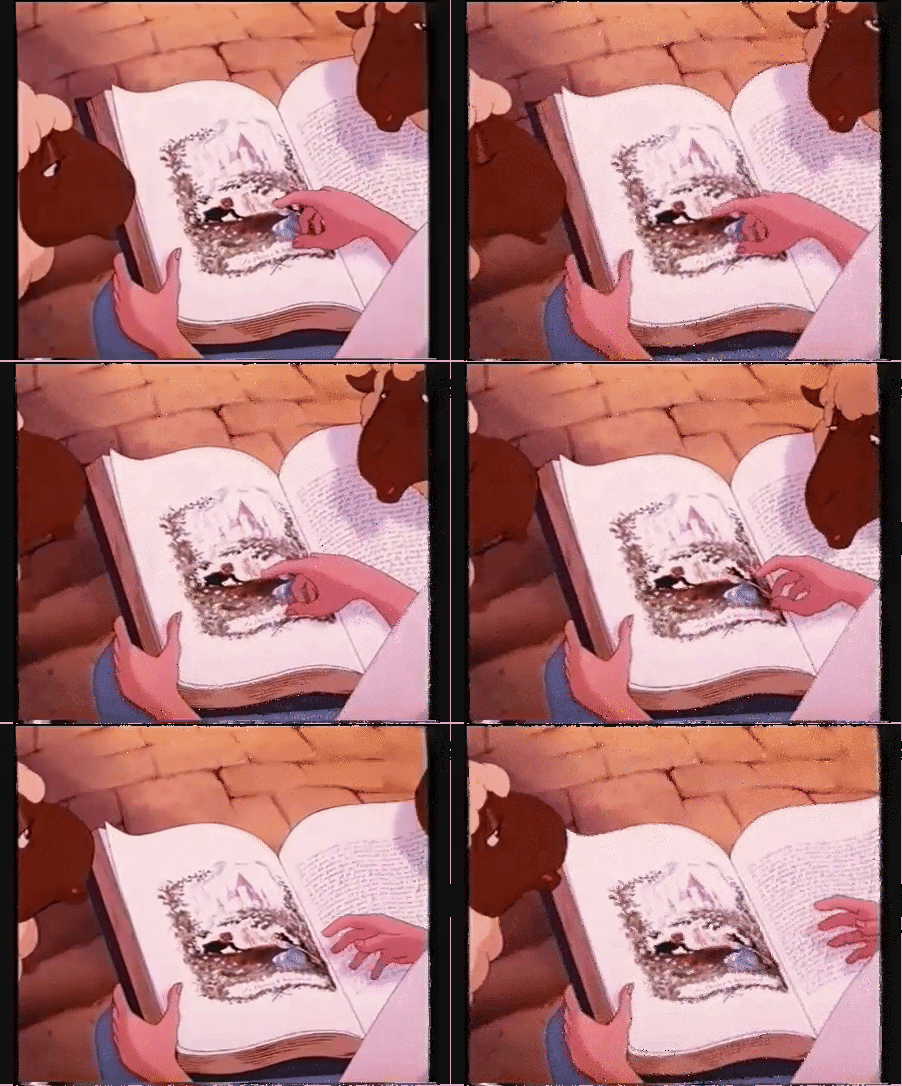
| It’s in a seemingly innocuous scene in Beauty and the Beast when Belle visits a local bookstore to return a book she borrowed. Is this just a scene to show the viewer that Belle’s an intellectual? No, there is so much more.

Yeah, yeah, that’s cute and all, but is that really the point of the scene? Last I checked, we knew she was a reader at this point. That scene merely showed that she was yearning for something more through her books, and that she’s kind enough to warrant a special gesture from the owner who lets her keep the book.

So, yeah, so much more.

Next, Hays actually just sticks the entire Tumblr post in the article. She doesn’t even set it up. It just appears out of nowhe-

aladdin beauty beast

Alright. A few things we need to discuss.

I’ve been asked about this theory around a dozen times, so I’ve looked into it plenty. And honestly, I don’t find it all that convincing. The gist here is that Beauty and the Beast is narratively hinting at Aladdin, a movie that came out a year later.

This makes some sense, as Disney is known to put little nods in here and there in its movies. And in a way, it’s cute to think that Aladdin is a book that Belle loves to read.

The problem? The plot points Belle references don’t really align with Aladdin when you actually give it some thought.

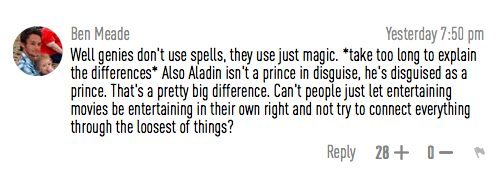
Daring sword fights? There really aren’t many at all. It’s mostly Aladdin running away all the time. Magic spells? The genie grants wishes, not “magic spells.” And that’s such a generic line, you can apply it to nearly any other Disney movie that has magic in it. Finally, Aladdin isn’t a prince in disguise, because he’s not a prince. He’s in disguise as a prince, and there’s a clear difference.

For that reason, I think this theory holds enough merit for debate, but it’s mostly weak.

| Belle’s favorite book describes the plot of Aladdin. Far off places? Agrabah.

 Ah, I forgot that one. But still, what Disney movie doesn’t occur in a far off place?

| Daring sword fights? Heck, even Abu the Monkey wields a sword at one point.

True, but Abu doesn’t even use it. It’s not a fight because the guards take out their swords and Abu runs off. How is that even daring?

Magic spells? Genie, ding ding ding!

And then Hays turned into a bell for some reason?

| And a prince in disguise? Prince Ali has an entire musical number, baby girl.

Semantics, baby girl. He’s a street rat in disguise. And it makes more sense that Belle is referencing a fairy tale land, like the ones where princes disguise themselves as common folk in order to save the damsel in distress. But I understand if you’re unfamiliar with information that is read in books.

| We don’t discover Prince Ali’s true identity until the third act of the film Aladdin.

What? We know who Aladdin is the entire time. I’m guessing she’s referring to Jasmine, perhaps? Even then, that occurs halfway through the film, not in the final act. But it’s complicated because there are two reveals: one where she discovers he’s the street rat from before, and then the reveal that he’s not a real prince.

Even then, here’s what Belle actually says: “Here’s where she meets prince charming. But she won’t discover that it’s him until chapter three.”

I get where Tumblr is coming from, but there are a lot of problems here. Aladdin is not prince charming. He’s not even a prince. And Belle is saying she won’t discover he’s a real prince until chapter three, but that’s the exact opposite of what happens in Aladdin.

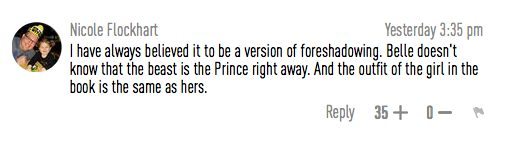
See, the book is more widely accepted to be a form of foreshadowing. Belle doesn’t know the Beast is actually prince charming (she references this same line in the song, Something There). She’s taken to a far off place, there’s a magic spell, etc.

| Granted, the book itself that Belle is reading shows artwork that could also represent other Disney films with similar plots.

That’s one way to put it. The other way to put it is: Oh, well the book shows an entirely unrelated story going on that bears no resemblance to Aladdin whatsoever. 

aladdin beauty and the beast

That’s a castle. And a forest. And a white guy. And a white girl in a blue dress. You know, all the things that aren’t in Aladdin.

| Beauty and the Beast and Sleeping Beauty feature similar elements.

And here’s where my migraine kicks in.

| Beauty and the Beast has a distant castle in the woods, Gaston fighting the beast with a sword, a magical rose and a castle under a spell, and Belle doesn’t know the prince thing about Beast until later in the film. So, perhaps some foreshadowing?

Yup. Hays is altering this “mind blowing” theory that is supposed to upend your take on the Disney universe with the convention that pretty much everyone already knows about. “Mind blown” alright.

And at the same time, she’s pointing out that Sleeping Beauty has visual elements similar to standard fairy tales. You had to read E! to figure that out.

| Sleeping Beauty, as well, deals with far off places and magical spells.

There are no daring sword fights or princes in disguise, but don’t let logic get in the way of a waste of your time.

| Aurora doesn’t know Prince Phillip is royalty at first, despite his hella princely looking outfit.

There are so many things wrong with this sentence, my migraine just fused with the Tylenol I just took, and they are now working together to pass me out slowly for my own good.

Aurora not knowing who Prince Phillip is doesn’t mean he’s in disguise. This is simple reading comprehension, people. And let’s just disregard that the word hella made its way to an article—actually, no that makes sense considering where we are right now.

| Plus, Phillip battles the evil Maleficent with a sword.

That’s not…no, that’s not a sword fight, Hays. A sword fight is when two people with swords fight each other. Why is this happening?

| Our hearts still trust the Tumblr investigation behind Aladdin, but like a Netflix documentary, we’re trying to give you all the facts.

All the facts? These were facts you were writing about? Because so far, you’ve posted a few Tumblr gifs and arguments that boil down to, this is similar to this. See?! 

| Post YOUR theory in the comments below!

Fine. Let’s see what the trusted E! community had to say about this “theory.”

aladdin beauty and the beastWhew, not off to a great start.

aladdin beauty and the beast

Hear, hear. Or is it here, here?

aladdin beauty and the beast

aladdin beauty and the beast

I’m so proud of you, Internet comment section.

Hey! If you’ve come across a silly article that deserves the Snarcasm treatment, send it my way via Twitter or the comments below!

I’m Jon and thanks for reading this. You can subscribe to my posts by clicking “Follow” in the right sidebar. Or just say hey on Twitter! @JonNegroni


Retronalysis: Ryan Reynolds Was the Least of ‘X-Men Origins: Wolverine’s Problems

deadpool ryan reynolds x-men origins wolverine

In 2009, the X-Men film franchise took a step backward in more ways than one. It stepped backward in time, literally, to explore the origins of Wolverine, played a fourth time by Hugh Jackman.

The problem? We had already experienced a Wolverine-centric trilogy. Seriously, those movies were all about Wolverine. Many people, myself included, had no idea why we needed an origin film for a character we already knew so much about .

But we were still excited going into Origins because it featured our favorite mutant, and perhaps, we thought, there was still a great story to be told. And even more new X-Men characters for Fox to show us, including Gambit, a fully realized Sabertooth, and yes, Deadpool.

X-Men Origins: Wolverine has its fans, to be sure, as it serves up at least a passable romp of an action movie (as well as a far superior video game made by Activision). But what made the origin movie unforgivable for legions of X-Men fans had a lot to do with that character I mentioned earlier: Deadpool.

deadpool ryan reynolds x-men origins wolverine

The “Merc with a Mouth” made his debut on the big screen with Origins, and he was actually played by Ryan Reynolds (a hint that the casting was one of the character’s few bright spots).

What’s odd about Origins‘ take on Deadpool has a lot more to do with the Deadpool we got in the final act of the film, not his initial introduction. Early on, he was still Wade Wilson, before getting the Weapon X treatment that would transform him into the fully fleshed (depending on how you look at it) Deadpool.

The movie portrayed him as the mercenary for hire with enhanced reflexes. This, of course, was before he would undergo the nightmarish operations granting him Wolverine’s healing factor.

And this version of Deadpool was one of the highlights of what was mostly a dreary retread of the first X-Men with more montages. Just take a look at how they nailed Wilson’s ninjaesthetic in just one scene:

Reynolds’ quick wit was a welcome addition to the exposition-heavy origin story, and it set up for an even more interesting story we were getting with the character who would become Deadpool.

Then he became Deadpool. And all hell broke loose.

Spoilers for X-Men Origins: Wolverine going forward. 

As I stated earlier, the final act of Origins is where the bastardization of Deadpool came into effect. Stryker unleashes “Deadpool” on Wolverine, whose mouth is sewn shut to somehow resemble the comic book character in a grittier manner. Deep sigh.

Not only that, but Stryker dumped several mutant powers upon Deadpool, rather than just the healing factor. For whatever reason, they even decided to give him Cyclops’ optic beams. The result was a pale shadow of what makes Deadpool a compelling character, complete with blades coming out of his arms to mimic Wolverine.

The message was clear. Fox was so convinced that Wolverine was their only draw for these movies, they had to manufacture more characters to emulate him. Tinkering with source material is one thing, but assuming fans only care about one character in such an expansive mythology is just idiotic.

Which is why I hesitate to lay any blame on Reynolds. True, “Deadpool” contributed heavily to why Origins was a failure, but that’s removing a decent take on the character that we can place on Reynolds. He fit the part, just not the script.

deadpool ryan reynolds x-men origins wolverine

And when it comes to Origins as a whole, the problems begin long before the final act. For one thing, the movie removes a key trait of Wolverine that makes him interesting: the mystery of his origins (who’d have thought?) Taylor Kitsch as Gambit is given nothing to do, along with many of the other characters you saw in the video above. Adamantium bullets. CGI Patrick Stewart. It all adds up to something bizarrely awful.

The side characters are hard to place fault on, even Will.I.Am (yes, this was his debut on the big screen). Origins spends the majority of its time trying to get two hours out of a somewhat substantial rivalry between Wolverine and Sabertooth, played expertly by Liev Schrieber.

Granted, it’s a better set up than their conflict in the first of these movies, but it wasn’t interesting enough to sweep the film’s other side plots aside, a decision I suspect the writers were either forced to make late in production, or chose to in order to save the movie. The result ended up being all the same.

deadpool ryan reynolds x-men origins wolverine

While I don’t expect the upcoming Deadpool to be a revolution in superhero cinema, there’s little doubt that Fox has learned its lesson in spades these last few years, with nary a truly terrible X-Men film to be found. Some still find all of these later entries, even First Class, mostly generic, but there’s a certain level of effort being shown every time.

And for better or worse, that hasn’t changed with Reynolds’ next foray into the X-Men universe.

My Retronalysis grade for X-Men Origins: Wolverine is a D. 

Thanks for reading this! You can subscribe to my posts by clicking “Follow” in the right sidebar. Or just say hey on Twitter: @JonNegroni

Retronalysis: ‘Meet the Parents’ Features De Niro at His Most Humorous

meet the parents retronalysis

The success and talent of Robert De Niro will never be understated, thanks to his legendary performances in Raging Bull, The Godfather: Part 2, and many more (notice these are curiously dramatic roles).

But we’ve seen a curious trend arising in De Niro’s latest movie choices (aside from his David O. Russell projects), such as Grudge Match, Last Vegas, and now, Dirty Grandpa. In some of these movies, De Niro is paired with a younger, but talented actor, such as Anne Hathaway in Nancy Meyers’ The Intern.

And now, for better or (probably) worse, Dirty Grandpa sees him acting alongside Zac Efron.

This shouldn’t be too surprising. After all, Efron can be compared just as easily to Ben Stiller, who starred with De Niro in one of his best comedies, Meet the Parents, which is actually a remake of a 1992 film of the same name. Like Stiller, Efron has proven his comedic chops with films like Neighbors and…oh.

Unlike the dark comedies of De Niro’s early career (Brazil, The King of Comedy, etc.), Meet the Parents gave us a more lighthearted and absurd performance from the actor, in no small part thanks to his co-star credit, Ben Stiller.

When the film came out in 2000, it was an instant hit with both critics and audiences. But does it stand the test of time and two atrocious sequels?

meet the parents retronalysis

Directed by Jay Roach (Austin Powers and recently Sisters and Trumbo), Meet the Parents is about an unlucky guy named Greg (Stiller) who meets his girlfriend’s extended family during her sister’s wedding. He gets caught up in a web of small, social lies that put him in the crosshairs of his girlfriend’s disquieting father, Jack (De Niro), who puts the pressure on him as an increasing amount of unfortunate events get blamed on Greg’s hapless antics.

Aside from De Niro, Stiller is one of the best things about Meet the Parents, as it should be. For whatever reason, Stiller is able to make slapstick comedy seem genuine and earned, which is a trait he also pulled off in the equally funny movie, There’s Something About Mary.

Stiller’s character straddles the line of “everyman” and “deviant,” which is no easy task. His subtle, occasional slip into deviancy is mostly relatable, as you can understand why he’s so prone to telling Pam’s family a bunch of nonsense to make himself seem better in their eyes. He’s a nurse, but with no real prospects, especially compared to De Niro’s sordid, later-revealed past in the CIA (which serves as another great intimidation tactic that elevates the comedy).

As you can expect, De Niro also nails his performance, a trick not many other actors could match. He’s obviously the antagonist, but he has to be somewhat likable for us to root for Greg getting his approval. We end up loving Jack for all of his tender moments with Jinx and the family, the clear sign that retirement has made him feel less relevant in his kids’ lives, and all matter of other characterization that makes Jack sympathetic and believable.

meet the parents retronalysis

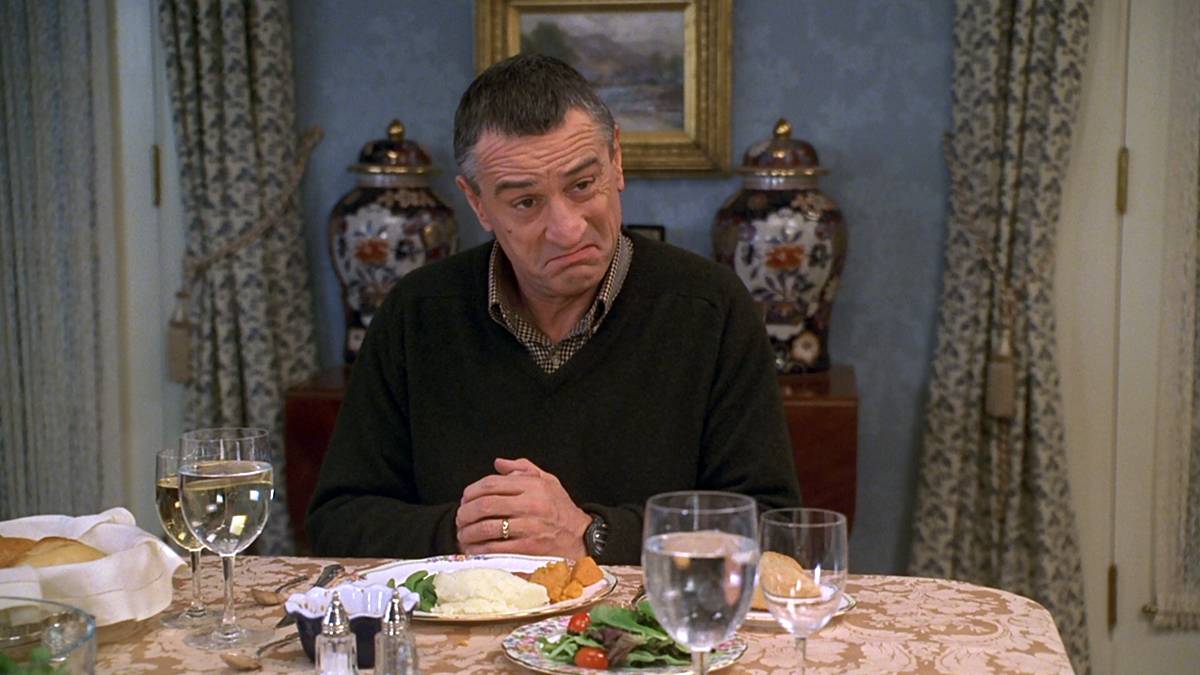
And the strangest thing about Meet the Parents is how much scope it lends to some extremely uncomfortable subject material, notably with the mixing of religions and class during the iconic dinner scene. Sitting at their table, Greg (a non-devout Jew) is socially compelled into praying for the food, a moment that adds unspeakable tension to an already unsettling scene. Of course, this only escalates further with some cat-milking anecdotes and the destruction of Jack’s mother, but the laughs don’t diminish the harsh realities gleaned from moments like that prayer.

This could have easily been a terrible movie, trying too hard to channel what made the Farrelly Brothers’ There’s Something About Mary work so well. But Meet the Parents never lets up with its unique brand of social and familial humor, even if it somewhat loses its creative stride by the ending.

Speaking of which, the only notable flaws in Meet the Parents are mostly forgettable. After a while, it’s easy to grow tired of the constant structure of Greg and Jack’s back and forth, which loses its variation by the third act. Audiences did get to the point where they just wanted Greg to dump Pam and just cut his losses.

Some of the jokes don’t work as well as the others, and some of the gags are too obvious for people not to see coming well in advance, including the vase scene mentioned earlier. But what does work in Meet the Parents works tremendously, and it has a fair share of memorable quotes and lines that people still love to quote 16 years later.

meet the parents retronalysis

For that reason, Meet the Parents will be remembered as one of De Niro’s best comedies, and I consider it his best modern comedy by far.

I’m going to give Meet the Parents a B+

Next week, I’ll be exploring the Kung Fu Panda movies as they lead up to the new installment, Kung Fu Panda 3. Until then, be sure to subscribe for other editorial content, podcast episodes, and more.

Thanks for reading this! You can subscribe to my posts by clicking “Follow” in the right sidebar. Or just say hey on Twitter: @JonNegroni