Snark + Sarcasm = what you’re about to read
Did Pixar lose its way, or did we lose our way with Pixar? There’s no real answer to the latter part of that question because it makes no sense. But the article we’re snarcasming this week actually does make a lot of sense and deserves to be approached thoughtfully. Even though it’s basically wrong for the most part.
Writing for The Atlantic, Christopher Orr titles his piece “How Pixar Lost Its Way,” because at this point, Orr is confident there’s no other conclusion to reach.
For 15 years, the animation studio was the best on the planet.
Studio Ghibli would like a word.
Then Disney bought it.
And the Fire Nation attacked.
Orr begins his piece with a line from Ed Catmull, Pixar’s own president who at one point claimed that sequels can represent “creative bankruptcy.”
He was discussing Pixar, the legendary animation studio, and its avowed distaste for cheap spin-offs.
Good thing Pixar doesn’t make cheap spin-offs!
Hold on, we’ll get to Cars 2.
More pointedly, he argued that if Pixar were only to make sequels, it would “wither and die.”
Good thing Pixar doesn’t only make sequels!
Yet here comes Cars 3, rolling into a theater near you this month.
Ah yes, it wouldn’t be a hot take on Pixar without car-related puns.
You may recall that the original Cars, released back in 2006, was widely judged to be the studio’s worst film to date.
“Worst,” however, is a misleading phrase. It wasn’t the strongest of the Pixar films, but most critics believed the film was good mainly on the strengths of its production value and a decent story. The problem was that Cars was the first Pixar movie made mostly for children. Cars 2 was made for merchandising to said children and was the studio’s first flop, coincidentally.
if Cars 3 isn’t disheartening enough, two of the three Pixar films in line after it are also sequels: The Incredibles 2 and (say it isn’t so!) Toy Story 4.
Of course, Pixar has made great sequels as well, including two for that last movie you mention. And they just made Finding Dory, which audiences loved—
The golden era of Pixar is over.
Yeah, ok, here we go.
It was a 15-year run of unmatched commercial and creative excellence,
Filled with sequels and large gaps in between movies.
Since then, other animation studios have made consistently better films.
This is somewhat true, but not necessarily fair. The only studio that’s been making those better films is Disney, which has been creatively led by Pixar’s John Lasseter since the studio’s purchase. Orr also mentions two Laika films, but one came out the same year as Up and the other came out the same year as Finding Dory.
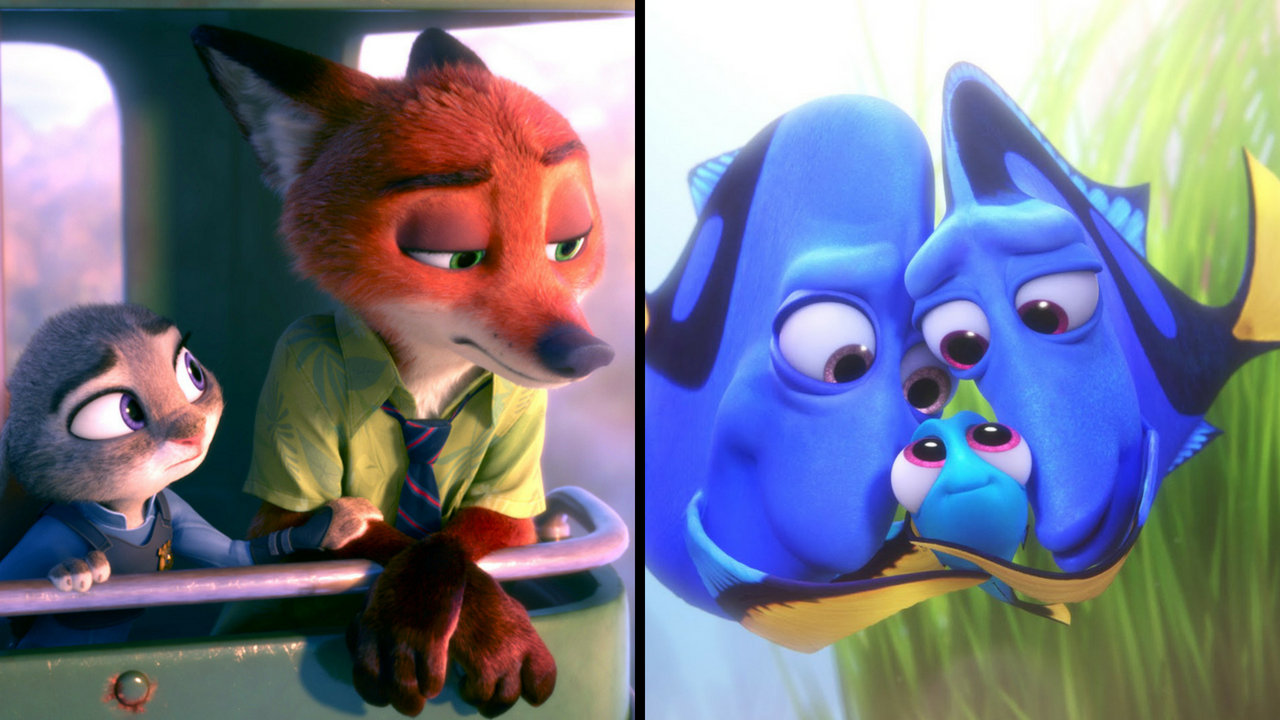
To Orr’s point, Disney has made Wreck-It Ralph, Frozen, Big Hero 6, Moana, and Zootopia, all of which are widely regarded as better than Brave, Cars 2, Monsters University (arguably), The Good Dinosaur (arguably), and Finding Dory. But Pixar has also made Inside Out, which most critics consider the superior film out of every single one of those Disney and Laika films.
Now, I get Orr’s point. That’s just one Pixar movie while Disney has had an aggressive output of great films that have managed to catch up to Pixar’s level of quality. If that were Orr’s only argument here, it would be a noteworthy one, but the jump to concluding that this means Pixar has lost its way ignores plenty of other important information, including Pixar’s excellent short animated films, which are consistently better than Disney’s, and the fact that they’ve still made good movies in the last seven years.
One need only look at this year’s Oscars: Two Disney movies, Zootopia and Moana, were nominated for Best Animated Feature, and Zootopia won. Pixar’s Finding Dory was shut out altogether.
First of all, Pixar won an Oscar just a year ago. Second, Finding Dory isn’t any less of a good film simply because it didn’t win a certain award. It just wasn’t as original and compelling as Zootopia and Moana, which is fine, and the Academy has a persistent stigma against sequels, anyway. Orr’s standard of Pixar being on the right path is too restricting, apparently arguing that movies are best when they manage to best other movies, ignoring, for example, Kubo and the Two Strings, which numerous critics argue was better than both Zootopia and Moana. Even if they’re right, all three movies are pretty good.
Simply put, a film being great doesn’t make another film any less great. This is only relevant if the value you hold in a movie is tied into how it compares with the reception of its competition.
Orr goes on, however, to expand on his own standard for what makes Pixar great, citing its technical achievements (which none of the sequels have erred on) and how it has provided great cinema for kids and adults (which hasn’t changed at all since Toy Story 3).
Even as others gradually caught up with Pixar’s visual artistry, the studio continued to tell stories of unparalleled depth and sophistication.
Some Pixar movies, however, weren’t so brilliantly received by critics at the time they came out. Films like Ratatouille and Wall-E, for example, were criticized plenty for trifles that no one even considers now. Monsters Inc. wasn’t exactly critic-proof either (it didn’t even win an Oscar?!), and that goes even more for A Bug’s Life.
Two films that unquestionably cemented Pixar’s eventual reputation beyond Toy Story were The Incredibles and Finding Nemo. Several other Pixar movies have managed to match them, in my opinion, but only Inside Out has truly reached the standard Orr sets here, which isn’t one that has been consistently met by Pixar with every film they’ve put out. Good Dinosaur is a good example, in that it’s a film directly trying to be far more bizarre and experimental than what’s worked for Pixar in the past.
Orr goes on to talk about Pixar’s achievement with crossover storytelling, raising some great points about how and why their movies are so consistently well-received.
And then, after Toy Story 3, the Pixar magic began to fade.
Here we go.
The sequels that followed—Cars 2 (a spy spoof) in 2011 and Monsters University (a college farce) in 2013—lacked any thematic or emotional connection to the movies that spawned them.
I truly take issue with Orr essentially lumping these two movies together, because Monsters University in no way lacks thematic connection to Monsters Inc. If anything, it adds flourish to the Mike Wazowski character and tells a poignant story about how we deal with our limitations. It’s far from merely being a “college farce.”
Though better than either of those two, Brave, Pixar’s 2012 foray into princessdom, was a disappointment as well.
I’m not sure which movie is better—Monsters University or Brave. Orr isn’t wrong in saying that Brave was a bit of a disappointment, but it’s about as serviceable as Cars and hey! It won an Oscar.
The studio rallied with Inside Out in 2015.
If by rallied, you mean they put out one of their best films in 20 years, sure. They “rallied.”
But the inferior The Good Dinosaur (also in 2015) and last year’s mediocre Finding Dory only confirmed the overall decline,
Here’s where Orr and I differ the most. To him, Pixar has lost its way because it’s made a few movies that aren’t as good as its very best ones. For me, Pixar has been unable to top themselves year after year, same as Disney wasn’t able to do in the 90s, well before that, and in the near future. But in reality, they never really did that in the first place.
Is Pixar experiencing an overall decline? Sure, no one really disputes that. But does an overall decline mean that the studio has lost its way? Not necessarily. It might just mean we’re witnessing a studio in transition, swinging for the fences with some movies and biding time with sequels as they prepare for a new era that may be entirely different.
Even Orr points out that at the time of the merger, Pixar was already facing huge problems as a studio. And these are the shifts that have led to the Pixar we know today, which has produced occasional masterpieces like Inside Out and artful experiments like The Good Dinosaur. Orr doesn’t even mention Coco, which comes out later this year, but laments Toy Story 4 and Incredibles 2, the latter of which is a sequel to one of Pixar’s best films ever and could very well be the first Pixar sequel since Toy Story 3 to actually be better than the original.
The Disney merger seems to have brought with it new imperatives. Pixar has always been very good at making money, but historically it did so largely on its own terms.
I agree. Merging with Disney is a big reason for the sequels, but that’s likely because Pixar knew they couldn’t survive much longer without them. Pixar movies take years to make, and their standards are too high to make new worlds from scratch at a quick enough speed to pay the bills. Sequels take much less time and can make even more money when done correctly. That’s not an excuse, of course, but it is indicative of what could happen next.
Merger or no, there’s plenty reason to believe Pixar would have kept making sequels anyway in order to support their simultaneous need for great original films to also fill the pipeline. That’s not Pixar losing its way. It’s Pixar changing course in a more sustainable direction, consolidating their talent and taking steps toward a future where they may not have to rely on sequels so badly. And this has led to some good results over the years, along with some unfortunate branding ones, admittedly.
Then Orr makes his worst argument.
There are a dozen Disney theme parks scattered across the globe in need of, well, themes for their rides.
Don’t do it, Orr. Please. Think of the children.
the overlap between the Pixar movies that beget sequels and the movies that inspire rides at Disney amusement parks is all but total.
Seriously? You’re trying to argue that Pixar is basing its creative decisions around theme-parks?
Theme-park rides are premised on an awareness of the theme in question, and young parkgoers are less likely to be familiar with movies that are more than a decade old.
That explains why Disneyland is filled with movie themes from over 50 years ago.
This idea that kids are going to forget what Toy Story is without a Toy Story 4 is almost enough for me to dismiss all of Orr’s previous arguments out of spite. I won’t because clearly he’s not entirely wrong about a lot of this, but…really? Theme-park rides?
Look, there’s a point to be made about how sequels can be properly timed with theme-park attractions in order to maximize exposure. But to suggest that a legendary storyteller like Lasseter is guiding one of the best animated studios of all time (with Catmull’s approval) around what will look good on a brochure is nothing more than a brainless conspiracy theory. They’re not making Toy Story 4 because of a theme-park ride. At best, and if we take Pixar at their word, they’re making it because they truly believe in the story and it would be easier and more profitable than a new IP.
Pixar has promised that after the upcoming glut of sequels, the studio will focus on original features.
And honestly, I believe them. Pixar has built up decades of credibility with its fans, but Orr would dismiss all of it because the studio has only put out one masterpiece in seven years, assuming Coco isn’t as good as it looks, while other studios like Disney haven’t really made any masterpieces of their own in the same amount of time.
I’m not sure I dare to expect much more of what used to make Pixar Pixar: the idiosyncratic stories, the deep emotional resonance, the subtle themes that don’t easily translate into amusement-park rides.
Seriously, it’s been two years since Inside Out. Two. And the people who made it still work at Pixar, and for the last time, they’re still making good films. What makes Pixar Pixar hasn’t changed, just the frequency of its best material, and impatience (while understandable) is a poor excuse for trying to accuse an animation studio of being enslaved to theme-park rides.
Orr finishes by rounding off examples of what he loves in Ratatouille, Wall-E, and Up, finally stating:
Would Pixar even bother making those pictures anymore?
So the implication is that because these movies supposedly wouldn’t translate well to a theme-park ride (though they actually would, considering the Axiom is begging to be in Tomorrowland and Ratatouille has its own part in Disneyland Paris, which Orr even admits), he questions Pixar’s willingness to make great movies. You know, despite the fact that Coco comes out in November and virtually nothing about Pixar tells us that they’re disinterested in making great movies.
As I’ve pointed out numerous times here, Orr makes a lot of accurate observations, and I don’t blame anyone for believing Pixar really has lost their way. But it really depends on what you look to Pixar for. Even their worst films still contain a level of quality that far surpass the worst of the Disney movies and DreamWorks movies for that matter. It’s definitely true that they’re not putting out a slew of original breakthroughs almost every year like they once did, and yes, that is a shame.
But we also can’t discount that their competitors really have caught up to them in a lot of ways. And there are a ton of learning curves to managing a bigger studio that is no longer as unique and creatively compact as it once was. From what I can tell, Pixar has embraced this decade with a new caution, desperate to preserve its best material by investing in more conventional ways of making money. I’m not saying this is necessarily the best choice they could’ve made, and I don’t agree with all of their decisions since Toy Story 3. But all of this does mean that Pixar can still make the masterpieces we want to see from them.
In other words, I very much doubt a movie like Inside Out, heralded as one of the greatest animated movies of all time, would have been able to come out if it weren’t for Cars 2 and Monsters University. These are movies that came out instead of failed concepts like Newt, and Pixar would have been in a tailspin if not for the box office they made off of Toy Story 3. You don’t have to like it, and hopefully this isn’t a new norm for Pixar, but it is the reality of a studio that has reached maturing age. It’s a different time for Pixar, but not necessarily a bad one.
Thanks for reading this. To get updates on my theories, books, and giveaways, join my mailing list.
Or just say hey on Twitter: @JonNegroni