Review: Star Wars: The Force Awakens Will Please Everyone, But That’s About It

star wars force awakens review

This is a spoiler-free review. 

When Disney acquired the rights to make a new Star Wars film, there was a unified cheer that this new take on the beloved franchise would be reinvigorated, creatively. Finally, there was a new hope for Star Wars, one of the most groundbreaking and revolutionary trilogies of its time.

So it puzzles me to see The Force Awakens be the most derivative Star Wars movie yet.

George Lucas has always infused his films with what he calls “rhyme.” That is, he echoes moments from previous movies in order to manufacture a compelling moment. Limb-cutting, catchphrases, and even cinematic shots are repeated endlessly throughout the original trilogy and its prequels.

The Force Awakens restrains itself from “rhyme,” but settles instead for replication. Elements throughout the film are carbonite copies of plot structures in both A New Hope and Empire Strikes Back, remixed and polished for a new audience.
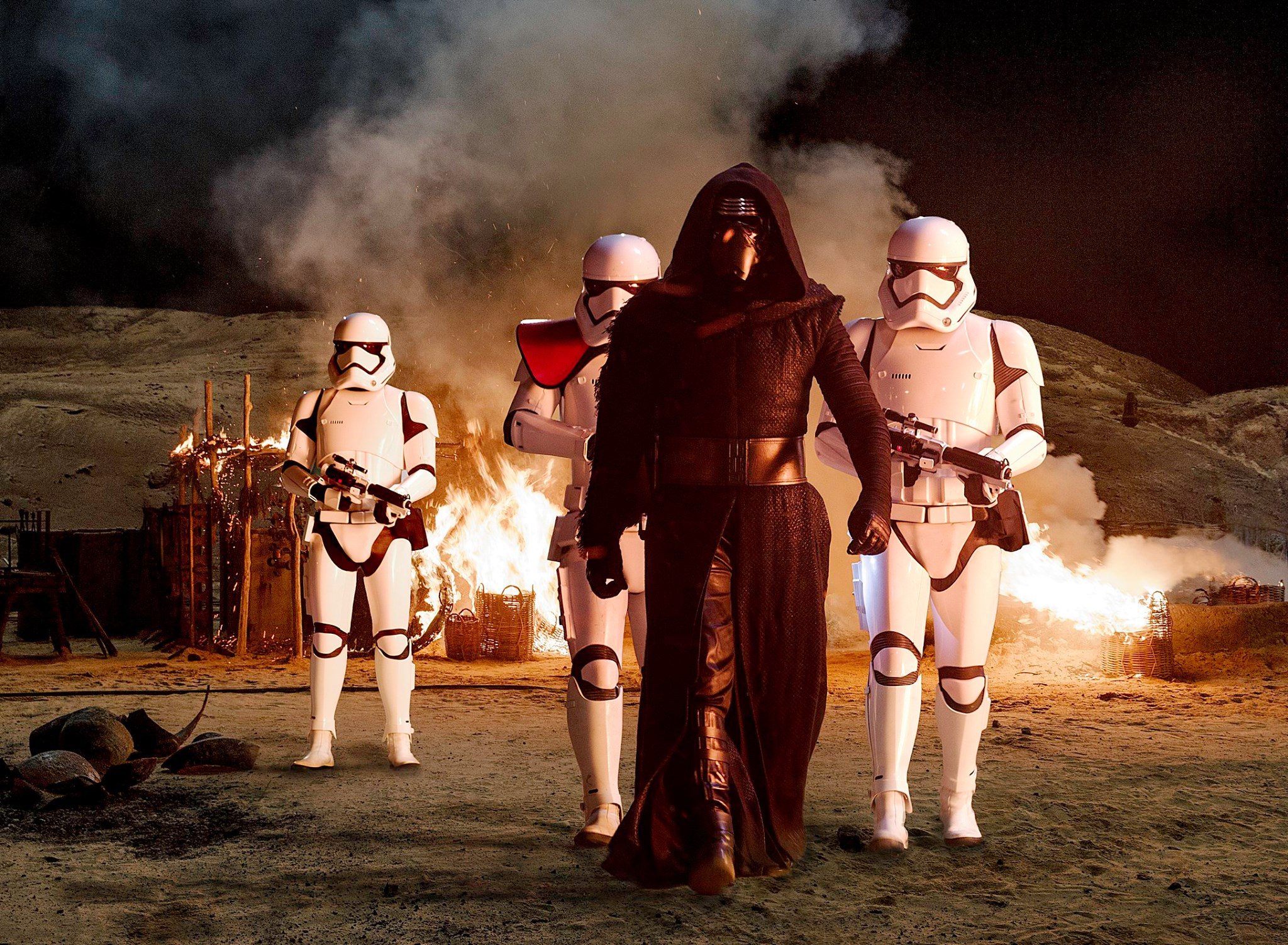
star wars force awakens review

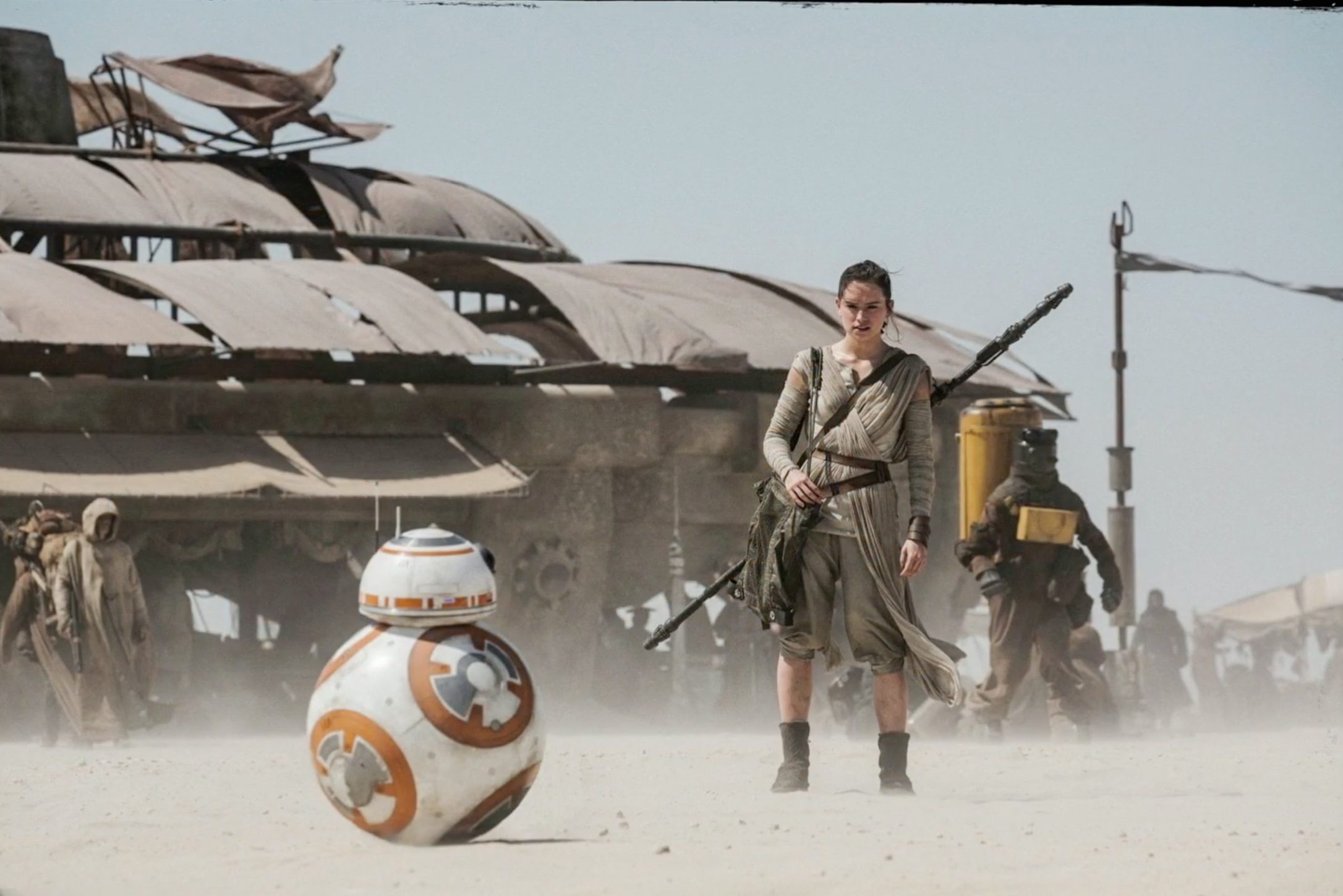
The doe-eyed Rey serves as the new Luke Skywalker, there’s a mysterious Sith villain tied to the past, a resistance versus an unstoppable military, and of course, there’s a destructive space station that must be stopped. There are few sparks of novelty in The Force Awakens when it comes to the ideas and struggles we’ve seen already.

This is likely intentional. Like the balance and cyclical nature of the Force, The Force Awakens almost advertises that its story must firmly echo the adventures of Luke Skywalker and his friends. And that caveat serves as an excuse for J.J. Abrams, the director, to evolve the lore for a brand new audience unwilling to sit through 30-year-old movies.

That said, Star Wars looks better than ever. The creatures, settings, and practical effects are a marvel. So much so, that any use of CGI is actually distracting. You’ll probably feel underwhelmed by one or two of these computer-generated characters who don’t hold their own against Abrams’ other creations. They’re inventive, to be sure, but stand out in the worst way possible.

The best thing that The Force Awakens has going for it is its new cast, with Rey (Daisy Ridley) at its center as one of the saga’s best characters yet. Kylo Ren (Adam Driver) also delivers an excellent performance as the villain you’ll love to hate, and I gushed over the antics of the “daring pilot,” Poe Dameron (Oscar Isaac).
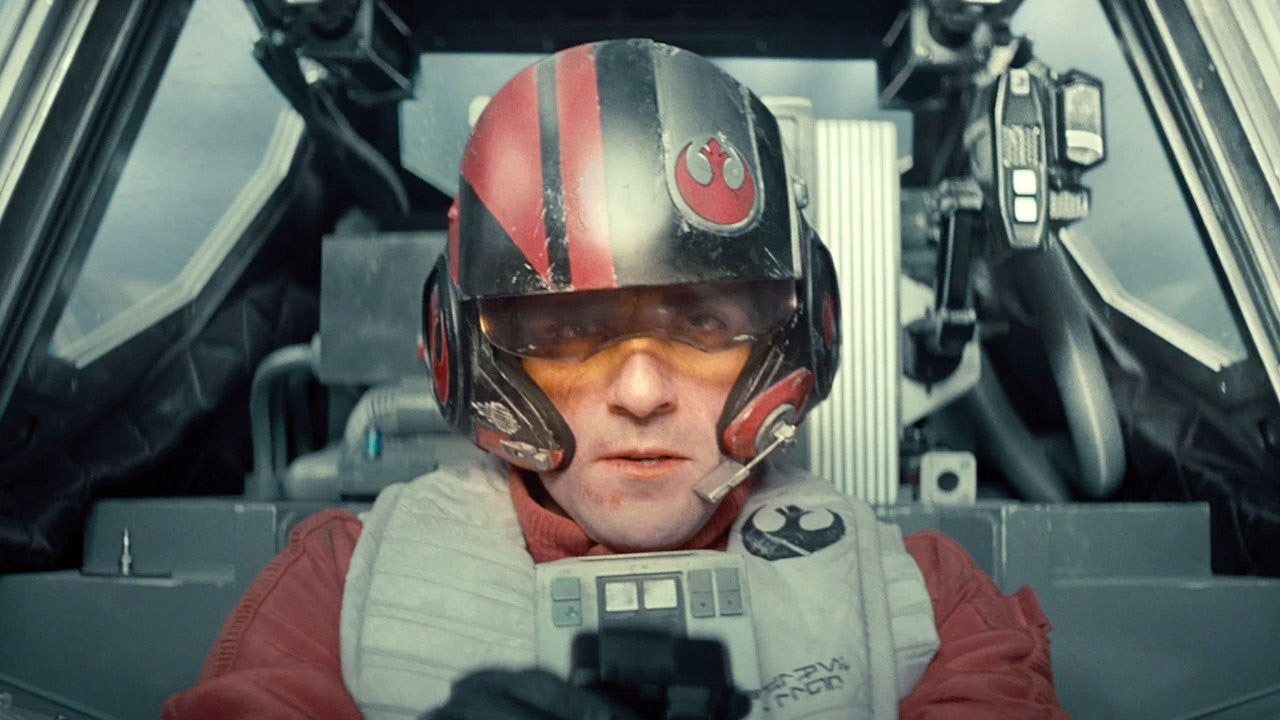
star wars force awakens review

BB-8 is also a welcome addition to the new family of characters, truly deserving of the role left behind by R2-D2. And while I’m not yet won over by John Boyega’s character, Finn, the actor provided an energy to this role that his peers should certainly take note of. And like the other characters, I’m waiting intently to see what Finn can offer as the trilogy progresses.

The characters interact well with each other and the original cast. Taking a note from its Marvel Cinematic Universe, Disney allowed the screenplay to have plenty of humor and levity, which balances well against the dramatic stakes and galaxy-crushing battles taking place in the background. Its one of the film’s strongest, most unique offerings.

Because the characters are a delight to watch onscreen, the battles (both with lightsabers and blasters) are more electric than ever, and easily among the best of the saga. The ample space battles are among the most entertaining dog fights you can see at the movies, and a one-take shot in particular featuring Dameron will likely be replayed dozens of times when this gets to DVD.

There are only two noticeable things that hold The Force Awakens back from surpassing the best of Star Wars. As discussed, it fails to fully develop any of its newer ideas, in favor of plot retreads that somewhat break the line of being an homage. You can argue that they’re kicking the can down the road for the next two movies to gain their own identity, but for now, it comes off as manufactured. Disney knows the recipe for pleasing a crowd full of fans, and this is both a good and bad thing.

star wars force awakens review

You’ll get most of what you want out of The Force Awakens, but you’ll also know that you’re getting it. If The Empire Strikes Back had let itself be crammed with this much fan service, it wouldn’t have become one of the greatest films of all time, by comparison.

The second thing that holds The Force Awakens back is some of its writing. Granted, it’s a tradition with these movies to have gaping plot holes. But that’s no excuse at this point, especially when you have a movie that is excelling at doing the same things as its predecessor. You’ll notice many odd and confusing plot inconsistencies that will take you out of the movie, and even if they can be explained in the next movie or two, they’ll still distract you until we get answers.

The script’s job is to make us feel like we can keep up with the film’s mythology, letting us peek into the development of the characters based on the moments we’re allowed to witness in the story. The previous trilogy did a poor job at this as well, and I’m disappointed that Abrams and company were unable to produce a tighter narrative. One or two more drafts would have served this film extremely well.

Grade: B+

It’s one of the better B+ movies I’ve seen this year, to be sure, and a standout among 2015 sci-fi movies. But as a first offering by Disney, I’m not yet impressed by what they can do with Star Wars in terms of pushing the series forward and delivering something new and exciting to audiences. It’s a crowd-pleaser, by design, and that’s about all you’ll get out of it.

Extra Credits:

  • This movie could have used double the amount of Poe Dameron that we got. Oscar Isaac was superb in Ex Machina, his best movie of 2015, in my opinion. Be sure to check that film out, if you haven’t already.
  • I’ll be providing a spoiler-filled discussion review at some point, so for now, keep your spoilers to yourself, please.
  • I want to watch this movie again (it really is a lot of fun), but I’m actually more excited for Rogue One at this point, since it seems to be the Star Wars movie that will take more risks. It’s coming out next December.
  • I firmly believe that many of the unsolved mysteries in The Force Awakens will be tied somehow to events in the anthology movies. That’s all I’ll say, for now.
  • All of the old characters fit snugly back into their roles. Especially a certain droid.

Retronalysis: Rewatching A New Hope

star wars new hope

Later this week, a new Star Wars trilogy will be kicked off by The Force Awakens. In preparation for this event, I’ll be rewatching the original trilogy (from A New Hope to Return of the Jedi) each day this week. My goal is to reevaluate these films’ merits, decades after their release.

This is also a discussion post, so if you have any lingering thoughts about the original trilogy after reanalyzing them yourself, be sure to sound off in the comments.

Let’s begin.

George Lucas, the creator of Star Wars, claims to have always intended A New Hope to be the fourth entry in a series of “episodes.” When Star Wars (1977) premiered, the studio allegedly forced him to omit this chapter heading from the opening credits, because they believed it would confuse audiences.

Since then, A New Hope has become the de facto title, and for good reason. Much like the first act of a movie, A New Hope serves more as an introduction of characters, rather than a full story. And the creators of this film did a fantastic job of making it feel like it could be more than just one movie without delivering something that felt incomplete (a mistake studios have been making pretty frequently these days with their non-starter franchises).

The story is simple, yet set against a vast and complicated setting. The characters are easy to understand and relate to, but their circumstances and backstories feel rich and unexplored. Part of the fun that comes with Star Wars is letting your imagination fill in the blanks when new story elements are brought in, including the reveal of the Force, the Clone Wars, and the history between Darth Vader and Obi Wan.

Simply put, the characters exist in a world that feels different, but familiar. The sounds aren’t synthesized and foreign. The materials are imperfect and rusty. This is a fantasy that is more down to earth (so to speak), making it feel more “lived in” than many other epics we’re used to seeing.

star wars new hope

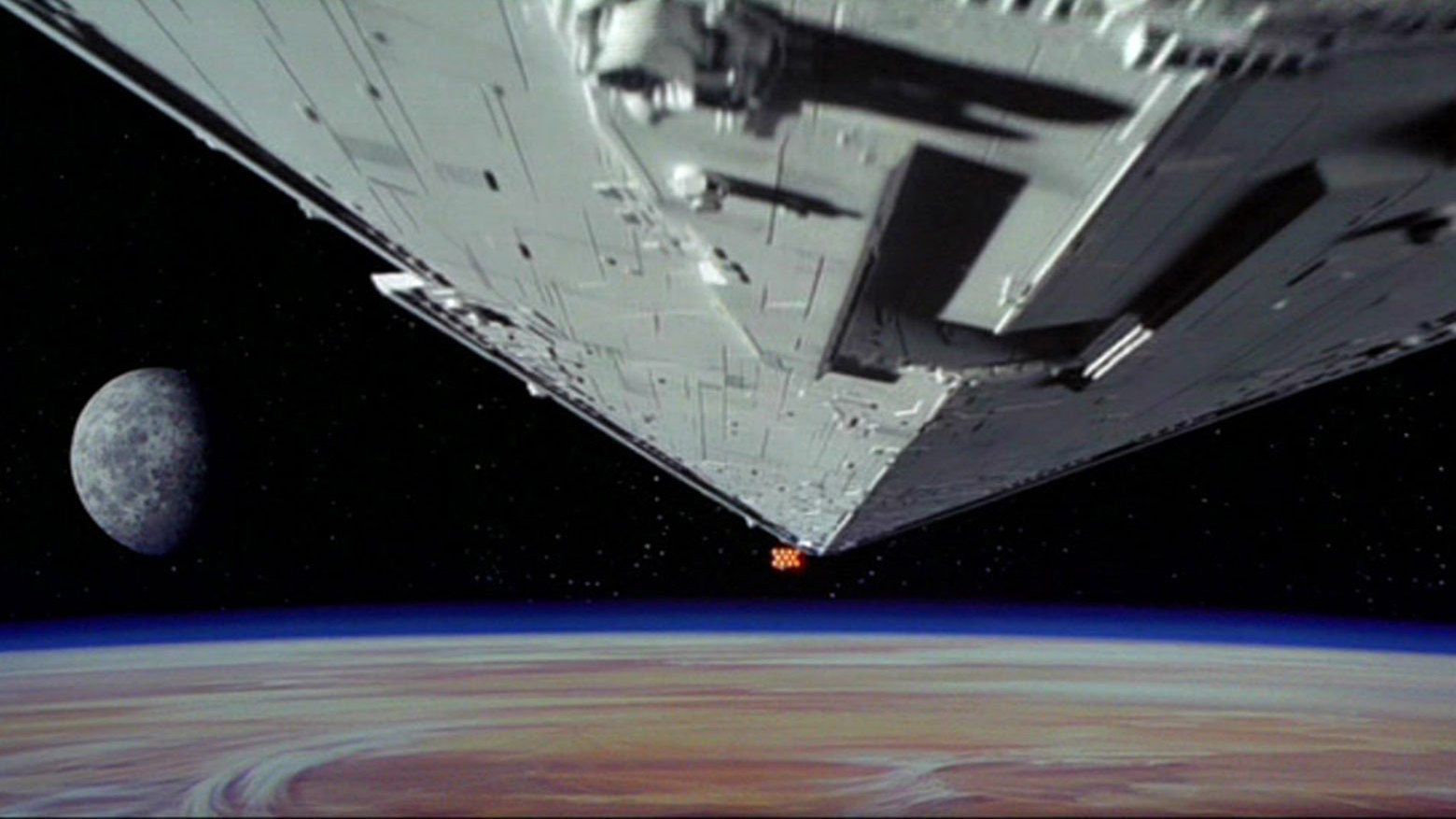
A New Hope begins with a swift explanation of who the Empire is and what they’re capable of accomplishing. Their massive ship descends upon a remarkably smaller one on the run. The stormtroopers easily break through the rebel soldiers on the ship and quickly take over.

This entire sequence is well-done because it manages to convince you of how powerful the threat of the Empire is without having to really say it. And your understanding of this conflict between the rebellion and an all-powerful military keeps building from there.

A lot of people tend to dislike what happens next, when the movie shifts perspective to the two droids who escape this ship and wander the desert planet of Tatooine. True, this entire sequence drags a bit, but consider how peculiar it was for the movie to spend so much time on the story of these two droids, who are arguably the crux of this entire movie. The plot moves forward because of them, and they’re essentially the glue that brings all of our main characters together. I don’t think A New Hope would have worked quite as well if the movie hadn’t given them this chance to establish their legitimacy in the story.

Because the movie builds from each of these moments, the ending will feel huge when you consider that it all started with these two droids. It was a novel idea that truly paid off.

star wars new hope

I’ve always appreciated the handling of Luke Skywalker’s introduction. It’s very modest and believable, so it takes you a few minutes to grasp that this is the story’s main protagonist (and John Williams is there to help you figure it out in one of the movie’s best scenes).

Granted, he’s a bit whiny, and his worst lines of the franchise occur in the first half hour. But it’s clear that making him a little unlikable at first was Lucas’s intention. It made his story arc much more interesting and expansive, making it a treat to rewatch his journey in later viewings.

The movie’s only major bout of exposition comes during Luke’s first extended conversation with Obi Wan. Here, Obi Wan tells Luke about his father, the Force, the Clone Wars, and all sorts of other plot points that we’re hearing about for the first time.

But because Alec Guinness delivers this long scene with such grace and gravitas, it actually works. Most sci-fi movies that are this high-concept typically fall flat on their face by the time the characters erupt with exposition, but they casted the perfect actor to help us get invested.

Mos Eisley serves as an excellent set of scenes that help establish more of our characters, along with some new ones. Interestingly, Luke gets very little development here, which is for the best. Instead, Obi Wan gets a chance to prove to the audience that he really is a powerful Jedi Knight. The mind trick — which is gracefully explained in just a short sentence — and Obi Wan’s quick lightsaber demonstration get the point across that the Force is a dynamic, mysterious tool our hero can one day use.

At this point in the movie, we just want to learn more about the Force and see all of this Jedi lore in action. But the movie instead branches off into the story of our next main protagonist, Han Solo. We’re quickly introduced to the more grounded aspect of this universe, which is another saving grace for this franchise. And like Luke, Han doesn’t arrive with fanfare. We don’t truly understand his importance to the story until his fateful confrontation with Greedo, which tells us more about his character in less than a minute than some movies can do in two hours.

star wars new hope

The next act of the movie is arguably its best, as we watch these characters go on their first real adventure. And it’s right in the heart of the Death Star, a massive space station that’s been shown to have destructive powers beyond even our heroes’ imaginations. At this point, I was still reeling from the quick elimination of Luke’s entire family, an event that truly sets the stakes as we see just how hopeless it is to resist the Empire. Now, once we have a few allies and (dare I say it) hope, our heroes are plunged into a pretty hopeless situation.

To be fair, we know that this has to happen in order for Luke to meet Leia. But the fate of Obi Wan and other somewhat extraneous allies seems murky. Throughout the entire sequence on the Death Star, our heroes are faced with increasingly dangerous threats that keep us entertained and wanting more.

But the true grab of the Death Star scenes is watching these characters interact and play off of each other. It’s great because this is the result of all the character development achieved in the first act, so watching them together onscreen is both fun and engaging.

To be fair, some of what happens on the Death Star is pretty silly and oddly convenient. Han rushes into a hallway full of stormtroopers, and they run away from him for no reason. Our heroes don’t get shot once by these apparently “precise” soldiers. Luke makes a weird lasso to get away from stormtroopers who have the high ground on him, and it actually works without him or Leia getting injured, despite having no cover. And there’s very little Obi Wan action, to the point where I actually forgot about him.

star wars new hope

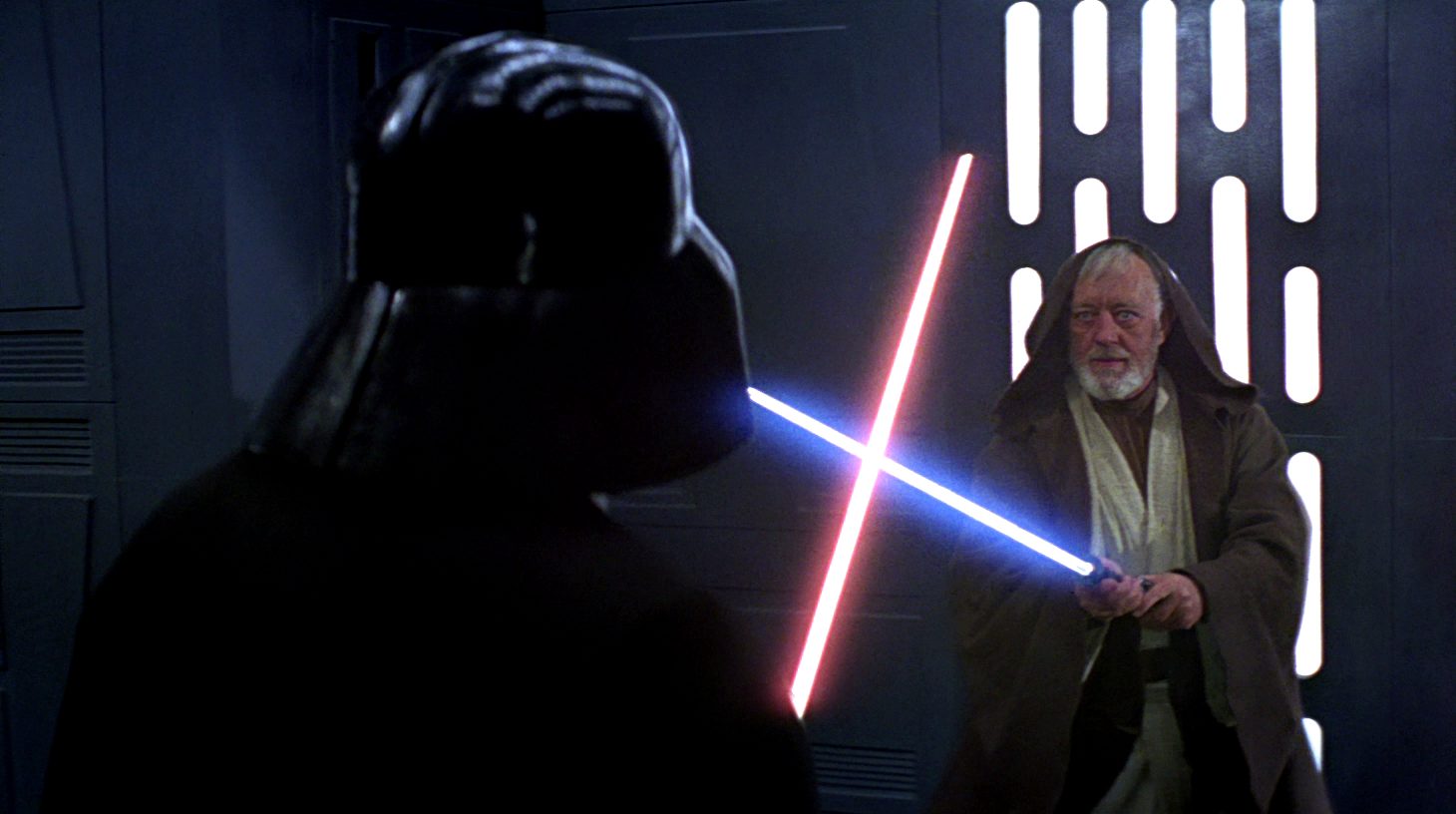
Of course, Obi Wan and Darth Vader battle, which is a pivotal scene. It establishes Vader’s lightsaber skills, and it validates their history only alluded to earlier. Honestly, I found this scene pretty underwhelming the very first time I ever watched it, but it’s grown on me over the years. Yes, they’re tapping their lightsabers slowly, but the thing to remember is that Lucas originally intended the lightsabers to be extremely heavy, which was changed for later movies.

Once you forego the belief that the lightsaber fights should be quick and pretty, this scene becomes a lot more interesting. You focus more on what’s going on between the characters, which is really what the point of this scene is. It’s not the best lightsaber fight, to be sure, but it’s definitely not the worst.

The final stretch of the movie is also its most critical. By the time our heroes escape the Death Star, there’s little chance for rest and mourning as Luke is summoned to fight off more of the Empire with Han. This is the part of the movie I like the least, not because it’s a bad scene, but because at this point, I’m exhausted. Danger upon danger has been thrusted upon these characters, and though the reality of the story demands it (they can’t just get away that easily), I was ready for Luke and the gang to take a breath.

Thankfully, we do get respite in the third act, though only for a moment. Lesser movies would have extended the Death Star scenes in order to borrow its weight for a climax, but A New Hope opts to show us the heart of the rebellion. On Yavin, we see what the alliance is truly like, and we get a chance to see Han Solo weigh his choices that have been building up since Tatooine. Will he stay and help, or will he take off with the reward? Both choices are believable, which makes his confrontation with Luke all the more heartbreaking when his “May the Force be with you” is met with silence.

star wars new hope

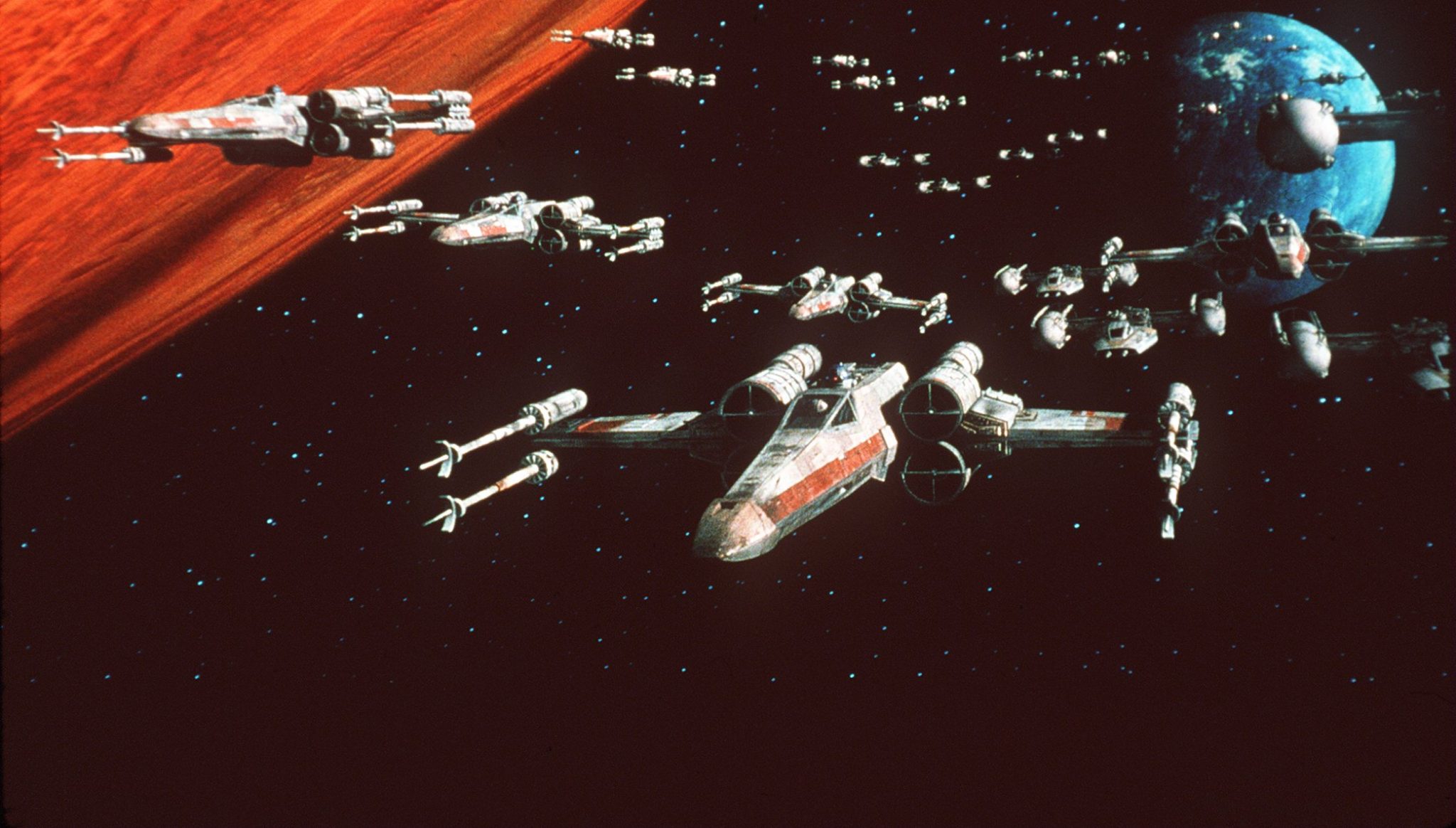
The symbolism in the movie’s climax isn’t subtle, which is probably why it’s so effective. Almost all of Rogue Squadron is eliminated, including Luke’s childhood friend. Up to this point, Luke has relied on wit and creativity to make it out of each predicament he’s been in, but for the first time, he has to rely on the Force to save the lives of his friends. All while dealing with the fact that Darth Vader’s ship has picked off all of his allies, with the exception of Wedge.

Two things save the day: Han’s rescue and Luke’s reliance on the Force. These are two somewhat disparate elements, as one displays the loyalty of a friend, while the other is otherworldly and focused on the promise of someone departed. In fact, it’s these two strengths that Luke will have to weigh as the next two movies progress, making for a brilliant first entry in the trilogy.

We do see that Darth Vader survives this battle, opening up the film for sequels. But aside from that, this is a massive blow to the Empire that symbolically shows that the rebels do have a fighting chance. In that way, the film could have easily stood alone, hinting that Luke’s transformation into a Jedi Knight was well underway. And with Han, Leia, Chewie, and the droids at his side, who could stop him, right?

A New Hope is definitely one of my favorite films of the franchise, by far. I only touched on some of what I love about the film here, but I don’t doubt that many of you reading this can relate. Let me know what you think about A New Hope below, and I’ll see you back here tomorrow to talk about The Empire Strikes Back.

I’m Jon and thanks for reading this. You can subscribe to my posts by clicking “Follow” in the right sidebar. Or just say hey on Twitter! @JonNegroni

Review: ‘In the Heart of the Sea’

in the heart of the sea review

What is the true story that inspired the myth? This is the question In the Heart of the Sea tries its hardest to answer, at the expense of something perhaps deeper that could have been explored within the true men who sailed the ill-fated Essex.

Strangely, the film expects you to have some previous knowledge about this tale of survival, as it eliminates its own suspense by starting with the premise that at least one person made it out of this story alive. There’s a better story in here about whether or not the cabin boy is the one telling the truth by the end of it all, but the movie trades this intrigue for something as emotive and tragic as Titanic.

The problem is that actually being familiar with the Essex story makes In the Heart of the Sea difficult to swallow, considering how far off this retelling of the book of the same name is from what truly happened during this 19th Century disaster.

To make up for this, the movie presents much of its biggest moments as art, with matte painting backgrounds and an attention to sprawling ocean vistas that spell doom for the sailors. But hardly anything pictured onscreen is believable, especially compared to most modern CGI in 2015. You’ll quickly lose interest in which backgrounds are somewhat inspired and which are purely green screen.

Some of the best scenes involve the actual whaling, a practice that is hard to watch, which makes it that much more entertaining. I shuddered (but couldn’t stop watching) when the cabin boy had to slide down the stomach of a rotting whale in order to gather the valuable blubber that felt worthless, which serves as some excellent foreshadowing.

In the Heart of the Sea is certainly passable when demonstrating the mighty themes of man versus nature. Much of this is compelling and will cause pause for anyone reflecting on the fact that these events weren’t all that long ago, and the lengths men went to for the sake of short term wealth certainly didn’t pay off the way they expected. When honor trumps the grotesque bond formed in cannibalism, that’s how you know you’ve watched a movie that is missing a few crucial scenes that tell a more interesting story.

Grade: C

Extra Credits:

  • My bias might come through here, but I’ve found the work of Ron Howard pretty unambitious, discounting any of his work from the early 90s. He’s certainly good at what he does, but I can’t shake the feeling that he was destined to be better.
  • Between this and the underwhelming Blackhat, 2015 hasn’t been a banner year for Chris Hemsworth, even if you loved Age of Ultron as much as I did.
  • I hate when other people do this, but…read the book. It’s better.
  • I forgot to mention that the cabin boy is played by Tom Holland, AKA our future Spider-Man. Along with Cillian Murphy, this movie is a superhero fan fiction waiting to happen.

This week on the podcast, Kayla and I talk about In the Heart of the Sea at length. Spoilerish alert: she’s not a big fan either.

Since the release of Star Wars: The Force Awakens is less than a week away, we discussed and ranked all six movies. Plus, we made pizza bets over whether or not The Force Awakens will become the highest-grossing movie of all time.

Later on, we read your comments from last week’s show and get lost in a wilderness of tangents.

QUESTION OF THE WEEK: (Two this week!) Do you think The Force Awakens will topple Avatar as the biggest movie of all time? Also, what are some classic movies you’ve never seen before? Now’s the time to get this off your chest.

Go on…Review: ‘In the Heart of the Sea’

Review: ‘Krampus’

krampus review

The most interesting thing about Krampus is probably how refreshing it is to see a horror Christmas movie that sidesteps the usual suspects (such as a directly murderous Santa Claus). But while Krampus isn’t actually very scary or even funny, it captures something just as welcome as horror comedies go: it’s fun mayhem.

In European folklore, Krampus is the evil shadow of Santa Claus. Rather than fulfill the happy wishes of children, he comes to satisfy their darkest desires with his band of merry murderers. A child who has become disenfranchised with how Christmas shapes his dysfunctional family tragically discards his Christmas list, which earnestly asks Santa to make everyone in his life happier. As a result, Krampus (and a magically frenetic blizzard) is called upon instead.

That said, little of Krampus is seen until the end of the movie, as we spend more time focusing on his “little helpers.” Thankfully, they almost steal the show with their remarkable practical effects and a willingness for the movie to inflict violence on just about anything in its way, creating a tension that mashes well with the chaos captured in an early scene that satires the greed of holiday shopping.

It can be easy to discount Krampus as a whole for a few rotten eggs, namely some of the performances and its odd “PG-13” rating. But it finds its groove with an inspiring throwback animation that cleverly tells the story of Krampus within a new context, coupled with a dreadful (in a good way) performance from the grandmother, played by Krista Stadler.

While Krampus may not ignite the sort of pre-Christian folklore that deserves more cinematic attention, it may prove that holiday horror is a genre worth larger budgets that keep it off the discount bin.

Grade: B+

Extra Credits:

  • Michael Dougherty directed and co-wrote Krampus, and the comparisons between this and Trick r’ Treat are obvious. The superior film is pretty obvious.
  • This is a much better cast than I think the movie deserved. Adam Scott and David Koechner play quite well together, and the relationship between Scott and Toni Collete’s character is actually quite touching.
  • It’s subtle, but the sibling relationship between “Max” and “Beth” was written so well, I was quite sad they didn’t spend much time together outside of the first act.
  • No spoilers, but I adore the ending. I wish more movies would be brave enough to let their final act match the rest of the film.

This week on the podcast, we review Krampus in more detail, get our feet wet with some movie news, read your comments from last week’s show, and get down to business on our favorite animated movies.

I’m joined by YouTube sensation, Maria “Cineclub” Garcia; Film writer, Adonis Gonzalez; and digital illustrator, Kayla Savage.

QUESTION OF THE WEEK: What is your favorite animated movie that wasn’t made by Disney, Pixar, or DreamWorks?

Go on…Review: ‘Krampus’

‘The Good Dinosaur’ Review: Finding Dino

the good dinosaur review

(You can read my full review here. Below is the shortened version).

The Good Dinosaur was directed by Peter Sohn and stars (the voices of) Jeffrey Wright, Frances McDormand, Sam Elliot, Raymond Ochoa, and Jack Bright.

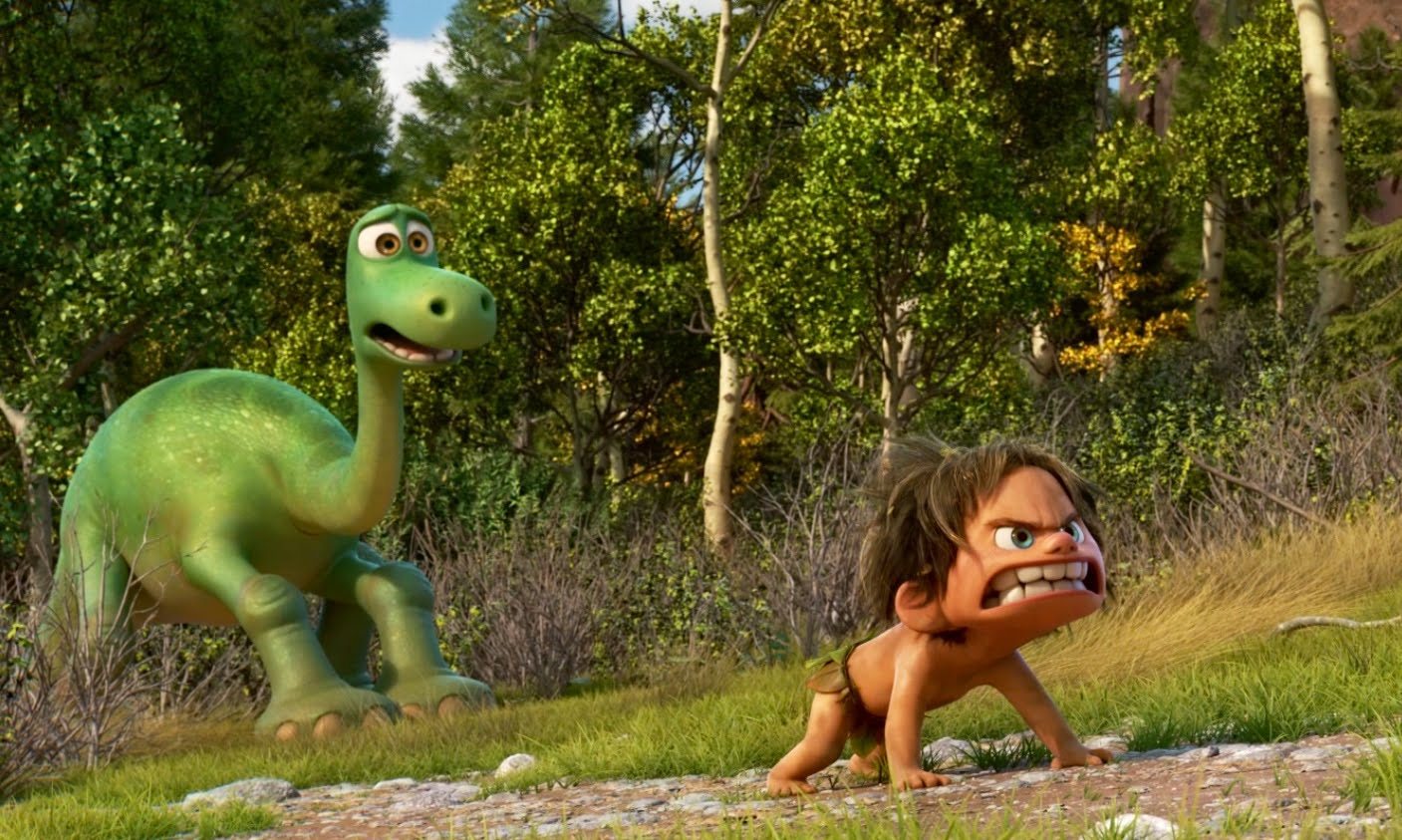
What if the dinosaurs had never been wiped out by an asteroid? According to Pixar, this would have led to dinosaurs eventually becoming the dominant species on Earth. The movie opens in what appears to be Wyoming or Montana, millions of years after the asteroid failed to wipe out all dinosaurs and supposedly before the Ice Age, perhaps.

There’s no exposition beyond this. We meet an Apatosaurus family that operates a farm almost like humans would, and the film gets rolling from there. Throughout this movie, you’ll come across these little moments that remind you how new this world is. Things operate differently, and there’s some clever imagination woven into the rules of this alternate universe.

the good dinosaur review

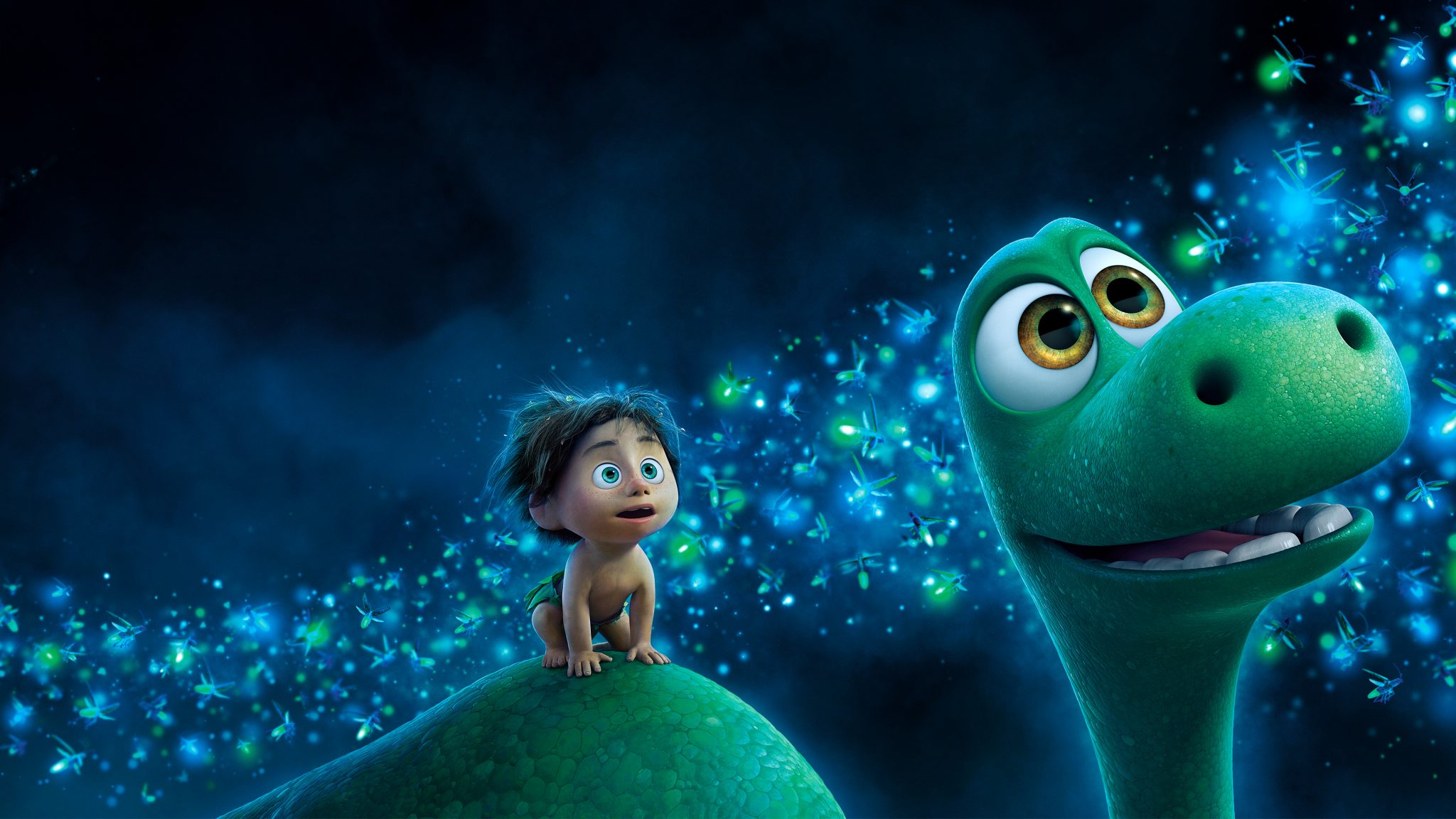
The main plot of the movie involves a young Apatosaurus named Arlo, who gets separated from his farm after getting washed away by a river. He’s incredibly fearful, and it’s led to some awful tragedies in his life, so this adventure is his opportunity to make his mark on the world and prove himself. To do this, he unwittingly befriends and essentially tames a human he names Spot.

Their journey is exciting and wrought with tension and real danger. Creatures die without warning. Arlo gets hurt a lot. And everything feels authentic, which is probably made better by how beautiful the photorealistic environments are. They’re worth the price of admission alone.

This is also a very funny movie, which is a saving grace from some of the more perilous moments that weight it down. And even though not every element about The Good Dinosaur is perfect, it’s the combination of what it does well that impresses. It’s soundtrack elevates the atmosphere. The softness of the voice acting helps the humor feel earned. The gorgeous visuals highlight how authentic the movie feels, which I’ve already stated.

It’s really the harmony of The Good Dinosaur that puts it above every other movie I’ve seen this year. Even Pixar’s other offering this year, Inside Out, just didn’t feel this cohesive and in sync.

Grade A+

the good dinosaur review

As of November, this is my favorite movie of the year, and it happens to be third movie of 2015 that I’ve given an A+. In my opinion, The Good Dinosaur is one of Pixar’s best films period, mostly because it pushes the studio in new directions that excite me for what they have in stored next. If you’re a fan of their work, then this is a film you should not miss.

Extra Credits

  • No cameos or easter eggs from what I can tell. I didn’t even spot A113. Honestly, this was probably for the best. The simplicity of The Good Dinosaur was one of the things I liked the most about it.
  • Shortly after writing my full review, I noticed that most critics disagree with my assessment on this one, and I have a feeling that many people will prefer Inside Out out of the two. That’s fine, of course, but my opinion remains. I walked into this movie not knowing how anyone would perceive it, and it’s stuck with me ever since. Simply put, I hope you enjoy it as much as I did.
  • It gets an A+, but it’s not perfect. One aspect of the movie in particular, the rustlers, was pretty underwhelming and uninspired. I’d also note that the third act trips a little bit, but is ultimately saved by a sequence I won’t spoil.
  • Does it fit in the Pixar Theory? I’ve thought about this plenty, and I’ll certainly have a post coming out soon covering this. But the short answer is: well, yeah.

For a more in-depth look at this movie, come back this Sunday for the Now Conspiring podcast, where we’ll discuss this and other new releases.

I’m Jon and thanks for reading this. You can subscribe to my posts by clicking “Follow” in the right sidebar. Or just say hey on Twitter! @JonNegroni

Review: ‘The Hunger Games — Mockingjay, Part 2’

hunger games mockingjay review

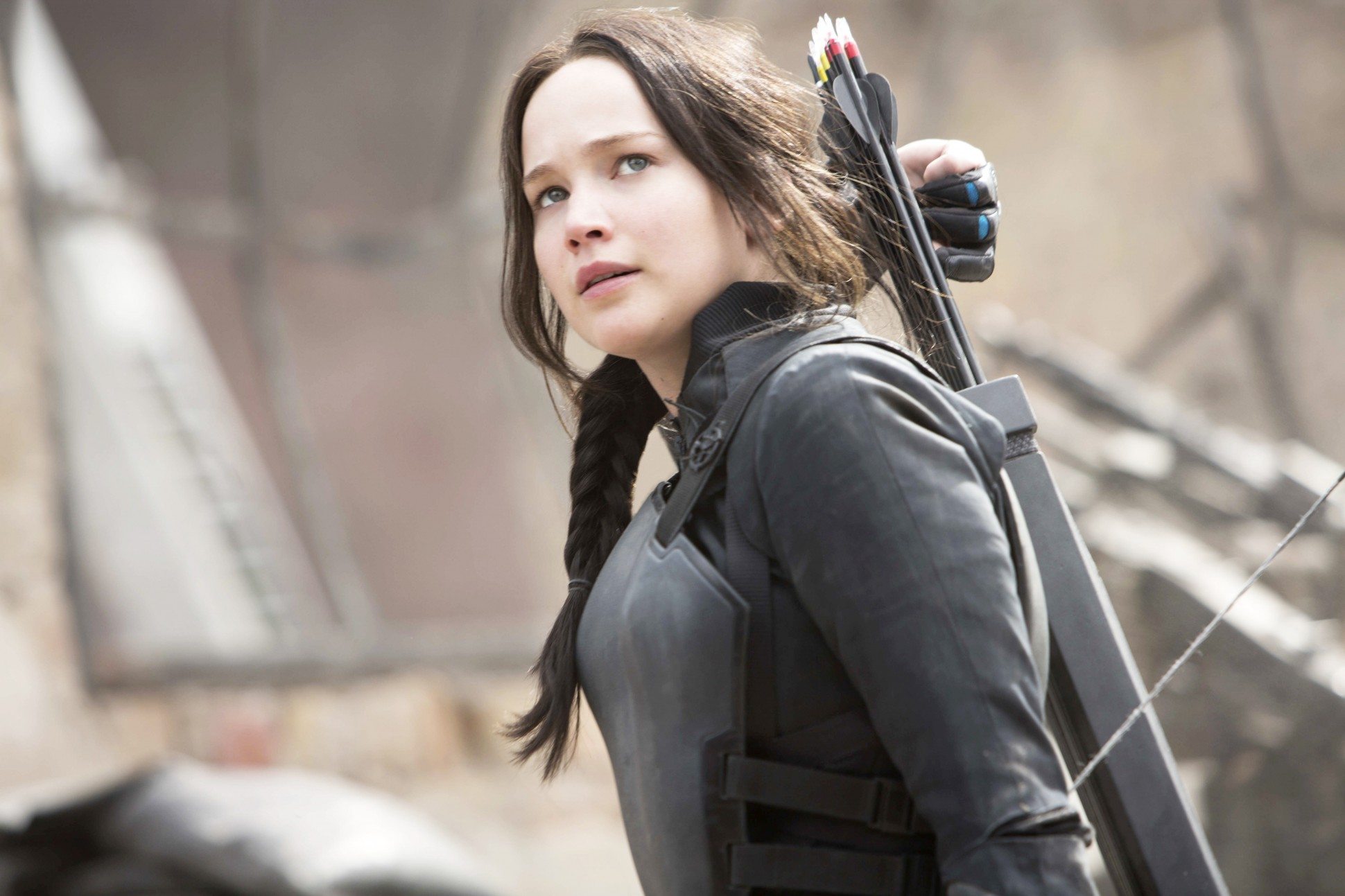
Directed by Francis Lawrence, Mockingjay, Part 2 is the fourth and final installment of the The Hunger Games movie franchise, which kicked off in 2012.

I’ve read all three books by Suzanne Collins, but I happen to prefer the film adaptations made by Lionsgate. I think the books were incredibly flawed, both with tone and how certain plot lines lined up. The movies share some of the problems, but they also fix a lot of issues I had with Mockingjay, which was the third and in my opinion, weakest book.

Of course, this is the second half of a two-parter, and certainly the stronger entry compared to last year’s Mockingjay, Part 1. A lot of the complaints I had for that last movie was how painfully slow it was trying to stretch half of a short book into two hours. But if you stuck with MP1, then you’re going to feel satisfaction after MP2, which is pretty much all action and climax.

A lot of things work in MP2 that have worked throughout all of these movies. The locations are beautiful, the camerawork is nearly flawless, and there are brushes of wow-moments and creativity that set this story apart from other dystopia offerings. At this point, Panem feels like a real place with believable characters, and this movie excels with its incredible supporting cast, including the late Philip Seymour Hoffman.

hunger games mockingjay review

But a major weakness in MP2 happens to be the under-utilization of these side characters, who are quite literally brushed to the side in favor of Katniss and her friends. And while I love what Jennifer Lawerence has done with this character overall throughout the series, I can’t help but feel a little underwhelmed with her character’s arc, which is really a criticism toward the books.

In MP2, the story is that Katniss is more of a mythical symbol, rather than a dynamic force who can create real change. And the entire movie is her struggle against the leaders of the rebellion that she can do more than just rally the troops with some propaganda videos. But her singular drive to assassinate Snow eventually becomes tiring, especially as her allies drop like flies, perhaps needlessly.

That’s the point, I suppose. And the highest praise I can give MP2 is how brazen it is with its themes, presenting the rebellion as evil and asking real questions about how war can undermine the good intentions behind a movement. You forget quickly that only two movies ago, the Capitol was perceived as an unstoppable force, mercilessly killing any opposition. By the end of MP2, you’ll wonder what it was all for, and that’s an achievement for a movie aimed at the young adult audience.

hunger games mockingly review

Grade: B+

Paired with Part 1, this is a satisfying conclusion in more ways than one, because it manages to elevate was a disappointing book for many fans like myself. The performances are solid, if not a little underused, and not a moment of it is boring.

For a more in-depth look at this movie, come back this Sunday for the Now Conspiring podcast, where we’ll discuss this and other new releases.

I’m Jon and thanks for reading this. You can subscribe to my posts by clicking “Follow” in the right sidebar. Or just say hey on Twitter! @JonNegroni

‘Spectre’ Review: It Might Be Time For Another Reboot

SPECTRE review

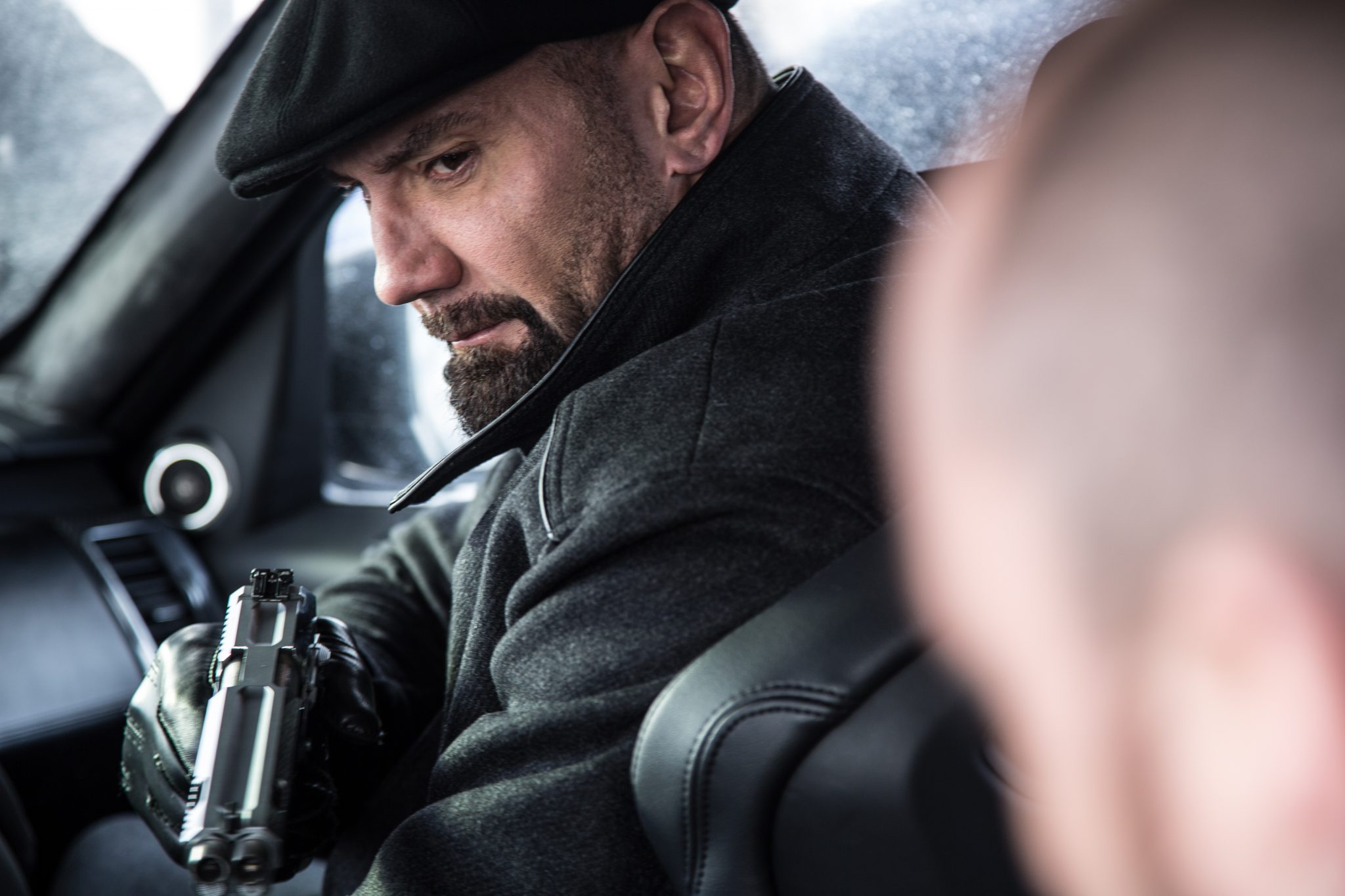
Spectre is the latest addition to the decade-spanning James Bond franchise. It was directed by Sam Mendes and written by John Logan, Neal Purvis, and Robert Wade.

For the fourth time, Daniel Craig reprises his role as the globe-trotting spy (well, assassin at this point) in yet another mission where he takes on a shadowy organization tied to the last three films and picks up a loosely related Bond girl in the process.

In Skyfall, we finally watched Bond’s full transformation into the suave 007 being built up since Casino Royale (still the best James Bond movie in decades). That’s why I find it strange that Mendes was chosen to direct the followup, considering the fact that Spectre should (by its franchise’s standards) be an evolution.

But Spectre is really just a very small step sideways. Granted, it’s beautiful and well-acted thanks to Mendes’s distinct, signature vision for these “origin” movies. And to the film’s credit, it merges much of what we know and love from the Connery films with this new iteration, effectively closing the loop on Craig’s story. The only problem is that this is executed to feel more like a needless homage, instead of a revival.

SPECTRE review

Perhaps Martin Campbell should have returned to direct, but he’s probably on retainer for the next actor’s take on the franchise. Though Mendes delivers much of what we want from Skyfall, his writers give us what amounts to a boring, overwritten script that could have used another rewrite.

Still, there are memorable set pieces throughout, including a long take early in the film that deserves to be seen on the big screen. The action scenes and editing are just as good as they were in Skyfall, and we have the best Bond girl since Vesper with Madeleine (Léa Seydoux), though her character somewhat falters throughout the last act.

So elements of Spectre work well, including the quips, choice of locations, and Craig’s performance. Like Mission: Impossible Rogue Nation, our side characters, including Ben Wishaw’s Q, have more to do than ever, and it helps the film tremendously.

If you’re already invested in the James Bond universe, you’ll probably have a good time with Spectre. But the film doesn’t come together as well you’d expect, especially with Christoph Waltz’s Franz Oberhauser ultimately being relegated to a minor role for most of the film (similar to how Dr. No was structured).

SPECTRE review

Grade: B

Overall, Spectre is a good James Bond movie (and much better than Quantum of Solace). But its script and uneven story hold it back from being a good movie on its own.

For a more in-depth look at Spectre, come back this Sunday for the Now Conspiring podcast, where we’ll discuss this and other new releases.

I’m Jon and thanks for reading this. You can subscribe to my posts by clicking “Follow” in the right sidebar. Or just say hey on Twitter! @JonNegroni