Star Wars: The Force Awakens Isn’t Really A Remake Of A New Hope

force awakens

Every so often, a fan theory comes along to remind us how good fan theories can actually be when the work and time is put into them. Less than a year ago, EC Henry composed what I believe to be a masterful breakdown of The Force Awakens that (dare I say it) makes the movie just a little bit better.

Is Star Wars: The Force Awakens a remake of the original Star Wars (A New Hope)? I’ve always considered the movie to borrow voraciously from that original film, while also lifting plenty from the other two parts of the trilogy. But many reviewers like myself have talked ourselves breathless about how TFA features yet another “droid on the run” story with Death Stars, cantinas, and a modest chosen one.

But in EC Henry’s video essay below, the case is made that TFA is really a “creative remix” of the original trilogy, and there’s a strikingly good reason for this that might shed light on the future of the entire franchise. I’ll unpack the theory below (with some of my own observations), but here’s the quick 3-minute breakdown.

As EC Henry points out, nearly all of the similarities between TFA and A New Hope occur in the first act of both movies. BB-8’s story is parallel to R2D2’s, and we’re on a barren planet that slowly reveals our hero, Rey, who is reminiscent of Luke in some ways.

The Millennium Falcon departing Jakku, followed by meeting Han Solo and Chewbacca, is where the first act in TFA ends (roughly), which mirrors the end of the first act in A New Hope, when Luke meets Han and departs Tatooine aboard the same ship. Henry also implies that Greedo and Han’s antagonism is mirrored with Han’s confrontation with the mercenaries aboard the freighter.

At this point, TFA’s second act starts to mirror the second half of The Empire Strikes Back. There’s a monster-in-space encounter (Rathtars in place of the asteroid worm) followed by Han deciding to visit an old friend (Maz Kanata as a fill-in for Lando Calrissian). We also see Kylo contacting Snoke in the same way Vader contacts Palpatine.

To save for time, TFA converges the Luke/Dagobah subplot with the Cloud City subplot. Rey goes to a mysterious planet and learns more about her origins and destiny with Maz pulling double duty as a fill-in for Yoda. And just like in Empire, the villains show up to wreck things. Rey is defeated by Kylo Ren (a la Luke and Vader’s first fight) and is captured, similar to how Han is taken away by Boba Fett.

force awakens

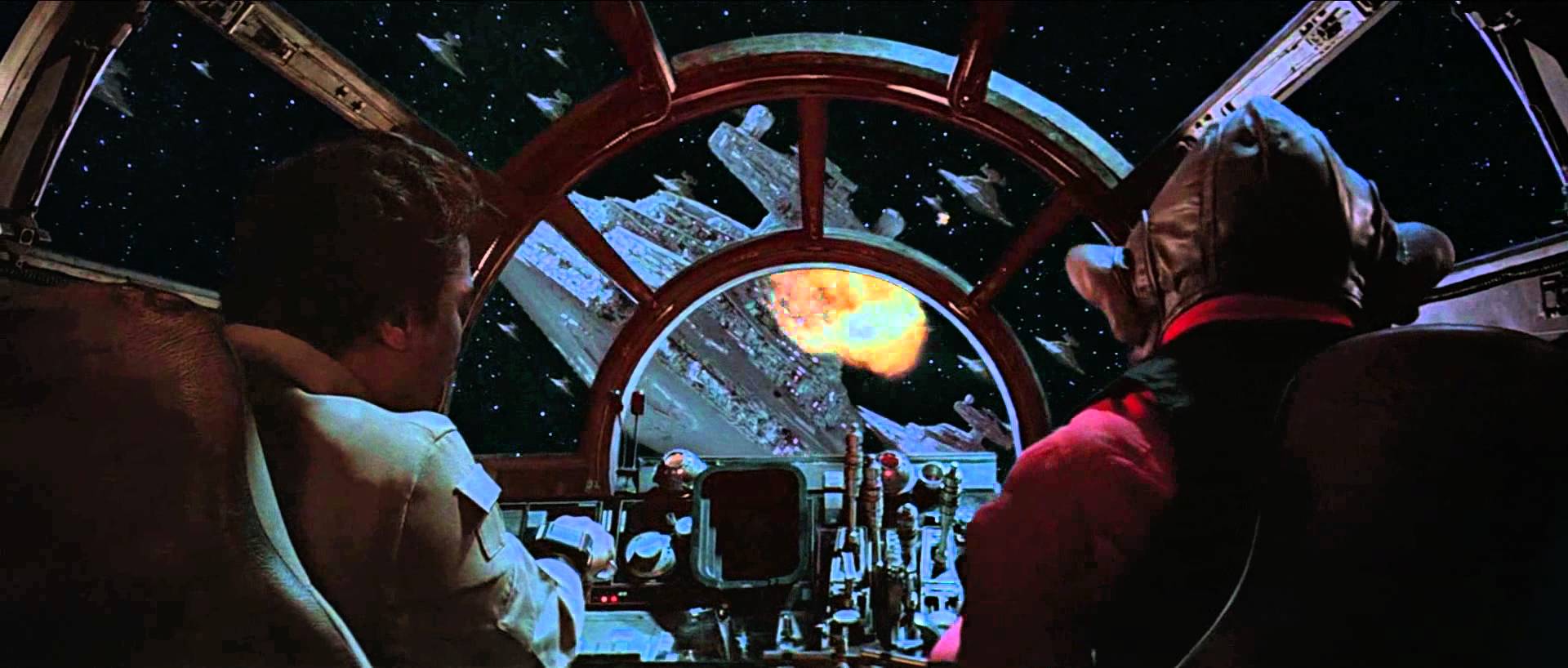
From here, TFA mirrors the third act of Return of the Jedi. The Rebels/Resistance meet to discuss their rescue plan and discover “another Deathstar.” The story breaks in two with ground forces on Starkiller Base trying to break down the shields and Rogue Squadron attacking from space, just as the Battle of Endor had two fronts. There’s an epic lightsaber battle happening as the space assault reaches its climax, with the Jedi using fury to overwhelm the Sith (Rey slicing Kylo is quite similar to Luke taking down Vader).

As Henry also points out, there are exceptions to this where small elements of the original trilogy are mirrored throughout (the catwalk scene, for example), but there certainly seems to be a primary structure in place that combines all of the movies in a coherent way. But what’s the point? Why would Lucasfilm do a creative remix like this at all?

The expectations for TFA were always going to be astronomically high, so the strategy here makes some sense. Add all of the nostalgic fan service to TFA as a tribute in order to gain credibility for this new trilogy, so the next two movies can unfold in more creatively bold ways that aren’t enslaved to the source material. Put more simply: they started with a look at the past and ended with a strong look toward the future.

And in one strange way, TFA is basically the movie George Lucas intended to make in the 1970s. Rather than a trilogy, he envisioned the entire arc of Star Wars to be told in a single movie. TFA essentially fulfills that vision and authorial intent, so as someone who had a lot of problems with the film, I’m finding myself appreciating it more for what it manages to accomplish in light of what couldn’t have been done 40 years ago.

Did I miss anything? Add some of your own observations below. And if you like this essay, be sure to subscribe to EC Henry’s channel, and consider supporting him on Patreon for more great videos.


Thanks for reading this. Seriously. You can subscribe to my posts by clicking “Follow” in the right sidebar. 

Or just say hello on Twitter: @@jonnegroni

‘Lou’ Is The Next Pixar Short Film. Here’s Everything We Know – The Pixar Detectives

Every week, Kayla Savage and I do a live show that’s all about Pixar (and Disney). This week was a “Pixar News Roundup,” because we had a ton of announcements and stories to share about various Emeryville happenings.

Our main topic of conversation was Lou, the next short film by Pixar that will be attached to Cars 3. We shared a ton of good info on what the short is about, how it weirdly connects to Toy Story (sort of), and why we think it’s one of the more original projects Pixar has done in a while.

We also discussed the Annie Awards, the Pixar Art Collection, and more, finishing it all out with a Pixar Trivia Challenge…

Oh, and we gave away an awesome Pixar Valentine’s gift: an “Our Adventures” book based on Up! If you want to enter our weekly giveaways, be sure to tune in live every Wednesday at 7:00 p.m. (Pacific). Follow the link below or just click the video above. We give away Pixar-related goodies like shirts, books, blu-rays, and tons more. And we’re always open to new suggestions for prizes you all might be interested in!

Hope you enjoy the show, and don’t forget to like Super News on Facebook, so you can check out all kinds of awesome shows and giveaways coming out daily. That includes vide game live streams, other Disney talk shows, superhero news, and plenty more. See you all next week!


Thanks for reading this. Seriously. You can subscribe to my posts by clicking “Follow” in the right sidebar. 

Or just say hello on Twitter: @JonNegroni

Ep107: Wild Wild Westworld

bestworld

You can also download this podcast episode on iTunes and Stitcher.


This week on Now Conspiring, we briefly talk about Birth of a Nation and Westworld, when really, we just spent most of our time laughing at the plight of Adonis (you’ll see).

There were a lot of topics brought up, actually from the crisis of clowns to a detailed look at Close Encounters. What this episode lacks in focus, it makes up for in…a lack of focus.

QUESTION OF THE WEEK: What are you going to be for Halloween, and what do you want us to be?

Go on…Ep107: Wild Wild Westworld

Snarcasm: Pixar Is So Average, You Didn’t Even Notice

pixar

Snark + Sarcasm = what you’re about to read.

Most people aren’t movie aficionados, and most of those people aren’t even sure what the word “aficionado” means. But they do know a good flick when they see it, and more often than not, Pixar churns out some great pieces of entertainment.

Since I’m the most biased person alive to comment on this particular “think”piece about Pixar movies from Indiewire, take everything you read here with no salt at all, because that’s bad for your sodium intake in the first place.

Charles Kenny gets in some choice hits with his write up, “Pixar’s Films Are Average and You Know It.”

Why so salty, Charles? None of us are trying to pull a fast one on you, pal.

Lauded, showered with praise and awards, raking in billions at the box office, and beloved by audiences everywhere.

That’s right, and what better way to cut Pixar down than to start by building them up…with obvious observations and facts?

Seriously, you’ve already proven that Pixar movies are anything but average on every merit above. But I have a feeling you’re about to “explain” why none of those things that matter actually matter, even though they clearly matter.

by digging just a little bit beneath the surface, it’s regrettably obvious that Pixar’s films are far from cutting edge: they’re rather average.

If this article had a mascot, it would be Mr. Peanut with a New Yorker on his lap.

The emperor isn’t wearing any clothes, but everyone believes he’s wearing the
finest robes.

“I bet my third grade analogy makes you feel far from cutting edge, hm?”

Seriously, I can never get enough of these contrarian regurgitations that insist their argument is good because most people will disagree with them. It’s like watching a guy eat asphalt because surely no one believes that’s good because I’m the first to think of it.

This may be hard to accept

Ya, and for good reason.

The argument is based purely on artistic merit and creativity

Believe me, no one is questioning how creative you’re being for making a lot of this nonsense up.

 Box office grosses are no indicator

Box office isn’t everything, but it is something. There’s a reason Pixar movies make more and more money, and it’s because they’re a trusted brand. Your argument is that they’re average movies, so why dismiss cultural relevance for the sake of making your argument seem a hair less crazy than it truly is?

Awards are not an impartial form of measurement

No one expects them to be, but we have basic rules of statistics to measure true consensus. We’re talking about people watching hundreds of movies a year consistently praising movies from one particular studio. To dismiss that because awards in and of themselves are a subjective matter should get the award for lamest duck.

Taste is personal and just because you think Pixar’s films are the best doesn’t mean they actually are the best

Who decides, then? You? I really hope not.

The studio does not make bad films

Cars 2 would like to have a word with you.

Snow White and the Seven Dwarfs, The Secret of Kells, and My Neighbor Totoro all lie much closer to generally accepted animated excellence

A few things. First, Snow White and the Seven Dwarfs is a masterpiece and in my opinion, the greatest animated film, period. Secret of Kells is great, and Neighbor Totoro is an eventual classic, but it’s the latter half of this sentiment that raises annoyingly loud alarm bells.

Generally accepted animated excellence? How are these films any more “generally accepted” than Pixar’s high points like Toy StoryIncrediblesFinding NemoRatatouilleWALL-E, Up, and Inside Out? It’s confusing because you can’t seem to decide on what imaginary audience is determining what’s “good” or “bad” when it comes to animated movies. You’ve said it has nothing to do with awards, box office, or personal taste, which leaves us with virtually nothing else.

In contrast to these films, Pixar’s are remarkably safe.

Unlike my intelligence after reading this drivel.

So yeah, we have to believe (now) that when Pixar made a movie about a rat using a human to cook food in Paris, or when they did a whole thing about robots falling in love within the backdrop of an environmental message, or when they made Fantastic Four actually look good, and so on, they were avoiding risk.

On the bright side, people who’ve never actually watched a Pixar movie might agree with you.

They convey a narrowly defined range of themes,

OK, assuming that’s true, you’re evaluating Pixar’s catalogue, not any one movie. By that logic, we can then say Snow White is lesser because Sleeping Beauty and Cinderella also have princesses in them. Welcome to Charles’s world, gang.

they are content to reuse a ‘house style’,

Charles doesn’t elaborate on this (probably because he’s too busy trying on those emperor clothes he was talking about earlier), but my guess is that he’s slapping every Pixar movie with a demerit because their consistently good movies do the same consistently good things. The horror.

and sequels aside (another demerit),

I think Charles invented his grading system after watching Idiocracy.

So yes, Pixar movies are “average” because some Pixar movies are sequels. We won’t even talk about how the Toy Story sequels are highly praised and celebrated because oops! That’s subjective! Didn’t you hear that only Charles’s subjectivity holds any value?

their stories are far from unique to filmmaking as a whole.

We’ll just leave out all of the technological innovations made possible because of Pixar since the late 80s. They get credit for nothing, despite routinely delivering some of the most beautiful visuals and stories of the 21st Century—oops! I’m being darn subjective again!

As a result. no Pixar film has pushed the artistic envelope

I want to meet the person who reads that sentence and actually agrees with it. Pixar has never pushed the artistic envelope? Right, and the Pope is an atheist.

they have appeared to without actually doing so.

The Pope prays, but does that really mean he thinks God is like a real thing? Nahhhhh.

They have not revolutionized animated filmmaking outside of their technology.

“They have not revolutionized animated filmmaking outside of the technology they use to revolutionize animated filmmaking. Trust me.”

What Pixar’s films haven’t done, is inspire others to make a creative leap.

Yeah! Not even Walt Disney Animation Studios….oh wait. Or DreamWorks…oh wait. Or Blue Sky…oh wait.

I love how Charles’s rubric for being “average” has everything to do with him assuming no creative person has ever been inspired by Pixar. And as you can imagine, he says nothing to back this up. Not even an anecdote.

The other problem I’m seeing here is Charles’s narrow criteria for what qualifies as artistic merit. It’s not enough to him that something is competently made and original. Apparently, it also needs to be flamboyant and provocative, but that’s just not what Pixar movies set out to do. But because he’s limiting literally ever other piece of criteria for what makes a film above average, he’s constructing a false narrative that just about anyone can see through.

The Looney Tunes and MGM shorts of the day developed as rapidly as they did because the teams behind them were determined to outdo each other creatively. Today, animated films (and especially CGI ones) do not compete creatively, but rather financially.

Charles, if you really think MGM and Looney Tunes weren’t interesting in getting paid for their work, then there’s literally nothing I can do for you. The idea of relevance and popularity tying into financial success is such a basic concept, I’m at a loss for words. Do you really think that Pixar and DreamWorks aren’t competing creatively? Because even when DreamWorks produces an unimaginative dud like Home, guess what happens? They don’t make money.

But what am I supposed to expect from a guy who thinks Pixar movies are “safe.”

any artistic developments as a result are rather coincidental.

Let’s apply this to any other scenario. I walk into a deli and tell the sandwich guy: “Oh, well you’re only using that brand of salami because it’s 9 cents cheaper than the other brand. And the fact that it tastes so good is just a coincidence.”

He’s either going to roll his eyes at you (like most everyone would) or write an overlong Snarcasm about it (like me). Either way, none of us win.

After all, no studio was inspired to create a CGI film because of Pixar’s artistic genius, they saw a concept that was profitable and wanted a piece of the pie for themselves!

Guys, I think I figured it out. Charles meant to write this as a satire essay for his eight grade history class, but oops! Indiewire got their independent wires crossed and published it by mistake. Happens all the time.

But yeah, the real nonsense here is that Charles makes a sweeping assumption that no studio has ever mimicked Pixar because they genuinely saw something creative that they want to replicate themselves. Either Charles is the NSA incarnate, able to monitor all animated filmmakers instantaneously, or he really needs to get those clicks, guys.

To get to the crunch of the issue,

Uh…no comment, I guess.

you have to consider how Pixar’s films are viewed by the general population.

Except you already said we can’t do that because we isn’t smart enough like you.

Their films appeal to all, and in turn are remarkably popular. This is possible primarily because the films are average.

I bet watching Charles do math in his head is adorable.

OK, so the idea is that if people really like something, it might mean the movie is average, so in your head, that means they’re average. Are we done with this yet?

They do not appeal to anyone in particular,

What? Are we on some sort of contradiction carousel?

Look, I get his point (despite him not explaining it well). He’s trying to say that Pixar movies appeal to everyone on a surface level, but they don’t actually make people think or feel. That’s dead wrong to the point of absurdity, of course, and mostly because he doesn’t use any examples to refute the most basic opinion people have about Pixar movies to the point where there are memes about how the movies are emotional: that they appeal to them in unique, deep ways.

For Charles to downplay all of that because he hasn’t had those experiences is more sad on his part than anything else. It also makes me wonder if he watches these movies while texting the entire time.

Next, Charles uses a quote from Simon Cowell that has nothing to do with Pixar to explain how “average tastes” work. I know I was joking before, but that eighth grade book report theory is just getting more and more plausible. At one point he says that Star Wars is artistically average which is…eh, what’s the point.

Imagine if Pixar released a film with casual abandon of all financial goals.

I love how you seem to know everything about the creative process of some of the world’s most creative people. See, Charles has the gall to claim that these guys are hacks who are only in it for the money. Can we all agree that he can keep that moronic opinion to himself?

At the end of the day, it’s fine to look to Pixar as a model for certain things such as its CGI technology,

CGI technology? I mean I figured out a long time ago that you have no idea what you’re talking about, but this is almost too on the nose.

to look to them as a creative leader and innovator is wrong.

Well, if being “right” is agreeing with a bunch self-righteous, unfounded assertions that waste everyone’s time, then you get an A+, sir.

They do not reside on the cutting edge of feature animation, and to accept such a belief is to drink some very strong Kool-Aid.

Said the guy who probably has no idea what Jonestown is.

Before I go, I’ll leave you with this quote from Charles on a different Indiewire post:

The other Pixar film from last year, Inside Out, blew everyone away with its sheer originality and emotional themes and quickly became a favorite. It is currently sweeping all awards before it and is well on it’s way to the status of a classic film.

Hmmm, well methinks Charles has some explaining to do.


Thanks for reading this. Seriously. You can subscribe to my posts by clicking “Follow” in the right sidebar. 

Or just say hello on Twitter: @JonNegroni


Second Opinion: ‘Sing Street’ Proves Not all Crowd-Pleasers Are Created Equal

sing street

As of September, my favorite movie of 2016 is John Carney’s Sing Street, a musical throwback set during the 80s boom in the U.K. Consider this my (late) review, perhaps made better by the fact that I’ve had months to process Sing Street and even revisit it.

For that reason, this is a Second Opinion, in the sense that I’m also forced to evaluate the strengths and weaknesses of Sing Street against the critic community at large. And it’s not quite so clear where critics landed with this film.

At first glance, you’d think Sing Street is the indie darling of the year, maybe because of its high score on Rotten Tomatoes or if you’ve heard me gush about the film on Now Conspiring. But that’s not to say the film hasn’t received some tepid responses as well, with many critics both praising the film and undercutting it with the “low” side of positive scores.

From what I can tell, the main reason is because Sing Street commits a “sin” in the eyes of a lot of serious film critics: it’s a crowd-pleaser.

sing street

You’ve heard the term, but let’s be more specific. The idea of a movie being a crowd-pleaser is an underhanded compliment, meant to criticize the film for using familiar tropes to elicit a specific reaction from the audience. It’s also used to note a film that is essentially boring in its formula and afraid of taking risks. Relevant crowd-pleasers include the likes of Marvel superhero movies, nostalgic franchise sequels, and even Oscar-bait — those Fall films that seemed designed to do nothing more than win awards.

So yes, it’s pretty accurate to call Sing Street a crowd-pleaser, perhaps to an even heavier degree because the film it draws so much heart from is John Carney’s previous film, Once (we’ll just skip Begin Again for obvious reasons if you’ve seen it).

Yet Sing Street also makes the case for why some crowd-pleasers are far superior to others. At the end of the film, I did find myself realizing how loud Carney’s voice was throughout, and the heart of the movie couldn’t be clearer. It’s a film you discuss and analyze for its craft in filmmaking and how it made you feel. Lesser crowd-pleasers suffer from only having the latter.

sing street

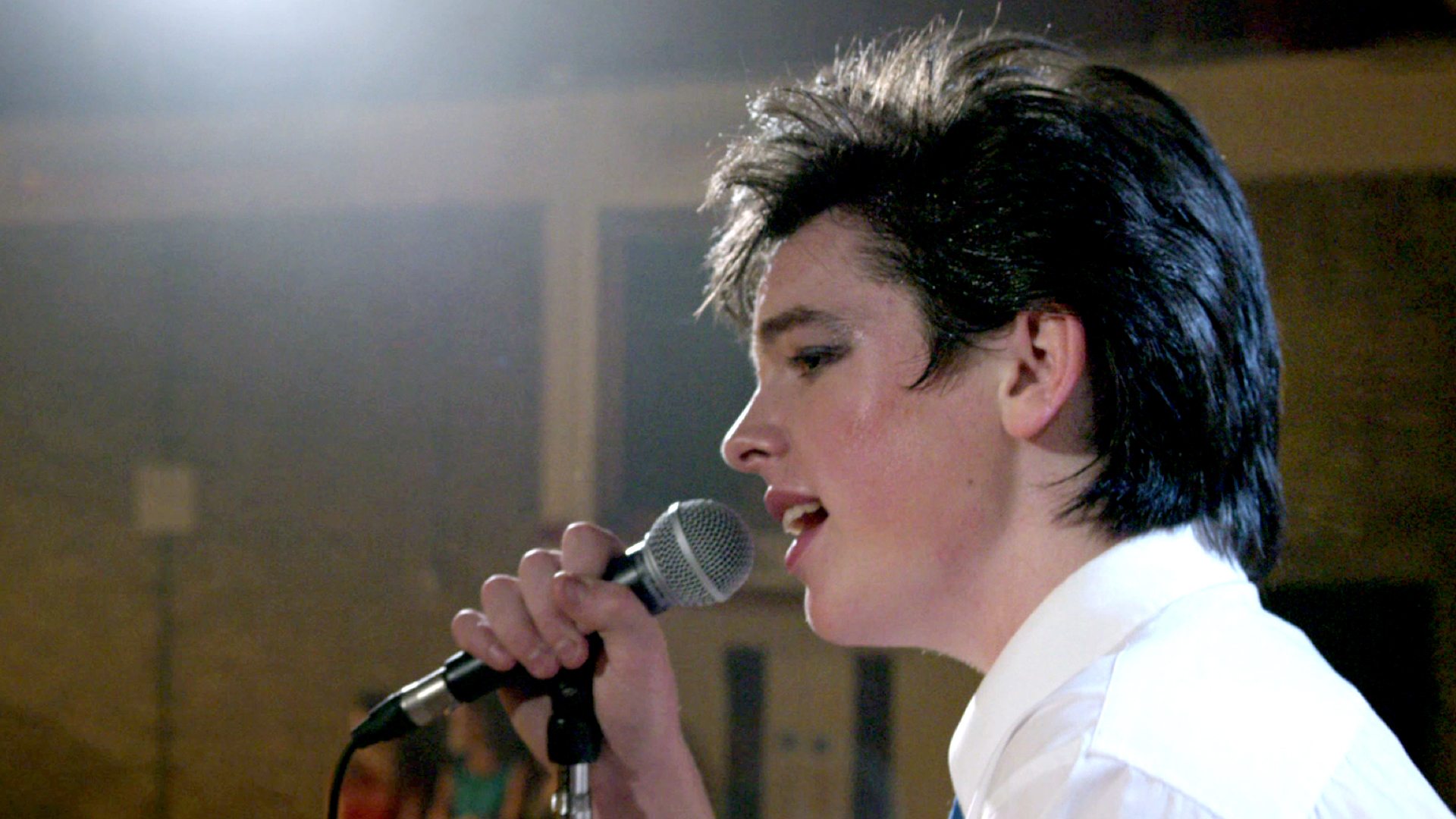
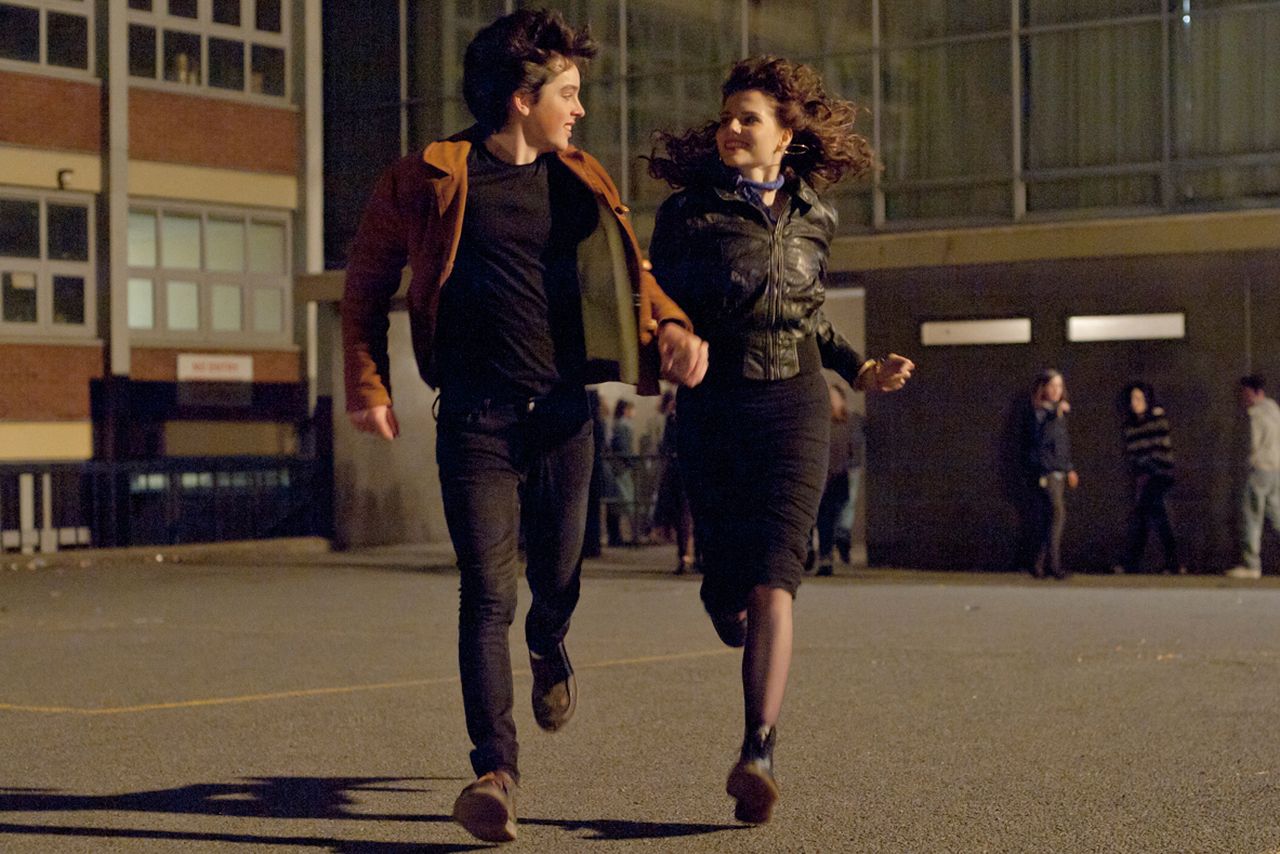
Let’s talk about how the film is set up. Set in Dublin, the movie centers around the life and journey of Conor (played by Ferdia Walsh-Peelo), a shy teenager who slowly cultivates a passion for music while attempting to win the heart of an older, beautiful girl (Raphina, played by Lucy Boynton). He starts a band in order to impress her, but the film splinters his motivations in a lot of surprising ways. Conor wants to break free of the rules of his claustrophobic prep school, suffer through his parents’ divorce, live up to his brother’s dreams, find success with his band…oh, and get the girl.

There’s real beauty in how simple the film appears, but it’s anything but straightforward. The film starts with a jumble of problems coming Conor’s way as he has to adjust to a new life at Synge Street, which is packed with bullies and a disturbing menace of a headmaster. But the moment he sees the girl, all those problems get thrown aside completely — a perfect capturing of what it’s like to fall in “love.”

That would be fine enough if the film didn’t also execute the rest of its content so fluidly and with so much endearing music (the soundtrack is sure to make an impression). There’s no crystallizing moment or raw talent in Conor that suggests movie magic. He starts like most other musicians and creatives: by ripping people off.

sing street

Eamon (Conor’s first recruit for the band, played by Mark McKenna) is the true prodigy, able to play multiple instruments and come up with the majority of the actual music. Conor’s brother (Brendan, played by Jack Reynor) mentors him on which music is worth mimicking, paving the way for Conor to gradually work his way to becoming a real musician. Even songwriting, Conor’s only apparent gift he’s discovered for himself, is only made possible because of, you guessed it, the girl.

Watching this creative process unfold as a love story is one of the most unique and charming experiences I’ve been entertained by in years. It’s a standout script with standout music and performances that makes it a crowd-pleaser for all of the right reasons, not the wrong ones. That’s not to say the film is perfect, and I could list several problems I have with the film, but at this point, they’re perfunctory and removed from what makes the film a keeper.

I think what makes Sing Street somewhat better than everything else I’ve seen this year has a lot to do with two reasons: for one thing, it transcends its genres (the comedy and romance never overshadow the darkness and melodrama). Second, the movie tackles a feeling that only movies can truly provide. And that’s creative spectacle unrestrained by a director’s heart.

Grade: A


Thanks for reading this. Seriously. You can subscribe to my posts by clicking “Follow” in the right sidebar. 

Or just say hello on Twitter: @JonNegroni


Review: ‘Sully’ Is a Weirdly Good, and Original, Exploration of Heroism

sully

Some movies are “based on a true story,” but it would be limiting to slot Sully, the latest film from Clint Eastwood, into such a broad, somewhat uninteresting category. When audiences go to see a biopic, or something similar, there’s a yearning for perspective, either through the eyes of the man or woman in question, or the people said person may have affected over the course of their own dynamic stories.

Sully is very much a film that twists and reshapes the idea of perspective, making it one of the more satisfying films of 2016, period. In a strange way, this tale about Chesley Sullenberger’s (Tom Hanks) famous, heroic landing on the Hudson river in 2009 is actually a cleverly flawed movie. The opening act is littered with directional exposition, slow moments, and rehearsed dialogue. There are even a few dream sequences that dance around the alarm bells of savvy moviegoers.

But then the movie pivots toward something quite brilliant and even surprising, paying off the idea of decency and duty in men, women, and society as a whole. This stealth message is both obvious and subtle at the same time, a tricky maneuver of filmmaking that parallels nicely with the water landing itself.

sully

The script, by Todd Komarnicki (Elf), is mostly nonlinear, taking its time to lead the audience into what happened on January 15th, and more importantly, why. The narrative starts days later as Sullenberger (Sully) struggles with the reality of his sudden fame, especially when government officials begin to question his heroic decision making. It’s more probable, they explain, that Sully needlessly put the passengers and crews’ lives in danger, perhaps because of hidden demons he might be hiding. As the film unfolds, including the white-knuckling scenes depicting the actual event, sharp payoffs are presented to make sense of what came before it, or in this case, after.

Essentially, it’s a more focused gambit movie than last year’s Steve Jobs, and certainly a more substantial piece of entertainment than Hanks’ last travel/disaster film, Captain Phillips. Even American Sniper, a competent film, was missing the sort of skillful impact that could be had, especially through its less polished visuals.

Sully ultimately rises above those films in a number of ways, but mainly one that deserves the most attention. The jumpy and even repetitive narrative serves a specific purpose, all to the goal of letting the audience better understand a compelling yet uncomplicated man who seemingly doesn’t want to be considered compelling. Consider it a flaw if you must, but only an actor with the relaxed charm of Tom Hanks could make something that should be dull so gripping and easy to latch onto.

sully

He’s supported by a humble performance from Aaron Eckhart as Jeff Skiles, the co-pilot who continues to support Sully long after the plane has landed. But aside from Eckhart and most of the event’s participants, the supporting cast comes across less effortless, perhaps because their performances are being consistently measured against Hanks and Eckhart at their best.

The best way to understand, and perhaps appreciate, Sully is to understand that much of what you see is a simulation. Some of it is meant to be imperfect and a little rough around the edges, in order to lend credibility to the people who actually had to live through what you’re seeing on the big screen.

Some of the flaws that come through this style of filmmaking are actually easy to forgive because the message is sent in such a clear way — that of how decency can sometimes be a very unchallenging thing, despite how torturous it can be to accept or believe it. It’s not often enough a story like that makes it to the big screen, fictional or otherwise.

Grade: A

Extra Credits:

  • Stick around after the film to see shots of the actual Hudson landing, its aftermath, and actual video of the passengers and Sullenberger made for the film.
  • Clint Eastwood hasn’t made a movie this good since Gran Torino. Maybe even Million Dollar Baby.
  • Yes, this is the second time Tom Hanks has played a “captain” involved in a famous, true-life event in 2009.  It’s also the second time he’s played an aviator from real life (Jim Lovell from Apollo 13).
  • I forgot to mention how brief the film is. At just 96 minutes, it’s Eastwood’s shortest movie yet, and thankfully so. I wouldn’t take out a minute or add much else.
  • Apparently, Eastwood is a fan of easter eggs. You can see references to two of his other movies when Sully is jogging through Times Square.

    Thanks for reading this. Seriously. You can subscribe to my posts by clicking “Follow” in the right sidebar. 

    Or just say hello on Twitter: @JonNegroni


Ep101: Don’t Breathe In the Hype

don't breathe

You can also download this podcast episode on iTunes and Stitcher.

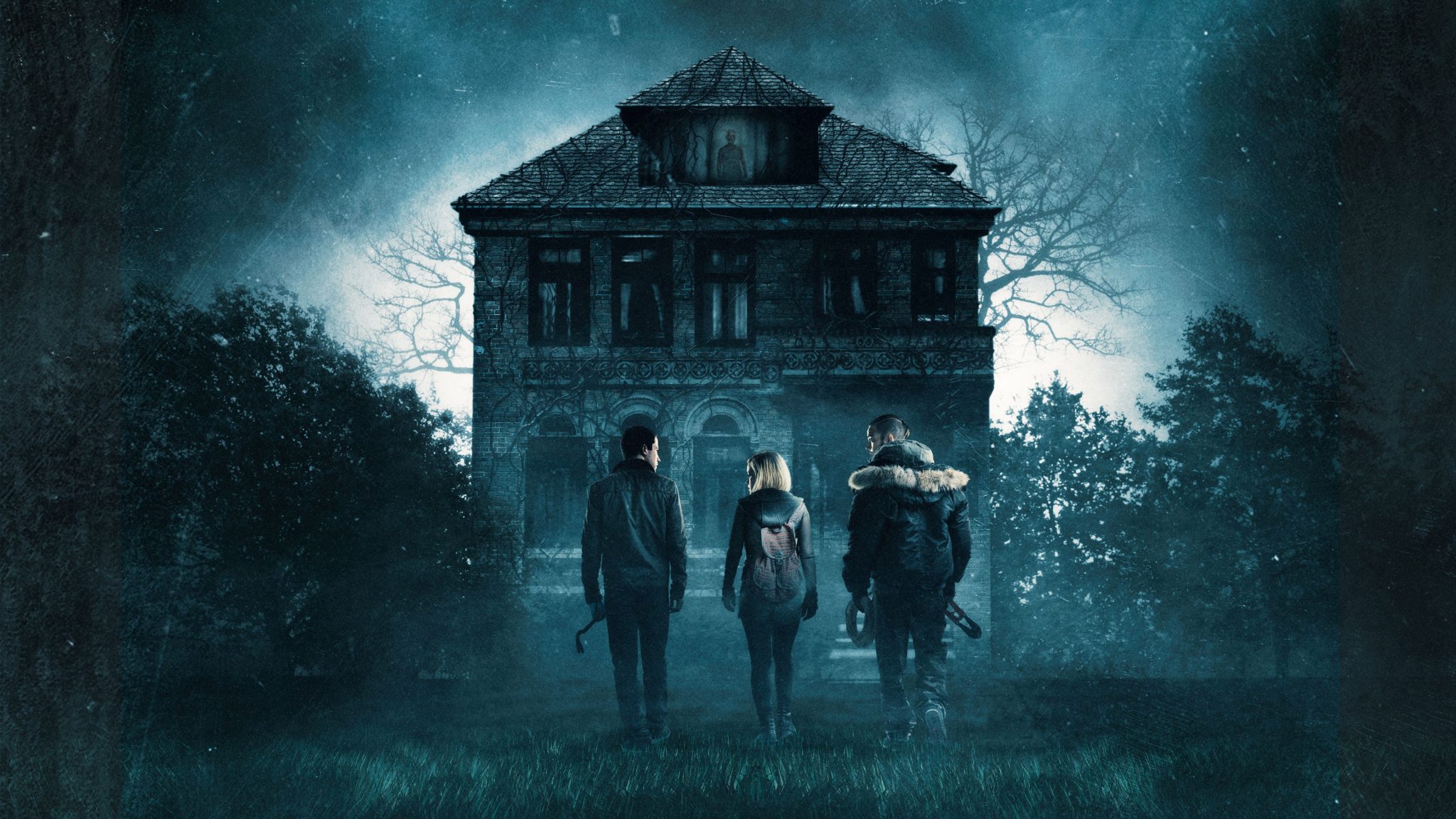
This week on Now Conspiring, we review Don’t Breathe and discuss what it’s like to be on a podcast that is officially past its 100-episode prime. Plus, Jon and Adonis have a racially sensitive discussion about Telemundo for some reason, which somehow relates to the Mary Jane Watson casting rumor/controversy everyone finds interesting (except for Sam).

QUESTION OF THE WEEK: What movie (or movies) should Jon add to his DVD bookshelf?

Go on…Ep101: Don’t Breathe In the Hype