Snarcasm: Carl From ‘Up’ Is Insane And So Are You

up

Snark + Sarcasm = what you’re about to read

Word of warning: if you tag me in a tweet promoting a fan theory you “wrote,” then expect the Snarcasm treatment in the most lighthearted way possible .

So here’s the background. Two years ago, SuperCarlinBros did a fan theory video about Pixar’s Up that proposed Carl Fredricksen is “insane” for reasons that sound anything but. It’s an amusing video from a couple of good friends of mine, which is why it’s strange to see the theory popping up again…from someone else.

Jonathan Sim, a different writer, tagged me in his own write-up for a theory he didn’t write, but instead rewrote with credit to the SuperCarlinBros. Now that this is in written form and it’s coming out while this column is a thing, we get to dive into why the “Insane Carl Theory” is…well, to say it’s insane is giving it at least a little credit.

What if I told you that Carl Fredericksen was actually insane and this movie was a figment of his imagination?

I’d tell you that it’s spelled “Fredricksen.” Then I’d tell you that at least 20 million “fan theorists” have been speculating that any given piece of fiction is “in someone’s head” since Descarte.

So, we start off this theory with that scene in Up where Carl assaults a man with his cane.

It’s a walker with tennis balls, but alright.

This is assault and battery as the man is later seen with blood on his forehead. And we later see Carl in a courtroom. And they sentence him to…a nursing home?

We’re not about to have a discussion about legal precedent are we—

Doesn’t it seem strange that this old man has committed what can be considered third degree assault and battery and his sentence is a nursing home?

Well, no, if we use our thinking caps. As you state, this is third degree battery, which is a misdemeanor. As in, not a felony. Most states will either put you in jail for 30 days and/or make you pay a $500 fine. Depends on the judge, though.

Now, let’s look at the situation Carl is in. This is, by all reasonable accounts, his first offense ever. In addition, a huge corporation has a clear stake in getting him out of his house. So we can surmise from the wordless court scene that BnL’s lawyers have arranged to make a deal that forces Carl to stay at a retirement home so that they can bulldoze his house. We even hear from the police officer in the next scene say that Carl doesn’t seem like a “public menace,” likely referencing the arguments made to kick him out.

You could also consider that Carl doesn’t have the money to pay the fine (he’s a balloon salesman, after all), but the state would rather put him in a retirement home than jail because of his age and the fact that he lives alone. This seems like a pretty logical ruling from a judge who has to sentence an old man without a criminal record.

I mean, he should honestly just receive a jail sentence or something like that. But a nursing home is not legitimate.

Let’s not pretend nursing homes don’t exist as punishments.

So, Carl actually was sentenced to a prison.

Wait, what? No he wasn’t?

And when this happened, he had lost everything. He lost his wife, his freedom, and now, he loses his mental health.

Um…no? The police officer told him that the retirement folks would pick him up in the morning. Where exactly does his mental health collapse for you? And why are you convinced he’s gone insane in the first place, just because he’s sad? Is that your only criteria?

What Carl then does next is absolutely impossible: he lifts up his house with balloons.

At this point, that seems way more plausible than what you’re suggesting.

Well, first off, that would mean he was a really bad balloon salesman.

Oh, I get it. Jonathan is just joking with us. Right?

Right?

Second, according to production notes from the film,

No, no, no, hold up and don’t you dare switch the topic. Carl is a bad balloon salesman? How does that…what? Because…he has a bunch of balloons? That means he’s bad…at selling them..but he’s retired…

WHO ARE YOU?

So, in one night, we’re expected to believe Carl had the stamina and physical ability to fill that many balloons with helium?

No, we’re expected to believe he already had those balloons ready to inflate and finish tying up, secretly. Remember, he and Ellie were planning on taking the house to Paradise Falls, hence the drawing of the house…on Paradise Falls. But they never did because she got sick, and the point of this next scene is to show that Carl’s willing to embark on the adventure they always dreamed of, but he’s not really alone because Ellie is the house and—

Oh sorry, you were saying?

He can’t even walk down the stairs without his machine.

Right. That means all the other times he’s running around and attacking construction workers were all a hoax. Which part of the movie is “in his head” again?

And not only that, but lifting a house with 10,297 balloons is not possible.

Neither is having a head shaped like a perfect rectangle, but you don’t question that for some reason.

Up co-director Pete Docter recently told Ballooning magazine

Recently? You mean in 2009?

that technician Pixar estimated

Who is technician Pixar?

it would take 23.5 million party balloons to lift a 1,800-square-foot house like Carl’s.

The funny thing is that in this same article, they point out that if the house did have enough balloons to lift the house, it would shoot off like a rocket rather than leisurely float away. So Pete Docter’s idea here never would have worked in the real world, but they went with it anyway because they like to dream big. Which doesn’t mean Carl’s dreaming big, an argument that Jonathan (both of them) haven’t even gotten to defending yet.

And then, when he is on his way there, he finds a child on his doorstep.

Thank goodness for babiesovernight.com.

He and Ellie never got to have children in their lives, and this crazy dream sequence (or you can call it heaven if you want) is giving him everything that he didn’t have before.

Let’s break this down. First, Jonathan just sneaks in yet another fan theory about Up that suggests Carl is dead the whole time. Which has been debunked by almost everybody because it’s such an overused fan theory that no one cares anymore.

Second, why would Carl be dreaming of a kid he’s already met? And that he hates? And if the kid represents what he wants in life, why does he try to get rid of the kid throughout the entire movie?

Carl and Ellie grew up loving adventurers and exploring and this kid shows up at the door, who loves adventuring and exploring and would be an ideal, perfect child for Carl and Ellie. 

Thanks, IMDB.

But that’s not the main reason why I don’t buy this.

Don’t buy what? You don’t believe what you just said?

See, Russell said that he saw a snipe (a type of bird) and chased it under his porch. However, that was when Carl lifted up his house and he remained on the house.

You don’t see Russell either, but you know he’s still there. Also, you know, birds fly.

I don’t see how it would be possible to get under that porch, and when he noticed the house lifting up, why would his immediate response be to grab on? It doesn’t make sense, and therefore, Carl’s mind is simply creating this vision for him.

Russell didn’t “grab on,” he clearly was hiding in fright. We don’t see him because the filmmakers wanted to keep his presence a surprise. We would have been distracted if Russell had been shown. This is a plot hole in the movie, not a definitive piece of evidence that Carl is imagining the whole movie.

The only kid that gets into Carl’s house is the kid that somehow knows how to get from the United States to South America, navigating with a house he’s not familiar with steering.

He uses his GPS to navigate. And he’s steering a floating house, not a B52. Movie logic aside, the nonsensical premise of Up is deliberate. To suggest that it’s all a fabrication is pointless,  because the movie is already a fabrication.

There is a scene in which Carl tries to drop Russell into the street by suspending him with a rope while about six stories off the ground. Carl then drops Russell into the street by accident, but in the next scene, he shows up in Carl’s house again, completely unharmed without a single scratch.

Jonathan…did you watch the movie? Because…Jonathan, if you watched the movie you’d know that this happened IN AN ACTUAL DREAM SEQUENCE CARL WAS HAVING.

See, Carl was considering dropping off Russell, but he DREAMED the scenario and realized it would harm Russell.

And we also have the character of Kevin.

Oh, don’t you even dare bring Kevin into this.

when we first meet Ellie as a child, we can’t really tell whether or not she is a male or female.

Yes you can? True, she’s a tomboy and it might not be immediately clear to everyone, but it doesn’t take long.

Russell names the bird Kevin (a male name), but we find out at the end of the movie that she is a female, as she gives birth.

You’re not about to say Ellie is the bird, are you? She’s already the house, mate.

To add on, Kevin can have kids, but Ellie had a miscarriage.

(Voice of Buzz Lightyear) Themes! Themes everywhere!

And right when Carl lands in Paradise Falls, he meets his childhood hero: Charles Muntz.

…who is the inspiration for why Carl wants to go to Paradise Falls in the first place.

Muntz is 92 years old during the main events of the film and though there are people who live up to 92 years old, he cannot be this impressive.

Why not? We see him struggle in his fight with Carl later on, so it’s not like he’s the pinnacle of health. Wouldn’t a life of living off the land make him hardier?

Anyway, it doesn’t matter because a dropped plot point of the movie is that Muntz’s age was slowed down by Kevin’s eggs, explaining how he’s still alive at such an old age.

He is living in the jungle with no healthcare, no way to treat any possible diseases, and not a lot of food.

OK, this is actually offensive. You do realize that people in other countries who have no modern medicine are still able to live a long time, right? And he lives on a zeppelin with tons of food shown onscreen, because his dogs take care of him.

And there is also the fact that when Carl points out a skeleton of a giant Somalian leopard tortoise, Muntz says, “I found it on safari with Roosevelt.

Here we go.

There are two likely Roosevelts that he was talking about: Franklin D. Roosevelt and Theodore Roosevelt.

To even suggest it was FDR is laughable, but go on.

Now, Theodore Roosevelt wouldn’t really make sense because Muntz was born in 1911 and Roosevelt died in 1919. That would mean that the oldest he could have been while hanging out with Roosevelt is eight years old and apparently, Roosevelt was going on safari and cheating at gin rummy games with eight year old kids.

Technically, Charles could have been a child on safari exaggerating his role. And kids are certainly capable of playing card games. But the more likely explanation is that Charles went on safari with Roosevelt’s son, Kermit Roosevelt, who was also an adventurer who actually went on African safaris.

OK, now hopefully Jonathan will reveal all of the evidence pertaining to Carl’s mental health by—

This means Carl was either insane, or, as other theories have said, he could have died and this may simply be his ascend to heaven. Russell, Kevin, and Dug are all just in his imagination.

That’s it? That’s the whole thing? This entire fan theory is just one argument over and over again: the movie is a bit silly, so that means it’s a dream.

This isn’t a fan theory, it’s a fan guess. And not a good one at that. There’s nothing about how Carl does actually have some clear psychological problems with thinking his wife is a house and how his attachments clearly blind him to reality over the course of the film. But rather than address anything like that, Jonathan just tells us it’s all a dream because movies aren’t real. Or something.

So in a way, doesn’t this mean we’re all insane for believing them?


Thanks for reading this. Seriously. You can subscribe to my posts by clicking “Follow” in the right sidebar. 

Or just say hello on Twitter: @JonNegroni


‘Kong: Skull Island’ Is A Quirky Adventure Just Barely Worth Taking

kong

What if the story of “King Kong” took place not during the 30s, but instead the orange-blazed Vietnam era, just as the war was ended-er-abandoned and complete with a poster that outright mimics Apocalypse Now? What if it also contained a collection of modern character personalities who’d probably feel more at home in a Marvel flick or a better sequel to Independence Day? What if it took itself about 50% less seriously than Peter Jackson’s 2005 remake? And what if, to top it all off, you layered it against a budding monster cinematic universe franchise that is already underway with 2014’s Godzilla?

Kong: Skull Island is the answer to those questions and more — a sort of mashup of interesting ideas and directions blended together by second-time director Jordan Vogt-Roberts, an indie auteur who’d make Gareth Edwards blush. The basic structure is still in place: a team of scientists, civilians, and soldiers travel to Skull Island, the last uncharted territory hiding in the South Pacific. There, they uncover prehistoric threats and a massive, titular primate named Kong. From there, it’s a tale of survival, but a much smaller one in scope than the 2005 remake, at least removed from its ties to bigger monster threats around the world and the mysterious “Monarch” organization.

The idea to paint this as a Vietnam film is definitely inspired. The same, “what are we doing here” mentality is played just right an overwhelming message, though that’s not to say Kong ever tries to be more than a big, blustering blockbuster that succumbs to movie logic willfully and enthusiastically. You can probably respect the fact that Kong knows how bonkers it is throughout, and in a better movie with more surprises, it could even be hailed as an inspired new turn for monster movies (Shin Godzilla or no).

kong

Strangely, though, Kong suffers from 21st Century film editing, a new wave of trailer-inspired cuts and cutaways that make this film feel more like a collection of intriguing short films spliced together to just barely hold together as a two hour feature. The screenplay by Dan Gilroy, Max Borenstein, and in small part, Derek Connolly is certainly in a great place, as this is one of the few flicks in a while I caught myself thinking about the script (in a good way).

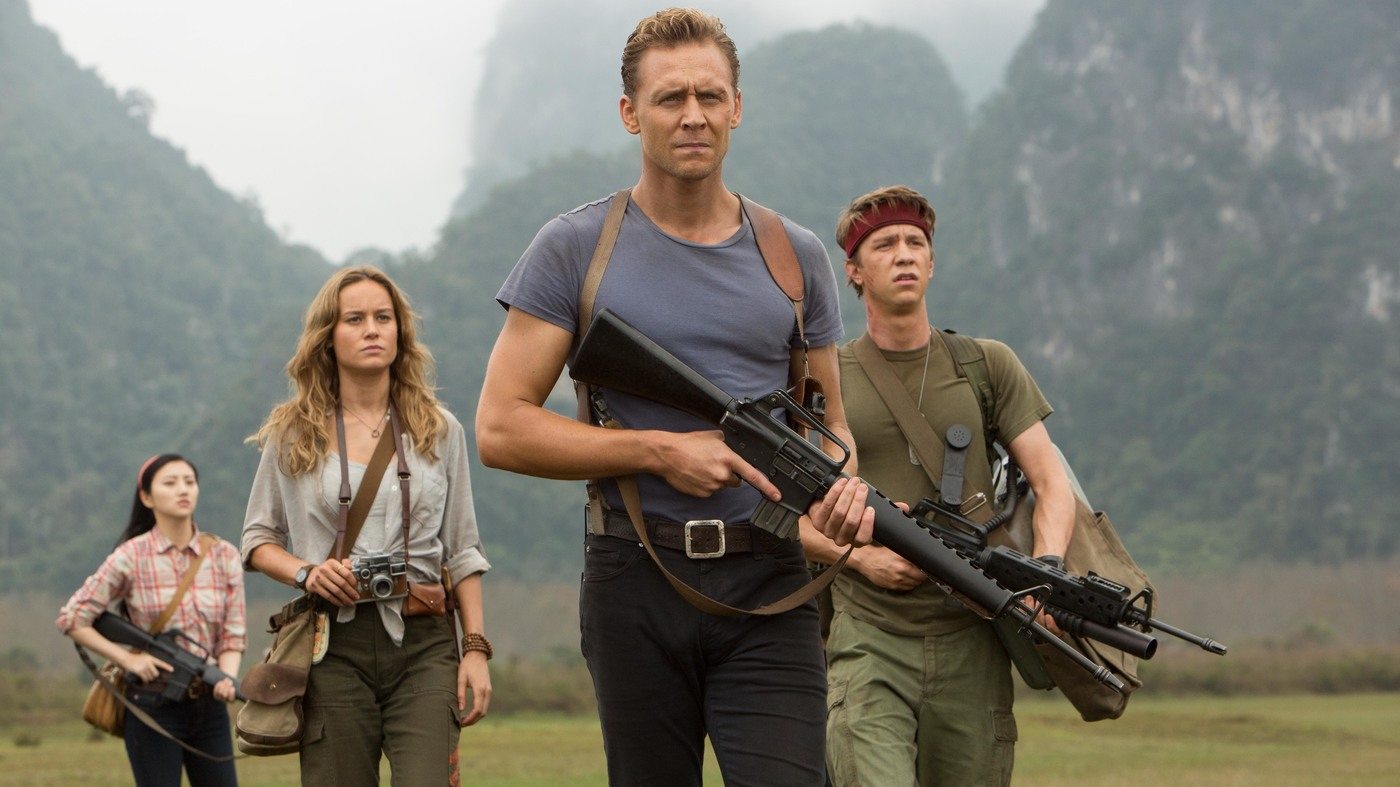
The story, by Need For Speed and Real Steal‘s John Gatins, is less innovative, yet mostly salvaged thanks to a serviceable ensemble of characters featuring Tom Hiddleston, Brie Larson, Samuel L. Jackson, John Goodman, John C. Reilly, and many others.  The best scenes in Kong belong to Jackson and Reilly without any doubt, as Reilly plays the island survivalist from World War II who kindly fills us in on just the right amount of exposition to get a sense of place and relevance in Skull Island.

What truly saves Kong from mediocrity, though, is what monster movie fans are itching to come see. A visually striking action movie with big monsters, big stakes, and big battles. This movie checks off those boxes in force, while mostly eschewing other expectations of its legacy, like the tendency to play up Kong as a “possessor” of a beautiful woman.

Brie Larson takes the role in her own way as a photographer in search of discovering something new, instead moving along the movie in a jog, playing about as crucial a role as the other ensemble characters without much of a special relationship with Kong, which is likely for the better. It’s replaced with a passive respect, rather than an otherworldly affection, and at the very least, it makes more sense for a film set in the 70s, not an escapist tragedy set in the 30s.

kong

Most films would suffer from tonal shifts as drastic as the ones in Kong. But for whatever reason, the scattershot ideas in this monster mash adventure movie manage to lend the film something of a personality, much like they accomplished with the CGI primate himself. There are just as many moments showing what Kong does when no one is around, and it’s one of a few morsels of surprising touches this movie thankfully scrambles to find.

Grade: B

Extra Credits:

  • There is a post-credits scene, and it’s actually awful. Badly edited. Bad in the way it teases. See it if you must, but I left the theater feeling a lot less excited about the future of Warner Bros.’s monsterverse.
  • With so many characters in this movie, I didn’t have much of a chance to get to each one. And that’s not a good thing. They’re mostly forgettable, even Larson and Hiddleston, whose motivations are actually interchangeable. Great screen presence, but this movie’s heart belongs to Reilly and Jackson.
  • This movie might look a tad familiar. It was shot in Hawaii, close to where Jurassic World was filmed. Samuel L. Jackson even utters his famous line, “Hold on to your butts” from the first Jurassic Park.
  • I also forgot to mention one of my favorite things about this movie: Kong’s design. It’s a clear combination of the 30s version and the adapted Japanese version. He stands tall, and it looks great.
  • Corey Hawkins and Jason Mitchell have great, understated roles in this movie. They last acted together as Dre and Eazy E in Straight Outta Compton.
  • Weird Easter egg that might be important: Riley’s character, Hank Marlow, wears a jacket with a reference to Akira, a manga that came out years after this movie takes place.  It’s a pill and the line, “Good for your health. Bad for your education.”

    Thanks for reading this. Seriously. You can subscribe to my posts by clicking “Follow” in the right sidebar. 

    Or just say hello on Twitter: @JonNegroni


Who Are These New ‘Cars 3’ Characters? – The Pixar Detectives

Cars 3 has a few more heavy hitters, as Pixar just revealed, including Kerry Washington and Nathan Fillion. To get to the bottom of it, here are the Pixar Detectives! Also, introducing our “under construction” studio, plus a rotating TV with (what else) easter eggs and memes for your entertainment. Stick around for the end of the show to take a couple of quizzes that test our love of Disney and Pixar.

Our giveaway this week is a Tangled/Frozen/Friends crossover shirt (which Jon is wearing in the video!) We’re about to announce the winners, so if you’d like to take part in next week’s prize, be sure to tune in live with us on Wednesday at 7:00 p.m. (Pacific). Follow the link below or just click the video above. We give away Pixar-related goodies like shirts, books, blu-rays, and tons more. And we’re always open to new suggestions for prizes you all might be interested in!

Hope you enjoy the show, and don’t forget to like Super News on Facebook, so you can check out all kinds of awesome shows and giveaways coming out daily. That includes vide game live streams, other Disney talk shows, superhero news, and plenty more. See you all next week!


Thanks for reading this. Seriously. You can subscribe to my posts by clicking “Follow” in the right sidebar. 

Or just say hello on Twitter: @JonNegroni

Snarcasm: ‘Moana’ Is Formulaic Once You Ignore All Of Its Originality

moana

Snark + Sarcasm = what you’re about to read

I correctly predicted that Zootopia would beat out Moana for Best Animated Feature at the Oscars this year. Not because Zootopia deserves it, but because I know an Academy Award winner when I see it, borrowing from the same universe where a socially relevant movie like Spotlight will outshine the crowd-pleasing favorite for Best Picture. Only in this case, Zootopia happens to be a favorite among many Disney fans, as well.

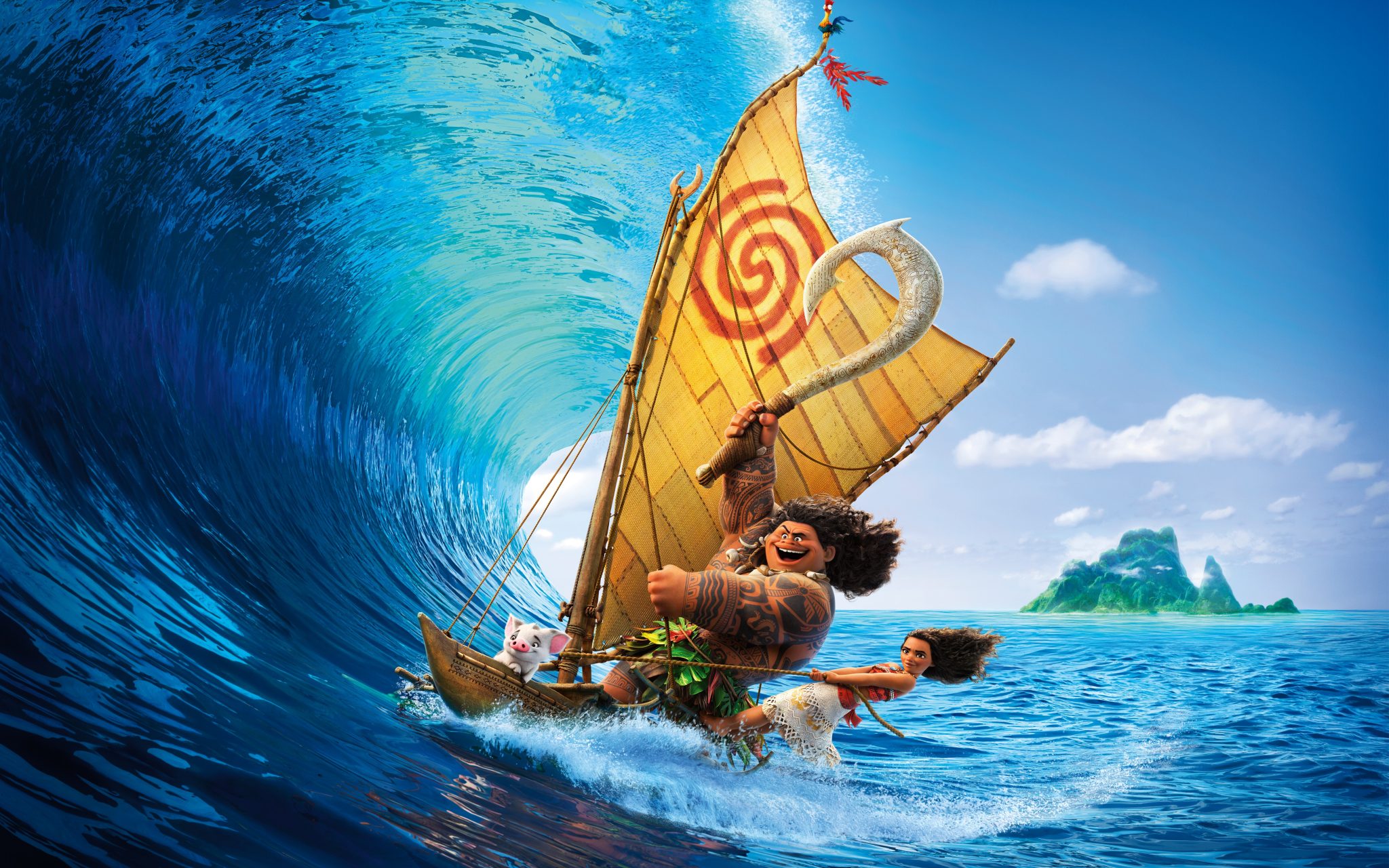
My issue with all this is less an attack against Zootopia and more a lament for how under-appreciated Moana is as both a movie and one that happens to be made by Disney. If you slapped the same movie with the logo of any other animation house, it would deservedly be hailed as a new classic and breath of fresh air. But as we’ll get to in a minute, Moana is dragged down by baggage it didn’t ask for, and in many ways, went out of its way to defy.

Why? Because film critics can be a bit lazy. They see something that sort of resembles something else and jump at the chance to make a comparison, usually knocking the film down because of their pseudo-intellectual word associations and cultural references, as if film borrowing inspiration is something to be ashamed of. This is a persistent annoyance with reviews for animated films because nearly 80 years after Snow White and the Seven Dwarfs, some critics are still refusing to take the art form seriously. Seriously.

Thankfully, most critics do appreciate good animated movies and approach them fairly. Of course, there were a small amount of unfavorable reviews for Moana in November, but most of them were perfectly fine for what the reviewer was trying to accomplish, which was a basic interpretation of their own subjective take on the film. But one in particular caught my Snarcastic attention, not because it was badly written or as outrageous as what I usually bring up in this column, but because it’s so tragically misguided in its bias. It’s also a summation of the criticism received by many who did like Moana overall.

Writing for Sight and Sound, Vadim Rizov writes, “Disney’s Hawaiian folk fable paddles safe waters.

Hey, did I mention the other thing that really bugs me about a lot of critics? It’s the wordplay headlines. Just the wordplay headlines.

Disney’s big-ticket seafaring saga lets rip with its computer animation, but sails the same old storyline.

To Rizov’s credit, he really does go into detail over what makes Moana a technical achievement in animation, so let’s focus on his main argument, that Moana is same-old, same-old for Disney.

In a way, that’s true. A young “princess” is the heroine, and she has to go on an adventure to save her village. Of course, most movies can be boiled down to a well-established plot structure, but we forgive it because of everything else that happens on top of the familiar “good vs. evil” and “buddy cop” tropes that show up again and again. Let’s see why Rizov disagrees.

Moana is an animated film of the subgenre codified at the start of the ‘Disney Renaissance’ by 1989’s The Little Mermaid.

Oh no. He’s not about to compare Moana to Little Mermaid is—

Both films are co-directed by Ron Clements and John Musker, and start from the same premise:

Sighing intensifies.

a young woman next in line to be queen/chief

OK, hold on. Ariel from Little Mermaid was not next in line to be queen, and in fact, Triton never even implies that her future has anything to do with running the kingdom. Rizov even has to point out here the difference between “queen” and “chief,” which is already a false comparison of the two movies in order to argue that Moana is somehow formulaic. But let’s keep going.

chafes at the for-safety’s-sake boundaries imposed on her.

Two huge differences you leave out, Rizov. First, Moana actually accepts these boundaries over the course of the first number, which chronicles how she chooses responsibility and duty over her own personal desires. It’s only later out of necessity that she challenges this authority, but it’s a far cry from the rebellious personality had by Ariel, who was going behind her father’s back in perpetuity before the movie started.

The second difference is that Triton’s hatred of humans is never really justified in a way that makes sense. Why are the aquatic folk so scared of humans? These rules come off as very authoritarian, which makes sense for a 1989 movie. But Moana actually presents a believable case for why the chief is so against their people (not just her) venturing beyond the reef. He’s given a backstory, and the script treats Moana’s father as a complex character, even though you somewhat root against him.

But Rizov would have you believe, “Nope! Same as Little Mermaid!”

her father…insists his people don’t venture past the coral reef. It’s as inevitable as her journey of self-discovery and vindication that, in between musical numbers, Moana will have reason to leave and prove herself.

Eh, more or less. And I see why Rizov is simplifying this in order to avoid an over-explanation. But it’s unfair to boil down Moana’s motivations to self-discovery, when it ignores how the first act effectively explains why she wants to “prove herself.” And it’s compelling, not just inevitable. For one thing, she’s energized by how her ancestors were voyagers, and part of her motivation to leave is to restore her people’s culture, in addition to answering the call to help her people that is set up earlier when she’s learning the ropes in becoming chief.

Rizov goes on to praise the movie a bit for not being as racist as Aladdin, bring up the weird controversy over Maui’s weight for some reason, and gush over how pretty the movie’s water and hair is. Eventually, he brings up the music and points out some of the clever lyrics.

But no matter who wrote the songs, there was always going to be a line about listening to your ‘inner voice’ – it’s pretty much Disney company policy.

I also shudder at the simplistic plot device that is “listening to your heart.” Disney popularized it, to be sure, but what’s so depressingly absurd about Rizov’s assessment here is how he missed the part where Moana blatantly defies this boring cliche.

First, I want to point out that one of my favorite things about Moana is the music, because Lin-Manuel Miranda and the other writers did a fantastic job using each song to lend the story a lot of complexity and depth (seriously). In “How Far I’ll Go,” Moana spends the entire song declaring her situation and moral conflict that will define the film. That what she wants consistently clashes with what is expected of her, while she pontificates the benefits of “playing along” and how that will work out better for everyone but her, only for the “voice inside” to make her question if this is truly what’s best for her people.

The inner voice is recalled throughout the film, but it’s foreshadowed in the first number, when Moana’s grandmother tells her exactly what that inner voice means and why it’s important. She tells Moana that if her inner voice essentially spurs her to action, that means the voice is “Who you are.” Later, in “I Am Moana,” her grandmother again starts to sing this part, but then asks Moana to answer if she knows who she is. This contrasts with the film’s other repeated theme of understanding “where you are” (the name of that first song). Moana answers her grandmother by saying that she’s defined by where she comes from, what she’s doing, and where she’ll go. Not her inner voice. Her inner voice is simply her.

These are complicated ideas that appear formulaic when you just tune out at the mere mention of “the voice inside,” but following the music leads you to a completely different understanding of what the writers were going for. Moana isn’t another a “follow your heart” diatribe, it’s an attempt to better explore what it means to make decisions about what you’ll do with your life based on your circumstances and instincts. It makes the case for balancing these two struggling concepts and carving out your own path by being fair and honest with yourself and the people around you.

If that’s Disney’s company policy, I’m game for seeing another animated movie tackle a trope so competently.

All of these affirmational bromides are a regrettable staple of the late Disney corpus, and while they coincide nicely with the recent boom in self-proclaimed ‘empowerment ballads’, they do little to actually raise the spirits.

Translation: I didn’t feel particularly empowered, so there’s no way you did.

for all the technical skill on display, this feels as inessential and disposable as any Shrek or Ice Age, only with ostensibly loftier pretensions. 

First of all, only the Shrek sequels (after the second) are disposable. To say that Shrek is inessential is obvious, forgetful nonsense. Second, to compare Moana to Ice Age is so off the mark, I have to believe Rizov did a spit take when he realized that nearly every single critic in the world completely disagrees with him.

Now, I’m not here to tell you that Moana is somehow a lot better than you realize. It’s a personal film for a lot of people, myself included, and I believe it has more than enough merit to be regarded with high praise outside of water and hair effects (which are gorgeous, don’t get me wrong). It’s still my favorite movie of 2016, Oscar or no, and that’s only being strengthened by repeated viewings.


Thanks for reading this. Seriously. You can subscribe to my posts by clicking “Follow” in the right sidebar. 

Or just say hello on Twitter: @JonNegroni


Which is Better? ‘Monsters Inc.’ VS ‘Shrek’


On the latest Pixar Detectives, Kayla Savage and I tried to somehow choose between Monsters Inc. and Shrek in the most unbiased as possible way. To help, our live audience supplied some awesome arguments and counterarguments in this week’s edition of Which is Better?

Of course, we’re not content to rest on the laurels of the debate in this video. Let us know in the comments below which movie you think deserves the acclaim and why. We spent the entirety of the episode on this topic, so we unfortunately didn’t have any time to cover the latest going on in the world of Pixar. But tune in next week and we’ll do our best to catch up.

If you want to enter our weekly giveaways, be sure to tune in live every Wednesday at 7:00 p.m. (Pacific). Follow the link below or just click the video above. We give away Pixar-related goodies like shirts, books, blu-rays, and tons more. And we’re always open to new suggestions for prizes you all might be interested in!

Hope you enjoy the show, and don’t forget to like Super News on Facebook, so you can check out all kinds of awesome shows and giveaways coming out daily. That includes vide game live streams, other Disney talk shows, superhero news, and plenty more. See you all next week!


Thanks for reading this. Seriously. You can subscribe to my posts by clicking “Follow” in the right sidebar. 

Or just say hello on Twitter: @JonNegroni


‘Get Out’ Is A Great Horror Mystery With A Conscience

Get Out

Get Out opens with a simple (and frightening) tone, then splinters off into competing genres of horror, mystery, and even comedy. And not necessarily in that order. Directed and written by Jordan Peele in his directorial debut, Get Out centers around Chris, a straight-talking young black man (Daniel Kaluuya) who goes to meet his white girlfriend’s liberal, well-to-do family.

Take out some of those adjectives, and you can see how easy it is to set a mood of discomfort there for Chris, who suspects from the first night that not all is what it seems. Is it paranoia, social commentary, or a strange mix of both? Get Out proposes the latter, and that’s probably why most moviegoers will have a great time with it.

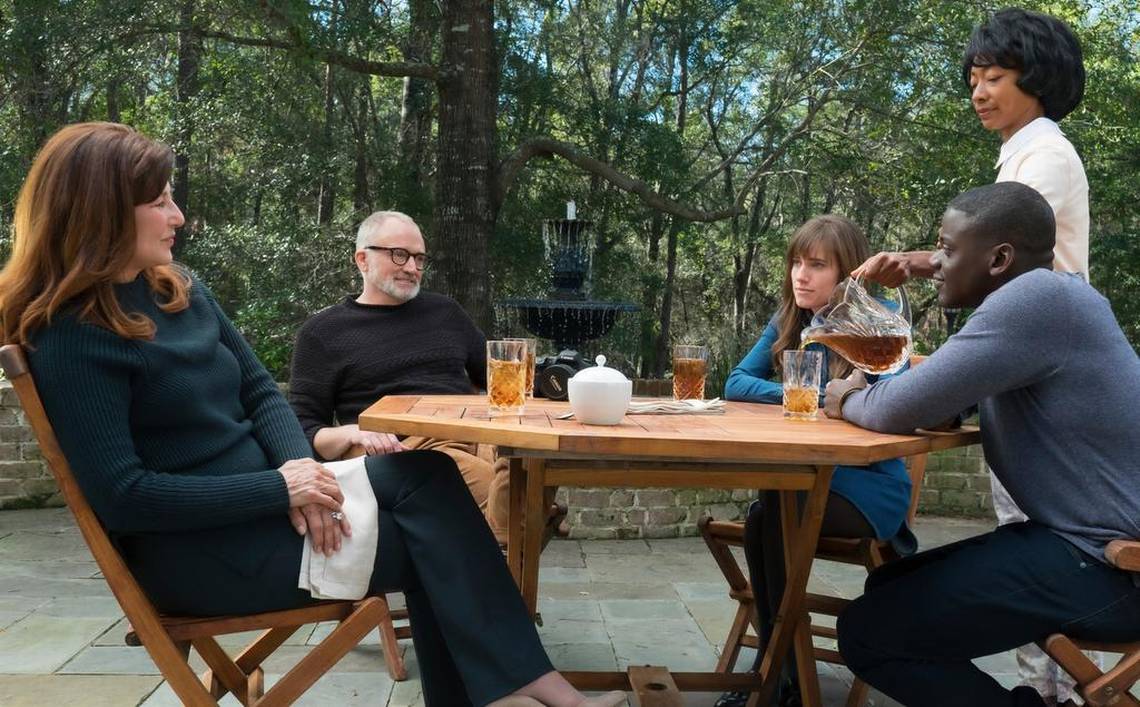
As shown in the trailers, the first red flag for Chris as he visits this film’s version of the White House is the family’s set of bizarrely-behaved housekeepers, each one a black person working for the Armitage family, played by Bradley Whitford and Catherine Keener. Chris’s girlfriend Rose (played by Allison Williams) insists that her family, while a bit tone-deaf, is certainly not racist. She’s the first to rise to Chris’s defense during most of the early encounters that convince the audience they’re watching a relevant piece of film with clear echoes of Black Lives Matter commentary, from a police encounter that singles Chris out for no reason to a dinner party where the guests ogle Chris’s appearance.

It all leads to some unconventional and even wacky horror and intrigue, but one with a refreshingly balanced perspective. Peele, who gained inspiration from Night of the Living Dead and The Stepford Wives, transforms the sensibilities of those genre flicks into something almost original in its craft and definitely in what it has to say about a theme I won’t dare spoil. The film is meant to be uncomfortable for multiple demographics for multiple reasons, and it doesn’t hurt that behind it all is a competently made film with tight pacing and consistent thrills. It’s not quite as scary or unsettling as some of the genre’s fans might want or expect, but it’s certainly ahead of the curve in its psychological horror.

Get Out

And weirdly enough, it’s also funny when it needs to be, though more as comedy relief than as deliberate comedy. That goes back to how the pacing allows steady breathers for a savvy audience, especially the handful who will be far more aware of what’s going to happen before some of the characters do. Of course, everything gets a little more serious toward the very end of the movie, but it’s all noticeably less impressive than some of the more subtle workings that precede it, a common issue with mainstream horror that Get Out gets somewhat of a pass on because it’s so incredibly satisfying in its own way.

Get Out could have easily been an aggressive take on modern prejudice and race relations that goes after easy targets, perhaps because that’s what audiences are so accustomed to. In the other direction, it could have come off as preachy and dismissive. Instead, it’s scary for all the right reasons.

Grade: A-

Extra Credits:

  • Sorry, no Key cameos. But that’s definitely for the best in this case.
  • I appreciate a movie as willfully short as this one, just 103 minutes and filmed entirely in Alabama.
  • Blumhouse Productions is behind this film, no surprise. Between this and enabling Shyamalan to make a horror comeback, Blumhouse has become somewhat of a cinematic universe for misfit directors.
  • Rated R for violence, bloody images, and language including sexual references.
  • Jordan Peele got the idea for this movie during the 2008 election, when it was being discussed whether or not an African American or a woman was more deserving to be president. According to Peele, that was the “seed” from which Get Out was born.

    Thanks for reading this. Seriously. You can subscribe to my posts by clicking “Follow” in the right sidebar. 

    Or just say hello on Twitter: @JonNegroni


‘The Great Wall’ Is A Middling Mashup Of Western And Eastern Tropes

the great wall

It’s not often that a film does so well to fall right in the middle, where the good and bad of its parts come together to represent one, halfway decent blockbuster for a very specific crowd.

That crowd is the group of moviegoers who might crave a Chinese produced movie that’s been written by Western storytellers, an idea that’s a lot better in theory than it is in practice, as evidenced but what was clearly a film designed by the committee to fully utilize a global box office. What if the Great Wall of China, a true wonder of human history, was built as a mythical shield against ancient aliens with a hive mind?

The Great Wall unfolds from there as an elaborate love letter to medieval Chinese ingenuity (indeed, the weapons and tactics of the film’s primary military is the true star, not Matt Damon or Jing Tian). It’s just too bad that they lumped in a passable script featuring a weightless performance from Damon himself.

Go on…‘The Great Wall’ Is A Middling Mashup Of Western And Eastern Tropes