Review: ‘The Conjuring 2’ Proves Fiction is Stranger than Truth

the conjuring 2 review

As far as horror movies go, in the sense that they’re supposed to just scare you, James Wan’s The Conjuring is one of the better examples of how excellent the genre can be in the current era of hybrid special effects. And that goes the same for The Conjuring 2, also directed by Wan, which does more to establish a sort of franchise/continuity than almost any other horror series of the last decade, and that even includes the long-running Paranormal Activity movies.

Like its predecessor, The Conjuring 2 perpetuates an alternate timeline of reality where Ed and Lorraine Warren are paranormal investigators who care about people, not the hoax-crazed profiteers most people found the truth of not long after the Amityville incident.

In these movies, they’re heroes who swoop in to solve demonic problems, and thankfully, Conjuring 2 is so well put together as a horror flick, you’ll have an easy time forgetting that you’re watching pure fiction. So, in other words, Conjuring 2 is great horror fiction, even if it does go out of its way at times to be self-aware about Warrens’ reputation.

The movie actually picks up in the middle of the Amityville incident, setting up Ed and Lorraine’s struggle with a demon that supposedly haunted her years later, only to come to a head during the Enfield Haunting from 1977-1979, which is the film’s main story.

the conjuring 2 review

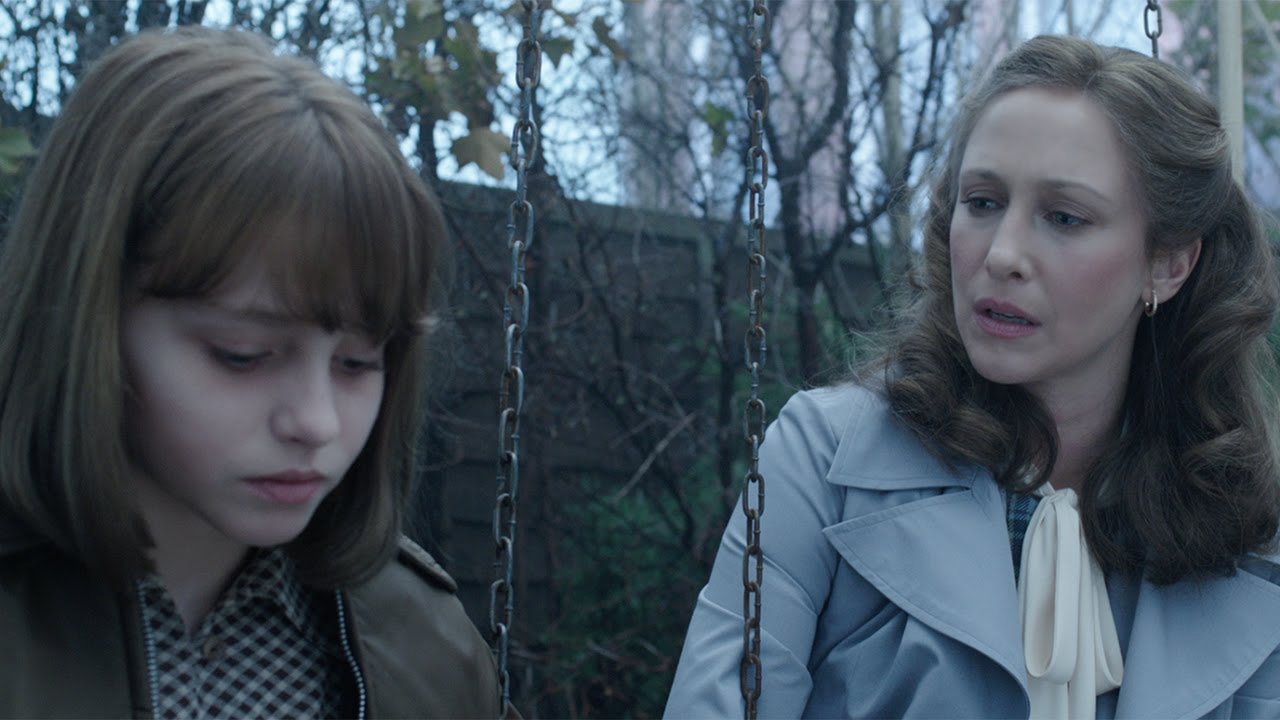
Surprisingly, The Conjuring 2 spends a lot of time fixating on whether or not the Warrens were con artists, regularly pitting them both against skeptics who sound quite similar to the real-life critics from over the years. And much of the film’s third act hinges on whether or not something paranormal is actually going on with the Hodgson family, especially 11-year-old Janet who finds herself being used as a pawn by the alleged spirit in her home.

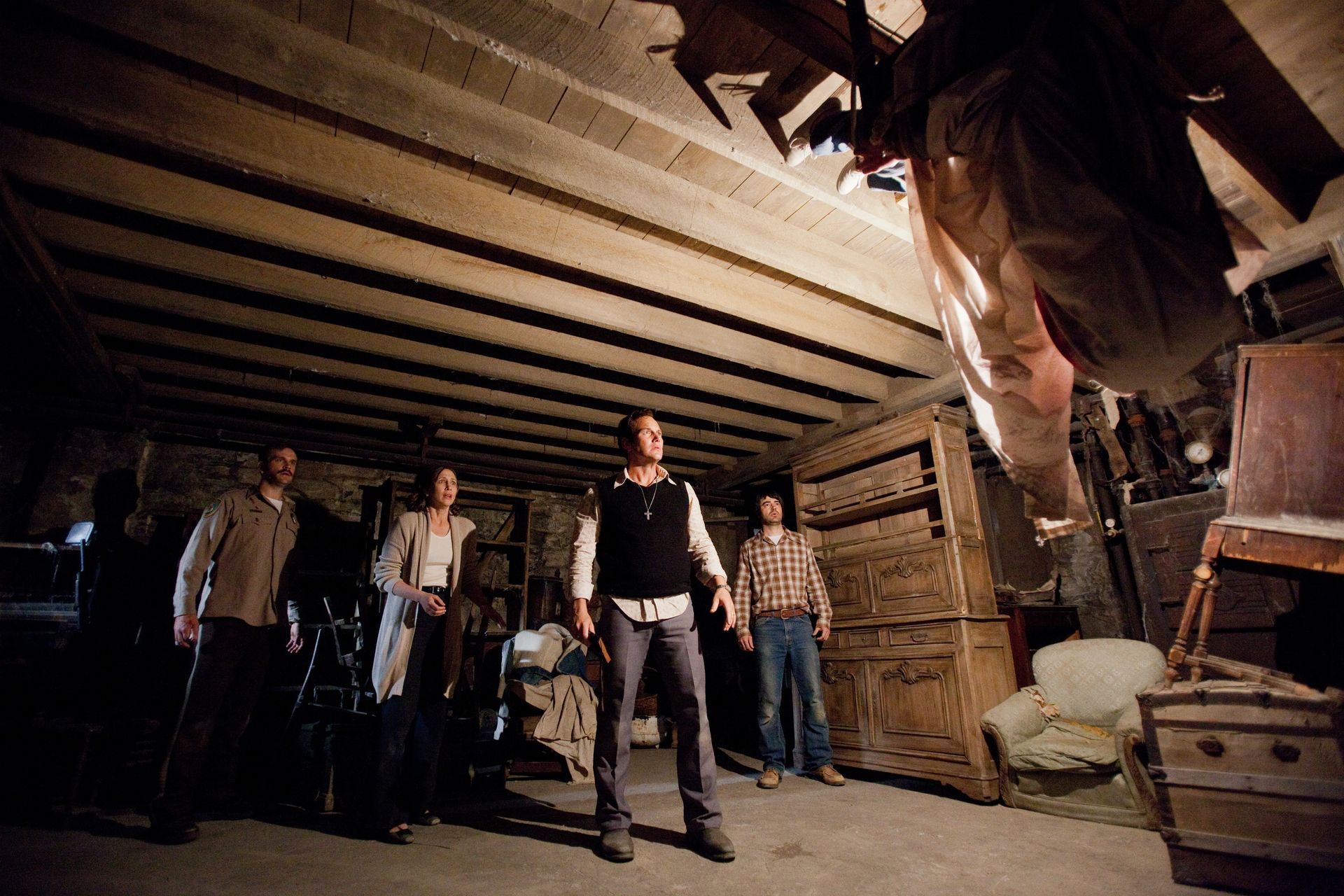
While this could have been a distracting, even eye-rolling aspect of the movie, Wan pulls it off pretty well by focusing on what he does best as a horror director: excellent (and restrained) jump scares, striking set pieces, and an attention to detail in every location. It’s chilling to see the real photos compared to the ones in this film, which seem too creepy to believe at times.

It’s even weirder how easy it is to root for the Warrens themselves, played again by Patrick Wilson and Vera Farmiga, who add some unexpected heart to a movie that could have easily been very cold and emotionally one-note. This gets into more of how their relationship creates a unique thread between movies, more so than many other sequels and franchises, even outside the horror genre.

Some of this world-building won’t work well for all audiences, though, despite how easy it is to jump into Conjuring 2 without seeing the first film. The problem is that the movie almost crams too much material in its long running time to remain effective for long. Every scene is at least decently scary, but by the end, you’ll feel like some of the best scenes were scattered about instead of built up into one effective thrill ride.

the conjuring 2 review

But this pacing is only a minor complaint considering how well-crafted and executed The Conjuring 2 is as a haunted house story, enough to captivate even the harshest critics of who’ll find it weird that after 40 years, people are still anxious to believe in the Warrens.

Grade: A- 

Extra Credits:

  • If you stick around for the credits, you’ll be treated to the actual audio of the Enfield recordings, juxtaposed with the real-life photos being held alongside stills from the movie.
  • This is one of those rare horror films that has me excited for a sequel.
  • Vera Farmiga, once again, makes this movie a lot better than what it would have been without her.
  • Seriously, there are skeptics all over this movie who call BS on everything you’d expect. It takes lampshading to a whole new level for this film to address it. And honestly, it kind of works in a weird way.
  • This movie is a stunning 133 minutes long.
  • Speaking of Paranormal Activity, I sincerely hope Conjuring never goes that far.

    I’m Jon and thanks for reading this. You can subscribe to my posts by clicking “Follow” in the right sidebar. Or just say hey on Twitter! @JonNegroni


Second Opinion: The Best Trick In ‘The Conjuring’ Was Its Marketing

the conjuring opinion

What would you rather see? A horror film with a “PG13” rating for violence, some nudity, and language? Or a horror film with an “R” rating for being too scary?

This was the main hook for James Wan’s The Conjuring, which served as his spiritual followup to Insidious and perhaps even Saw for sheer inventiveness with the genre. The care he put into crafting a horror film where the horror comes first is probably what set The Conjuring apart for its hit box office run in 2013.

Even the incredibly loose “based on a true story” gimmick is underplayed here, as the movie centers around a couple of the case files of Ed and Lorraine Warren, who were actual paranormal investigators for decades known best for the story that became another well-known film, The Amityville Horror (along with its 2005 remake).

Set in the 70s, The Conjuring goes back in forth between point of view characters. First with the Warren couple (Vera Farmiga and Patrick Wilson) during some introductory exposition concerning the “Annabelle doll” case file, which was intriguing enough to green-light a standalone to release just a year later. The film then pivots to a standard haunted house narrative centered around a family with Ron Livingston and Lilli Taylor as the parents.

the conjuring opinion

Its the typical horror film fare with sudden noises, creepy atmosphere, and near-misses between ghost and human. But Wan prevents some of this familiarity to feel like fatigue, offering some much needed surprises in the form of his technique, always shifting perspective on the rooms and preventing the specters from getting too much facetime. Instead, we study the reactions of the humans who witness the supernatural for themselves, allowing us to fill in the blanks according to their fine performances.

None of these filming techniques are new when it comes to classic horror, but they’re a breath of fresh, foggy air for modern scare films that have adapted perhaps a little too much to the inviting world of “anything can happen” visual effects that are purely built in a computer. Perhaps it’s easy to accept the throwback nature of Conjuring due to the fact that its set in the 70s and has a slight filter that softens the picture.

While every performance is above grade here, there are some instances of somewhat forced drama used to round out the Warren couple, with lots of added dialogue concerning God’s purpose in their lives and how that will play into their marriage and family. Some of it works to contrast nicely with the chaos that ensues once they decide to aid the central family of The Conjuring, but the nicest thing to say about it is the fact that James Wan does a far better job with atmosphere and pacing than he does with living, breathing characters.

the conjuring opinion

Still, The Conjuring is one of the best horror films in the last few years, and mostly because of its restraint. As a result, the marketing for said movie (while inundated with the annoying Twitter quotes from screenings) was successful because of what it said about the love put into the film’s creation, rather than a forced superlative that would have sounded like white noise for most audiences.

(Second Opinion) Grade: A-


I’m Jon and thanks for reading this. You can subscribe to my posts by clicking “Follow” in the right sidebar. Or just say hey on Twitter! @JonNegroni

Hollywood has a Sequel Problem

hollywood sequel problem

Pamela McClintock via THR: 

Sequel after sequel has disappointed at the box office this year. This weekend’s underpowered opening of Teenage Mutant Ninja Turtles: Out of the Shadows is just the latest example. And that is perplexing and alarming Hollywood studios, which are addicted to turning films of all sizes and genres into ongoing franchises, from comedies to the smallest horror films to tentpoles.

And that’s just one of many examples cased in this article, which include Alice Through the Looking GlassThe Huntsman: Winter’s WarRide Along 2Zoolander 2, Divergent Series: Allegiant even Neighbors 2, and more, which all have suffered huge drops in box office against all of Hollywood’s expectations for how sequels should “work.”

In this list alone, I’ve only bothered to review Alice and Allegiant, mostly because interest in these other movies was waning long before I ever went to a screening. When I choose a film to review, I usually go with the one I think people are actually on the fence about checking out and want to discuss afterward. How much does that say about the fact that we don’t even want to talk about some of these sequels?

TMNT is the exception, and it’s a film I would have reviewed if I had seen the first of the series. But even that franchise is a tough sell for me because the Turtles are such lasting pop culture icons with so many iterations that I don’t think my opinion on said movies will do much to sway people or offer some new insight.

“Sequels of late have fallen on rough times. The tried-and-true formulas and familiar characters and themes that are the cornerstone of the modern sequel have acted as a de facto life insurance policy against box-office failure,” says box-office analyst Paul Dergarabedian. “However, 2016 has proven to be a very tough battleground, and the landscape has been littered with a series of sequels that have come up short, and thus call into question the entire notion of the inherent appeal of non-original, franchise-based content.”

Good.

Review: ‘Popstar: Never Stop Never Stopping’ Is More than Just a Lonely Island Movie

popstar review

It’s unclear how much the world needed a straightforward lampoon of the pop music industry, that is until you watch Popstar: Never Stop Never Stopping, a mockumentary starring Andy Samberg and his fellow Lonely Island performers that picks apart Justin Bieber: Never Say Never, TMZ, reality television, and many other staples of late-2000s/early-20teens/and the present.

So if you’ve seen a rock documentary, perhaps even the wonderful This is Spinal Tap, then you can easily imagine the set up and format of the film, which was directed and written by Lonely Island’s Akiva Schaffer and Jorma Taccone (Samberg also shares a writing credit).

The mockumentary centers around Conner Friel (or his stage name, Conner4real), a massively successful pop star who deals with the highs and lows of fame as he prepares to release his sophomore album, claiming he’s a perfectionist because it just has to sell way more than his first album after splitting from his own version of Destiny’s Child, the Style Boyz (there’s obviously a not-so-subtle One Direction jab thrown in here and there).

popstar review

What follows is a series of well-constructed set pieces that consistently top the humor with each scene. Popstar is a viciously funny movie, for Top 40 fans, Justin Bieber fans, Justin Bieber haters, reality TV fans and haters, and pretty much anyone else somewhat clued in on what the jokes are dismantling.

The pacing works well too, always shifting from scripted “fly on the wall” conversations that move the somewhat predictable (but entertaining) plot along, in between hilarious music numbers that range from stage performances to music videos, including one standout that parodies Macklemore’s “Same Love” by having Conner sing a marriage equality rights song where he reminds the viewers that he’s not gay in every other verse.

popstar review

This film has a lot of humorous moments, rivaling this year’s Deadpool even for how many jokes and references you’re likely to miss on the first viewing. But the majority of them land, and even the weaker scenes, mostly in the third act, are kept in balance by the consistently funny commentary aided by real-life music celebrities who offer deadpan reactions to Conner’s latest media disasters.

Though Popstar doesn’t offer anything that will pull in viewers at large who are mostly uninterested in the subject material (or the Lonely Island brand, for that matter), it’s still a competent entry in a genre that has been severely lacking outside of TV sitcoms. And it even has a fair share of ageless jokes that will be sure to crack your smile, even if you’ve never heard of Taylor Swift, Seal, and the peril of Yelp reviews.

Grade: B+

Extra Credits:

  • One criticism I left out of this review was how generic the main story is, concerning Conner’s “solo act” creating a rift between him and his fellow Style Boyz (played by Schaffer and Taccone). And the reason is because I think the story had to be a little familiar for us to appreciate the parody.
  • I didn’t get to mention one of the film’s best supporting actors, Tim Meadows, who plays Conner’s manager. He gets a lot of screen time in this one, and it’s all well-deserved.
  • “Pitchfork can be a little pretentious.”
  • Judd Apatow was a producer on this film, marking this as his first collaboration with Samberg.
  • Stick around the for the mid-credits scene, which features a last-minute send off to one of the film’s best gags.
  • Think of it this way. Popstar is essentially the Zoolander for the pop music industry.

    I’m Jon and thanks for reading this. You can subscribe to my posts by clicking “Follow” in the right sidebar. Or just say hey on Twitter! @JonNegroni


X-Men Through the Looking Glass

x-men through the looking glass

This week on the Now Conspiring, we review X-Men: Apocalypse and Alice Through the Looking Glass. We also cover some pressing entertainment news and debate whether or not Fox should give the X-Men rights back to Marvel Studios.

QUESTION OF THE WEEK: Do you think X-Men movies should be made by Marvel now?

Go on…X-Men Through the Looking Glass

Review: ‘X-Men: Apocalypse’ Takes Fan Service to New Heights

x-men apocalypse review

Apocalypse will have a hard time swaying movie fans over to its clunky, bombastic style that feels more like a comic-book adapted to the screen than even Snyder’s Watchmen, and this latest X-Men sequel isn’t even strictly based on any one story.

Other factors work against Apocalypse in the sense that it will lose many different types of viewers along the running time. It still suffers from problems it can’t readily solve, like with how overwhelming this cinematic universe has become in terms alternate timelines, the large cast of characters, and keeping your mind off of its now irrelevant predecessors (especially when Sophie Turner’s Jean Grey makes a not-so-subtle wink at how Last Stand is the “worst.”)

These were problems with Days of Future Past, too, but for the first time since X2, an X-Men movie has come along that does far more with its material than we should have otherwise suspected. Flaws and all, X-Men: Apocalypse is an excellent work of film in both ambition and execution, despite how alienating it will be for a wide swatch of viewers.

Even at its most convoluted, director Bryan Singer offers a movie with some thrilling set pieces that connect a lot of meandering pieces. They’re some of the best moments in the franchise, even if they have to share screen time with some of the weirdest flaws in the franchise.

x-men apocalypse review

This is the third film of the trilogy started by First Class, and it even sports several flashbacks to both that and the second film in order to deepen the lore many of us took for granted over the years, including plot involvement from Rose Byrne’s Moira and even Alex Summers.

Some of the loose story threads from those films come to a head in Apocalypse, though not in a way that feels paid off by the main narrative of this movie. Apocalypse opens with the origin of its titular villain, the “first” mutant played by Oscar Isaac, a power-collecting man worshipped like a god who was buried by rebellious followers thousands of years ago. Mystique and Magneto’s actions in D.C. ten years prior have since sparked mutant cults, including one that sets out to resurrect Apocalypse for no real explanation beyond…well, he exists to be worshipped.

While this happens, the film spends a lot of time catching fans up with the established characters and setting up new mutant students that will inevitably team up to face this new threat. The pacing and plot jumping from these characters is actually quite competent, though sure to confound anyone who skipped First Class or hasn’t seen it since 2011. If you’re invested in this universe, it’s more exciting than worthy of head-scratching.

For once, Tye Sheridan’s Cyclops is given the screen time worth his due, including a sub plot that better sets him up as a future leader within the ranks. Jean Grey’s character arc is a little messier, but easy to latch onto, and Nightcrawler is handed scraps he turns into some meaty offerings, thanks to a fun rivalry established between him and Angel.

x-men apocalypse review

Jennifer Lawrence plays a more relaxed Mystique than her somewhat lazy performance in Days of Future Past. She still seems miscast here, but Apocalypse seems to have a better idea of what to do with this hero/villain who constantly finds herself switching sides. In Apocalypse, she has a more solid foot in the heroic camp, and it’s refreshing to see her work with the X-Men without the tedious guesswork over whether or not she’s sincere. It’s a testament to the film’s willingness to allow Mystique a story in these movies that follows swiftly from the first two films, rather than a correction to make her evil for the sake of being truer to the comic.

As for Apocalypse and his four, loyal followers, the film falls a bit short in giving them time to shine, aside from a satisfying continuation of Magneto’s tragic story. Yet once again, we’re forced to sit through familiar stories that place Charles Xavier and Magneto at the center, with offhand characters (including the villain and a just-as-good-as-last-time Quicksilver played by Evan Peters) working around them.

In other words, Apocalypse lives, breathes, and dies as a comic book story, not a movie. Like a comic, it shifts locations quickly and without much cohesion. Its colors brightly match the 80s time period in a way that makes me wish for more X-Men films in this decade. And the plot boils down to a simple battle between good and evil that focuses more on the main characters deciding what truly is good and evil, as well as how their actions in this battle will affect future storylines in the series.

x-men apocalypse review

Its biggest flaw is probably where it falls extremely short with visuals. The CGI is either decent or poor to the point of distraction. You have to be fully onboard with this universe of zany characters and over-the-top action in order to overlook some of the weaker effects, but it’s somewhat matched by some of the most entertaining fight choreography seen in these films, including what may forever be a wholly underrated fight sequence between Beast (reprised by Nicholas Hoult) and Psylocke (played by Olivia Munn), that utilizes both characters in a way X-Men fans probably never expected to make it to the movies.

Perhaps along the way, Singer decided to make this the X-Men film that pays more service to fans of X-Men, rather than movie fans. Unfortunately, that’s sure to be a problem for plenty of big X-Men fans as well, but that doesn’t negate much of Apocalypse that is just solidly entertaining.

Grade: B

Extra credits: 

  • I really wanted to give this film a higher score, if only because I was so enthralled by it, in a way that rivals Deadpool and Civil War even. Unfortunately, it’s impossible to overlook some of the bigger flaws and how they will be deal breakers for most audiences. Hopefully, you’ll enjoy Apocalypse as much as I did, because it’s easily one of my favorite X-Men films to date.
  • No spoilers, but stick around for the end of the credits. Not like you needed to be reminded.
  • Comparisons will likely be made to Dawn of Justice, a film that is also likened to being too much of a comic-book in terms of structure, so it’s off-putting to movie fans. The big difference is that Apocalypse does a much better job, all around. At no point was I shaking my head at plot holes or gaps in character motivation.
  • I was always a fan of X-Men: Evolution more than the older animated cartoon. Sorry. But for that reason, Apocalypse worked on a deeper level for me considering the similarities. Something about seeing Jean, Scott, and Nightcrawler as students felt right.
  • Not enough Storm. Not even close.
  • I might actually be in the camp of people who now wish for an X-Men movie that takes a break from Magneto and Mystique for a while. Apocalypse might have been something really special (and for everyone) if it had streamlined its characters more and made this an Xavier vs. Apocalypse affair.

I’m Jon and thanks for reading this. You can subscribe to my posts by clicking “Follow” in the right sidebar. Or just say hey on Twitter! @JonNegroni

Snarcasm: That Martha Moment in ‘Batman v Superman’ Is Smarter Than You Think

martha batman v superman

Snark + Sarcasm = what you’re about to read.

I didn’t care for Batman v Superman, but you have to admit that the movie has at least succeeded in getting people to talk about it. And I applaud any fan of the film who is continuing to defend it in a way that’s constructive and meaningful for both sides of the debate.

But at some point, your defense of this movie becomes more akin to speculation, rather than an honest interpretation of what’s presented. What I mean is that it’s easy to fall into a trap where you’re adding an interpretation to your defense that makes the movie seem better, except that it doesn’t flow from what’s been set up in the narrative. This is one of those times.

John Campea is a skilled critic, though I disagree with him often and certainly with this movie. One of his latest videos is titled, “Defending the ‘Martha’ Scene in Batman v Superman,” and it’s his case for why the movie is smarter than people give it credit for.

I obviously disagreeSpoilers for the movie from here on out.

I know the movie’s been out for months and months and months,

It’s only been two months, so don’t sweat it.

As one of the people who like Batman v Supermanthere’s one criticism that movie always gets (you still see it joked about all the time all the time) and I wanted to give a defense of it. And the moment I’m talking about in Batman v Superman is the “Martha” moment. You know what I’m talking about. You see the jokes all over the place online, right? 

Sure, but not just jokes. People genuinely criticize the movie for this moment without poking fun at it. Hopefully, your defense will cover this, and not just the knee-jerk meme reactions that turn the opposing argument into a straw man.

I just think that that scene has been misunderstood a lot. 

In a soft way, he’s basically saying here that there is a correct way to interpret this scene, by saying most of us “misunderstood” it.

Because then he goes on about three times, saying what boils down to, “your way of interpreting this scene might have been different than mine and that’s cool.”

Well, which is it?

…I actually see that scene as a strength in the movie as opposed to a major major flaw in the movie.

If a film falls down in a forest, but no one is around to hear it…wait, no, that’s not how i goes.

My point is that even if you’re right, and we’re all just too blinded by the Spidey-light to see this moment’s greatness, the fact is that this scene, the most pivotal point of the film, was in fact a massive failure for the majority of moviegoers when they first experienced it. That doesn’t make the movie bad on its own, but it is a crucial flaw of the execution that you need to accept.

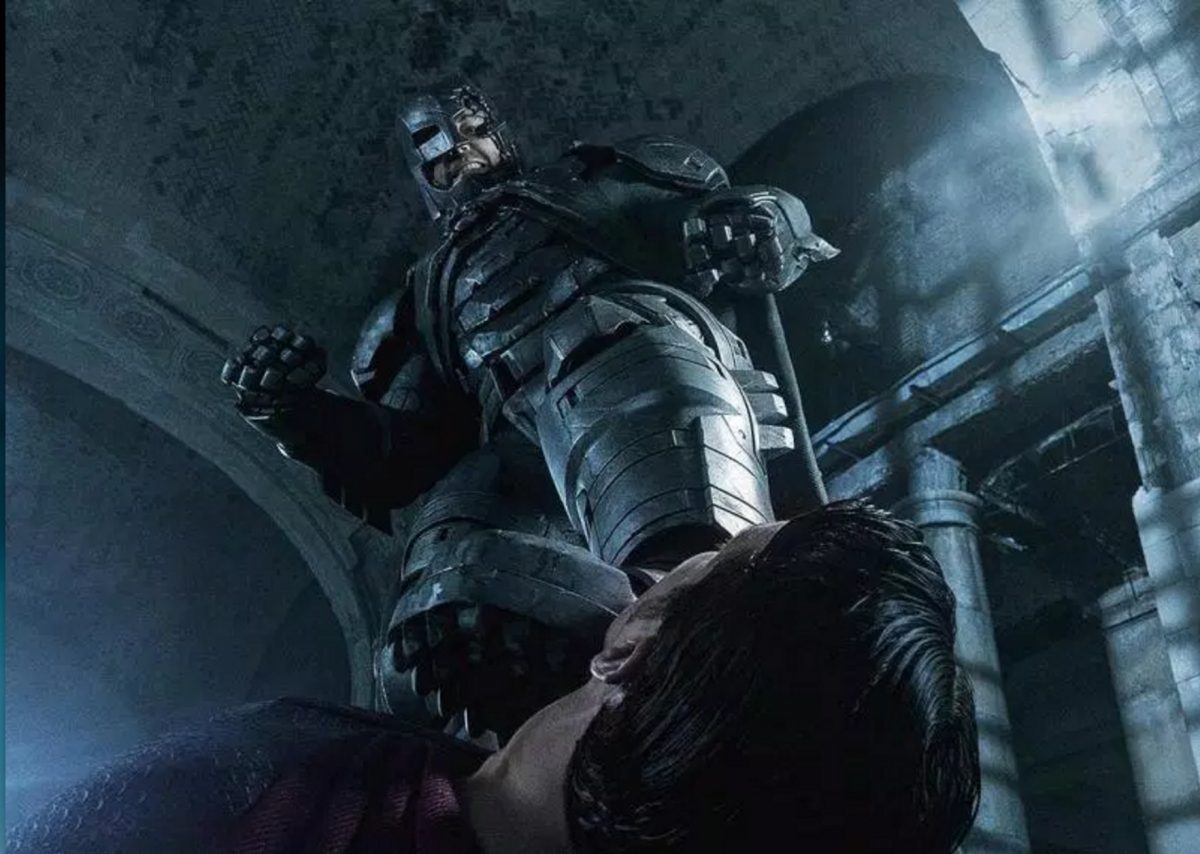
Batman and Superman finally have their fight. They had a definitive winner. Batman was the winner of the fight. And of course, Batman is about to deliver the killing blow to now a downed, helpless opponent. And Superman raises up his hands and says, “Save Martha.” And of course, Batman has his freak out, like “what did you say that name, why did you say that name.” Here is how I interpreted it the first time I saw the film, OK.

Here we go.

Look, Batman is the detective, right? 

Clearly not a good one, like at all,  in this movie, but go on.

And what we know as an audience up till that point is that Lex Luthor has actually been playing him and been playing both of them. Even when Bruce thought he was playing Lex, as it turns out, Lex was playing him.

He was? Because here’s what really happened with Bruce and Lex in this movie. Bruce steals a bunch of Lex’s information about metahumans and uncovers the secret about kryptonite. Then he steals the kryptonite to build weapons to kill Superman. Lex was never “playing” Bruce or manipulating his actions here. He simply allowed Bruce to carry out his plans, while somehow also knowing he was Batman for some reason that’s never explained, and then manipulates Superman, which let’s admit is not hard to do in any interpretation of the character.

Sure, Luthor says to Superman that he’s been playing them because he’s been fueling the animosity between both characters. But one of my main issues with that scene is that this line makes no sense. Luthor had nothing to do with the opening scene where we see why Bruce hates Superman to the point that he does.

If we’re to believe that the blowing up of the congressional hearing is all it took for Bruce to take action (which isn’t the case because he was already gearing up for the fight), then we have to believe that Bruce is a total idiot for “detecting” Superman’s involvement in any of these situations he’s obviously being framed for.

martha batman v superman

Even when Bruce is justifying his decision to kill Superman, he seems to admit that the guy hasn’t done anything wrong, yet. But the “if there’s a 1% chance” line along with his nightmare where Superman really does kill him has everything to do with his fueled animosity toward the guy, not Luthor himself.

But by all means, continue.

He thought, “Oh, I was so smart. I broke into his house and his party. Got that information. Turns out, that’s what Lex wanted all along.

Really? His plan was to hope that Batman would show up and steal something from him? That’s the extent of his manipulation?

Of course, nothing in the movie actually sets this up or leads us to believe any of this is part of Luthor’s plan, but that’s probably why Campea’s interpretation is so much different from, you know, pretty much everyone else’s.

Anyway, so here you have Bruce Wayne, who is the detective, and he figures all this stuff out on his own, normally, and he has this moment where…remember that one big conversation he had with Alfred, where Bruce has convinced himself, thanks in no small part to the manipulations of Lex Luthor, that Superman is actually a monster.

Yes in small part. In the atoms of that small part. Because at no point does Luthor steer Bruce toward wanting to kill Superman. That’s all been established by the first 20 minutes when his character watches the collateral damage from Man of Steel occur.

He has convinced himself that he is a threat to humanity. When he’s talking to Alfred, you know, it’s not just, “Hey, I know he’s a good man, but you know, if there’s a 1% chance he could destroy the earth, we gotta take that certainty.” No, it’s like, “That son of a b***h brought the war to us!” The movie gave us glimpses…he’s convinced that Superman is a monster and will be a catastrophe for the earth. 

Nothing says Batman like a guy who — instead of figuring out who the enemy is and understanding them — decides to just kill the guy to death because…well you’ll have to watch the Director’s Cut to get more “glimpses” of that.

He’s about to finish him off, and remember up to this point, we haven’t seen Batman kill an unarmed, helpless person.

Right, we’ve only seen him blow up criminals driving cars setting off chain reactions of other cars blowing up more criminals. No big deal.

Superman reaches out his arm and he says, “Save Martha.” And what I saw happen onscreen was, number one, we all know Batman is a little bit disturbed. We know that. We’ve always known that about Batman. But when he reaches out and in his last breath, he doesn’t beg for his life, he doesn’t say some ominous threatening thing that a super villain would say in that scene.

Really? A lot of super villains will say anything to get out of being killed, including, “if you kill me, she’ll die! Ha ha ha!” Not saying Superman was going for that, but the point remains.

He uses his last breath to plead for the life of somebody else.

No, Superman says, “You’re letting them kill Martha.” He doesn’t plead for anyone’s life. He basically throws a guilt trip at the guy in the hopes that he’ll put the spear down. Also, he’s doing this in a very odd way. He’s calling his mother by her first name instead of “Mom” for some writers-team-related reason. And how will Batman know who’s he’s talking about? Superman can’t say, “Martha Kent” because…well,  because then Batman won’t get confused and the plot will be halted. The writing team strikes again.

Eventually, Superman does say, “Find him…Save Martha.” But again, how are these pronouns and first names helpful in any way? Superman doesn’t know Lois Lane isn’t going to pop in and add some much-needed exposition.

They’ve set up in the movie that Bruce has some loose wires when it comes to memories and visions about his own mother.

Yeah, it’s almost as if the purpose of their existence was just to pay off this one moment in the movie, not to cohesively flow with the rest of the narrative.

This being Bruce had convinced himself was a pure monster…he sees him in that moment reach out and asking for the life of somebody else. He’s asking the guy who’s about to kill him, “Please go and save this person.” 

So that’s why your experience was so much different than everyone else’s! Because you apparently watched a screening with drastically different dialogue. I mean, come on, Zach Snyder’s version of Superman asking please?

That creates a disconnect for Batman. It’s a contradiction to what Batman believes about this being laying in front of him.

That’s why after this line, Batman puts the spear down realizing that Superman isn’t a monster.

Wait, what? Oh, that didn’t happen at all, did it. What really happened was, he kept the spear up and started yelling, “Why did you say that name? Martha? Why did you say that name? WHY DID YOU SAY THAT NAME?”

What a disconnect, wow!

Lois Lane comes in and she throws himself (herself?) down on top of him. This creates another disconnect for Batman because he sees a famous, intelligent human being who loves this person pleading for his life.

Except, well, Lois doesn’t plead for Superman’s life. She says, “It’s his mother’s name! It’s his mother’s name!”

Which is why, class, everyone paid more attention to the fact that “Martha” was said as a coincidence, rather than this idea that Batman could have a change of heart. Few will disagree that your interpretation is what the movie was trying to do. But the execution was so sloppy and mishandled that audiences were forced into an interpretation that latched closer to what was actually happening onscreen.

Think about it. If these disconnects are so relevant and compelling, why did the movie have to also point out that their moms have the same name? By your logic, he could have just said, save my mom, and Batman would have gone through the same change of heart.

It’s not misunderstood. We know what Snyder and his writers were going for. You are simply misunderstanding the execution, believing its stronger than it really is.

Then it goes to a third stage of disconnect for Batman.

Seriously? According to you, the guy should have an aneurysm at this point.

She explains, “That’s the name of his mother.” Now you gotta understand that these are three points of disconnect for Bruce in this construct he’s had in his head about Superman, this monster that’s gonna be the destruction of the world.

The problem with this is that when you’re watching the movie, you don’t feel any real sympathy for Superman that can be related to what Batman’s going through. All of these arguments for why Batman should sympathize with Superman fly in the face of everything we’ve watched and learned about the character throughout the movie.

He’s violent, aggressive, and acts like he’s above everyone else because he refuses to participate in his own defense. Even when he goes to the court hearing, the script prevents him from ever getting a word out. So when we’re supposed to believe that he’s not a monster for arbitrary reasons like, “Well, he has a mom and some woman loves him,” we’re left wondering why that’s enough for Batman to drop his weapons and suddenly work with this guy.

batman v superman wrong

It’s not satisfying, to the point where we’re also left wondering if the “Martha” connection is meant to be a stronger emotional weight than it should be, which is where the criticism and a lot of the jokes come from. Again, the problem has more to do with the execution than the idea itself, so if you ignore the main flaws of how this plays out in the film, you’re going to like it more and find it weird that everyone else disagrees with you.

Campea goes on to explain that Batman freaking out over all this is somehow him “figuring it out” because he’s such a great detective and compares it to how a supercomputer thinks.

Seriously. Seriously.

“This guy has a mother, too!” won’t quite hold up in court, and it doesn’t negate any of Batman’s hatred for this guy who’s caused the deaths of so many people. Campea even argues that he’s figured out that this is all Lex Luthor, except that also doesn’t make any sense because again, Lex Luthor had nothing to do with the events that cemented Bruce’s hatred for this guy.

When a lot of people saw, (starts doing a jokey impression) “Wait a minute, Superman says his mom’s name is Martha, too, and Batman goes, ‘Oh, well we should be best friends!'” I get why some people saw that. 

Sigh.

What I saw was a complex, intelligent deconstruction of the great detective putting the pieces together when new information was brought into it.

What everyone else saw was, “Wow, this screenwriting is trying to be complex and intelligent but it’s doing a horrible job. Am I really supposed to believe what I’m seeing right now?”

This is exacerbated by Batman calling himself Superman’s friend ten minutes later, adding to the steaming pot of bloated confusion that is this movie.

Don’t get me wrong. Campea is a good guy, and nothing about this video is mean-spirited or meant to make people feel stupid for disagreeing with him. He’s simply offering up his own perspective and why he thinks that makes the movie better.

batman v superman wrong

That said, it’s also clear to me that a little reaching is going on in order to pass the movie off as better than it really is. And it’s veiled as deep film analysis in order to convince people that they missed something when they first saw the movie.

But no, this isn’t another one of those under appreciated films that will one day be celebrated despite the fact that it was somehow ahead of its time. Films like that have always been criticized more for their content and brazen style, not fundamental misunderstandings when it comes to filmmaking and how to tell a unique story.


Thanks for reading this. To get updates on my theories, books, and giveaways, join my mailing list.

Or just say hey on Twitter: @JonNegroni