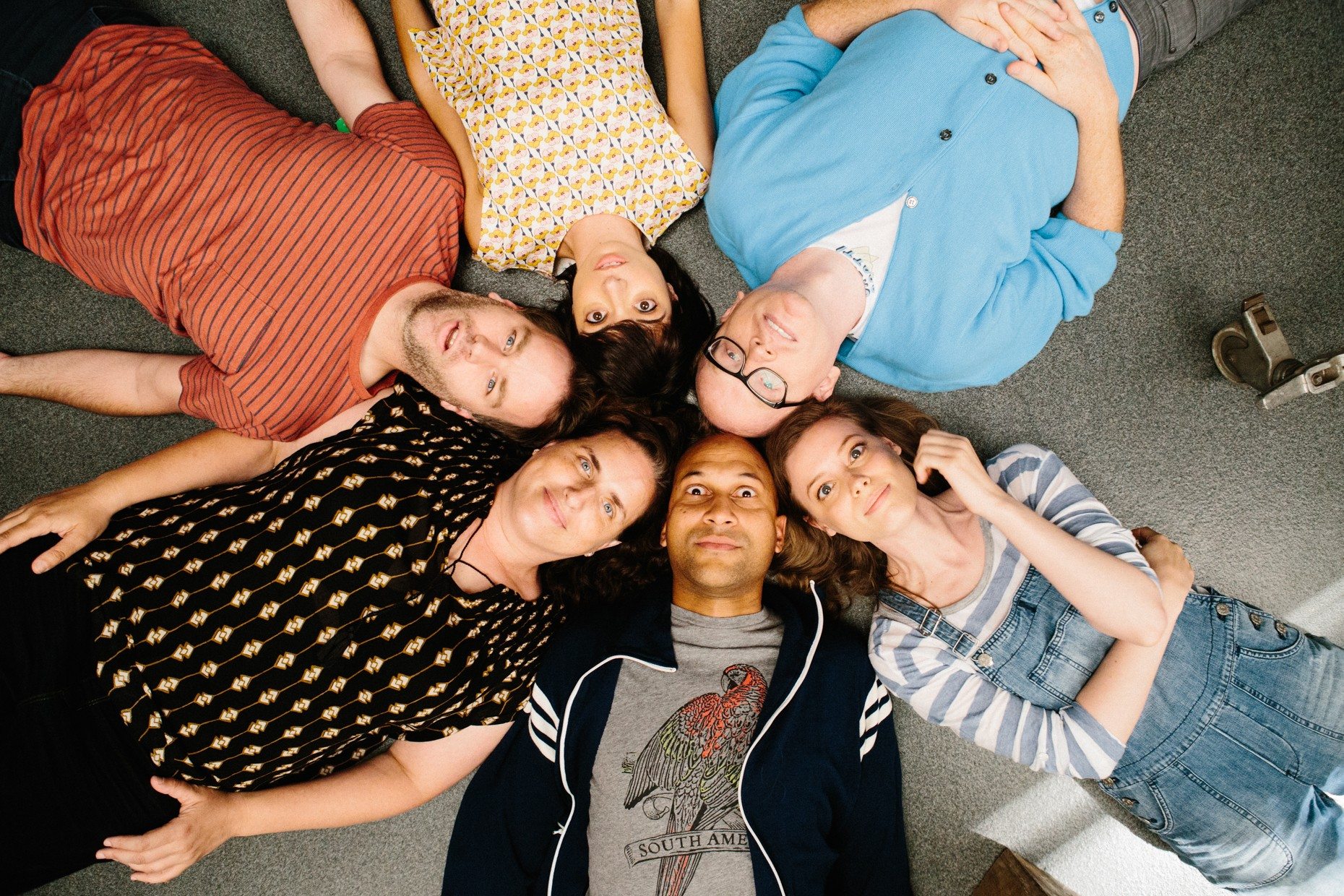
Second Opinion: ‘Sing Street’ Proves Not all Crowd-Pleasers Are Created Equal

sing street

As of September, my favorite movie of 2016 is John Carney’s Sing Street, a musical throwback set during the 80s boom in the U.K. Consider this my (late) review, perhaps made better by the fact that I’ve had months to process Sing Street and even revisit it.

For that reason, this is a Second Opinion, in the sense that I’m also forced to evaluate the strengths and weaknesses of Sing Street against the critic community at large. And it’s not quite so clear where critics landed with this film.

At first glance, you’d think Sing Street is the indie darling of the year, maybe because of its high score on Rotten Tomatoes or if you’ve heard me gush about the film on Now Conspiring. But that’s not to say the film hasn’t received some tepid responses as well, with many critics both praising the film and undercutting it with the “low” side of positive scores.

From what I can tell, the main reason is because Sing Street commits a “sin” in the eyes of a lot of serious film critics: it’s a crowd-pleaser.
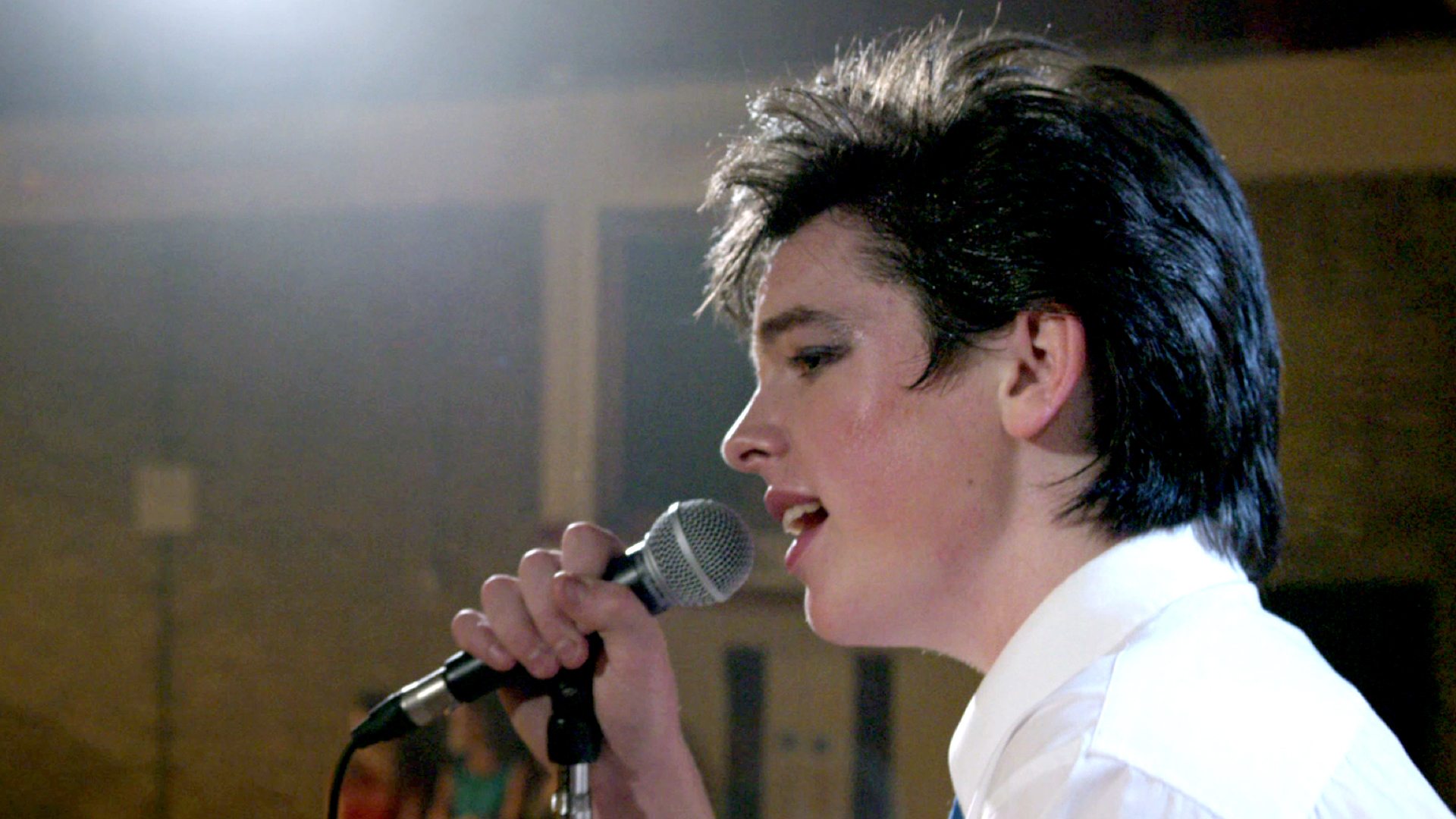
sing street

You’ve heard the term, but let’s be more specific. The idea of a movie being a crowd-pleaser is an underhanded compliment, meant to criticize the film for using familiar tropes to elicit a specific reaction from the audience. It’s also used to note a film that is essentially boring in its formula and afraid of taking risks. Relevant crowd-pleasers include the likes of Marvel superhero movies, nostalgic franchise sequels, and even Oscar-bait — those Fall films that seemed designed to do nothing more than win awards.

So yes, it’s pretty accurate to call Sing Street a crowd-pleaser, perhaps to an even heavier degree because the film it draws so much heart from is John Carney’s previous film, Once (we’ll just skip Begin Again for obvious reasons if you’ve seen it).

Yet Sing Street also makes the case for why some crowd-pleasers are far superior to others. At the end of the film, I did find myself realizing how loud Carney’s voice was throughout, and the heart of the movie couldn’t be clearer. It’s a film you discuss and analyze for its craft in filmmaking and how it made you feel. Lesser crowd-pleasers suffer from only having the latter.
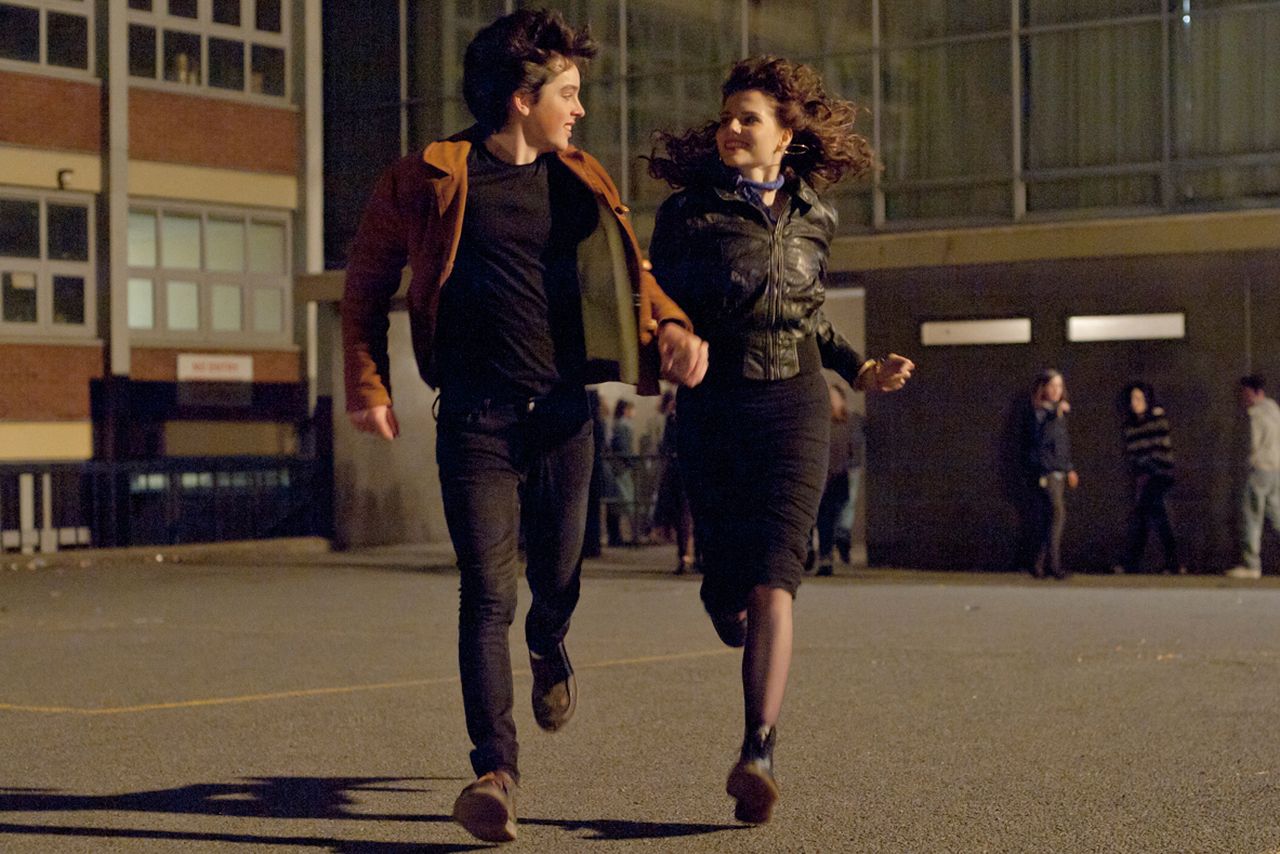
sing street

Let’s talk about how the film is set up. Set in Dublin, the movie centers around the life and journey of Conor (played by Ferdia Walsh-Peelo), a shy teenager who slowly cultivates a passion for music while attempting to win the heart of an older, beautiful girl (Raphina, played by Lucy Boynton). He starts a band in order to impress her, but the film splinters his motivations in a lot of surprising ways. Conor wants to break free of the rules of his claustrophobic prep school, suffer through his parents’ divorce, live up to his brother’s dreams, find success with his band…oh, and get the girl.

There’s real beauty in how simple the film appears, but it’s anything but straightforward. The film starts with a jumble of problems coming Conor’s way as he has to adjust to a new life at Synge Street, which is packed with bullies and a disturbing menace of a headmaster. But the moment he sees the girl, all those problems get thrown aside completely — a perfect capturing of what it’s like to fall in “love.”

That would be fine enough if the film didn’t also execute the rest of its content so fluidly and with so much endearing music (the soundtrack is sure to make an impression). There’s no crystallizing moment or raw talent in Conor that suggests movie magic. He starts like most other musicians and creatives: by ripping people off.
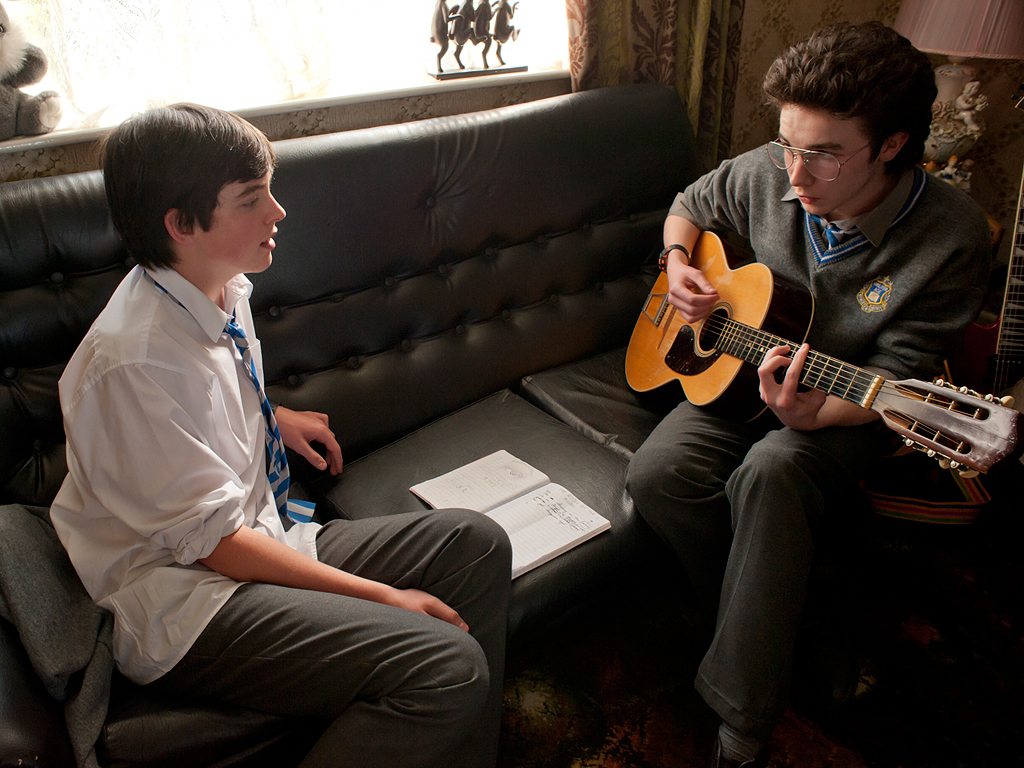
sing street

Eamon (Conor’s first recruit for the band, played by Mark McKenna) is the true prodigy, able to play multiple instruments and come up with the majority of the actual music. Conor’s brother (Brendan, played by Jack Reynor) mentors him on which music is worth mimicking, paving the way for Conor to gradually work his way to becoming a real musician. Even songwriting, Conor’s only apparent gift he’s discovered for himself, is only made possible because of, you guessed it, the girl.

Watching this creative process unfold as a love story is one of the most unique and charming experiences I’ve been entertained by in years. It’s a standout script with standout music and performances that makes it a crowd-pleaser for all of the right reasons, not the wrong ones. That’s not to say the film is perfect, and I could list several problems I have with the film, but at this point, they’re perfunctory and removed from what makes the film a keeper.

I think what makes Sing Street somewhat better than everything else I’ve seen this year has a lot to do with two reasons: for one thing, it transcends its genres (the comedy and romance never overshadow the darkness and melodrama). Second, the movie tackles a feeling that only movies can truly provide. And that’s creative spectacle unrestrained by a director’s heart.

Grade: A


Thanks for reading this. Seriously. You can subscribe to my posts by clicking “Follow” in the right sidebar. 

Or just say hello on Twitter: @JonNegroni


Review: ‘Sully’ Is a Weirdly Good, and Original, Exploration of Heroism

sully

Some movies are “based on a true story,” but it would be limiting to slot Sully, the latest film from Clint Eastwood, into such a broad, somewhat uninteresting category. When audiences go to see a biopic, or something similar, there’s a yearning for perspective, either through the eyes of the man or woman in question, or the people said person may have affected over the course of their own dynamic stories.

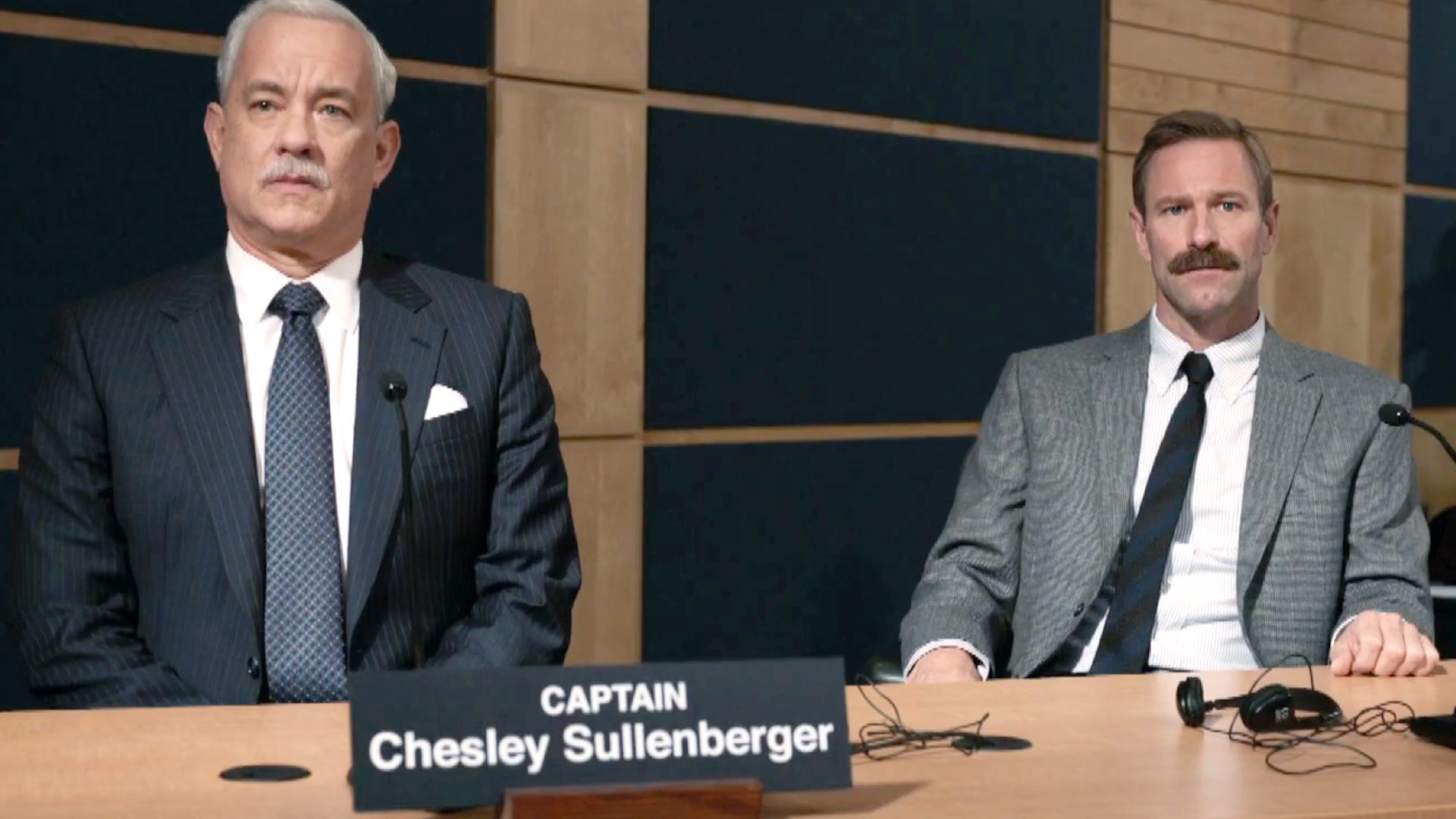
Sully is very much a film that twists and reshapes the idea of perspective, making it one of the more satisfying films of 2016, period. In a strange way, this tale about Chesley Sullenberger’s (Tom Hanks) famous, heroic landing on the Hudson river in 2009 is actually a cleverly flawed movie. The opening act is littered with directional exposition, slow moments, and rehearsed dialogue. There are even a few dream sequences that dance around the alarm bells of savvy moviegoers.

But then the movie pivots toward something quite brilliant and even surprising, paying off the idea of decency and duty in men, women, and society as a whole. This stealth message is both obvious and subtle at the same time, a tricky maneuver of filmmaking that parallels nicely with the water landing itself.

sully

The script, by Todd Komarnicki (Elf), is mostly nonlinear, taking its time to lead the audience into what happened on January 15th, and more importantly, why. The narrative starts days later as Sullenberger (Sully) struggles with the reality of his sudden fame, especially when government officials begin to question his heroic decision making. It’s more probable, they explain, that Sully needlessly put the passengers and crews’ lives in danger, perhaps because of hidden demons he might be hiding. As the film unfolds, including the white-knuckling scenes depicting the actual event, sharp payoffs are presented to make sense of what came before it, or in this case, after.

Essentially, it’s a more focused gambit movie than last year’s Steve Jobs, and certainly a more substantial piece of entertainment than Hanks’ last travel/disaster film, Captain Phillips. Even American Sniper, a competent film, was missing the sort of skillful impact that could be had, especially through its less polished visuals.

Sully ultimately rises above those films in a number of ways, but mainly one that deserves the most attention. The jumpy and even repetitive narrative serves a specific purpose, all to the goal of letting the audience better understand a compelling yet uncomplicated man who seemingly doesn’t want to be considered compelling. Consider it a flaw if you must, but only an actor with the relaxed charm of Tom Hanks could make something that should be dull so gripping and easy to latch onto.

sully

He’s supported by a humble performance from Aaron Eckhart as Jeff Skiles, the co-pilot who continues to support Sully long after the plane has landed. But aside from Eckhart and most of the event’s participants, the supporting cast comes across less effortless, perhaps because their performances are being consistently measured against Hanks and Eckhart at their best.

The best way to understand, and perhaps appreciate, Sully is to understand that much of what you see is a simulation. Some of it is meant to be imperfect and a little rough around the edges, in order to lend credibility to the people who actually had to live through what you’re seeing on the big screen.

Some of the flaws that come through this style of filmmaking are actually easy to forgive because the message is sent in such a clear way — that of how decency can sometimes be a very unchallenging thing, despite how torturous it can be to accept or believe it. It’s not often enough a story like that makes it to the big screen, fictional or otherwise.

Grade: A

Extra Credits:

  • Stick around after the film to see shots of the actual Hudson landing, its aftermath, and actual video of the passengers and Sullenberger made for the film.
  • Clint Eastwood hasn’t made a movie this good since Gran Torino. Maybe even Million Dollar Baby.
  • Yes, this is the second time Tom Hanks has played a “captain” involved in a famous, true-life event in 2009.  It’s also the second time he’s played an aviator from real life (Jim Lovell from Apollo 13).
  • I forgot to mention how brief the film is. At just 96 minutes, it’s Eastwood’s shortest movie yet, and thankfully so. I wouldn’t take out a minute or add much else.
  • Apparently, Eastwood is a fan of easter eggs. You can see references to two of his other movies when Sully is jogging through Times Square.

    Thanks for reading this. Seriously. You can subscribe to my posts by clicking “Follow” in the right sidebar. 

    Or just say hello on Twitter: @JonNegroni


Review: ‘Don’t Breathe’ Lives Up to Its Gimmicky, Yet Suspenseful Premise

review don't breathe

It might seem odd for audiences to root for a group of bumbling burglars, which is why Don’t Breathe is the rare thriller that provides tense moments no matter which character you consider the protagonist. Just don’t expect it to last.

Directed by Fede Alvarez, who last helmed the underwhelming Evil Dead remake, comes Don’t Breathe, which is essentially his remake of Panic Room, with some Green Room and 10 Cloverfield Lane thrown in as well (2016 has a thing for funhouse peril, it seems). But this time, Alvarez seems to have found a more consistent step in suspenseful thrillers, as the premise and marketing of Don’t Breathe suggest.

Set in a rundown segment of Detroit (think last year’s It Follows without the synth-pop), three teen cat burglars are just one big score away from finally getting out and going west for a better life. Rocky, played by Jane Levy in her most effortless role yet, yearns for a life in California with her sister. Alex, played by Dylan Minnette, is the brains of their group, though his heart obviously yearns for Rocky. And Money, played by Daniel Zovatto, is the thug who ribs both of them along the way. After a few successful smalltime robberies, their next mark is a house owned by a retired army vet who’s rumored to be sitting on $300,000. Oh, and he’s blind.

review don't breathe

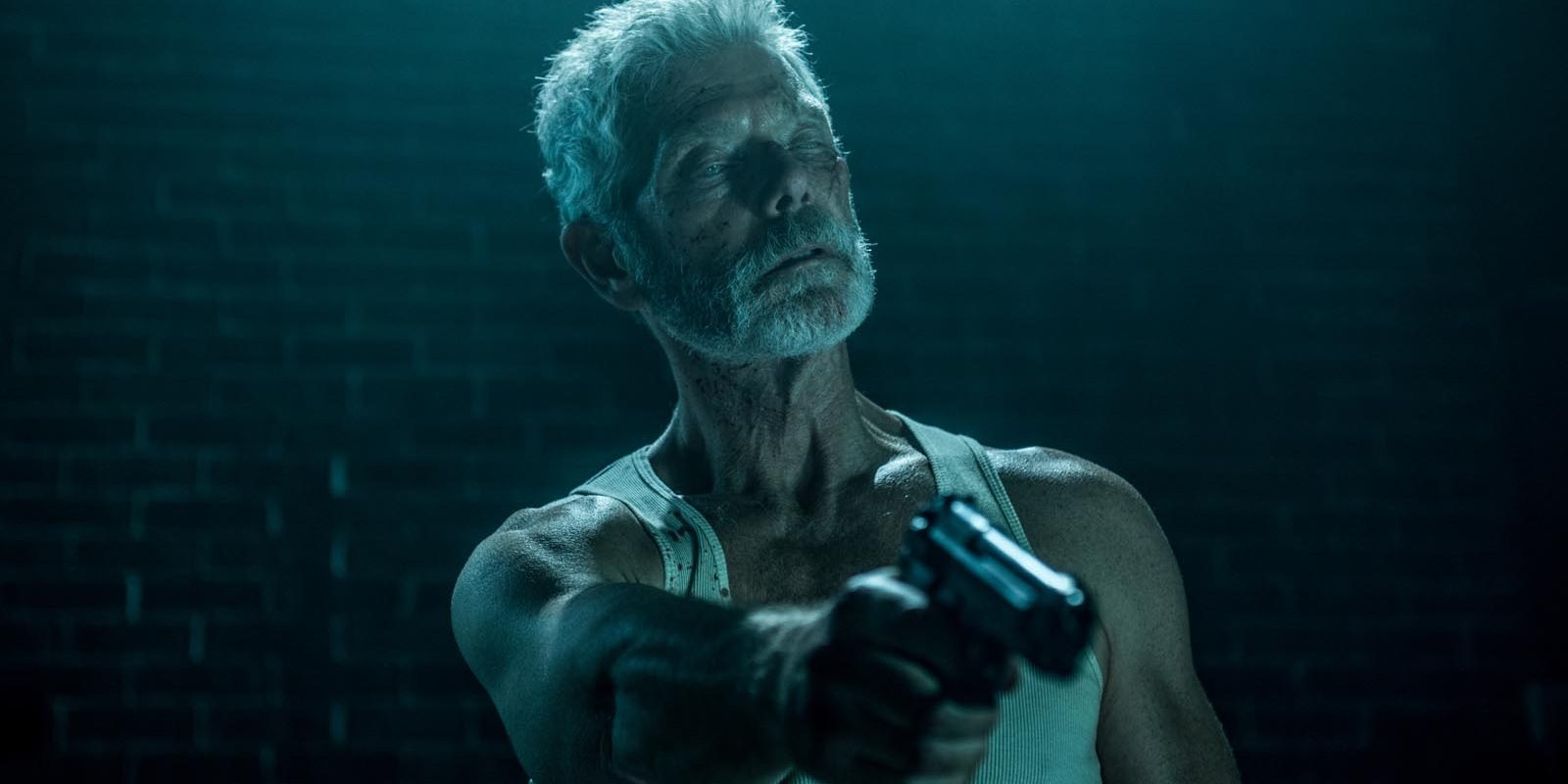
Believing the house to be an easy target, the kids subsequently break in and start searching for the cash, but to their horror, the owner (played by a monstrous Stephen Lang) is a more formidable opponent than they expected. Armed with a gun and a keen sense of hearing and smell, the blind man begins a hunt for the burglars, first by boarding up every entry way to ensure there’s no escape.

What might come off as a gimmicky premise actually works incredibly well as a 90-minute thrill ride, thanks to superb directing from Alvarez and graciously spacial establishing shots, complete with a steadicam tour of the house that instantly familiarizes you with where the characters are in relation to each other. And it helps that Don’t Breathe never lets up on its various narrative developments, including a surprisingly haunting revelation concerning the blind man when it comes to the privileged wealthy. Don’t Breathe makes no concessions on its location, after all.

Not everything in Don’t Breathe is airtight storytelling, unfortunately. Characters often defy contextual plot points, the “powers” of the blind man go back and forth between realistic and Matt Murdock, and the camera is sometimes a little too helpful in setting up surprising moments. But chances are, you’ll be too enthralled to notice, perhaps holding your breath as much as the burglars.

review don't breathe

The experience of watching Don’t Breathe in a theater “surrounded by strangers” (as Alvarez puts it) is probably the best way possible to watch this well-made B-horror movie. And if you’re willing to put the time in, there are even a few meaningful messages to decipher from the chaos.

Grade: B+ 

Extra Credits:

  • Don’t…watch the trailer.
  • Originally titled “A Man in the Dark.”
  • Stephen Lang in a “monster” movie as the monster is some of the best casting this year.
  • I prefer 10 Cloverfield Lane and Green Room, which are both more special films to me. But for a late-August summer movie, Don’t Breathe gets the job done.
  • Jane Levy is simply fantastic in this movie. Expect to see a lot more from her, hopefully in more independent films.

    Thanks for reading this. Seriously. You can subscribe to my posts by clicking “Follow” in the right sidebar. 

    Or just say hello on Twitter: @JonNegroni

Review: ‘Hell or High Water’ Is the Modern Western You Didn’t Know You Wanted

hell or high water review

Believe it or not, the best westerns in filmmaking history have been more than action movies. They’ve been more than thrilling shootouts and chase scenes on horseback. As Hollywood gradually replaced the more bombastic side of the western genre with new tiers of disaster, comic-book, and pulp movies, the general consensus has become that the golden age of westerns has long been over.

But the best westerns have always been about something, a lesson painfully unlearned by Favreau’s Cowboys and Aliens, yet gratefully grasped by the Coen Brothers’ True Grit remake. And Hell or High Water, directed by Starred Up‘s David Mackenzie, also stars Jeff Bridges in this present-day western about bank-robbing brothers who have high aspirations for petty thieves. Well, one of them at least.

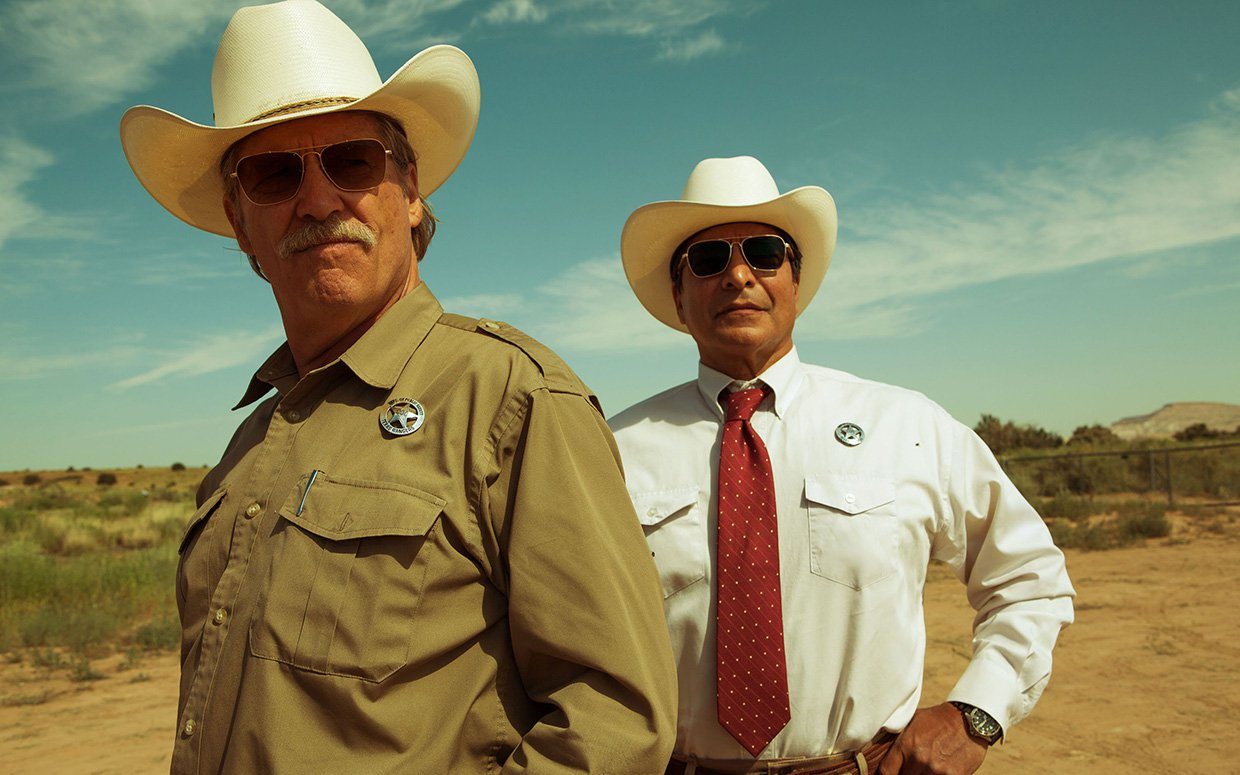
Bridges plays a Texas Ranger in search of the crafty bandits, joined by his half-Native American partner Alberto, played by Gil Birmingham. They’re after the Howard brothers, played by Chris Pine and Ben Foster, who’ve been robbing small banks belonging to the same Texas branch in towns all over the state. This might sound like a dour crime movie set within a western backdrop, but it’s a actually a more lively affair than its close cousin, No Country for Old Men, yet as somber and beautifully shot as last year’s Sicario, which writer Taylor Sheridan also produced the script for.

The combinations and comparisons don’t end there. Hell or High Water is also a talkative film that brazenly explores the painful consequences of the Great Recession, paralleled with how the 21st Century has both changed and been passed over in these small towns across west Texas. In other words, this is a western that actually has a lot to say when the bullets aren’t flying.

hell or high water review

Despite all of its obvious inspirations, Hell or High Water manages to be an unpredictable experience, never resorting to obvious plot contrivances that would manufacture tension between Foster and Pine, who have one of the more unique brotherhood dynamics in recent cinema. Pine is very much the straight man, while his brother is essentially the Joker without face paint — an agent of chaos with a surprisingly sober backstory to lend credibility to his madness. Watching these two actors play off each other is a high point of the film, enhanced by how similarly compelling the relationship is between the rangers, Bridges and Birmingham, who are constantly after them.

Hell or High Water is slow in parts and often methodical in how it wants you to absorb its scenery and frequent allusions to “Debt Relief” signs and shots of working-class Texans who are either packing heat or know someone nearby who is. This could be wrongly perceived as preachy storytelling or an obvious “Robin Hood” spin on the west, if it weren’t for the complex and animated Bridges, who lives by a code of justice that is as sympathetic as the supposed protagonists. Yet just as horrifying.

In short, it’s no 99 Homes. The world of west Texas is easy to disappear into once the first shot is established, as you’re forced to wonder if this is some sort of post-apocalyptic version of the U.S., despite the setting being quite true-to-life and accurate in terms of how massive sprawls of the country have become lawless, apathetic wastelands due to financial greed. It’s probably one of the most interesting “fantasy” worlds created for the big screen this year, and it’s not even fabricated or dolled up with CGI.

hell or high water review

There are a lot of words that describe Hell or High Water in a satisfying way. It’s cynical, yet humorous.  Brainy, yet simple. Mischievous, yet noble. Depressing, yet beautiful. Touching, yet tragic. Straightforward, yet ironic. It’s the masterful combination of these juxtapositions, complemented by well-rounded performances across the cast, that elevate what should have been a B-list movie into one of the best (and most relevant) westerns in years.

Grade: A

Extra Credits:

  • David Mackenzie, who is Scottish, shoots Texas like a true European. Mostly flat shots of the land and wide landscapes to impress upon the magnitude of the state. This is something a lot of American filmmakers tend to take for granted. Though to be fair, this film was mostly shot in New Mexico.
  • “What don’t you want?”
  • This might seem obvious, but a lot of the extras in this movie are “real” people they filmed on location.
  • Seriously, if the idea of Jeff Bridges playing a Texas Ranger on the verge of retirement doesn’t draw you in to see a movie, we need have a discussion in the comments below.
  • The tracking shots are a lot better than the more gimmicky “one-shots” you’ll see in standard films. Each one is simple and elegant, getting the moment of the scene across, rather than bragging about the lack of cuts.

    Thanks for reading this. Seriously. You can subscribe to my posts by clicking “Follow” in the right sidebar. Or just say hello on Twitter: @JonNegroni


Review: ‘Kubo and the Two Strings’ Is a Leap Forward for Stop-Motion Animation

kubo two strings review

There’s a small chance, and tragedy, you’ve never watched a Laika film, but you’ve probably heard of this Oregon-based animation studio. They’re on a winning streak of consistently remarkable stop-motion animated films, including ParaNormanCoralineBox Trolls, and now, of course, Kubo and the Two Strings. With the latter, they’ve certainly crossed new territory into becoming the Pixar of stop-motion animation, to say the least.

This is because Kubo and the Two Strings is one of the finest films of 2016, animation or otherwise. For one thing, it’s impossibly beautiful, and that’s not understating it . Blending stop-motion mechanics with subtle blink-and-you’ll-miss-it CG placement is what gives Kubo its unique flavor of both flow and visuals. Not one moment stutters, and the film treats both character and setting designs with the kind of care and detail you’d expect from Studio Ghibli’s finest films, like Spirited Away and Princess Mononoke.

The story is a stylized epic that borrows heavily from multiple Japanese folk tales to make its original story feel more legitimate. There’s some Hero’s Journey, of course, but it’s intentionally combined with stories more rooted in Eastern storytelling, as some of them will be very familiar to Americans who love Avatar the Last Airbender, for example.

At one moment, a character focuses on a quest that feels straight out of Legend of Zelda, until the dreamlike wonder Laika has become famous for takes over with ships made of leaves, literal dream sequences, and all manner of impressive set pieces designed to astound your skeptical eyes.

kubo two strings review

The narrative opens with some profound family drama that persists throughout the film. Kubo, voiced by Art Parkinson, is the son of a powerful spirit woman and a legendary samurai, two important figures of this noticeably small mythos who started out as enemies. Kubo’s grandfather, known throughout the lands as the Moon King, took one of Kubo’s eyes at birth, and now he wants the second one.

We’re not immediately privy to the Moon King’s motivations, but it’s easy to suspect that it has something to do with Kubo’s magic powers, which he inherited from his mother. He can use music to bring inanimate objects to life, his entertainment of choice being origami. This ends up being one of the most oft-used quirks of the stop-motion animation, and to great effect. Kubo’s powers are certainly a key reason why this film has as much agency as it does. There’s never a moment when Kubo has to come to terms with the supernatural, or some surprise at how the world around him works. We’re placed in the middle of Kubo’s story, and it allows for some efficient storytelling.

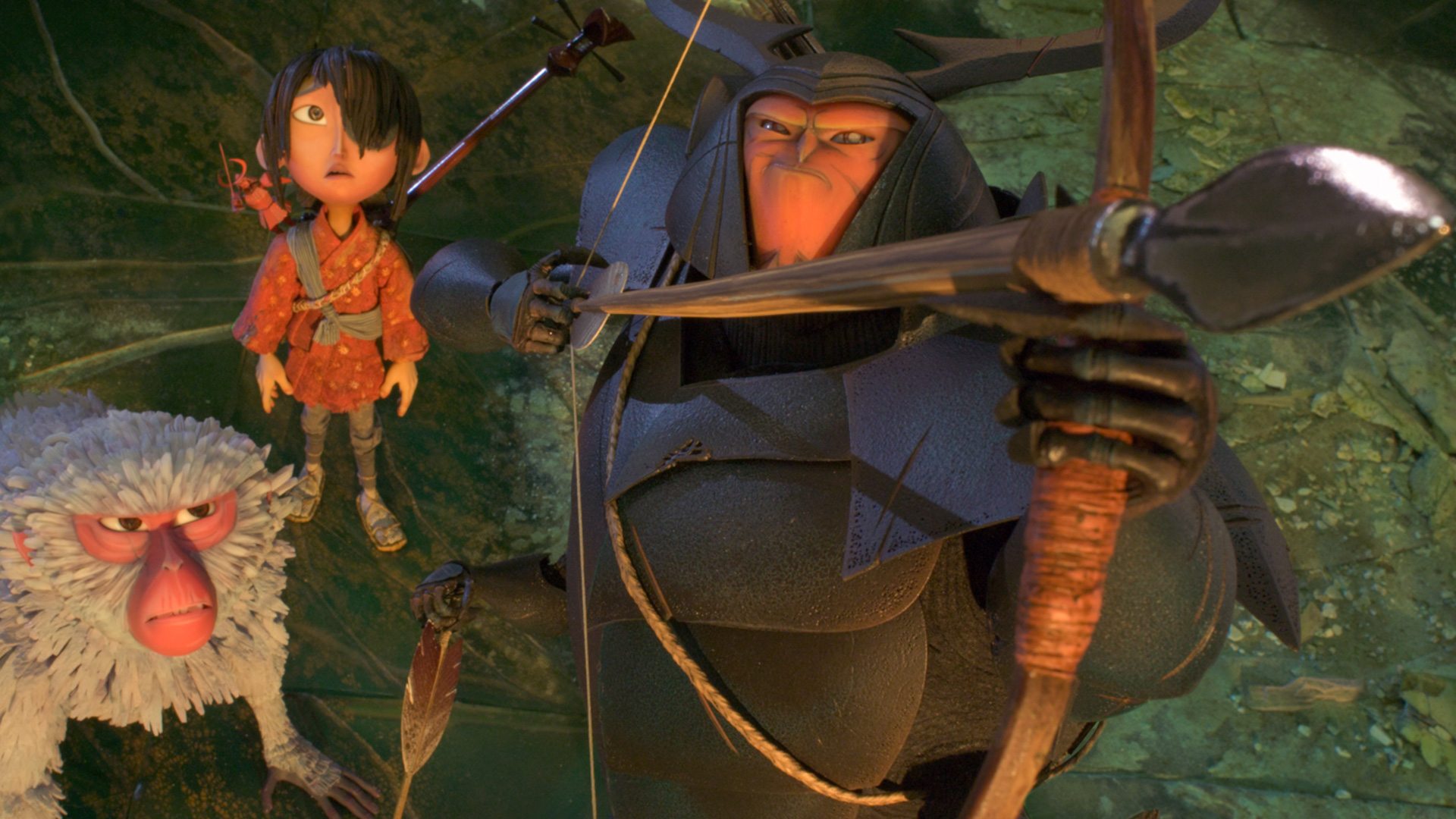
Later in the movie, Kubo is on the run from his masked aunts, two flying (and frightening) demons voiced by Rooney Mara.  He’s protected by one of his charms, a monkey figure brought to life and voiced by Charlize Theron, and an amnesic beetle samurai who thinks he used to be a man, voiced by Matthew McConaughey. From there, the story becomes even more akin to Legend of Zelda, with fetch quests, magical items to hunt down, and extravagant action scenes. Studios who want to make great movies out of video games should take note.

kubo two strings review

One of the best things about Kubo and the Two Strings is its gimmick-free storytelling. It’s a pure, mostly uncomplicated epic that’s still layered in a poignant message that speaks more to adults, rather than children. But a downside of this “pure” narrative is a lack of any real surprise. Savvy viewers will see the obvious twists and pivots far too early to fully appreciate them, and the film’s repetition on some of its most interesting themes dulls the effect and sours any insightful conversation you might want to have about the film after the fact. Not enough is left to interpretation, mostly because the film is overstuffed with “this is what the movie is about” dialogue.

But that’s not a problem if you’re willing to enjoy the journey more than the destination.

Grade: A-

Extra Credits:

  • Yes, Art Parkinson (AKA Rickon Stark from Game of Thrones) has more lines of dialogue in 20 minutes than the entirety of that show.
  • The voice acting was pitch-perfect, especially the decision to cast McConaughey as the blissfully unaware beetle. But would it have been such a hassle to cast more Asian voice talents for this Asian-inspired film?
  • Not as good as ParaNorman, but about as good as Coraline and definitely a step up from Box Trolls.
  • The “Don’t Blink” moments are some of my favorite movie moments in 2016. Such a creative, interactive way to tell a story on the big screen.
  • The credits sequence is a wonder. I didn’t leave until well after the projector turned off.
  • Believe it or not, this is the first time Matthew McConaughey has starred in an animated film.
  • It’s dangerous to go alone! Take this!

    Thanks for reading this. Seriously. You can subscribe to my posts by clicking “Follow” in the right sidebar. Or just say hello on Twitter: @JonNegroni


‘Don’t Think Twice’ Is a Surprisingly Heartfelt Comedy About Improv

don't think twice

A feature film that centers around the life and times of an improv group in New York City definitely sounds like something a screenwriter in LA would pitch to his bosses at least once a year. That’s because you can make a decent film out of just about any idea, but it can be very challenging to craft a relatable film from a singular art, especially one that’s literally built around the idea of people “making things up as they go along.”

We can expect this kind of specific storytelling from a talent like Mike Birbiglia, one of the most understated comedians in the industry, as well as an exciting director and writer. His last film, Sleepwalk With Me, was a dramatic retelling of one of his most famous standup routines, an emotional (and funny) story about how his desperation to avoid marriage and commitment drove him to sleepwalking through a window and out of a building.

Don’t Think Twice is a stronger and more humorous film overall, but it still follows Birbiglia’s pattern of choosing one critical, uncomfortable plot point and driving the rest of the narrative around it. In this case, he’s going after the jealousy that forms from when someone becomes rapidly successful, and how that alters the lives and relationships of his closest friends (even the tagline drives this home with “the spotlight is not for everyone”).

This just happens to involve a popular improv group made up of six friends with immediate comedic talent as improvisation performers. They get on stage each week and play out improvised situations, always leaning off of the audience support of someone who has had a particularly hard day.

don't think twice

Don’t Think Twice kicks off in the middle of some harder times for the group, and it’s pushed further when Jack (played by Keegan-Michael Key) gets an audition for Weekend Live, the movie’s version of Saturday Night Live. Though his friends initially support him, it becomes clear that Jack’s newfound fame isn’t doing anything to improve his current relationships, including his romantic relationship with Sam (played by the true star of the film, Gillian Jacobs).

What follows from there is a deeply involved dramatic comedy that pits each improv member against each other and themselves, always decrying the “need” for selling out, while simultaneously working to make sense out of how Jack’s success says more about them than it does him. Jack’s 36-year-old teacher, Miles (played by Birbiglia), is the biggest culprit, as he can’t seem to understand why he hasn’t been able to reach the heights of his own students, moments after he’s lured another student to his “dorm room” apartment to have some fun.

The rest of the cast has less to do than Key, Jacobs, and Birbiglia, but they’re all as crucial to the film’s emotional punches as they are to the fictional improv performances they take part in. Chris Gethard as Bill gets a few small scenes that feel mostly servant to how his life affects the core members, even though he garners some of the biggest laughs from the film’s staged improv scenes. Tami Sagher gets even fewer attention, and tragically so, as she’s the only one in the group who is financially secure, despite losing her job and relying mostly on rich parents.

don't think twice

Kate Miccuci is certainly short-thrifted here, getting even fewer chances to have much of an impact despite her tremendous talent, but the saving grace is that Don’t Think Twice works best when the group is together on stage, at their favorite bar, and back at the shared apartment. Though not everyone gets their due, that’s sort of how improv tends to work, anyway. And as a result, Gillian Jacobs as Sam gets to shine in one of her best performances to date, culminating in a single scene toward the end of the film that is one of my favorite movie moments of 2016.

If you’ve ever had to deal with how friendships can always feel a little tense and competitive, which should be just about everyone, then Don’t Think Twice has something brutally honest to tell you, but it’s not a hand-wrung comedy. If anything, it excels more at being a vague, even loose passage of events, rather than a cohesive narrative that drives a single purpose that the audience must consume and accept all as one. In other words, it’s one of those few, modest films that actually has something for everyone.

Grade: B+

Extra Credits:

  • I love Sleepwalk With Me, but if you truly want a great intro to Mike Birbiglia’s comedy, check out his standup routine that the movie is based on.
  • Also, here’s a somewhat interesting fact. Mike Birbiglia is the first mainstream comedian I’ve ever seen live.
  • According to Birbiglia, the cast actually received instruction from a professional improv coach because Gillian Jacobs and Kate Miccuci had never actually performed this type of comedy before.  Makes sense, though, when you consider that Jacobs went to Julliard.
  •  Birbiglia has also stated that the premise behind Don’t Think Twice mimics how Judd Apatow reacted when his roommate, Adam Sandler, was cast on Saturday Night Live decades ago, before either were famous. The pair have collaborated on a movie together: the 2009 dramedy, Funny People.

    Thanks for reading this. Seriously. You can subscribe to my posts by clicking “Follow” in the right sidebar. Or just say hello on Twitter: @JonNegroni


Review: ‘Pete’s Dragon’ Both Reinvents And Recaptures Classic Disney

pete's dragon review

I wrote a full review of Pete’s Dragon is on Movie Pilot, which you can read here. Overall, I loved the movie and had a blast watching it, thinking about it, and of most of all, writing about it. I’ll be chatting about the film more in length for Monday’s podcast, along with even more thoughts on Sausage Party, which I also reviewed this week.

Here’s a quick excerpt from my review of Pete’s Dragon:

There are a lot of intelligent, aspirational elements at play within Pete’s Dragon, as it sets up the forest as an idyllic setting that needs to be cherished, but not ignored. Like the dragon himself, there’s something beautiful about man and nature coming together, but the obvious message about environmentalist values you might read into here is one thing the movie smartly downplays, instead accepting that man’s role in the world doesn’t have to be a passive one.

Pete’s Dragon revels in its simplicity and digestible themes, which is why it’s such an easy film to immerse yourself in, at just about any age (and not just because Robert Redford steals all of his scenes). For that reason, it’s the best family movie of the year and among the best films in 2016, overall.


Thanks for reading this. Seriously. You can subscribe to my posts by clicking “Follow” in the right sidebar. Or just say hello on Twitter: @JonNegroni