Jon is one of the co-founders of InBetweenDrafts. He hosts the podcasts Thank God for Movies, Mad Men Men, Rookie Pirate Radio, and Fantasy Writing for Barbarians. He doesn't sleep, essentially.
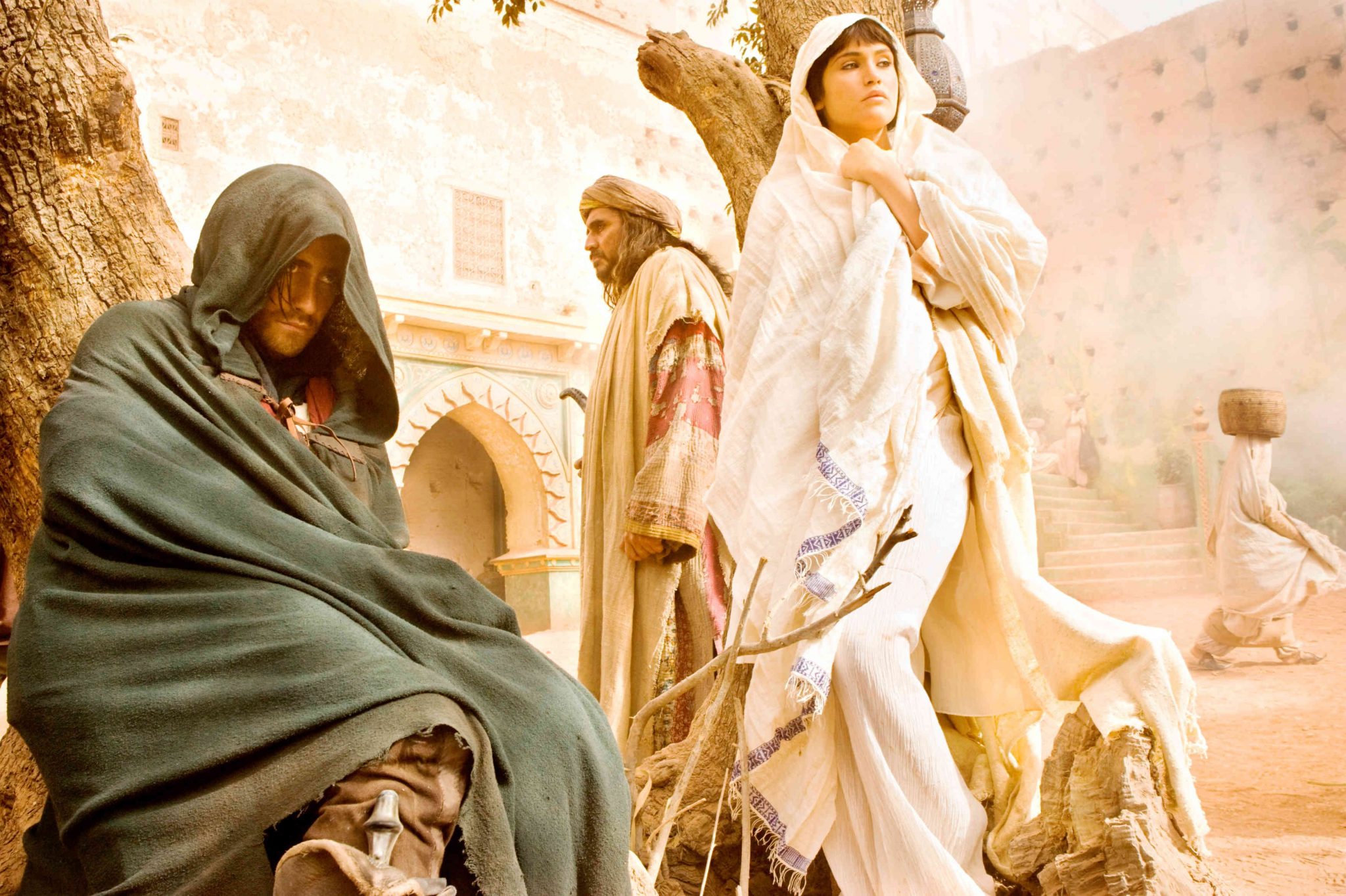
Directed by Mike Newell (who also directed Harry Potter and the Goblet of Fire and some other fantasy films), Prince of Persia: The Sands of Time came out in 2010 as one of the later attempts to revitalize (or just vitalize) the trend of adapting popular video games into movies.
When this film was on the horizon, a lot of gamers were ready to love it, because unlike a lot of other ill-fated adaptations, everyone agreed that Prince of Persia was a game that lent itself nicely to the feature film treatment. Even better, this was a game franchise that had already been successfully reinvented many times since the 80s.
That said, Prince of Persia: The Sands of Time was intended to be a film adaptation of the 2003 hit video game of the same name. But that didn’t really happen. Instead, Jerry Bruckheimer produced a film that deviated heavily from its video game source material, maintaining only the most superficial aspects of the game that define its identity.
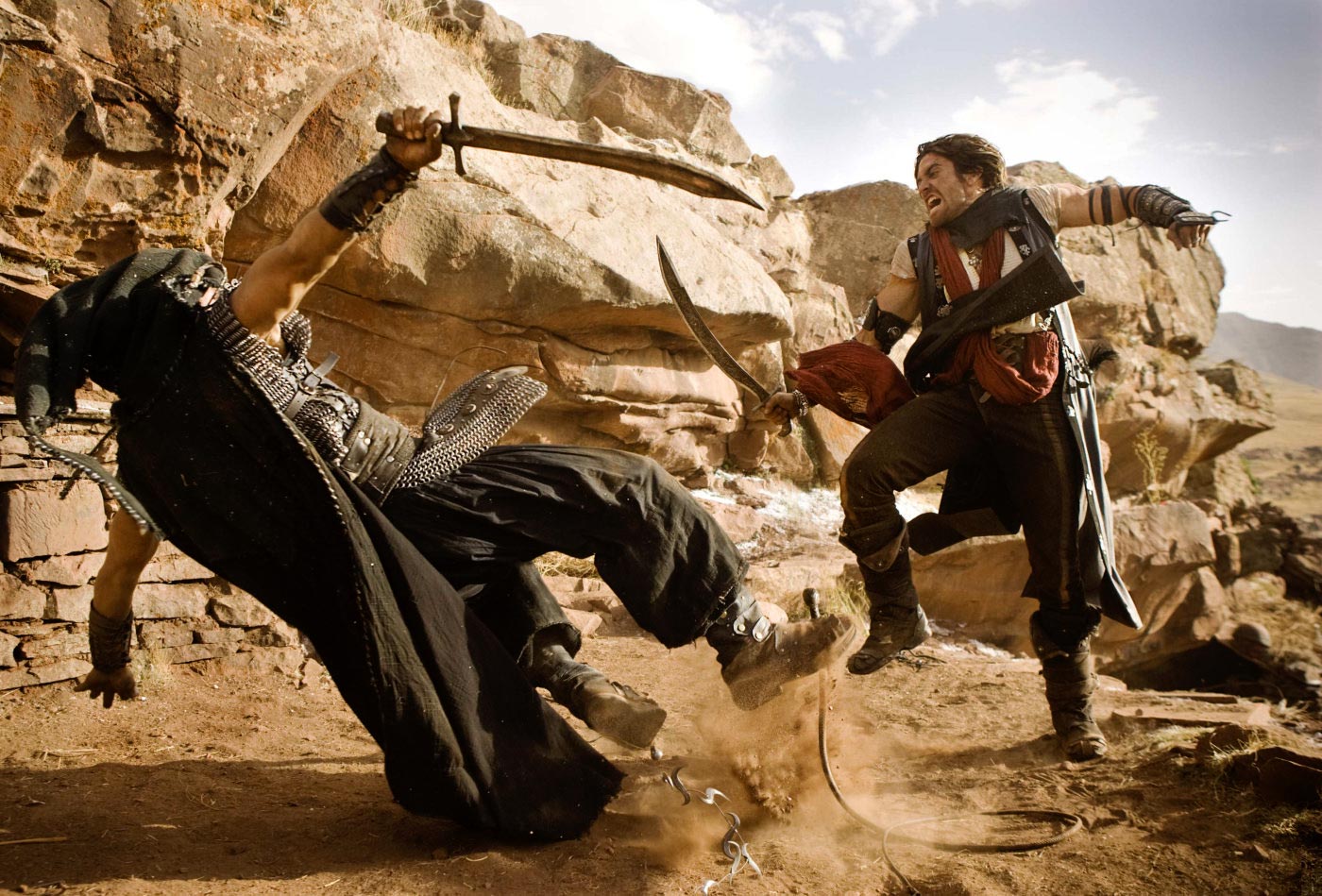
Yes, the main character has the power (somewhat) to turn back time with a dagger, though it’s hardly used in this movie. And he’s a quick-moving prince living in a Persian empire who must team up with a feisty princess (played well here by Gemma Arterton). But rather than adapt the more thrilling aspects of this character, who loses his family in the night due to the villainous treachery of their sorcerer advisor amidst a castle magicked to all hell, Prince of Persia (the movie) focuses on traditional swashbuckling adventure akin to Bruckheimer’s work in Pirates of the Caribbean.
This isn’t inherently a bad thing, as long as you’re able to buy into a British-accent Jake Gyllenhaal playing someone who lives as Persian royalty after being adopted as a street orphan. The adventure boils down to the prince being framed for treason and then trying to prevent a magical sandstorm that will wipe out everyone in the world, which is a far cry from the more singular, human adventure in the games where only a kingdom is at stake.
For all of the fun Prince of Persia tries to have, its main problem is lacking any sort of identity that it could have easily gleaned from its source material. A generic plot and world-ending villainy are even less interesting when none of the characters (even Gemma Arterton, Alfred Molina, and Ben Kingsley) have nothing interesting to say beyond their simplistic motivations.
There are bright spots whenever the film shows off some now-dated parkour reminiscent of the games, but even the Dagger of Time, a powerful plot device in and of itself, is relegated to B-movie time travel plots we’ve seen before, rather than the effect that reversing mistakes at will can have on a person trying to do the right thing.
Unfortunately, the movie never really gets that interesting, but it also manages to stay light and entertaining throughout. Like National Treasure to a lesser degree, Sands of Time is full of breezy action with likable enough characters thrown into the chaos. But even its own special effects are hard to swallow, since even basic rooftop antics are enhanced with CGI for the sake of spectacle, and it was just as noticeable 6 years ago as it is now.
Getting down to it, the major problem with Sands of Time has nothing to do with it being an imperfect movie. Plenty of enjoyable adventure films have glaring flaws that you forgive because you love being in this world that’s been created for you. Sands of Time lacks this type of setting, with characters whose chosen names could have used more debate, a historical backdrop devoid of awe (Secret Guardian Temple, anyone?), and an uninspired…well, everything else.
Second Opinion Grade: C-
I’m Jon and thanks for reading this. You can subscribe to my posts by clicking “Follow” in the right sidebar. Or just say hey on Twitter! @JonNegroni
This week on the podcast, we bring on a guest cast to discuss the future of the Avatar universe, made famous by the Last Airbender series. This episode is a must for any fans of the hit animated show.
Maria helps with hosting duties by covering Movie Releases and Feedback, with Sam and Adonis filling in while Kayla and I are on vacation. Yikes.
QUESTION OF THE WEEK: What would you like to see for the next entry in the Avatar universe? Also, whose idea did you like the most in this episode?
Every Tuesday, I examine an unpopular opinion in film and argue against it. This week: Why do so many people hate Birdman despite its huge success?
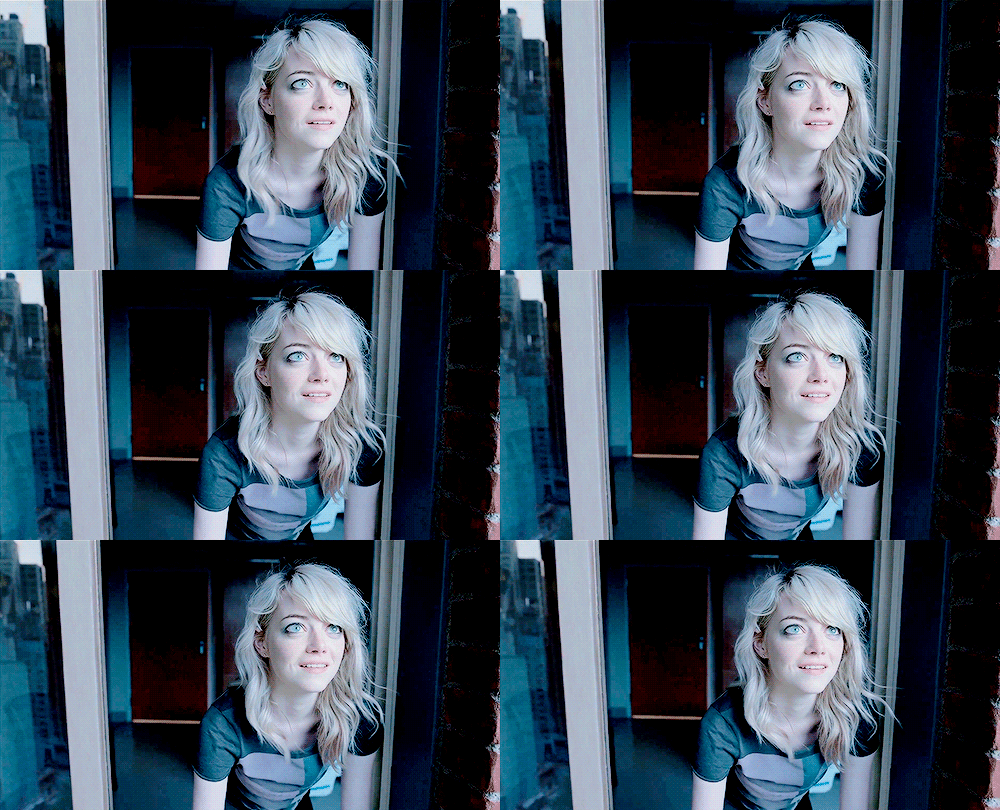
There are a lot of ways to dislike a film, and sometimes for the worst reasons. So is the case with Birdman, the 2014 dark comedy that won the Academy Award for Best Picture over the likes of Boyhood and Whiplash (my personal favorite film of that year).
The film has been widely praised as a return to greatness for its star, Michael Keaton, as well as the cementing of Alejandro Iñárritu as one of Hollywood’s premiere filmmakers, just as long as he keeps signing Emmanuel Lubezki’s checks.
Like with most movies that achieve high praise among critics, Birdman’s detractors are quite vocal about their distaste for the film’s supposedly undeserved success. And since seeing the film myself in theaters, I’ve been one of those harsher critics.
But Birdman isn’t a terrible movie. It’s above average, I would argue, and its resonance with film buffs as a great film, or even a work of art, has plenty of merit for the same reasons all of Iñárritu’s films achieve critical success. Technically speaking, the film is quite masterful.
Birdman centers around an aging actor named Riggan, who once played the superhero, “Birman,” and has yet to find gratification beyond that peak fame he acquired. It’s an obvious parallel to Keaton’s true life, as he of course portrayed Batman in the 1989 Tim Burton film that inspired the majority of that character’s evolution in film, television, and even video games.
To prove he is an actor who transcends the schlock that made him famous, Riggan directs, writes, and stars in a Broadway show adaptation of Raymond Carver’s What We Talk About When We Talk About Love. The title alone is a clear dig into the type of love that fans heave onto their heroes, and this is played out in a satisfying way as we constantly see people stopping Riggan to take a photo, while he stands there unamused. Even when teenagers admit to not even recognizing him, proving that indifference really is the true opposite of love.
This is a film that makes its audience feel clever for catching these clues and making snide remarks about the current state of the superhero genre. Yet so much of it is loud and on the nose, including a fantastic scene where Riggan tells off a Broadway critic for all of the reasons most of us haven’t even bothered to articulate. In fact, the same criticisms he lobs at her apply nicely to Birdman itself.
But is anything within Birdman really all that smart? Viewers don’t have to work hard to grasp the film’s deepest themes, and the camera itself even holds your hand by never violating its one-take structure and giving you a specific sense of where everything is laid out. Optimistically, this is an enjoyable trick that shows off the best of Iñárritu and Lubezki’s ability to enliven even the most mundane sets (some of them being gross to even look at), but for some, it comes off as a magic trick, in that finding out the illusion sort of spoils the fun.
But this is no reason to dismiss Birdman, for the same reason you put up with a brilliant friend who acts pretentious from time to time. There’s value in watching an imperfect character study that allows itself to get swallowed in the creative process, which we see with Riggan and his co-stars as they wander backstage with a never-ending purpose. Though it doesn’t amount to anything reasonably profound in the end, Birdman feels like a film that doesn’t even care about its own ending. It’s a show off in the best way possible.
And Birdman is among a long list of films that tackle the existential crises of fame. It’s just a shame that the unique and crafty questions it brings up aren’t answered in an equally compelling way. Without getting into spoilers, its resolution comes straight from the Hollywood playbook of rushed ex machina, and an ambiguous ending does little to assuage this. But the ride itself is still pretty satisfying as long as you don’t take it too seriously.
Grade: B
I’m Jon and thanks for reading this. You can subscribe to my posts by clicking “Follow” in the right sidebar. Or just say hey on Twitter! @JonNegroni
This week on the podcast, the Now Conspiring team reviews The Jungle Book, Disney’s remake of the 1967 animated classic (depending on who you ask). We also talk in length about the Doctor Strange trailer, the future of superheroes in film, and a lot more.
Also, we are now on Facebook! Be sure to check out our new page so you can subscribe and leave feedback whenever your heart desires.
QUESTION OF THE WEEK: Which upcoming Disney live-action remake are you most looking forward to?
It’s no secret that Disney has had tremendous success with its live action cartoon remakes, even if they usually come at the expense of better storytelling than what’s appropriated for new takes on Alice in Wonderland, Sleeping Beauty, and Cinderella.
But The Jungle Book, a remake of the 1967 animated classic (well, classic soundtrack at least), is the first of these live-action films to rise above what came before it. It solves many of the issues fans have had with the original for years, even if it does stumble from time to time due to its own limitations.
Directed by Iron Man and Chef‘s Jon Favreau,The Jungle Book is among the most gorgeous movies in recent years, discounting computer and hand drawn animation. But it’s strength really is in how immersive its jungle is without having to computer animate the characters. Granted, the majority of The Jungle Book was made on a computer, and it was filmed thousands of miles away from any real jungle.
Based on Rudyard Kipling’s series of tales set in India (mostly Mowgli’s Brothers like the rest of these adaptations), The Jungle Book is a coming of age story about a boy named Mowgli (Neel Sethi), who was raised in the jungle by wolves and overseen by a stern, but loving, panther named Bagheera (Ben Kingsley).
Unlike past iterations, The Jungle Book fully explores the role of a “man cub” living amongst animals, as he has to familiarize himself with the politics of said society and decide once and for all where he truly belongs. At times, Mowgli is given opportunities to set himself apart for the good of the animals around him, while at other times, his mere presence causes disaster, brought on in large part by this film’s excellent new rendition of Shere Khan (Idris Elba), who will do whatever it takes to kill Mowgli before he becomes a true threat.
Like the “red flower” that defines human dominion, Mowgli has the potential for both life and destruction in this world. It’s a simplistic story, but not a thin one, in that Mowgli’s agency as a character provides ample motivation and purpose for the various creatures he meets throughout the film. Making their believability as characters (both visually and narratively) all the more impressive.
The vast majority of audiences will be enamored by the surprising depth of The Jungle Book, but it’s not a perfect film that will convert everyone. There are several scenes that feel aped (no pun intended) from other Disney stories like The Lion King. This film crosses the line from homage to ripoff by the third act.
There is also an inconsistency with how this film deals with the popular song numbers from the animated classic, which were critical to its lasting memory. Only two of them make it into the film, and only one comes off as a harmless tribute. The other is quite out of place and nearly ruins a fantastic scene featuring the well-realized King Louie as an extinct giant ape (Christopher Walken).
Thankfully, nearly everything else in The Jungle Book is extremely solid and even brilliant at times. You’ve probably never seen talking animals appear so convincing and true to life on the big screen, yet so mystical at the same time. And they’re balanced nicely by a set of valid themes that raise great questions for children, such as man’s place in nature and what it means to respect the environment, without putting them to sleep with a preachy message.
Grade: B+
Extra Credits:
OK, let’s nitpick. Neel Sethi did a fine job, but at times, his performance was bizarrely over the top, far removed from what you would expect from a boy raised by wolves.
I’m not sure where I stand on the film’s intense action scenes. Mowgli is in a constant state of peril at times, and it all seemed rather frightening for a PG kids film. It’s about as violent as something like Star Wars: The Force Awakens, for example.
I didn’t get to mention Baloo, who was voiced by Bill Murray in what I believe is his best role in years. He doesn’t show up until about 40 minutes into the movie, but his impact on the darker tone of the script is felt almost immediately.
I wish I could lend the same praise to this film’s handling of Kaa, voiced by Scarlett Johansson. She has a lot of fun with the character, but it’s far too brief to get excited about.
Disney has a new opening logo treatment that I hope lasts into future films. It has a unique transition that looks great in 3D, and it’s hopefully not the last we’ll see of this technique.
The end credits are also fun to watch, as we see a literal book unfolding one of the dance numbers. I’ve always thought it was weird that these movies are called The Jungle Book rather than The Jungle Movie.
I’m Jon and thanks for reading this. You can subscribe to my posts by clicking “Follow” in the right sidebar. Or just say hey on Twitter! @JonNegroni
Hating everything in sight for no good reason is just the Internet thing to do these days, and that point is not lost on Megan Purdy, editor-in-chief of Women Write About Comics.
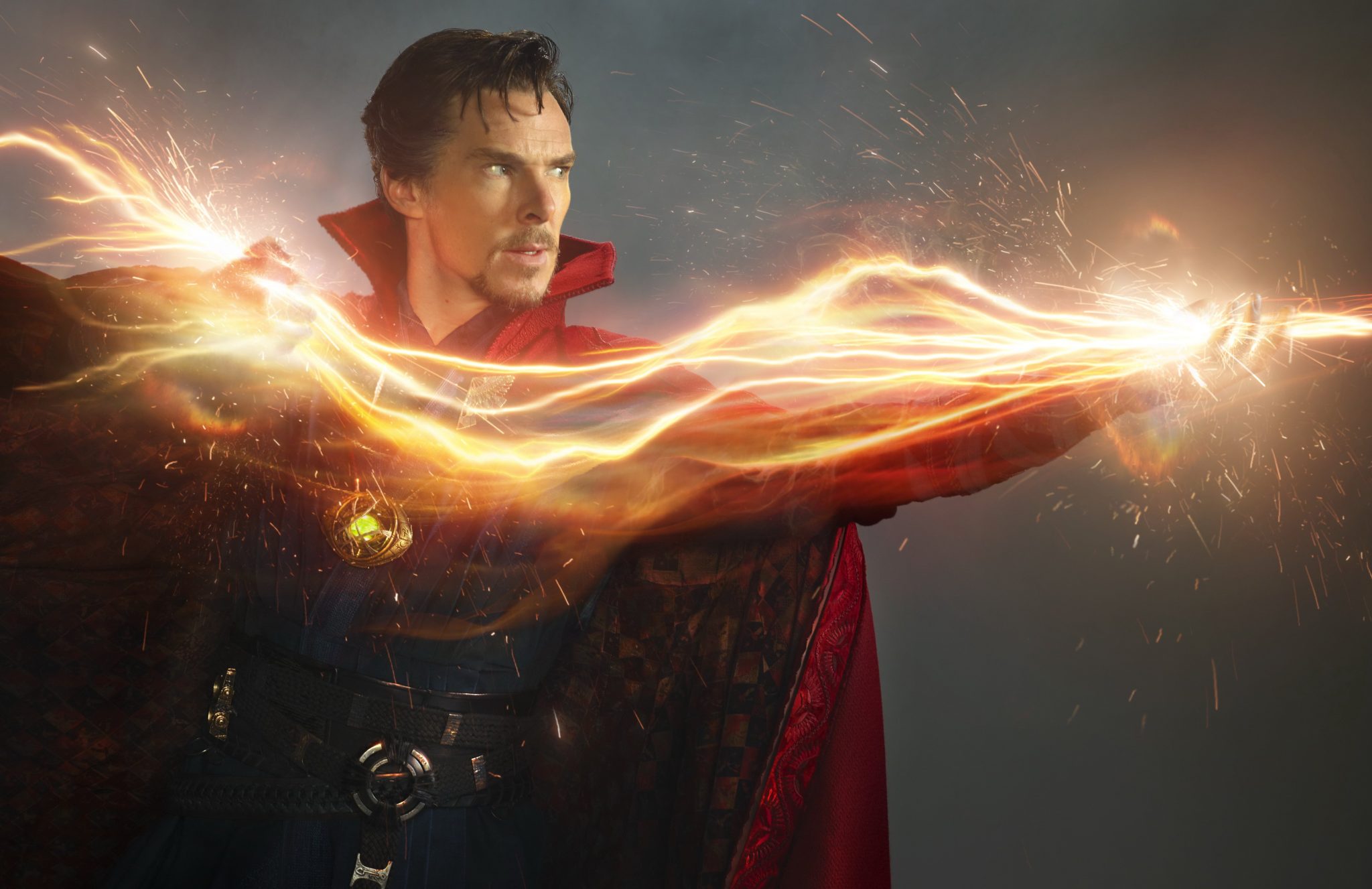
Upon the release of Marvel’s first teaser for Doctor Strange, Megan and her band of professional YouTube commenters decided to get together with their favorite thesaurus and write about how much it sucks.
Tagged under Race, Racism, and several other SEO boosts, Megan writes:
Gosh darn it! It’s just the most awful thing, and Megan’s roundtable (don’t worry, that’s tagged, too) is here to spell out why.
The Dr. Strange trailer. So… it’s here.
Yikes. AWKward.
We hated it.
WHAT?! The headline was accurate?! Let’s begin with Megan talking.
This seems like a trailer for four movies in one: The Matrix, Inception, Eat Pray Love and a watery wuxia ripoff for white America.
Wow, a brief teaser is vague enough to have similar imagery to a few movies. The nerve. Also, where does the Eat Pray Love movie fit in? What, because he travels? Is that how low your bar is?
It’s basically plagiarism.
Interesting that your “water wuxia ripoff for white America” couldn’t just be summarized with an actual movie to get your point across, by the way. I mean it’s a thesaurus, not a existing knowledge of actual films.
It’s visually confused and so derivative that it makes no argument for its own existence.
Yeah, that teaser is such a tease. I mean what other movies are about a doctor who travels the world in search of a cure for his broken hands, only to stumble across a mystical force that transcends dimensions? Too many to count! Remember when Neo’s soul got punched out by Tilda Swinton in Matrix ReCumberbatched?
It relies entirely on exoticism and flash
Yeah, whatever happened to uninteresting and boring comic book movies?
here is a proud white man brought low, walking into the East to meet his destiny, and inevitably, become not just any old magician, but the Sorcerer Supreme.
It’s almost as if they’re making a movie based on an existing comic book. But Megan would know that if she wrote for Women Write…About Comics.
And is Doctor Strange a proud white man? Well, first of all, his value as a character has nothing to do with his skin color, so that’s irrelevant. Is he proud? Sure, which is what makes his forced humility an interesting point of the movie. Making him perfect and politically correct would be like having Anakin Skywalker not become Darth Vader in Revenge of the Sith.
Or worse.
He finds greatness by searching outside of himself, presumably. But why is this a bad thing? And how does this relate to that dreaded “exoticism and flash” you were bemoaning a sentence ago?
First Benedict Cumberbatch was Khan Noonien Singh — not just any old nemesis of Captain Kirk, but an Asian warlord who ruled a future territory spreading from South East Asia to the Middle East — and now he’s a white doctor learning magic in Tibet.
“First, he played a white character. Then he played another white character. Can you believe it?”
Seriously, I have no idea what Megan is trying to say here. Khan was never Asian, just a perfectly bred human played by a white actor who ruled much of Asia and the Middle East. And that’s not even how he’s presented when Cumberbatch plays him in Into Darkness. And why is this even being discussed, anyway?
You have a problem with white people learning superpowers from people who aren’t white? That’s too specific of a complaint, even for Megan Purdy..
The Ancient One, a Tibetan mystic and sorcerer played by fellow white Brit Tilda Swinton, is his Morpheus, who we meet in a scene that’s straight ripped from The Matrix.
Yeah, straight from The Matrix. Because they were in a room, and there were some vaguely Asian aesthetics. And…that’s about it. Oh, wait! Neo groveled “Teach me!” after being shown incredible mystical powers outside the realm of his understanding!
What? Oh, that didn’t happen at all. He just fought Morpheus in a computer simulation. But let’s not bring up the fact that over half of The Matrix pays homage to dozens of movies. You know, because that’s what lots of great movies do.
Go on, then.
What do I know about this film, based on this trailer?
That you weren’t really paying attention because you were triggered from the first frame?
It’s, well, pretty damn racist,
It’s not a little racist. It’s not even just racist. It’s pretty damn racist. Impressive for a two minute teaser.
and it doesn’t seem to have a clear purpose or audience in mind.
No audience! Not even Doctor Strange fans, Marvel fans, comic book fans, movie fans, Benedict Cumberbatch fans, Tilda Swinton fans, film buffs, or (breath) people who don’t read anything on Women Write About Comics because clearly that’s a website where they don’t bother to also like comics. Well, the Doctor Strange ones at least.
I mean seriously, how are you the editor-in-chief of a website about comics, and you can’t even judge from a comic book movie teaser WHY said movie exists?
Why is there a Dr. Strange movie?
Because everyone is out to hurt you.
Because Marvel could make one?
Uh, yeah. And that’s a good reason. Marvel has gotten to the point where they’ve had so much success with niche comic book movies like Guardians of the Galaxy and Ant-Man,that they can now present the Doctor Strange story in a way deserving of the character based on trust from the bankrollers.
But according to Megan, Marvel simply said, “Eh screw it. We can do this thing, so let’s do this thing.” Because that’s how Marvel makes multi-million dollar decisions.
Why would they do this after all the criticism from their fans?
Yeah, remember when all the fans criticized Marvel for making good movies based on their favorite comics they never thought they’d get to see on the big screen?
Well. Because they don’t care.
Hmmm…well, that’s the kindergarten reaction to the question you presented. The first-grade answer is, “Because Marvel is gross!”
Next, we have Ray Sonne commenting on this winning roundtable.
Okay, putting aside how horrifyingly offensive this trailer is because I’m not the best person to discuss it, what the hell?
Easy, Ray, it’s a teaser trailer. It’s just a bunch of moving pictures that aren’t real and you’re going to be fine.
A trailer, as an effective marketing tool, is supposed to give the audience a basic idea of the movie’s story and characters without spoiling any surprises.
Yeah. Did you, uh, see this teaser? Did you…did you watch it, Ray?
But when you watch this trailer, you’re basically receiving a bunch of scattered details that make zero damn sense.
Look, I can sort of see how someone completely unfamiliar with Doctor Strange might be a little confused by specific moments in this teaser. But how is someone who writes for Women Write About Comics not understanding what happens in a Doctor Strange teaser that aligns almost exactly with the origin story for this character?
Seriously, this teaser was not that complicated. Benedict Cumberbatch plays a skilled doctor in search of something greater, and he stumbles upon something much, much greater than he could have ever predicted. That’s plenty to tease the audience with, especially for fans who can fill in the blanks.
So Benedict Cumberbatch is a doctor who did good doctor things?
WHAT IS THIS WEBSITE?
But then something bad happens to him and, oh no, he has bruise makeup on his face?
The most humorous thing about this entire piece is that there are plenty of valid criticisms of this teaser, like the “I don’t know if I like this” accent Cumberbatch has. But Ray is so far removed from reality right now, she’s criticizing a character with bruise makeup as if that’s the biggest cinematic insult since “I hate sand. It gets everywhere.”
So he goes to… some undefined part of Asia, which other people need to tell me is Tibet? Why does he do this? I suppose I would have some idea if I had an inkling of this guy’s personality or background, but alas.
“Trailers shouldn’t spoil the story! Now someone tell the people who made this trailer to give us tons of information on this character’s personality and then spell out the whole plot.”
This trailer didn’t need to give us all of the details. We can see glimpses into who Stephen Strange is, based on the tragedy that begins the teaser, his journey to overcoming these problems, and then a strong desire to learn the art of mysticism. You can’t even complain that these are only discernible from knowing the comic because most of these tidbits are delivered via narration.
He meets Tilda Swinton, who is living in Tibet and knows “Tibetan” magic because… what?
Please stop talking until you understand that the Ancient One uses sorcery, not “Tibetan magic.”
And then…Cumberbatch learns magic and shit? And apparently he has potential, but why does he want to explore his potential in corny magic instead of, like, dog-training?
Seriously, stop.
If you were expecting some big bad villain who hammers home the theme and the main source of conflict, haha joke’s on you.
Honestly, I wouldn’t be surprised at this point if Ray outright said that she’s never seen a trailer. Or a movie.
Ray goes on to complain that this teaser recycles “last year’s blockbusters,” clearly admitting she has no idea when Matrix or Inception were released, and then Angel Cruz takes the stage.
This trailer is less infuriating than it is a lazy, inconsiderate piece of cinema being offered to people who are much smarter than Marvel gives them credit for.
Burn it! Burn it alive before it kills the smart people like us!
It’s 2016, and we are still being fed orientalist stereotypes that are given free rein to continue damaging people with Asian heritage–
…You…you do realize that saying “oriental” is extremely offensive, right? Like you have to know that because you’re the Earth Politics Warrior of Cinema, Angel Cruz, right?
And yes, she’s actually claiming that this two minute teaser featuring a white woman who tells a white man about magic is damaging to Asian heritage…for all of the wrong reasons.
I can understand complaints about Marvel whitewashing the Ancient One just to avoid these stereotypes that are obviously lost on Angel Cruz. But these commenters aren’t even complaining at this point because nothing they’re saying even connects with the teaser they’re criticizing, as evidenced by the fact that they keep calling it a “trailer.”
for what? Reaffirmation that white narratives will always be more valued?
You’re the only person saying that, but hey, if Nancy Grace can get away with it, so can you.
A reminder that Hollywood still believes that Asian stories have no validity without a white person at the center, controlling and living that narrative better than any Asian person ever could?
Except that Doctor Strange is not an “Asian story.” It’s about an American who goes to a fictionalized place in Asia to become a powerful sorcerer. He has always been the central figure of this story and that hasn’t changed. In fact, there have been Sorcerer Supremes in countries all over the world, and it just happens that the Ancient One resides in the Himalayas.
But hey, why let facts get in the way of pure, unbridled outrage?
It’s exhausting, yes, to see Benedict Cumberbatch and Tilda Swinton slinking into roles that so clearly appropriating Chinese, Tibetan, and South Asian cultures. Their acting abilities aren’t in question here, just their acceptance that they have the right to tell these stories instead of Asian actors.
I’m not even sure what else to say at this point. Angel clearly has no idea what she’s talking about or what Doctor Strange truly is as a comic. Now, we can debate, as I mentioned earlier, whether it was right or wrong for Marvel to sidestep the offensive Asian stereotypes that were present in the original comics with the Ancient One by casting an androgynous actor.
I see why they did it (the “wise” minority stereotype comes to mind), but it’s still cringeworthy. But is it the defining mistake of Hollywood? Not even close thanks to The Last Airbender.
It’s likewise exhausting to see all the nods to Asian art and motifs set in the background against white faces.
I’m 100% positive Angel would lose her mind if she walked inside a Panda Express.
She continues this tirade, citing that Marvel doesn’t care about her at all (oh, they’re so mean!) until Laura shows up to keep this all going.
I’m pretty convinced at this point that any Cumberbatch role is just Sherlock in a nicotine-haze trying to solve some nefarious crime, because it’s the only explanation for a Cumberbatch Strange.
Your inability to understand how actors can act in two separate roles because they’re good at acting says way more about you.
A Victorian England setting would also explain the over-the-top mystic orientalism, because there’s no way that’s a reasonable thing to propose in 2016 after getting slammed with criticism for the usage and treatment of The Mandarin, Black Sky, the Hand, and Iron Fist.
I’m guessing they were only “slammed” with criticism by readers of Women Write About Comics. All six of them.
And yet, here we are, and people are arguing on Twitter
NOOOOO, not Twitter! Not the last bastion of civil discussion and thoughtful conversations!
about how Strange needs to be white, but that the casting of The Ancient One is a problem, totally missing the point that a white person out-Asianing Asians is an issue no matter what character we’re talking about.
Is Stephen Strange out-Asianing Asians in this teaser? Nope, just doing the exact opposite, which is not doing that. Logic is a funny thing. Not haha funny in this case.
OK, but what does Desiree have to say in order to bring this whole thing home?
I understood the trailer because I know Dr. Strange’s origins, and backstory.
Gird your loins everyone. They’re finishing this article with someone who claims to know what they’re talking about on a website about comics…presumably.
I’ve written about them, and since then, Dr. Strange, as a movie, has only seemed to have gotten worse and worse.
Desiree links to another article worthy of Snarcasm, in which she complains that Marvel cast a white guy to play a white superhero from a comic book. She’s basically the inverse of those people who complained about Human Torch being played by Michael B. Jordan, as well as having a black stormtrooper in The Force Awakens.
Or this guy.
It’s a bunch of modge-podged East and South Asian cultural references pieced together to look magical and exotic without any Asian people shown.
These “cultural references” without any Asian people shown include a guy walking through a village in the Middle East with natives all around him, establishing shots of exotic locations with no people in them by design, Chiwetel Eijofor walking through an Asian city with Asians all around him, Benedict Cumberbatch walking through another Middle Eastern location with Middle Easterners all around him, Tilda Swinton standing in a temple, an unrecognizable character using magic in a temple, more unrecognizable characters in an unrecognizable location, and…do I need to go on?
Each character in the trailer has adopted some bastardized form of East and South Asian cultural style yet none of them are Asian. Another movie that’s portraying an exotic, vaguely Asian culture entirely through the lens of white people.
And Chiwetel Eijofor.
Are there enough Asians in Doctor Strange? Well, how is anyone supposed to know based on a teaser marketed to American audiences?
Strange, in the comics, is an arrogant, skilled surgeon who loses the ability to use his hands and basically falls off the wagon.
And by “falls off the wagon,” you must mean “searches the world in search of a cure.”
Strange then is seemingly “chosen” to be a candidate for Sorcerer Supreme because…reasons? Really, it was because it was the 70’s and white guys could do anything!
Or because you didn’t read the comics (since the first comic came out in 1963, not the 70s). Strange was an idealist, though arrogant. He was chosen because Baron Mordo (his rival) was corrupted by power, and Strange had proven to be a more selfless person who would use the authority of Sorcerer Supreme to protect, not to put his power over others.
That doesn’t make this an inoffensive story, obviously, but it was, in fact, the 60s. But to suggest that it was this simplistic is a straw man.
Yay, white male power fantasies!
Yay, I’m nearly done with this Snarcasm!
Seriously, we’re almost there, folks.
So Strange goes to Tibet and learns humility and magic and boom! Excels at magic so much he gains the title of Sorcerer Supreme.
No, Strange sacrifices his quest to heal his hands in order to serve the greater good, earning him the title. He’s not even that much better than everyone else at first, as Baron Mordo is more experienced and a true threat later on. His real skill lies in ingenuity and heart and please let this end soon.
That story is now so dated it’s laughable.
True. Which is why they’re probably updating the story.
Can anyone truly provide me with an argument that proves Stephen Strange needs to be white?
Wow, we’re actually going there. Well, first of all—
Other than, “that’s how it was in the comic.”
OK, so can I name a reason beside the main one that’s the most convincing? Hmmm, well yeah, I still can.
Doctor Strange has a very particular look and social class that affects his character. Shifting his appearance for the sake of it would alter his backstory, his ties to Western culture, and what makes his motivations work as a character. It would be like making Luke Cage a white guy.
Or played by Carlton.
Strange’s embellished appearance, and even his whiteness, lends to his arrogance gifted from the epitome of privilege. He has to humble himself in order to find meaning outside of what he could achieve as a skilled surgeon in New York. Altering his appearance would just come across as forced and doing more harm than supposed good, because making him Asian would mean rewriting a significant portion of who he is and what has gotten him to this place.
In other words, writing a character is very complicated. Rewriting a character without losing much of what makes him who he is in the first place can be even more challenging. These things do matter, and Marvel is right to preserve essential aspects of this character moving forward.
Spider-man once had eight arms in the comics. Tony doesn’t drink (anymore) in the comics. Bucky was a child when he was teammates with Steve. Sam was originally a gang member. Don’t tell me Dr. Strange and Iron Fist have to be white because of comics canon when the movies change things all the time.
The difference is that none of these niche examples you provide are woven into what makes the character iconic. Spider-Man isn’t known for having eight arms. Tony is known for having a drinking problem. It’s one thing to make updates to the source material, and it’s another to reinvent the character in order to suit an unrelated agenda. Didn’t we just go through this with Synder’s nonsensical take on Superman?
I’m not arguing that the Doctor Strange story couldn’t use some major tweaks in order for audiences to find it relevant and inoffensive. But we haven’t gotten any real indication from just one teaser (as all of these “writers” admit) what this movie is really going to be about and how these characters will be presented.
So, there you have it. The Doctor Strange trailer is bad, bad, and also bad. Is it possible to find something good in the movie itself? Is it even worth trying?
sigh
Yes, Megan. It’s worth trying to find good in something related to comics. You know, your blog’s namesake. If you have to ask whether or not it’s worthwhile being optimistic about movies, then maybe they just aren’t for you.
Hey! If you’ve come across a silly article that deserves the Snarcasm treatment, send it my way via Twitter or the comments below!
I’m Jon and thanks for reading this. You can subscribe to my posts by clicking “Follow” in the right sidebar. Or just say hey on Twitter! @JonNegroni
Demolition, directed by Jean-Marc Vallèe, is a movie about brokenness, and if you think that’s a little obvious from the title, then you’re already one step ahead of this review.
“Everything’s a metaphor,” cites Davis Mitchell, an upper class Wall Street broker played by Jake Gyllenhaal, who finds himself in an existential crisis after his wife is tragically killed in a car accident that he witnessed firsthand.
Yet his crisis of identity has little to do with his wife or grief over her death. Demolition is an unconventional dramedy that explores the callous nature of a man who feels nothing when his wife dies, revealing to him and the audience that we’re seeing someone on the screen with almost no likable qualities.
But Demolition gets to the heart of why we find it so alarming when characters in movies don’t align with our expectations of what’s normal and acceptable. This trope works well in shows like The Office, when Michael Scott is only as horrifying as he is affectionate with the people around him. In Demolition, audiences are forced to pay attention to a character they have no reason to feel sympathy for, despite the film asking them to feel sympathy for that character. And for some people, this works well thanks to Gyllenhaal’s performance.
The script is very quirky for the subject material presented, as Davis finds himself in a surprising correspondence with a vending machine customer service rep named Karen, played by Naomi Watts. Davis becomes immediately obsessed with Karen and her rebellious son, Chris, but the script is much too afraid of crossing into “Manic Pixie Dream Girl” territory to let their relationship play out as you’d expect. And this is probably for the best.
Their connection will likely divide audiences, but it feels far more authentic than similar personal journey movies like Cameron Crowe’s Elizabethtown. More importantly, Davis himself reads a lot like the type of people you’ve come across in your life who seem to have everything, despite living on autopilot. Whether you are that person or you’re used to dealing with that person, Demolition could be a revelation for understanding what makes apathetic people of privilege tick when they break down mentally.
If you can grapple with some of Demolition’s more brazen themes (he literally hits the nail on the head at one point), such as an ongoing reliance on taking things apart to put them back together again, you’ll find yourself charmed by Davis’s antics, which range from nihilism on par with his character in Nightcrawler, all the way to his more upbeat performances in films like Love and Other Drugs and even October Sky to an extent. His range here is very satisfying, if not a little sappy by the final act.
Demolition also has several moments of near brilliance, when the soundtrack and moving narration come together and stick the landing. It’s even quite funny from time to time. But many of the moving parts between Davis, Karen, Chris, and the father-in-law (Chris Cooper, who balances a logical character mixed with tyrannical aggression), ultimately fail to amount to much when held together. Demolition operates on a very specific level that asks a lot of its audience, but if you’re willing, it can be a very affecting experience.
Grade: B
I’m Jon and thanks for reading this. You can subscribe to my posts by clicking “Follow” in the right sidebar. Or just say hey on Twitter! @JonNegroni