It’s been a long wait, but Toy Story 4 is getting close. Well, closer: Although we originally expected the toys back in town last year, changes in personnel – most significantly with the departure of writers Rashida Jones and Will McCormack – saw Pixar rework the animation, pushing it back to a June 2019 release.
Part of me has always suspected that the movie was delayed in order to stagger Pixar’s next few movies coming out through 2019. At the moment, Toy Story 4 is the last officially announced Pixar movie with a release date and title. The rest are still under wraps, including “Untitled Suburban Fantasy,” but Pixar has confirmed that their next wave of releases will be original stories, not sequels.
The Pixar Theory is old news, everyone. You know it. I know it. Lee Unkrich practically breathes it into the cease and desist letters he claims his lawyers send me. And then there’s Joshua Eyler, who graciously wants to speed the process of a new Pixar Theory along. So much to unpack here. Perhaps we should begin with a tweet?
My new post (with all due respect to @JonNegroni‘s original): “It’s Time for a New Pixar Theory”
From Toy Story to Finding Dory, which Pixar movies found the most financial success with audiences?
A few years ago, I did a ranking just like this in the year leading up to Inside Out. It was simple: I took the worldwide box office returns for each Pixar movie and adjusted for inflation, though I measured the numbers according current rates of inflation (2014 at the time). A faulty metric, now that I take a second look.
Honestly, it’s hard to rank these movies on the same playing field, because so many circumstances determined their profits. 3D ticket sales and a widening international market make it harder to define which Pixar movies were more “successful” than others based on their own terms and fair context.
So this time, I’m only looking at two factors: domestic box office and a rate of inflation with 1995, the year that Toy Story came out. So all of the numbers you’re about to see bolded are NOT the actual numbers you’ll find online, but rather they’ve been modified to match what they were worth 22 years ago. UPDATE: I’ve since added Cars 3 and Coco to this list.
Let’s start at the bottom of the list this time with…
Did Pixar lose its way, or did we lose our way with Pixar? There’s no real answer to the latter part of that question because it makes no sense. But the article we’re snarcasming this week actually does make a lot of sense and deserves to be approached thoughtfully. Even though it’s basically wrong for the most part.
Writing for The Atlantic, Christopher Orr titles his piece “How Pixar Lost Its Way,” because at this point, Orr is confident there’s no other conclusion to reach.
For 15 years, the animation studio was the best on the planet.
Studio Ghibli would like a word.
Then Disney bought it.
And the Fire Nation attacked.
Orr begins his piece with a line from Ed Catmull, Pixar’s own president who at one point claimed that sequels can represent “creative bankruptcy.”
He was discussing Pixar, the legendary animation studio, and its avowed distaste for cheap spin-offs.
Good thing Pixar doesn’t make cheap spin-offs!
Hold on, we’ll get to Cars 2.
More pointedly, he argued that if Pixar were only to make sequels, it would “wither and die.”
Good thing Pixar doesn’t only make sequels!
Yet here comes Cars 3, rolling into a theater near you this month.
Ah yes, it wouldn’t be a hot take on Pixar without car-related puns.
You may recall that the original Cars, released back in 2006, was widely judged to be the studio’s worst film to date.
“Worst,” however, is a misleading phrase. It wasn’t the strongest of the Pixar films, but most critics believed the film was good mainly on the strengths of its production value and a decent story. The problem was that Cars was the first Pixar movie made mostly for children. Cars 2 was made for merchandising to said children and was the studio’s first flop, coincidentally.
if Cars 3 isn’t disheartening enough, two of the three Pixar films in line after it are also sequels: The Incredibles 2 and (say it isn’t so!) Toy Story 4.
Of course, Pixar has made great sequels as well, including two for that last movie you mention. And they just made Finding Dory, which audiences loved—
The golden era of Pixar is over.
Yeah, ok, here we go.
It was a 15-year run of unmatched commercial and creative excellence,
Filled with sequels and large gaps in between movies.
Since then, other animation studios have made consistently better films.
This is somewhat true, but not necessarily fair. The only studio that’s been making those better films is Disney, which has been creatively led by Pixar’s John Lasseter since the studio’s purchase. Orr also mentions two Laika films, but one came out the same year as Up and the other came out the same year as Finding Dory.
To Orr’s point, Disney has made Wreck-It Ralph, Frozen, Big Hero 6, Moana, and Zootopia, all of which are widely regarded as better than Brave, Cars 2, Monsters University (arguably), The Good Dinosaur (arguably), and Finding Dory. But Pixar has also made Inside Out, which most critics consider the superior film out of every single one of those Disney and Laika films.
Now, I get Orr’s point. That’s just one Pixar movie while Disney has had an aggressive output of great films that have managed to catch up to Pixar’s level of quality. If that were Orr’s only argument here, it would be a noteworthy one, but the jump to concluding that this means Pixar has lost its way ignores plenty of other important information, including Pixar’s excellent short animated films, which are consistently better than Disney’s, and the fact that they’ve still made good movies in the last seven years.
One need only look at this year’s Oscars: Two Disney movies, Zootopia and Moana, were nominated for Best Animated Feature, and Zootopia won. Pixar’s Finding Dory was shut out altogether.
First of all, Pixar won an Oscar just a year ago. Second, Finding Dory isn’t any less of a good film simply because it didn’t win a certain award. It just wasn’t as original and compelling as Zootopia and Moana, which is fine, and the Academy has a persistent stigma against sequels, anyway. Orr’s standard of Pixar being on the right path is too restricting, apparently arguing that movies are best when they manage to best other movies, ignoring, for example, Kubo and the Two Strings, which numerous critics argue was better than both Zootopia and Moana. Even if they’re right, all three movies are pretty good.
Simply put, a film being great doesn’t make another film any less great. This is only relevant if the value you hold in a movie is tied into how it compares with the reception of its competition.
Orr goes on, however, to expand on his own standard for what makes Pixar great, citing its technical achievements (which none of the sequels have erred on) and how it has provided great cinema for kids and adults (which hasn’t changed at all since Toy Story 3).
Even as others gradually caught up with Pixar’s visual artistry, the studio continued to tell stories of unparalleled depth and sophistication.
Some Pixar movies, however, weren’t so brilliantly received by critics at the time they came out. Films like Ratatouille and Wall-E, for example, were criticized plenty for trifles that no one even considers now. Monsters Inc. wasn’t exactly critic-proof either (it didn’t even win an Oscar?!), and that goes even more for A Bug’s Life.
Two films that unquestionably cemented Pixar’s eventual reputation beyond Toy Story were The Incredibles and Finding Nemo. Several other Pixar movies have managed to match them, in my opinion, but only Inside Out has truly reached the standard Orr sets here, which isn’t one that has been consistently met by Pixar with every film they’ve put out. Good Dinosaur is a good example, in that it’s a film directly trying to be far more bizarre and experimental than what’s worked for Pixar in the past.
Orr goes on to talk about Pixar’s achievement with crossover storytelling, raising some great points about how and why their movies are so consistently well-received.
And then, after Toy Story 3, the Pixar magic began to fade.
Here we go.
The sequels that followed—Cars 2 (a spy spoof) in 2011 and Monsters University (a college farce) in 2013—lacked any thematic or emotional connection to the movies that spawned them.
I truly take issue with Orr essentially lumping these two movies together, because Monsters University in no way lacks thematic connection to Monsters Inc. If anything, it adds flourish to the Mike Wazowski character and tells a poignant story about how we deal with our limitations. It’s far from merely being a “college farce.”
Though better than either of those two, Brave, Pixar’s 2012 foray into princessdom, was a disappointment as well.
I’m not sure which movie is better—Monsters University or Brave. Orr isn’t wrong in saying that Brave was a bit of a disappointment, but it’s about as serviceable as Cars and hey! It won an Oscar.
The studio rallied with Inside Out in 2015.
If by rallied, you mean they put out one of their best films in 20 years, sure. They “rallied.”
But the inferior The Good Dinosaur (also in 2015) and last year’s mediocre Finding Dory only confirmed the overall decline,
Here’s where Orr and I differ the most. To him, Pixar has lost its way because it’s made a few movies that aren’t as good as its very best ones. For me, Pixar has been unable to top themselves year after year, same as Disney wasn’t able to do in the 90s, well before that, and in the near future. But in reality, they never really did that in the first place.
Is Pixar experiencing an overall decline? Sure, no one really disputes that. But does an overall decline mean that the studio has lost its way? Not necessarily. It might just mean we’re witnessing a studio in transition, swinging for the fences with some movies and biding time with sequels as they prepare for a new era that may be entirely different.
Even Orr points out that at the time of the merger, Pixar was already facing huge problems as a studio. And these are the shifts that have led to the Pixar we know today, which has produced occasional masterpieces like Inside Out and artful experiments like TheGood Dinosaur. Orr doesn’t even mention Coco, which comes out later this year, but laments Toy Story 4 and Incredibles 2, the latter of which is a sequel to one of Pixar’s best films ever and could very well be the first Pixar sequel since Toy Story 3 to actually be better than the original.
The Disney merger seems to have brought with it new imperatives. Pixar has always been very good at making money, but historically it did so largely on its own terms.
I agree. Merging with Disney is a big reason for the sequels, but that’s likely because Pixar knew they couldn’t survive much longer without them. Pixar movies take years to make, and their standards are too high to make new worlds from scratch at a quick enough speed to pay the bills. Sequels take much less time and can make even more money when done correctly. That’s not an excuse, of course, but it is indicative of what could happen next.
Merger or no, there’s plenty reason to believe Pixar would have kept making sequels anyway in order to support their simultaneous need for great original films to also fill the pipeline. That’s not Pixar losing its way. It’s Pixar changing course in a more sustainable direction, consolidating their talent and taking steps toward a future where they may not have to rely on sequels so badly. And this has led to some good results over the years, along with some unfortunate branding ones, admittedly.
Then Orr makes his worst argument.
There are a dozen Disney theme parks scattered across the globe in need of, well, themes for their rides.
Don’t do it, Orr. Please. Think of the children.
the overlap between the Pixar movies that beget sequels and the movies that inspire rides at Disney amusement parks is all but total.
Seriously? You’re trying to argue that Pixar is basing its creative decisions around theme-parks?
Theme-park rides are premised on an awareness of the theme in question, and young parkgoers are less likely to be familiar with movies that are more than a decade old.
That explains why Disneyland is filled with movie themes from over 50 years ago.
This idea that kids are going to forget what Toy Story is without a Toy Story 4 is almost enough for me to dismiss all of Orr’s previous arguments out of spite. I won’t because clearly he’s not entirely wrong about a lot of this, but…really? Theme-park rides?
Look, there’s a point to be made about how sequels can be properly timed with theme-park attractions in order to maximize exposure. But to suggest that a legendary storyteller like Lasseter is guiding one of the best animated studios of all time (with Catmull’s approval) around what will look good on a brochure is nothing more than a brainless conspiracy theory. They’re not making Toy Story 4 because of a theme-park ride. At best, and if we take Pixar at their word, they’re making it because they truly believe in the story and it would be easier and more profitable than a new IP.
Pixar has promised that after the upcoming glut of sequels, the studio will focus on original features.
And honestly, I believe them. Pixar has built up decades of credibility with its fans, but Orr would dismiss all of it because the studio has only put out one masterpiece in seven years, assuming Coco isn’t as good as it looks, while other studios like Disney haven’t really made any masterpieces of their own in the same amount of time.
I’m not sure I dare to expect much more of what used to make Pixar Pixar: the idiosyncratic stories, the deep emotional resonance, the subtle themes that don’t easily translate into amusement-park rides.
Seriously, it’s been two years since Inside Out. Two. And the people who made it still work at Pixar, and for the last time, they’re still making good films. What makes Pixar Pixar hasn’t changed, just the frequency of its best material, and impatience (while understandable) is a poor excuse for trying to accuse an animation studio of being enslaved to theme-park rides.
Orr finishes by rounding off examples of what he loves in Ratatouille, Wall-E, and Up, finally stating:
Would Pixar even bother making those pictures anymore?
So the implication is that because these movies supposedly wouldn’t translate well to a theme-park ride (though they actually would, considering the Axiom is begging to be in Tomorrowland and Ratatouille has its own part in Disneyland Paris, which Orr even admits), he questions Pixar’s willingness to make great movies. You know, despite the fact that Coco comes out in November and virtually nothing about Pixar tells us that they’re disinterested in making great movies.
As I’ve pointed out numerous times here, Orr makes a lot of accurate observations, and I don’t blame anyone for believing Pixar really has lost their way. But it really depends on what you look to Pixar for. Even their worst films still contain a level of quality that far surpass the worst of the Disney movies and DreamWorks movies for that matter. It’s definitely true that they’re not putting out a slew of original breakthroughs almost every year like they once did, and yes, that is a shame.
But we also can’t discount that their competitors really have caught up to them in a lot of ways. And there are a ton of learning curves to managing a bigger studio that is no longer as unique and creatively compact as it once was. From what I can tell, Pixar has embraced this decade with a new caution, desperate to preserve its best material by investing in more conventional ways of making money. I’m not saying this is necessarily the best choice they could’ve made, and I don’t agree with all of their decisions since Toy Story 3. But all of this does mean that Pixar can still make the masterpieces we want to see from them.
In other words, I very much doubt a movie like Inside Out, heralded as one of the greatest animated movies of all time, would have been able to come out if it weren’t for Cars 2 and Monsters University. These are movies that came out instead of failed concepts like Newt, and Pixar would have been in a tailspin if not for the box office they made off of Toy Story 3. You don’t have to like it, and hopefully this isn’t a new norm for Pixar, but it is the reality of a studio that has reached maturing age. It’s a different time for Pixar, but not necessarily a bad one.
Thanks for reading this. To get updates on my theories, books, and giveaways, join my mailing list.
Allanah Faherty confirmed the rumor yesterday on Movie Pilot:
Pixar President, Jim Morris has revealed that after the release of the last sequel on the current slate, The Incredibles 2 in June 2019, the studio will release four original films.
“Everything after Toy Story and The Incredibles is an original right now,” he said. At the moment there are two untitled original films scheduled to be released in March and June 2020, and a further two are in early development, and look “highly likely” to join the studio’s schedule soon.
This is interesting news for a few big reasons. The most obvious one is that this addresses the “sequel-fatigue” many of us have been experiencing with the studio since Cars 2, as well as the doubts people have been having about Pixar’s quality in comparison to Walt Disney Animation Studios’ recent wave of huge success.
But the other big reason we should consider is how this will reflect on Pixar’s massive hit, Finding Dory, which is of course a sequel. The film has been a box office juggernaut in the U.S. (it will soon dethrone Captain America: Civil War as the biggest domestic hit of 2016), and the movie has also enjoyed steadily positive praise from critics.
In other words, this news implies what a lot of us have always suspected about Pixar as a business. Their decisions on which movies to release are not solely driven by short-term numbers and cash grabs. It seems they’re more interested in telling the stories they want to tell.
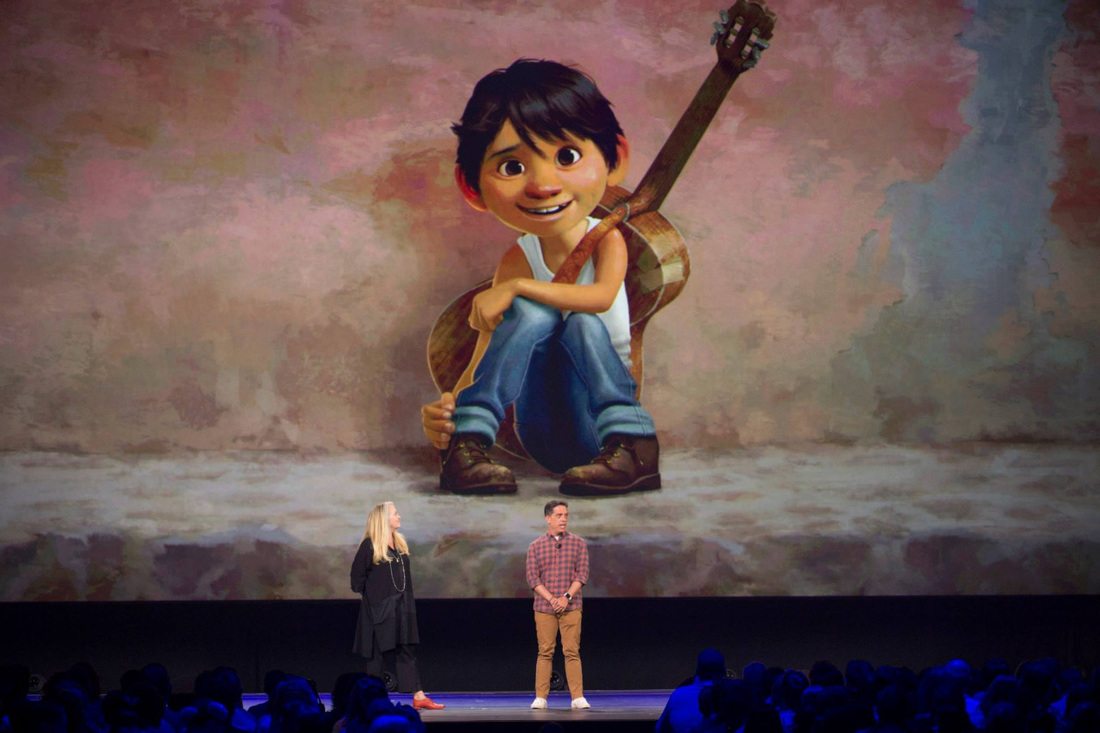
Note: the top image is a reference to Pixar’s next original film, Coco, which will release next year.
You’ve probably seen a teaser or two for Illumination Entertainment’s upcoming franchise starter, The Secret Life of Pets. The movie is essentially about what dogs, cats, and other pets are up to when their owners aren’t around.
Sound familiar?
Look, I didn’t dare make this comparison last summer when the first teaser released. That version of the movie was intriguing, as it featured a variety of animals getting caught up in humorous situations in different environments somewhat connected by an apartment building.
Then the trailer dropped, revealing the actual plot of Pets. And to be honest, it doesn’t look nearly as interesting thanks to its incessant borrowing from Pixar’s first feature film, Toy Story.
What do pets do when their owners aren’t around? This is a generic premise that movies have been using for decades, not just Toy Story. That said, a handful of movies have already tackled the pets aspect of that story (the live-action Cats vs. Dogs immediately comes to mind), but I’m not opposed to a different studio trying something new with the concept. After all, Toy Story can easily be compared to The Brave Little Toaster, and who hasn’t compared The Walking Dead to Toy Story?
But then…well, here’s the trailer:
Like Toy Story, we have a pre-established society where pets call the shots. On top of that, we have a main character named Max who is used to getting all of the attention from his owner, exactly like Woody and Andy’s relationship in Toy Story.
The inciting incident appears to be the adoption of a new pet who steals the attention away from the favorite, who is Max in this case. Then the two of them get “lost” and have to find their way home, resolving their differences along the way. I won’t be surprised if getting neutered will be spun as the new “YOU ARE A TOY!” line.
The plot also borrows a key structure from Toy Story 2, in that the remaining pets go on a mission to the city in order to find their lost friend. Gidget’s speech sounds remarkably reminiscent of Buzz’s rallying of the toys to find Woody.
Sure, there are some inventive gags in this trailer, including the poodle’s System of a Down obsession. But then you have the tired jokes where dogs get easily distracted by animals, circa Dug in Up.
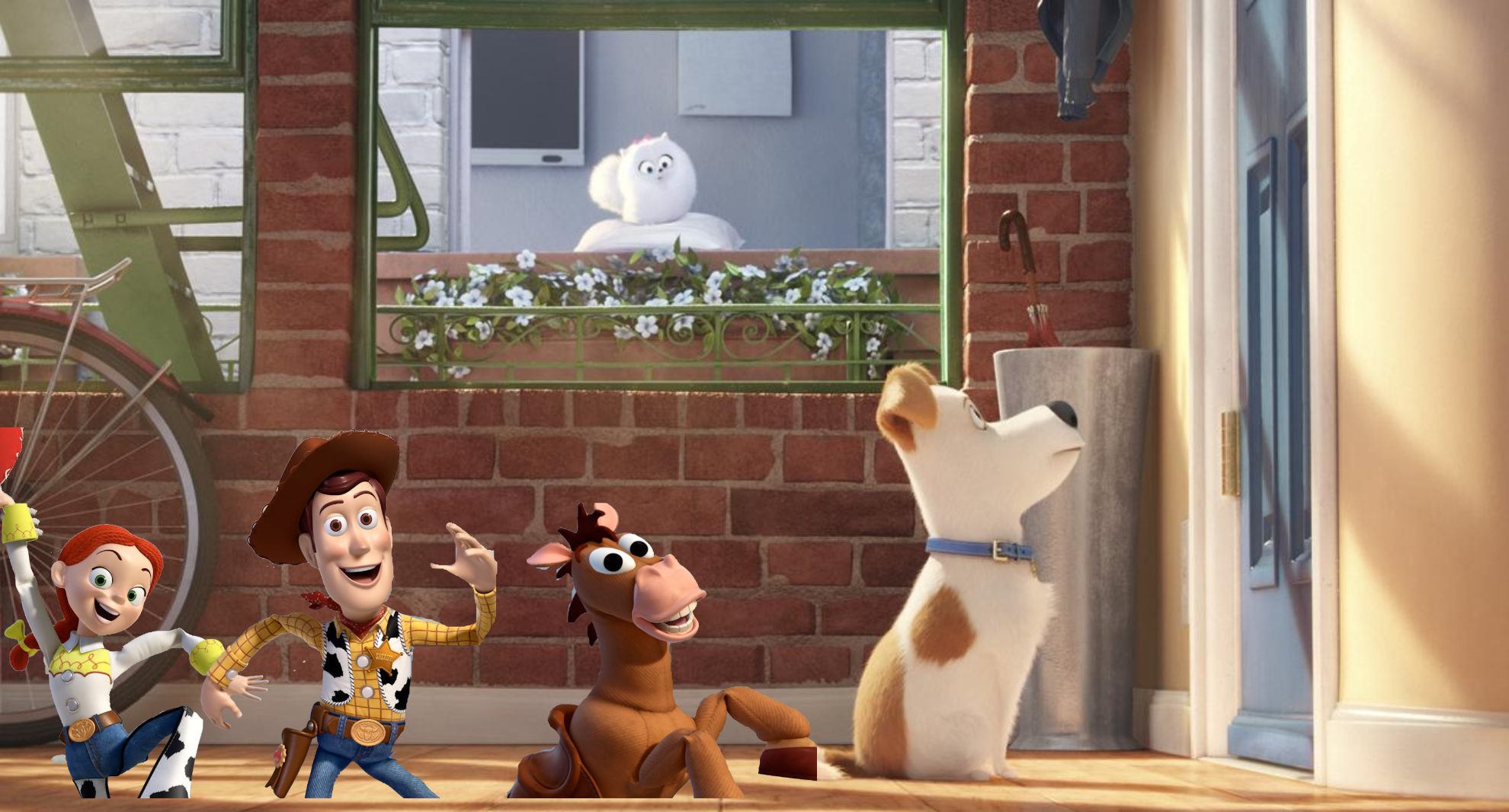
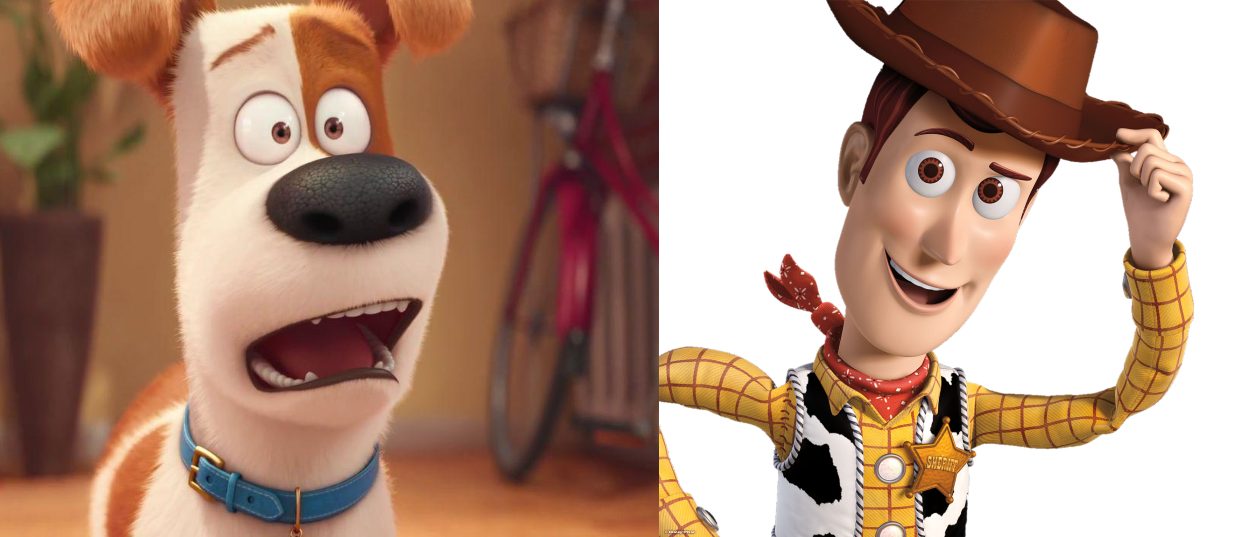
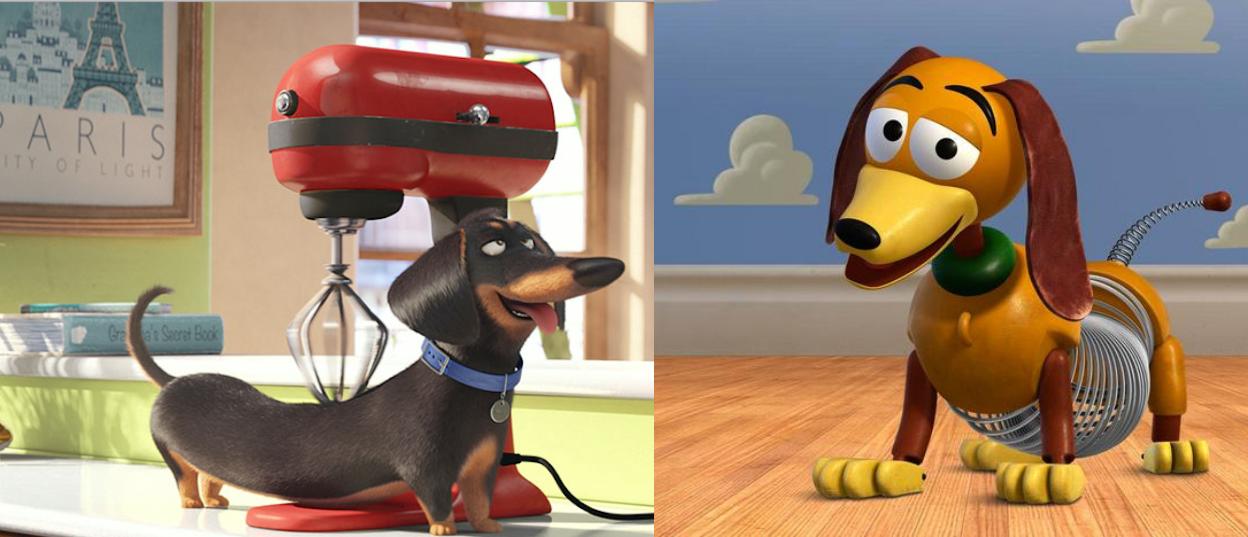
And I haven’t even mentioned the visual similarities. Take Maxfor example. His colors are nearly identical to Woody, from the brown and white to the black, red, and gold.
The design of the “new” dog and Buzz Lightyear are different, but the scope is still there. This new dog is a lot bigger than Max, which is a visual representation of how Max feels around him. The same emotion was captured by Buzz’s space-cool features.
And these aren’t the only characters who are weirdly similar. Gidget, a side character who seems to be the close friend/love interest, shares a similar voice and style as Bo Peep.
In fact, all of the side characters have a reasonable counterpart when it comes to tone and basic visuals.
And that’s still not the end of it. Not only does the plot share a lot of basic similarities, even some of the scenes are ripped straight out of Toy Story:
There’s the bunny, Snowball, who is voiced by Kevin Hart. And from what I can tell, he feels like a fresh(er) character inspired from the Penguins of Madagascar. But his character arc looks a lot like Sid’s in Toy Story. He frees Max and Duke from a cage, then tells them that they belong to him. He’s also maniacal and appears to be sadistic.
Actually, the bunny could more easily be compared to Lotso from Toy Story 3. Both characters are cute on the outside, yet are slowly revealed to be monstrous villains. They both bail out the main characters when they’re in trouble (Lotso provides a new way of life for the toys, and Snowball rescues Max and Duke from Animal Control), only to thrust the heroes into an even worse scenario.
Of course, thoughtful borrowing can lead to great movies. That said, when your work is this derivative in so many ways, it calls the quality of the entire film into question.
I have no doubt that Pets will have some clever jokes and memorable characters. Despite my public disdain for the Despicable Me franchise, I have high hopes for directors Chris Renaud and Yarrow Cheney, who are returning to cement Illumination Entertainment as one of the top animation companies (Eh, who am I kidding? Minions is a billion dollar franchise. They’re already at that point).
But while the movie will cater to the same people who still think the Minions are adorable, I am losing hope in Illumination’s ability to deliver a remarkable story, or anything that will last the test of time for a reason beyond genius marketing ploys.
I’m Jon and thanks for reading this. You can subscribe to my posts by clicking “Follow” in the right sidebar. Or just say hey on Twitter! @JonNegroni
Sorry, everyone. It turns out we have to ditch enjoying our entertainment a certain way because the managing editor of Movie Mezzanine thinks they are, and this is a direct quote, “truly toxic.”
Alright. Let’s do this.
In his latest editorial, titled “Why Fan Theories are Destroying Film Discourse,” film critic Josh Spiegel deconstructs the modern fan theory, directly calling me out on two theories I’ve written on this very site. For that reason, I think it would be rude not to respond, right?
He starts the essay with a few examples to set up his case.
Did you know that, in The Dark Knight, the hero was actually the Joker? It’s true—if you buy into this recent theory posited by a user on Reddit.
Interesting that he doesn’t link to the post itself, just an article on SlashFilm reporting on it. I mean, that’s not egregiously terrible or anything…but why not just link to the original post? Wouldn’t it be fairer for readers to evaluate the original version instead of a shortened one that leaves out his full explanation?
Also, I don’t get his logic with this sentence: “It’s true—if you buy into this.”
Well, no, something isn’t “true” just because you believe it. I suppose, then, it is true to you, but if Josh is subtly implying that truth is relative, then doesn’t that make this entire article pointless?
And did you know that Andy’s mom in Toy Story is also the grown version of the girl named Emily in Toy Story 2 who owned, and then discarded, Jessie the cowgirl?
YES! Wait, is this a trap?
No fooling, according to a postby the same guy who has a far broader theory that every Pixar movie—yes, even the Cars movies—are connected to each other.
Well, no, that’s not true. If he had read the actual post he’s linking to, he would have noticed that I didn’t, in fact, come up with the original theory for Andy’s mom being Emily. It was presented to me, and I made the case for it with my own research.
So long, logic.
And in the most mind-blowing one of all, it’s even been suggestedthat the snarky kid at the beginning of Jurassic Park who Alan Grant threatens with a raptor claw grew up to be none other than Chris Pratt’s hero character in Jurassic World.
Again, Spiegel links to the article reporting what someone posted on Reddit, instead of just the original posting. Does Spiegel hate Reddit or something?
Also, I actually like this theory about Jurassic World. It’s interesting. It’s a fun connection. It makes enough sense, and it doesn’t contradict anything presented in the respective movies. So, what’s the problem?
There are an embarrassingly large number of fan theories floating around the Internet, and the emphasis here should be on the word “embarrassingly.”
It’s embarrassing to have a large number of discussions about movies? I thought fan theories were destroying film discourse, not strengthening it? Oh, Josh, let’s just cut to the chase, friend.
What these ideas amount to are fan fiction, not fan theories.
Wait, but what are “these ideas” you refer to? I didn’t leave a sentence out. You’re saying that fan theories are fan fiction, but they’re not fan theories. What?
And even *terrible* fan fiction gets to be a book!
Also, fan fiction isn’t as broad a term as you’re alluding. Unless someone is actually writing a fiction, it’s not fan fiction. And even if it is, some fan fiction can be pretty good (don’t see above), and a lot of people read and love it. In a way, the celebrated Star Wars novels are a form of fan fiction cleverly called “expanded universe.” Why is that acceptable, but an interpretation of a movie you just saw isn’t?
I have a feeling he’s not going to answer the question and instead bring something else up.
Few, if any, of these theories ever get a direct response;
They’re not supposed to get a direct response. That’s not the point. Fan theories, in a broad sense, are an experiment by moviegoers to let themselves interpret movies they love in new and different ways. They don’t have to be “true.”
That’s like saying your interpretation of 2001: A Space Odyssey isn’t worth your time because Kubrick hasn’t directly responded to it from the grave.
OR HAS HE?
..the closest in recent memory is Pixar director Lee Unkrich playfully retweeting a comment or two from followers of his who treat the so-called Pixar Theoryas utter silliness.
Well first of all, it’s not “so-called.” It’s just called.
Also, why not just link to the Tweet itself?? Again, Spiegel links to the blog post about the Tweet. I’m feeling an Inception fan theory coming on here…is…is Josh Spiegel Dom Cobb? Makes sense.
Oh, and you’re linking to the wrong Pixar Theory. That’s the website inspired by it, not the original post. I’m guessing Spiegel doesn’t care.
[UPDATE: Movie Mezzanine graciously fixed this error and sent the link to the correct spot. Credit where credit is due.]
But fan theories are becoming as prevalent to modern film culture as stories about casting rumors or reviews, and they are becoming truly toxic.
Toxic, eh? That’s strong language. I mean it implies that fan theories themselves are harmful. Probably to film discourse! Let’s read why.
It’s easy to imagine the counterargument from those in favor of fan theories: What’s the harm?
Right. That’s a big one.
The Dark Knight doesn’t become better or worse because of a Reddit user’s theory about the Joker, as silly as that theory might sound.
Nods.
The Toy Story films are still marvelous whether or not Andy’s mom is Jessie’s old owner.
True that.
Jurassic World is still a resounding disappointment,
Wait, what? A resounding disappointment? That’s heavy hyperbole, especially considering the adjective is implying that we’re still feeling it as a disappointment months later.
Never mind that Jurassic World is one of the top-grossing films of all time, or that it managed to score good reviews when most people were expecting another terrible Jurassic Park sequel.
Never forget.
I get why you may not have liked it, Spiegel, but that doesn’t make it an ongoing disappointment to everyone else.
The problem is that these theories, online, become as inextricable to a vast amount of readers as the actual movies themselves.
He just asserts this. No evidence. No examples. Not even a bloody anecdote. Spiegel, in all his wisdom, just declares that fan theories are confusing people because there’s a lot of them. Does he not think we’re smart enough to read fan theories? And then he says the movies should be confusing us. What? What’s confusing?
This argument makes no sense to me because it implies that people care more about fan theories than the movie themselves, but liking the movie is the actual prerequisite to even wanting to read a fan theory.
So what’s the problem? People aren’t overthinking movies the right way? Is that where this is going?
Worse still, these fan theories are quickly replacing actual critical analysis,
Last I checked, people still critique movies. Like a lot of them. All the time. Do you have, maybe, any evidence that there are fewer articles that analyze movies the way you want them to be analyzed?
covered by a large amount of entertainment websites in part because the content beast must be fed,
Exactly! Like how celebrity gossip ruined film discourse because the magazine content beast had to be fed. Should we hate that, too?
and in part because it takes the work out of the hands of the sites’ writers and into the hands of random commenters who have too much time on their hands.
Look, I’m all for giving writers more work to do. Like sourcing the actual comments instead of just linking to the blog post about them. (But I guess he’s doing that to strengthen his point.)
And we don’t totally disagree on this. Some fan theories are pretty bad, and it’s annoying when a website will feature them just to get clicks. So why are you attacking all fan theories? Some of them are fantastic, and yes, worth talking about.
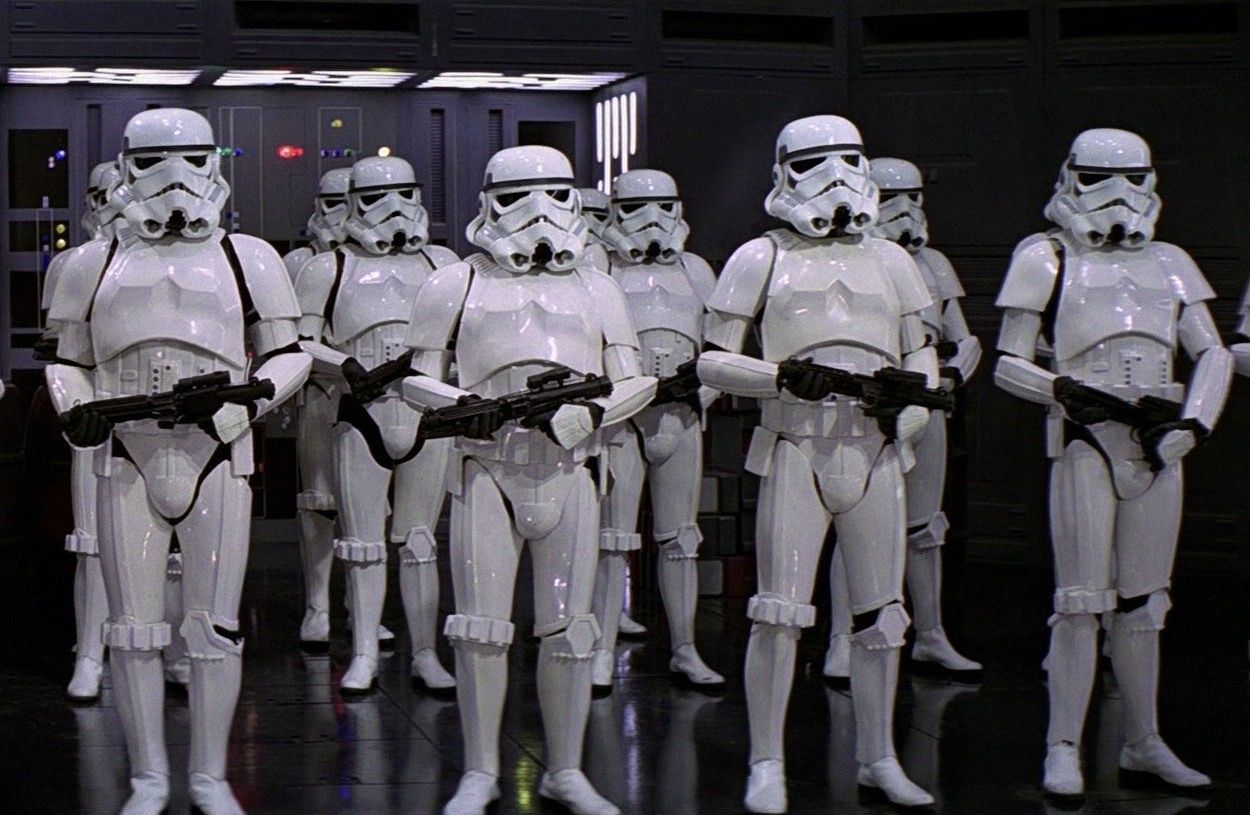
Like “the stormtroopers missed all the time because Vader ordered them not to kill his son. Oh, and he knew Luke was his son the whole time.”
They’re not from “random commenters” as you so condescendingly refer to them as. They’re human beings who love movies just as much as you and I do.
I don’t care what you think about them, Spiegel. Loving movies is the only qualifier you need to join the discussion, EVEN if you have free time (gasp).
So what’s the difference between a fan theory and a deep-dive exploration into one aspect of a film?
Hmmm…How many flattering adjectives you’re willing to assign to them?
The former is the product of a person choosing to fantasize about what they would do if they had made the film they’re watching,
No, that’s not it at all. Last I checked, not everyone wants to be a director. Maybe I’ll check again. Checks. Nope.
and the latter is the product of a person paying attention to the movie they’re watching and responding in kind.
Wow. Just…wow. Spiegel isn’t using words like “some” or “generally.” He’s definitively saying that people who write fan theories aren’t paying attention to the movie.
I couldn’t have written any of those things because I wasn’t “paying attention.” I was too busy also writing fan theories, and those are bad.
Often, the fan theories that send the Internet—specifically its social-media avenues—into a tizzy rely heavily on the fact that they aren’t based directly on what’s present in the text.
True. Most of these theories end up being rubbish, or not completely thought through.
Take, for example, the notion that Owen Grady in Jurassic World is the kid in the opening of Jurassic Park. That certainly sounds cool, and would be a nice, if random, tie-in to the 1993 film. But what’s the evidence backing this theory? Well, see, the kid in Jurassic Park is only credited as “Volunteer Boy.” So his name could be Owen! Also, Chris Pratt is only a year older than the actor who played Volunteer Boy, so the timeline could fit! Also…um…hey, look, something shiny!
Seriously, Josh? Why so mean-spirited in that last line? We get it. You think fan theories are childish. You don’t have to be a tool about it.
Take a long, Lohan, look at yourself.
Also, the evidence for this Jurassic World theory comes from the fact that you can reasonably see the people who made the film creating a character who embodies this moment from the first film. It actually informs the story as a whole.
That said, and I can’t stress this enough, this theory doesn’t have to be true. But it is a fun thought experiment that you can speculate about because it does happen to fit with the source material so nicely.
The majority of the work to make this theory seem remotely logical is done behind the scenes, as someone imagines what could have happened to this kid after Alan Grant scratched at his stomach with a raptor claw.
Yeah, who needs imagination? Certainly not people who watch what is essentially an illusion on a big screen.
See, much of what we take from a movie has to come from thinking external of what’s being presented. This is because the audience makes an emotional connection with what’s happening, but not every director can spoon feed you the context. That would alienate the audience.
We have to fill in those blanks ourselves most of the time, which leads to…you guessed it…film discourse.
This same vagueness plagues the majority of fan theories. Yes, it’s not impossible that, in the Toy Story films, Andy’s mom could have a deeper connection to one of his toys than he or even she realizes. So many existing fan theories rely on the first four words of the previous sentence: “Yes, it’s not impossible.” The lack of impossibility, however, doesn’t automatically prove a theory correct; it merely suggests that it’s not impossible for something to be true.
Again, these theories don’t have to be true. That’s not why most people come up with them. It’s about interpreting small clues in new ways that get you to think about the film. When someone reads this theory for the first time, they’re often pushed into rewatching the movie, and (guess what!) paying attention to it.
Fan theories are no substitute for critical analysis, yet they have quickly become inseparable for so many readers online.
This is Josh’s main argument, and I get why he’s so concerned. Because it’s true that fan theories are not a substitute. But that’s a complete misunderstanding of their role. They’re not meant to be a substitute, either. They never were.
Instead, fan theories in their nature are meant to be a form of interpretation through imagination and passion for the subject material. They’re meant to answer questions that don’t have to be answered, but create conversations between the people who answer these questions in different ways.
Sometimes, fan theories are answered by the voice actors themselves.
Analogy time!
Fan theories are like movies. There are good movies, and there are bad movies. That doesn’t mean we should get rid of all movies because some are bad. And bad movies certainly don’t replace other art forms that approach entertainment in a different way. I can read a fan theory and a deep analysis by A.A. Dowd. And I can enjoy both of them.
On the other, fan theories pose as critical analysis in spite of featuring neither criticism—often, these are posed by people who would proudly consider themselves fanboys or fangirls, never pausing to think about the built-in imperfections of even their favorite films—nor analysis.
Translation: Josh thinks you like movies too much. Go figure.
Right, because in his world, people who overthink movies don’t criticize them. That is an actual opinion held by a film critic.
Popular films like Jurassic World or The Dark Knight or Toy Story beg to be debated for their themes.
And nothing else! Only themes!
Hey, wouldn’t that mean that critical analysis of themes is destroying film discourse? What if someone wants to debate the characters in the movie, or how some of the movies share nods to each other?
Nope! To save film discourse, we must prevent it from happening the way we want it to. Shrug!
As ubiquitous as they may be, the discourse surrounding these films frequently sidesteps a conversation on nostalgia, on childhood heroes, on the possible emptiness of vast spectacle.
This sentence exists in a world where The Nostalgia Critic is one of the most widely viewed critics in new media.
OK, maybe some people talk about Nostalgia Critic more than nostalgia itself.
Fan theories now drive the discourse on these films, and to everyone’s detriment.
No, they just exist. That’s all they do. Yes, some are more popular than others, but how is that in any way proof that they’re replacing anything?
I browse the Top and Trending URLs almost every single day. You know which articles about movies I see the most being shared? Not fan theories. Those make up a small percentage, because the reality is that a good fan theory is hard to discover, while pointing out what you think about a movie is pretty easy, and a lot of people are pretty interested in critical analysis.
You know what the top trending links were for the day I wrote this (September 2, 2015)? The top link was an image of Bryan Cranston as LBJ in the upcoming movie, All the Way.
Yes, this is actually happening.
The second most shared link about movies (including via social media) was a longform piece by Italo Calvino about movies that influenced his youth, adapted from a published autobiography.
So that’s everything movie-related from the top 100 links. Yet I don’t see a single “fan theory” shoving its way past articles that are, in Spiegel’s eyes, more deserving.
For some odd reason, Spiegel feels threatened because a good article he probably wrote isn’t as famous as a theory about the Joker from The Dark Knight. And I guess I sympathize. That sounds weird, and I’ve been there.
Does that mean fan theories are inherently bad, though? Absolutely not. You could only argue that they’re toxic if you actually have an argument that points out how they prevent people from deep analysis.
But instead of doing that, Spiegel has chosen to create a false dichotomy between analysis and analysis fueled by imagination. By doing this, he tries to makes you feel dumb for liking fan theories instead of something he likes.
That’s not an argument. That’s a childish guilt trip.
On their own, fan theories are, indeed, harmless; if they existed next to critical discussions, and did so in lesser standing, they would be a fun distraction.
“Fan theories wouldn’t be so bad if people liked my articles better.”
But the more fan theories are treated as serious, thoughtful salvos in a debate, the more ridiculous they appear to become.
To you.
Here’s a new fan theory to ponder: making these things die a quick death will improve the world of film immeasurably. What more proof do you need?
All of the proof you failed to deliver thousands of words ago.
And I’m puzzled by the raising of the stakes toward the end. Now we have to make fan theories die a quick death? What’s going on, Josh? Did a fan theory steal your girlfriend or something?
Seriously, he went from talking about how fan theories are harmless to calling for their immediate death. This sounds a lot like a dictatorship to me, rather than letting people who love movies make up their minds on how they want to approach the entertainment they like.
In other words, not everyone thinks like a film critic. And that’s OK.
You. Are going. To do great, today.
This entire article is a classic case of subjectivity rearing its opinionated head. The truth of it is that Josh Spiegel is an intelligent film critic. I actually like his work a lot and enjoyed his review of Inside Out, among others. We don’t always agree, of course, but he’s good at adding great points to any given discussion.
But this idea that fan theories are making everything worse is a true moment of FUD (fear, uncertainty, and doubt).
The quick of it is that Josh doesn’t like fan theories. So he doesn’t like that you like fan theories. Then he accuses you of not liking the type of analysis that he likes (even though you probably do). Then he calls for the death of said thing that you love.
No thanks.
[UPDATE] The original author of the “Joker” theory (who goes by the username, generalzee) responded to Spiegel’s post via the comments, and I thought it would be good to share it here as well. Source.
As the person who wrote the Joker Fan Theory in question, I can’t believe how wrong and insecure this article sounds.
First of all, I never intended for my fan theory to be a critical analysis of The Dark Knight. Nowhere in my theory do I talk about the framing of shots (which I could have), or the acting (which could have been a major point in such a theory), or even the uber-dark mise-en-scene, which may have fully supported my theory, and highlighted how, thematically, all three main characters were living in the dark. Instead, I made an arguably compelling argument that the film could be interpreted another way.
What I find worse than that, though, is the fact that you claim that I ignored facts that are DIRECTLY MENTIONED in my theory. I explained both the boats and Dent’s scarring (Both physical and emotional) directly in the original piece. Of course, I wouldn’t expect a modern blogger to actually check his sources, and I’m sure you just read the Mashable version at some point, but it annoys me that you would make such an attack on fan theories WITHOUT EVEN READING THE ONE YOU’RE TALKING ABOUT.
So please let me be clear that this response IS intended to be a critical discourse on your work. What I see is a self-proclaimed critic who is horrified by his perceived loss of power to a basically unrelated group of people investigating films in a way that he, himself, has arbitrarily deemed below himself. This is reflected in his weak, but clear call to action to end Fan Theories as if they are going to harm legitimate film criticism. The panic he feels reflects strongly in his hastily researched (Really, how long did it take you to read the titles of the top 5 Fan Theories on Reddit?), and poorly thought-out criticism of a culture that he would attempt to appropriate into his own, only to discard it immediately.
I’m Jon and thanks for reading this. You can subscribe to my posts by clicking “Follow” in the right sidebar. Or just say hey on Twitter! @JonNegroni