Review: ‘Miss Peregrine’s Home For Peculiar Children’ Looks Nice, But Feels Hollow

peregrine

Tim Burton’s latest feature film is based on a recent series of novels by Ransom Riggs that center around supernatural children derived from creepy vintage photographs. Strangely, he adapted these interesting peculiarities into a YA novel, just when the idea of magic children attending a magic school was finally being recognized as a tiresome trope (though not in time to prevent this movie from getting the green light).

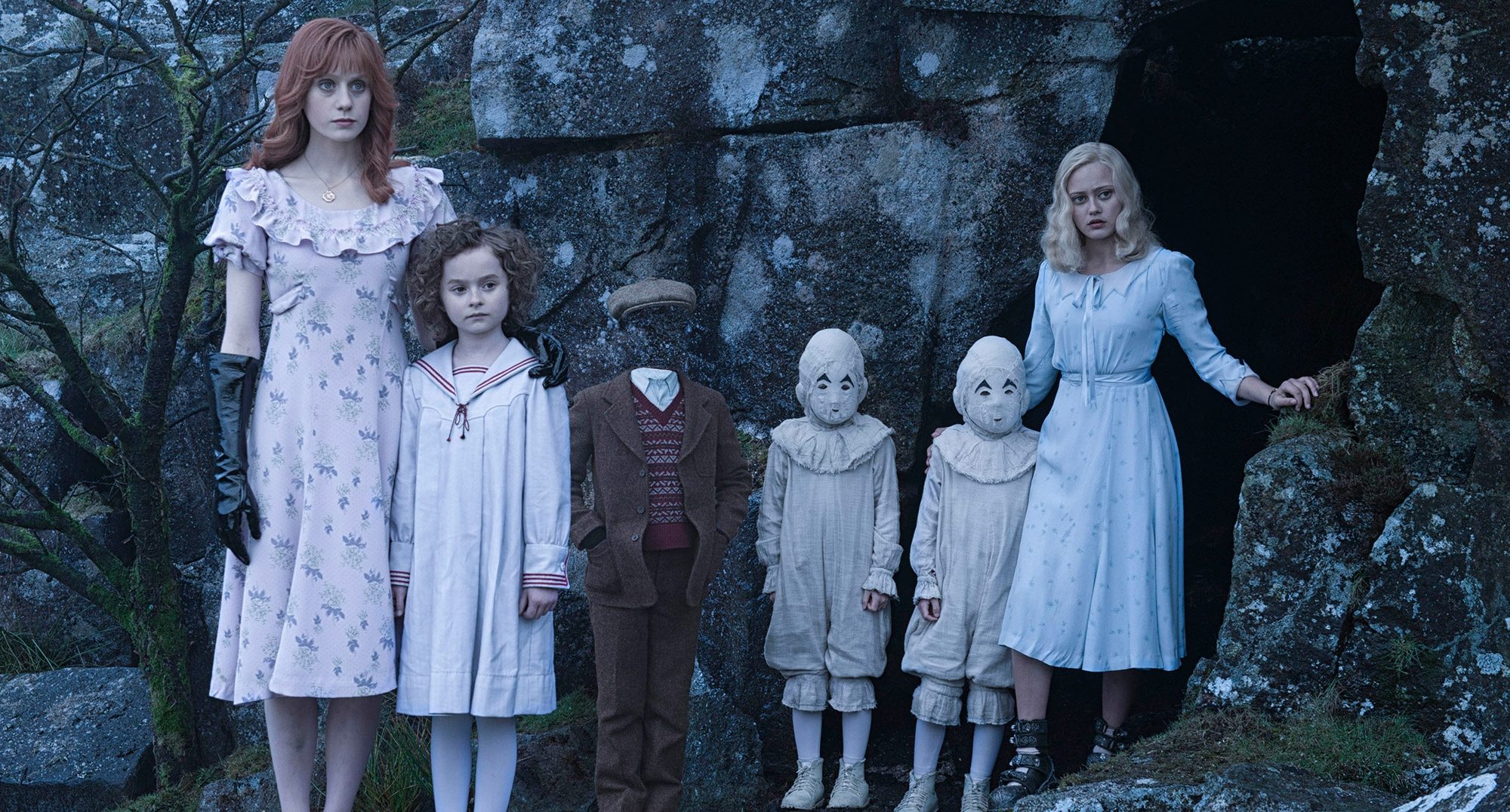
The structure is quite familiar, then. An “ordinary” boy from the Florida suburbs named Jake (played weightlessly by Asa Butterfield) seeks out the wreck of a children’s home in Wales in order to find answers for why he saw paranormal demons connected to his grandfather’s death. What he instead finds is the home quite intact, but trapped in an intentional 1943 time loop, governed by an astute headmistress named Miss Peregrine (Eva Green).

As he gets to know the rest of the children at this home, Jake uncovers a host of mysteries associated with the greater “peculiar” universe (this is a franchise movie ripe for sequels, which is clear early on). And he must eventually aid the children in overcoming the same threat that went after his grandfather, and you about know the rest.

There are only a few nice things to say about Miss Peregrine’s Home for Peculiar Children, so it’s useful to get them out of the way. The most obvious standout is the production design, which emphasizes atmosphere over visual effects to a winning degree akin to last year’s big budget spectacles, Mad Max: Fury Road and Star Wars: The Force Awakens. There are classic Burton tricks pulled off here and there, including some delightful stop motion scenes that ironically feel like the most lively elements of the entire film.
peregrine

Second, Miss Peregrine herself is probably the movie’s most competent character, even if she is criminally underused. Every scene she appears in dramatically realigns into what Burton apparently was gunning for: campy weirdness that shouldn’t be taken too seriously, except for how beautiful it is. Green sells every line with the sort of vampy expression that makes her one of the best in business, and too good for Burton’s drive-thru character direction.

The rest of the film fails on just about every level imaginable. There’s a fantastic looking world for these characters to live in and create moments for, but it’s all undermined by a horrendous script, massive and noticeable gaps in simple logic, and a disastrously wooden performance from a mostly reactive Asa Butterfield, who rivals Anakin Skywalker from Attack of the Clones in terms of sleepwalking through every line, or stuttering into a sudden bout of expression after probably realizing himself that Burton is giving him nothing.

Simply getting through the entire movie is a chore once you stop caring about the abounding exposition and rules Peregrine tries to dump in its first and second acts, a typical YA book movie flaw that is somehow worse here than in Percy Jackson and Divergent. Never mind that the source material itself is too much like X-Men to give this story any sense of originality or surprise—the movie could have still been salvaged by unique visuals and atmosphere. The real issue is that the script is so bland and unimaginative that you’re forced to fixate on the flaws, especially Butterfield’s acting.

Jake is meant to be our audience surrogate—a way in so we can understand this new world as he does. But the character does little more than ask everyone questions and react stone-faced to most of the answers. The children themselves are rough sketches of interesting ideas, but Burton never commits to making them feel like real people who have to live in an endless time loop (a huge missed opportunity for someone who’s so good at happy melancholy). Their personalities are relegated to their powers, which are useful for some of them about once or twice throughout the whole runtime.

peregrine

Worse, Terence Stamp, Chris O’Dowd, and Eva Green are granted with great potential to turn the film around, but as noted for Green earlier, they’re underused to a dismal fault, most of them disappearing entirely for long stretches of the film in order to give more time to whatever Samuel L. Jackson was trying to do as “evil peculiar” Barron, who is about as frighteningly incompetent as Jake, oddly enough. Countless times in the film, both the main villain and hero have obvious chances to defeat the other, but they just don’t. They either do nothing or act completely against reason until the resolution finally presents itself, which comes as a relief for all of the wrong reasons.

Miss Peregrine’s Home for Peculiar Children tries hard in some ways, but overall, it’s a travesty of bad storytelling that should either be avoided, or watched on mute.

Grade: D+

Extra Credits:

  • Why in the world is Judi Dench in this movie?
  • Also, how in the world did Burton direct Allison Janney to be amazingly flat in every line?
  • I could talk more about the great production design, but it’s just depressing to even dwell on the wasted potential.
  • I hope beyond hope that Eva Green doesn’t get squandered yet again by Burton in more movies. Dark Shadows should have been the first red flag.

Review: ‘Alice Through the Looking Glass’ Is Weird For All the Wrong Reasons

alice looking glass review

When I saw the first live-action film, Alice in Wonderland, I found the whole thing sort of…OK.

It wasn’t very good or anything, but the 3D at the time was so stunning, and the effects so magical, it was easy to overlook how off-putting it was to see Alice being transposed as a fantasy hero, complete with a boring, unrelated side plot in the real world.

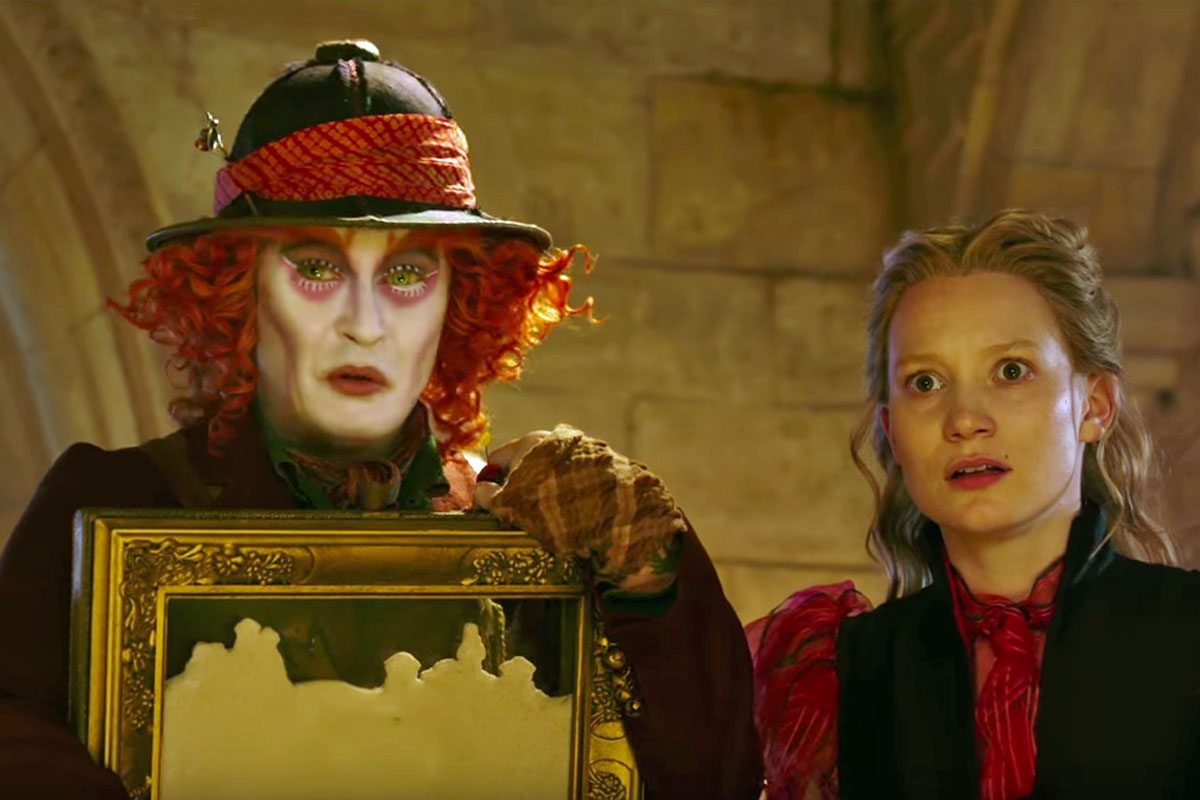
Over half a decade later, her adventures continue, though not much has changed to the film’s detriment. It seems Disney learned from all the wrong takeaways in that first film’s success, namely how important the Mad Hatter deserves to be in his role thanks to the fact that Johnny Depp is playing him.

Below are my lingering thoughts on the film, but my full review and breakdown is available here.

I suspect that the only people who will care for this sequel are strict fans of Burton’s 2010 interpretation. And I suspect even further that those fans will be mixed on Looking Glass for the most part. Unless you have a sadist passion for seeing the Mad Hatter and Alice embarking on elaborate adventures in Wonderland just for the sake of it, then this entire film will ring as hollow as the 3D.

alice looking glass review

In the review I linked above, I go into detail over why the story and purpose of Looking Glass is atrocious to the point of my stamping it a very low grade (lower than the “C” I would grade Alice in Wonderland). But I glossed over points about the visuals and how the film measures up to the books.

As far as the books go, I’m not very disappointed with how they’ve been adapted, if only because it’s probably impossible for anyone to adapt them faithfully. Carroll wrote them to be veiled absurdist stories that criticized the Victorian Era, so a more modern interpretation suffers a herculean task: how can you use wordplay to capture the spirit of the original while also applying the Carroll effect to current events? If any filmmaker was able to do this successfully, they’d have a masterpiece on their hands. But for obvious reasons, that will probably never happen, at least anytime soon.

When it comes to the CGI, I have little doubt that this will be a splitting point between fans and critics. Some of the actual design and movement of these characters is solid, even compelling at times. My main issue with them is that the existence of the green screen was all too apparent throughout the film, thanks to bizarre hiccups in lighting that contradicted the faces of the characters with their backgrounds. Why some are heralding this as a visual treat on par with this year’s Jungle Book completely baffles me, but for whatever reason, I’ll probably be the minority opinion on that front.

alice looking glass review

So chances are that you’ll enjoy the visuals and hopefully overlook the massive narrative issues that doomed this film for critics like me. Otherwise, you’re probably better off scouring for other, better adaptions of Looking Glass, including the somewhat decent 1998 movie with Kate Beckinsale.

Grade: D


I’m Jon and thanks for reading this. You can subscribe to my posts by clicking “Follow” in the right sidebar. Or just say hey on Twitter! @JonNegroni

The Batman Theory Of Everything

batman theory

The Tim Burton “Batman” movies and the Joel Schumacher “Batman” movies exist in the same universe. To explain how and possibly why, let’s answer a real quick question:

Who is the real Batman?

Is it Christian Bale? Ha, that’s a laugh (or a scream).

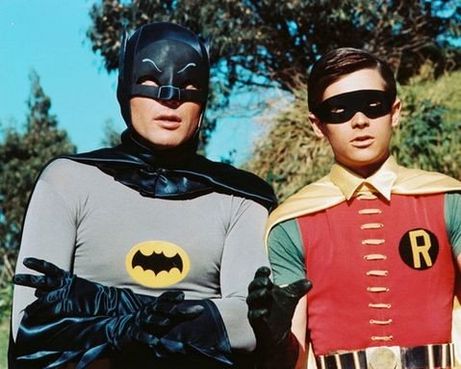
Adam West?

batman theory

Maybe.

But what if the “real” Batman is Michael Keaton, who appeared in 1989’s Batman and 1992’s Batman Returns? Both of which are Tim Burton films, by the way.

The Batman Theory is that Michael Keaton’s version of Batman is the “original” Batman. And the subsequent movies featuring Val Kilmer and George Clooney in Batman Forever and Batman & Robin are simply movies about Batman taking place in Tim Burton’s version of Gotham.

batman theory

Now this isn’t my theory, to be clear. In fact, I’m having trouble pinpointing the originator of this theory, but here’s how I came across it. Cracked author Adam Wears recently highlighted this theory in an article. He cites a Redditor who brought it up in r/fantheories, though he claims it’s not his theory either.

Wears greatly expands the Redditor’s idea in the article, and I’m going to expand further. But here’s the basic rundown.

The Tim Burton movies starring Michael Keaton were the first “serious” Batman movies after years of the character being seen as a campy, comical superhero. Batman and Batman Returns are gritty and dark interpretations that haven’t really been mimicked since they came out (save for Fox’s Gotham, which delivers a spiritual prequel reminiscent of Burton’s vision).

batman theory

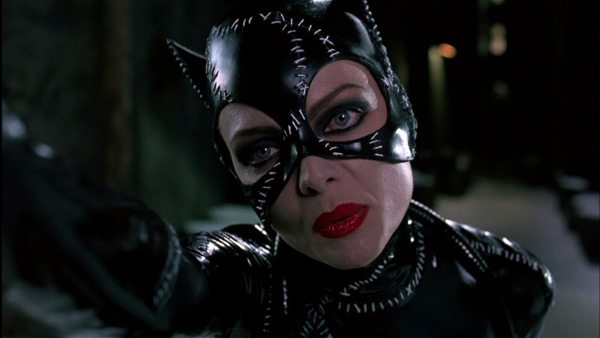
Now at the end of Batman Returns, Bruce Wayne believes Catwoman has run out of her nine lives, leading to her death. Though she was a villain initially, Bruce and Selina (Catwoman’s alter ego) developed a romantic relationship. Even though she (as Catwoman) plotted to kill Batman at one point.

At the end of the movie, Bruce believes she is dead, though we see she is still alive. Heartbroken, this would lead Bruce to “retiring” as Batman and confessing he is Batman to the rest of the world. Personally, I just think he died or was killed eventually. And from his remains, people figured out who he was.

batman theory

The theory is that someone would come along and make a movie out of his life, which would lead to the Joel Schumacher movies. These “movies” would be based on the Michael Keaton version of Batman.

This would explain why there is such a tonal and stylistic change between the two sets of films, and why there are different actors for Bruce Wayne in both movies (even though other actors like Chris O’Donnell stay the same, and Harvey Dent goes from being Billy Dee Williams to Tommy Lee Jones).

And of course, it explains why the Joel Schumacher movies suck…unless you were a kid when they came out. And why we should never regard them as canon ever again.

Wears brings up that these changes are apparent when you compare the screenshots of the Tim Burton movies against the Joel Schumacher ones.

batman theory

327828_v1

These screenshots capture a city that is very “industrial and gothic,” as Wears puts it. Contrast that with Batman Forever and Batman & Robin:

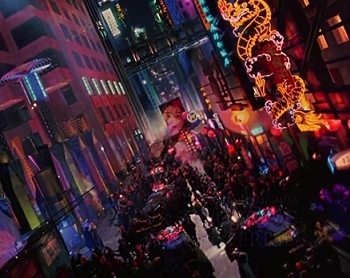
batman theory

327832_v1

And of course these “re-imaginings” of Gotham are more vibrant and colorful. For a city that is so bankrupt morally and optimistically, it makes sense that they would have over-the-top movies that appeal to kids, showing off a lighter, campier version of Gotham.

But what of Alfred? Michael Gough plays Alfred in all four of these dang movies. Same goes for Pat Hingle playing Commissioner Gordon in all of them.

batman theory

Are we really supposed to believe that these guys would play themselves in movies about Batman?

Well, sure. One thing we know about Gotham is that it’s the opposite of the land of opportunity. Not everyone has a Batman Credit Card, so if your one job was working for the Batman but he suddenly died, then what else are you going to do? (Oh yeah, this is why the retirement idea doesn’t work for me).

batman theory

So Alfred would carry on the Batman legacy by helping produce these films, inspiring the children of Gotham that crime is bad. Same goes for Commissioner Gordon, the super cop who is not actually incompetent and should be seen as the hero of law enforcement.

After all, the news of their connection to Bruce Wayne would instantly elevate them to celebrity status. What would you do with that level of fame? Probably what other people do. Make movies.

Basically, the Joel Schumacher movies are propaganda that are used to carry on the effectiveness of the cowl beyond the grave. Of course, this is assuming Bruce Wayne/Michael Keaton would really be dead, when really, he’s probably just off with Catwoman (who’s also believed to be dead) in another country. Hey, what does that remind you of?

batman theory

Checkmate, Mr. Wayne.

Thanks for Reading! You can subscribe to this blog by email via the prompt on the sidebar. Otherwise, be sure to stay connected with me on Twitter (@JonNegroni). I’ll follow you back if you say something witty and awesome.