The Pixar Theory: How ‘Onward’ Fits In The Pixar Universe

onward

When the first trailer for Onward dropped, I was immediately hit with a flood of questions about how it could possibly share the same universe as all of the other Pixar films from Toy Story to Coco. As soon as I watched the trailer, I had more than a few ideas and predictions, but I of course wanted to wait and see the film for myself before drawing any conclusions. Well, that time has come.

In case you’re new here, The Pixar Theory is a fan project I started back in 2013 in an effort to connect all of the Pixar films through a single, all-encompassing timeline. Since then, the theory has really taken off and I always get a real kick out of the branching theories people come up with and contribute to this site and elsewhere. The idea is simple: every Pixar film, according to this theory, exists in the same universe. Going deeper they share a strong narrative about what it means to be human in a world where anything is possible, including the apocalypse. Fun right?

I published a book called The Pixar Theory in 2015, which fleshed the whole fan theory out in a more meticulous fashion. But a couple of years ago, the book switched publishers, and I went to work revamping the theory into a brand new book that will include plenty more Pixar films, including Inside Out, The Good Dinosaur, Coco, and soon, Onward (maybe Soul, too, which comes out in June).

But I don’t want to keep fans of the theory waiting long. Though I’ll certainly need more time to finalize the Onward chapter of the theory with all of the easter eggs and narrative connections you’d expect, I can at least give a sneak preview right now into where Onward fits in the timeline, plus maybe a few extra details.

onward

Don’t worry. I’m not spoiling any of the story elements of Onward. If you haven’t seen the movie yet, you can keep reading without having to worry about having any surprises ruined for you. But you will get a sneak peek into the world of Onward and what it’s like on a basic level.

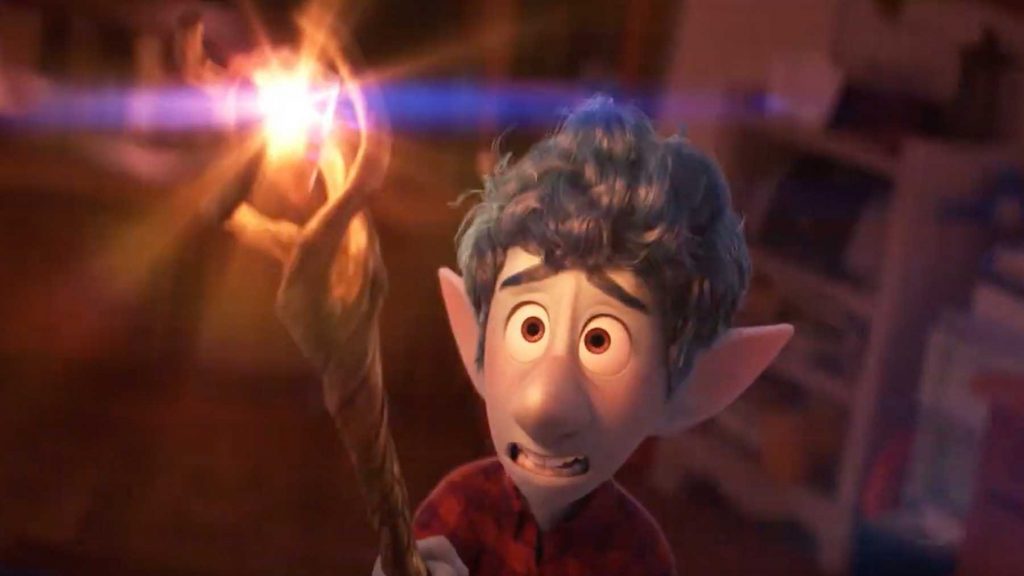
Directed by Dan Scanlon (Monsters University), Onward is about two brothers who go on a quest to find a magical gem that will bring their late father back to life for one, single day. You see, Ian (voiced by Tom Holland) never got a chance to even meet his father, who died right before he was born. His brother Barley (Chris Pratt) only has a handful of memories about their dad, because he too was very young when this tragic event took place.

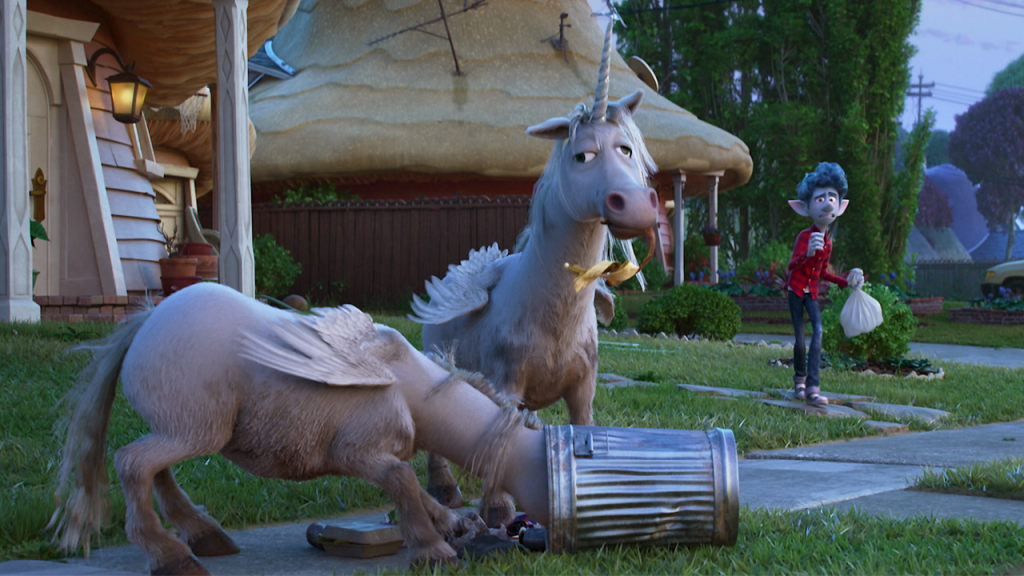
Here’s the catch. These brothers aren’t human, and the world they live in has more in common with “Dungeons & Dragons” than it does a world like ours today. Ian and Barley are elves, and the opening of the film explains that their world once contained many of the fantasy elements (like magic and dragons) that we’d see in a book written by J.R.R. Tolkien. The big difference is that there are no humans whatsoever in this world, not even in the visual history shown onscreen. And all of these fantastical creatures like unicorns, gnomes, trolls, and centaurs discovered the modern conveniences of electricity and indoor plumbing all on their own, making their world a parallel to the human one of 2020.

onward

The premise is a fun one. We get to see these traditionally old-school fantasy characters living in a modern world with cities, freeways, and themed restaurants. But lurking in the background is a hint of the magic that was once commonplace, only to be replaced by the perceived convenience of lightbulbs and automobiles. Centaurs don’t need to run 70MPH anymore because they have, well, cars.

So…how does this work for a Pixar movie? You might be wondering how it’s possible for a modern version of “Middle Earth” to exist anywhere close to the same one containing superheroes and Andy’s toys. This world has two moons, even! Is it another planet? Another dimension? What’s the deal?

THE DEAL.

Onward takes place in a section of the Pixar Theory timeline we’ve been curious about for years: in between the events of WALL-E and Monsters Inc. (also A Bug’s Life, which is shortly after WALL-E). As you may remember from the original theory, WALL-E ends with the humans of Earth returning home after centuries of being in space aboard the Axiom. While gone, the cars of Cars roamed the planet until running out of fossil fuels. But we’ve had little to go on when it comes to how humans were replaced with “monsters,” the animal-hybrid creatures who have their own modern society allowing them to go back in time to steal human energy (or…magic?) from the emotions of children, as we see in Monsters Inc.

Monsters University shows us that the monsters have been honing their scaring skills since at least 1313, when the university itself was founded. Onward hints at what this time might’ve been like for these diverse creatures, which aren’t very dissimilar to monsters. Remember, the timeline was reset for these creatures at some point in the far future, so 1313 for them would be thousands of years in the future for us.

onward

Simply put, the monsters of Monsters Inc. and Monsters University are part of the same society as the fantasy creatures we see in Onward. In Onward, we only get to know a small corner of this world, and it likely takes place many years before Monsters University, because it still contains many remnants of folklore, like wizards. But the Monsters films show us Monstropolis, which is more similar to a human society with little hint to the past. That’s because their world is more closely influenced by human society, as this is where Monsters Inc. is located, so this part of the world has a close connection to the human world of the past, which may have influenced the customs of this particular city.

For all we know, many of the towns and cities outside of Monstropolis are more similar to the one we see in Onward, which is clearly located closer to where magic was at its strongest. Put another way, Monstropolis resembles America because of its “new world” energy. But in Europe, it’s easier to find historical landmarks closely tied to the legacy of the past, which we see laid out a few times in Onward.

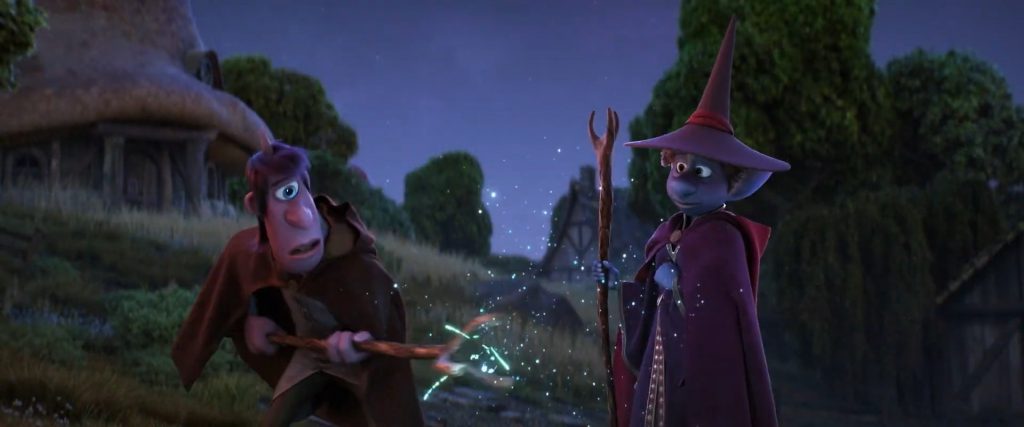
Of course, there are plenty more clues to consider and dissect. We see in Onward that magic does still exist, like the magic we see in Brave, in fact. The elements of the dead coming back to life are an obvious callback to how Day of the Dead works in Coco, and at various points in the movie, you could consider the magical action seen onscreen as something out of The Incredibles. The running theme, however, is that these powers are governed by emotion. In order for elves to perform magic effectively, they have to use their “heart’s fire” as a means of channeling magic. And as we see in the movie, only elves and other humanoid creatures appear to have the ability to use any kind of magic at all, hinting at the possibility that they are in fact the descendants of the humans who were aboard the Axiom and “re-inherited” the Earth.

onward

Humans are batteries in the Pixar universe. Their emotions can power toys, cars, and entire cities ( as seen in Toy Story, Cars, and Monsters Inc., respectively) But what happened to them after WALL-E and A Bug’s Life, when there were barely any humans to be found? Well, it’s possible they gradually changed into a new species, or bred into what would eventually be known as elves. And over time, they’d die out all the same, because we learn in Onward that not all elves have “the gift” of using magic. Eventually this ability would apparently disappear completely, forcing “monsters” to go back in time to harvest the energy needed to power their world. Perhaps these creatures evolved into scary monsters out of necessity, because it would be the only way for them to effectively scare children for centuries, weeding out all of the “nice-looking” creatures in favor of the scarier ones.

That’s not to say some of the creatures of Onward are helpless unless they have some connection to the humans of the past. Dragons breathing fire and pixies being able to fly can be easily compared to the heightened abilities of some monsters, like Randall, who can turn invisible. But when it comes to outright magic, the source always seems to come back to humans.

There’s a lot more to figure out with Onward, like why there are two moons, as opposed to just one. I have a few theories about this, but I’d like to see the film a couple more times to finalize my thoughts on how this is possible. It’ll also be fun to revisit the Monsters Inc. movies to find more direct comparisons between the world of Onward and the one where we meet Mike and Sulley. I’ll also be scouring the film for more easter eggs and cameos revealing all of the clues we’ve come to expect from these movies, so please stay tuned for the new and improved book, The Pixar Theory. I promise it’ll be worth the wait.

Before we part, I definitely want to praise the incredible work of Dan Scanlon and the fine folks at Pixar who did an incredible job making Onward. It’s as wonderful and heartwarming as many of Pixar’s other recent work, like Inside Out and Coco. The core message of the film pertains to brotherhood and how memories carry us through tragedy and toward the adventures of the future. I hope you all like crying in public, because yes, this is another Pixar tearjerker. I simply can’t wait to see it again and again.


Thanks for reading this. Be sure to say hey on Twitter: @JonNegroni

All images courtesy of Disney/Pixar

Which Pixar Plot Twist is the Best? (And Worst)

pixar plot twist

Pixar movies aren’t really known for having great plot twists. But there are still a few good ones here and there that we can appreciate.

So which Pixar “plot twist” is the best? This isn’t an easy question to answer, and obviously Pixar fans will spar and disagree over the top 5, let alone the very best. That said, I’ve devised my own rating system for each of Pixar’s most relevant plot twists, and to answer this question for myself, I’m breaking down the Pixar filmography movie by movie to assign these ratings and form my own conclusion accordingly.

But first, let’s define what a plot twist really is as best we can. To keep things simple, I consider a plot twist to be a radical shift in the expected outcome of the plot. Normally, we would only consider these to be plot twists if they happen closer to the end of the story, but I think a great plot twist can be revealed as early as the second act.

(Warning, this post contains spoilers for every single Pixar movie!)

Let’s begin with Pixar’s first feature-length film: Toy Story.

Go on…Which Pixar Plot Twist is the Best? (And Worst)

Comic: Boo and Randall, Meet Lilo and Stitch

boo and randall

“Lizard of Badness” comic made by DeviantArtist coffeebandit, who has made a few other humorous mashups of Pixar characters, many of them centered around the Monsters Inc. antagonist.

For example, “what if” Randall was at one point Violet’s monster? One invisibility powered hero meets an invisibility powered villain.

violet and randall

You can view the artist’s full collection here. I definitely recommend.


Snarcasm: Disney Ruined Pixar Because Why Not?

disney pixar

Snark + Sarcasm = what you’re about to read

Did Pixar lose its way, or did we lose our way with Pixar? There’s no real answer to the latter part of that question because it makes no sense. But the article we’re snarcasming this week actually does make a lot of sense and deserves to be approached thoughtfully. Even though it’s basically wrong for the most part.

Writing for The Atlantic, Christopher Orr titles his piece “How Pixar Lost Its Way,” because at this point, Orr is confident there’s no other conclusion to reach.

For 15 years, the animation studio was the best on the planet.

Studio Ghibli would like a word.

Then Disney bought it. 

And the Fire Nation attacked.

Orr begins his piece with a line from Ed Catmull, Pixar’s own president who at one point claimed that sequels can represent “creative bankruptcy.”

He was discussing Pixar, the legendary animation studio, and its avowed distaste for cheap spin-offs.

Good thing Pixar doesn’t make cheap spin-offs!

Hold on, we’ll get to Cars 2.

More pointedly, he argued that if Pixar were only to make sequels, it would “wither and die.”

Good thing Pixar doesn’t only make sequels!

Yet here comes Cars 3, rolling into a theater near you this month.

Ah yes, it wouldn’t be a hot take on Pixar without car-related puns.

You may recall that the original Cars, released back in 2006, was widely judged to be the studio’s worst film to date.

“Worst,” however, is a misleading phrase. It wasn’t the strongest of the Pixar films, but most critics believed the film was good mainly on the strengths of its production value and a decent story. The problem was that Cars was the first Pixar movie made mostly for children. Cars 2 was made for merchandising to said children and was the studio’s first flop, coincidentally.

if Cars 3 isn’t disheartening enough, two of the three Pixar films in line after it are also sequels: The Incredibles 2 and (say it isn’t so!) Toy Story 4.

Of course, Pixar has made great sequels as well, including two for that last movie you mention. And they just made Finding Dory, which audiences loved—

The golden era of Pixar is over.

Yeah, ok, here we go.

It was a 15-year run of unmatched commercial and creative excellence,

Filled with sequels and large gaps in between movies.

Since then, other animation studios have made consistently better films.

This is somewhat true, but not necessarily fair. The only studio that’s been making those better films is Disney, which has been creatively led by Pixar’s John Lasseter since the studio’s purchase. Orr also mentions two Laika films, but one came out the same year as Up and the other came out the same year as Finding Dory.

To Orr’s point, Disney has made Wreck-It RalphFrozenBig Hero 6Moana, and Zootopia, all of which are widely regarded as better than BraveCars 2Monsters University (arguably), The Good Dinosaur (arguably), and Finding Dory. But Pixar has also made Inside Out, which most critics consider the superior film out of every single one of those Disney and Laika films.

Now, I get Orr’s point. That’s just one Pixar movie while Disney has had an aggressive output of great films that have managed to catch up to Pixar’s level of quality. If that were Orr’s only argument here, it would be a noteworthy one, but the jump to concluding that this means Pixar has lost its way ignores plenty of other important information, including Pixar’s excellent short animated films, which are consistently better than Disney’s, and the fact that they’ve still made good movies in the last seven years.

One need only look at this year’s Oscars: Two Disney movies, Zootopia and Moana, were nominated for Best Animated Feature, and Zootopia won. Pixar’s Finding Dory was shut out altogether.

First of all, Pixar won an Oscar just a year ago. Second, Finding Dory isn’t any less of a good film simply because it didn’t win a certain award. It just wasn’t as original and compelling as Zootopia and Moana, which is fine, and the Academy has a persistent stigma against sequels, anyway. Orr’s standard of Pixar being on the right path is too restricting, apparently arguing that movies are best when they manage to best other movies, ignoring, for example, Kubo and the Two Strings, which numerous critics argue was better than both Zootopia and Moana. Even if they’re right, all three movies are pretty good.

Simply put, a film being great doesn’t make another film any less great. This is only relevant if the value you hold in a movie is tied into how it compares with the reception of its competition.

Orr goes on, however, to expand on his own standard for what makes Pixar great, citing its technical achievements (which none of the sequels have erred on) and how it has provided great cinema for kids and adults (which hasn’t changed at all since Toy Story 3).

Even as others gradually caught up with Pixar’s visual artistry, the studio continued to tell stories of unparalleled depth and sophistication.

Some Pixar movies, however, weren’t so brilliantly received by critics at the time they came out. Films like Ratatouille and Wall-E, for example, were criticized plenty for trifles that no one even considers now. Monsters Inc. wasn’t exactly critic-proof either (it didn’t even win an Oscar?!), and that goes even more for A Bug’s Life.

Two films that unquestionably cemented Pixar’s eventual reputation beyond Toy Story were The Incredibles and Finding Nemo. Several other Pixar movies have managed to match them, in my opinion, but only Inside Out has truly reached the standard Orr sets here, which isn’t one that has been consistently met by Pixar with every film they’ve put out. Good Dinosaur is a good example, in that it’s a film directly trying to be far more bizarre and experimental than what’s worked for Pixar in the past.

Orr goes on to talk about Pixar’s achievement with crossover storytelling, raising some great points about how and why their movies are so consistently well-received.

And then, after Toy Story 3, the Pixar magic began to fade.

Here we go.

The sequels that followed—Cars 2 (a spy spoof) in 2011 and Monsters University (a college farce) in 2013—lacked any thematic or emotional connection to the movies that spawned them.

I truly take issue with Orr essentially lumping these two movies together, because Monsters University in no way lacks thematic connection to Monsters Inc. If anything, it adds flourish to the Mike Wazowski character and tells a poignant story about how we deal with our limitations. It’s far from merely being a “college farce.”

Though better than either of those two, Brave, Pixar’s 2012 foray into princessdom, was a disappointment as well.

I’m not sure which movie is better—Monsters University or Brave. Orr isn’t wrong in saying that Brave was a bit of a disappointment, but it’s about as serviceable as Cars and hey! It won an Oscar.

The studio rallied with Inside Out in 2015.

If by rallied, you mean they put out one of their best films in 20 years, sure. They “rallied.”

But the inferior The Good Dinosaur (also in 2015) and last year’s mediocre Finding Dory only confirmed the overall decline,

Here’s where Orr and I differ the most. To him, Pixar has lost its way because it’s made a few movies that aren’t as good as its very best ones. For me, Pixar has been unable to top themselves year after year, same as Disney wasn’t able to do in the 90s, well before that, and in the near future. But in reality, they never really did that in the first place.

Is Pixar experiencing an overall decline? Sure, no one really disputes that. But does an overall decline mean that the studio has lost its way? Not necessarily. It might just mean we’re witnessing a studio in transition, swinging for the fences with some movies and biding time with sequels as they prepare for a new era that may be entirely different.

Even Orr points out that at the time of the merger, Pixar was already facing huge problems as a studio. And these are the shifts that have led to the Pixar we know today, which has produced occasional masterpieces like Inside Out and artful experiments like The Good Dinosaur. Orr doesn’t even mention Coco, which comes out later this year, but laments Toy Story 4 and Incredibles 2, the latter of which is a sequel to one of Pixar’s best films ever and could very well be the first Pixar sequel since Toy Story 3 to actually be better than the original.

The Disney merger seems to have brought with it new imperatives. Pixar has always been very good at making money, but historically it did so largely on its own terms.

I agree. Merging with Disney is a big reason for the sequels, but that’s likely because Pixar knew they couldn’t survive much longer without them. Pixar movies take years to make, and their standards are too high to make new worlds from scratch at a quick enough speed to pay the bills. Sequels take much less time and can make even more money when done correctly. That’s not an excuse, of course, but it is indicative of what could happen next.

Merger or no, there’s plenty reason to believe Pixar would have kept making sequels anyway in order to support their simultaneous need for great original films to also fill the pipeline. That’s not Pixar losing its way. It’s Pixar changing course in a more sustainable direction, consolidating their talent and taking steps toward a future where they may not have to rely on sequels so badly. And this has led to some good results over the years, along with some unfortunate branding ones, admittedly.

Then Orr makes his worst argument.

There are a dozen Disney theme parks scattered across the globe in need of, well, themes for their rides.

Don’t do it, Orr. Please. Think of the children.

the overlap between the Pixar movies that beget sequels and the movies that inspire rides at Disney amusement parks is all but total.

Seriously? You’re trying to argue that Pixar is basing its creative decisions around theme-parks?

Theme-park rides are premised on an awareness of the theme in question, and young parkgoers are less likely to be familiar with movies that are more than a decade old.

That explains why Disneyland is filled with movie themes from over 50 years ago.

This idea that kids are going to forget what Toy Story is without a Toy Story 4 is almost enough for me to dismiss all of Orr’s previous arguments out of spite. I won’t because clearly he’s not entirely wrong about a lot of this, but…really? Theme-park rides?

Look, there’s a point to be made about how sequels can be properly timed with theme-park attractions in order to maximize exposure. But to suggest that a legendary storyteller like Lasseter is guiding one of the best animated studios of all time (with Catmull’s approval) around what will look good on a brochure is nothing more than a brainless conspiracy theory. They’re not making Toy Story 4 because of a theme-park ride. At best, and if we take Pixar at their word, they’re making it because they truly believe in the story and it would be easier and more profitable than a new IP.

Pixar has promised that after the upcoming glut of sequels, the studio will focus on original features.

And honestly, I believe them. Pixar has built up decades of credibility with its fans, but Orr would dismiss all of it because the studio has only put out one masterpiece in seven years, assuming Coco isn’t as good as it looks, while other studios like Disney haven’t really made any masterpieces of their own in the same amount of time.

I’m not sure I dare to expect much more of what used to make Pixar Pixar: the idiosyncratic stories, the deep emotional resonance, the subtle themes that don’t easily translate into amusement-park rides.

Seriously, it’s been two years since Inside Out. Two. And the people who made it still work at Pixar, and for the last time, they’re still making good films. What makes Pixar Pixar hasn’t changed, just the frequency of its best material, and impatience (while understandable) is a poor excuse for trying to accuse an animation studio of being enslaved to theme-park rides.

Orr finishes by rounding off examples of what he loves in RatatouilleWall-E, and Up, finally stating:

Would Pixar even bother making those pictures anymore?

So the implication is that because these movies supposedly wouldn’t translate well to a theme-park ride (though they actually would, considering the Axiom is begging to be in Tomorrowland and Ratatouille has its own part in Disneyland Paris, which Orr even admits), he questions Pixar’s willingness to make great movies. You know, despite the fact that Coco comes out in November and virtually nothing about Pixar tells us that they’re disinterested in making great movies.

As I’ve pointed out numerous times here, Orr makes a lot of accurate observations, and I don’t blame anyone for believing Pixar really has lost their way. But it really depends on what you look to Pixar for. Even their worst films still contain a level of quality that far surpass the worst of the Disney movies and DreamWorks movies for that matter. It’s definitely true that they’re not putting out a slew of original breakthroughs almost every year like they once did, and yes, that is a shame.

But we also can’t discount that their competitors really have caught up to them in a lot of ways. And there are a ton of learning curves to managing a bigger studio that is no longer as unique and creatively compact as it once was. From what I can tell, Pixar has embraced this decade with a new caution, desperate to preserve its best material by investing in more conventional ways of making money. I’m not saying this is necessarily the best choice they could’ve made, and I don’t agree with all of their decisions since Toy Story 3. But all of this does mean that Pixar can still make the masterpieces we want to see from them.

In other words, I very much doubt a movie like Inside Out, heralded as one of the greatest animated movies of all time, would have been able to come out if it weren’t for Cars 2 and Monsters University. These are movies that came out instead of failed concepts like Newt, and Pixar would have been in a tailspin if not for the box office they made off of Toy Story 3. You don’t have to like it, and hopefully this isn’t a new norm for Pixar, but it is the reality of a studio that has reached maturing age. It’s a different time for Pixar, but not necessarily a bad one.


Thanks for reading this. To get updates on my theories, books, and giveaways, join my mailing list.

Or just say hey on Twitter: @JonNegroni


Which is Better? ‘Monsters Inc.’ VS ‘Shrek’


On the latest Pixar Detectives, Kayla Savage and I tried to somehow choose between Monsters Inc. and Shrek in the most unbiased as possible way. To help, our live audience supplied some awesome arguments and counterarguments in this week’s edition of Which is Better?

Of course, we’re not content to rest on the laurels of the debate in this video. Let us know in the comments below which movie you think deserves the acclaim and why. We spent the entirety of the episode on this topic, so we unfortunately didn’t have any time to cover the latest going on in the world of Pixar. But tune in next week and we’ll do our best to catch up.

If you want to enter our weekly giveaways, be sure to tune in live every Wednesday at 7:00 p.m. (Pacific). Follow the link below or just click the video above. We give away Pixar-related goodies like shirts, books, blu-rays, and tons more. And we’re always open to new suggestions for prizes you all might be interested in!

Hope you enjoy the show, and don’t forget to like Super News on Facebook, so you can check out all kinds of awesome shows and giveaways coming out daily. That includes vide game live streams, other Disney talk shows, superhero news, and plenty more. See you all next week!


Thanks for reading this. Seriously. You can subscribe to my posts by clicking “Follow” in the right sidebar. 

Or just say hello on Twitter: @JonNegroni


The Pixar Theory: How The Good Dinosaur Fits In Pixar’s Universe

the good dinosaur pixar theory

The Storm provides.

In 2013, I wrote the first draft of The Pixar Theory, an essay that makes the case for how and why every Pixar movie takes place within a shared universe.

Just this past year, I published a book that finalized this draft into a more convincing and fleshed out read that you can check out here, but you can get a decent idea of what we’re talking about by reading the original article. Just keep in mind that much of what I wrote in that first blog post has been changed and improved on over the years.

Also this year, I posted how Inside Out (Pixar’s other 2015 movie) fits into the Pixar Theory, which you can check out here for even more context.

Yeah, I know it’s a lot of reading. As we talk about The Good Dinosaur below, I’ll do my best to add refreshers from past articles, so you don’t have to keep clicking around.

Needless to say, this post contains a lot of spoilers for The Good Dinosaur, so if you haven’t watched it yet and don’t want it spoiled for you, then check back later after you’ve had a chance to see the movie. You’ve been warned. 

That said, it’s time to address a question I’ve been getting for over two years now…

THE BIG QUESTION

Does The Good Dinosaur take place in the same universe as ever other Pixar movie? Including Toy StoryFinding Nemo, and even Cars?

the good dinosaur pixar theory

We’re going to address that question and then some. But first, let’s talk about something possibly more important. Let’s talk about what The Good Dinosaur contributes to the shared Pixar universe, beyond how it potentially “fits in.”

In other words, we’re going to talk about how The Good Dinosaur makes the Pixar Universe Theory better.

For one thing, it actually answers some major questions I’ve been asking since day one of putting this theory together. And I know plenty of people have wondered this too:

WHERE DOES “MAGIC” COME FROM?

If you’re at all familiar with this theory, then you’re plenty aware of how magic plays a mysterious role in the shared universe of Pixar. But one thing I’ve never fully understood is where it’s supposed to come from in a world where animals can cook and toys can talk.

I’ve claimed in the past that the wisps of Brave are where this magic originated, or at least point to magic tying in with nature somehow. I’ve also posited that wood is a source of magic, which is certainly evident given how doors have dimension-defying capabilities in multiple Pixar movies, including Monsters Inc, and Brave.

the good dinosaur pixar theory

Humans can use magic from what we’ve seen, or at least some type of it. In my book, I argue that the supers from The Incredibles received their powers through government experiments in order to be spies (at first), which would explain why they seem to have military experience and backgrounds in espionage.

But it’s unclear how technology could make a person fly. It’s unclear how Boo from Monsters Inc., could harness the magic of a door and travel through time. It’s unclear how humans of the distant future could find a magic tree with fruit that could transform them into animalistic monsters (a tidbit from the Monsters Inc., DVD).

But with The Good Dinosaur, we finally have a suitable theory for where this magic comes from, as well as a proper starting point for the Pixar Universe.

THE SET UP

The film opens 65 millions years in the past, when dinosaurs still roamed the Earth. The opening scene clearly shows us a world like the real one you and I live in, where animals eat from the ground and have primitive senses.

In reality, it’s believed by many that an extinction-level event is what caused the disappearance of the dinosaurs as we know them today. A predominant theory is that an asteroid wiped all of these creatures out, long before mammals like humans ever came to be.

the good dinosaur pixar theory

Pixar accepts this premise and turns it on its head by proposing a world where there is no extinction of the dinosaurs because the asteroid misses Earth entirely. Millions of years later, dinosaurs are still the dominant species on a very different-looking planet, while humans are just now arriving on the scene.

One thing I love about The Good Dinosaur, by the way, is how the film doesn’t rely on any exposition to illustrate what’s taken place since the asteroid missed Earth. We just see an apatosaurus family tending to their farm. Right off the bat, we learn that dinosaurs have become the most intelligent creatures in this world, able to provide shelter, fences, and resources for themselves and other creatures.

They’re smart. They use their appendages in unique ways to ensure their survival. It’s a simple reimagining, but it’s effective. And it parallels nicely with what we’ve come to expect from future animals in the Pixar Universe, notably Remy from Ratatouille, an animal who manages to become a better chef than any other human (in Paris, at least).

So right away, The Good Dinosaur hammers the point that when left to their own devices, animals can become just as intelligent as humans, as we also see in A Bug’s Life with Flik’s inventions and ingenuity ensuring the survival of his entire community.

In the same way, the apatosaurus family of The Good Dinosaur relies on the harvesting of food to get them through a harsh winter. Arlo, the main character, is the youngest of three siblings to the apatosaurus parents who run the farm. To “earn his mark,” Arlo is given the responsibility of catching a feral critter who keeps stealing their food.

the good dinosaur pixar theory

We eventually learn that this critter is what we know as a human. He’s a small, wolf-like boy who doesn’t appear to have his own language beyond grunts, and Arlo adopts him has his pet after the two get washed away by the river, far from home.

From there, the movie shows us their long journey home, and a lot happens over the course of these few weeks. We learn quickly that this part of the world suffers from frequent storms, some of them looking like typhoons. Later, it’s evident that very few dinosaurs are around, despite the fact that they’re the most intelligent species around.

We see a few dinosaurs along the way, but only in small groups, rather than herds. Towns and settlements are apparently scarce, but still alluded to. And every dino is obsessed with survival.

Forrest, the Styracosaurs, chooses to live in the wilderness under the protection of the creatures he carries around with him. This is played off as a joke, mostly, but it shows just how harsh life is in this world for reasons that are left to the imagination.

the good dinosaur pixar theory

It’s also telling that Forrest is just as fearful as Arlo, and with good reason. There’s not much food around, and though these dinosaurs are smart, some are being born with an innate (possibly learned) sense of fear.

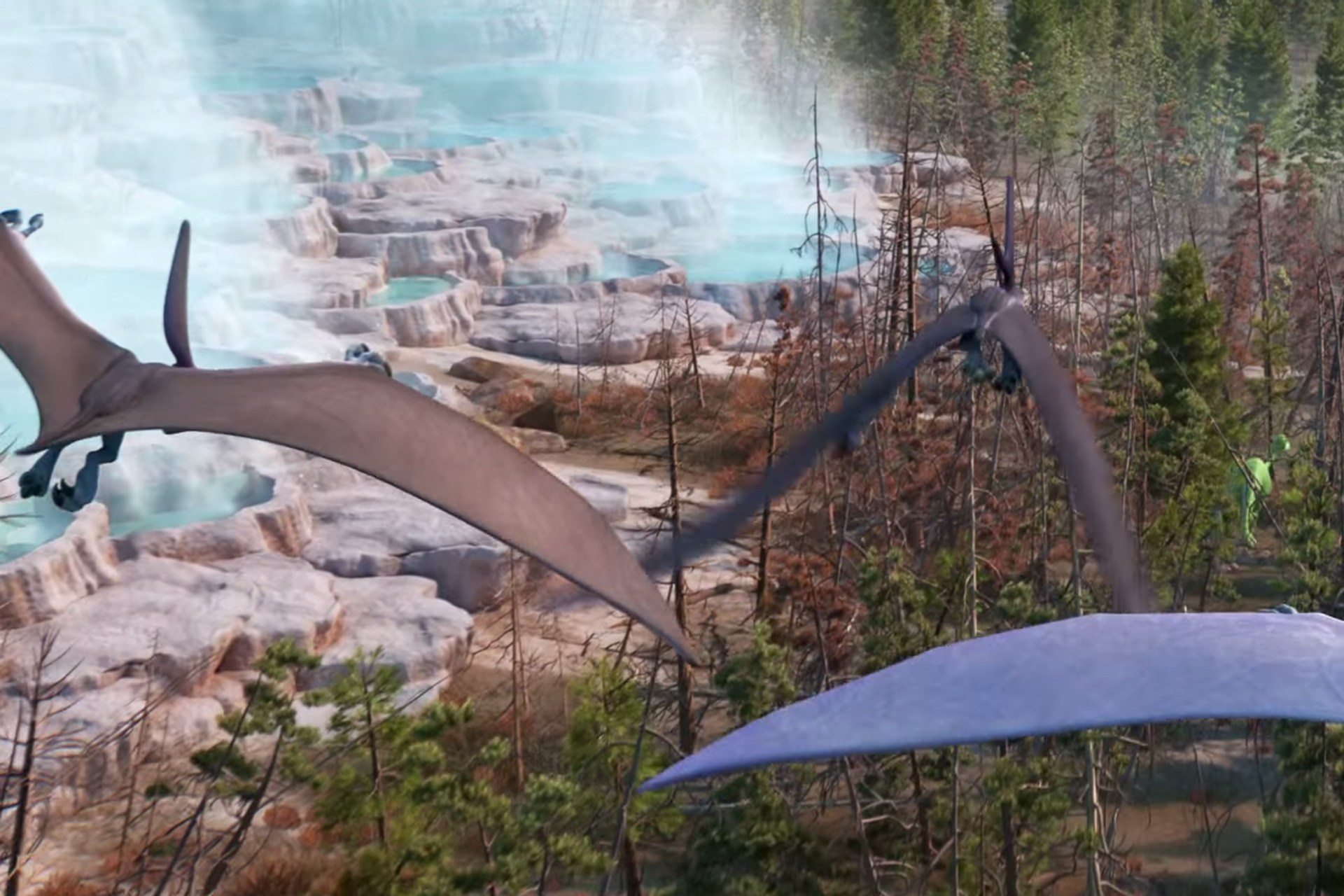
We certainly get a feel for how scarce resources are by the time we meet the hybrid Nyctosaurus gang, led by Thunderclap. I say hybrid because like the other dinosaurs in this film, they have many traits that have evolved from the fossils we have on these creatures. In fact, every creature in Thunderclap’s gang is a different species.

These flying creatures are a “search and rescue” team who scavenge the helpless creatures traumatized by the frequent storms. “The ‘Storm’ provides” is not just a weird catchphrase for these beasts—it’s their religion. They worship the storm for giving them much-needed food.

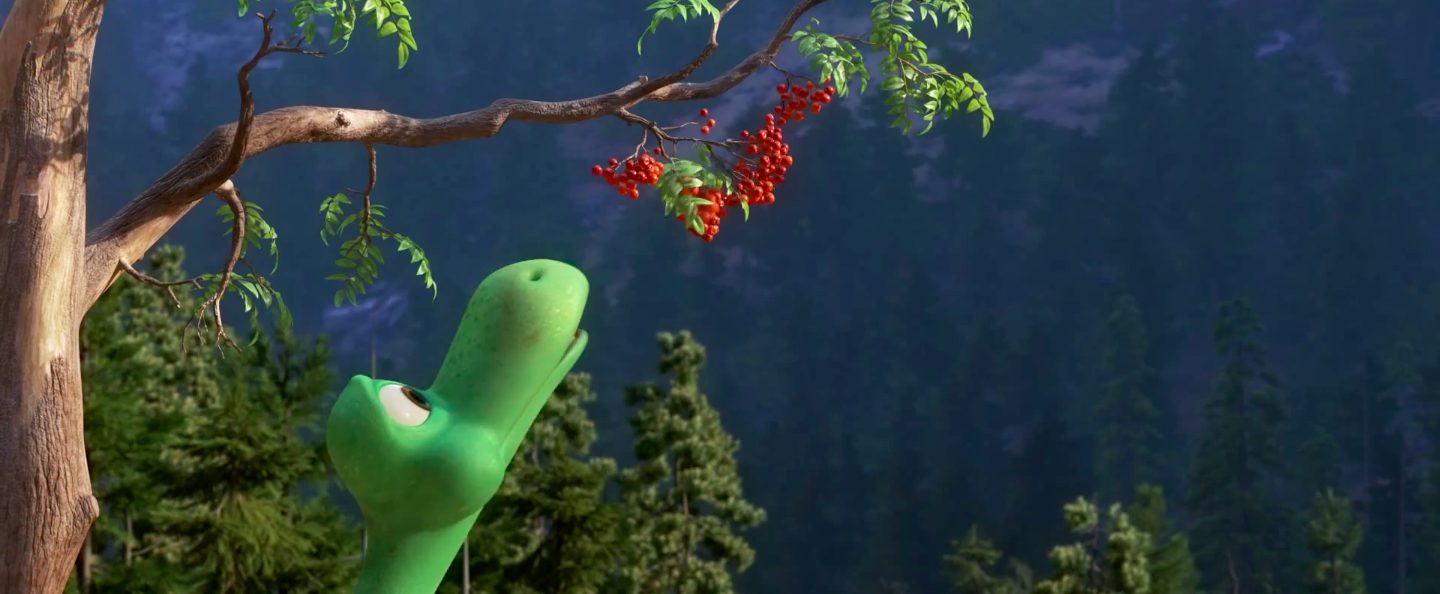
Isn’t it strange that Arlo got sick from eating plants that weren’t fruits like berries and corn? Millions of years earlier, we saw dinosaurs eating grass just fine, so what changed?
the good dinosaur pixar theory

Before we get to that, it’s important to point out how the T-Rex family manages to survive. They have to raise and take care of a bison herd by themselves in order to have enough food, often fighting off vicious raptors desperate for their food. And the T-Rexes are constantly on the move, which probably has something to do with how the environment is too volatile for them to settle down anywhere, as well as the fact that they have to find enough food to feed their food.

WHY?

If dinosaurs have been evolving for millions of years, then why are they having such a hard time, now? In the opening scene, there are many dinosaurs all eating together without a care in the world, so something big had to happen between those good times and the bleak world we’re introduced to countless years later.

Well, I think it’s pretty simple. These dinosaurs are living in a “post-apocalypse” of their own civilization. At one point, they probably had plentiful resources to sustain a massive population, much like you’d expect. But what we see is a shifted environment. The lush jungles filled with edible plants that we know existed millions of years ago have vanished by the time we meet Arlo, just as they would have if the asteroid had hit Earth.
the good dinosaur pixar theory


Simply put, the world slowly became less optimal for the dinosaurs to roam, which the movie goes out of its way to illustrate. Arlo’s family is on the brink of running out of food because rival creatures like the mammals (AKA humans) are stealing their food and thriving in this new environment. These storms are a product of this change, as the world gradually corrects the imbalance of reptiles and mammals caused by the lack of an extinction-level event.

And many years later, the same “correction” will happen between man and another new species: machine.

In other words, Pixar loves cycles. And the Pixar Universe is as cyclical as they come. It’s actually pretty amazing how a simple movie like The Good Dinosaur offers such a close parallel to stories they’ve already told, Pixar Theory or no.

WHAT ABOUT THE OTHER PIXAR MOVIES?

If The Good Dinosaur exists in the same timeline as movies like The Incredibles and Finding Nemo, then where’s the evidence of those movies being a result of this alternate universe where dinosaurs ruled the Earth much longer than planned?

What about fossils? Certainly, the Pixar movies would exist in a world where the fossil record is drastically different. What about these strange creatures in The Good Dinosaur that don’t look like any animals we’re aware of, like the dreaded cluckers?

Well, that’s where Up comes in.

the good dinosaur pixar theory

Early on in Up, we see that the famous explorer Charles Muntz has found a place in South America filled with plants and animals “undiscovered by science.” That place is Paradise Falls (or, “The Lost World” as the narrator puts it).

And what is the prize creature that Muntz discovers? It’s no dinosaur. It’s a bird (Kevin). And this is a bird that bears resemblance to the bizarre makeup of the “prehistoric” birds and raptor-hybrids we see in The Good Dinosaur, who have originated from this alternate universe where evolution was never halted.

And that’s not where the weirdness ends. Cut from Up is the explanation for why Charles Muntz is still spry and healthy, despite being much older than 80-year-old Carl Fredericksen. According to Pixar, Muntz found Kevin’s eggs, which somehow have the ability to slow down the aging process (my book covers this in more detail, but that’s the gist).

So Kevin’s existence, as well as this rare, superhuman ability, finally has an explanation. Somehow, the longer evolution of these strange creatures brought about magic  or at least something that resembles magic — that can eventually be harnessed by humans in various ways. After all, what is it really that makes those dogs in Up talk? And is it any surprise that Muntz comes across Kevin’s existence in the 1930s, not long before the sudden rise of supers with strange abilities?

the good dinosaur pixar theory

Remember: The Incredibles takes place in an alternate version of the 1950s and 60s. Mr. Incredible was very young or even born around the same time Charles Muntz was uncovering what could be “magic” properties. This could even serve as an explanation for why academia suddenly turned on Muntz, shaming him for what we know weren’t fraudulent discoveries. Perhaps this was a ploy to keep his research hidden from the world, explaining why only Americans are shown to have powers in The Incredibles.

Sometimes I get goosebumps when these things fit together a little too nicely.

OK, what about the strange animals mentioned earlier? Well, when we explore the dirigible in Up, Muntz shows off his collection of these strange creatures that are so rare, Muntz doesn’t expect Carl to know what they are.

They range from giant turtles and other aquatic life to hybrid mammal/dinosaurs that are reminiscent of Forrest from The Good Dinosaur. And we can now deduce that in the Pixar Universe, many of these creatures existed closer together in time, explaining why they’re displayed as a group.

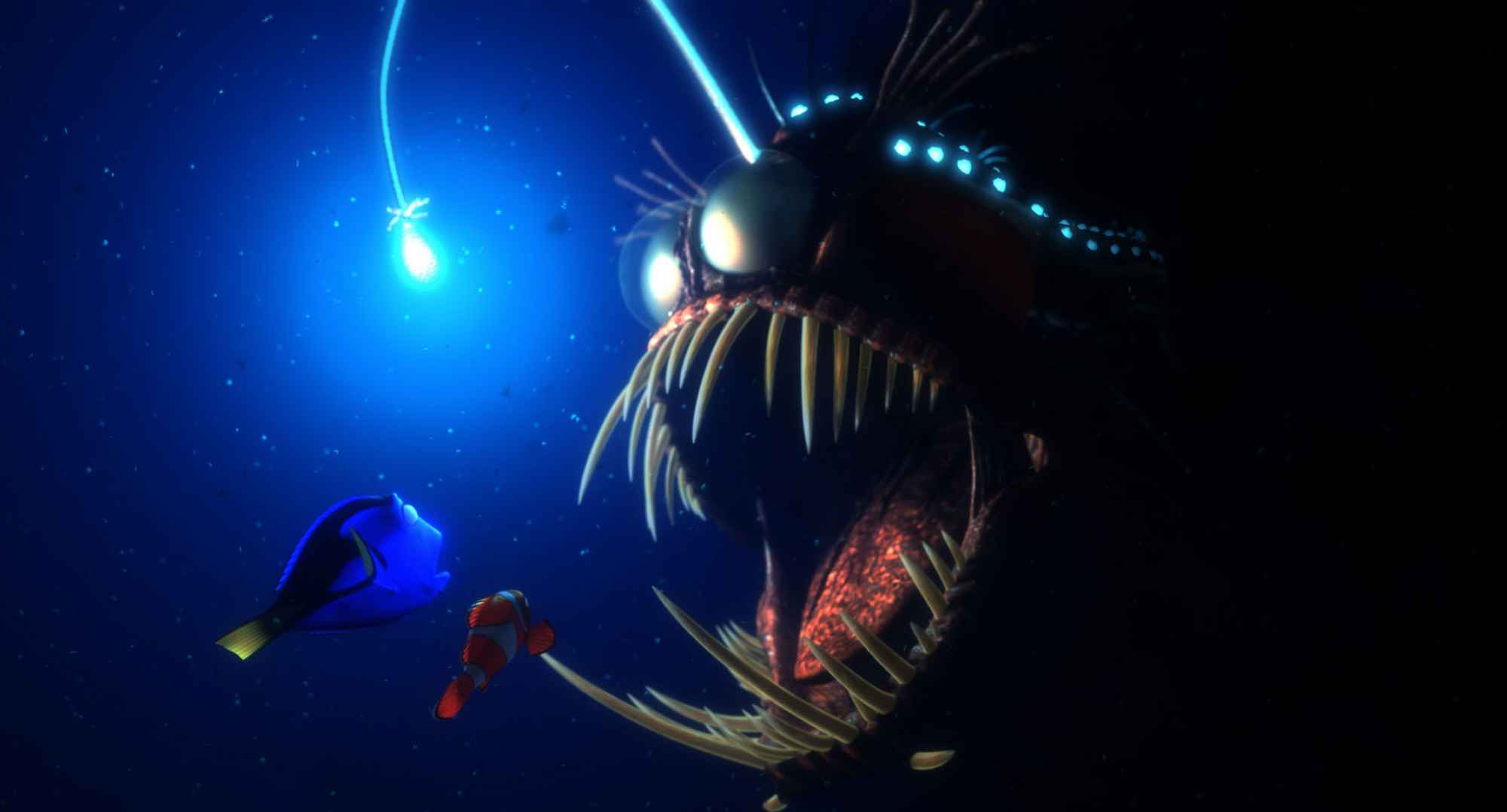
Side note: One of the reasons I’ve waited to add all of this to the Pixar Theory is because I’m still researching how these creatures connect to other movies, including the angler fish that looks just like the one we see in Finding Nemo.
the good dinosaur pixar theory

So the exotic creatures from The Good Dinosaur apparently exist across multiple Pixar movies, and the absence of an extinction-level event seemingly provides an explanation for why animals have become so intelligent by the time we get to movies like Ratatouille.  And the movie even provides some hints as to why magic exists in the Pixar Universe, and we now know why said universe is alternate to our own.

Is that it?

Ha, no.

FOSSILS AND FUELS.

Oil. It’s something that Axelrod from Cars 2 addresses as the very thing we get from fossils, which he specifically defines as “dead dinosaurs.” But for whatever reason, the world runs out of oil in the Pixar Universe much sooner than we would by today’s standards.

Drilling the way we are today, there’s probably 50-100 years of oil left, which obviously excludes methods that dig much deeper. So really, we’re just running low on cheap oil.

In Cars 2, the sentient cars are running out of oil, entirely. And this makes sense for two major reasons:

  1. Mankind has a 200 billion population by 2105 (according to WALL-E)
  2. There’s less oil on Earth because (whoops!) dinosaurs died out more gradually.

Fossil fuels bring life to us from dead organisms, and we get a lot of it from extinction-events that compact them for easier extraction through drilling (for the record, my knowledge on this topic goes about as far as Armageddon).

Without the asteroid, fossil fuels are a bust.

the good dinosaur pixar theory

In The Incredibles, technology has progressed more rapidly by the 1950s, likely because scientists are seeking solutions to this energy crisis. Syndrome finds a way to harness zero-point energy, and “human” energy will be extracted by toys and eventually monsters indefinitely. The absence of other energy options like fossil fuels might provide an explanation for why human energy is so important in the Pixar Universe.

Yet in WALL-E, mankind lives in a loop for hundreds of years aboard starliners like the Axiom. They harness solar energy with advanced technology that allows them to avoid the laws of entropy (and you can argue that the machines are also kept alive by the humans themselves).

All this points to a world that figured out (much faster) that it needs an alternative to fossil fuels, which is why humanity is still around hundreds of years after the cars die out.

THE LEGACY OF DINOCO.
the good dinosaur pixar theory

So in the Pixar Universe, dinosaurs eventually die out because the world changes without them. But they’re remembered, nonetheless, mostly because humans have passed down their memories of the once predominant species.

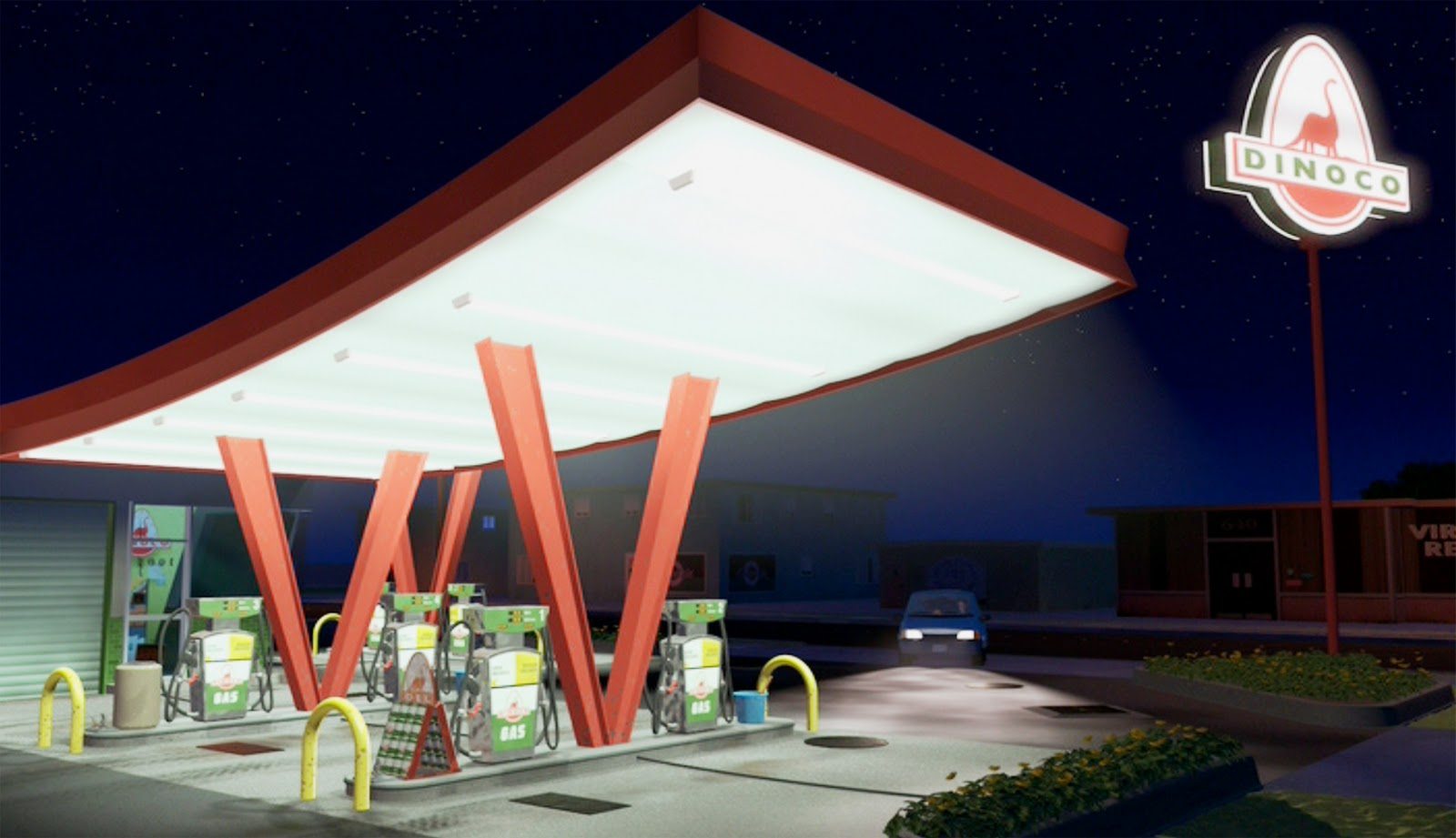
By the time we get to “modern Pixar,” there are companies like Dinoco that use these forerunners as their logo. Toys like Rex and Trixie get played with, just as they would in our world. There are even statues in Inside Out that look like dinosaurs we see in the movie.

the good dinosaur pixar theory

The major difference is that in The Good Dinosaur, there’s a specific “passing of the torch” moment between Arlo and Spot. The symbolism is actually tragic in a way, as we see Arlo giving Spot over to a human family willing to adopt him. Unlike Spot, these humans wear furs instead of leaves and alternate between walking on all fours and standing upright, even teaching Spot how to do it by guiding him. This moment crystalizes the rise of mankind in contrast to the dinosaurs, who are quite literally on their last legs.

After all, Arlo will return to his farm and eke out a pretty humble existence as a herbivore. His family will barely survive, as his mother tells him bluntly early in the movie. Meanwhile, humans are already hunting and living off of the newer resources tailor-made for mammals. Pixar could have easily left these implications out, but instead they shine a light on the important role mankind will take up as the world continues to change.

That said, I suspect there are more mysteries to solve here. We have millions of years of history between The Good Dinosaur and Brave, so you can expect brand new narratives to rise out of those films as the studio continues to deliver excellent movies more than worthy of our time.

WRAPPING UP.

the good dinosaur pixar theory

That’s the long version of how The Good Dinosaur fits within the narrative of The Pixar TheoryBut I hope you’ve also gotten some insight into why it’s so important to the theory, in a way that not even Inside Out was able to accomplish, though it also was quite enlightening.

With The Good Dinosaur, we have firm answers for some of the biggest questions many have come across when digging into this theory. It gives us a reason why everything in Pixar movies is so different and set apart from reality. It alludes to the mysteries of magic with a little help from Up, further providing connections I didn’t think we’d ever get.

And we even got Dreamcrusher.

I hope you enjoyed the movie itself as much as I did. My full review is also available in case you’re not already tired of reading, which you can check out here. You’ve probably noticed by now that I’m absolutely in love with The Good Dinosaur, and the review expands more on all of that.

As for the easter eggs, this movie has proven to be quite the challenge when it comes to finding the elusive Pizza Planet Truck and A113. Peter Sohn (director of the movie) confirmed they’re in there somewhere, albeit in clever ways similar to how Brave managed it. I haven’t caught them yet, but I’ve heard the truck shows up as either a rock formation or an optical illusion from the positioning of several rocks and debris. Be sure to share your findings.

Let me know your thoughts, ideas, and rebuttals in the comments, and I’ll do my best to clear anything up!

Ready for more?

The conspiring doesn’t end here. Check out my other Pixar Theory posts from infinity to beyond:

  • The Pixar Theory – the full book available on paperback and ebook via Kindle, Barnes and Noble, iBooks, or just a PDF. This will cover the entire theory and every movie in the Pixar universe, updated from what you just read.

Thanks for reading this. To get updates on my theories, books, and giveaways, join my mailing list.

Or just say hey on Twitter: @JonNegroni

Were There Self-Aware Toys in ‘Monsters Inc,’ All Along?

toy story monsters inc theory

Since the release of my new book, The Pixar Theory, I honestly haven’t given much thought to expanding these Pixar-related connections because…vacation.

So, I’m back and here’s something potentially interesting for you to seek your teeth into. A few weeks ago, a regular visitor to the site (cheers, @ThomastheBrainEngine), brought me some interesting evidence of toys being “self-aware” in Monsters Inc, a la Toy Story.

In Toy Story, we learn that toys are sentient. They move around on their own when we’re not watching, and their entire lives revolve around the children who love them.

One of the main tenets of my theory, which tries to unite the Pixar movies, is that toys are alive because in the Pixar universe, human imagination is like a battery, and it gives life to ordinary things (maybe even cars).

toy story monsters inc theory

I argue that this is the same concept as monsters powering their society with the energy of children in Monsters Inc. But despite a few cameos (like Jessie and the Luxo ball), there’s nothing tangible linking Toy Story and Monsters Inc, especially if you consider Jessie’s appearance in Monsters Inc., to only be an easter egg, not a hint to something more.

But ThomastheBrainEngine presented a fascinating thought that I had not yet considered: what if we do see evidence that the world of Monsters Inc. has sentient toys? 

So I looked into this, and the evidence is solid, believe it or not. And it all hinges on the movie’s first scene.

Mr. Bile, can you tell me what you did wrong?

toy story monsters inc theory

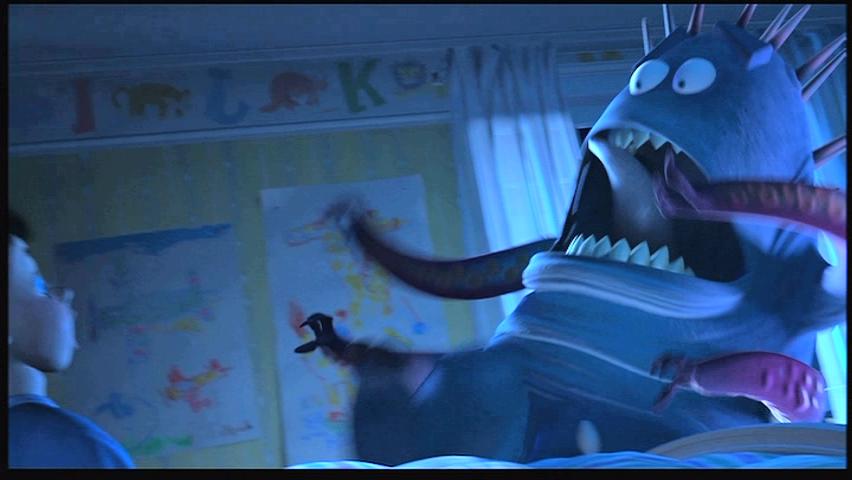
This opening sequence introduces us to the basic mechanics of how monsters scare children. The monster, Mr. Bile (Phlegm), sneaks into a child’s room and attempts to scare him, but the kid wakes up and sees him. We see that Mr. Bile is actually more scared of the child than vice versa, and he trips and falls for comedic effect.

This, of course, is a simulation. A demonstration of how not to scare a child, so that the movie can cut to Sulley, our main character, who is the best scarer at Monsters Incorporated. The simulation we just watched was at the factory, and it’s our set up for everything that happens next in the movie (notably, that the worst thing you can do is let in a child by leaving the door open).

toy story monsters inc theory

Something that has bugged a lot of people, including myself, is a major goof (or series of goofs) that transpires during the simulation. When Mr. Bile walks in, we get a clear shot of the room’s layout and where everything is located. The soccer ball is under the bed, the toy train and its tracks are at the foot of the bed, and one of the books near the window hangs over the edge.

But as the scene changes, everything moves around. The soccer ball inexplicably moves to the side of the bed. It’s in a totally different location, and it eventually shows up again at the foot of the bed, where the train tracks have disappeared. Instead, there’s a bunch of jax in its place. Mr. Bile steps back on the soccer ball and falls on the jax (see above) like we’re watching a better version of Home Alone 3. We even see that the books on the toy box have moved a little bit, but they return to their original spot toward the end of the scene.

toy story monsters inc theory
The soccer ball is now under the bed again.

It’s nitpicking, but I’ve always been annoyed by how overtly obvious these goofs are. I’ve sat through a dailies session at Pixar, where the director and a group of animators will scrutinize every single aspect of what’s on the screen. Even for a movie that was made in Pixar’s early days, it’s strange to think that they could make so many continuity errors in just a couple of minutes, and the movie’s first few minutes at that.

Granted, these goofs happen all the time, and some are caught too late in the game to be considered worth the effort of fixing them. But they’re usually separated and scarce, not gathered in a cluster.

So, what if this entire scene wasn’t a goof at all? What if we were meant to see them? They’re certainly hard to miss, after all.

monsters inc toy story theory

The idea is that the toys moved on their own because the rules of Toy Story bleed into Monsters Inc. Part of any good simulation would be to make sure monsters are prepared for anything that could happen. If toys are able to come alive and possibly protect their sleeping owner from an invader, then it makes perfect sense for these simulations to include these variables.

Without those toys interfering, Mr. Bile probably would have been able to successfully leave the room and escape before the child could get up and go through that door. So part of the simulation could be to move the toys around, like they would in a real situation, in a way that conspires against the monster pulling off a scare. In this case, that meant moving the ball to where he would fall on a bunch of conveniently placed jacks that weren’t there in the first place.

It’s definitely possible, at least. The monsters controlling the simulation are creating atmospheric effects (the curtain moving like wind is blowing it, the child moving around in reaction to realtime events). If toys could move, too, then the monsters could simulate that experience.

monsters inc toy story theory

Would toys really do this, though?

I don’t think it’s a stretch based on what we’ve seen in Toy Story. Woody breaks the rules and unites Sid’s toys against him just to get back to Andy. He goes to incredible lengths to make Andy happy, so I’m pretty sure he’d also go pretty far to protect Andy from a terrifying monster.

It might not happen every time with every kid who has toys, but it could happen enough to warrant a response from Monsters Inc. When you watch Monsters University, you see that the higher ups are teaching the monsters tons of useful tips and facts about this profession, ranging from how the doors work to how monsters can adapt to any given situation.

monsters inc toy story theory

They have to prepare the monsters to be so stealthy, not even the toys know they’re there (which is possible, since we see that the toys do sleep when Woody has that nightmare in the first movie).

This also solves another major inconsistency that was brought on by Monsters University. If monsters have to go to college to get jobs as professional scarers, then why is Mr. Bile having such a hard time? And why is he doing this, anyway, if he has experience and a college education?

Well, if you watch Monsters University again, you probably won’t notice any of these instances of toys getting in the way. And that’s probably because introducing them as a variable is when you get into the expert mode of scaring. This would make scaring so hard for monsters that it wouldn’t be a critical point of the simulator until you actually got the job, explaining why Mr. Bile is sort of talented, but he ends up falling on his face, despite the rigorous standards of professional scaring established by Dean Hardscrabble in MU.

monsters inc toy story theory
Weirdly, Phlegm was good enough to hide this with a sweater.

To sum up, I think this evidence is pretty strong, mostly because those goofs I pointed out just seem overwhelmingly obvious. It is possible that the monsters controlling the simulation could be moving the toys around from the control room just to make things harder for Mr. Bile, not because toys are expected to come alive. But that just seems sort of harsh.

Mr. Bile walked into that room and surveyed everything as he was trained. Mixing things up for no good reason in a scenario that wouldn’t possible happen just to make things harder undermines how the monsters are trained in Monsters University. It’s like testing high school students on a different subject with information you never taught them—OK, wait, that happens all the time.

Let me know if you’re convinced or unconvinced and we can hash it out in the comments. If you’re interested in the Pixar Theory (that is, how all the movies may be connected and why) enough to read an entire book about it with all of the clues and arguments I’ve collected over the past few years, don’t forget to check out my book, which is available now in print and as an e-book on Amazon, Barnes and Noble, etc.

I’m Jon and thanks for reading this. You can subscribe to my posts by clicking “Follow” in the right sidebar. Or just say hey on Twitter! @JonNegroni