Oscars Winners That Actually Deserved To Win (Anyway, That’s All I Got)

oscars winners

It’s been a week or two since the Oscars, so we decided to recap some of the winners from this year. Oddly, we all felt relatively satisfied with how things turned out in 2018 (minus one or two categories, but hey, we get into that). Afterward, we go back in time to talk about some films from the past that have won big awards, specifically winners we actually agree with for once.

We’d love to know what some of your favorite Oscar Winners are, and what you thought about this year’s ceremony, plus any topics and ideas you’d like us to discuss in the future!

Go on…Oscars Winners That Actually Deserved To Win (Anyway, That’s All I Got)

Unopinionated: ‘Birdman’ Was a Good Movie, And That’s OK

birdman unpopular opinion

Every Tuesday, I examine an unpopular opinion in film and argue against it. This week: Why do so many people hate Birdman despite its huge success? 

There are a lot of ways to dislike a film, and sometimes for the worst reasons. So is the case with Birdman, the 2014 dark comedy that won the Academy Award for Best Picture over the likes of Boyhood and Whiplash (my personal favorite film of that year).

The film has been widely praised as a return to greatness for its star, Michael Keaton, as well as the cementing of Alejandro Iñárritu as one of Hollywood’s premiere filmmakers, just as long as he keeps signing Emmanuel Lubezki’s checks.

Like with most movies that achieve high praise among critics, Birdman’s detractors are quite vocal about their distaste for the film’s supposedly undeserved success. And since seeing the film myself in theaters, I’ve been one of those harsher critics.

birdman unpopular opinion

But Birdman isn’t a terrible movie. It’s above average, I would argue, and its resonance with film buffs as a great film, or even a work of art, has plenty of merit for the same reasons all of Iñárritu’s films achieve critical success. Technically speaking, the film is quite masterful.

Birdman centers around an aging actor named Riggan, who once played the superhero, “Birman,” and has yet to find gratification beyond that peak fame he acquired. It’s an obvious parallel to Keaton’s true life, as he of course portrayed Batman in the 1989 Tim Burton film that inspired the majority of that character’s evolution in film, television, and even video games.

To prove he is an actor who transcends the schlock that made him famous, Riggan directs, writes, and stars in a Broadway show adaptation of Raymond Carver’s What We Talk About When We Talk About Love. The title alone is a clear dig into the type of love that fans heave onto their heroes, and this is played out in a satisfying way as we constantly see people stopping Riggan to take a photo, while he stands there unamused. Even when teenagers admit to not even recognizing him, proving that indifference really is the true opposite of love.

This is a film that makes its audience feel clever for catching these clues and making snide remarks about the current state of the superhero genre. Yet so much of it is loud and on the nose, including a fantastic scene where Riggan tells off a Broadway critic for all of the reasons most of us haven’t even bothered to articulate. In fact, the same criticisms he lobs at her apply nicely to Birdman itself.

birdman unpopular opinion

But is anything within Birdman really all that smart? Viewers don’t have to work hard to grasp the film’s deepest themes, and the camera itself even holds your hand by never violating its one-take structure and giving you a specific sense of where everything is laid out. Optimistically, this is an enjoyable trick that shows off the best of Iñárritu and Lubezki’s ability to enliven even the most mundane sets (some of them being gross to even look at), but for some, it comes off as a magic trick, in that finding out the illusion sort of spoils the fun.

But this is no reason to dismiss Birdman, for the same reason you put up with a brilliant friend who acts pretentious from time to time. There’s value in watching an imperfect character study that allows itself to get swallowed in the creative process, which we see with Riggan and his co-stars as they wander backstage with a never-ending purpose. Though it doesn’t amount to anything reasonably profound in the end, Birdman feels like a film that doesn’t even care about its own ending. It’s a show off in the best way possible.

And Birdman is among a long list of films that tackle the existential crises of fame. It’s just a shame that the unique and crafty questions it brings up aren’t answered in an equally compelling way. Without getting into spoilers, its resolution comes straight from the Hollywood playbook of rushed ex machina, and an ambiguous ending does little to assuage this. But the ride itself is still pretty satisfying as long as you don’t take it too seriously.

Grade: B


I’m Jon and thanks for reading this. You can subscribe to my posts by clicking “Follow” in the right sidebar. Or just say hey on Twitter! @JonNegroni

The Batman Theory Of Everything

batman theory

The Tim Burton “Batman” movies and the Joel Schumacher “Batman” movies exist in the same universe. To explain how and possibly why, let’s answer a real quick question:

Who is the real Batman?

Is it Christian Bale? Ha, that’s a laugh (or a scream).

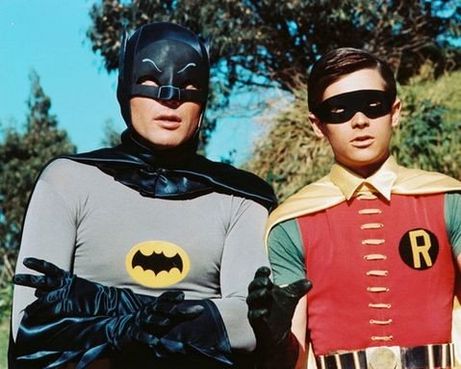
Adam West?
batman theory

Maybe.

But what if the “real” Batman is Michael Keaton, who appeared in 1989’s Batman and 1992’s Batman Returns? Both of which are Tim Burton films, by the way.

The Batman Theory is that Michael Keaton’s version of Batman is the “original” Batman. And the subsequent movies featuring Val Kilmer and George Clooney in Batman Forever and Batman & Robin are simply movies about Batman taking place in Tim Burton’s version of Gotham.

batman theory

Now this isn’t my theory, to be clear. In fact, I’m having trouble pinpointing the originator of this theory, but here’s how I came across it. Cracked author Adam Wears recently highlighted this theory in an article. He cites a Redditor who brought it up in r/fantheories, though he claims it’s not his theory either.

Wears greatly expands the Redditor’s idea in the article, and I’m going to expand further. But here’s the basic rundown.

The Tim Burton movies starring Michael Keaton were the first “serious” Batman movies after years of the character being seen as a campy, comical superhero. Batman and Batman Returns are gritty and dark interpretations that haven’t really been mimicked since they came out (save for Fox’s Gotham, which delivers a spiritual prequel reminiscent of Burton’s vision).
batman theory

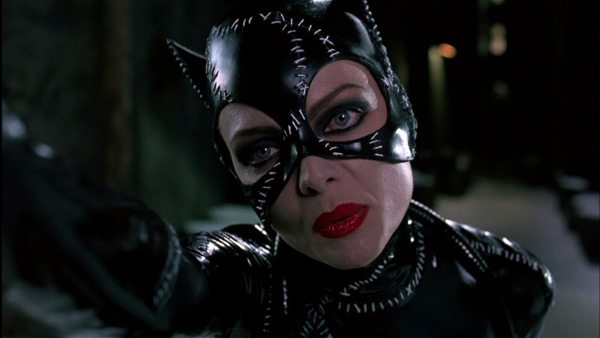
Now at the end of Batman Returns, Bruce Wayne believes Catwoman has run out of her nine lives, leading to her death. Though she was a villain initially, Bruce and Selina (Catwoman’s alter ego) developed a romantic relationship. Even though she (as Catwoman) plotted to kill Batman at one point.

At the end of the movie, Bruce believes she is dead, though we see she is still alive. Heartbroken, this would lead Bruce to “retiring” as Batman and confessing he is Batman to the rest of the world. Personally, I just think he died or was killed eventually. And from his remains, people figured out who he was.

batman theory

The theory is that someone would come along and make a movie out of his life, which would lead to the Joel Schumacher movies. These “movies” would be based on the Michael Keaton version of Batman.

This would explain why there is such a tonal and stylistic change between the two sets of films, and why there are different actors for Bruce Wayne in both movies (even though other actors like Chris O’Donnell stay the same, and Harvey Dent goes from being Billy Dee Williams to Tommy Lee Jones).

And of course, it explains why the Joel Schumacher movies suck…unless you were a kid when they came out. And why we should never regard them as canon ever again.

Wears brings up that these changes are apparent when you compare the screenshots of the Tim Burton movies against the Joel Schumacher ones.

batman theory

327828_v1

These screenshots capture a city that is very “industrial and gothic,” as Wears puts it. Contrast that with Batman Forever and Batman & Robin:

batman theory

327832_v1

And of course these “re-imaginings” of Gotham are more vibrant and colorful. For a city that is so bankrupt morally and optimistically, it makes sense that they would have over-the-top movies that appeal to kids, showing off a lighter, campier version of Gotham.

But what of Alfred? Michael Gough plays Alfred in all four of these dang movies. Same goes for Pat Hingle playing Commissioner Gordon in all of them.

batman theory

Are we really supposed to believe that these guys would play themselves in movies about Batman?

Well, sure. One thing we know about Gotham is that it’s the opposite of the land of opportunity. Not everyone has a Batman Credit Card, so if your one job was working for the Batman but he suddenly died, then what else are you going to do? (Oh yeah, this is why the retirement idea doesn’t work for me).

batman theory

So Alfred would carry on the Batman legacy by helping produce these films, inspiring the children of Gotham that crime is bad. Same goes for Commissioner Gordon, the super cop who is not actually incompetent and should be seen as the hero of law enforcement.

After all, the news of their connection to Bruce Wayne would instantly elevate them to celebrity status. What would you do with that level of fame? Probably what other people do. Make movies.

Basically, the Joel Schumacher movies are propaganda that are used to carry on the effectiveness of the cowl beyond the grave. Of course, this is assuming Bruce Wayne/Michael Keaton would really be dead, when really, he’s probably just off with Catwoman (who’s also believed to be dead) in another country. Hey, what does that remind you of?

batman theory

Checkmate, Mr. Wayne.

Thanks for Reading! You can subscribe to this blog by email via the prompt on the sidebar. Otherwise, be sure to stay connected with me on Twitter (@JonNegroni). I’ll follow you back if you say something witty and awesome.

Let’s Breakdown the Official “RoboCop” Trailer

robocop trailer

When Hollywood metaphorically called us up and imparted the big news that RoboCop was coming back to the big screen after being a 1980’s cult classic (hard to do), a lot of us said things like “No thanks” and “Why would you do something so ridiculous?”

Go on…Let’s Breakdown the Official “RoboCop” Trailer