Second Opinion: Seriously, ‘Interstellar’ Is Worth Another Watch

interstellar

Christopher Nolan’s ambitious sci-fi space epic Interstellar has proven itself to be a very contentious topic of discussion among hardcore moviegoers (and Nolan fans). And in the three years since its release and after Nolan’s newest film Dunkirk, the debate has only gotten more divisive.

Some liked it, some (including Jon Negroni himself) didn’t, some were indifferent, etc. Despite all this debate, Interstellar has managed to gain a surprisingly devoted following, many of them (like myself) even more impressed the second time watching it.

As the title of this article suggests, I remain a staunch defender of Interstellar. Yes, it definitely has flaws, but there’s still a lot to love. When I first saw the movie, however, I was sad to say that I didn’t like it much. I found it boring and confusing, and it just kind of left me disappointed. It wasn’t until the recent release of Dunkirk that I decided to give it another shot, along with some other Nolan movies, to gain a fresher perspective.

I was amazed by how much I loved Interstellar the second time.

I almost didn’t think I was watching the same movie, and I eventually came to the conclusion that time was the key factor here. It had been over two years since I first saw the film, so I had actually forgotten a lot of what had happened, weirdly enough. I did remember most of the actual plot thanks to a combination of my disjointed memory and some of the online discussions I had observed over the years, so I pretty much knew the basic premise going in, which I think made for a much more complete experience. An emotional one.

In fact, the emotion of it all is what surprised me the most watching Interstellar the second time. The personal story of the characters, the beautiful imagery, and the score by Hans Zimmer all worked together to sell me on humanity being at stake. I truly felt like time was running out and that every second was important. The relativity scene and the docking sequence stick out as being especially tense and heavy, making for some decent thrills among the more conceptual material.

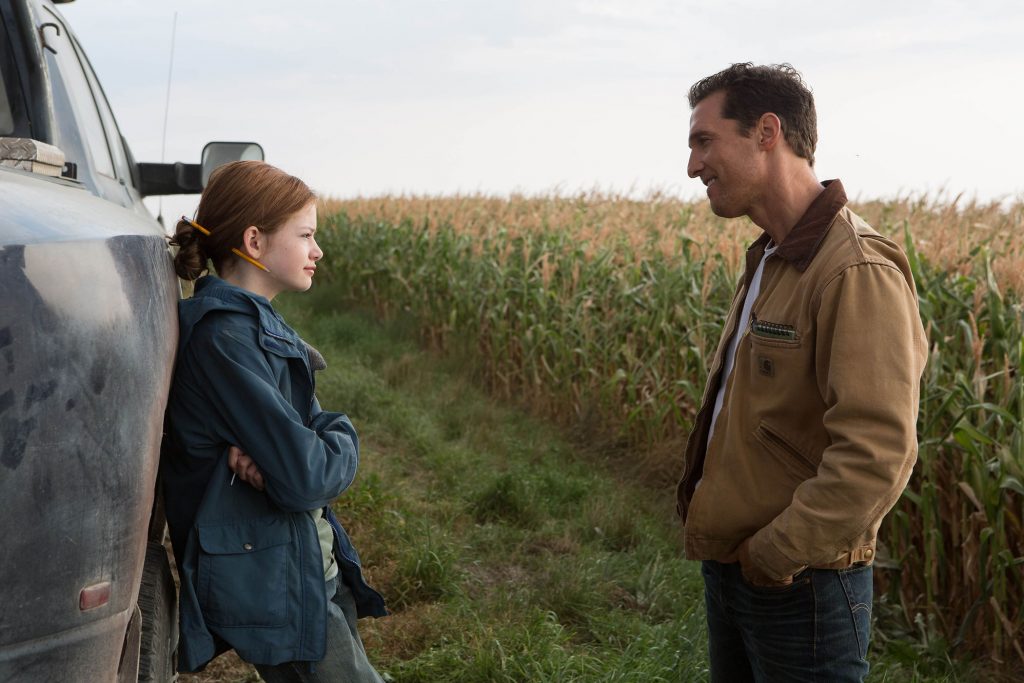
On top of all that, I was impressed by how Nolan balanced all this heaviness with a very unique story about a father and his daughter. Although Cooper (Matthew McConaughey) and Murph (Mackenzie Foy and Jessica Chastain) don’t have a lot of screen time together, the connection between them managed to be as potent as it needed to be, even across time and space (a point the movie directly addresses, of course).
interstellar

That said, I attribute this successful character relationship to the editing by Lee Smith. He cut these scarce scenes together in just the right way for them to display the mutual care between Cooper and Murph and how they can’t seem to move on, even though it may be in their best interest to do so. The performances by McConaughey, Foy, and Chastain obviously help too. They’re able to convey the pain of leaving a loved one behind in a very convincing way, and I was excited to see where the story was going even though I already knew the ending. That’s not easy to pull off.

But what I liked the most while rewatching Interstellar was the overall message I must have missed the first time around. It might be a hackneyed thing to say, but I was impressed by what I think Nolan was getting at with a recurring motif in the movie in the form of Professor Brand (Michael Caine) repeating these lines from a Dylan Thomas poem:

“Do not go gentle into that good night; Old age should burn and rave at close of day. Rage, rage against the dying of the light.”

First, recall the premise of the movie: humanity is on the verge of extinction and/or famine as a result of a second dust bowl destroying the world’s resources. You get the sense early on that most people have basically accepted their fate and are just trying to have as good a time as possible before it all slowly ends.

What I think Professor Brand, and by extension Christopher Nolan, is getting at with the poem is that we shouldn’t just give up on life. We possess the intelligence, the potential, and the technology to resist the natural order of things, and we should use our humanity wisely. Just because we can. Why not fulfill our potential as intelligent beings?

It’s this kind of compelling philosophy that makes me love science fiction as a genre.

Despite all of the praise I’ve given it, I still don’t think Interstellar is a perfect movie. Most of my flaws stem from pure filmmaking aspects. For instance, I think the shifts in tone between intellect and emotion can be very jarring at times, and some scenes can be a little too wordy and bogged down in exposition.

interstellar

I think there are numerous wasted characters, as well, most notably Dr. Amelia Brand (Anne Hathaway) and Dr. Mann (Matt Damon). They’re both a bit underwritten and don’t have as clear motivations as you’d expect from the rest of the script. Plus, Dr. Mann is a little on-the-nose in that one scene I don’t think I have to spell out.

Also, and this is painful to say, the ending is…perfunctory. I think most people agree the story wraps up sappy and with little apparent thought put into the broader implications of the whole enterprise. I don’t want to accuse the studio of meddling, but it really seems like someone put something into the movie at the last minute in an attempt to make the film more accessible. Who knows?

Problems aside, I’m happy to say I finally got my money’s worth after almost three years. If there’s anything I would like you to take away from this belated review, it can be found right in the title. Maybe Interstellar is worth another try. Coming from the perspective of someone who came around after just one rewatch, I think there could be more to it than you originally imagined.

Second Opinion Grade: B+
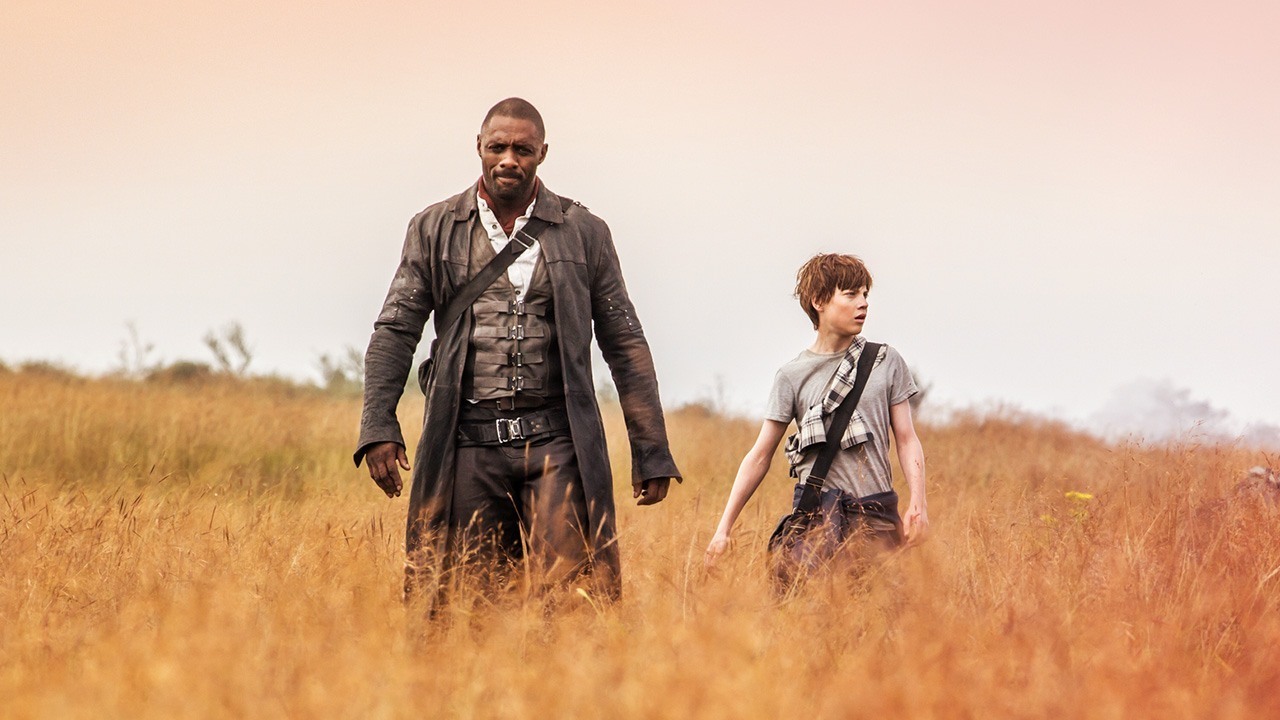


‘The Dark Tower’ Is A Genre Mashup, So Why Is It So Generic?

dark tower

The Dark Tower was directed by Nikolaj Arcel and is the latest film adaptation of a popular Stephen King novel, this one being the first in a fantasy series that is more or less about a western gunslinger hunting down a sadistic wizard in a universe of competing genre ideas. And yet the film itself seems to be completely uninterested in what makes that set up appealing in the first place.

Go on…‘The Dark Tower’ Is A Genre Mashup, So Why Is It So Generic?

Review: ‘Kubo and the Two Strings’ Is a Leap Forward for Stop-Motion Animation

kubo two strings review

There’s a small chance, and tragedy, you’ve never watched a Laika film, but you’ve probably heard of this Oregon-based animation studio. They’re on a winning streak of consistently remarkable stop-motion animated films, including ParaNormanCoralineBox Trolls, and now, of course, Kubo and the Two Strings. With the latter, they’ve certainly crossed new territory into becoming the Pixar of stop-motion animation, to say the least.

This is because Kubo and the Two Strings is one of the finest films of 2016, animation or otherwise. For one thing, it’s impossibly beautiful, and that’s not understating it . Blending stop-motion mechanics with subtle blink-and-you’ll-miss-it CG placement is what gives Kubo its unique flavor of both flow and visuals. Not one moment stutters, and the film treats both character and setting designs with the kind of care and detail you’d expect from Studio Ghibli’s finest films, like Spirited Away and Princess Mononoke.

The story is a stylized epic that borrows heavily from multiple Japanese folk tales to make its original story feel more legitimate. There’s some Hero’s Journey, of course, but it’s intentionally combined with stories more rooted in Eastern storytelling, as some of them will be very familiar to Americans who love Avatar the Last Airbender, for example.

At one moment, a character focuses on a quest that feels straight out of Legend of Zelda, until the dreamlike wonder Laika has become famous for takes over with ships made of leaves, literal dream sequences, and all manner of impressive set pieces designed to astound your skeptical eyes.

kubo two strings review

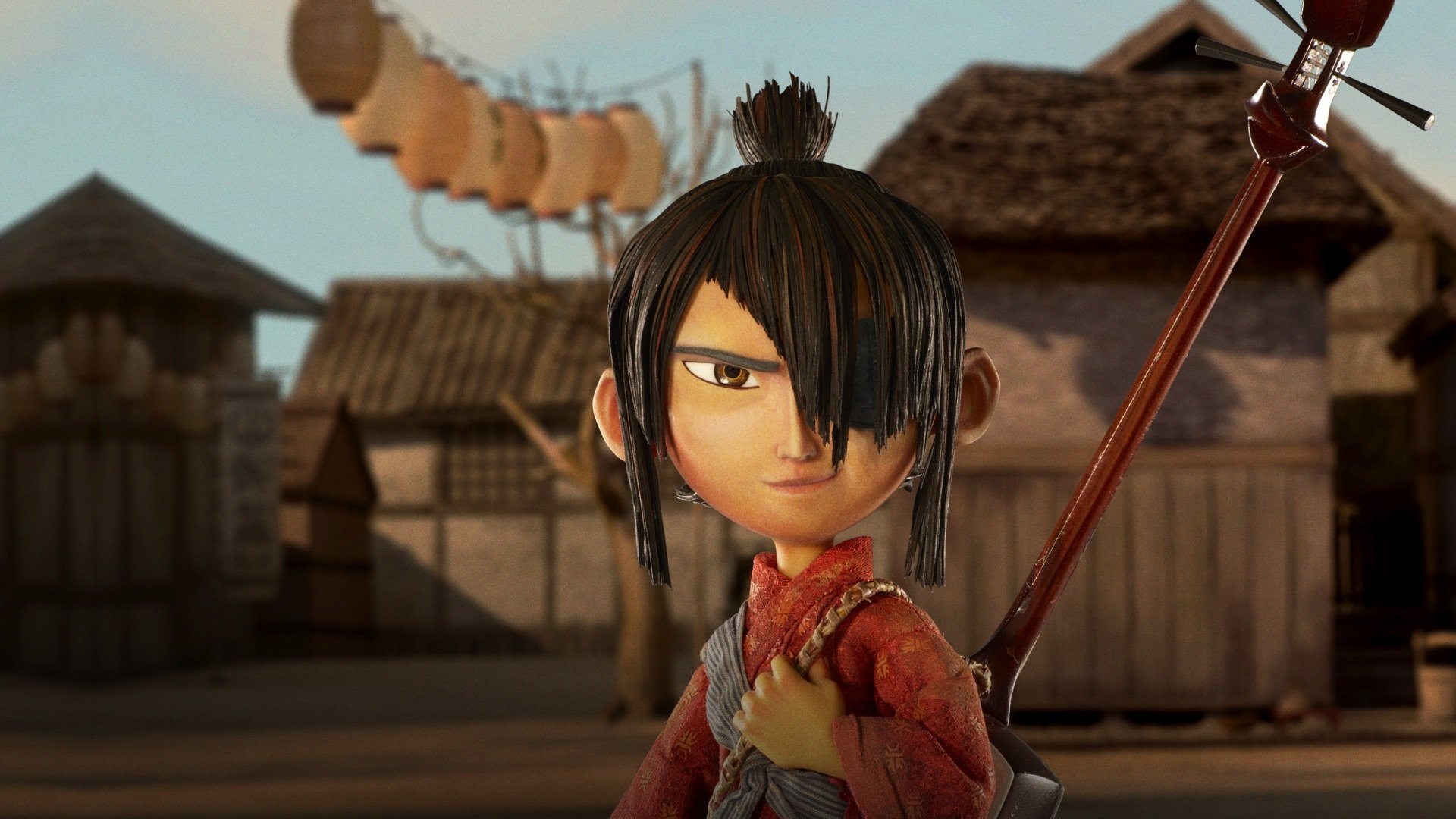
The narrative opens with some profound family drama that persists throughout the film. Kubo, voiced by Art Parkinson, is the son of a powerful spirit woman and a legendary samurai, two important figures of this noticeably small mythos who started out as enemies. Kubo’s grandfather, known throughout the lands as the Moon King, took one of Kubo’s eyes at birth, and now he wants the second one.

We’re not immediately privy to the Moon King’s motivations, but it’s easy to suspect that it has something to do with Kubo’s magic powers, which he inherited from his mother. He can use music to bring inanimate objects to life, his entertainment of choice being origami. This ends up being one of the most oft-used quirks of the stop-motion animation, and to great effect. Kubo’s powers are certainly a key reason why this film has as much agency as it does. There’s never a moment when Kubo has to come to terms with the supernatural, or some surprise at how the world around him works. We’re placed in the middle of Kubo’s story, and it allows for some efficient storytelling.

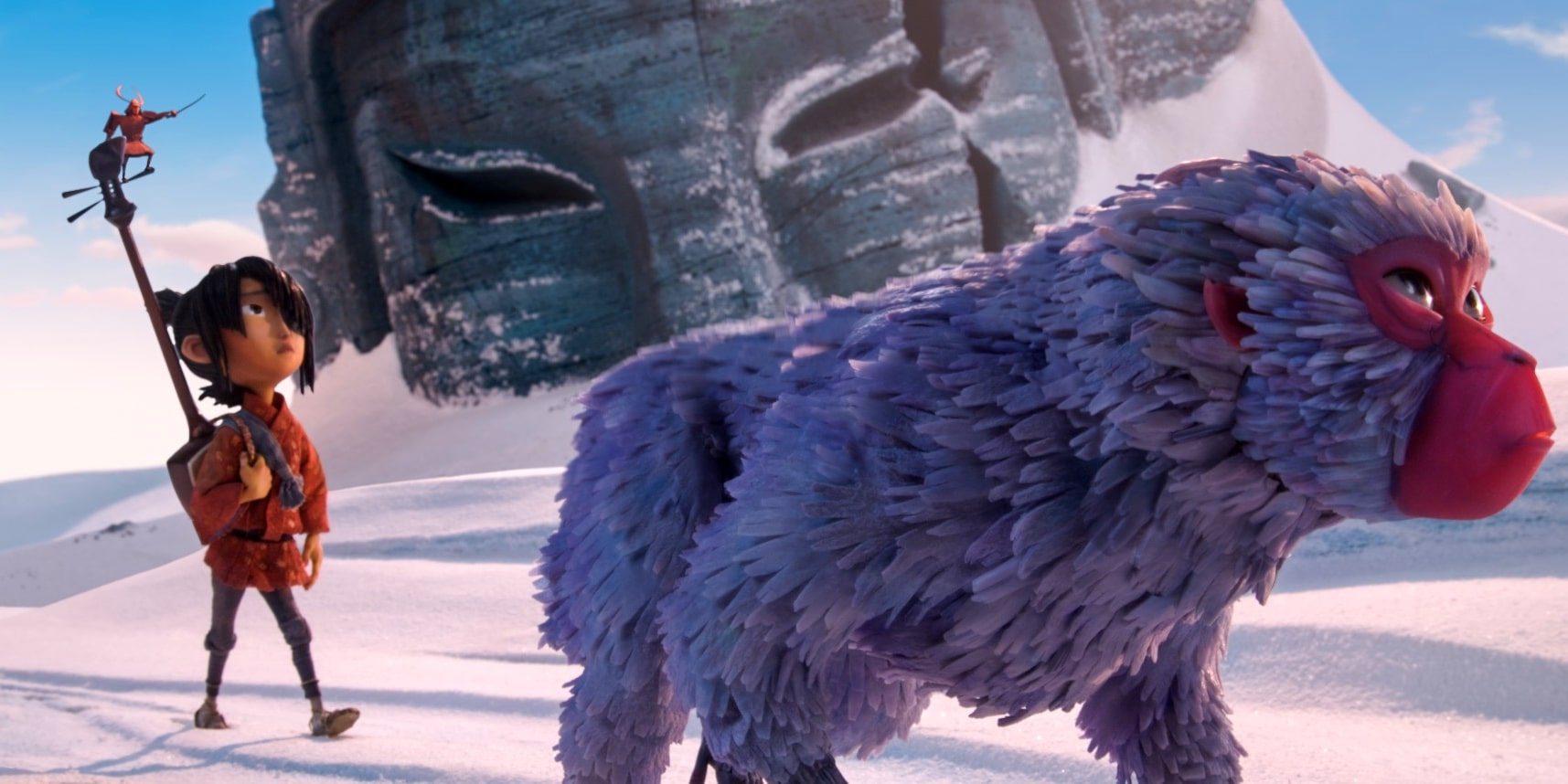
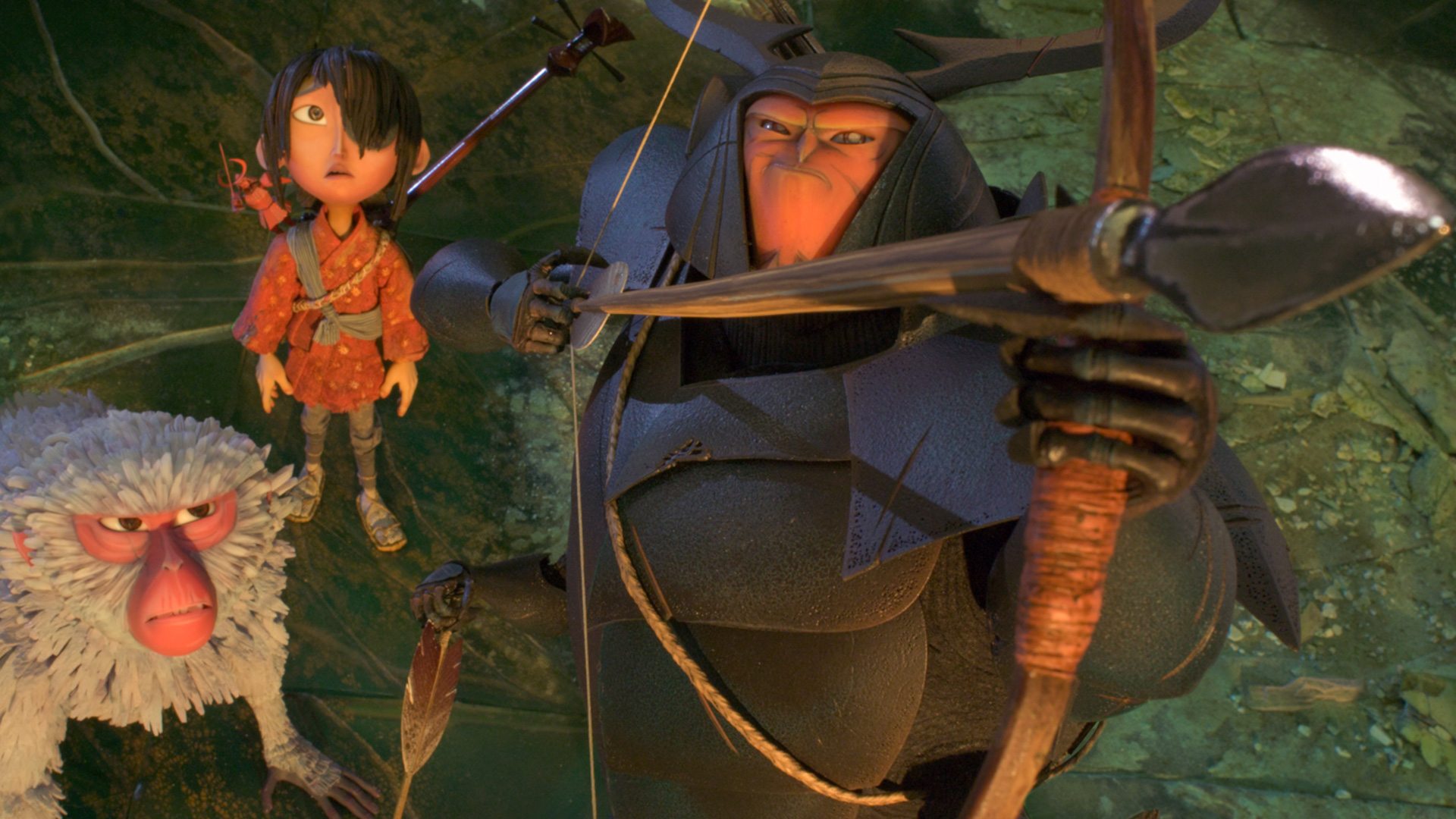
Later in the movie, Kubo is on the run from his masked aunts, two flying (and frightening) demons voiced by Rooney Mara.  He’s protected by one of his charms, a monkey figure brought to life and voiced by Charlize Theron, and an amnesic beetle samurai who thinks he used to be a man, voiced by Matthew McConaughey. From there, the story becomes even more akin to Legend of Zelda, with fetch quests, magical items to hunt down, and extravagant action scenes. Studios who want to make great movies out of video games should take note.

kubo two strings review

One of the best things about Kubo and the Two Strings is its gimmick-free storytelling. It’s a pure, mostly uncomplicated epic that’s still layered in a poignant message that speaks more to adults, rather than children. But a downside of this “pure” narrative is a lack of any real surprise. Savvy viewers will see the obvious twists and pivots far too early to fully appreciate them, and the film’s repetition on some of its most interesting themes dulls the effect and sours any insightful conversation you might want to have about the film after the fact. Not enough is left to interpretation, mostly because the film is overstuffed with “this is what the movie is about” dialogue.

But that’s not a problem if you’re willing to enjoy the journey more than the destination.

Grade: A-

Extra Credits:

  • Yes, Art Parkinson (AKA Rickon Stark from Game of Thrones) has more lines of dialogue in 20 minutes than the entirety of that show.
  • The voice acting was pitch-perfect, especially the decision to cast McConaughey as the blissfully unaware beetle. But would it have been such a hassle to cast more Asian voice talents for this Asian-inspired film?
  • Not as good as ParaNorman, but about as good as Coraline and definitely a step up from Box Trolls.
  • The “Don’t Blink” moments are some of my favorite movie moments in 2016. Such a creative, interactive way to tell a story on the big screen.
  • The credits sequence is a wonder. I didn’t leave until well after the projector turned off.
  • Believe it or not, this is the first time Matthew McConaughey has starred in an animated film.
  • It’s dangerous to go alone! Take this!

    Thanks for reading this. Seriously. You can subscribe to my posts by clicking “Follow” in the right sidebar. Or just say hello on Twitter: @JonNegroni


Retronalysis: ‘Dazed and Confused’ Ruined Teen Comedies in the Best Way Possible

dazed and confused

Before there was boyhood, Richard Linklater was dazed and confused, transplanting his own experiences as an angsty teenager growing up in 1976 onto the big screen.

So what works in Dazed in Confused has a lot more to do with Linklater himself than the admirable cast, as it was the 90s comedy that undermined all of the others that came after it (peaking at Can’t Hardly Wait and perhaps Not Another Teen Movie). Dazed dashed the plot heavy drama-fests of the 80s and replaced them with a heart even Breakfast Club would fist bump, cementing itself as one of the first true cult classics of its decade.

That’s not to say people were ready for this movie in 1993. Though it captures many of the typical aesthetics that accompanied teen comedies at the time, Dazed approached both the spiritual highs and lows of being a kid during that era, or any era if you grew up with a good taste in music and loved to wander around without a GPS.

The film centers around a group of seniors on their last day of high school; going to parties, pool halls, and overall just getting into trouble. The movie addresses the fact that while these many teenagers we see engage in obvious behavior (sex, drugs, and rock and roll), not much of what they say or do actually means anything.

dazed and confused

And most of them seem to honestly get that. It’s one of the most honest coming of age films of all time, if only for addressing just how empty adolescence can feel when you’re trying to reflect back on it, putting your hopes and wishes onto the relationships that were either forced by proximity or brought on by a mixture of hormones and chemical substances.

…if I ever say these were the best years of my life, remind me to kill myself.

– Pink

Rather than place the weight of its characterization on massive set pieces, such as a sudden tragedy, failed romance, or name your trope, Dazed hedged its emotion on small moments of dialogue between relatable characters. Is it any wonder that a 90s stoner movie centered around 70s in-jokes strikes a chord with everyone else?

Amidst all of its disheartening observations on life is some fun, though. The humor of Dazed is competent enough to lend weight to its softer touches. Wooderson (played by a young Matthew McConaughey), is probably the film’s most humorous character, while also the most pathetic — being a guy in his 20s who still hangs out with high schoolers.

He’s also one of the few characters who doesn’t go through his own rite of passage (and for good reason). Throughout the film, we observe how each character either wins or loses based on some arbitrary contests that range from freshmen hazing to full-on brawls. Wooderson is the only character who sees through their prideful bragging. As a surrogate for Linklater himself, Wooderson understands how always wanting what’s next (more girls, leaving high school, etc.) is almost as unsatisfying as actually getting it.

Grade: A-

Everybody Wants Some, Richard Linklater’s spiritual successor to Dazed and Confused, opens in limited release this weekend. It’s set in Austin, Texas like Dazed, but this time focusing on college students in the early 80s. It will hit wide release on April 15th.


Thanks for reading this! You can subscribe to my posts by clicking “Follow” in the right sidebar. Or just say hey on Twitter: @JonNegroni

Review: ‘Interstellar’

interstellar worth watching

Is Interstellar worth watching?

Yes, but manage your expectations.

I watched the film in its best format — 70mm IMAX on one of the biggest screens in the country. I couldn’t have been any closer to the content.

It’s a spectacle of a movie. It uses a lot of flair and constrained visual effects to justify its ridiculously long runtime. And it’s best feature is the emotional story that evolves between Cooper (Matthew McConaughey) and his daughter Murphy (played by Jessica Chastain as an adult).

But the fantastic performances and literally epic world-building is undercut by the science of it all. The ultimate story. It doesn’t wrap up as nicely as it ought to, as the final act tries to be a deserved payoff, but for me it felt confusing and underwhelming.

But it’s still a blast of a movie, and among Nolan’s most ambitious. It’s just not his best.

The trick with Nolan is that he’s often misunderstood as more of a thinking filmmaker than he really is. The director excels most at spectacle that is raised by high concepts, so it’s easy to expect a little too much out of his offerings. 2001, this isn’t.

In other words, he’s very serious, but you shouldn’t take him too seriously. Here, he scatters his near-future world with interesting locations, a race against time, and deep familial relationships, but the only matter truly at the center here is the latter. Otherwise, it’s a lot of exposition carried on by mostly relaxed scientists placed in a hopeless situation. Interstellar gets much of this drama right, but it comes sparsely within the meat of the movie’s middle.

By the end, the power and mystery of love get a little too much attention, as the film trades its interesting themes of man versus nature for a strange admission that both are one in the same. For most moviegoers, this message won’t resonate. But perhaps they’ll be too enthralled by the gorgeous vistas and raw human emotions that are also in play.

Interstellar speaks a lot of sacrifice, both unseen and through our main character, Cooper. Strangely, a lot of the sacrifice he undergoes is written out of the story in favor of a convenient resolution. That said, Nolan shouldn’t be faulted for putting so much effort into injecting spirituality into a film void of hardly anything else.

If the tide continues to turn in favor of Christopher Nolan being one of our most overrated filmmakers, then Interstellar will likely be one of the jewels of that argument. Strangely, it’s probably Nolan’s boldest work.

Grade: B-