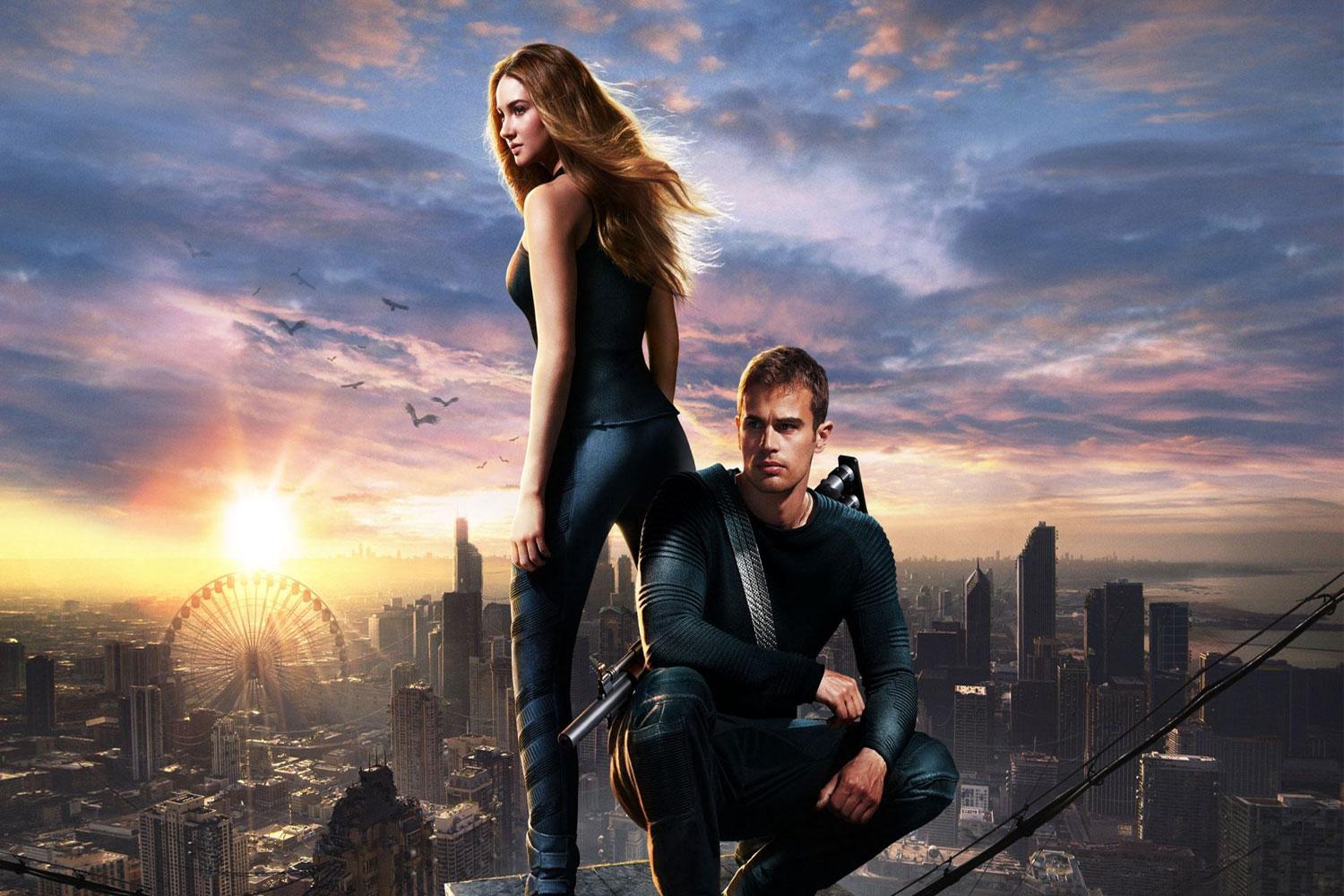
Review: ‘Allegiant’ Doubles Down On the Worst Aspects of ‘The Divergent Series’

allegiant review

At first glance, Allegiant seems like an attractive step forward for the somewhat stale YA dystopia trope. It eschews the clunky “Part 2” title in favor of a final movie that will receive a new name altogether (Ascendant). And for a book series that has as many structural problems as Divergent, any change to the source material is welcome.

Unfortunately, Allegiant is just a bigger and more chaotic copy of the first two Divergent movies, narrowing in on many of the themes and plot dynamics that have repeated themselves constantly (seriously, how many characters in these movies need to switch sides for no apparent reason just to move the plot forward?)

Now that the factions of Chicago have rid themselves of the malignant Erudite, two sides have risen up to take control: the Allegiant, made up of the people who want to return the city back to five factions; and the factionless, who want to rid the city of this system altogether.

Rather than pay any sort of attention to the obvious war brewing, Tris (played here by a static Shailene Woodley) and Four (Theo James carrying most of this film’s better moments) gather their friends in order to escape the city in search of the people who put them there in the first place. Eventually, they come across an organization they learn is experimenting on Chicago in order to create a perfect human society. As expected, this comes at a cost that not everyone part of “Team Tris” is on board with.

allegiant review

What kept the first Divergent somewhat breezy and passable was its simplistic plot. You could explain in a few sentences who the main character was and what she wanted. With Allegiant, it’s exhausting trying to understand who any of these characters are, what they actually want, and what needs to be done. This is partly because the movie fails on almost every level when it comes to defining these characters’ motivations.

There is no clear motive behind the conflicts that occur between the various factions ranging from the Allegiant all the way to the Bureau. Exposition is provided of course, but the acting is so stiff and wooden, this dialogue sounds like more white noise piled on all of the nonsense spoken before it. The movie talks at the audience endlessly, but you never get a sense that the these characters are believably communicating with each other.

Four and Peter are notable exceptions, as usual. Their characters seem to have at least some coherent story arc that makes for some interesting drama. Shailene Woodley is mostly pushed to this side this time around, being forced to react tirelessly to the rantings of the Bureau’s leader, David (played by Jeff Daniels).

Some interesting sci-fi elements provide at least a little imagination to this dull, uneventful prologue to the final chapter, but even the production value seems to be slipping from the previous movies. Many of the effects look unfinished, and the attention to detail has never been so obviously lacking. Early on, a character is shot in the head at point blank range. A second later, we see his body dragged with the back of his head in plain view. There’s no indication whatsoever that he was shot.

Odd continuity errors plague Allegiant throughout, and they’re emphasized by an apparent desire to stretch the movie’s running time with pointless, lingering shots of characters either gawking at each other or staring at mundane landscapes. Strange, considering the film feels 30 minutes longer at just a minute past 2 hours.

allegiant review

It’s a shame because there are corners of this series that could allude to some interesting discussions. There’s much to be said about how trying to control the very emotions and genetics of human beings could be manipulated in order to build a peaceful society. But Allegiant lends no moral ambiguity to the villains of this film, instead forcing mindless acts of villainy coupled with repetitive betrayals in order to justify the direction of the plot. As expected, even the younger target audience is a bit too intelligent to get fooled by the artificial recipe of this unimpressive sequel.

Grade: D-

Extra Credits:

  • It’s no secret that I carry a lot of disdain for this franchise, as well as the book trilogy. Still, I can’t believe I expected more from a premise that boils down to someone being too special for a personality test.
  • Not even the camerawork gets a pass. At one point, the camera zooms in on a characters’ face and then abruptly shifts to a medium shot. It’s amateurish to the point of disbelief.
  • Shailene Woodley can, and has, done so much better. Here’s hoping she makes enough money from this franchise so she can go back to films that have craft.
  • Director Robert Schwentke won’t be directing the final Divergent film (he also did Insurgent). I’m glad because after this and R.I.P.D., Schwentke could use another Red.
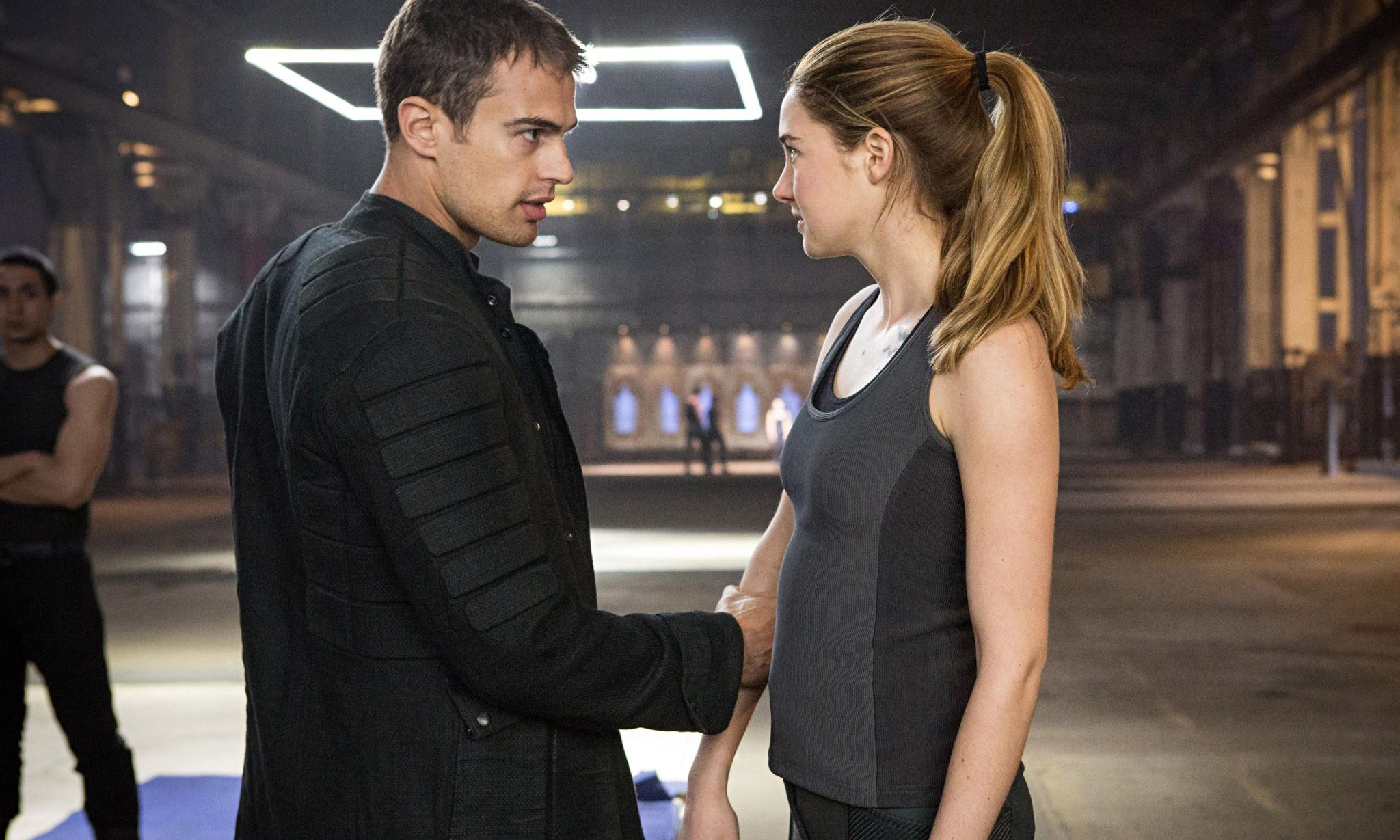
Unopinionated: ‘Divergent’ Isn’t Terrible, But that Doesn’t Mean It’s Good.

Divergent terrible good

You’re different. You don’t fit into a category. They can’t control you. They call it Divergent. You can’t let them find out about you. (Tori speaking to Tris).

Every week, readers send me their unpopular opinions, and on Unopinionated, I explain why they’re unpopular in the first place.

From my inbox: “Here’s an unpopular opinion. Divergent is better than Hunger Games. There, I said it.” – Katie

Comparing these two films is obvious, mostly because Lions Gate Entertainment practically begged fans of Hunger Games to show up for their next young adult dystopia franchise in 2014. Based on a best-selling trilogy by Veronica Roth, Divergent is arguably better than the source material, but that’s not saying much.

The premise of Divergent is pretty much where the trouble starts. Years after an apocalyptic event nearly levels the world, a somewhat rebuilt Chicago has become home to a new, simplified caste system unapologetically inconsistent with nouns and adjectives.

The Amity faction is made up of happy farmers who live outside the city, Erudite holds the city’s intellectuals, Candor are honest and determine the law, Abnegation are selfless and drive the government, and Dauntless are the brave soldiers who protect everyone.

The future belongs to those who know where they belong. -Jeanine

Divergent terrible good

All people are born into a faction that characterizes one of these personality traits in which they’re most dominant, and when they come of age, these adolescents can choose to join another faction after taking what amounts to a personality test.

This is all fairly reminiscent of the Sorting Hat in Harry Potter, but while that more mystical and even mysterious element of the Hogwarts house system was more of an aside to the central plot, Divergentattempts to build an entire narrative around how our personalities divide us. While not a bad concept in theory, it’s immediately overwrought by a plot that never moves on from its initial principle, which isn’t even that interesting to begin with.

The main character, Tris (played by Shailene Woodley in her breakout role), craves a life beyond the plain Abnegation, the faction she was born into. She gets her wish when she discovers she’s “divergent,” meaning she fits into too many factions.

In other words, she’s too special because no one gets her. As if.

Don’t try and define me. – Tris

Tris joins Dauntless, much to everyone’s surprise, fueling the only narrative within Divergent that has some meaningful entertainment. A step up from typical High School movies, Tris has to overcome her literal fears in order to survive fitting into a group of young adults she previously had nothing in common with. All while dodging the inconvenience of her status as a divergent, making her a target if the secret gets out.

There are genuine thrills and absorbing moments to be had while watching Tris bond with the recruits and mainstays of the more free-wheeling Dauntless, especially within the commentary of a city trying to rebuild itself with harsher rules and regulations.

Divergent terrible good

But the payoff is too familiar and derivative to contribute anything meaningful to dystopian epics for this age range. Rather than provide something novel to Tris’s character and how she fits into a new world, the film jerks backward to make this about oppressive, authoritarian adults messing up everything.

Having a “chosen one” in any given story is a quick way to ramp up the mediocrity in storytelling. Harry Potter cleverly sidesteps this by shifting focus to how special the villain is, making him an equally important shade of the titular boy wizard. Hunger Games turns this trope on its head by making the “chosen one” special only in the eyes of the masses being manipulated into war, a far more interesting culture point.

Fear does something strange to people like Al. But not you. Fear doesn’t shut you down, it wakes you up. – Four

But Divergent has nothing interesting to give its “chosen one” except that she has too many dominant personality traits. There’s nothing else to Tris’s character that shapes her decisions and struggles to move through the plot. She’s simply special because the script demands it, and this is too obvious for most moviegoers.

On the other hand, it’s not clear that denser lore would have improved anything. The world of Divergent is already stuffed with uninspired naming conventions and quirks that beat the moviegoer over the head with reminders that they’re watching a movie created for kids.

Grade: C+

Fans of the books have plenty to love in Divergent, as it’s a streamlined improvement over the schlock writing that inspired it. And it certainly has some entertaining moments that keep the story moving. But at this point, fans of the genre have plenty of options superior to an empty psychology lecture.


Do you have an unpopular opinion you want challenged? Let me know in the comments and I’ll take it on in a future Unopinionated article. Or you can email nowconspiring@gmail.com

I’m Jon and thanks for reading this. You can subscribe to my posts by clicking “Follow” in the right sidebar. Or just say hey on Twitter! @JonNegroni

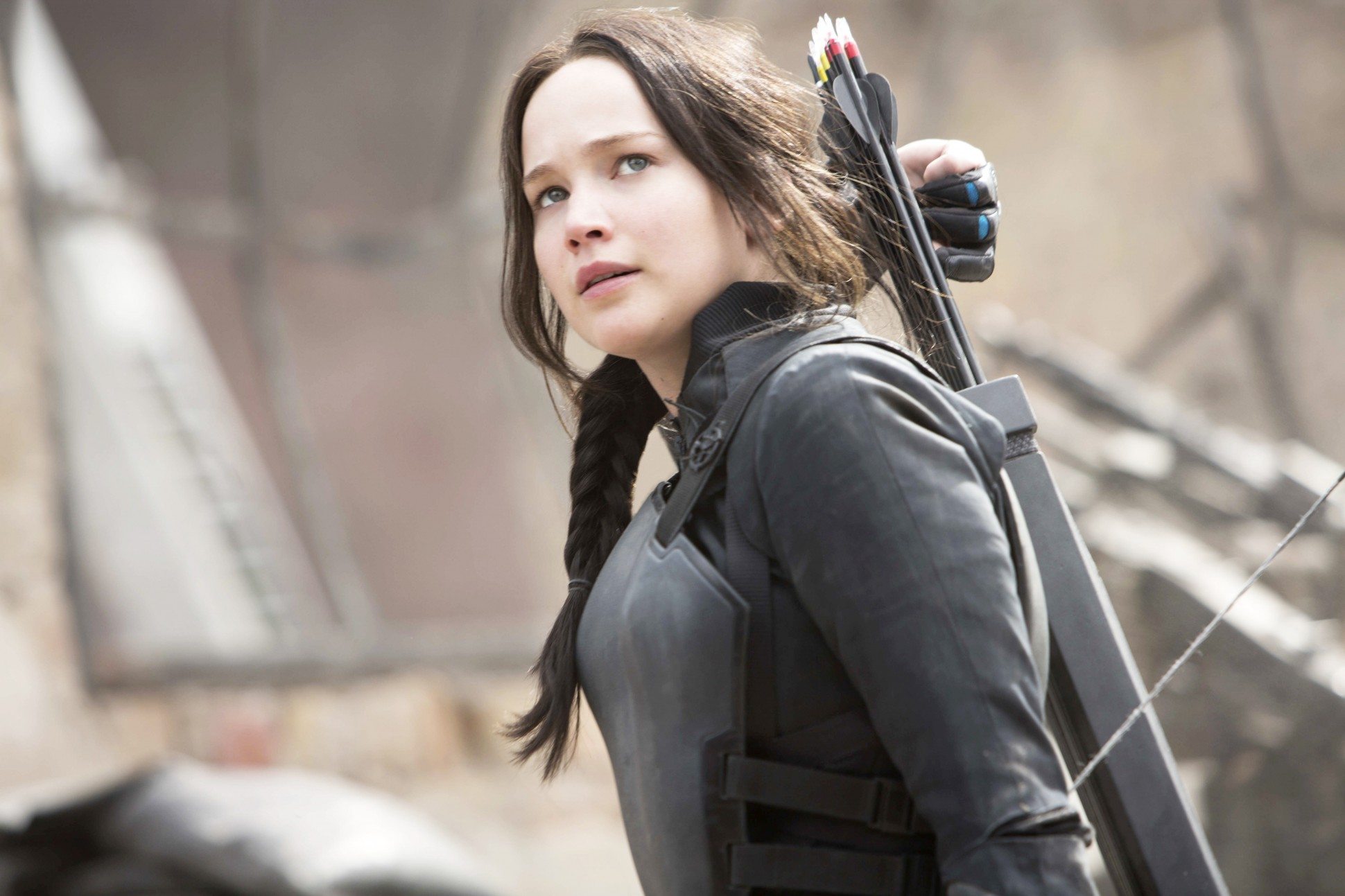
Review: ‘The Hunger Games — Mockingjay, Part 2’

hunger games mockingjay review

Directed by Francis Lawrence, Mockingjay, Part 2 is the fourth and final installment of the The Hunger Games movie franchise, which kicked off in 2012.

I’ve read all three books by Suzanne Collins, but I happen to prefer the film adaptations made by Lionsgate. I think the books were incredibly flawed, both with tone and how certain plot lines lined up. The movies share some of the problems, but they also fix a lot of issues I had with Mockingjay, which was the third and in my opinion, weakest book.

Of course, this is the second half of a two-parter, and certainly the stronger entry compared to last year’s Mockingjay, Part 1. A lot of the complaints I had for that last movie was how painfully slow it was trying to stretch half of a short book into two hours. But if you stuck with MP1, then you’re going to feel satisfaction after MP2, which is pretty much all action and climax.

A lot of things work in MP2 that have worked throughout all of these movies. The locations are beautiful, the camerawork is nearly flawless, and there are brushes of wow-moments and creativity that set this story apart from other dystopia offerings. At this point, Panem feels like a real place with believable characters, and this movie excels with its incredible supporting cast, including the late Philip Seymour Hoffman.

hunger games mockingjay review

But a major weakness in MP2 happens to be the under-utilization of these side characters, who are quite literally brushed to the side in favor of Katniss and her friends. And while I love what Jennifer Lawerence has done with this character overall throughout the series, I can’t help but feel a little underwhelmed with her character’s arc, which is really a criticism toward the books.

In MP2, the story is that Katniss is more of a mythical symbol, rather than a dynamic force who can create real change. And the entire movie is her struggle against the leaders of the rebellion that she can do more than just rally the troops with some propaganda videos. But her singular drive to assassinate Snow eventually becomes tiring, especially as her allies drop like flies, perhaps needlessly.

That’s the point, I suppose. And the highest praise I can give MP2 is how brazen it is with its themes, presenting the rebellion as evil and asking real questions about how war can undermine the good intentions behind a movement. You forget quickly that only two movies ago, the Capitol was perceived as an unstoppable force, mercilessly killing any opposition. By the end of MP2, you’ll wonder what it was all for, and that’s an achievement for a movie aimed at the young adult audience.

hunger games mockingly review

Grade: B+

Paired with Part 1, this is a satisfying conclusion in more ways than one, because it manages to elevate was a disappointing book for many fans like myself. The performances are solid, if not a little underused, and not a moment of it is boring.

For a more in-depth look at this movie, come back this Sunday for the Now Conspiring podcast, where we’ll discuss this and other new releases.

I’m Jon and thanks for reading this. You can subscribe to my posts by clicking “Follow” in the right sidebar. Or just say hey on Twitter! @JonNegroni

Which YA Dystopia Movie Franchise is the WORST?

worst ya movie

This week on the podcast, the Now Conspiring team reviews Maze Runner: The Scorch Trials and Black Mass. We also play a new game called “Was it a Flop?” and revisit the glory days of Zoey 101.

Plus, we read your comments from last week’s episode and start up this week’s burning discussion.

QUESTION OF THE WEEK: Which book-movie franchise of the young adult dystopia genre is the absolute worst?

Go on…Which YA Dystopia Movie Franchise is the WORST?

The ‘Divergent’ Series Is Actually Being Smart About Its Final Two Movies. Almost.

ascendant divergent

I could be wrong about this, but I’m pretty sure we have Harry Potter (and Warner Bros) to thank for this “one book stretched into two movies” trend that has taken over mainstream YA cinema.

Hunger Games did it, Twilight did it, and Percy Jackson would have probably done it if enough people went to see Sea of Monsters. And as you no doubt expected, The Divergent Series is doing it, too.

But rather than go with the normal convention to give both movies the same name as the book with just a “Part 1” and “Part 2” tacked on, the studio (Summit Entertainment) has chosen to rename the fourth movie.

As someone who is fed up with the marketing tactics of YA movies, I think this is a smart move and hope it catches on with book-to-movie franchises I actually want to watch. And to be fair, Summit is likely taking a cue from how poorly received Mockingjay: Part 1 was, which made $100 million less than Catching Fire. This happened in part because even the name of the movie went out of its way to let you know that this was more of a setup, not a sequel.

ascendant divergent

So the next film in the Divergent franchise will be called The Divergent Series: Allegiant, which is the name of the book plus the annoying descriptive phrase preceding it because apparently Hollywood doesn’t have enough faith in our short-term memory and hates fitting the actual name of the movie on a ticket stub. Regardless, there’s no “Part 1” because…

The fourth movie will now be called The Divergent Series: Ascendant, which betrays the “gent” branding they’ve worked so little to make us work for. Still, it’s a big deal that they’re willing to rename the second half of a book. Can you imagine the uproar if The Deathly Hallows had been replaced with something like Harry Potter: and the Surprising Addition of Neville Longbottom as a Critical Character? Actually, that sounds about right.


What’s even more barely interesting is their choice in visual marketing. If you take a close look at the Allegiant poster, you’ll see the same symbols from the cover of the book. That makes sense. But then look at the Ascendant image right next to it.

divergent ascendant

Seriously, Summit? You couldn’t vary the posters just a little bit? Sure, the symbols are different, but literally no effort was made to provide a distinction between the two movies. You might as well revert the naming format if you’re going to market them as…well, Part 1 and Part 2.

To be fair, I’m not saying the posters look bad. It’s just a little jarring when you see the math formula behind this franchise’s marketing so overtly, as opposed to gently obvious.

This is actually a great representation for my main issue with this franchise, which is how annoyingly planned this world comes off as. It obeys every trope in the YA handbook, it treats its release dates with unrelenting precision and predictability, and the movies themselves are just a checklist/gift bag of meticulous things you’ve already seen in other movies, only better.

I’m not just picking on Divergent, of course. Marvel and D.C. deserve a lot more flack (especially Marvel at this point) for how willing they are to lay out the next ten years of superhero movies they plan to do on a timeline, eliminating all of the mystery and guessing for what comes next. It’s all just become such a boring science.

ascendant divergent

Anyway, Allegiant and Ascendant also have new tailgates that shouldn’t surprise anyone with their blandness. Allegiant is simply “break the boundaries of your world” and Ascendant is “the end is never what you expect.” Except, I’ve already read the books, and unless they’re changing the ending for the movies, you’re going to expect it…and not in a good way.


Robert Schwentke — who directed the nearly unwatchable Insurgent (in my opinion) — is helming both Allegiant and Ascendant, which makes me strongly reconsider finishing this franchise. The Divergent Series: Allegiant will open on March 18, 2016, followed by The Divergent Series: Ascendant a year later on March 24, 2017.

Source: MTV

Review: ‘The Maze Runner’

Once in a while, I force myself to withhold writing a review for a movie. I choose to wait a few days before actually sitting down and unfolding my thoughts for anyone who cares to read them.

In the case of The Maze Runner, we have a film that has proven more polarizing than expecting. That is, more people are walking out of the theater satisfied than I think analysts predicted. I’m one of those people, and I’m more sure of this now even after coming across negative reviews elsewhere.

I’ve never read the trilogy of books that The Maze Runner is based on, which is good news for the majority of people who are reading this. After all, fans of the books have likely already decided whether or not this film is worth watching.

maze runner

So to be clear, I went into The Maze Runner with a blank slate, much like how the film itself begins.

The film opens with Thomas, a teenage boy who wakes up in an ascending elevator. He’s frantic, and we soon realize why. Thomas has no idea where or even who he is. And he’s greeted by a gathering of fellow teenage boys who share the same affliction.

It’s a great narrative device to give your main character amnesia from the start. It allows the audience to immediately connect with Thomas and learn the rules of the world alongside him. It’s an easy, but effective way to immerse your audience.

maze runner

The story is a fun and thrilling ride, as the “rules” of the world continue to be challenged by newcomer Thomas. The boys live within the “Glade,” a spread out field that lies within the center of a deadly maze that towers over them.

At night, the walls of the maze close. This ritual protects the boys from dangerous creatures that would kill them outright. During the day, the “runners” explore the maze in an attempt to find a way out. But if they don’t make it back before the walls close…well, let’s just say that no one survives a night in the maze.

The boys are sent to this place with amnesia, though they gain their memory within a day or two. They know that someone is doing all of this to them, since a new “Glader” is sent to the maze every month with fresh supplies.

maze runner

The characters Thomas interacts and forms relationships with are unique, rather than placeholders for the most part. You’ll likely find them endearing, especially if you enjoy the “Lost Boys” aesthetic.

Speaking of, I found it particularly refreshing to watch a YA adaptation that is more about adventure and science fiction than a coming-of-age romance story. It probably helps that the main set of characters are boys, and it’s fun to watch a group of hapless teens try to create their own society.

Put simply, this is a story about survival. Not politics. Not forbidden romance. Just getting through the day.

maze runner

As the film progresses, Thomas’s curiosity creates new problems for the residents of the maze.  This culminates when a girl ascends in the elevator soon after Thomas (too soon) with the note that she is the “last one ever.”

This of course leads to all-out chaos that sparks a believable and gripping third act, with an ending that I honestly didn’t see coming.

To be fair, elements of The Maze Runner are quite predictable. And some execution of the ideas presented are more derivative of similar YA fare akin to Hunger Games.

maze runner

But if you stick with these characters until the very end, you may find yourself pumped for Act II, which has unsurprisingly been green lit early by Fox thanks to strong box office numbers.

The Maze Runner is certainly not a runaway hit, though. At least when you compare it to other YA franchises that have been proven moneymakers. It’s collected $81 million worldwide in its first weekend, which isn’t anything to scoff at, especially when you consider it only cost $34 million to make.

So we can expect another one of these movies (The Scorch Trials) in the near future. And judging by the strong performance by Dylan O’Brien (who happens to be one of my favorite actors and can be seen on MTV’s Teen Wolf), a sequel could make Fox’s investment truly pay off.

maze runner

This is no Hunger Games-killer, but it’s certainly a welcome departure from tired outings such as Divergent and The Giver. One of my few complaints is that the film tragically under-utilizes Kaya Scodelario (Effy from Skins), who’s probably wondering why she didn’t join her friends in Game of Thrones.

Her character, Teresa, is more of a plot device than an engaging character, which is a shame since she happens to be one of the only girls in the film. Still, we can hopefully expect more from her character in coming installments.

Is it worth watching?

maze runner

Yes. The Maze Runner is an easy film to sink your teeth into, if you’re willing to sink your teeth into it. The story, lore and characters ultimately work because they are as simple as they elegant. And of course, the special effects are expertly handled to make this world come alive.

The Maze Runner was directed by Wes Ball and is based on the series of books written by James Dashner. It stars Dylan O’Brien, Will Poulter, and Kaya Scodelario.

What is the Best Young Adult Book Movie?

This week on the Agents of FILM podcast, we talk Maze Runner and the future of young adult book adaptations being Hollywood money-makers (or not). Plus we evaluate upcoming movies that will try to be the next Harry Potter/Hunger Games/Twilight.

Maria also talks about her interview with Michelle Monaghan (True Detective), and we go over which films we think you should check out next week.

(On the go? Download the audio podcast here.)

Cool things we mentioned:

Maria’s interview with Michelle Monaghan.
Supergirl confirmed for CBS.
Deadpool movie confirmed for Fox.

Thanks for Reading! You can subscribe to this blog by email via the prompt on the sidebar. Otherwise, be sure to stay connected with me on Twitter (@JonNegroni). I’ll follow you back if you say something witty and awesome.