The Pixar Theory: How ‘Onward’ Fits In The Pixar Universe

onward

When the first trailer for Onward dropped, I was immediately hit with a flood of questions about how it could possibly share the same universe as all of the other Pixar films from Toy Story to Coco. As soon as I watched the trailer, I had more than a few ideas and predictions, but I of course wanted to wait and see the film for myself before drawing any conclusions. Well, that time has come.

In case you’re new here, The Pixar Theory is a fan project I started back in 2013 in an effort to connect all of the Pixar films through a single, all-encompassing timeline. Since then, the theory has really taken off and I always get a real kick out of the branching theories people come up with and contribute to this site and elsewhere. The idea is simple: every Pixar film, according to this theory, exists in the same universe. Going deeper they share a strong narrative about what it means to be human in a world where anything is possible, including the apocalypse. Fun right?

I published a book called The Pixar Theory in 2015, which fleshed the whole fan theory out in a more meticulous fashion. But a couple of years ago, the book switched publishers, and I went to work revamping the theory into a brand new book that will include plenty more Pixar films, including Inside Out, The Good Dinosaur, Coco, and soon, Onward (maybe Soul, too, which comes out in June).

But I don’t want to keep fans of the theory waiting long. Though I’ll certainly need more time to finalize the Onward chapter of the theory with all of the easter eggs and narrative connections you’d expect, I can at least give a sneak preview right now into where Onward fits in the timeline, plus maybe a few extra details.
onward

Don’t worry. I’m not spoiling any of the story elements of Onward. If you haven’t seen the movie yet, you can keep reading without having to worry about having any surprises ruined for you. But you will get a sneak peek into the world of Onward and what it’s like on a basic level.

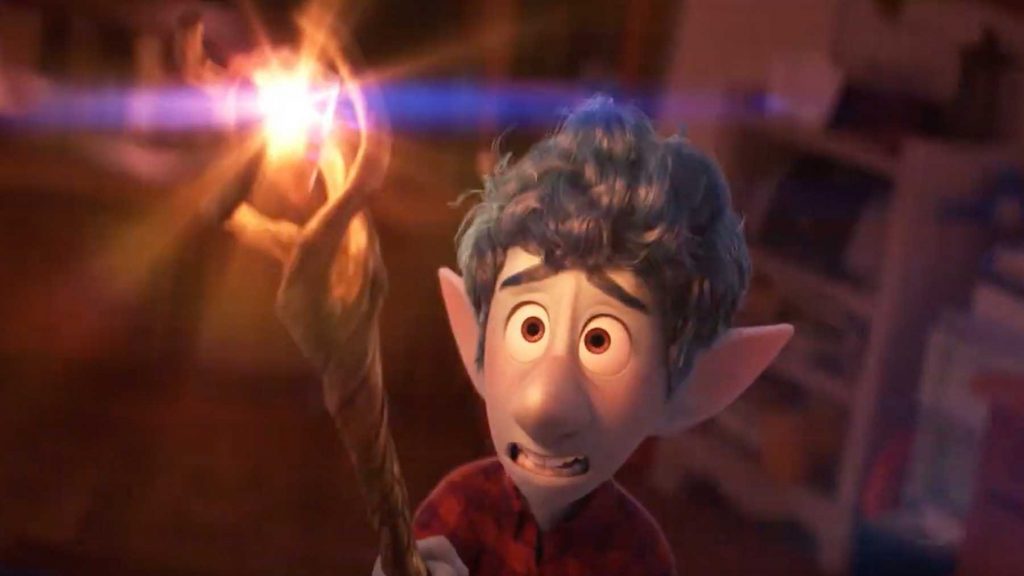
Directed by Dan Scanlon (Monsters University), Onward is about two brothers who go on a quest to find a magical gem that will bring their late father back to life for one, single day. You see, Ian (voiced by Tom Holland) never got a chance to even meet his father, who died right before he was born. His brother Barley (Chris Pratt) only has a handful of memories about their dad, because he too was very young when this tragic event took place.

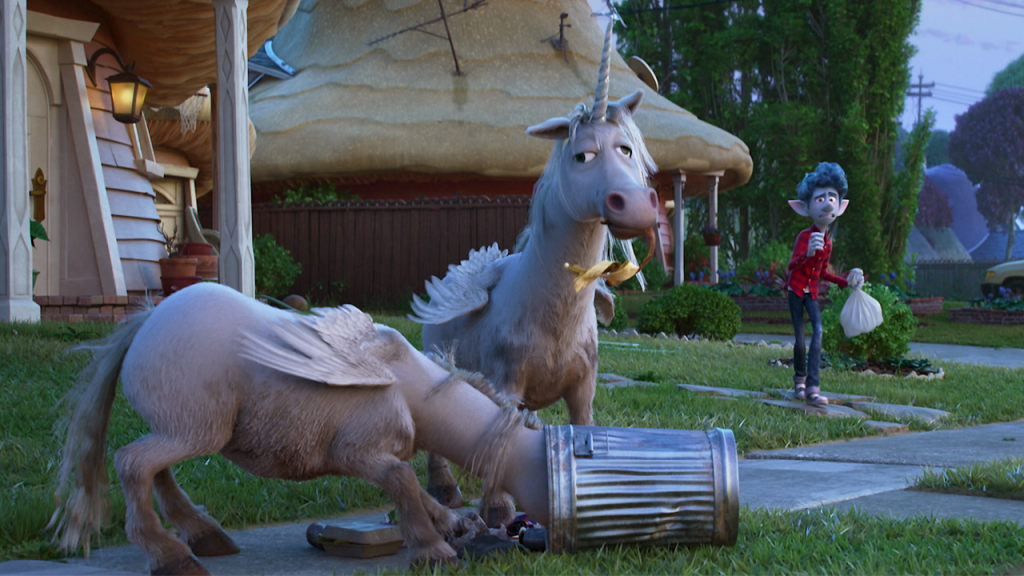
Here’s the catch. These brothers aren’t human, and the world they live in has more in common with “Dungeons & Dragons” than it does a world like ours today. Ian and Barley are elves, and the opening of the film explains that their world once contained many of the fantasy elements (like magic and dragons) that we’d see in a book written by J.R.R. Tolkien. The big difference is that there are no humans whatsoever in this world, not even in the visual history shown onscreen. And all of these fantastical creatures like unicorns, gnomes, trolls, and centaurs discovered the modern conveniences of electricity and indoor plumbing all on their own, making their world a parallel to the human one of 2020.

onward

The premise is a fun one. We get to see these traditionally old-school fantasy characters living in a modern world with cities, freeways, and themed restaurants. But lurking in the background is a hint of the magic that was once commonplace, only to be replaced by the perceived convenience of lightbulbs and automobiles. Centaurs don’t need to run 70MPH anymore because they have, well, cars.

So…how does this work for a Pixar movie? You might be wondering how it’s possible for a modern version of “Middle Earth” to exist anywhere close to the same one containing superheroes and Andy’s toys. This world has two moons, even! Is it another planet? Another dimension? What’s the deal?

THE DEAL.

Onward takes place in a section of the Pixar Theory timeline we’ve been curious about for years: in between the events of WALL-E and Monsters Inc. (also A Bug’s Life, which is shortly after WALL-E). As you may remember from the original theory, WALL-E ends with the humans of Earth returning home after centuries of being in space aboard the Axiom. While gone, the cars of Cars roamed the planet until running out of fossil fuels. But we’ve had little to go on when it comes to how humans were replaced with “monsters,” the animal-hybrid creatures who have their own modern society allowing them to go back in time to steal human energy (or…magic?) from the emotions of children, as we see in Monsters Inc.

Monsters University shows us that the monsters have been honing their scaring skills since at least 1313, when the university itself was founded. Onward hints at what this time might’ve been like for these diverse creatures, which aren’t very dissimilar to monsters. Remember, the timeline was reset for these creatures at some point in the far future, so 1313 for them would be thousands of years in the future for us.

onward

Simply put, the monsters of Monsters Inc. and Monsters University are part of the same society as the fantasy creatures we see in Onward. In Onward, we only get to know a small corner of this world, and it likely takes place many years before Monsters University, because it still contains many remnants of folklore, like wizards. But the Monsters films show us Monstropolis, which is more similar to a human society with little hint to the past. That’s because their world is more closely influenced by human society, as this is where Monsters Inc. is located, so this part of the world has a close connection to the human world of the past, which may have influenced the customs of this particular city.

For all we know, many of the towns and cities outside of Monstropolis are more similar to the one we see in Onward, which is clearly located closer to where magic was at its strongest. Put another way, Monstropolis resembles America because of its “new world” energy. But in Europe, it’s easier to find historical landmarks closely tied to the legacy of the past, which we see laid out a few times in Onward.

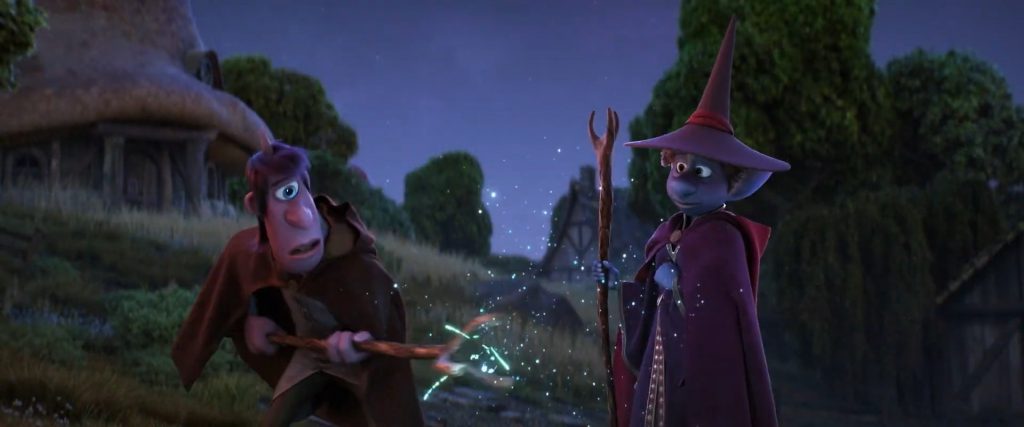
Of course, there are plenty more clues to consider and dissect. We see in Onward that magic does still exist, like the magic we see in Brave, in fact. The elements of the dead coming back to life are an obvious callback to how Day of the Dead works in Coco, and at various points in the movie, you could consider the magical action seen onscreen as something out of The Incredibles. The running theme, however, is that these powers are governed by emotion. In order for elves to perform magic effectively, they have to use their “heart’s fire” as a means of channeling magic. And as we see in the movie, only elves and other humanoid creatures appear to have the ability to use any kind of magic at all, hinting at the possibility that they are in fact the descendants of the humans who were aboard the Axiom and “re-inherited” the Earth.
onward

Humans are batteries in the Pixar universe. Their emotions can power toys, cars, and entire cities ( as seen in Toy Story, Cars, and Monsters Inc., respectively) But what happened to them after WALL-E and A Bug’s Life, when there were barely any humans to be found? Well, it’s possible they gradually changed into a new species, or bred into what would eventually be known as elves. And over time, they’d die out all the same, because we learn in Onward that not all elves have “the gift” of using magic. Eventually this ability would apparently disappear completely, forcing “monsters” to go back in time to harvest the energy needed to power their world. Perhaps these creatures evolved into scary monsters out of necessity, because it would be the only way for them to effectively scare children for centuries, weeding out all of the “nice-looking” creatures in favor of the scarier ones.

That’s not to say some of the creatures of Onward are helpless unless they have some connection to the humans of the past. Dragons breathing fire and pixies being able to fly can be easily compared to the heightened abilities of some monsters, like Randall, who can turn invisible. But when it comes to outright magic, the source always seems to come back to humans.

There’s a lot more to figure out with Onward, like why there are two moons, as opposed to just one. I have a few theories about this, but I’d like to see the film a couple more times to finalize my thoughts on how this is possible. It’ll also be fun to revisit the Monsters Inc. movies to find more direct comparisons between the world of Onward and the one where we meet Mike and Sulley. I’ll also be scouring the film for more easter eggs and cameos revealing all of the clues we’ve come to expect from these movies, so please stay tuned for the new and improved book, The Pixar Theory. I promise it’ll be worth the wait.

Before we part, I definitely want to praise the incredible work of Dan Scanlon and the fine folks at Pixar who did an incredible job making Onward. It’s as wonderful and heartwarming as many of Pixar’s other recent work, like Inside Out and Coco. The core message of the film pertains to brotherhood and how memories carry us through tragedy and toward the adventures of the future. I hope you all like crying in public, because yes, this is another Pixar tearjerker. I simply can’t wait to see it again and again.


Thanks for reading this. Be sure to say hey on Twitter: @JonNegroni

All images courtesy of Disney/Pixar

Which Pixar Plot Twist is the Best? (And Worst)

pixar plot twist

Pixar movies aren’t really known for having great plot twists. But there are still a few good ones here and there that we can appreciate.

So which Pixar “plot twist” is the best? This isn’t an easy question to answer, and obviously Pixar fans will spar and disagree over the top 5, let alone the very best. That said, I’ve devised my own rating system for each of Pixar’s most relevant plot twists, and to answer this question for myself, I’m breaking down the Pixar filmography movie by movie to assign these ratings and form my own conclusion accordingly.

But first, let’s define what a plot twist really is as best we can. To keep things simple, I consider a plot twist to be a radical shift in the expected outcome of the plot. Normally, we would only consider these to be plot twists if they happen closer to the end of the story, but I think a great plot twist can be revealed as early as the second act.

(Warning, this post contains spoilers for every single Pixar movie!)

Let’s begin with Pixar’s first feature-length film: Toy Story.

Go on…Which Pixar Plot Twist is the Best? (And Worst)

Snarcasm: This WALL-E Theory Makes So Much Sense That It Doesn’t

wall-e theory

Snarcasm is an editorial column I do when I read something so upsetting, I have to publish something snarky and sarcastic about it. Thanks for indulging, and definitely take everything you’re about to read incredibly seriously.

Hi. Fan theories are both the best and the worst. Kind of like people! But you can’t say the same about Pixar’s WALL-E, a triumph of animated cinema about the reckless, capitalist dangers of mankind passively wreaking havoc on the environ—

“Sinister WALL-E fan theory will change the way you watch the sweet Pixar film forever”

Oh, OK. I forgot we were watching this “sweet Pixar film” all wrong. How, exactly, was WALL-E some sort of overtly nice and go-lucky tale, considering all the dystopian apocalyptic subject matter?

Go on…Snarcasm: This WALL-E Theory Makes So Much Sense That It Doesn’t

Every Pixar Film Ranked By Their Box Office Success

pixar movies

From Toy Story to Finding Dory, which Pixar movies found the most financial success with audiences? 

A few years ago, I did a ranking just like this in the year leading up to Inside Out. It was simple: I took the worldwide box office returns for each Pixar movie and adjusted for inflation, though I measured the numbers according current rates of inflation (2014 at the time). A faulty metric, now that I take a second look.

Honestly, it’s hard to rank these movies on the same playing field, because so many circumstances determined their profits. 3D ticket sales and a widening international market make it harder to define which Pixar movies were more “successful” than others based on their own terms and fair context.

So this time, I’m only looking at two factors: domestic box office and a rate of inflation with 1995, the year that Toy Story came out. So all of the numbers you’re about to see bolded are NOT the actual numbers you’ll find online, but rather they’ve been modified to match what they were worth 22 years ago. UPDATE: I’ve since added Cars 3 and Coco to this list. 

Let’s start at the bottom of the list this time with…

Go on…Every Pixar Film Ranked By Their Box Office Success

Which Pixar Romance is the Best? – The Pixar Detectives

This week on Pixar Detectives, Kayla Savage and I put out some huge Pixar announcements and debated the BEST Pixar romance. We talked about Pixar in a Box, played a quiz game with the live audience (Which Pixar couple are you?) and gave away an awesome Pixar mashup shirt.

So…which Pixar romance really is the best? Among our suggestions, we talked about Marlin and Coral from Finding Nemo, Carl and Ellie from Up, WALL-E and Eve from WALL-E, Buzz and Jessie from Toy Story, and a bunch more. Let us know in the comments which romance you think is the overall best!

If you want to enter our weekly giveaways, be sure to tune in live every Wednesday at 7:00 p.m. (Pacific). Follow the link below or just click the video above. We give away Pixar-related goodies like shirts, books, blu-rays, and tons more. And we’re always open to new suggestions for prizes you all might be interested in!

Hope you enjoy the show, and don’t forget to like Super News on Facebook, so you can check out all kinds of awesome shows and giveaways coming out daily. That includes vide game live streams, other Disney talk shows, superhero news, and plenty more. See you all next week!


Thanks for reading this. Seriously. You can subscribe to my posts by clicking “Follow” in the right sidebar. 

Or just say hello on Twitter: @JonNegroni


Everything You Need To Know About Pixar’s New Short, ‘Lou’


The Pixar Detective is my weekly Facebook Live show, where I share the secrets of the Pixar universe and beyond in real-time. Tune in Wednesdays at 7pm (pacific) to comment live, ask questions, answer my questions, and help settle Pixar debates with my cohosts.

This week’s highlights:

  • Pixar has a new short coming out called Lou. Let’s talk about it!
  • Do you think The Good Dinosaur is a flop or masterpiece?
  • Guys, we’re taking Pixar for granted.
  • Why Incredibles 2 probably won’t suck.
  • Here’s why WALL-E need a sequel, but maybe something else…

Go on…Everything You Need To Know About Pixar’s New Short, ‘Lou’

The Humans of ‘WALL-E’ Were Probably Better Off Without Him

Have you ever seen Pixar’s WALL-E? No? Then go watch that, come back, and let’s discuss something somewhat troubling about this film.

There are a lot of movies that you can point to and say that the protagonists (i.e. heroes of the film) actually do more harm than good. There are some movies with tragic endings that would have been just fine if the protagonist had done nothing at all.

And I think WALL-E accidentally does the same thing, and not for the reason you may be thinking.

wall-e theory

Let’s recap the story. WALL-E is set 800 years in the future. In this universe, Earth becomes incredibly overpopulated by the year 2105, with 200 billion humans contributing to an environmental disaster for obvious reasons.

In response, a world-dominating organization called Buy n Large (BnL) pledges to clean up the mess, though it’s heavily implied it’s mostly their fault, and they send all humans to space on executive cruise ships called “starliners.” But after only five years, BnL decides to abandon the planet completely because the air has become toxic.

Side note: Soon, my book on The Pixar Theory will be coming out, and it’s packed with theories that concern this movie and BnL in general. What you’re about to read is something that didn’t make it into the final draft, so BONUS!

wall-e theory

Anyway, humans remain in space unbothered for 700 years, which is when the movie’s plot begins with WALL-E. When a probe named EVE arrives to find hospitable life, WALL-E falls in adorable robot love with her, and when she returns to deliver the plant-life she found, WALL-E frantically follows her.

WALL-E ends up on Axiom, one of many starliners running in a lifestyle “loop.” The humans there have been raised from birth to support and trust BnL and it’s routines for their entire lives. The robots satisfy all of their needs, and life is pretty much perfect in their minds, even though they do nothing for themselves.

It’s a strange setup because you’d think the people on Axiom would grow bored and feel stifled, but in contrast, they seem completely intent, until WALL-E arrives and causes a chain of events that leads to their return to Earth.

wall-e theory


This brings me to the main point: The people of Axiom are incredibly nice, well-functioning people.

Not once do you see a human on Axiom acting spoiled or rude. Instead, they’re incredibly polite, especially when they meet WALL-E for the first time. John and Mary are two great examples. They’re not used to robots having a personality, and when they meet WALL-E, they are very positive and nice to him. You’d think they’d treat him terribly, but instead they befriend him and get eerily excited when they see him again.

The humans we see have friends, romantic relationships, and excellent living accommodations. The screens they view everything through are translucent, so they have no shame in letting other people see what they’re working on.

wall-e theory

Even life expectancy isn’t a problem. When we see the panel of past Axiom captains, you can see that all of them live well over 100 years.

When the current captain of the ship becomes enamored with Earth, he appears to have the joy of a child. He’s incredibly optimistic, and in many ways, one of the central heroes of the film when it comes down to it.

In some of the final scenes, we see the humans showing a lot of empathy for WALL-E and EVE, even though most have them have no idea what’s going on. They cheer for the captain when he’s fighting Auto, and John and Mary don’t hesitate to risk their lives for the babies falling down the platform.

wall-e theory

What caused humans to be this nice?

Well, BnL apparently did. The society created by this “loop” of never-ending pleasure created a culture of interestingly polite humans, contrary to the spoiled rich kid syndrome you’d expect to see.

So was what WALL-E did for them…for the best?

If he had never followed EVE, the humans would sill be on the Axiom, but when the movie closes, the humans have returned to Earth. It’s depressing, but history repeats itself. Though we see shots of life rebuilding itself peacefully, won’t humans just make the same mistakes again and damage Earth completely this time?

wall-e theory

It’s tricky because the movie is clever about how it makes you hate BnL, despite it being the invention of the very humans we sympathize with. Pixar overtly makes the conditions of the Axiom both horrific and enticing at the same time, but few people walk away from it thinking the humans made a mistake.

From a storytelling perspective, it’s genius on Pixar’s part. They present the humans in a way that makes us want the best for them. If they had made the humans spoiled and insufferable, we wouldn’t care about them as much as we do by the end.

But the weird side-effect of this characterization is that Pixar is unintentionally saying that BnL’s methods created a better society than the one we already have. We know it’s better because Pixar is intentionally saying the society we have is what caused the problems emphasized in the film.

wall-e theory

So, here’s the question: Were the humans better off living in a society that made them the best they could be personally and socially? Or is living on Earth too important to ignore? I’m not convinced either way, to be honest.

Sure, the effects of gravity make you a blob dependent on a chair, but then again, it’s an awesome chair.

In Axiom’s society, there’s no crime from what we see. Everyone has their needs met. There’s likely no poverty, racial injustice, or food shortages. It’s utopia, but we think it sucks because the people aren’t skinny. Isn’t that a little messed up when you think about it?

wall-e theory

Still, the captain makes a good point when he says, “I don’t want to survive, I want to live!”

But does everyone on Axiom want that, or is it just the result of one man who wants to impulse buy something he read about on the Internet? It’s hard to say.

Of course, I’m not saying Axiom would be the best for me or you. We’re accustomed to bike rides, trampolines, and Taylor Swift concerts. But if you told me there was a way to solve all of Earth’s problems in exchange for a few extra pounds, I’d have a hard time saying no.


Thanks for reading this. To get updates on my theories, books, and giveaways, join my mailing list.

Or just say hey on Twitter: @JonNegroni