Let the debate begin. There were plenty of enjoyable big screen outings this summer, but which one was your favorite? The best?
On this week’s episode of the Agents of FILM podcast, we answer that question as best we can. And stick around for the end of the show to hear about new films that will be coming out this weekend.
You can watch the show below, or download the audio version here.
Thanks for Reading (and/or Watching)! You can subscribe to this blog by email via the prompt on the sidebar. Otherwise, be sure to stay connected with me on Twitter (@JonNegroni). I’ll follow you back if you say something witty and awesome.
By now, you may have learned the tragic news that celebrated actor Robin Williams tragically passed away today at age 63. One of my personal favorite actors growing up, Williams is best known for his wide range of talent as both a comedian and dramatic powerhouse. The word to best describe him, honestly, will always be memorable. His films simply left a lasting impression.
Films like Aladdin, Mrs. Doubtfire, Good Will Hunting, Good Morning Vietnam, and of course, Dead Poets Society will be remembered as some of Williams’ best work. But there are still four more films to be released that feature the deceased actor. Here they are:
Night at the Museum: Secret of the Tomb
The third film of the Night at the Museum movies (about a museum where the exhibits come to life) will see Robin Williams reprise his role as Teddy Roosevelt.
The movie will be released on December 19th of this year, and you can watch the trailer below.
Merry Friggin’ Christmas
Another comedy coming this holiday season is Merry Friggin’ Christmas, which stars Robin Williams and Lauren Graham. In it, Williams plays a man who visits his dysfunctional family at the holidays, only to realize he left his son’s gifts at home and must travel back home with his own father to make it back in time.
Christmas opens on November 7th, 2014.
Boulevard
Williams stars in this indie drama alongside Bob Odenkirk (Breaking Bad). It debuted at this year’s Tribeca Film Festival and will be a drama centered around a married man who must confront his “secret life.”
A wide release date has not yet been announced.
Absolutely Anything
In what will likely be his last onscreen offering, Williams lends his voice to “Dennis the Dog” in this film about a man who discovers he has magic powers. The film also stars Simon Pegg and Kate Beckinsale in live action roles.
The film will open sometime next year.
Of course, several other projects were “in the works” for Williams, including a possible sequel to Mrs. Doubtfire. The actor had tough year as of late due to the cancellation of his CBS comedy, The Crazy Ones.
It’s hard to say goodbye to an actor who has meant so much to so many people. It’s even harder to say goodbye so suddenly. But I hope that you will make the trip to theaters to finish Williams’ work. I know I will.
Listen, I love movies. I also love television. They’re fantastic mediums that provide the world with a seemingly endless supply of great entertainment. But the real potential is in the world of video games. The world of truly interactive entertainment.
The main difference between these three mediums is the fact that video games haven’t been around quite as long. They have immense room to grow, even as the way we experience games continues to shift toward the smart phone in contrast to the blockbuster console.
That said, too many websites and smart discussions decide to talk about how “cool” it would be for so-and-so video game to become a movie. And I get that. I’ve talked before about how great it would be to see more of the Mass Effect universe on the big screen (though it would likely fail if it centered around Commander Shepard).
But for whatever reason, people default to a supposed need for making a movie out of something we already enjoy as gamers. Shouldn’t it be the other way around? I think so. Here are a few of the best examples I can think of (for now):
[Note: I’m excluding the topic of licensed games from this discussion. No one likes them. We already know why. Let’s just not talk about it.]
6. Inception
The idea of translating the Christopher Nolan “dream-within-a-dream” universe seems like a natural step forward for an indicate, complex plot that almost demands user interaction.
Exotic locations that are tied to one narrative structure without feeling forced? Check. Varied combat that is put on its head by gravity-bending mechanics related to other plot points within the story? Got it. Compelling characters working together via a heist mode that is both unexplored and familiar at the same time? Hey, Grand Theft Auto 5 already showed us how to do it.
I’m not a gaming insider by any stretch of the imagination, so I’m completely unaware if someone out there is already working to make this happen. If so, then they have my support.
5. Avatar: The Last Airbender
Yes, ATLA already has a trilogy of video games based on the popular TV series. They were nothing special, to be clear, and I think it would be a waste of time and money to retread that story, or even the sequel series, Legend of Korra.
No, the real potential lies in Wan, who is the first Avatar. Revealed in a special two-part event during Book 2 of LOK, Wan’s story is one that takes place in a world that is reminiscent of Miyazaki (intentionally), and his journey to becoming the first Avatar completely lends itself to the structure of storytelling we see in gaming. Wan learns each of the elements by traveling the Spirit World and grows stronger as he realizes his destiny. Perfect.
Of course, that’s just one rabbit hole for a game developer to go down. Thanks to ATLA’s attention to world-building and beautiful combat (a weird combination of words, but totally accurate), crafting a video game that is both creative and fun to play would be a cakewalk if taken seriously.
4. Firefly
I’m not even sure why this infamous cult-classic hasn’t already been transformed into a video game, but here we are. I suspect that the idea has been tossed around quite a bit already in the right board rooms.
Many would agree that this Joss Whedon-built space western has the depth and real estate to give gamers a fun tour of what lies beyond Alliance Control. Sadly, I doubt it would work to bring back the original cast for a continuation of the short-lived TV Show and its subsequent movie, but a good team of writers could easily breathe new life into the franchise through video games.
3. Game of Thrones
Can I just say it? We’re sick of Lord of the Rings as the go-to franchise for medieval mayhem (OK, that’s an exaggeration). One world we’ve yet to see play out in video games is the 7 Kingdoms of Westeros.
[Note: there’s a licensed Game of Thrones already. And it sucks. We want the real deal.]
Of course, there are two options. You could either develop an open world game a la Skyrim that tells a brand-new story within George R.R. Martin’s carefully crafted world of dragons and others, or you could do what the show has done – but with more faithfulness to the source material.
If you’re unaware, the HBO series known as “Game of Thrones” (which is based on the series of novels by Martin called A Song of Ice and Fire) is only loosely based on its source material. It makes for great television, but the expanded possibilities of side quests and drawn out storytelling could bring the world of Westeros into a full picture of what it’s meant to be.
2. Pacific Rim
This is another movie on this list that has already had the video game treatment attempted. And again. It sucked.
But a Pacific Rim video game that was conceived and executed from the ground up? One that was built to be a self-contained world with blockbuster graphics? That could definitely work, and it would be a great way to tell the story of the first battles between the Kaijus and the Jaegers. A story that was only briefly explained in expository dialogue.
Also, giant robots.
1. The Mask of Zorro
I’m not putting this as #1 because it is objectively the best idea on this list (truthfully, I didn’t order these by which would be “best”).
No, I’m putting this as #1 because I am a well-known fanboy of anything “Zorro.” And yes, The Mask of Zorro is my favorite film of all time. Judge away.
But I believe a video game centering around the Fox would make for some great entertainment, regardless of my bias. Assassin’s Creed has already shown us how impactful and thrilling it can be to sword-fight our way through fully realized historical settings.
Though Zorro the character isn’t based on real history, careful attention to the setting (California, or Spain if the game would be based on the novels, instead) and rich echelon of characters that made the film great would translate beautifully to interactive storytelling.
Plus, with two new Zorro films planned to release in the coming years, the Zorro hype is about to reach its hype. Take notes game developers!
Honorable mentions (because opinions)
Bladerunner – bringing this up is basically required.
District 9 – but with more of what we saw in the third act.
Almost Human – overblown TV show, but great candidate for gaming.
Elysium – see District 9.
In Time – I can’t be the only person who liked this movie.
Hunger Games – prequel anyone?
Peter Pan – Neverland deserves the open-world treatment.
Yes, I know I didn’t get to the wealth of other examples. If you think of any ideas, sound off in the comments!
Thanks for reading! You can subscribe to this blog by email via the prompt on the sidebar. Otherwise, be sure to stay connected with me on Twitter (@JonNegroni). I’ll follow you back if you say something witty and awesome.
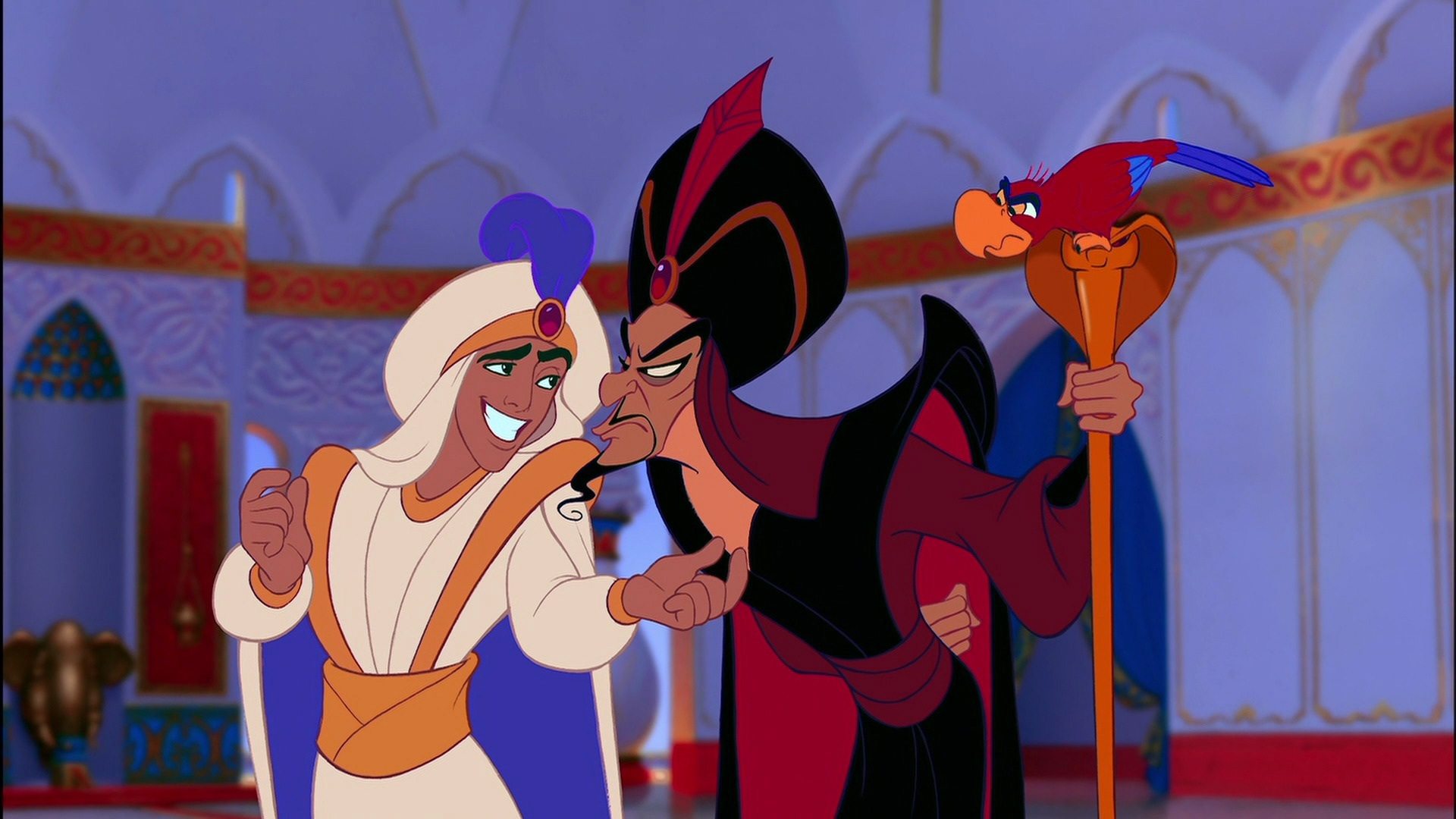
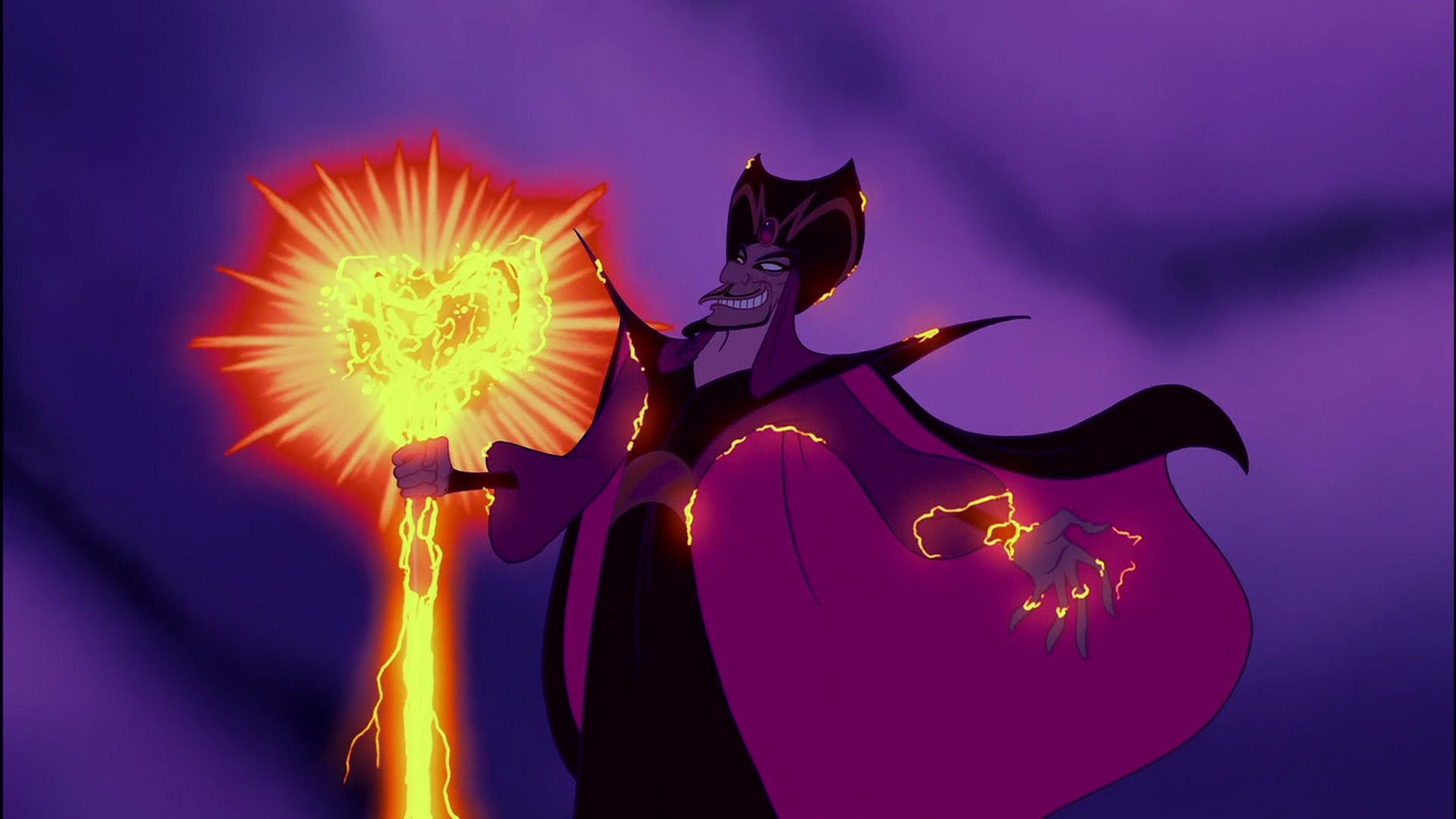
Jafar is the primary villain of the Disney animated classic, Aladdin, which magic carpeted its way into our hearts back in 1992.
I’m sure many of you agree that the film is easily one of Disney’s best offerings of all time, and a lot of that has to do with its complex “good and evil” narrative, as well as some fantastic music.
Rather than leave the movie alone, however, I’ve decided that it requires a little over-analyzing, and you can thank the recent live-action Disney film, Maleficent, for my mischief.
Maleficient is a modern retelling of the classic story, Sleeping Beauty, which you may fondly remember as a VHS box tape that sat next to Cinderella, Snow White and maybe even Peter Pan. In this new version of Sleeping Beauty, Disney decided to turn the narrative on its head by making Maleficient a misunderstood villain.
Much like Broadway did with the Wicked Witch from The Wizard of Oz in “Wicked,” Disney retold the classic story with Maleficient actually being justifiable in her actions, though I won’t say much more for fear of ruining the film for anyone else.
At any rate, I found it valuable to do the same with Jafar from Aladdin, and I think you’ll find I have a decent case on my hands.
Right now, you’re probably remembering all of the awful things Jafar did in both Aladdin and its somewhat unofficial sequel, Return of Jafar. For the sake of keeping things simple, we’ll stick with just talking about Aladdin.
In the movie, Jafar betrays Aladdin after hiring him to do a job, tries to kill him later on, hypnotizes the sultan, tries to kill Aladdin again and then uses his power to usurp the title of sultan and force Jasmine and the real sultan to do his bidding.
After all of that, how could we possibly perceive Jafar as a good guy? Case closed, right?
Well, not necessarily. The problem here is that we have an unreliable narrator that could change the way we really watch the movie. The narrator I’m referring to is the merchant from the very beginning of the film.
If you recall, the movie starts with an unnamed merchant who is trying to sell his wares to us, the audience. To be clear, he’s as sleazy as they come, and it’s not long before he tries to sell us the magic lamp that once belonged to Aladdin.
In other words, the entire movie is a sales pitch.
The merchant is trying to prove to us (in his words) that the lamp is important because it “changed the course of one man’s life.” He then goes on to tell us the “story” of Aladdin.
The main problem here is that in order for us to want the lamp, he would have to position the main character, Aladdin, as the good guy. Even if he’s telling a “true” story, we as the audience have no idea how far he may be straying from the truth in order to convince us that having a magic lamp is a good idea.
(I’m sure what I just said has raised a lot of questions for those of you who remember how the movie ends, but stay with me for now).
To be fair, even the merchant’s telling of the story raises a lot of doubts for me that Jafar is that bad of a guy. So before we go any further, let’s go through the “Case for Jafar.”
THE SULTAN SUCKS AT HIS JOB
This is probably the most important piece of evidence we have to work with. The root of Jafar’s motivation is to replace the sultan, but why do you think he is lusting for this power in the first place?
There’s a three-pronged answer to that question:
The sultan plays with toys all of the time instead of running Agrabah
The sultan has let his daughter put off finding an heir
The sultan has let his daughter let her tiger physically assault princes from other countries
All of these are reasons for why the Grand Vizier would be so incredibly frustrated with the current affairs of Agrabah. As we see in the opening sequence with Aladdin and Abu running from the guards, poverty and homelessness is a huge problem.
This is likely because every time we run into the sultan, he’s goofing off or playing with toys. Jafar has to hypnotize the sultan just to get him to do his job.
WHY WOULDN’T JAFAR HAVE HYPNOTIZED HIS WAY TO BECOMING SULTAN?
Jafar himself is not a sorcerer until the end of the movie, but he does have a wide array of magical tools and instruments, which includes his cobra staff, the sands of time, etc. So why does he need a lamp to make himself sultan?
We’re led to believe that Iago (his parrot) convinced Jafar that he should just get the sultan to make Jafar a suitor for the princess. But if Jafar was really as cruel as the merchant portrays him, then Jafar could have simply hypnotized the sultan to concede his title.
Instead, Jafar wants to become sultan by either “wishing” himself sultan or marrying into it, which would both occur without hurting anyone (except Jasmine’s feelings).
You could argue that Jafar isn’t powerful enough to hypnotize the sultan in this way, but he seems to have plenty of other tools at his disposal. It seems unlikely that he wouldn’t be able to accomplish this without the lamp unless he was trying to do this without bloodshed.
THE MOVIE FROM JAFAR’S PERSPECTIVE
Let’s review. We have a Grand Vizier named Jafar who is fed up with how the sultan is refusing to take his job seriously. Poverty and homelessness run rampant, the princess is antagonizing her suitors and the sultan is just standing by.
The law says Jasmine has to marry within the next few days, but she refuses because she wants love. So Jafar decides he needs to take matters in his own hands.
He’s been hypnotizing the sultan so far to keep things running, but that’s not enough anymore. Jafar decides he needs to become sultan himself and right what the sultan has wronged, while also allowing Jasmine to marry whomever she wants.
Meanwhile, Jasmine runs away and falls for a homeless thief who only likes her for her looks (as evidenced by how he describes her to the genie).
Of course, the sultan is old and could die soon. If Jasmine, his only heir, doesn’t marry in time, then the city will fall into turmoil. But Jasmine selfishly neglects her responsibility until the guards finally find her.
Jafar discovers with the sands of time that Aladdin is the key to getting into the Cave of Wonders, where the lamp resides. He hires him to get the lamp, but his stupid monkey touches something and the whole thing is collapsing. Deciding not to take any chances, Jafar takes the lamp and lets Aladdin suffer the consequences of his actions, but Abu steals the lamp back as they become trapped.
Jafar then has no choice but to save the city by hypnotizing the sultan into arranging a marriage between him and Jasmine.
But then some random prince no one has ever heard of (from a place no one has ever heard of) bombards the palace with a parade. The guy certainly doesn’t act or talk like a prince, but the sultan doesn’t care at all about how shady the situation is.
Of course, the “prince” is Aladdin, who tricked the genie into breaking him out of the cave without wishing for it and then made the promise that he’d free the genie later (even though he apparently didn’t intend to keep that promise).
Aladdin sneaks into Jasmine’s chambers (at night) and whisks her away across the world. Oh, and he lies to her again about who he really is by claiming he was a prince all along.
Jafar knows that the “prince” is a fraud, so he arranges to have him disposed of before he ruins the entire kingdom. But Aladdin escapes thanks to the genie, whom he betrays by going back on his promise to free him. Aladdin decides it’s more important to keep the genie around in order to keep the “prince” act up.
But Jafar realizes that the “prince” is actually Aladdin, so he steals his lamp back and commands the genie to make him sultan.
He also wishes for power, hoping that it will protect Agrabah from the country that just found out their prince they sent to marry Jasmine was attacked by a tiger. Jafar even places the kingdom on a hill to make it a more secure stronghold.
Alas, Aladdin returns and tricks Jafar into becoming a genie, thus imprisoning him.
We could also talk about Return of Jafar (which starts with the same merchant singing “Arabian Nights” by the way), but it’s pretty much the same story.
Oh, and I’m not the only person to argue for the case of Jafar. In fact, there is an entire musical based on this concept called Twisted, which you can watch in its entirety below:
(Warning: contains material not suitable for children)
SO, THE MERCHANT?
The obvious question here is, why would the merchant tell us that the lamp is essentially useless? At the end of Aladdin, the merchant tells us that the genie is freed. That definitely explains how the merchant would have his hands on it without just using it himself.
The only answer I can think of is that he wants to sell the lamp because it is rare. It’s no ordinary lamp! This is the lamp that Aladdin used to defeat the evil Jafar! Hear the tale of the magical Genie would can summon entire parades that disappear without any explanation!
Can you see how his hyperbole and twisting of the story would convince someone that the lamp would be cool to have? Even if the story isn’t accurate? This is the same sales tactic that people make even today, but especially during those times when street merchants would shout extravagant sales pitches from the corner.
THE LESSON
Am I over-thinking this? Of course. But I didn’t get into this because I want to prove something is true. Rather, I recognize the value in turning a story on its head to learn a new lesson.
The message here is that sometimes, things aren’t all what they seem. Sure, Aladdin is probably a cool guy and Jafar was a jerk, but my article may have made you doubt that a little. And that’s just because it’s easy to twist a story and blur the lines between good and evil (even though they are clearly distinct at the same time).
That said, which version of Jafar do you prefer?
Thanks for reading this. To get updates on my theories, books, and giveaways, join my mailing list.
As I sat down to write this review, I quickly remembered that I also reviewed the first Amazing Spider-Man on this site two years ago, and it’s fascinating to me how little I had to say about it.
Seriously, I basically came to the conclusion that it’s barely worth watching on the basis that it has some decent effects and a mediocre story that may pay off in the long-run.
Of course, I (along with most of the Spider-Man fandom) was sorely disappointed with several directions Sony took with the origin story, especially when it came to Ben Parker’s death. I understood then and now that this would be underwhelming for moviegoers like me who are still fondly remembering the original Spider-Man in 2002.
Two years and one two-hour movie later, we have The Amazing Spider-Man 2, which is undoubtedly a bigger, better version of the movie that came before it. Everything about this sequel tries incredibly hard to outdo the original, from the acting and character development to the carefully crafted action scenes.
Even the soundtrack seems to have more thought put into it this time (with dubstep tracks being carefully placed only in sequences that feature the film’s central villain: Jamie Foxx’s Electro)
In the months leading up to this film’s release, I was obsessed with staying up-to-date with all of the featurettes, promos, interviews and trailers that did their darndest to convince us that they’d fix what went wrong with the original (which still made them plenty of money).
The first thing to note, and the film’s biggest improvement, is that Sony at least has a powerful agenda behind this film aside from their obligation to make a Spider-Man movie before their contract to the character’s rights fall back to Marvel (which most of us want to happen, ironically).
The first film felt forced, basically, because we knew Sony was only doing it to hang on to their film rights. But this time around, there’s more to Sony’s madness. Thanks to Marvels grand Avengers experiment, Sony is in the business of franchise-building, and they’re now setting up a richer universe that can branch off into numerous spin-offs, which include a film devoted to both Venom and the Sinister Six.
So that’s one point for the movie so far. There’s something to it this time.
But is the movie any good?
Yes. In fact, I’m going to say it’s great.
I know, I know. The consensus so far among Spider-Man fanatics like myself has been that this sequel is essentially an abomination. Bob Chipman, one of my favorite movie critics, nearly quit reviewing moviesout of frustration over this film.
But I politely disagree with Chipman and many other naysayers, and here’s why.
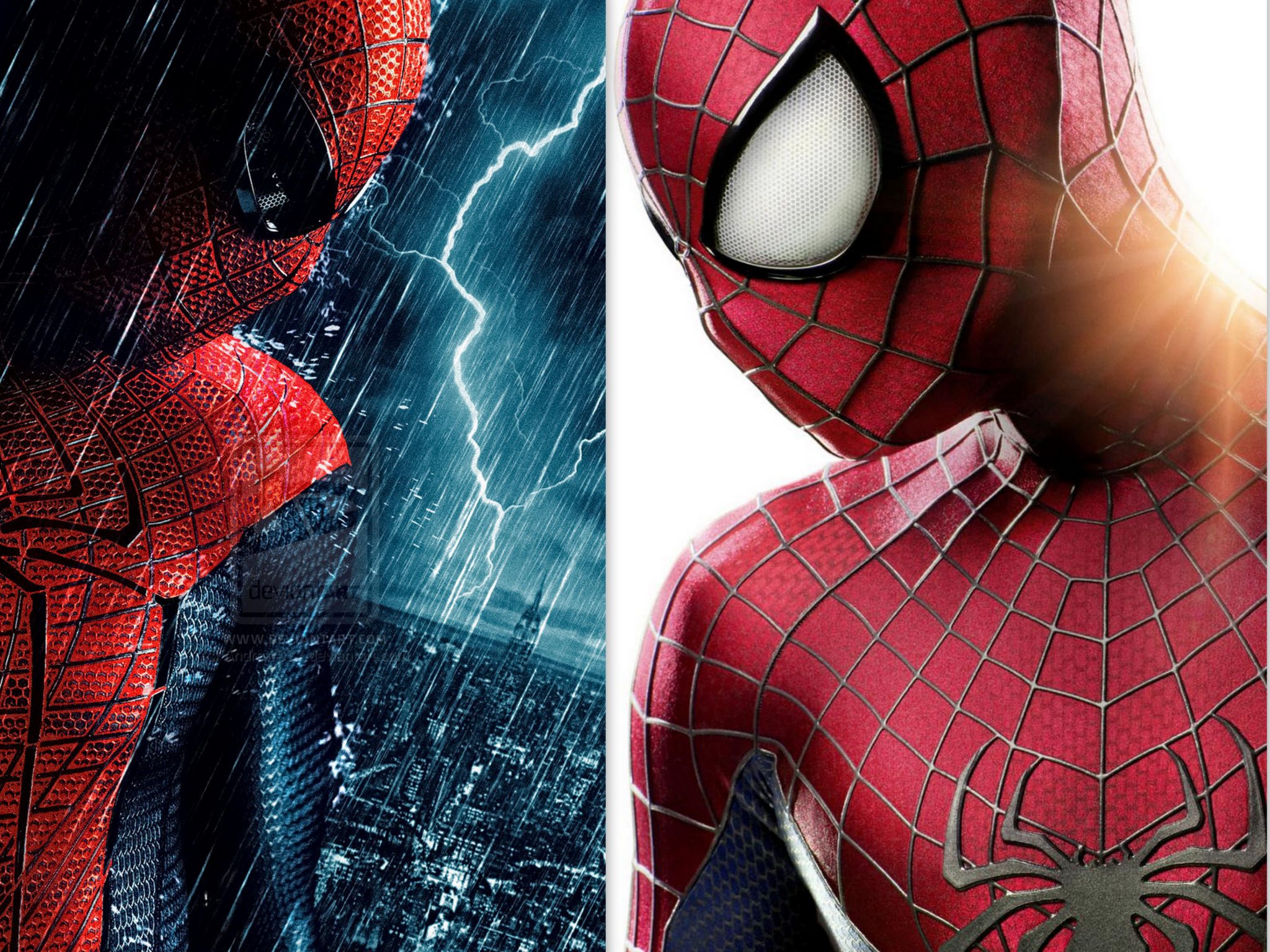
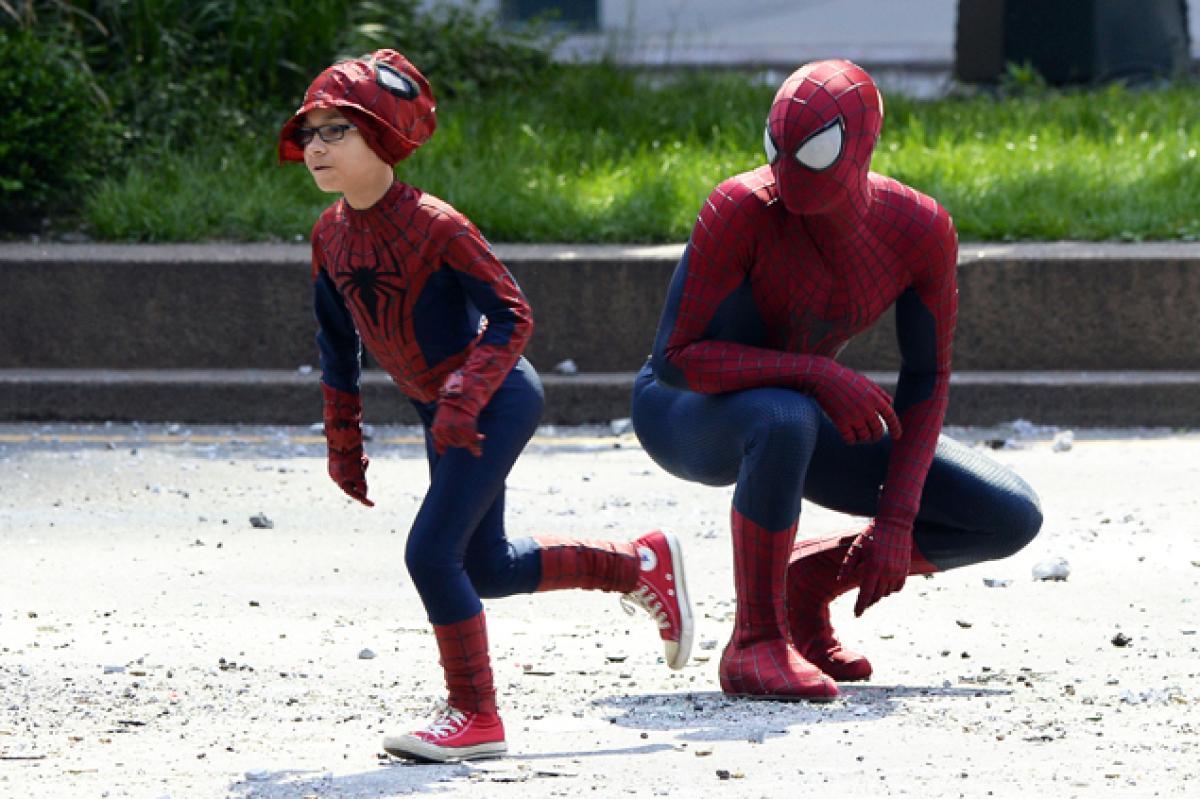
First, they finally got the costume right. I was pretty indifferent to the Sam Raimi costume version, despite its toned down color and melancholic feel. But The Amazing Spider-Man proved that you can definitely mess up his costume, with laughable blinking lights and a look that doesn’t look at all like the Spider-Man we’ve gotten to love over the better half of the last century.
This time around, however, the costume is pretty much perfect, capturing the look of Spider-Man in a way that pays homage to the original without looking dated.
Next, the action scenes and special effects were fantastic, and I applaud Dave Schaub for his hard work and dedication to crafting a movie that lets Spider-Man be the web slinging daredevil he is, stealing every scene he’s in when donning the costume.
(I even wrote a piece on how Schaub and his team set out to nail the physics of web slinging in this awesome interview you can read here.)
Adding to the action was a devotion to revealing what I call little moments throughout the story. Yes, you had big themes and character plots controlling the drive of the story, but that didn’t prevent director Marc Webb from giving Spider-Man some time to just be a hero. For the first time since Spider-Man 2, audiences were allowed to see Spider-Man foil petty crimes in creative ways, without the plot keeping him too busy.
These moments consisted of Spidey’s varied conversations with the citizens he would save, along with entire scenes devoted to heroic crime fighting that didn’t even contribute heavily to the plot. I think that some critics were possibly annoyed at these little moments because they might seem pointless to some, but appreciated the care put into differentiating Spider-Man from his real identity, Peter Parker.
Spider-Man is a superhero who is always cracking jokes and keeping things light because he has a mask on. Peter Parker is less confident and a little more nerdy, and that’s a theme that is far more faithful here to the comics.
And it made the film fun. I found myself laughing out loud during the film many times, and kudos to Garfield for letting himself over-act for this role, because it definitely worked.
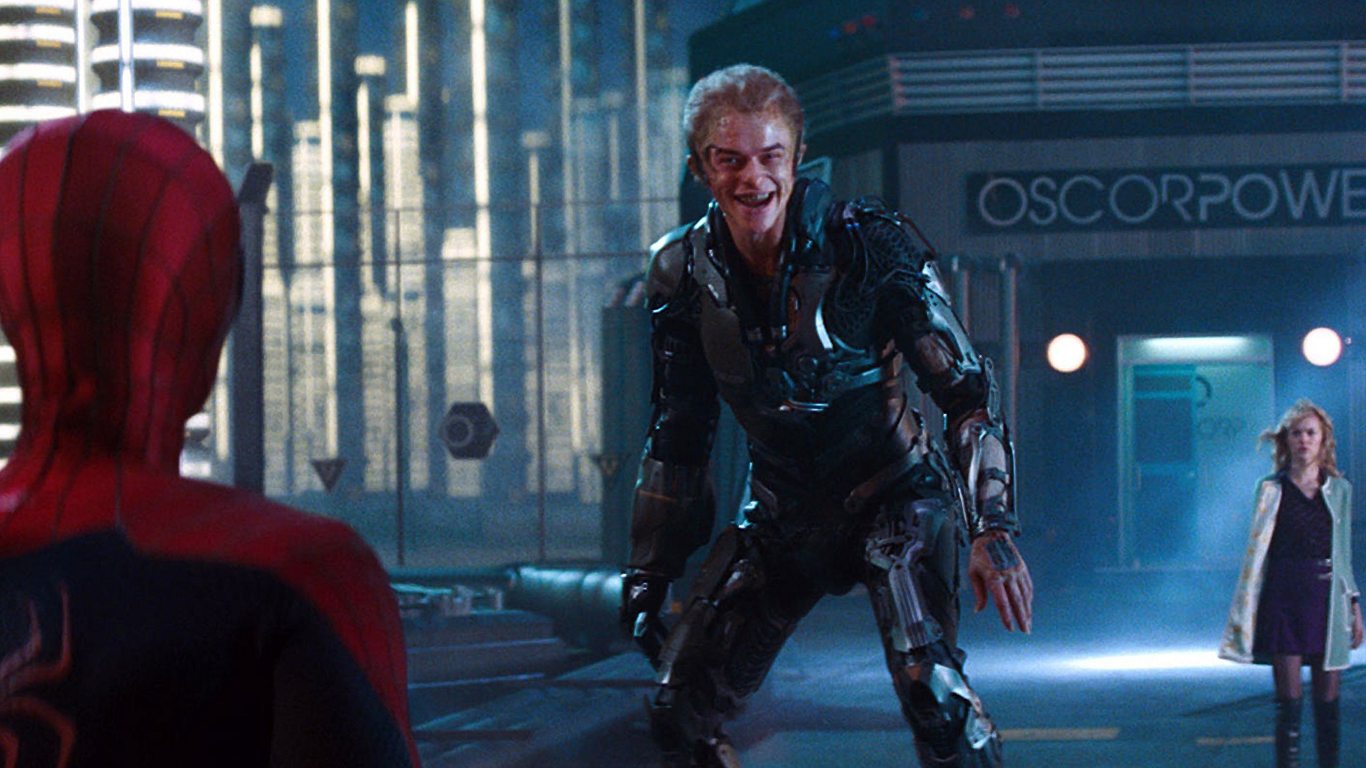
There were two main villains in this film: Max Dillon (AKA Electro) and Harry Osborn (AKA Green Goblin). My biggest complaint for this film lies in how they handled these two, both as characters and how they fit into the plot.
To be fair, I liked both of these villains early on, especially Max Dillon’s incredibly awkward transition from bumbling electrician to full-on psychopath. But as the film trudged along, we lost what made Dillon interesting as he became a ruthless villain. In other words, his character arc was a bit clumsy.
Dane DeHaan’s take on Green Goblin committed the same sins, and I hate how they handled the origin of this villain. I spent the entire film hoping that we’d find out that Harry’s father, Norman Osborn, would end up being the “real” Goblin, using his son as a pawn, but no such twist came to fruition.
The film had a lot of great moments, but it was a bit lopsided, as it would spend huge chunks focusing on one of its many story threads. They handled the progression of Gwen and Peter’s story quite well, at the very least, and I was satisfied with how the film answered the question of what happened to Peter’s parents.
Still, the pacing just felt a bit off and the film could have used some strategic trimming. It was a bit long, but I certainly didn’t look at my watch.
I’d like to talk more on how I felt about the film toward the third act, which was its strongest (at least in regards to the last 15-20 minutes). But I’ll leave you with this:
The Amazing Spider-Man 2 is worth watching. It’s a well-made film that presents a decent take on the webhead, unless you’re firmly against Sony’s new version already. My advice is to just go with the flow and let yourself be amazed by the plenty of good things this sequel has to offer.
Thanks for Reading! You can subscribe to this blog by email via the prompt on the sidebar. Otherwise, be sure to stay connected with me on Twitter (@JonNegroni). I’ll follow you back if you say something witty and awesome.
Watch and be amazed as the visionaries at HISHE provide us with the alternate ending we didn’t even know we wanted to Disney’s Frozen.
Don’t conceal not feel this video by sharing with the people you love!
Thanks for Reading! You can subscribe to this blog by email via the prompt on the sidebar. Otherwise, be sure to stay connected with me on Twitter (@JonNegroni). I’ll follow you back if you say something witty and awesome.