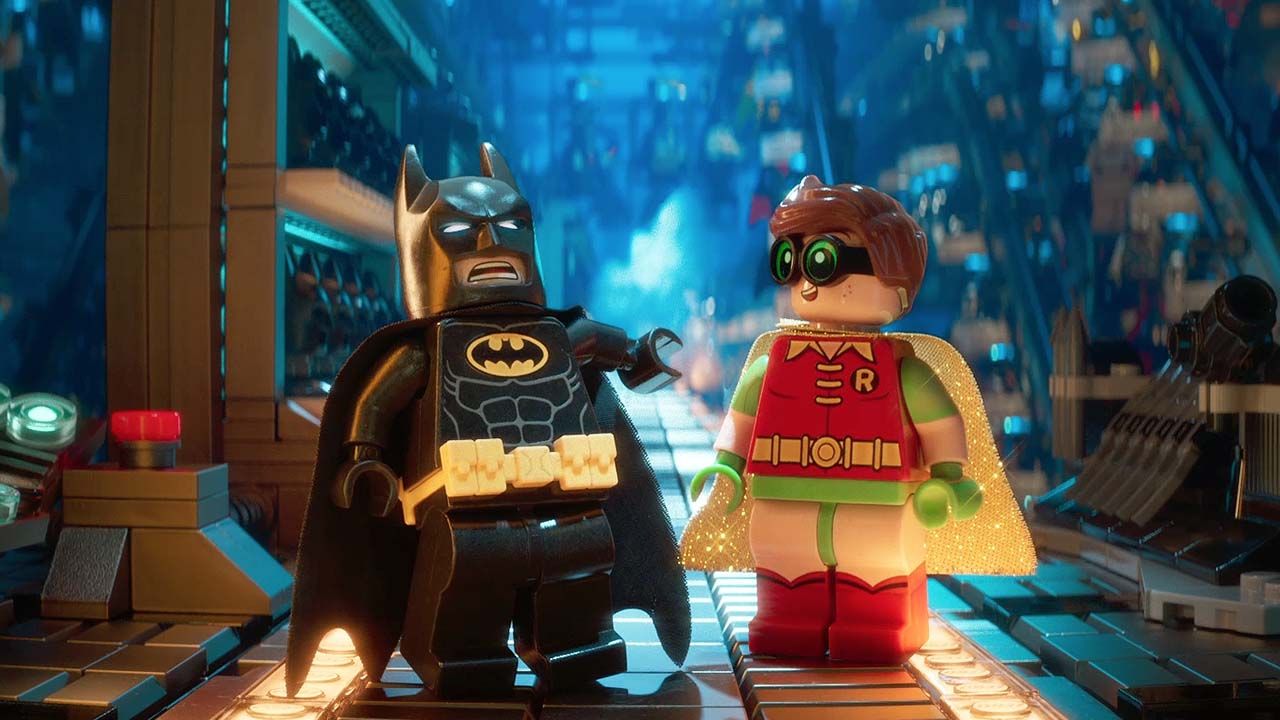
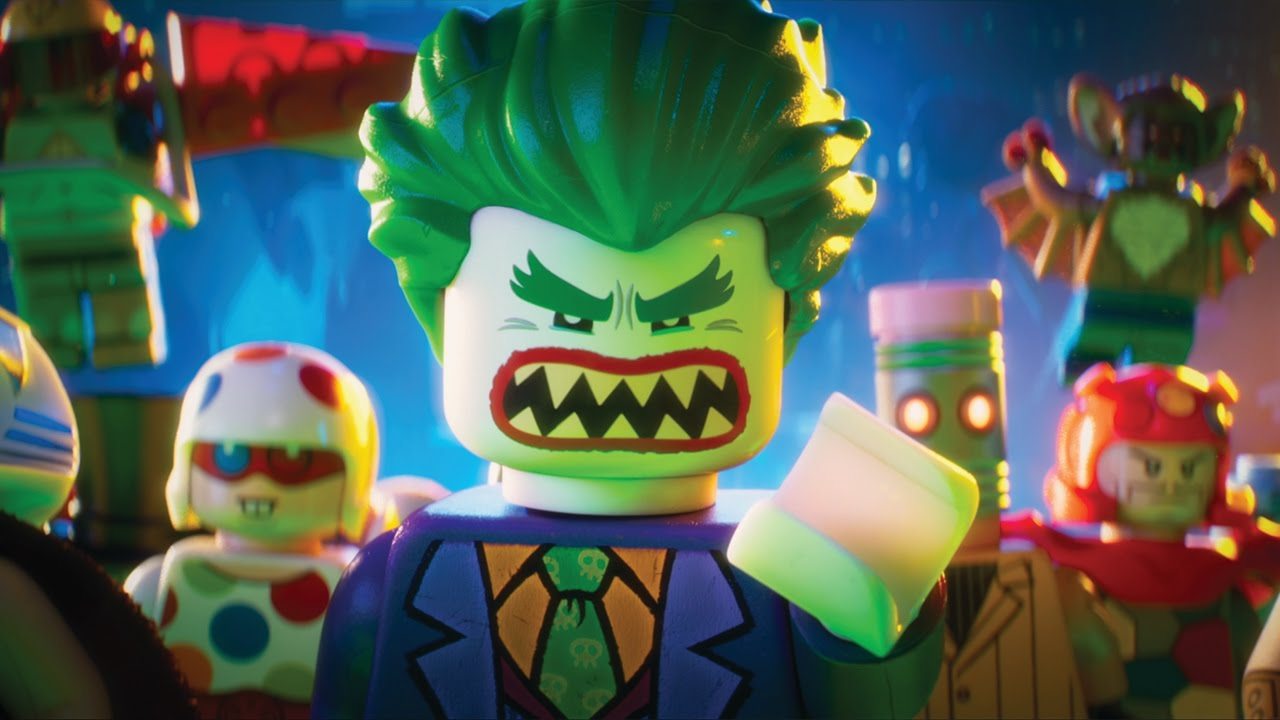
If Deadpool could parody the entire superhero genre, why not create a Batman movie that parodies the massive, long-running Batman mythology? It’s a smart, timely idea to build a monument to the decades of trivia regarding one of the most iconic superheroes (and characters) of all time, and as a followup to the hilarious and self-aware Lego Movie, which is ultimately a more thoughtful attempt to woo both kids and audiences.
Within the story of Lego Batman Movie, the titular character (voiced by Will Arnett) is as much a pop culture phenomenon as he is in real life, singing songs about how incredible he is and lavishly surrounding himself with gadgets and vehicles that best represent his own ego. But Batman is lonely, too, for reasons that might confound the same viewers who do manage to get all the references being tossed and visually planted.
See in this “universe,” Batman has never had a Robin, Batgirl, or otherwise. He’s a member of the Justice League (sort of?), and the movie wants to suggest that his symbiotic relationship with Joker is an interesting parody of romantic comedies (helped by frequent references to actual romcoms Batman enjoys in private).
It’s all written in a sloppy, haphazard way, because the viewers who will get the most out of the mountains of jokes and references will also wonder how all of this can simultaneously coexist with a Robin/Batgirl origin story, especially as there are loads of winks to previous Batman films (with those characters) being in the same mythology as this movie. In other words, it’s confusing, distracting, and hard to ignore, even for a movie that doesn’t ask you to take any of this seriously until it does.
The film’s primary message is that Batman needs to learn how to work with others as a team, and the path for him to get there is utter chaos. Entire scenes are mismatched in pace and tone, frequently stopping the action completely every few minutes or so to repeat (sometimes verbatim) the themes and messages of the movie, just in case the kids didn’t understand how hard it is for Batman to have…friends?
As a result, Batman ends up learning the same lesson multiple times, sometimes pontificating the same ideas a scene later. It seems the writers (there were many) didn’t have sufficient time or freedom to edit the script because they also wanted to maintain the jokes they came up with to suit those scenes, so Lego Batman Movie comes off as a first draft riddled in mayhem and some interesting ideas, which will make it hard for audiences to feel less than overwhelmed by the frenetic references, action, and set pieces that turn on a dime.
The saving grace, however, is the fact that most of these jokes are humorous, especially if you’re a batfan. The ratio of goofy “kids will get this” jokes with the “inside jokes” that go over their head seems purposefully imbalanced, making Lego Batman Movie more a product of its time rather than a lasting comedic film. Perhaps only the first 10 or 15 minutes represent the best Lego Batman Movie has to offer as both a parody and an accessible comedy, akin to something like Spaceballs or, yes, Lego Movie.
But for the rest of the runtime, the film lobs more jokes than you can keep up with in order to satisfy everyone who won’t get the last joke. Unlike Deadpool, that critical mass of humor isn’t paced quite as well, so the laughs won’t be quite as abundant as the attempts to earn them. And that’s no good when you consider that the rest of the movie’s ideas about Batman’s loneliness and teamwork are too shallow and over-explained for audiences to care when the snarky inside trivia dries up years from now.
Grade: B-
Thanks for reading this. Seriously. You can subscribe to my posts by clicking “Follow” in the right sidebar.
Note: This review is spoiler-free, but it does contain a major spoiler from the ending of Batman v Superman: Dawn of Justice. You have been warned.
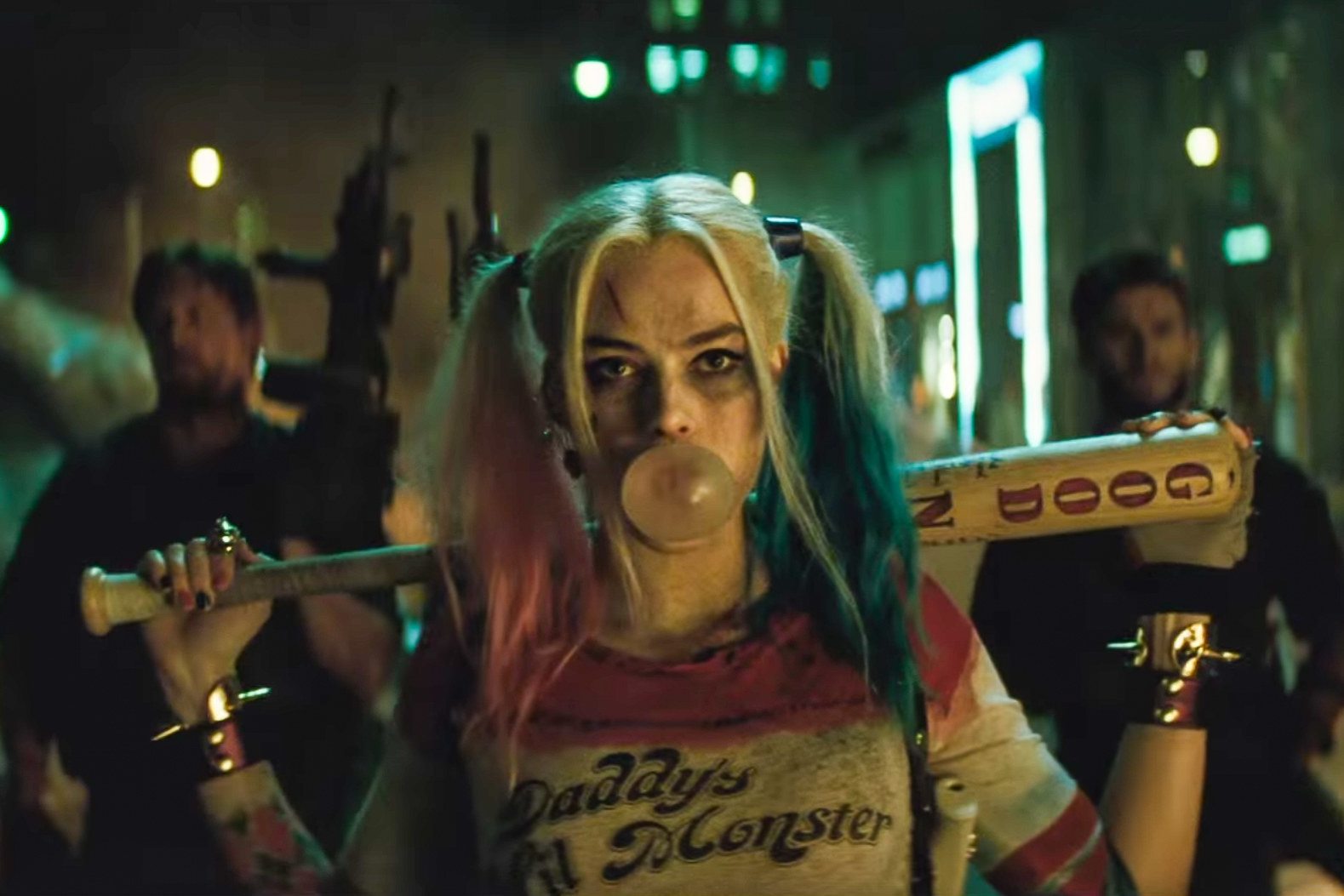
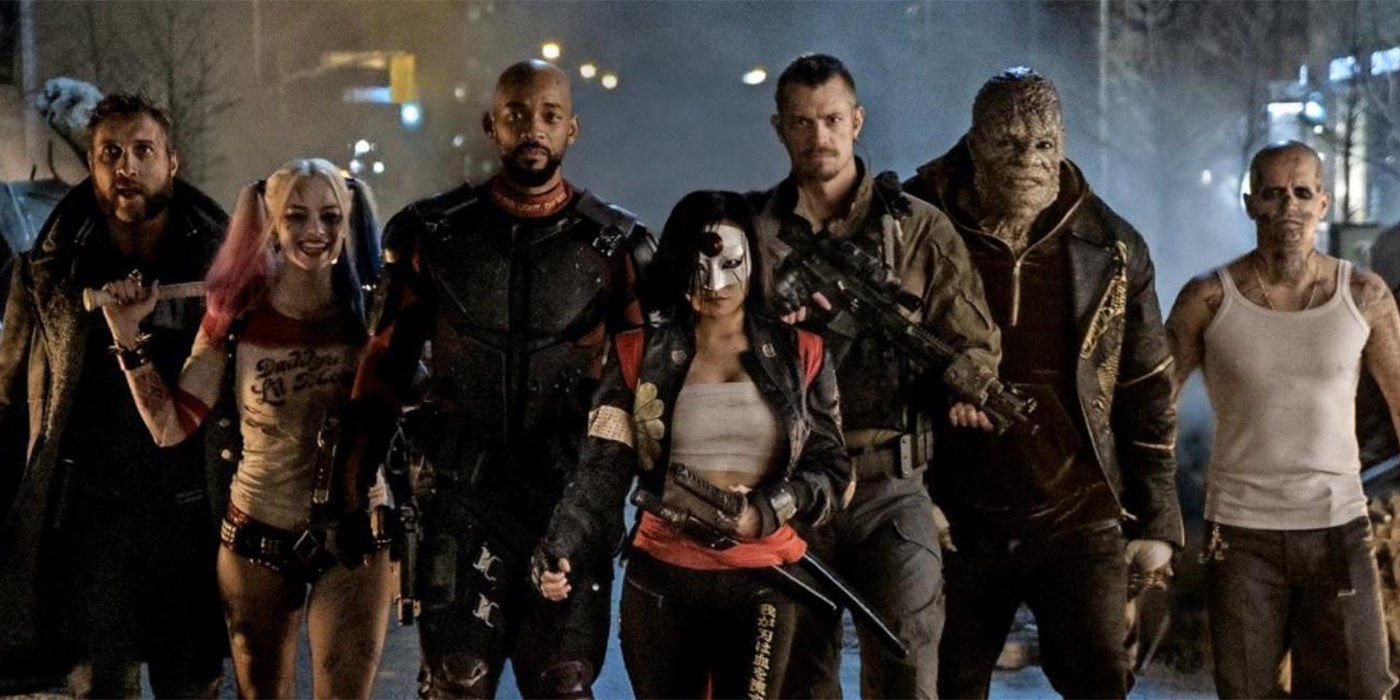
When it comes to comics that center around bad guys defeating even worse guys (and gals), Suicide Squad is one of the most lasting and recognizable of the lot.
It wasn’t the first book to be about villains, of course (though this movie is the first comic book film to have a main cast of villains as characters). But it was one of the first that was actually successful. And that’s probably because Suicide Squad essentially defined the idea of reluctant heroism found in the vilest of our society.
That’s tricky territory, because it presents a philosophical debate that modern society is mostly split on: Are people inherently bad, or are they tainted by an inherently bad world?
Fortunately, Suicide Squad doesn’t dwell on these questions for easy dramatic fodder (at least, not as much as it could have). Instead, it takes a note from some of Marvel’s recent films by emphasizing character over spectacle, at least with some of its titular bad guys.
In case you’re unfamiliar with the set up of Suicide Squad from the comics — of which the 80s run is still the best — the idea is simple. A shady black ops leader named Amanda Waller (played by Viola Davis) wants to assemble her own team of metahumans, like Superman, and unhinged specialists, like Batman, in the wake of Superman’s death from the end of Batman V Superman: Dawn of Justice.
The team is codenamed “Task Force X,” but as one of their recruits points out early on in the film, they’re really a “suicide squad” in the sense that they’re not expected to live through the mission that takes up the majority of the film. And that’s because most members of Task Force X are dangerous villains, accompanied by a Colonel and “good” metahuman to reign them in.
As noted earlier, the structure of Suicide Squad is brazenly different from typical superhero and comic book films. It’s focused and constrained to one major location, a familiar technique if you’re caught up with director David Ayer’s other work.
And the decision to limit Suicide Squad to one mission ends up being one of the film’s greatest strengths, because by the end credits, the viewer is left feeling as if they’ve gone through a significant ordeal with these characters, even if the movie doesn’t always stick the landing with some of its big moments.
There’s as much good as there is bad with Suicide Squad, in the sense that Ayer and his team succeeded at getting this movie right where it really counts — notably with standout characters like Deadshot (played by Will Smith). The problem is that like previous entries in the DC comics cinematic universe, Suicide Squad just doesn’t sweat the details enough.
These details include basic plot mapping (the opening scenes, for example, are a glaring mess), action set pieces (especially toward the end), and the film’s worst offense: its script. Though Suicide Squad has its moments of surprising and smile-inducing dialogue, a great deal of it comes off as hastily tacked on in order to elicit a reaction, usually humor.
For that reason, Suicide Squad practically forces the viewer to accept it in a very specific way. That is, it’s painted and executed as a guilty pleasure movie, and you get the sense that the movie has no aspirations for self-importance or melodrama. Which makes it an easy film to get lost in and just enjoy, without having to “turn your brain off,” for the most part.
One of the reasons the movie swings more toward guilty pleasure has a lot to do with the care Warner Bros. has put into better fleshing out its world of DC characters, and a good number of them are paraded beautifully. As revealed in the early trailers, Batman (reprised by Ben Affleck) has a small presence in this film, and it plays out about as well as his best moments from Batman v Superman, without any of the confusing quirks added to the character.
And it goes without saying that Suicide Squad is brimming with loving references to other DC stories, reminiscent of how shows like Arrow and The Flash insert subtle asides for eagle-eyed viewers. Put simply, this is the first DC comics movie that does a good job of establishing a coherent personality for this world of heroes and villains, while also integrating it in a more graceful way than we’ve seen in the past.
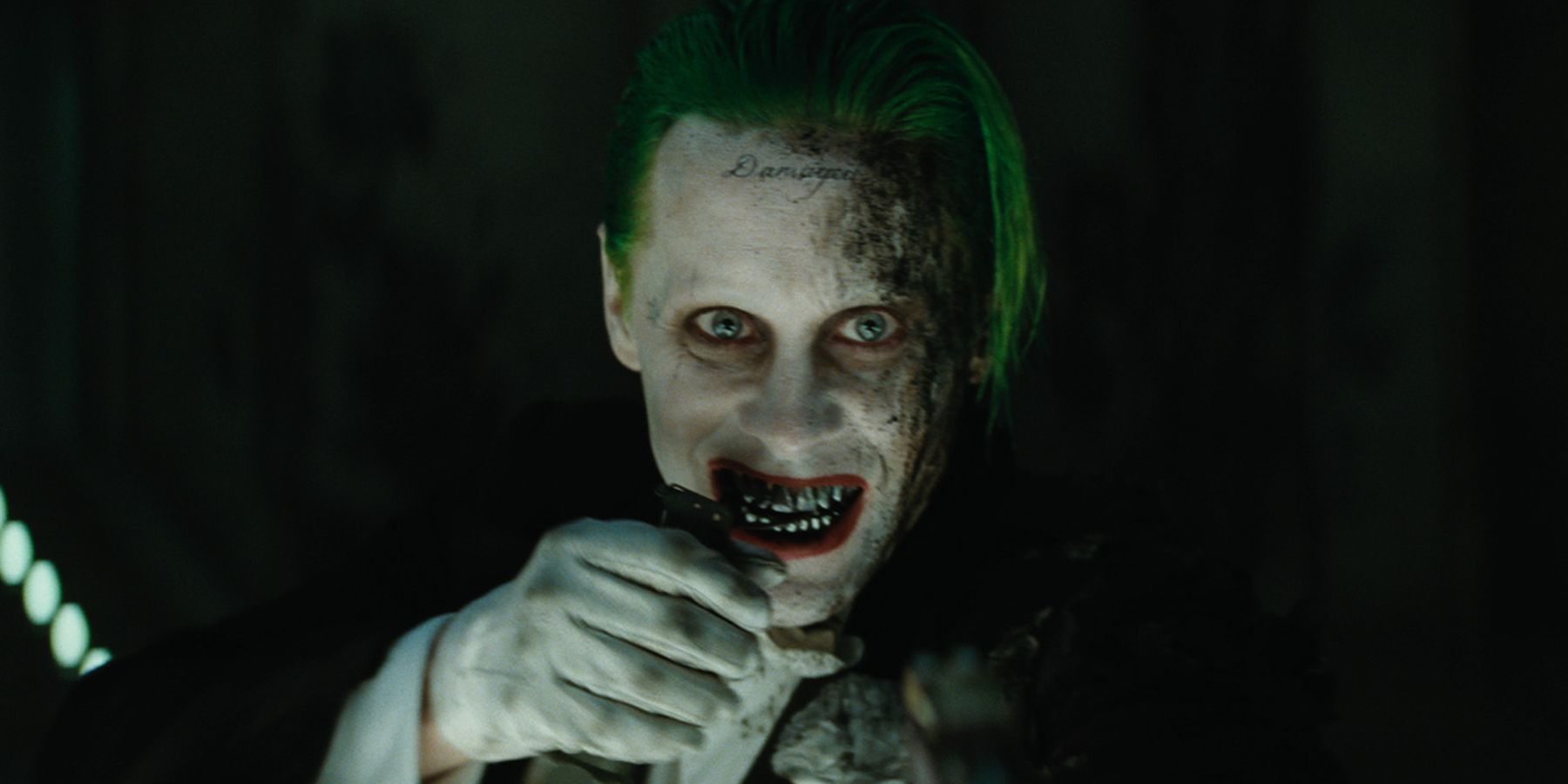
The only weak link worth mentioning is certainly the Joker (played by Jared Leto), who is balanced with the other characters in this film in a gratifying way so as not to steal the spotlight. This ends up being for the best, though, because this is easily one of the most uninteresting depictions of the Joker of all time, not just in the movies.
Granted, the movie works hard to dress Leto up as the Joker, and sparse dialogue certainly sounds like something Joker might say. But upon close inspection, this version of the Joker does virtually nothing reminiscent of what’s fundamental to the character. There’s nothing he truly does that sets him apart from a flamboyant crime boss/pimp who wants to find his girlfriend.
Yes, he wears funny costumes. Yes, he looks weird and kills people. But there is far more to the Joker than “oh by the way” scenes of him laying on a floor surrounded by knives. And that’s because his only true motivation in this film is to get Harley Quinn back. There’s no chaos, comedic insanity, or diabolical planning to anything he does or wants to do in the film. He simply acts like he is crazy, rather than truly showing it, and it’s one of the film’s biggest disappointments.
Thankfully, Joker is not the crux of Suicide Squad. Far from it. So it’s easy to overlook the shortcomings of his character in lieu of this film as its own standalone story. It’s not easy, though, to overlook the fact that too many characters in Suicide Squad have poorly fleshed out character ideologies that make sense of their own payoffs toward the end. They do it in spades for Deadshot and Diablo, but that’s about it.
Lastly, the soundtrack does little to enhance or even complement the story, instead only reminding viewers that Guardians of the Galaxy did a much better job integrating a playlist with the rhythm of its plot (as proven by the film sharing one of the same songs from Guardians). In Suicide Squad, it really just feels like the music was added out of obligation, not because it was essential to the scene it was put in.
And better thought (and edits) put into the scenes is all it would have really taken to make Suicide Squad a better movie than what we’ve gotten, which is a guilty pleasure that only looks good by comparison to the in-universe movies its attached to.
Grade: C+
Extra Credits:
There’s a mid-credits stinger and…well, it’s not that relevant or surprising, honestly.
I’m not a fan of most David Ayer movies, so Suicide Squad sort of defied the odds in my case. According to all the evidence, I should have hated this movie.
The chemistry of the cast is one of the film’s biggest strengths, as emblemed by the fact that a lot of them got “SKWAD” tattoos for the movie.
It’s not saying much, but this is my favorite live-action depiction of the Suicide Squad. That’s what full Will Smith can do for a film.
A standalone Harley Quinn movie featuring other DC femme fatales has been announced by Warner Bros., but it’s likely that the success of Suicide Squad will still determine whether or not that actually happens.
For once, Cara Delevingne wasn’t one of the worst characters in a movie.
I’m Jon and thanks for reading this. You can subscribe to my posts by clicking “Follow” in the right sidebar. Or just say hey on Twitter! @JonNegroni
Every week, readers send me their unpopular opinions, and on Unopinionated, I explain why they’re unpopular in the first place.
From my inbox: “Sad to see you hating Batman v Superman, when The Dark Knight Rises has to be one of the worst Batman films of all time. That’s not an unpopular opinion, it’s just fact.” – Cheyenne
It’s interesting how quickly some have turned on The Dark Knight Rises (TDKR), a powerfully ambitious film that is quite easy to unpack for various flaws and plot holes that we’ve all come to expect from Christopher Nolan’s brand of filmmaking.
Not that this is an excuse. TDKR is absolutely a flawed movie. Part of that might have to do with how it is justifiably compared to its predecessor, The Dark Knight, which has cemented itself as a lasting future classic within the pantheon of superhero movies (despite the fact that it is far removed from what constitutes a typical superhero film).
Expectations were always going to be lopsided with TDKR, so it was surprising to see mostly positive reviews surface as the movie was released. As the years have gone on, however, there’s been a quiet movement to shift the consensus of that film to something much less grandiose than the two Batman films it wrapped up.
And I’m among the fans of this movie who wished for a more cohesive film, structurally. TDKR has not one, but two “rebirth” narratives it forces its Bruce Wayne to endure. Multiple time skips, an overabundance of key players, and some familiar beats from TDR are just a few complaints that weaken the overall product of this film, but they don’t even come close to undercutting how potent this conclusion truly was.
You don’t owe these people any more. You’ve given them everything. – Selina Kyle
What the film does spectacularly is stay on target with what Batman Begins set out to do in the first place (and what TDK carried on so superbly). That is, these movies have always been about holding a mirror up to the deepest fears we have about the post-9/11 millennium — the deconstruction of American capitalism through outside forces, terrorist attacks based in nihilism, and highly invasive government tactics — only to show us how ludicrous it is for us to think that one man can save us all.
Of course, we root for him anyway.
TDK played with this direct parallel by pitting the “clean” politician, Harvey Dent, against the vigilante secretly known as Bruce Wayne in a love triangle, of all constructs. By TDKR, audiences are convinced that no one man can save Gotham, but perhaps everyone can unite in righteous fear against a force they don’t understand. This, of course, speaks more relevantly to current events of 2016 even more than 2012, when Barack Obama was poised to win his re-election and the Occupy movement was in full swing.
TDKR makes it clear that violence always has a purpose, whether it’s for the sake of violence as illustrated in TDK, or to be a forced resurrection through the events of Batman Begins. There’s a reason Nolan chose to end this trilogy on the shoulders of the League of Assassins, whose seemingly anarchistic goals are based in some eerily sound logic carried over from the first film.
The film actually begins during a time of peace, eight years after the events of TDK. This peace, of course, is based on the lie that Harvey Dent (and his morals) survived his own death. The white knight was chosen over the dark knight, except the dark knight is the one who made this choice possible.
Speak of the devil and he shall appear. – Bane
Forced into exile, Bruce Wayne has spent this time letting others run the city, and even his company, believing once and for all that the city no longer needs a “Batman.” Meanwhile, a new threat named Bane has set a plan into motion that couldn’t be more ambitious: an actual takeover of Gotham City, effectively making it the hostage of a rogue network of fascist mercenaries.
Three new faces enter Wayne’s life as this plan takes off, and they couldn’t be more dissimilar. A young cop named John Blake represents the faith Wayne once had in the Batman role. Miranda Tate, a board member of Wayne Enterprises, helps Wayne enact a new plan to create sustainable and clean energy for Gotham. And the wildcard is Selina Kyle, a thief who shifts between wanting to save the world or giving up to profit off of the chaos.
A good part of the film is used exploring what these new characters mean to Bruce Wayne as he embarks on a war against Bane, but also against his own uncertainty and entanglement with the darkness that he hasn’t been able to shake since the Joker came around.
I don’t know why you took the fall for Dent’s murder, but I’m still a believer in the Batman. – John Blake
But it’s truly the more established cast that helps make the spectacle of TDKR worth caring about. Gary Oldman, Michael Caine, and Morgan Freeman all return to reprise their roles as a shade of Bruce Wayne’s standalone mentor. And Christian Bale himself delivers a more compelling, pain-stricken Wayne than even the TDK, but mostly because that movie did the work to set him up.
And that’s the biggest advantage TDKR has, and it’s what helps it overcome its various shortcomings. The film is improved by what came before it, and it also improves them, as well. While franchise blockbusters like The Avengers are to be commended for their commitment to world-building, TDKR is to be celebrated for how complete its story is across its three offerings.
Nolan does a splendid job balancing energetic set pieces (the opening hijack scene is a highlight) with what would descend into mindless fantasy, otherwise. And they save TDKR from being devoid of any fun or awe considering how lacking this film actually is of Batman himself.
A hero can be anyone. Even a man doing something as simple and reassuring as putting a coat around a young boy’s shoulders to let him know that the world hadn’t ended. – Batman
But when viewed as a continuation, not a standalone film, these flaws suddenly become less entrenched with the film itself. From start to finish, TDKR works more as an honorable resolution, rather than a climactic high achieved by TDK. Perhaps we wanted something more groundbreaking, or even faithful to the comics that founded this character and how his story ends in our own imaginations. Our expectations aside, TDKR still delivers something that makes sense within itself.
Grade: B+
Do you have an unpopular opinion you want challenged? Let me know in the comments and I’ll take it on in a future Unopinionated article. Or you can email nowconspiring@gmail.com
I’m Jon and thanks for reading this. You can subscribe to my posts by clicking “Follow” in the right sidebar. Or just say hey on Twitter! @JonNegroni
Sorry, everyone. It turns out we have to ditch enjoying our entertainment a certain way because the managing editor of Movie Mezzanine thinks they are, and this is a direct quote, “truly toxic.”
Alright. Let’s do this.
In his latest editorial, titled “Why Fan Theories are Destroying Film Discourse,” film critic Josh Spiegel deconstructs the modern fan theory, directly calling me out on two theories I’ve written on this very site. For that reason, I think it would be rude not to respond, right?
He starts the essay with a few examples to set up his case.
Did you know that, in The Dark Knight, the hero was actually the Joker? It’s true—if you buy into this recent theory posited by a user on Reddit.
Interesting that he doesn’t link to the post itself, just an article on SlashFilm reporting on it. I mean, that’s not egregiously terrible or anything…but why not just link to the original post? Wouldn’t it be fairer for readers to evaluate the original version instead of a shortened one that leaves out his full explanation?
Also, I don’t get his logic with this sentence: “It’s true—if you buy into this.”
Well, no, something isn’t “true” just because you believe it. I suppose, then, it is true to you, but if Josh is subtly implying that truth is relative, then doesn’t that make this entire article pointless?
And did you know that Andy’s mom in Toy Story is also the grown version of the girl named Emily in Toy Story 2 who owned, and then discarded, Jessie the cowgirl?
YES! Wait, is this a trap?
No fooling, according to a postby the same guy who has a far broader theory that every Pixar movie—yes, even the Cars movies—are connected to each other.
Well, no, that’s not true. If he had read the actual post he’s linking to, he would have noticed that I didn’t, in fact, come up with the original theory for Andy’s mom being Emily. It was presented to me, and I made the case for it with my own research.
So long, logic.
And in the most mind-blowing one of all, it’s even been suggestedthat the snarky kid at the beginning of Jurassic Park who Alan Grant threatens with a raptor claw grew up to be none other than Chris Pratt’s hero character in Jurassic World.
Again, Spiegel links to the article reporting what someone posted on Reddit, instead of just the original posting. Does Spiegel hate Reddit or something?
Also, I actually like this theory about Jurassic World. It’s interesting. It’s a fun connection. It makes enough sense, and it doesn’t contradict anything presented in the respective movies. So, what’s the problem?
There are an embarrassingly large number of fan theories floating around the Internet, and the emphasis here should be on the word “embarrassingly.”
It’s embarrassing to have a large number of discussions about movies? I thought fan theories were destroying film discourse, not strengthening it? Oh, Josh, let’s just cut to the chase, friend.
What these ideas amount to are fan fiction, not fan theories.
Wait, but what are “these ideas” you refer to? I didn’t leave a sentence out. You’re saying that fan theories are fan fiction, but they’re not fan theories. What?
And even *terrible* fan fiction gets to be a book!
Also, fan fiction isn’t as broad a term as you’re alluding. Unless someone is actually writing a fiction, it’s not fan fiction. And even if it is, some fan fiction can be pretty good (don’t see above), and a lot of people read and love it. In a way, the celebrated Star Wars novels are a form of fan fiction cleverly called “expanded universe.” Why is that acceptable, but an interpretation of a movie you just saw isn’t?
I have a feeling he’s not going to answer the question and instead bring something else up.
Few, if any, of these theories ever get a direct response;
They’re not supposed to get a direct response. That’s not the point. Fan theories, in a broad sense, are an experiment by moviegoers to let themselves interpret movies they love in new and different ways. They don’t have to be “true.”
That’s like saying your interpretation of 2001: A Space Odyssey isn’t worth your time because Kubrick hasn’t directly responded to it from the grave.
OR HAS HE?
..the closest in recent memory is Pixar director Lee Unkrich playfully retweeting a comment or two from followers of his who treat the so-called Pixar Theoryas utter silliness.
Well first of all, it’s not “so-called.” It’s just called.
Also, why not just link to the Tweet itself?? Again, Spiegel links to the blog post about the Tweet. I’m feeling an Inception fan theory coming on here…is…is Josh Spiegel Dom Cobb? Makes sense.
Oh, and you’re linking to the wrong Pixar Theory. That’s the website inspired by it, not the original post. I’m guessing Spiegel doesn’t care.
[UPDATE: Movie Mezzanine graciously fixed this error and sent the link to the correct spot. Credit where credit is due.]
But fan theories are becoming as prevalent to modern film culture as stories about casting rumors or reviews, and they are becoming truly toxic.
Toxic, eh? That’s strong language. I mean it implies that fan theories themselves are harmful. Probably to film discourse! Let’s read why.
It’s easy to imagine the counterargument from those in favor of fan theories: What’s the harm?
Right. That’s a big one.
The Dark Knight doesn’t become better or worse because of a Reddit user’s theory about the Joker, as silly as that theory might sound.
Nods.
The Toy Story films are still marvelous whether or not Andy’s mom is Jessie’s old owner.
True that.
Jurassic World is still a resounding disappointment,
Wait, what? A resounding disappointment? That’s heavy hyperbole, especially considering the adjective is implying that we’re still feeling it as a disappointment months later.
Never mind that Jurassic World is one of the top-grossing films of all time, or that it managed to score good reviews when most people were expecting another terrible Jurassic Park sequel.
Never forget.
I get why you may not have liked it, Spiegel, but that doesn’t make it an ongoing disappointment to everyone else.
The problem is that these theories, online, become as inextricable to a vast amount of readers as the actual movies themselves.
He just asserts this. No evidence. No examples. Not even a bloody anecdote. Spiegel, in all his wisdom, just declares that fan theories are confusing people because there’s a lot of them. Does he not think we’re smart enough to read fan theories? And then he says the movies should be confusing us. What? What’s confusing?
This argument makes no sense to me because it implies that people care more about fan theories than the movie themselves, but liking the movie is the actual prerequisite to even wanting to read a fan theory.
So what’s the problem? People aren’t overthinking movies the right way? Is that where this is going?
Worse still, these fan theories are quickly replacing actual critical analysis,
Last I checked, people still critique movies. Like a lot of them. All the time. Do you have, maybe, any evidence that there are fewer articles that analyze movies the way you want them to be analyzed?
covered by a large amount of entertainment websites in part because the content beast must be fed,
Exactly! Like how celebrity gossip ruined film discourse because the magazine content beast had to be fed. Should we hate that, too?
and in part because it takes the work out of the hands of the sites’ writers and into the hands of random commenters who have too much time on their hands.
Look, I’m all for giving writers more work to do. Like sourcing the actual comments instead of just linking to the blog post about them. (But I guess he’s doing that to strengthen his point.)
And we don’t totally disagree on this. Some fan theories are pretty bad, and it’s annoying when a website will feature them just to get clicks. So why are you attacking all fan theories? Some of them are fantastic, and yes, worth talking about.
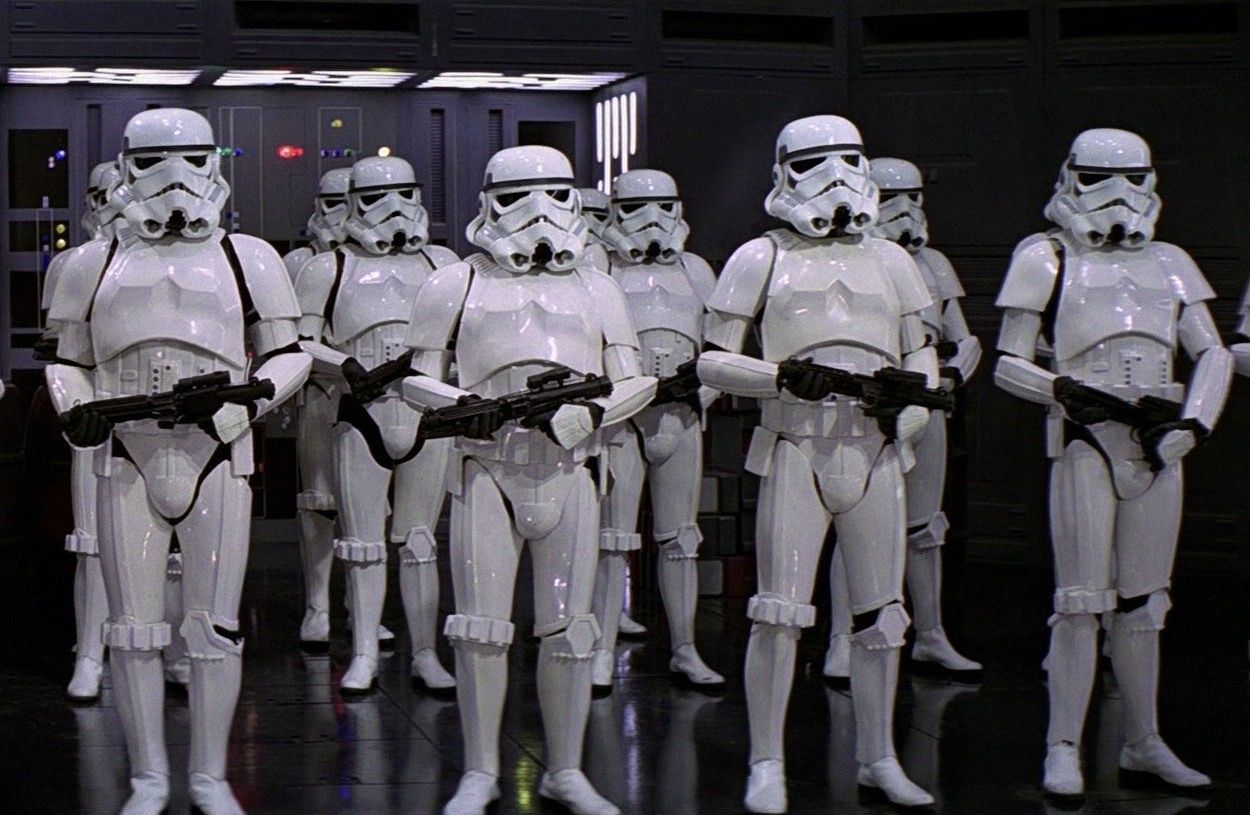
Like “the stormtroopers missed all the time because Vader ordered them not to kill his son. Oh, and he knew Luke was his son the whole time.”
They’re not from “random commenters” as you so condescendingly refer to them as. They’re human beings who love movies just as much as you and I do.
I don’t care what you think about them, Spiegel. Loving movies is the only qualifier you need to join the discussion, EVEN if you have free time (gasp).
So what’s the difference between a fan theory and a deep-dive exploration into one aspect of a film?
Hmmm…How many flattering adjectives you’re willing to assign to them?
The former is the product of a person choosing to fantasize about what they would do if they had made the film they’re watching,
No, that’s not it at all. Last I checked, not everyone wants to be a director. Maybe I’ll check again. Checks. Nope.
and the latter is the product of a person paying attention to the movie they’re watching and responding in kind.
Wow. Just…wow. Spiegel isn’t using words like “some” or “generally.” He’s definitively saying that people who write fan theories aren’t paying attention to the movie.
I couldn’t have written any of those things because I wasn’t “paying attention.” I was too busy also writing fan theories, and those are bad.
Often, the fan theories that send the Internet—specifically its social-media avenues—into a tizzy rely heavily on the fact that they aren’t based directly on what’s present in the text.
True. Most of these theories end up being rubbish, or not completely thought through.
Take, for example, the notion that Owen Grady in Jurassic World is the kid in the opening of Jurassic Park. That certainly sounds cool, and would be a nice, if random, tie-in to the 1993 film. But what’s the evidence backing this theory? Well, see, the kid in Jurassic Park is only credited as “Volunteer Boy.” So his name could be Owen! Also, Chris Pratt is only a year older than the actor who played Volunteer Boy, so the timeline could fit! Also…um…hey, look, something shiny!
Seriously, Josh? Why so mean-spirited in that last line? We get it. You think fan theories are childish. You don’t have to be a tool about it.
Take a long, Lohan, look at yourself.
Also, the evidence for this Jurassic World theory comes from the fact that you can reasonably see the people who made the film creating a character who embodies this moment from the first film. It actually informs the story as a whole.
That said, and I can’t stress this enough, this theory doesn’t have to be true. But it is a fun thought experiment that you can speculate about because it does happen to fit with the source material so nicely.
The majority of the work to make this theory seem remotely logical is done behind the scenes, as someone imagines what could have happened to this kid after Alan Grant scratched at his stomach with a raptor claw.
Yeah, who needs imagination? Certainly not people who watch what is essentially an illusion on a big screen.
See, much of what we take from a movie has to come from thinking external of what’s being presented. This is because the audience makes an emotional connection with what’s happening, but not every director can spoon feed you the context. That would alienate the audience.
We have to fill in those blanks ourselves most of the time, which leads to…you guessed it…film discourse.
This same vagueness plagues the majority of fan theories. Yes, it’s not impossible that, in the Toy Story films, Andy’s mom could have a deeper connection to one of his toys than he or even she realizes. So many existing fan theories rely on the first four words of the previous sentence: “Yes, it’s not impossible.” The lack of impossibility, however, doesn’t automatically prove a theory correct; it merely suggests that it’s not impossible for something to be true.
Again, these theories don’t have to be true. That’s not why most people come up with them. It’s about interpreting small clues in new ways that get you to think about the film. When someone reads this theory for the first time, they’re often pushed into rewatching the movie, and (guess what!) paying attention to it.
Fan theories are no substitute for critical analysis, yet they have quickly become inseparable for so many readers online.
This is Josh’s main argument, and I get why he’s so concerned. Because it’s true that fan theories are not a substitute. But that’s a complete misunderstanding of their role. They’re not meant to be a substitute, either. They never were.
Instead, fan theories in their nature are meant to be a form of interpretation through imagination and passion for the subject material. They’re meant to answer questions that don’t have to be answered, but create conversations between the people who answer these questions in different ways.
Sometimes, fan theories are answered by the voice actors themselves.
Analogy time!
Fan theories are like movies. There are good movies, and there are bad movies. That doesn’t mean we should get rid of all movies because some are bad. And bad movies certainly don’t replace other art forms that approach entertainment in a different way. I can read a fan theory and a deep analysis by A.A. Dowd. And I can enjoy both of them.
On the other, fan theories pose as critical analysis in spite of featuring neither criticism—often, these are posed by people who would proudly consider themselves fanboys or fangirls, never pausing to think about the built-in imperfections of even their favorite films—nor analysis.
Translation: Josh thinks you like movies too much. Go figure.
Right, because in his world, people who overthink movies don’t criticize them. That is an actual opinion held by a film critic.
Popular films like Jurassic World or The Dark Knight or Toy Story beg to be debated for their themes.
And nothing else! Only themes!
Hey, wouldn’t that mean that critical analysis of themes is destroying film discourse? What if someone wants to debate the characters in the movie, or how some of the movies share nods to each other?
Nope! To save film discourse, we must prevent it from happening the way we want it to. Shrug!
As ubiquitous as they may be, the discourse surrounding these films frequently sidesteps a conversation on nostalgia, on childhood heroes, on the possible emptiness of vast spectacle.
This sentence exists in a world where The Nostalgia Critic is one of the most widely viewed critics in new media.
OK, maybe some people talk about Nostalgia Critic more than nostalgia itself.
Fan theories now drive the discourse on these films, and to everyone’s detriment.
No, they just exist. That’s all they do. Yes, some are more popular than others, but how is that in any way proof that they’re replacing anything?
I browse the Top and Trending URLs almost every single day. You know which articles about movies I see the most being shared? Not fan theories. Those make up a small percentage, because the reality is that a good fan theory is hard to discover, while pointing out what you think about a movie is pretty easy, and a lot of people are pretty interested in critical analysis.
You know what the top trending links were for the day I wrote this (September 2, 2015)? The top link was an image of Bryan Cranston as LBJ in the upcoming movie, All the Way.
Yes, this is actually happening.
The second most shared link about movies (including via social media) was a longform piece by Italo Calvino about movies that influenced his youth, adapted from a published autobiography.
So that’s everything movie-related from the top 100 links. Yet I don’t see a single “fan theory” shoving its way past articles that are, in Spiegel’s eyes, more deserving.
For some odd reason, Spiegel feels threatened because a good article he probably wrote isn’t as famous as a theory about the Joker from The Dark Knight. And I guess I sympathize. That sounds weird, and I’ve been there.
Does that mean fan theories are inherently bad, though? Absolutely not. You could only argue that they’re toxic if you actually have an argument that points out how they prevent people from deep analysis.
But instead of doing that, Spiegel has chosen to create a false dichotomy between analysis and analysis fueled by imagination. By doing this, he tries to makes you feel dumb for liking fan theories instead of something he likes.
That’s not an argument. That’s a childish guilt trip.
On their own, fan theories are, indeed, harmless; if they existed next to critical discussions, and did so in lesser standing, they would be a fun distraction.
“Fan theories wouldn’t be so bad if people liked my articles better.”
But the more fan theories are treated as serious, thoughtful salvos in a debate, the more ridiculous they appear to become.
To you.
Here’s a new fan theory to ponder: making these things die a quick death will improve the world of film immeasurably. What more proof do you need?
All of the proof you failed to deliver thousands of words ago.
And I’m puzzled by the raising of the stakes toward the end. Now we have to make fan theories die a quick death? What’s going on, Josh? Did a fan theory steal your girlfriend or something?
Seriously, he went from talking about how fan theories are harmless to calling for their immediate death. This sounds a lot like a dictatorship to me, rather than letting people who love movies make up their minds on how they want to approach the entertainment they like.
In other words, not everyone thinks like a film critic. And that’s OK.
You. Are going. To do great, today.
This entire article is a classic case of subjectivity rearing its opinionated head. The truth of it is that Josh Spiegel is an intelligent film critic. I actually like his work a lot and enjoyed his review of Inside Out, among others. We don’t always agree, of course, but he’s good at adding great points to any given discussion.
But this idea that fan theories are making everything worse is a true moment of FUD (fear, uncertainty, and doubt).
The quick of it is that Josh doesn’t like fan theories. So he doesn’t like that you like fan theories. Then he accuses you of not liking the type of analysis that he likes (even though you probably do). Then he calls for the death of said thing that you love.
No thanks.
[UPDATE] The original author of the “Joker” theory (who goes by the username, generalzee) responded to Spiegel’s post via the comments, and I thought it would be good to share it here as well. Source.
As the person who wrote the Joker Fan Theory in question, I can’t believe how wrong and insecure this article sounds.
First of all, I never intended for my fan theory to be a critical analysis of The Dark Knight. Nowhere in my theory do I talk about the framing of shots (which I could have), or the acting (which could have been a major point in such a theory), or even the uber-dark mise-en-scene, which may have fully supported my theory, and highlighted how, thematically, all three main characters were living in the dark. Instead, I made an arguably compelling argument that the film could be interpreted another way.
What I find worse than that, though, is the fact that you claim that I ignored facts that are DIRECTLY MENTIONED in my theory. I explained both the boats and Dent’s scarring (Both physical and emotional) directly in the original piece. Of course, I wouldn’t expect a modern blogger to actually check his sources, and I’m sure you just read the Mashable version at some point, but it annoys me that you would make such an attack on fan theories WITHOUT EVEN READING THE ONE YOU’RE TALKING ABOUT.
So please let me be clear that this response IS intended to be a critical discourse on your work. What I see is a self-proclaimed critic who is horrified by his perceived loss of power to a basically unrelated group of people investigating films in a way that he, himself, has arbitrarily deemed below himself. This is reflected in his weak, but clear call to action to end Fan Theories as if they are going to harm legitimate film criticism. The panic he feels reflects strongly in his hastily researched (Really, how long did it take you to read the titles of the top 5 Fan Theories on Reddit?), and poorly thought-out criticism of a culture that he would attempt to appropriate into his own, only to discard it immediately.
I’m Jon and thanks for reading this. You can subscribe to my posts by clicking “Follow” in the right sidebar. Or just say hey on Twitter! @JonNegroni