Marvel Has Been Successful Because It’s Better at Being Different

marvel better different

Until the end of the “superhero golden era” finally comes, we won’t be able to analyze the full impact that Marvel Studios has had with its cinematic universe of movies. But even though we don’t have the full picture at our disposal, everyone has their own reasonable guess for how and why Marvel been the dominant superhero movie franchise for nearly a decade, in terms of both critical and fan reception.

Some of the effects of the Marvel Cinematic Universe (MCU) are quite obvious, and I think that’s why vague observations about Marvel Studios are tossed around by its naysayers. When you think of shared universe movies — that is, movies that share the same characters and other sandbox elements without being direct sequels — you might feel the urge to groan a bit, especially if you watch and keep up with a lot of different movie franchises that all strive to replicate what Marvel did so well with Iron Man in 2008.

Sony tried to kickstart a Spider-Man shared universe of villains and ultimately failed. Universal has long been planning a shared universe of monster movies, citing they could have the “Avengers” of Dracula, the Frankenstein monster, the Wolfman, and more. Even a Hanna-Barbera cinematic universe is reportedly in the works, planned to kick off with a new Scooby Doo movie. And this year’s Ghostbusters ends with a universe-setting teaser straight out of the ambiguously defined Marvel formula.

Marvel’s most direct rival, and for several obvious, yet key reasons, is DC Comics, which Warner Bros. owns the exclusive rights to. After a hugely successful trilogy of Batman movies, all helmed by Christopher Nolan and universally praised by fans and critics, Warner Bros. took the next logical step toward establishing a shared universe of their own that could do for Wonder Woman and the Flash what Marvel managed for Iron Man and Captain America, just to name a few.

marvel better different

Remember, just one year after Nolan’s Batman trilogy ended with The Dark Knight Rises, Warner Bros. released Man of Steel, the perfunctory beginning of what was meant to be something completely different compared to anything put out by Marvel Studios.

Except, well, Marvel has already  been “different” by its own standards for years, and it’s found great success doing so, while DC Comics hasn’t. At least not on the same scale.

To be fair, Man of Steel and Batman v Superman: Dawn of Justice were not financial failures, but they did fail to live up to their profitable potential, making less money domestically than Deadpool, which is based on a character far less popular and recognizable than Batman, Superman, and Wonder Woman. And even more recently, Suicide Squad has been panned by critics for sharing a lot of the same flaws of these movies, though it will still open to huge box office numbers, regardless.

What’s odd, then, is that the films have been criticized by many for being too different, using phrases like joyless and dark to color a picture of a movie that doesn’t deliver the same experience viewers got with most of the Marvel movies.

marvel better different

Supporters of these DC Comics movies have a right to call out this opinion for being intellectually dishonest. Of course a movie like Batman v Superman: Dawn of Justice is different, they say. If it were the same formula as a movie like The Avengers, then critics would complain just as feverishly.

Both sides of this argument have it wrong, then. Because what they both forget is that while there is a bare-bones formula to the Marvel movies that makes them feel cohesive — that is, it’s easy to believe the movies exist in the same universe at all — none of them are all that similar to any of the others in just about every other way, unless the movie is a sequel, and even then, Marvel movies have a habit of changing entire subgenres in between their sequels.

One of the best and most famous examples of Marvel being “different” involves the entirety of what sets up the first Avengers movie, which serendipitously released the same year as The Dark Knight Rises. The very concept of setting up an ensemble superhero film after several standalone pictures that establish the characters was brand new at the time and, more importantly, untested.

Yet The Avengers is the highest-grossing superhero film of all time and was universally acclaimed by moviegoers, which holds up even today.

marvel better different

It’s fair to judge Marvel for being good at being different based on the fact that people loved The Avengers, despite how risky the structure of it was, and because it provided a sizable return on investment both financially and even culturally, hence we’re even having this debate about superhero movies being different.

What’s even more interesting, though, is the fact that Marvel movies have continued to be different and surprising, even though they have a proven formula they could repeat on end to minimize the risk of failure.

For example, the Marvel films that have truly defied expectations include Guardians of the Galaxy and Ant-Man, arnhich were both proven hits for the studio, despite being completely different from any other Marvel film in tone, structure, and many other crucial elements.

Guardians of the Galaxy is an action comedy set in space, and most of its characters aren’t even human. That’s a far cry from any other comic book film, period, let alone Marvel movies like Iron Man and even Thor. The premise of Ant-Man is absurd enough, despite the movie actually taking place on Earth. Yet it feels so different as a superhero movie because first and foremost, it’s really a heist film with bits of Edgar Wright’s unique editing style thrown in.
marvel better different

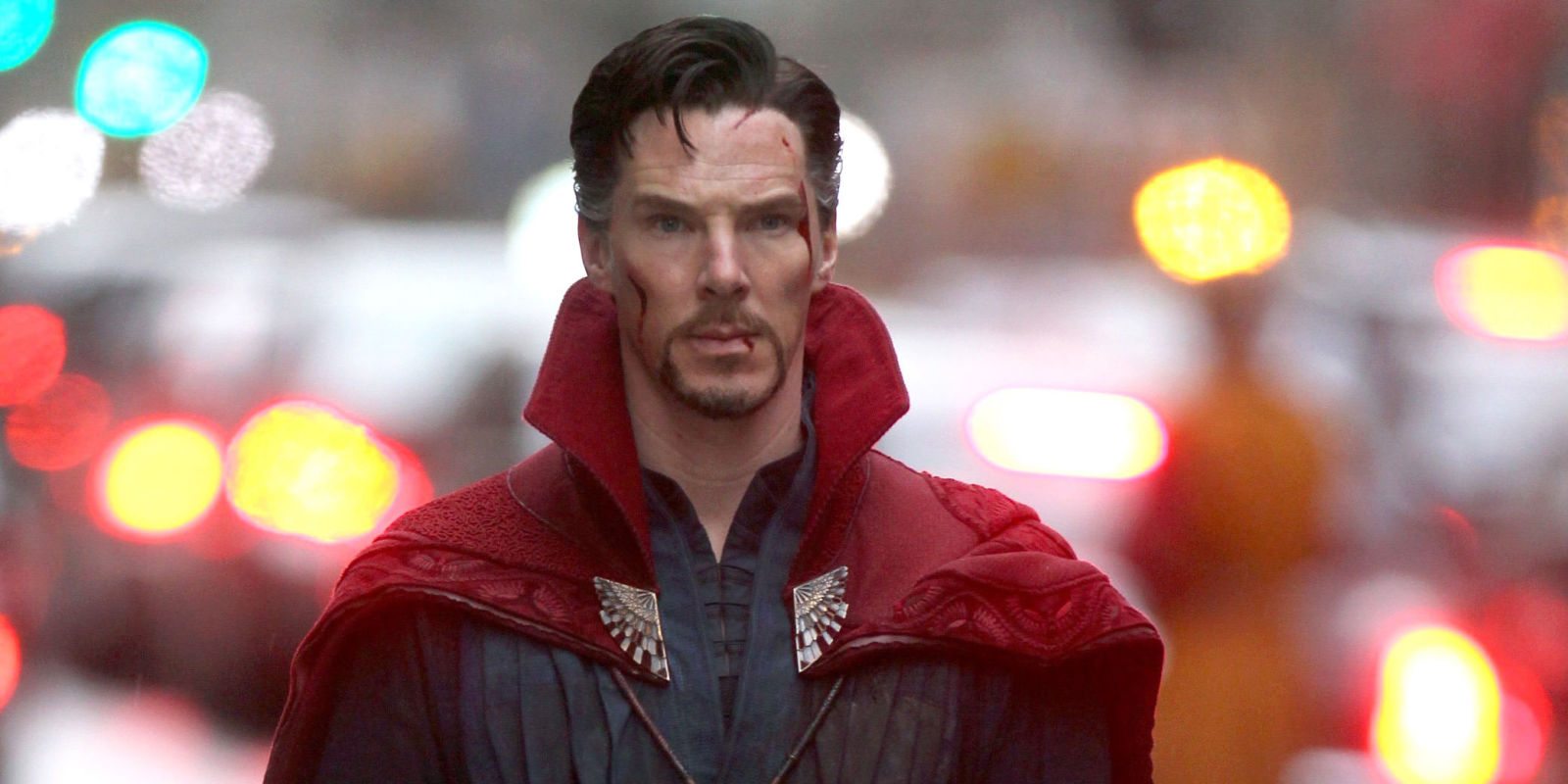
The upcoming Doctor Strange, set to release this November, is also a movie that — judging by the marketing and previous knowledge of the character — looks and feels different from previous Marvel offerings, because it seems to be tackling unchartered territory in terms of fantasy elements and dimensional science for the hero of that movie to experience.

These movies, excluding the as of yet unseen Doctor Strange, have been hits with both critics and casual audiences because yes, they’re different. So it’s strange, then, when both critics and naysayers of Marvel movies speak as if this cinematic universe has a firm license on vague storytelling elements, like humor and quipping. There’s a desire for DC to be the other side of the coin, different and more progressive than what might be called a mainstream superhero franchise with Marvel.

The problem with that desire, though, is that Marvel has already been the other side of that coin, and the other side of many coins that they, themselves, have inserted into the zeitgeist of superhero films. They don’t always get it right, of course, and some of their risks have been paid off better than others, but if DC should take notes on being “different” for the sake of surprising and delighting its fans, it should really be paying more attention to Marvel. Not less.

Because being different, while a good start, is not a merit on its own. Fantastic Four was different, which we can all agree on. But that definitely didn’t improve what was inherently flawed with that film. A non-Marvel movie that’s great at being different is Deadpool, made by Fox, proving that a superhero film doesn’t have to be made by Disney in order for it to be beloved by just about everyone old enough to see it.
marvel better different

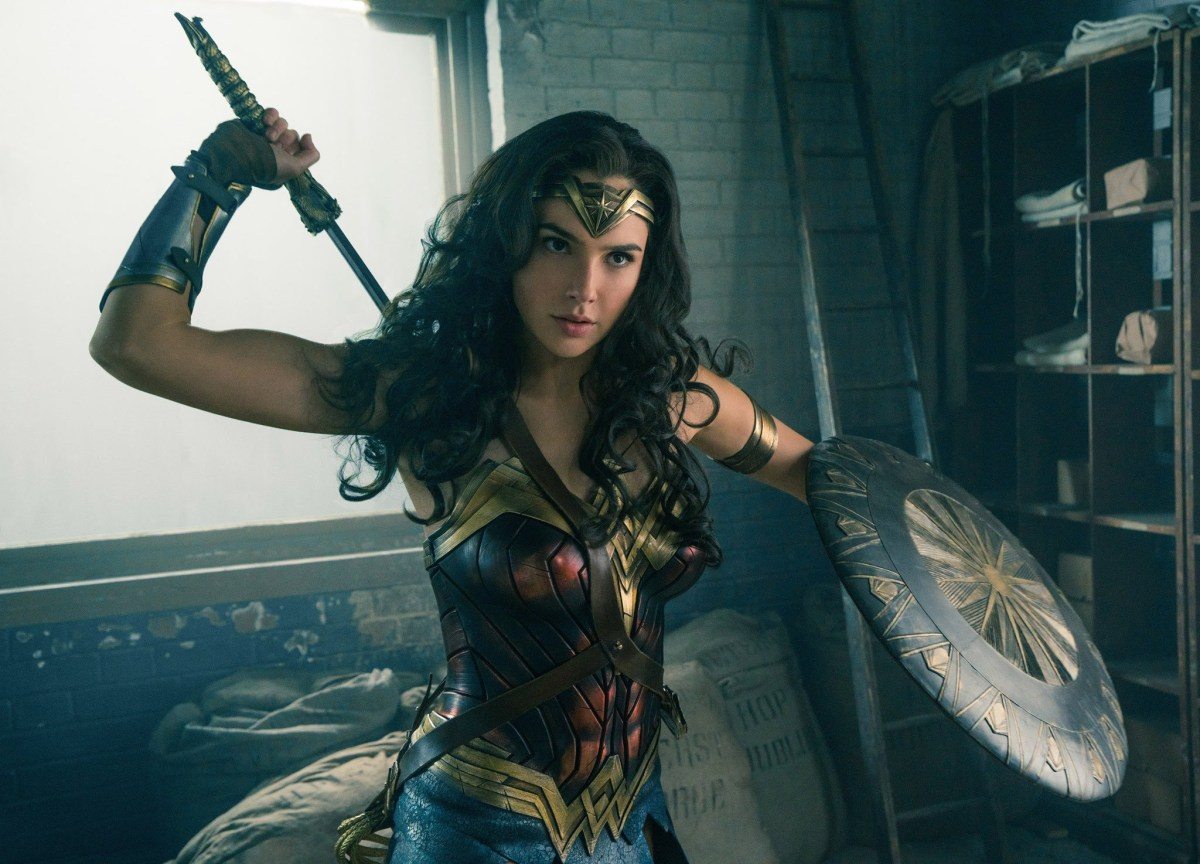
I still have high hopes for DC Comics moving forward, though not nearly as high as I used to three years ago. But if you’re reading this and feeling a bit alienated because you want DC Comics and Warner Bros. to keep taking risks and producing films with these iconic characters that demand to be different from what we’ve seen before, then you can definitely take solace in one, major thing: The DC Comics movie universe under Geoff Johns — their new Chief Creative Officer and co-developer of The Flash on CW — kicks off next year with Wonder Woman.

And from what we’ve seen so far of that movie, the future could still be quite bright (not dark) for DC Comics.


I’m Jon and thanks for reading this. You can subscribe to my posts by clicking “Follow” in the right sidebar. Or just say hey on Twitter! @JonNegroni

Unopinionated: ‘The Dark Knight Rises’ Is Better Than What You May Remember

dark knight rises unpopular opinion

Every week, readers send me their unpopular opinions, and on Unopinionated, I explain why they’re unpopular in the first place.

From my inbox: “Sad to see you hating Batman v Superman, when The Dark Knight Rises has to be one of the worst Batman films of all time. That’s not an unpopular opinion, it’s just fact.” – Cheyenne

It’s interesting how quickly some have turned on The Dark Knight Rises (TDKR), a powerfully ambitious film that is quite easy to unpack for various flaws and plot holes that we’ve all come to expect from Christopher Nolan’s brand of filmmaking.

Not that this is an excuse. TDKR is absolutely a flawed movie. Part of that might have to do with how it is justifiably compared to its predecessor, The Dark Knight, which has cemented itself as a lasting future classic within the pantheon of superhero movies (despite the fact that it is far removed from what constitutes a typical superhero film).

dark knight rises unpopular opinion

Expectations were always going to be lopsided with TDKR, so it was surprising to see mostly positive reviews surface as the movie was released. As the years have gone on, however, there’s been a quiet movement to shift the consensus of that film to something much less grandiose than the two Batman films it wrapped up.

And I’m among the fans of this movie who wished for a more cohesive film, structurally. TDKR has not one, but two “rebirth” narratives it forces its Bruce Wayne to endure. Multiple time skips, an overabundance of key players, and some familiar beats from TDR are just a few complaints that weaken the overall product of this film, but they don’t even come close to undercutting how potent this conclusion truly was.

You don’t owe these people any more. You’ve given them everything. – Selina Kyle

What the film does spectacularly is stay on target with what Batman Begins set out to do in the first place (and what TDK carried on so superbly). That is, these movies have always been about holding a mirror up to the deepest fears we have about the post-9/11 millennium — the deconstruction of American capitalism through outside forces, terrorist attacks based in nihilism, and highly invasive government tactics — only to show us how ludicrous it is for us to think that one man can save us all.

Of course, we root for him anyway.

dark knight rises unpopular opinion

TDK played with this direct parallel by pitting the “clean” politician, Harvey Dent, against the vigilante secretly known as Bruce Wayne in a love triangle, of all constructs. By TDKR, audiences are convinced that no one man can save Gotham, but perhaps everyone can unite in righteous fear against a force they don’t understand. This, of course, speaks more relevantly to current events of 2016 even more than 2012, when Barack Obama was poised to win his re-election and the Occupy movement was in full swing.

TDKR makes it clear that violence always has a purpose, whether it’s for the sake of violence as illustrated in TDK, or to be a forced resurrection through the events of Batman Begins. There’s a reason Nolan chose to end this trilogy on the shoulders of the League of Assassins, whose seemingly anarchistic goals are based in some eerily sound logic carried over from the first film.

The film actually begins during a time of peace, eight years after the events of TDK. This peace, of course, is based on the lie that Harvey Dent (and his morals) survived his own death. The white knight was chosen over the dark knight, except the dark knight is the one who made this choice possible.

Speak of the devil and he shall appear. – Bane

Forced into exile, Bruce Wayne has spent this time letting others run the city, and even his company, believing once and for all that the city no longer needs a “Batman.” Meanwhile, a new threat named Bane has set a plan into motion that couldn’t be more ambitious: an actual takeover of Gotham City, effectively making it the hostage of a rogue network of fascist mercenaries.

dark knight rises unpopular opinion

Three new faces enter Wayne’s life as this plan takes off, and they couldn’t be more dissimilar. A young cop named John Blake represents the faith Wayne once had in the Batman role. Miranda Tate, a board member of Wayne Enterprises, helps Wayne enact a new plan to create sustainable and clean energy for Gotham. And the wildcard is Selina Kyle, a thief who shifts between wanting to save the world or giving up to profit off of the chaos.

A good part of the film is used exploring what these new characters mean to Bruce Wayne as he embarks on a war against Bane, but also against his own uncertainty and entanglement with the darkness that he hasn’t been able to shake since the Joker came around.

I don’t know why you took the fall for Dent’s murder, but I’m still a believer in the Batman. – John Blake

But it’s truly the more established cast that helps make the spectacle of TDKR worth caring about. Gary Oldman, Michael Caine, and Morgan Freeman all return to reprise their roles as a shade of Bruce Wayne’s standalone mentor. And Christian Bale himself delivers a more compelling, pain-stricken Wayne than even the TDK, but mostly because that movie did the work to set him up.

Dark Knight Rises unpopular opinion

And that’s the biggest advantage TDKR has, and it’s what helps it overcome its various shortcomings. The film is improved by what came before it, and it also improves them, as well. While franchise blockbusters like The Avengers are to be commended for their commitment to world-building, TDKR is to be celebrated for how complete its story is across its three offerings.

Nolan does a splendid job balancing energetic set pieces (the opening hijack scene is a highlight) with what would descend into mindless fantasy, otherwise. And they save TDKR from being devoid of any fun or awe considering how lacking this film actually is of Batman himself.

A hero can be anyone. Even a man doing something as simple and reassuring as putting a coat around a young boy’s shoulders to let him know that the world hadn’t ended. – Batman

But when viewed as a continuation, not a standalone film, these flaws suddenly become less entrenched with the film itself. From start to finish, TDKR works more as an honorable resolution, rather than a climactic high achieved by TDK. Perhaps we wanted something more groundbreaking, or even faithful to the comics that founded this character and how his story ends in our own imaginations. Our expectations aside, TDKR still delivers something that makes sense within itself.

Grade: B+


Do you have an unpopular opinion you want challenged? Let me know in the comments and I’ll take it on in a future Unopinionated article. Or you can email nowconspiring@gmail.com

I’m Jon and thanks for reading this. You can subscribe to my posts by clicking “Follow” in the right sidebar. Or just say hey on Twitter! @JonNegroni

Snarcasm: The Director of Batman v Superman is Way Smarter Than Us

Zack Snyder idiots

Snark + Sarcasm = what you’re about to read.

Ever since the complete and utter disaster that is Sucker Punch, I’ve kept a watchful eye on Zack Snyder as a filmmaker. I found Watchmen to be a fantastic adaption of the comic, despite some minor flaws. 300 blew me away with how Snyder was able to stylize action scenes without resorting to cheap editing tricks. And who doesn’t love Dawn of the Dead?

But something strange happens when you hand a guy the keys to one of the most important film franchises of all time after he doesn’t do a stellar job the first time with Man of Steel. And we’re starting to see some of that piping bowl of crazy that occurs when people expect a human being to be…well, Superman.

Now, I’m not here to review Batman v Superman, as I haven’t seen it yet and don’t have an opinion. But analyzing some of the conversation and buzz surrounding this film, you’d think that the Marvel Civil War was already happening, but between fans and critics, with Jon Negroni swooping in Snarcasm style whispering,

snarcasm

First, let’s take a look at Snyder’s first…decision. Sadie Gennis reported this story on TV Guide:

Zack Snyder Explains Why Grant Gustin Isn’t The Flash in Batman v Superman

That’s…an interesting topic to bring up during the marketing of your prequel to what you hope to be an Avengers-level success. But fine, let’s discuss this because it’s been bothering huge Grant Gustin fans like me since episode one.

Snyder: I just don’t think it was a good fit. I’m very strict with this universe and I just don’t see a version where [Gustin’s The Flash would work]… that [tone is] not our world.

Really? The main character of an extremely successful TV show doesn’t “fit” in a universe where you’re repeatedly striking out with feature films? Gee, maybe Gustin isn’t a good fit for Snyder?

To be fair, the main consensus from critics and fans alike (so far) is that Ben Affleck makes a great Batman, so that casting decision is at least solid. Same goes for Gal Gadot as Wonder Woman. But what strikes me as insane is how one of the comic relief characters of this DC team has to fit a darker, more serious tone.

zack snyder
“Look! He smirked! NOT SERIOUS ENOUGH.”

I think most people who’ve actually watched The Flash would agree that Gustin has plenty of talent, CW resume notwithstanding. He’s certainly capable enough to contend with the writing of David Goyer, who managed to warp Ma and Pa Kent into nihilistic psychopaths.

Snyder: Even if Grant Gustin is my favorite guy in the world and he’s very good, we made a commitment to the multi-verse [idea], so it’s just not a thing that’s possible.

It’s this kind of tone-deaf logic that continuously turns me off to Snyder has a director. He has no sense of momentum or build up, because if he did, he’d understand that the payoff of connecting a well-established and successful TV series with a movie that extends the scope of these characters would more than surpass the milestones set by The Avengers.

It’s not possible? Neither is making a Justice League movie feel earned when we know absolutely nothing about these individual characters going in. And if Batman v Superman is as mediocre as the critics claim, then maybe Gustin is better off.

Sadly, that’s not all, folks. In an interview with the Wall Street Journal, Snyder commented on the bizarre collateral damage of Man of Steel:

Snyder was mystified when someone told him that they couldn’t think of a movie in recent memory that’s had as much collateral damage as “Man of Steel.” “I went, really? And I said, well, what about [‘Star Wars: The Force Awakens’]?” the director says. “In ‘Star Wars’ they destroy five planets with billions of people on them. That’s gotta be one of the highest death toll movies in history, the new ‘Star Wars’ movie, if you just do the math.”

There’s more to this than I think a lot of people are grasping. Because at first glance, it may seem that Snyder is completely off his rocker, considering the damage done in Force Awakens was inflicted by the villain, so the analogy makes no sense.

People aren’t put off by collateral damage because there’s a lot of it. They were annoyed that it was mostly caused by Superman, and he spent more time punching Zod through presumably filled skyscrapers without stopping to consider his actions or show any restraint. He doesn’t even attempt to move the fight away from the populated area.

zack snyder
“Eh, I’m sure no one was in there.”

But something else is even more irritating, and that’s the context of his answer. Snyder is simply playing a math game, assuming the person making the comment was merely saying that the damage done in Man of Steel is comical because of its size, and Snyder’s first reaction is to correct him, not try to understand the criticism.

This gets to the heart of Snyder’s bizarre personality as a filmmaker who seems to have zero self-awareness. He makes the same mistakes in every movie because his apparent arrogance keeps convincing him that everyone else is wrong, and he’s right. It’s this kind of confidence that probably keeps him employed, but how long can this hold up?

In this same interview, Snyder admits that he crafted this superhero universe as an intended continuation of themes he explored in Watchmen. And here’s what he thinks about the obvious criticism that comes with this weird mixing of two polar-opposite franchises:

“I was surprised with the fervency of the defense of the concept of Superman,” Snyder says of his detractors. “I feel like they were taking it personally that I was trying to grow up their character.”

snarcasm
“33 years old to be exact. Not like Jesus, though.”

Look, Superman has changed plenty of times over the years, and very few people are against taking some creative liberties with the character. But when you warp the identity and motivations of the most popular superhero of all time in order to balance it nicely with the purposefully grim superhero movie you made seven years ago, then don’t get offended when the obvious backlash comes.

In other words, take your own advice.

People aren’t taking it personally that you’re “growing up their character.” They’re taking it personally that you don’t even seem to care about what they think.

That said, I still hope I enjoy Batman v Superman. I may not like Snyder at all right now, but I’d much rather have a great time watching two of my favorite characters on the big screen than shake my head in disappointment. Unfortunately, nothing about any of his decisions so far have lead me to get my hopes up.


Hey! If you’ve come across a silly article that deserves the Snarcasm treatment, send it my way via Twitter or the comments below!

I’m Jon and thanks for reading this. You can subscribe to my posts by clicking “Follow” in the right sidebar. Or just say hey on Twitter! @JonNegroni