Review: ‘Star Trek: Beyond’ Is Short on Ideas, Big on Silly Action

star trek beyond review

The appeal of Star Trek as a franchise of movies, TV shows, books and more has always varied depending on the time of release, the exact story in question, and the ensemble of characters.

The early run of Roddenberry’s Trek, for example, was very much a series about perplexing puzzles, intriguing ideas, and the sheer wonder of an unexplored frontier, coming out at a time when mankind was only just beginning to put a man on the moon.

Later iterations of the Star Trek sandbox have rightly experimented with new ways to tell new stories, while always falling back on at least one aspect of what made the original run so compelling in the first place. And when the original TV show became a continuity-bending reboot in Star Trek (2009), we were granted one of the most brazen attempts to make a genuinely fascinating lore and universe more appealing for larger audiences.

It’s strange, then, that the third movie of this “requel” trilogy, Star Trek: Beyond, essentially reverts to the barebones formula of classic Star Trek. The characters trade one-liners every minute, the stakes are muted, everyone’s story arc kicks off only to be barely mentioned again until wrapping up nicely in the end, and the overall adventure is isolated to one main location. So to compare Beyond to an actual episode of Star Trek with a huge budget and a longer running time is extremely fair.

star trek beyond review

And for a lot of Star Trek fans, that’s plenty good reason to enjoy every second of Beyond, despite it losing the rejuvenation of the ’09 version and even the beautiful, yet flawed Into Darkness. Both of these movies pushed the universe of Star Trek in new directions, while still using familiar tropes to keep the concept grounded. The sets and costume design were given more edge, the pacing and energy matched the panic of space, and ultimately, you felt like you were watching a brand new spin on Star Trek.

Beyond does, in fact, rely on those familiar tropes just as much. The villain, Idris Elba in layers of makeup, boils down to yet another revenge-seeking, Starfleet-hating general, about as insidious as Nero and Khan in the last two movies. His arc is delayed until the third act, so it’s difficult to sympathize with his motivations, as unclear as they are, when you’re in the mode to finish an episode of television, not a compact experience.

It also doesn’t help that this is easily the most visually unimpressive Star Trek of the series, with most of the sharp detail of the last two films appearing to have been gutted due to budget cuts. An even likelier explanation is that we’ve simply been spoiled over the last seven years, and Paramount just hasn’t caught up.

That said, there are certainly some intriguing ideas and set ups offered by Beyond, mainly with Captain Kirk (Chris Pine) and Spock (Zachary Quinto) at the forefront. After years of helming the Enterprise, Kirk has become disillusioned about their mission to explore an endless space, trying to help civilizations that don’t seem to need their help much (a conceit that the movie sparsely addresses again until the very end). And Spock struggles with the progeny of his dying race, the Vulcans, and if his time would be better served leading his own people.

star trek beyond review

Unlike Kirk, Spock’s story here seems to affect almost everything he does in Beyond, thanks mostly to the decision to pair him with Bones (Karl Urban) for most of the movie, giving both characters ample opportunities to play off each other in amusing, often heartfelt ways. This is certainly at least one aspect of the original Star Trek that deserved to be maintained.

When Beyond is at its best, the crew of the Enterprise scrambles to solve impossible problems with ingenious solutions, all while bickering with each other in the process. At its worst, Beyond is mind-numbingly mediocre and middling, setting up huge action pieces with silly vehicles, shaky fight choreography, and serviceable side characters, rather than bold ideas and moments of surprise and wonder you’d expect by the third movie.

Grade: C+

Extra Credits:

  • This one’s for Anton and Leonard.
  • Despite the grade, I do expect fans of Star Trek to absolutely love this movie. But will they remember it for years? Will they cherish it for boldly going where no film has gone before? I don’t see how that’s the case.
  • Great credits sequence if you’re watching in 3D.
  • Produced by J.J. Abrams, but co-written by Simon Pegg and directed Justin Lin from the Fast and Furious movies. Despite all that, this seriously feels like Pegg’s movie.
  • Speaking of Simon Pegg, there was just maybe a…little too much Simon Pegg.
  • I didn’t really speak on the mountains of plot clichés and contrivances, which ultimately brought the grade down to “C” territory. This won’t surprise a lot of people after watching the 2009 movie, where Kirk lands on a planet and just magically runs into Leonard Nimoy.
  • I was pretty disappointed with Uhura and Sulu this time around. Their characters were given very little to do, and their personalities felt incredibly one-note.
  • KRAAAAAAAAALLL!

    I’m Jon and thanks for reading this. You can subscribe to my posts by clicking “Follow” in the right sidebar. Or just say hey on Twitter! @JonNegroni


Unopinionated: There’s a Reason You Think ‘Avatar’ Is Generic

avatar opinion

Unopinionated is a brand new editorial series where I explore “unpopular opinions” and why they’re unpopular in the first place. This week: loving Avatar is a hard thing to do now more than ever. 

In October, I made a friendly bet with a fellow movie buff who was convinced Star Wars: The Force Awakens would dethrone Avatar as the highest grossing movie of all time. It’s now February and my friend has conceded, seeing as how Star Wars is still roughly $800 million short of the 2009 3D epic and hasn’t even surpassed the #2 spot, Titanic.

Not even adjusting for inflation.

How did I know The Force Awakens would fall short? It wasn’t with all the confidence in the world, just a simple memory of how Avatar took the entire world (namely China) by storm with the introduction of 3D to the mainstream. It was the movie that spurred the release of worldwide theaters just to house the IMAX technology necessary to watch it. For that reason, this was a global movie in which people saw 3D and IMAX for the very first time, hence all of the rereleases that would drive Avatar to an impressive box office take of well over $2.7 billion.

It was obvious to many people like myself that The Force Awakens wouldn’t draw in those same numbers worldwide, but I find it hard to blame anyone for believing a movie as hyped up as the new Star Wars film deserves to perform better than one of the most generic science fiction films in recent memory. Who wouldn’t want such a fun movie starring Han Solo again to do better than a dated rehash of Dances with Wolves?

avatar opinion

That said, an “unpopular opinion” held by many is that Avatar isn’t just an average movie. It’s a terrible film that doesn’t deserve its box office throne. This unpopular opinion was brought to me by fans of The Force Awakens who are simply frustrated with how the numbers turned out, but for my first Unopinionated, I’ve decided to address the fact that Avatar is an average movie, not a bad one.

And to do that, I’ll be addressing three key aspects of the film: the Good, the Bad, and the Meh.

The Good

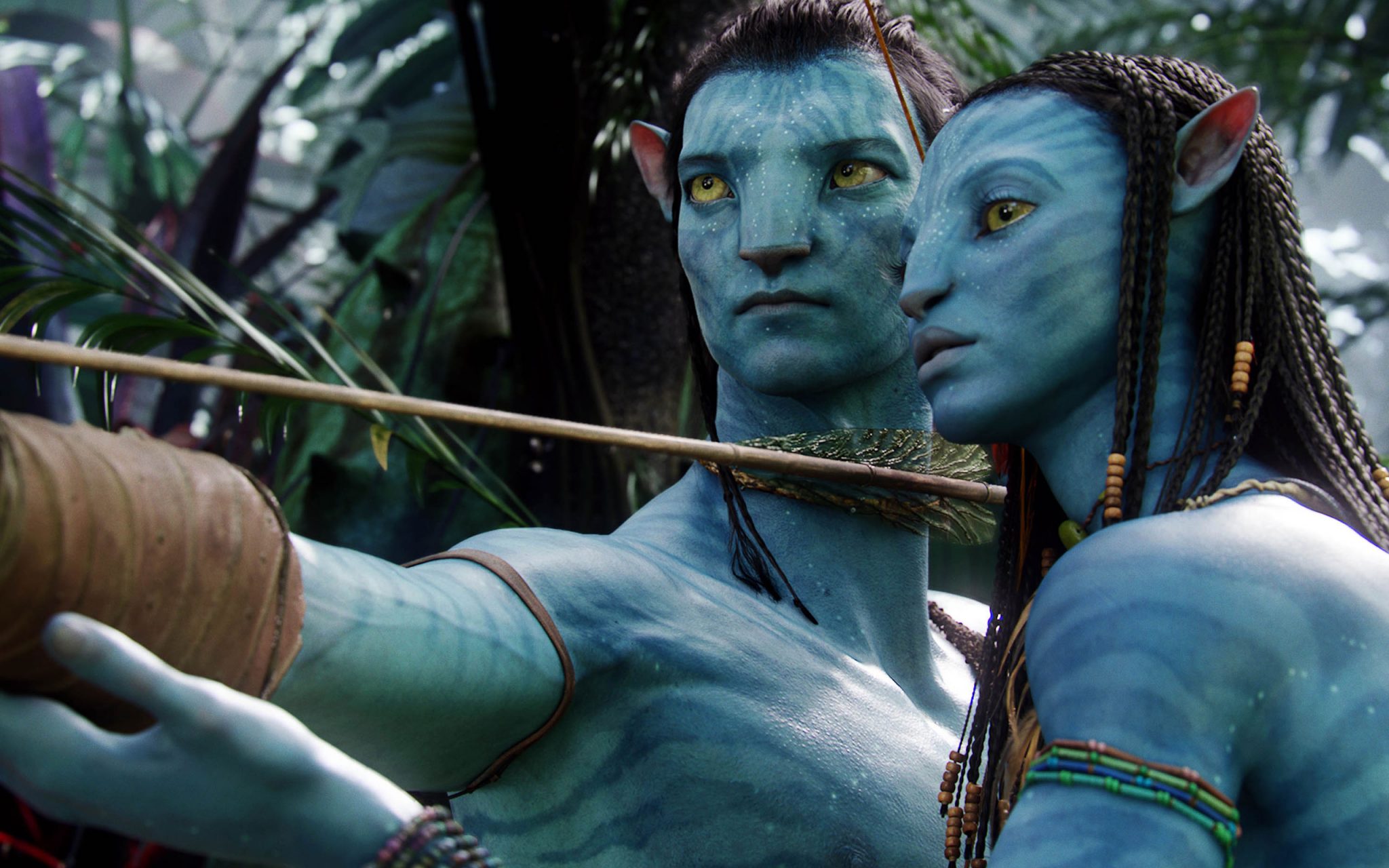
On a visual level, Avatar truly was a remarkable film when most of us saw it in late 2009/early 2010. What the movie does with color depth and digital effects is something 3D movies are still imitating today (and poorly most of the time). While you can’t judge a movie solely on how it looks, you can certainly credit effort where it’s due, and Director James Cameron offered something truly beautiful that pushed the needle forward for how CGI can transcend the “uncanny valley.”

The movie also boasts a wacky creativity for its  fantasy sci-fi setting. The character designs are inspired, the environments are as vibrant as they are subtle, and every application of CGI fits naturally, from the action scenes to the computer animated characters.

This fusion of live-action with computer animation is nothing to scoff at, and for many moviegoers, a by-the-numbers plot is all the film really needed to impress. What Avatar excels at is scope, in that it uses its effects for an impressive feat of world-building that makes its plot far more accessible than it deserves to be.

The Meh

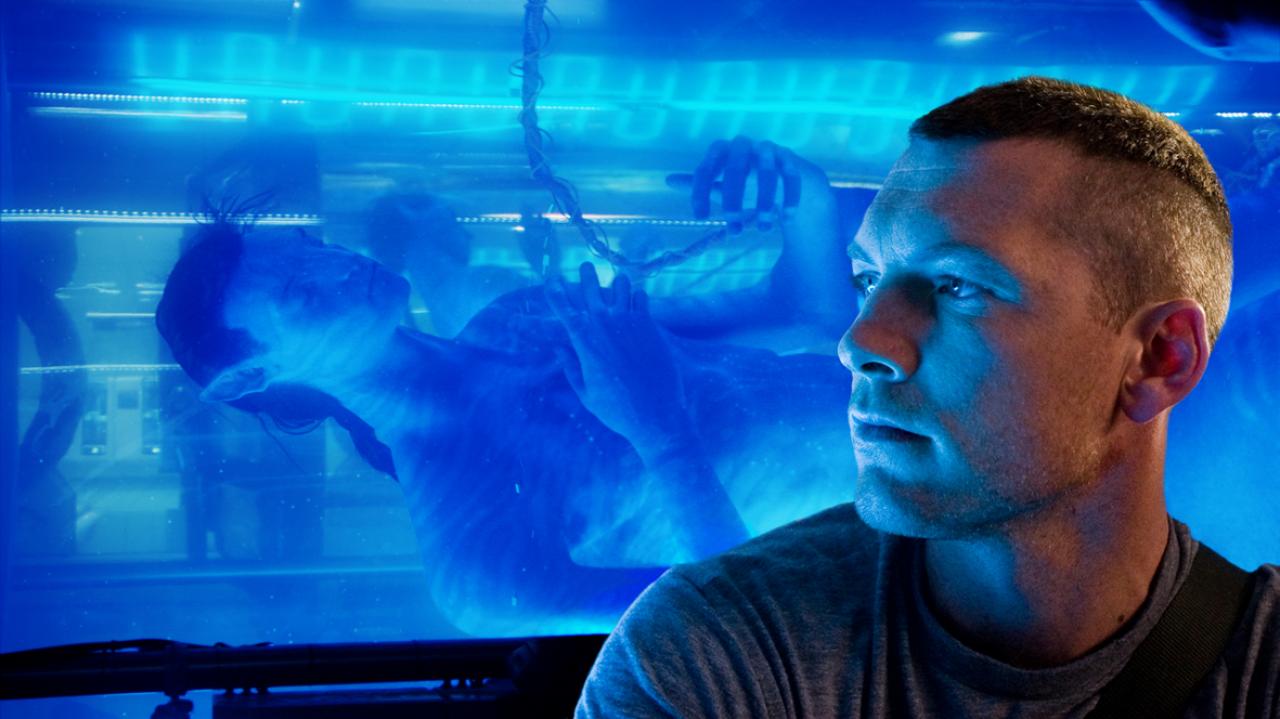
It’s telling that Sam Worthington (the lead actor) has less animation than the characters made by a computer. He’s meant to be a straight man to the wonders of Pandora, but he’s severely lacking of any charisma that compels our interest.

avatar opinion

He’s not terrible, but he’s also not very good. And the same can be said for most of the characters meandering Pandora with their simplistic motivations that don’t boil down to much more than anti-war propaganda even our college professors would fine overbearing.

Which brings us to the main complaint lobbied at Avatar: its plot is too familiar and undemanding when you hold it against the beauty of the movie itself. Like one of the early IMAX offerings that felt more like a test run of what the technology could do, Avatar comes across as if it was purposefully written by amateurs, which is a startling contrast to the detail put into pretty much everything else this movie has to offer.

Cameron remixes many techniques from his previous films in Avatar, such as the forbidden love dynamic of Titanic, the droll narration from Terminator, the space marine aesthetic from Alien, and so on. Any other director would get a pass for this, but because Cameron’s work is so iconic, this mixing and matching is too obvious to be appreciated.

And of course there’s no avoiding how reminiscent Avatar is to Dances with WolvesPocahontas, and pretty much any other film featuring the story of a white man learning the ways of an indigenous tribe.

When it comes to plot and interesting ideas, Avatar doesn’t try anything new, but to the film’s credit, it doesn’t fail outright. We just hated it more at the time because we were disappointed at how close Avatar stuck to a formula, rather than provide the sort of genre twist worthy of such an ambitious film.

The Bad

Honestly, there isn’t much. You can complain that the dialogue and cartoonishly evil villain are draining, but they aren’t atrocious qualities. Avatar mostly plays it safe as a predictable romp on an alien planet, which makes it regrettably average, not bad.

avatar opinion

Yes, the film has its share of haters, and their criticisms are usually valid. But analyzing Avatar as a piece of film requires an honest look at everything it offers, not just the parts that distracted you. Pandora is a well-made paradise of science fiction. The 3D is expertly used to create a sense of immersion that no other movie had yet accomplished in the same way. The entirety of the film’s experience created a sense of awe for its many viewers…dragged down by some unfortunate compromises.

When this movie came out, many people likened it to the first Star Wars, convinced it would capture the imagination of the next generation. I think it’s safe to say that never fully came to pass, mostly because Avatar‘s story was too formulaic to grab viewers at every level. While Star Wars was also a bit cheesy, its rich and interesting characters managed to make up for it. Avatar, on the other hand, only has what will soon be dated visuals and an accompanying footnote to hold itself up as an accomplishment.

Grade: C 

Is there an unpopular opinion you think deserves the Unopinionated treatment? Shoot me your suggestion in the comments.

I’m Jon and thanks for reading this. You can subscribe to my posts by clicking “Follow” in the right sidebar. Or just say hey on Twitter! @JonNegroni