Review: ‘Allegiant’ Doubles Down On the Worst Aspects of ‘The Divergent Series’

allegiant review

At first glance, Allegiant seems like an attractive step forward for the somewhat stale YA dystopia trope. It eschews the clunky “Part 2” title in favor of a final movie that will receive a new name altogether (Ascendant). And for a book series that has as many structural problems as Divergent, any change to the source material is welcome.

Unfortunately, Allegiant is just a bigger and more chaotic copy of the first two Divergent movies, narrowing in on many of the themes and plot dynamics that have repeated themselves constantly (seriously, how many characters in these movies need to switch sides for no apparent reason just to move the plot forward?)

Now that the factions of Chicago have rid themselves of the malignant Erudite, two sides have risen up to take control: the Allegiant, made up of the people who want to return the city back to five factions; and the factionless, who want to rid the city of this system altogether.

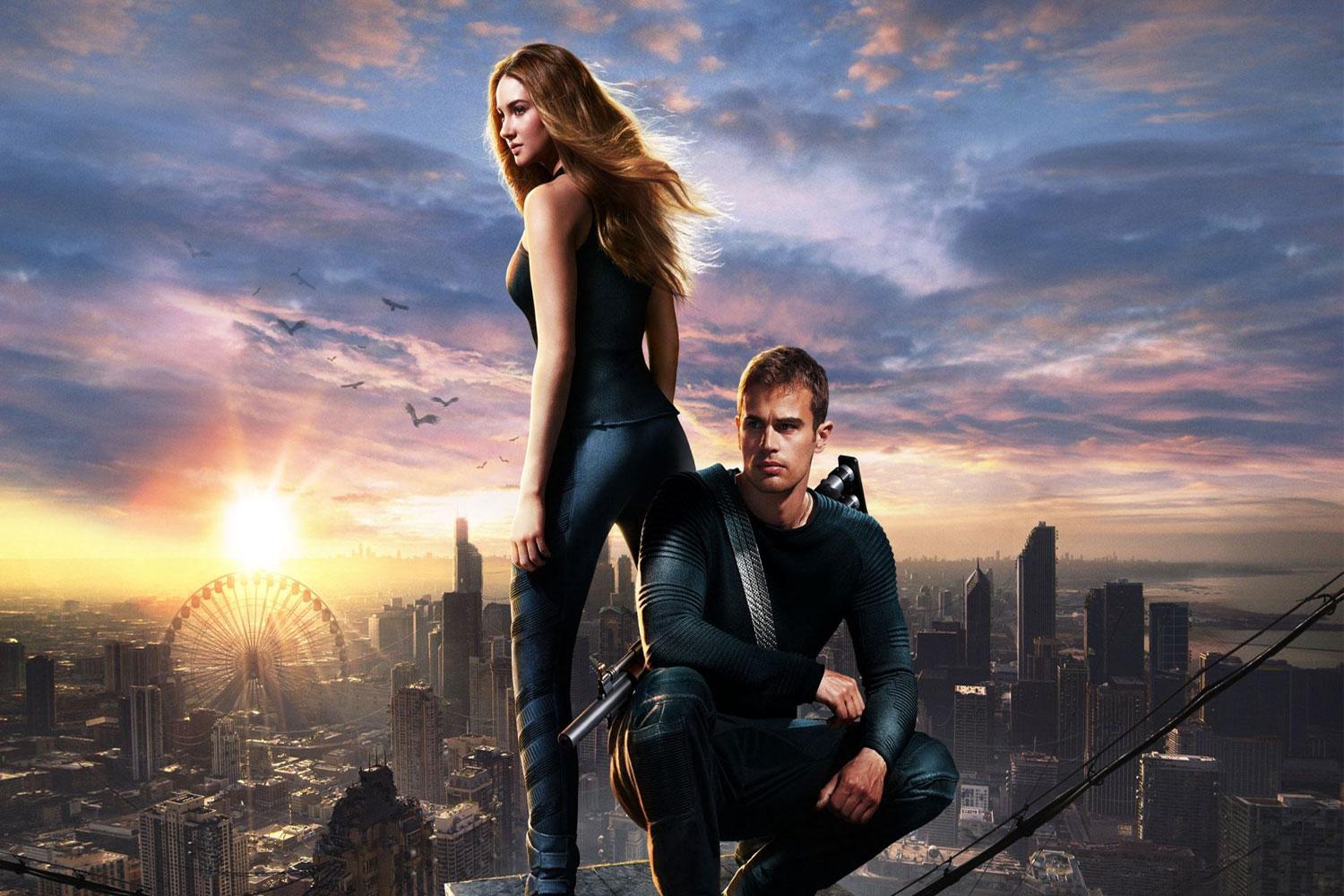
Rather than pay any sort of attention to the obvious war brewing, Tris (played here by a static Shailene Woodley) and Four (Theo James carrying most of this film’s better moments) gather their friends in order to escape the city in search of the people who put them there in the first place. Eventually, they come across an organization they learn is experimenting on Chicago in order to create a perfect human society. As expected, this comes at a cost that not everyone part of “Team Tris” is on board with.

allegiant review

What kept the first Divergent somewhat breezy and passable was its simplistic plot. You could explain in a few sentences who the main character was and what she wanted. With Allegiant, it’s exhausting trying to understand who any of these characters are, what they actually want, and what needs to be done. This is partly because the movie fails on almost every level when it comes to defining these characters’ motivations.

There is no clear motive behind the conflicts that occur between the various factions ranging from the Allegiant all the way to the Bureau. Exposition is provided of course, but the acting is so stiff and wooden, this dialogue sounds like more white noise piled on all of the nonsense spoken before it. The movie talks at the audience endlessly, but you never get a sense that the these characters are believably communicating with each other.

Four and Peter are notable exceptions, as usual. Their characters seem to have at least some coherent story arc that makes for some interesting drama. Shailene Woodley is mostly pushed to this side this time around, being forced to react tirelessly to the rantings of the Bureau’s leader, David (played by Jeff Daniels).

Some interesting sci-fi elements provide at least a little imagination to this dull, uneventful prologue to the final chapter, but even the production value seems to be slipping from the previous movies. Many of the effects look unfinished, and the attention to detail has never been so obviously lacking. Early on, a character is shot in the head at point blank range. A second later, we see his body dragged with the back of his head in plain view. There’s no indication whatsoever that he was shot.

Odd continuity errors plague Allegiant throughout, and they’re emphasized by an apparent desire to stretch the movie’s running time with pointless, lingering shots of characters either gawking at each other or staring at mundane landscapes. Strange, considering the film feels 30 minutes longer at just a minute past 2 hours.

allegiant review

It’s a shame because there are corners of this series that could allude to some interesting discussions. There’s much to be said about how trying to control the very emotions and genetics of human beings could be manipulated in order to build a peaceful society. But Allegiant lends no moral ambiguity to the villains of this film, instead forcing mindless acts of villainy coupled with repetitive betrayals in order to justify the direction of the plot. As expected, even the younger target audience is a bit too intelligent to get fooled by the artificial recipe of this unimpressive sequel.

Grade: D-

Extra Credits:

  • It’s no secret that I carry a lot of disdain for this franchise, as well as the book trilogy. Still, I can’t believe I expected more from a premise that boils down to someone being too special for a personality test.
  • Not even the camerawork gets a pass. At one point, the camera zooms in on a characters’ face and then abruptly shifts to a medium shot. It’s amateurish to the point of disbelief.
  • Shailene Woodley can, and has, done so much better. Here’s hoping she makes enough money from this franchise so she can go back to films that have craft.
  • Director Robert Schwentke won’t be directing the final Divergent film (he also did Insurgent). I’m glad because after this and R.I.P.D., Schwentke could use another Red.
Unopinionated: ‘Divergent’ Isn’t Terrible, But that Doesn’t Mean It’s Good.

Divergent terrible good

You’re different. You don’t fit into a category. They can’t control you. They call it Divergent. You can’t let them find out about you. (Tori speaking to Tris).

Every week, readers send me their unpopular opinions, and on Unopinionated, I explain why they’re unpopular in the first place.

From my inbox: “Here’s an unpopular opinion. Divergent is better than Hunger Games. There, I said it.” – Katie

Comparing these two films is obvious, mostly because Lions Gate Entertainment practically begged fans of Hunger Games to show up for their next young adult dystopia franchise in 2014. Based on a best-selling trilogy by Veronica Roth, Divergent is arguably better than the source material, but that’s not saying much.

The premise of Divergent is pretty much where the trouble starts. Years after an apocalyptic event nearly levels the world, a somewhat rebuilt Chicago has become home to a new, simplified caste system unapologetically inconsistent with nouns and adjectives.

The Amity faction is made up of happy farmers who live outside the city, Erudite holds the city’s intellectuals, Candor are honest and determine the law, Abnegation are selfless and drive the government, and Dauntless are the brave soldiers who protect everyone.

The future belongs to those who know where they belong. -Jeanine

Divergent terrible good

All people are born into a faction that characterizes one of these personality traits in which they’re most dominant, and when they come of age, these adolescents can choose to join another faction after taking what amounts to a personality test.

This is all fairly reminiscent of the Sorting Hat in Harry Potter, but while that more mystical and even mysterious element of the Hogwarts house system was more of an aside to the central plot, Divergentattempts to build an entire narrative around how our personalities divide us. While not a bad concept in theory, it’s immediately overwrought by a plot that never moves on from its initial principle, which isn’t even that interesting to begin with.

The main character, Tris (played by Shailene Woodley in her breakout role), craves a life beyond the plain Abnegation, the faction she was born into. She gets her wish when she discovers she’s “divergent,” meaning she fits into too many factions.

In other words, she’s too special because no one gets her. As if.

Don’t try and define me. – Tris

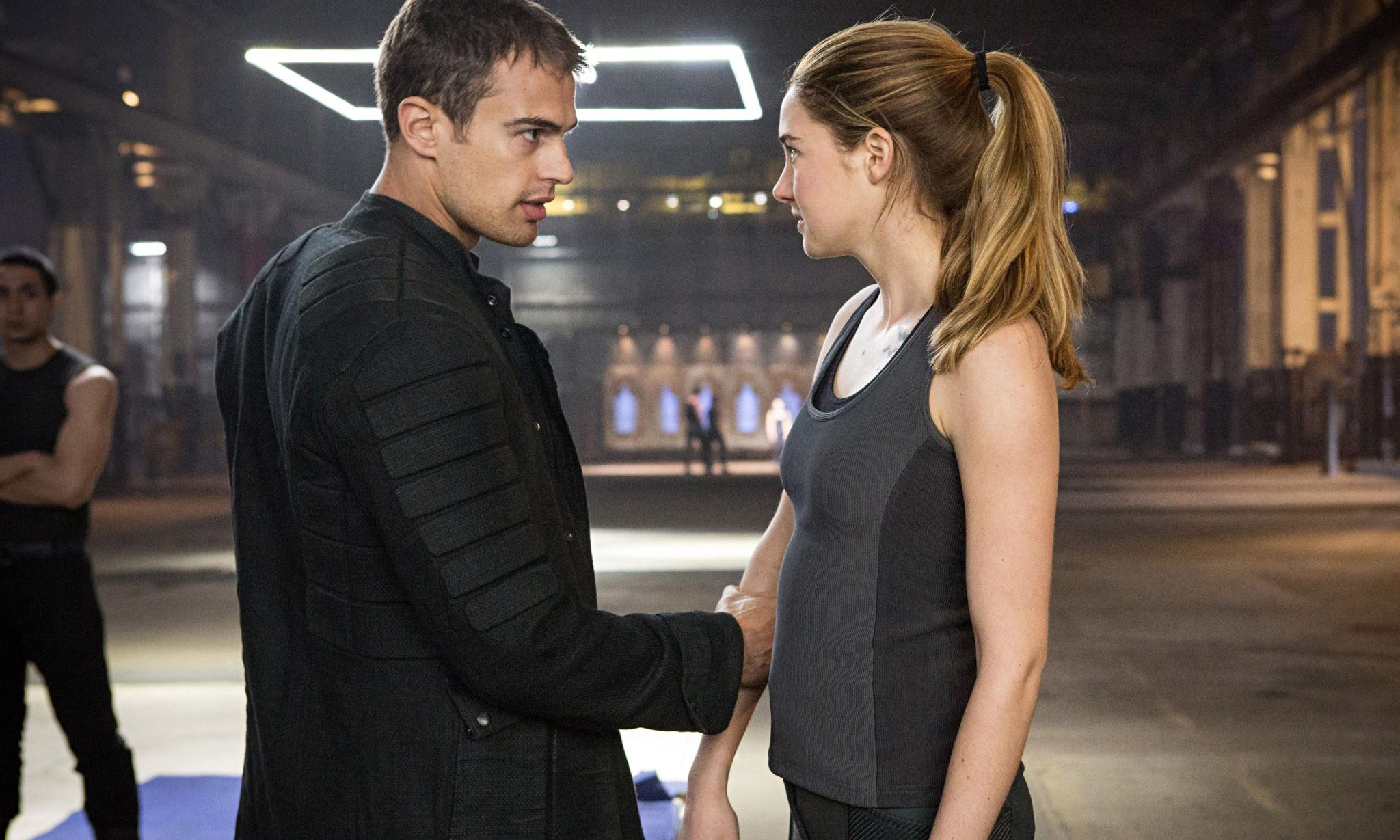
Tris joins Dauntless, much to everyone’s surprise, fueling the only narrative within Divergent that has some meaningful entertainment. A step up from typical High School movies, Tris has to overcome her literal fears in order to survive fitting into a group of young adults she previously had nothing in common with. All while dodging the inconvenience of her status as a divergent, making her a target if the secret gets out.

There are genuine thrills and absorbing moments to be had while watching Tris bond with the recruits and mainstays of the more free-wheeling Dauntless, especially within the commentary of a city trying to rebuild itself with harsher rules and regulations.

Divergent terrible good

But the payoff is too familiar and derivative to contribute anything meaningful to dystopian epics for this age range. Rather than provide something novel to Tris’s character and how she fits into a new world, the film jerks backward to make this about oppressive, authoritarian adults messing up everything.

Having a “chosen one” in any given story is a quick way to ramp up the mediocrity in storytelling. Harry Potter cleverly sidesteps this by shifting focus to how special the villain is, making him an equally important shade of the titular boy wizard. Hunger Games turns this trope on its head by making the “chosen one” special only in the eyes of the masses being manipulated into war, a far more interesting culture point.

Fear does something strange to people like Al. But not you. Fear doesn’t shut you down, it wakes you up. – Four

But Divergent has nothing interesting to give its “chosen one” except that she has too many dominant personality traits. There’s nothing else to Tris’s character that shapes her decisions and struggles to move through the plot. She’s simply special because the script demands it, and this is too obvious for most moviegoers.

On the other hand, it’s not clear that denser lore would have improved anything. The world of Divergent is already stuffed with uninspired naming conventions and quirks that beat the moviegoer over the head with reminders that they’re watching a movie created for kids.

Grade: C+

Fans of the books have plenty to love in Divergent, as it’s a streamlined improvement over the schlock writing that inspired it. And it certainly has some entertaining moments that keep the story moving. But at this point, fans of the genre have plenty of options superior to an empty psychology lecture.


Do you have an unpopular opinion you want challenged? Let me know in the comments and I’ll take it on in a future Unopinionated article. Or you can email nowconspiring@gmail.com

I’m Jon and thanks for reading this. You can subscribe to my posts by clicking “Follow” in the right sidebar. Or just say hey on Twitter! @JonNegroni

Which YA Dystopia Movie Franchise is the WORST?

worst ya movie

This week on the podcast, the Now Conspiring team reviews Maze Runner: The Scorch Trials and Black Mass. We also play a new game called “Was it a Flop?” and revisit the glory days of Zoey 101.

Plus, we read your comments from last week’s episode and start up this week’s burning discussion.

QUESTION OF THE WEEK: Which book-movie franchise of the young adult dystopia genre is the absolute worst?

Go on…Which YA Dystopia Movie Franchise is the WORST?