Retronalysis: Can We Reboot “The Last Airbender” Already?

2 years ago, we were handed one of the worst movies of all time that was depicting one of the greatest animated series of all time. Our feelings were hurt when The Last Airbender (TLA) failed to capture the greatness of Avatar: The Last Airbender (ATLA).

With the rising popularity and success of the animated series’ successor, The Legend of Korra, it’s high-time that Hollywood try again with the Avatar series while the timing is still good.

By the way, I spent a lot of time talking about social media last week, so expect this week to be a little more entertainment-heavy.

Now, let’s get some basic points out of the way. ATLA is my favorite animated series of all time. Debuting in 2005, this show had everything I could possibly want in a sprawling epic.

Amazing animation (it is an American cartoon animated in South Korea), deep and interesting lore, a high-stakes storyline (making it accessible for an older audience), some of the most memorable characters on television, and even humor.

So, making a movie out of this show should have been a cinch. As we understand it, the show’s studio gave Hollywood a lot of freedom with the story, over $150 million was put into its production, and the show lends itself very nicely to a trilogy since it was made with three seasons.

The movie even had M. Night Shyamalan directing it.

Well, okay, all of these things ended up being a negative. Hollywood ruined the story because they had too much freedom, they spent way too much money on the wrong things, making three movies meant changing the length of the story to keep up with aging actors, and M. Night Shyamalan wrote and directed it.

If you haven’t seen the movie or know what I’m talking about, watch these videos that recap everything wrong with the movie pretty perfectly (SPOILERS from here on out).

The question being asked by some is whether or not Shyamalan will follow-up this disaster of a movie with a sequel the movie begged.

Obviously, no one outright wants it, but the movie did manage make $300 million worldwide. So, the movie does make sense financially, if not critically.

Still, that’s no guarantee the sequel will manage to pull off the same magic, especially if none of the first movie’s mistakes are corrected.

That said, I have two possible solutions that would please everyone.

We should either reboot the first movie or go the way of The Incredible Hulk (Most people did not like Ang lee’s Hulk that came out in 2003, so 2008’s The Incredible Hulk served as an unofficial sequel to the 2003 film).

A reboot is the nice solution, because it would take less effort to rework the movie’s mistakes.

Here’s my wish-list for a reboot:

1. Change the writers. The animated series had different writers for almost all of their episodes. Tapping into their talent for a movie just makes sense, especially since they’re the biggest reason (along with the creators) why the series was successful.

2. Pronounce the names correctly. Shyamalan decided that the names in the show were not pronounced correctly in Asian. That was misguided, considering the show takes place in an alternate world influenced by Asian themes, not Asia. Changing the pronunciation did nothing but annoy all of the show’s fans.

3. Change the casting strategy. In the movie, the Fire Nation was depicted by Indians, the Water Tribe was caucasian, the Earth Kingdom was chinese, and the Air Nomads were diverse. This doesn’t make sense alongside the show at all.

The Fire Nation was clearly influenced by the Japanese, which we see in their culture, architecture, and how we find out later on that “firebending” originated with dragons. So, why not carry that over to the movie? Also, a Japanese actor playing Zuko would be way more interesting.

The Earth Kingdom makes way more sense as the “diverse” nation because they are largest. Even the show implies this, since Zuko and Iroh were able to pass as Earth Kingdom refugees in season 2, and many of the characters in this part of the world look very different from each other.

The Water Tribe is composed of two separate tribes, the North and South Pole. You can get away with having Europeans depict the North Pole, but Katarra and Sokka should just be darker skinned like they are in the show to please the fans. A “white” Katarra is just too much of a change, and our pop culture could really use more diversity anyways.

Also, Dev Patel would’ve made a far better Sokka than Jason Rathbone. Sokka is humorous and very animated. Patel’s “Anwar” in Skins was one of the most animated characters in that show, so why not give him a character with more to do?

Finally, the Air Nomads should be Chinese for the same reason that the Fire Nation should be Japanese. They clearly represent Tibetan monks, and we’d have an easier time casting a child actor for Aang who can handle all of the physical stunts throughout the trilogy.

4. Rework the plot. The first season of Avatar is the most challenging to compress into one movie because almost every episode is “standalone.” It’s basically about a group of friends travelling the world having various adventures.

That said, the movie left a lot of really critical characters out, including the Kyoshi Warriors and King Bumi, who play major roles in the other seasons. 

Here’s how I would break it down: The first act would focus on Aang, Sokka, and Katarra. We needed that more in TLA, which glossed over major character development points.

The second act should introduce us to the Kyoshi Warriors and King Bumi, who could be Aang’s method of receiving his world-saving mission from Roku. This could all culminate with Book 1’s most important episode, The Blue Spirit, which teaches us a lot more about Zuko.

Finally the third act would focus on the North Pole, giving us more time to commit to Yue’s character, Aang’s confrontation with Koh, the fight between Zuko, Katarra, and Zhao, and Aang’s epic fight against the entire Fire Nation navy.

5. Make the movie longer. Yes, this is a kid’s movie, but that didn’t stop us from letting Harry Potter have at least 2 hours, and there’s really no other way to tell the show’s story.

I’d go on, but you get the point. A reboot would be a much-needed, major overhaul of the 2011 iteration.

As I said before, we could also just skip the reboot and do the sequel as an unofficial follow-up to the reboot I just described. After all, season 2 of the show was far more like a serialized saga with major set pieces, making a movie easier to create.

Or we could leave ATLA alone and just skip to a prequel for Legend of Korra. After all, who wouldn’t want to see a young version of Korra mastering water, earth, and fire?


Social Media is Making Us More Insecure

Social Media Insecurity

Disclaimer: a lot of you are probably going to disagree with me on this, and that is fine. I want to disagree with me.

After all, social media isn’t just a hobby for me. It’s my profession, which hopefully makes what I’m about to say a little more validated.

Social Media is making us insecure.

Specifically, people (skewing younger) are misusing the social media tools given to them and creating false impressions of themselves that are fueling their own insecurities, as well as the insecurities of their peers.

Plenty have researched the link between social media sites and depression. A 2012 study found that there is, in fact, a high correlation between depression and use of major social network, Facebook. The study assessed the risk of depression among high schoolers and compared the risk rate to links between depression and TV use, to name one.

Other studies somewhat disagree. Huffington Post discussed a few related findings and found that there seems to be a stronger case that social media doesn’t cause anxiety or depression, it just pushes already at-risk people off the figurative cliff.

I find that difficult to know for sure, and I gravitate more towards the idea that we have yet to see the true effects of what social media use is doing to the youngest of us.

See, the originators of these studies, and the writers like me who are interpreting them, are a different generation from the one ahead of us.

Yes, I am a millennial, but I’m also a little older. I didn’t grow up linked to social media like children are today, which means that we can only discuss what is happening in real-time with younger users.

And it’s not pretty.

It’s easy to make the argument that insecurity and low self-esteem is evident in teenagers, after all. We have millions of people logging into Facebook, Twitter, LinkedIn, and Instagram, bragging about the great things that are happening in their lives. We know this because we see it every day.

Forget for one second how bragging is a result of insecurity. Focus on the result of this social competition we’re seeing before us. Kids are getting on Instagram and seeing pictures of people they know doing something that they aren’t. It can be overwhelming for someone between the ages of 13 and 16 to feel like they are missing out on something.

Honestly, we’ve all felt like this at one point, so you know that social jealousy can be a lot more impacting when you’re a teen, that stage of life when your self-esteem is at an all-time low.

Thus, teens like to lie about their lives in order to feel slightly better about what they think they’re missing out on. Why do you think Catfish seems to resonate so quickly with people? Most of us have been “catfished” or have even “catfished” someone else.

Social media is an anonymity paradox. On the one hand, we are more anonymous than we would be in a face-to-face interaction with someone. On the other hand, we are using social media to essentially make ourselves public to the whole world.

Now, I don’t mind being public about a lot of things, but I certainly don’t want some things to be so easily accessible. No one really does. The problem we need to address, then, is how we educate ourselves and those younger than us. 

Throwing money at the problem or forcing kids to stay away from it won’t help. Kids are way too far ahead of their parents for them to regulate social media use. Instead, kids (and us) need to be taught how to temper our concern and fixation over social media.

Would that solve the whole problem? No, but it’s a start. I’m convinced that a lot of the depression and anxiety complexes developing from social media can be prevented by good parenting and willpower.

And, of course, social media has just as many benefits as it does pitfalls. It’s strengthened relationships between friends separated by distance, given brands the opportunity to grow, provided many jobs, and overall, it’s been a great outlet for entertainment and leisure.

Just remember to be cautious of its ills.

So, when your friend tells you that they want to take a “break” from Facebook or Twitter for a few weeks, don’t mock them for it (which I am guilty of doing). Encourage and cheer them on.

You could even join them if you’re brave enough.

Like what you read? Connect with me further via twitter @JonNegroni. I’ll follow back if you seem like a real person. You can also subscribe to this blog by clicking the “follow” button in the top-left corner.

Don’t forget to check out New Professional News, a list of headlines essential for any new professional, updated daily at 8am.

How to Create Your Content Machine

Content Machine

“Whoa Jon! What’s a content machine?” Great question, voice in my head. Your content machine is how you take in content across multiple channels daily.

It’s simply a collection of all of the news, blog articles, tweets, and one-offs that are being put in front of you by way of Gmail, Twitter, LinkedIn, Facebook, or even Reddit.

We often don’t put much thought into our content machines and how we’re setting up channels for consumption. Most of us just go to our favorite sites and happen upon stories we find interesting.

That said, creating your content machine is essential to ensuring that the stories you happen upon are the best in your network, and setting up your channels to do this isn’t very complicated.

The first step is recognizing what your content machine already looks like.

Ask yourself, “What do I find myself reading a lot? Newspapers? Whatever randomly pops up on my Facebook?”Which bookmarks am I actually checking?”

Be honest with yourself and acknowledge what sources influence you the most. From there, you can fine-tune these channels to supplying you with great content whenever you need it.

Next, let’s go through some of the more common channels and see how we can make them work for our content machine more effectively.

1. Email. 

I put this at the top because this is the apex of my own content machine, and probably yours as well. It’s a given that your email is where most of your subscriptions funnel in, so I would recommend starring the websites you find most useful.

Or you can be more proactive and research some great news aggregation sites that will send you great links to explore every morning. I rely a lot on PRSA for example, since I am a member and receive great stories from them. (Subscribing to jonnegroni.com can’t hurt either)

2. Twitter.

Yes, there is more to Twitter than just gaining followers and playing with hashtags. Making Twitter work for your content machine is a little trickier than email, because it requires a little more work than just subscribing to great stuff.

You want your news feed to be filled with great content you can access on the go, so I recommend following the followers of your passions. I love to blog, so I follow a lot of bloggers. The payoff is that my news feed is full of great stories that are relevant to me and whoever I share them with.

If you have a cluttered feed beyond repair, remember that you can always create lists and bookmark them for daily use!

If you want to use Twitter for fun and professional networking, consider making two separate accounts.

3. LinkedIn.

Similar to Twitter, your updates feed on LinkedIn can work wonders for your content machine. Thankfully, LinkedIn is a little easier for sorting good content from sillier updates, and you can always customize what shows up in your feed.

Be sure to also join a lot of groups with like-minded people, as this will give you great updates and content to digest and share. Oh, and PLEASE check out LinkedIn Today. 

4. Google+.

I’ve spoken on this recently, but Google+ boasts a very content-rich community that is active and engaging. Because there are less active users, there are more meaningful interactions, and the service does a great job of simplifying how you get great content.

I find myself searching for what’s trending a lot on Google+, which lets you use the search bar at the top to discover great content from people you don’t follow (yet).

5. Facebook.

I say this tongue-in-cheek, but there are very useful ways to make Facebook an asset for your content machine. While I mostly prefer to use the site for recreational use (unless it’s for work), I can’t deny how Facebook’s massive network works well to deliver new content.

Okay, there are certainly many reasons why your news feed is filled with mundane information, but utilizing Facebook’s “list” function can allow you to filter posts from friends that do like to share interesting, useful content from the rest.

Conclusion.

Now, these are just some of the ways you can get to work on your content machine. Whatever network or platform you’re using, remember to always set time aside in your day to read and follow-up with as much content as you can. It’s a great habit, and it will no doubt grow your skills and awareness of whatever industry you commit to.

Like what you read? Connect with me further via twitter @JonNegroni. I’ll follow back if you seem like a real person. You can also subscribe to this blog by clicking the “follow” button in the top-left corner.

Don’t forget to check out New Professional News, a list of headlines essential for any new professional, updated daily at 8am.

5 Steps to Branding Yourself Online

Brand Yourself

If you have profiles on various social networks, then you have a personal brand. The problem is that you may not be keeping good track of this brand and how you’re perceived online.

Luckily, there are simple ways for you to start creating a more consistent presence online, rewarding you with a tighter, more influential network.

1. Craft your ideal brand. 

Before anything else, you absolutely need to have a clear idea of how you want to brand yourself (this can be broad, so don’t panic.) Simply put yourself in the shoes of someone who just stumbled upon your LinkedIn, Twitter, or whatever else.

What do you want them to see? Do you want them to find you fun, energetic and engaging? Do you want people to like your writing and creativity? Do you want to come off as professional and business-oriented?

In my case, I want my identity to feature what I can do as a writer and how well I get along with others online. I go for the creative youth identity that I know I excel at.

As long as you’re realistic and honest about what you really represent, coming up with an identity game-plan can be an extremely fun exercise.

2. Update/Create all of your profiles at the same time.

Time to get started. Once you know exactly what you want your personal brand to be, it’s time to implement it across all of your channels.

If you want an online identity that sticks, you need to have a cohesive theme between your major networks. The best way to accomplish this level of consistency is to edit them all at the same time.

They don’t have to be identical (and definitely shouldn’t), but they should at least match each other in terms of language and presentation. Your “About Me” on Facebook should make sense alongside your Twitter bio, even though they will no doubt say different things.

For example, your  Facebook may say that you are a lawyer at Earth, Wind, and Fire Legal (Fresh Prince of Bel-air joke), but you LinkedIn, in contrast, says you are a legal consultant for the parent of the firm. Even worse, your Twitter could say you’re a paralegal because you haven’t updated it in a year.

Use the same language and verify that your online brand is as up-to-date as possible.

3. Leave some information out. 

This may seem counterintuitive, but a big mistake some people make with their online identity is that they talk about themselves too much. Yes, you want to inform people and make your bragging rights known, but being an open book can have negative consequences.

You don’t want people to feel like there’s nothing else they can learn about you, so try to keep an air of mystery that will open the door to future conversations.

4. Change your profile picture.

I’m a firm believer that you should have a different profile picture for the social networks you use the most. This is because each network is different, and you want to communicate separate (but equal) things about yourself across your profiles.

My goal with Facebook, for example, is to feature pictures of my family and what I like to do for fun. So, my profile picture reflects the lighthearted, family side of me. My Twitter is more of an outlet for the creative professional in me, so I usually go with minimalist pictures. LinkedIn is obviously a place for being professional, so you’ll find the suit and tie version of me on there.

See, it’s not that I’m a different person in each of these cases. If you read about me, you’ll find the same person, just a different shade. And it all ties back to one theme, my brand.

5. Create as much content as possible.

Sharing is great. I do it a lot, and I love telling others about what I find interesting. That said, creating your own content is very important as well.

I create my own graphics for this blog and I write everything you see. That’s because when I broadcast something I’ve published, I want my identity stamped on it.

Attaching yourself to your works is one of the easiest ways to communicate your identity to your network, and it leaves a lasting impression if you’re content is good enough.

And you don’t have to just blog. Take photos. Make videos. Write poetry. Do what you like to do and put it on your fridge (new social media idea, don’t steal it).

Like what you read? Connect with me further via twitter @JonNegroni. I’ll follow back if you seem like a real person. You can also subscribe to this blog by clicking the “follow” button in the top-left corner.

Don’t forget to check out New Professional News, a list of headlines essential for any new professional, updated daily at 8am.

Leaving “Stuff” Behind

Screen shot 2013-05-07 at 5.46.40 PM

“Those who save their life will lose it. Those who give up their life will save it.” This is a famous passage from Luke 9:24 that I believe almost anyone can grab value from.

Why?

I’m rapidly learning how to give up the things I have clung to in order to gain something far more valuable. I don’t want to generalize, but it has to be said that a common attitude among new professionals like me is that we need to conserve everything we have and avoid any and all risks that threaten our current status.

Example: I left the town I graduated college from and worked for about 5 months. It was a great experience, but I eventually needed to make the next step in my career. I made what I still believe was the right choice and took a job in the same town I went to school in.

It hasn’t been easy, only humbling. Still, time has passed and eventually I’ll have to leave again for whatever is next. And this definitely won’t be easy.

Life here is comfortable. I have everything I need, and yet I am certain that my ambitions don’t lie here. Rather than cling to the life I know and love, I have to give them up for something that will eventually be better. Something that will be fulfilling.

The hard part is leaving “stuff” behind. I’ve built a life here. I have so many things I’ve invested in here, so the idea of leaving them behind is daunting. But it’s necessary.

Some of you have taken risks in the past. You’ve moved on from them and may find yourself clinging to what you put aside before.

I never realized how easy it is to fall into this trap, so I encourage you to let it go, as I need to.

Claim that confirmation you have. Make the sacrifices you need to make so that you can finally settle on what you want in your life once and for all.

If this seems impossible to you, but you still have that desire, surround yourself with those who challenge you. Talk to someone older about what they’ve learned and accomplished. Find ways to encourage yourself and build a clearer vision.

In short, stuff is stuff. We can gain it. We can lose it. What we won’t always have access to is opportunity. Know the right opportunities from the flimsy ones. Seize the opportunities that are worth sacrificing your “stuff” for.

Like what you read? Connect with me further via twitter @JonNegroni. I’ll follow back if you seem like a real person. You can also subscribe to this blog by clicking the “follow” button in the top-left corner.

Don’t forget to check out New Professional News every day, updated at 8am for a list of today’s main headlines as selected by my editorial team (me) 

Don’t Be Impressed With Yourself

Screen shot 2013-04-29 at 4.17.53 PM

Will you? Yes. Should you? Depends. Would it be better if you weren’t? Absolutely.

Let’s be clear: self-esteem isn’t being brought into question. Having a high self-esteem is crucial in preventing depression and anxiety, so please don’t get the two confused.

The difference between self-esteem and being impressed with yourself is within the very nature of the words. Self-esteem has everything to do with being content with yourself. It’s a word that relates to satisfaction and confidence.

By contrast, being impressed literally means to “affect forcibly or deeply” in relation to admiration. Why do you think the word is synonymous with “imprint?”

Most of us can agree that self-esteem is a positive force in our lives, but I’m not so sure about the idea of always being impressed with yourself.

Having such a high admiration of yourself leads to nothing but conceit and complacency. After all, our ambitions are stifled when we think we’ve achieved everything we can. This intense focus on ourselves prevents us from being objective and, more importantly, creative.

The essence of what I’m trying to say is this: don’t be satisfied with where you are at and what you are doing. Don’t be “impressed” with yourself. Instead, be confident in what you’ve managed to achieve and then move forward.

Like what you read? Connect with me further via twitter @JonNegroni. I’ll follow back if you seem like a real person. You can also subscribe to this blog by clicking the “follow” button in the top-left corner.

Don’t forget to check out THE JON REPORT every day, updated at 8am for a list of today’s main headlines as selected by my editorial team (me) 

Everything You Missed When You Watched ‘Inception’

inception

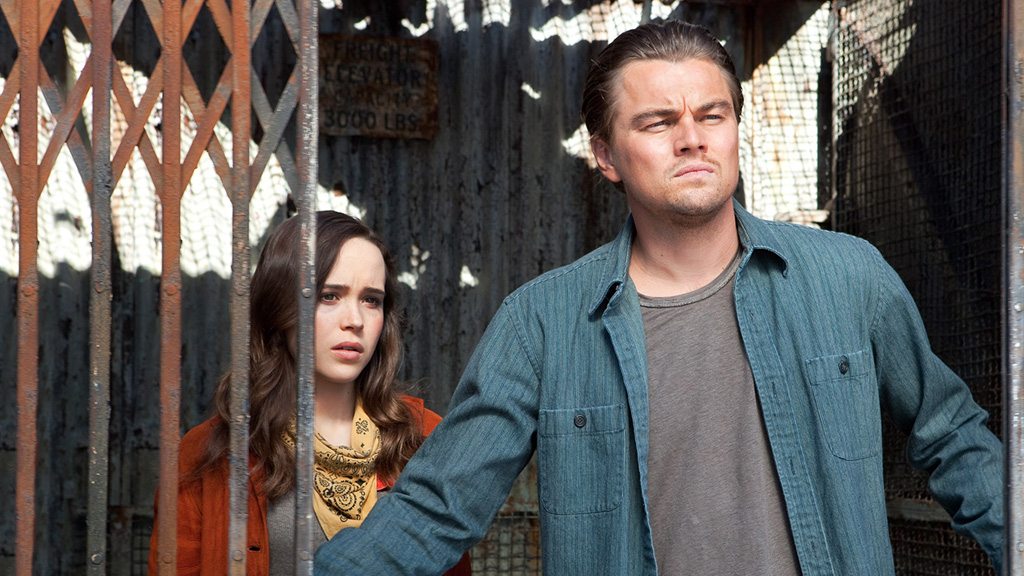
Inception is rapidly becoming my favorite movie of all time. I first saw it during the midnight premiere back in 2010, and I enjoyed the heck out of it. I remember being mesmerized by its originality and unrelenting assault on my mind’s stamina.

It took another dozen viewings of the film, however, to persuade me that this is one of the best films of my lifetime, and the first truly great film of the 21st Century.

Let me explain.

For me, a truly great film isn’t really like a masterpiece. A masterpiece, after all, is more about critical praise and the apex of one’s career. Inception is great in a different way. It’s just smart. It didn’t receive universal, critical praise (though it got some) because it completely went over the heads of almost everyone.

inception

For all of you who think you “get” the movie, I sincerely doubt that more than a handful actually caught everything that was going on in the story.

Here’s a test to see if you did: do you think the ending was a cliffhanger? Because if you did, you are dead wrong.

Let me be clear about something. I’ve seen this movie backward and forward, so what I’m about to get into is just a summary of what I’ve personally discovered, combined with some great insights provided by the research of others.

Spoilers ahead, so if you haven’t seen the movie, stop reading this and get that taken care of.

inception

I believe the entire movie was a dream, and we are supposed to arrive at that conclusion. Nolan implants countless clues that point to this, but he works to make sure that even the clues themselves are ambiguous.

The first clue? To catch it, you have to watch the movie at least twice. There is a line in the movie when Cobb points out that our dreams always start in the middle of something, but not really the beginning. We never think about “how we got there” as he puts it.

Inception begins in the middle of Cobb’s story, as well as the middle of a dream heist. We aren’t introduced to Cobb, Arthur, or Saito. We are given a brief look at the end of the story, and then the movie just shifts seamlessly into the dream heist.

What does that remind you of? When we recall a dream, we typically start at the end (Cobb and “old” Saito) and try to remember how it actually started, but we can’t remember how it really started and just start somewhere in the middle.

inception

So, let’s say you buy that. The whole movie was a dream. Doesn’t that make you mad? Well here’s Nolan’s genius: that shouldn’t matter. We get mad that the movie was just a dream and say, “Why bother watching a movie that didn’t really happen–” and then you realize that the movie is fiction anyway.

That is just one example of why this movie is so amazing. It has scores of themes you didn’t even think were possible to associate with the film. And it takes work to sort this all out.

Back to the first statement that everything was a dream. Maybe you’re not convinced? I’ll give you more clues. The basis for the “It’s a dream” theory is based on how limbo works. When the “kick” happens, namely suicide here, you go one level up in the multi-level dreams.

inception

Cobb explains to Ariadne that he and Mal, his wife, ended up in their world-building limbo because they were experimenting with multi-dreams and Cobb pushed them too deep. He says they grew “old” together and eventually committed suicide on the train tracks to go back to reality. But here’s the thing…that would have sent them only one level up.

Cobb believes inception is the reason Mal went insane and killed herself, but it was actually true. If they died in limbo, it would be impossible for them to return to reality again unless they died again and again. Totems mean nothing here because the totem Cobb used was Mal’s, and he even broke the rules and explained how it works to Ariadne, compromising its purpose. (Talking about the totems alone would take up this entire article by the way)

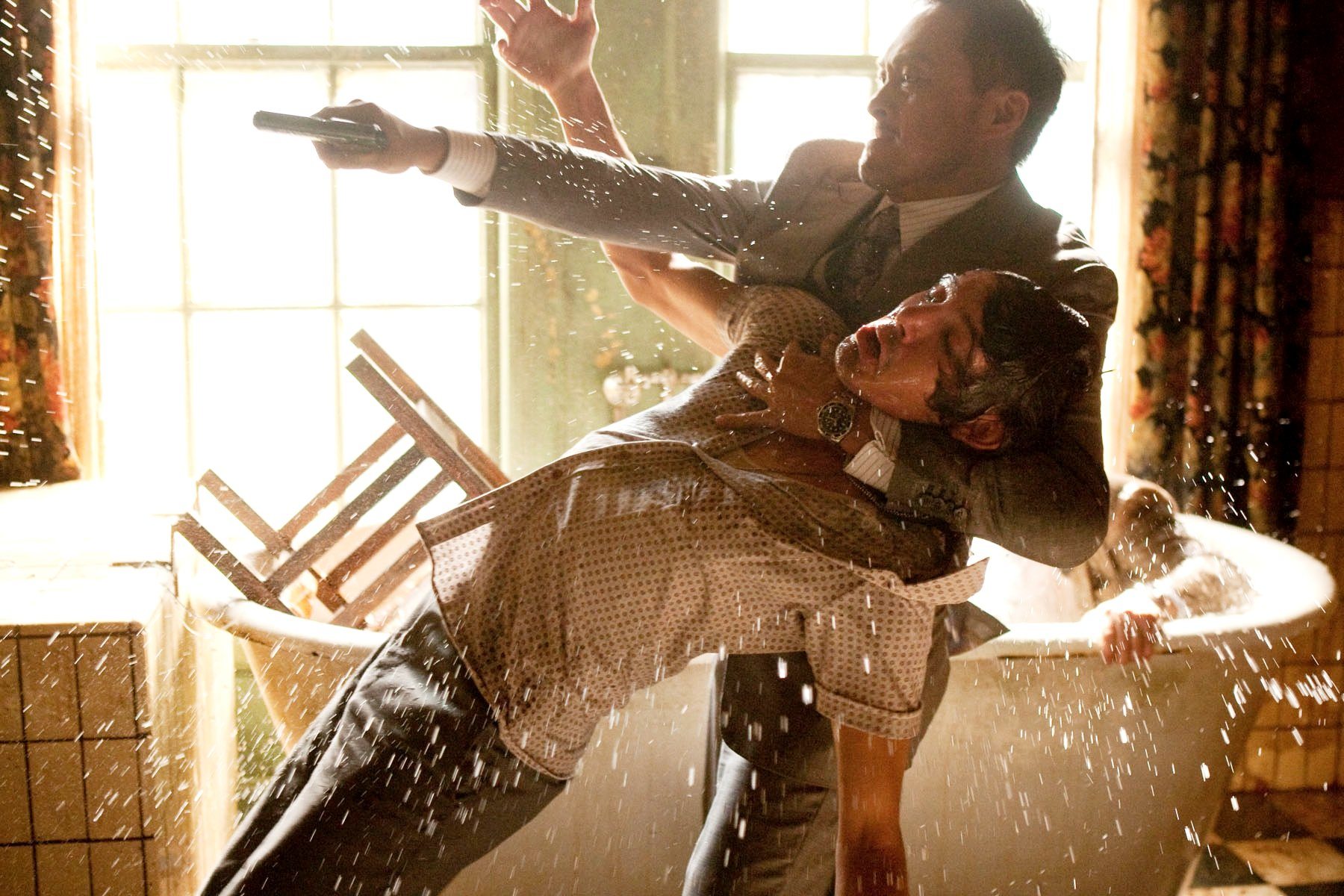
Another clue that they were in a dream when Mal killed herself: She trashes the hotel room to make it look like Cobb killed her so that he will eventually join her, but when he approaches the window, she’s across the road in another hotel room. If you look closely, it’s the same hotel room, plus it would make no sense for her to go to the other side. Cobb even proves that he doesn’t catch how that’s odd when he tells her to come inside and motions for her to come into the window he’s currently at, even though she’s across the street.

inception

One of the characteristics of a dream is that weird things happen that we don’t catch. When the dream was happening, strange things happened that we didn’t realize were major “plot holes” or illogical until we woke up and actually thought about it.

The entire movie is like this. The fast (and sloppy) editing, the one-dimensional characters all revolving around Cobb, the walls closing in on Cobb for no reason during the chase scene in Mombasa, bodyguards coming out of nowhere to attack him, Saito showing up just in time to save Cobb, and so many more examples all lead the diligent audience to believe that this is really just a dream.

After all, do we really believe that an energy tycoon that is smart about money would actually buy an entire airline just for the heck of it? And then said tycoon would risk his life in order to take part in the mission? It doesn’t really make sense the more you think about it.

inception

Watching the movie play out, it’s hard not to catch that it is clearly an allegory to filmmaking. When watch a movie, we are watching what is essentially a dream. Plot holes and the like exist because the director is trying to explain his “dream.”

Nolan himself has even admitted that he framed the characters around certain roles in filmmaking.

Cobb is the director: he leads the whole thing.

Arthur is the producer: he organizes everything.

Eames is the actor: he changes his appearance.

Ariadne is the screenwriter: she designs everything.

Yusuf is the special effects studio: he’s behind the technology to make everything work.

Saito is the bank-roller: he funds the project.

Robert is the audience: he’s the person they’re trying to plant an idea into.

inception

Need more clues? We’re told during the movie that elements of a person’s subconscious creep up during the dreams. That’s why Robert’s number, 528491, appears so often in the movie. He initially guesses the number is a combination to his father’s safe. Later, the number shows up on a napkin, a hotel room, and eventually his father’s safe at the snow fortress.

This carries on throughout the whole movie. The number of the train that kills Cobb and Mal, when they are in limbo is 3502. The taxi number later on is 2305, and the hotel Mal trashes is in room 5302. This implies that Mal’s death happened during a dream. And in the image above, you can see 3502 on the train that appeared during Robert’s dream.

Here is the most important subconscious clue, since it has to do with the ending that ticked everyone off for being a supposed cliffhanger. The end scene when we watch to see if the totem will fall (and prove Cobb is in reality) is a red herring. A massive misdirection that serves to make us miss what’s going on in the background.

inception

Remember, killing yourself only sends you one level up. We find “old” Saito and Cobb about to shoot themselves to escape limbo. If they did, then that means they would go back to the snow fortress. But wait, that was Fisher’s dream and Fischer received the “kick” already. If they went back a level up, that means there is nothing there. That means that the first person to die, Saito, would fill that dream with his subconscious, leading to the ending scene where Cobb supposedly reunites with his children.

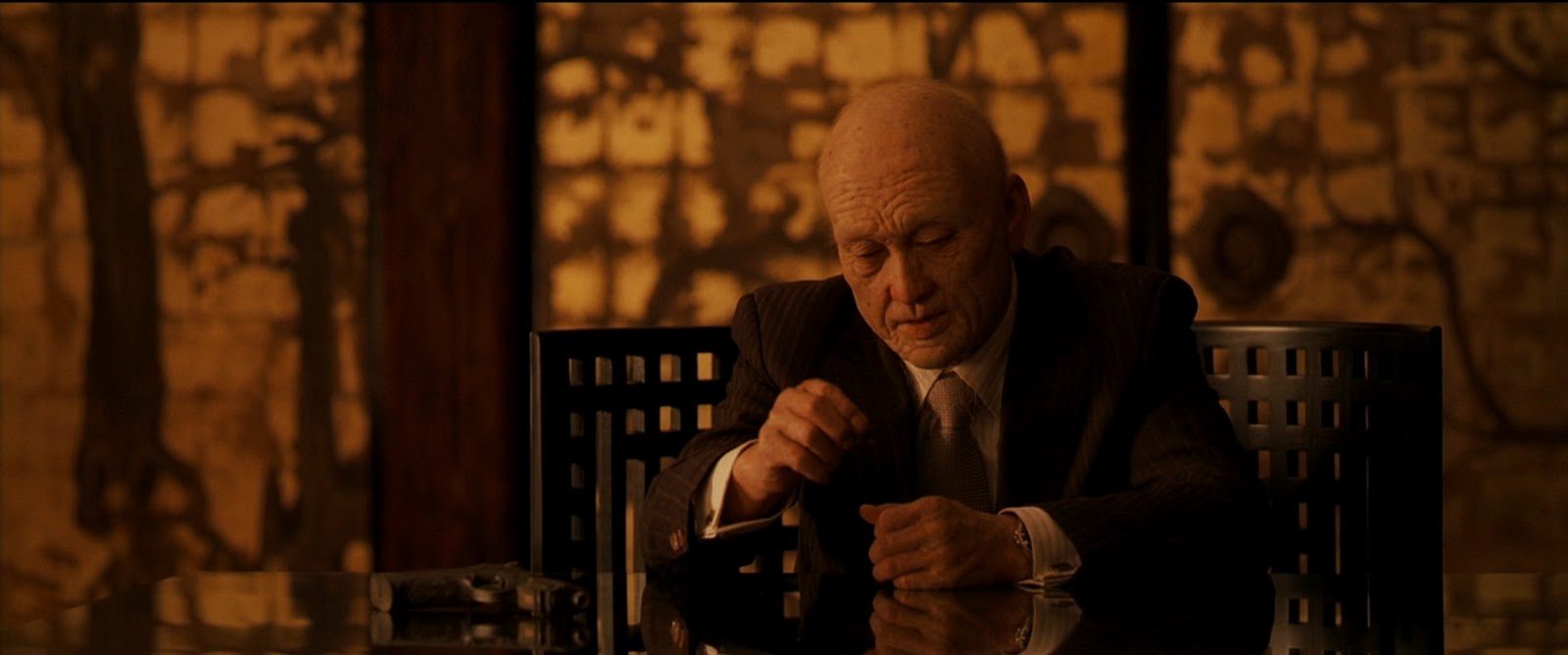
How am I sure? Saito says that he always wanted a “house on a cliff.” In limbo, he is an old man living in a house on a cliff. At the very end when Cobb spins the totem and greets his kids, they say that they have just built a “house on a cliff.” This points to the whole thing taking place within Saito’s subconscious.

The beauty is how that can be a number of things. What if “house on a cliff” referred to Cobb’s subconscious being projected through Saito? That would mean Saito never existed. Honestly, there are countless ways to interpret this, but that’s not the point. The point is that this movie was designed in a way to make us understand that movies themselves are, well, inception.

inception

I could go on and on about this movie, honestly. There are just so many ways to interpret and find new revelations within the narrative. That is why it is a truly great movie, and it pains me to see that so many people dismissed it because it went over their heads and a movie like this lost “Best Picture” to The King’s Speech.

I’ll leave you with some more crazy facts in case you’re interested:

DREAMS: Dom, Robert, Eames, Ariadne , Mal, Saito.

If you add Peter, Arthur, and Yusuf, it spells DREAMS PAY (their profession is to make money by stealing from others’ dreams).

Hanz Zimmer created the entire soundtrack for this movie using only one song that is slowed down and sped up: the song used to initiate a dream is over, which is “No Regrets (translated)” by Edith Piaf. Seriously, even the blaring trombone composition is taken from that song. Also, the very last word in the song is “mal” which coincidently refers to the character Mal.

inception

The running time of the movie is exactly 2 hours and 28 minutes long, which is how long the song “No Regrets” is when translated to minutes and seconds.

Ariadne is a mythological princess who aids Theseus in escaping the Minotaur’s labyrinth. The name is also associated with Ariadne auf Naxos which is an opera that is essentially a “play within a play.”

The movie is based on Cobb’s mission to get home. His first name, Dom, literally means “home” in Latin (think domestic).

One last thought, a lot more about this subject can be found in this book, Inception and Philosophy, by Kyle Johnson. I haven’t read it myself, but I’ve been told it goes even deeper into the movie and what it all meant. Click here to check it out. 


Thanks for reading this. To get updates on my theories, books, and giveaways, join my mailing list.

Or just say hey on Twitter: @JonNegroni