Hey friends. Got an email this week I’m excited to get into. A young writer, let’s call them Blake, reached out about help with their magic system. I actually did a whole episode about magic systems on the Fantasy Writing for Barbarians podcast, but this was back in 2024, and so much has changed, right? Excited to revisit this topic in…wait, it’s 2026? Already? Sheesh.
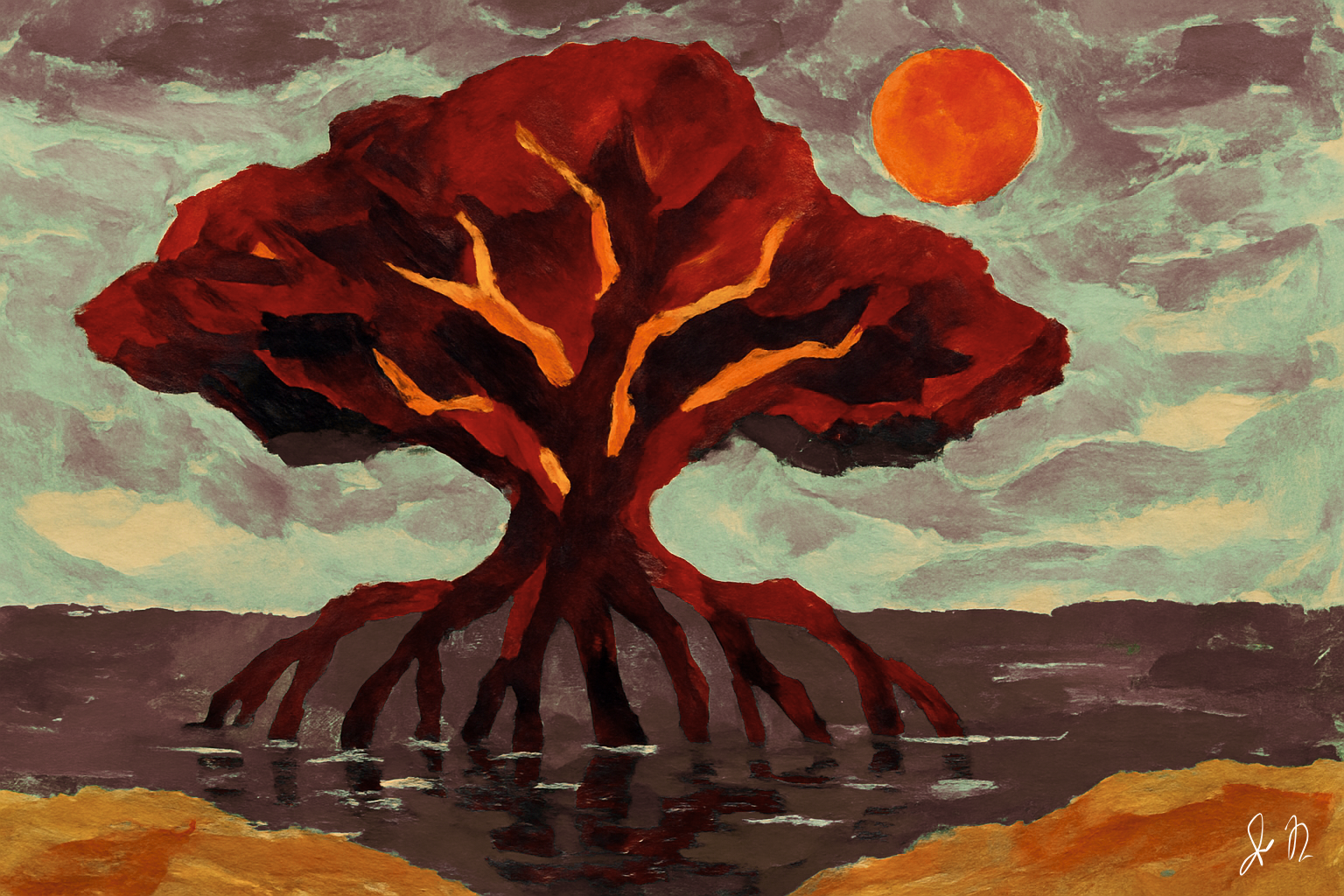
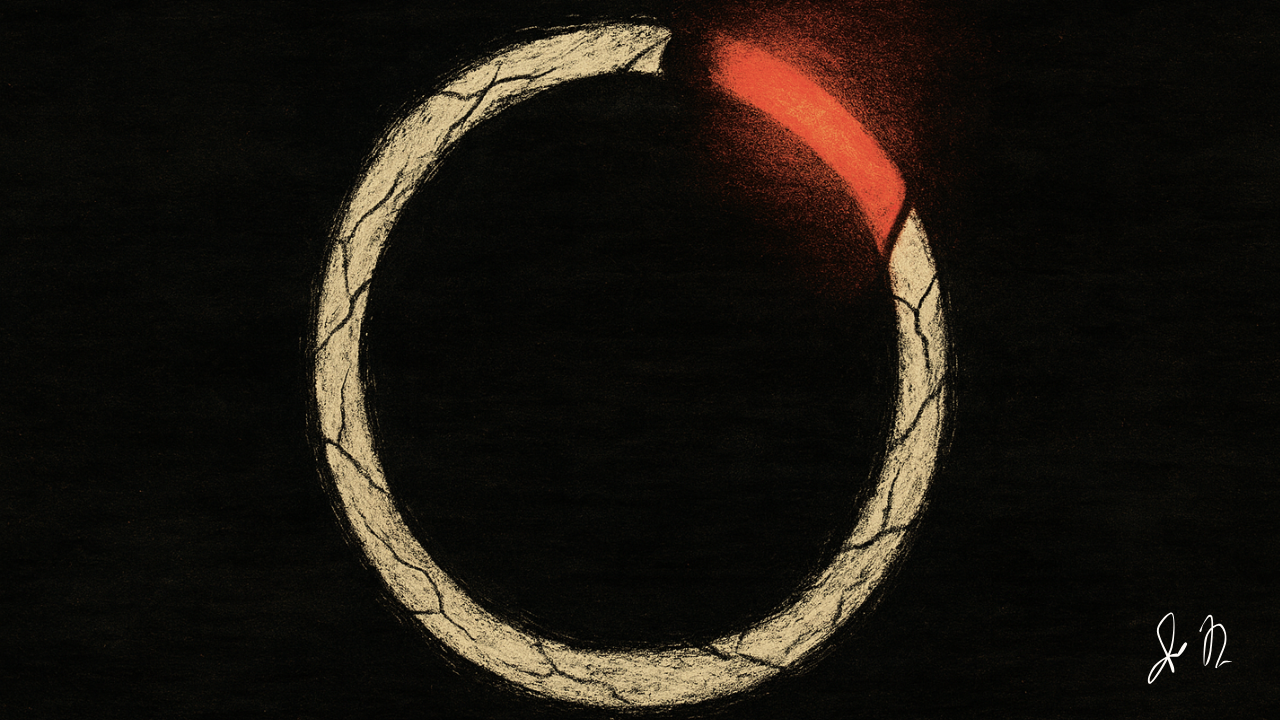
The email is about magic systems, so for this post’s thumbnail I chose some artwork I did for a recent short story with a magic system I think is pretty neat, where magic is literally carved into people’s bones. It’s called “The Graven Oaths” if you want to give it a quick read.
Anyway, here’s the email:
Hello, it’s me again! :))
Thanks for helping me out in making immortal characters some time ago, I still appreciate it, even more considering my current predicament of starting school. This time I would like to know how to make a magic system, or what makes a good magic system at least—basically what makes sense but is still fantasy and all that blah blah. School has made me lose a lot of words with essays and creativity a bit.
Anyway, the current magic system I have has gone through about three changes. The third being just recent (aka last night). The original magic system I made would be using “mana,” like the rest I’ve seen. And just like the rest, it has a bar so a person knows when to use it and other stuff. And getting mana would work like inheriting genes from parents (using the Punnett Square). Alongside it would be different categories of magic being Abjuration, Conjuration, Elemental, Transmutation, Enchantment and Divination. It would be fine for a while until I changed it, and that’s where I loved the idea but then broke down trying to make sense.
See, part of making a magic system for me is to include a bit of science. I like science. In this second change, a person would this time use life or what I wrote as “life energy” to fuel their magic instead of something well known like mana. Meaning the cost of using magic would be life—yet mages have found a workaround using tree branches as wands so they’ll take the cost instead rather than the mage. And it was this part where things began to get absolutely messy which led to some breakdowns before school even started. I’d like to save those for school, thank you.
And now the most recent change would be something way more acceptable and hopefully one that makes sense. Going back to energy, what I wrote down is that energy is magic in a sense—along with life (explaining why the cost of magic would be life). Meaning energy is creator-like, even though in science it can’t be destroyed or created… but that’s fine it’s fantasy. In science, there are types of energy that can be attributed to different magic spells found in the different categories. So instead of one energy being associated with magic, it’s nearly all.
These would include: life, thermal/heat, light/solar/radiation, motion, chemical, sound, electrical, and gravitational. With these different types, mages with a high energy would be able to control them and create magic (having high energy is what determines if you’re able to do magic, since energy is power or generates it at least). So in that way, magic really wouldn’t just cost your life but maybe also other things. Because for life, it’s associated in creation which is nearly all magic. Heat would be related to elemental fire magic and so on. Except some energies would be used in alchemy (chemical) or still being studied and learning how to apply. And to apply or create magic it would need to be concentrated into power—which is where wands or staffs come in.
Though I’m not sure if this is a magic system or is even a good magic system since I’ve barely done research since school has been filling my google bar with school stuff. Won’t complain about english or science though. It would mean a lot again if you could double check this or give some advice. Thank you again really :))
Well, first of all, Blake, I do hope you’re able to get more into the swing of things with school moving forward. I can definitely recall the mania of those days, and I applaud you for fueling your passion to write even alongside the chaos that is modern education.
To your question (or series of questions), I think the short answer is that you’re building the wrong thing first. What I mean is that you’re not having a magic system problem. You’re having a story problem masquerading as a worldbuilding problem.
I know this because I’ve done it. We all do it, pretty much. We build elaborate taxonomies of power that would rival or exceed an Elder Scrolls game before we know what our characters want or what the story is even about. We create elaborate systems for magical inheritance before we have a scene where that inheritance actually matters.
It’s a seductive trap. We’re thinking, if we just get the rules right, the story will follow! But that’s completely backward. The cart’s pulling the horse. The magic system by nature is incapable of generating the story. The story has to generate the magic system you need.
Different authors and “experts” have their own answers to the big question of “What actually makes a good magic system?” You’ll typically find some interesting responses like:
Consistency.
Wait, no, it’s scientific plausibility!
What, are you joking? It’s obviously elegant categorization, you swine.
Whatever the response you get, there’s probably a kernel of helpful truth in just about all of them. But for me, what makes a magic system “good” is dramatic utility.
I’ll say it again for emphasis. Dramatic utility. A good magic system does exactly two things: It creates interesting problems for your characters. And it reveals something true about your world and/or your themes.
That’s it. Everything else is completely optional.
Let me show you what I mean.
In The Name of the Wind, Patrick Rothfuss has sympathy—magic through symbolic connection. The rules matter because they create a specific dramatic problem: Kvothe can’t just “magic his way” out of poverty. These limitations reveal something about the world. That power requires resources, knowledge, and access. The magic system, underneath all the technical details, is about class.
One more example: in N.K. Jemisin’s Broken Earth trilogy, orogeny—earth magic—is a literalization of oppression. Orogenes can cause earthquakes when emotional, so they’re exploited and controlled. The magic system is the theme.
Your idea—energy as magic—has potential. Not because it’s scientifically coherent (magic will never be scientifically coherent, and that’s fine), but because of what you buried in there: magic costs something.
That’s interesting. That’s dramatic. That’s where your story lives.
Let’s put aside Punnett squares for a minute and answer a few questions that investigate what you have in process. First, what does magic cost in your world, and who pays?
So far, you’ve been circling this with mana bars, life energy, tree branches as batteries, and so on. You’re onto something. In your second version, mages found a workaround using wands so they don’t pay the cost (reminiscent of C.S. Friedman’s Feast of Souls). Okay. Who does pay the cost? The trees? Is there an environmental consequence? A moral one? Are there mages who refuse the workaround?
That’s where you’ll find your magic system. Not in the categories, but in the conflict it organically creates within your world.
Second question. Who has access to magic, and why?
You mentioned “high energy determines if you’re able to do magic.” Fine. How does someone get high energy? Are they born with it? Can they cultivate it? Buy it? Steal it?
The answer to that question determines your world’s power structure, which determines your conflicts, which determines your story. It’s almost like everything is political or something.
Third and final question for now. What can’t magic do?
See, this is the big one. Limitations create drama. If magic can do anything, nothing matters. So what’s forbidden? What’s impossible? What breaks the system?
In your world, maybe you can manipulate thermal energy to create fire, but only if there’s ambient heat to work with. Suddenly a winter campaign becomes interesting. A mage in the Arctic is powerless. A fire mage has to carry coals like ammunition.
See how that creates story almost on its own?
Now, here’s my advice on how to actually build this thing. And for anyone else who might be stuck in a magic system spiral…
1. Stop worldbuilding for a minute. Write a scene.
Pick a character. Give them a problem they desperately need magic to solve. Now write them trying—and maybe failing—to use magic to solve it.
You’ll discover what magic needs to do in that scene. You’ll discover what it can’t do. You’ll discover the cost. The scene will tell you what rules you need and what gaps might show up.
2. Start with three rules. Maximum.
Try not to think of rules as categories or taxonomies. They should merely be constraints. Constraints include things like “magic requires X, “magic costs Y,” “magic cannot do Z.”
So in your current version, maybe it’s:
Magic requires concentrating energy through a focus (wand/staff)
Magic costs life energy (yours or a surrogate’s)
Magic cannot create energy, only transform it
Three rules. That’s it. You can add more later if the story demands it, but three is enough to start.
3. Make the science stuff flavor instead of the foundation.
You like science. Great! Use it for texture and inspiration. Your idea about different energy types corresponding to different magic is an example of cool flavor. It gives you evocative language. Thermal magic. Kinetic magic. Gravitational magic. Newsletter magic.
But don’t let the science logic constrain the magic. Magic doesn’t have to be scientifically consistent because it’s magic. The conservation of energy doesn’t apply, and if it did, it wouldn’t be magic. It would be, like, physics or something.
In other words, use science as a jumping-off point, then let the fantasy take over from there.
4. Unify magic through theme.
You don’t need all the magic in your story to work the same way. But you do need it to all mean the same thing.
In Avatar: The Last Airbender, the four elements work differently. But they all explore the same theme: balance. Inner balance, political balance, spiritual balance. The magic system is unified thematically, not mechanically through a system.
What’s your story about? Power and its costs? The relationship between civilization and nature? The colonization of energy itself? Whatever you choose, let that theme organize your magic.
A final thought.
Blake, you mentioned school is eating your creativity, filling your Google bar with essays instead of magic systems. I hear you. But here’s the thing. I actually don’t think you’re losing creativity to school for the same reason most other people don’t lose it to work or raising kids. If anything, you’re learning structure. You’re learning how to organize complex ideas, how to argue a point, how to build from evidence.
And please know that what you’re learning is not opposed to fantasy worldbuilding. It’s actually, wonderfully, preparing you for it.
That’s because the best magic systems tend to be as coherent as they are elaborate. The two principles should be in total sync. They should have a logic, even if it’s not perfect, scientific logic. They build from simple premises to complex consequences. And that’s hopefully what you’re learning in your essays right now.
So don’t despair about the breakdowns or the rewrites or the third version that still doesn’t feel right. You’re doing the work. You’re asking the right questions. You’re in the process of finding the right answers.
Just remember: Story first. Magic second. Always.
Thanks for reading. Subscribe for new posts in your inbox below: