
Earlier this year, I submitted a short story to the Brooklyn Caribbean Literary Festival (BCLF) for their 2025 Short Fiction Story Contest. It has two prizes, of which I qualified for one of them as a Caribbean-American writer. Wouldn’t you know it, I received an email in August letting me know that I was on the “Long List,” which simply means my story made it past the initial round of judging and would be seriously considered for the prize.
As you can imagine, I was thrilled to hear this, but thanks to imposter syndrome, I invalidated myself immediately. Must be a fluke. No way I’m making it to the short list. This is a habit of mine that my therapist literally walked me through this very morning. I do this self-deprecation thing with most good news because it’s one of my preferred coping mechanisms, big surprise. It’s built out of a basic, understandable fear of rejection. Some underlying trauma I experienced when I was much younger, when people often invalidated me whenever I felt even the slightest urge to congratulate myself for my own hard work.
Well, imposter-syndrome-Jon apparently has some enemies, because a few weeks after that Long List email, they let me know I had made the Short List. And just this past weekend, I was a finalist. I didn’t win the prize, but I tied for second place with one other person.
Wow.
Even typing that out feels weird. Especially when you consider the origins of the story I submitted (which will be published sometime in the next year or so). See, most of the short fiction I write (and I write quite a lot) is wholly original and based on new worlds, characters, and themes. But the story I submitted to BCLF was an edited chapter of a novel I’ve been working on for most of this year. I literally plucked a “chapter 6” out of its own novel and then made a few changes to make it make sense, then I sent it out to the big, mean world, all on its own.
I didn’t do that because I’m a monster. I did it because this particular chapter so perfectly captured the theme of the contest. They were asking for stories about botanicas, which for Caribbean people are basically spiritual sanctuaries. Consider it a wildly coincidental miracle that I was even working on a novel centered around botanicas, which I guess is fitting when you consider the supernatural roots of the story.
Now in most cases, chapters in novels aren’t meant to stand on their own. They’re supposed to be continuations of the story, otherwise people will find the pace sluggish. So…why did my story work? Well, it’s probably because of my own peculiar writing style, which heavily focuses on scenes.
What are scenes? Well, they’re pretty much the tiniest unit of a story. And a scene should create at least some meaningful change in the circumstances of a character or setting, usually through conflict. When I write scenes, I try to always make sure they begin with a clear desire or objective. By the end of the scene, there needs to be a tangible shift in what has happened with the character. As in, they’ve gone from doubting something to believing something. They’ve gone from being in danger to being safe. Or vice versa.
The scene absolutely has to have at least one moment of conflict. And conflict isn’t just external stuff, like bandits showing up to threaten a village. It can be internal: a man doesn’t know if he has what it takes to defend his village from bandits. Or the conflict can be interpersonal: a husband wants to defend his village but he knows his wife won’t approve. Or it can be spiritual: a man wants to know if violence is the right thing to do when bandits threaten his village.
By setting up these desires and conflicts, you raise questions for the reader. What will the man do? How will he do it? Will he survive? And questions like these are a sign that you’ve successfully generated curiosity for the reader, which is what gives people that spark of immersion, that “gotta keep reading this, the pages are flying by” type of feeling.
But if your scene doesn’t change anything for the character or setting…then it’s not really a scene. It’s exposition or maybe setup or even filler. This is the kind of thing that makes people criticize a story for having sluggish pacing. “Nothing happened,” etc. You might think “slice of life” stories can make this work, but no. Even mundane stories about someone going about a normal day can be more action-packed than a Spider-Man comic. Just, you know, in a different way.
In short fiction, our job is to compress stories so that they can work just as well as something much longer. Which means the structuring of scenes can be your first step to outlining a short story and what happens in it. Many if not most people just start writing without a concrete plan, and that’s perfectly valid. I do the same, sometimes, though that’s partly because I’m experienced enough to follow a lot of these scene guidelines instinctually.
But if you’re finding yourself stuck all the time or with ballooning word counts and stilted endings, then odds are good that you need to go back to basics. Look at your scenes and break them down for parts.
Or you can be like me and do most of your short fiction as just one scene. One scene is so easy. So doable! Rather than layer a bunch of storytelling with a big cast and complicated act structures, you can focus on just one thing and do it insanely well.
I use a lot of different tools and mindsets for crafting scenes, but one of my favorites to lean on is Story Grid’s Five Commandments of a scene. I’ll lay it out below, though I actually break them into six steps, and I my overall method differs slightly from theirs.
First, you should start with your inciting incident: what will disrupt the character’s status quo? It can be subtle or explosive, just as long as it generates some kind of imbalance. Per our earlier example, this would be: the protagonist hears the news that bandits are approaching his village.
Second, we need a complication: what makes things more difficult for the character and will add tension or stakes? It’s best here to escalate the story in an unpredictable way. The village is looking for soldiers, and the protagonist has experience in war that gives him unique skills. But he left his violent past behind in order to recover mentally and preserve a healthy relationship with his wife.
Third, we need a turning point: what is the moment where everything changes? This can be emotional or narrative change, and ideally, it’s a surprise that’s inevitable in hindsight. The bandits greatly outnumber the village defenders, and the protagonist is the tipping point of success or failure. Everyone is counting on him.
Fourth, we reach the crisis: what difficult decision must the character make? Usually it’s a binary, like “should I do this or should I do that?” And the reader should feel the tension of this decision, knowing that there are valid reasons for each choice. If the protagonist defends his village, he’ll likely sever the bond with his wife and his own sanity. But if he refuses to defend the village, the bandits will kill a lot of people and ruin the survivors financially.
Keep this in mind: the outcome of the protagonist’s decision will represent their values. For a lot of writers, this is the hardest part to get right and it can sink a lot of stories. if readers don’t buy the decision based on the character they’ve come to know thus far, then you’ve probably messed up the crisis moment in the story.
Fifth, the climax: how does the character’s choice play out? We already know the what, but the climax focuses on the how and even the why. Yes, even a scene with very little movement or action has a climax. It’s not just a blue beam shooting into the sky and now all the superheroes have to stop the villain. The climax is fundamentally a boiling pot of character decisions in action. The protagonist chooses to protect the village, even at the cost of ruining what remains of his soul and likely his marriage.
Sixth, the resolution: what is the reader left with? This can be a changed state or an unanswered question. It’s the fallout or even a tease. For short fiction, resolutions are typically better when sparse and ambiguous, so when you’re crafting one story as just one scene, then it should essentially be in the abstract and hardly recognizable. The protagonist succeeds in stopping the bandits, but the story doesn’t let us know if he and his wife make it. That’s left up for the reader, hopefully with some smart clues to inform interpretation. Like the wife giving him a soft, but harsh look at the very end. Or the man’s hand trembling when he tries to hold hers, a sign that he doesn’t believe he’ll ever recover from what he’s done.
I could go on an on, but hopefully this gets the main point across. When I write chapters in novels, I typically like to make them one scene, and then I follow this format as rigorously as I can. This is why I can go to some chapters and essentially turn them into their own stories, because all it takes is a few sentences here and maybe a paragraph there to let the reader know what is going on before they get to the inciting incident and after the climax of the scene.
But ultimately this falls on a larger question about what you even choose to write about. And that’s probably an entry for another day. For now, I hope this rambling helps out a writer or two with whatever chapter or short story they might be noodling with.
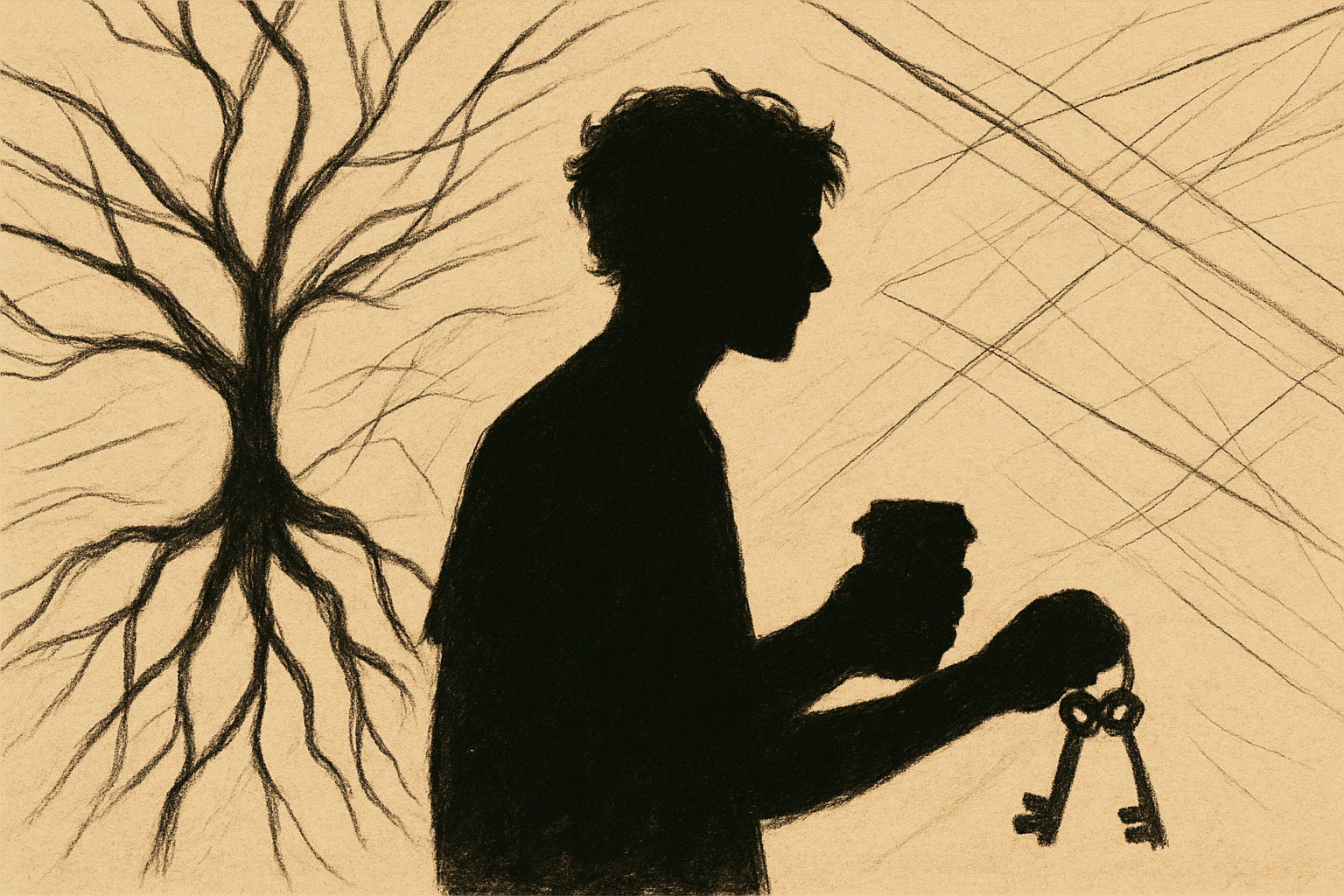
Final note, this week’s artwork is just some concept sketching I did for Bohike Boy, the story I submitted to BCLF. For this post, I did some polishing to make it more presentable but I’m actually a lot happier with it than I expected to be. And you can expect a new short story from me on Thursday over at Cetera, though a quick tease for all of you who made it this far…some big exciting changes are coming to that publication. More on that later. See you next time.
A unique rhythm-based arcade game, Space Waves blends intense music-driven gameplay with fast-paced action. In contrast to many other casual games, the focus is on moving in time with the beat rather than just speed or dodging obstacles. Do you want to try? Join now
Really enjoyed this post, Jon. The way you map out desire, conflict, and resolution makes writing scenes feel a lot less overwhelming. I have found that when a company lets writers explore outside the usual formula, that’s often when the most memorable scenes happen. Your process is a great reminder that structure and creativity don’t have to fight each other, they can work hand in hand.
Oyun həvəskarları üçün Pin-Up etibarlı və geniş imkanlar təqdim edən onlayn kazinodur. Burada klassik və müasir slotlar, canlı kazino masaları, turnirlər və bonus kampaniyaları mövcuddur. Sadə qeydiyyat, sürətli ödəniş və təhlükəsiz oyun mühiti oyunçulara həm əyləncə, həm də real qazanmaq imkanı yaradır. Tətbiqi yükləmək üçün baxın: https://pin-up-az.org/
Really enjoyed this post, Jon — your breakdown of desire, conflict, and resolution makes the whole scene-building process feel much more approachable. I’ve also noticed that when writers or even businesses allow a little room to move beyond the usual formula, that’s when the most impactful work comes through. It’s a solid reminder that structure and creativity can complement each other instead of clashing. On a related note, I’ve been exploring tools that bring structure to property investments too, and a good example is this professional landlord for buy-to-let management. Visit https://propertymanagementcompany.uk/
I really liked how you explained the flow of a scene, desire, conflict, and resolution. It makes the writing process feel less intimidating and more practical. Something I’ve found useful is asking myself after a draft, “What changed here?” If nothing really shifts, I know the scene needs more work.
On a side note, it kind of reminds me of real-life situations too, like when there’s tension around a tenants deposit, it’s a small detail, but it can spark a lot of drama and reveal character quickly.
Thanks for the breakdown — the comparisons were particularly useful.
Your blog is like a beacon of light in the vast expanse of the internet. Your thoughtful analysis and insightful commentary never fail to leave a lasting impression. Thank you for all that you do.
solitaire IO is a classic single-player card game where your goal is to arrange all cards into four foundation piles in ascending order from Ace to King.
🏏🔥 Turn every match into a winning opportunity with **LemonBook**!
Create your **cricket id** in seconds and dive into live action with real-time odds, smooth gameplay, and quick withdrawals. 💸
From IPL thrillers to global clashes, enjoy a reliable and exciting **online cricket betting** experience all in one place.
👉 Get started here: [https://lemonbook.in](https://lemonbook.in)
Play smart, stay ahead, and make every moment count! 🎯
ShivaayBharat is one of the best platforms for getting an online betting ID. Fast activation, easy login, and great customer support make the experience amazing. Perfect for IPL betting, live casino games, and online cricket betting users in India.
Dubai Exchange 24X7 with Jio Fair Play offers a smooth and secure online experience for users looking for quick and reliable access. Easy registration, fast login, and trusted support make it a convenient platform for anyone wanting uninterrupted access anytime, day or night.
Visit Now: https://jiofairplay.com/dubai-exchange-247/
Get your online cricket betting ID with Kochi11 and enjoy fast signup, secure access, and smooth betting on IPL, live cricket, casino games, and more. Trusted platform with quick withdrawals, easy deposits, and 24/7 support for all cricket lovers. Join Kochi11 today and start winning with the best online betting experience.
Visit Now: https://kochi11.com/cricket-betting-id-providers/
From a writing perspective, strong scenes often depend on a balance between anticipation and uncertainty. Chicken Pirate https://chicken-pirate-1hp.com mirrors this structure through gameplay mechanics where players constantly choose between safety and risk, much like a protagonist deciding whether to continue deeper into conflict. Sources describing the game highlight features such as progressive multipliers, four risk levels, and short high-intensity rounds that keep tension active throughout the experience.
Learning how authors approach scene constructions is helpful for anyone trying to Tomb of the Maskimprove their own storytelling skills.
After trying TonyBet , I appreciate how polished everything is. The site runs fast, the mobile version is excellent, and navigation is intuitive. Support replies quickly whenever needed. Security features give a good sense of trust. Registration and daily use are uncomplicated. Overall, it’s a clean, reliable platform that works consistently well. A good option if you want a stable and user-friendly site with solid Canadian availability.
Leaving the ending a little open can work really well when the clues are there. acceleration city
What an insightful post, Jon! Your approach to writing scenes and focusing on the immediate dramatic utility—rather than getting lost in endless world-building—really resonates with me. I’ve definitely been guilty of creating massive, complex outlines only to freeze up when it comes time to actually draft the interactions.
Interestingly enough, I recently experienced a massive breakthrough with my own manuscript by forcing myself to step back and just write a single, contained scene without worrying about the broader plot. I was actually taking some time off on a catamaran charter in Corfu—completely disconnected from my usual desk and standard writing tools—and decided to just free-write a conversation between my two protagonists. The change of environment, combined with letting go of the “grand design,” helped the dialogue flow so much more naturally.
Thanks for sharing your process for The Finalist. It’s a great reminder that sometimes we just need to narrow our focus, set the constraints, and let the characters drive the scene!
I enjoyed this look at *The Finalist* and the process behind writing scenes. The explanation of how scenes are shaped around character, purpose, and story progression is especially interesting. It is easy to focus only on the final story, but seeing how individual scenes are developed gives a better understanding of the writing process.
I also work on online information projects such as https://tinid.ph/, so I appreciate content that breaks down a process in a clear and practical way rather than only showing the finished result.
When winter storms are approaching, students, parents, and teachers often want to know whether schools may close because of snow and hazardous travel conditions. A reliable Snow day prediction can help families prepare by considering factors such as expected snowfall, temperature, ice accumulation, road conditions, and the timing of the storm. While weather forecasts can provide useful guidance, official school district announcements remain the final source for closure decisions. visit now:https://snowadaycalculator.us/