
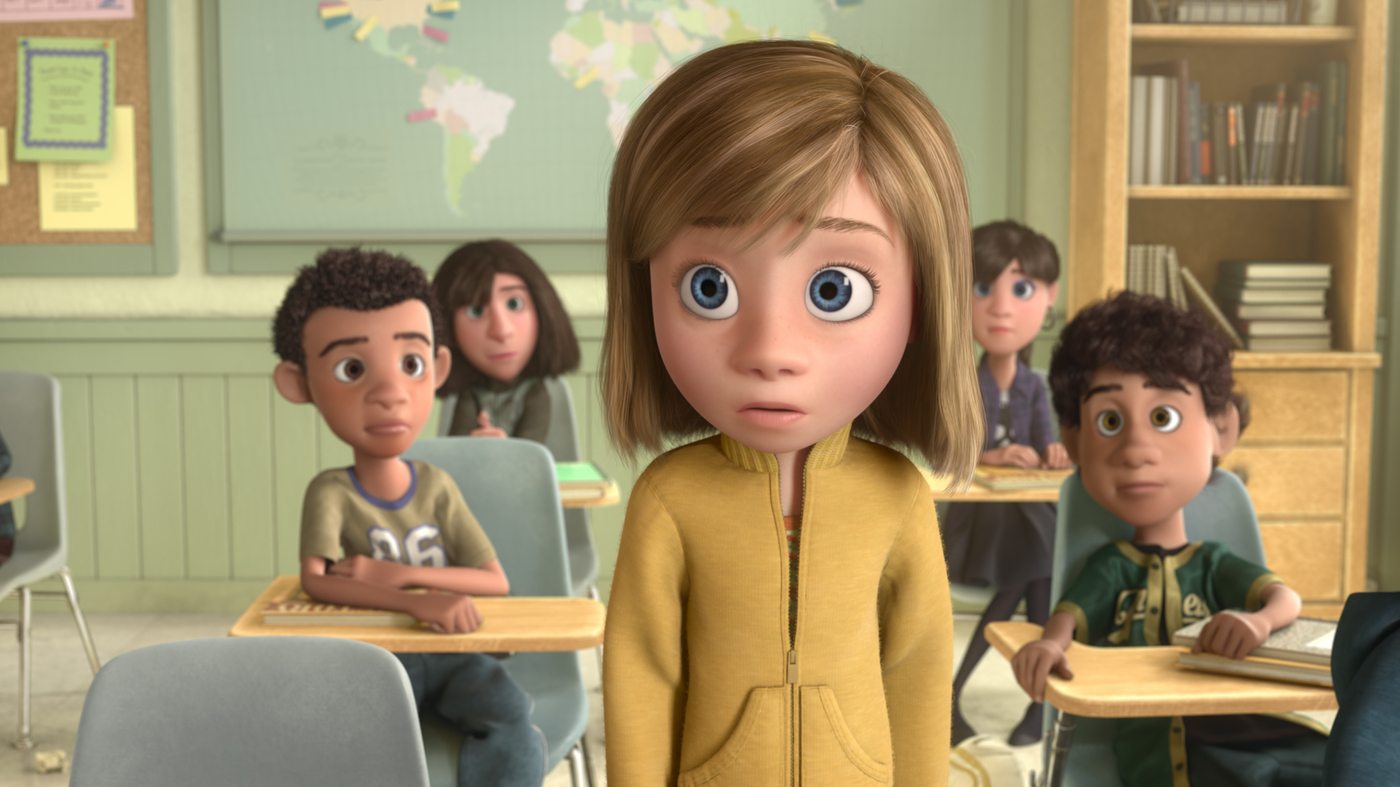
Take her to the moon for me. Okay?
The Pixar Theory, or “Grand Unifying Theory of Pixar movies” if you want to be more intense, is a fan theory I wrote in 2013 about how every single feature film made by Pixar Animation Studios is intentionally set in the same universe. Or unintentionally, if you believe in miracles.

I was inspired by an episode of the Web Series, “After Hours,” on Cracked.com. In the episode written by Dan O’Brien, the After Hours crew discusses, at length, how a few of the Pixar movies may secretly be about the apocalypse. They address Toy Story, WALL-E, and Cars before giving up because they can’t find a way to connect the films any further.
So I took that as a challenge.
Over the following year, I developed my own theory on how all the movies connect, and the results have been surprisingly epic. People from all over the world have read the theory, and many of you have been having ongoing discussions in the comments that go way beyond anything I first imagined (trust me, I read all of them).
Now, two years later, it’s time to see where we’re at as we welcome a new Pixar movie to the world: Inside Out.

First, it’s important to point out that the theory itself has changed dramatically over the years. A lot of people have called out flaws and underdeveloped points of the theory that make it fall apart for them. I’ve read the feedback and spent the last two years writing a book that fully fleshes out my original theory. It addresses pretty much every major complaint and issue that “debunkers” have thrown at it. And it does this in about ten chapters.
Every chapter follows a specific movie (some are lumped in together, like the Cars franchise). I talk about the context of the movie as it relates to this theory, where it fits in the grand timeline, and how each movie contributes to the idea that these movies exist in the same narrative. And yes, I go way beyond the easter eggs.
My book is available now on paperback and all e-book stores. Hope you guys like it!

But let’s get back to the main task at hand. Let’s talk about how Inside Out masterfully fits within the idea that all of these Pixar films are connected. What you’re about to read is set up like how I wrote the chapters for my book, so if you like what you read, then that may be a sign that the book is for you. Consider this your sample chapter, if you will.
Obviously, many spoilers are ahead, so read at your own risk. I highly recommend that you watch the movie at least once before reading this, especially since it’s pretty fantastic. You’ve been warned.
THE SET UP.

Inside Out is the story of a young girl struggling to grow up, seen through the eyes of her emotions as literal beings. Yes, Pixar made a movie where feelings have feelings.
The movie opens with the birth of Riley Andersen. The first thing you may notice is that she shares the same last name as Bonnie Anderson from Toy Story 3 and the subsequent shorts based on that movie. That may tempt you into believing that Riley and Bonnie are connected somehow, but that’s definitely not the case since their names aren’t spelled the same way.
For context, Pixar named Bonnie after two people: Bonnie Hunt (a frequent voice actor for the Pixar films) and Darla K. Anderson, the producer of Toy Story 3. Darla actually has easter eggs for her name dating all the way back to A Bug’s Life, where you can catch her first name on a box in “Bug City.”
Anyway, we learn early on that Riley grew up in Minnesota, but her family moves to San Francisco when she’s 11 years old. Now it’s true that Bonnie lives in Tri County, around the corner from Andy, and Tri-County does take place in the Bay Area of California. But that’s really just a coincidence. Riley’s family never mentions that they have relatives around, and they only moved to San Francisco for her dad’s job. For that reason, all signs point to this being a coincidence.
WHEN DOES THE MOVIE TAKE PLACE?
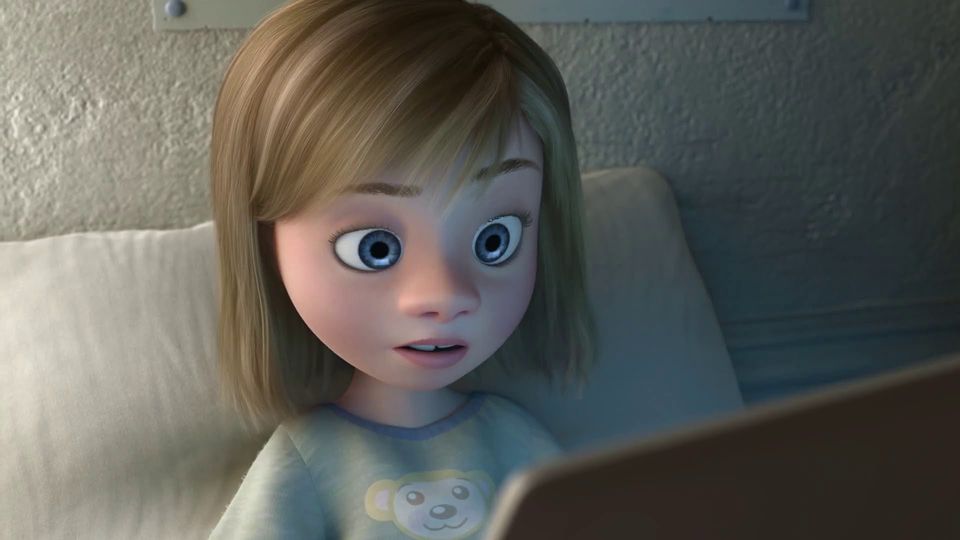
Moving on, we get to know Riley through a montage of her early life. When we get to the point where she’s 11, it appears to be modern day. Much of the technology we see throughout the movie — like a Skype surrogate that closely resembles the one used by Trixie in Toy Story 3 and the presence of smartphones — point to this being a film set in 2015.
That means Riley was born in either 2003 or 2004, depending on her exact birthday. Interestingly, that would mean the movie opens during the same year as Finding Nemo.
We also know that this has to be some time after 2007, which is when Ratatouille takes place. In fact, Inside Out actually confirms that Ratatouille takes place in 2007 instead of 2004, which is a conundrum I ran into while writing the book. It’s all based on the blurry date seen on Gusteau’s will and…eh, don’t worry, it’s not important.

Anyway, the reason we know that this is some time after Ratatouille is because you can see Colette Tatou on the cover of a magazine in a blink-and-you’ll-miss-it easter egg. Judging by the prestige of this magazine, Colette has done well for herself during her years learning from Remy and working at La Ratatouille, the bistro she started with him and Linguini.
After all, why would she be on the cover a magazine before her adventures in Ratatouille? Before she met Linguini, she was just a hardworking chef trying to build a career at a failing restaurant. I find it much more plausible that she’s created a name for herself under the tutelage of the best chef in France.
(DONALD GLOVER VOICE) MY EMOTIONS!

So as we get to know Riley in the film’s early montage, we meet her emotions. The film immediately takes us inside her head, where we watch Joy, Sadness, Disgust, Fear, and Anger team up to influence Riley’s actions. They work in “Headquarters” (get it?) and use a mysterious console to control Riley’s decisions.
When an emotion manages to elicit a meaningful experience in real life, a memory is generated and sent to Riley’s long term memory. If it’s a specifically powerful experience, then it will create a core memory that will stay in Headquarters.
It’s somewhat confusing, but Pixar does a great job of explaining this better than I can. They use subtle techniques and cleverness to make the inside of Riley’s head immediately unique, while also incredibly believable.

For example, the memories are shaped like “marbles” because without them, Riley would lose her marbles.
This is a fun movie.
The plot of Inside Out focuses on Riley being uprooted to a new home in San Fransisco and how this negatively affects her emotions. She misses her friends, never sees her dad anymore because of his new job, and feels pressured to just “be happy” all the time. This causes her to repress her sadness, which eventually causes even more problems.
CONNECTIONS AND MISFIRES…

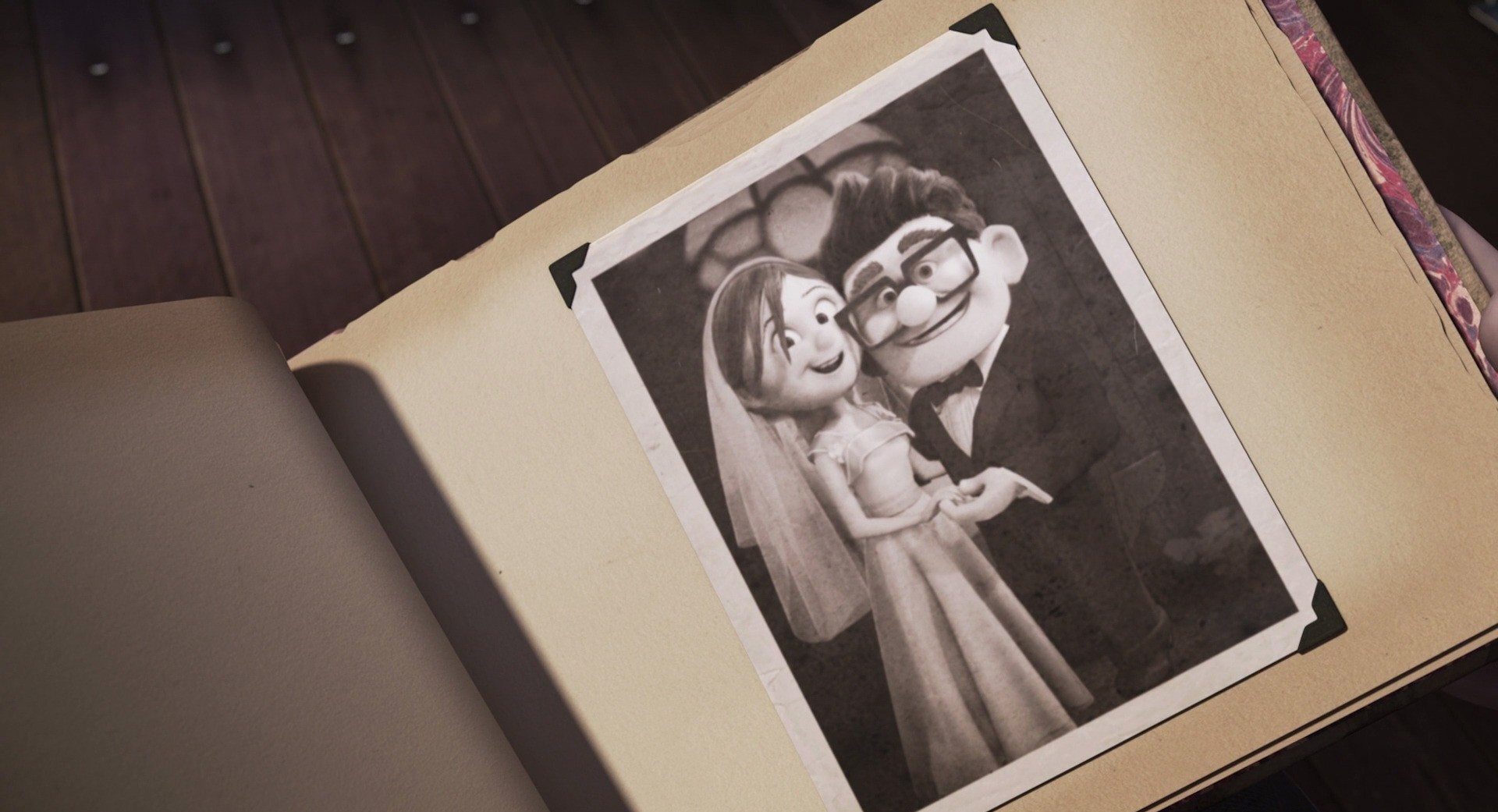
There’s another fun cameo during this part of the movie. We see a rat that looks a lot like Remy, which is just a fun reminder that Pixar animation transcends the multiple stories they tell. And we also see memories that feature other Pixar characters. You can see Carl and Ellie’s wedding from Up for example.
A good reason for that could be that Riley saw a tape of this wedding at some point, though that would have to be a very old home movie. It could be a picture, since we see a camera in the first frame of that scene in Up. In that case, Riley could have seen that picture and imagined the wedding herself. This has led a lot of people to think that Riley could somehow be related to Carl and Ellie, which would be quite a stretch.
That’s because Carl and Ellie sadly never had kids, so Riley would have to be a distant relative. If she knows about the wedding, then she’s probably met some of this family, but we know in those early scenes of Inside Out that Riley is visiting California for the first time. She thought the Golden Gate bridge was actually golden, after all.
You could argue that people from this family went to Minnesota to visit her, but I’m not really convinced. Personally, I don’t think we’re able to know just yet, though one theory I have is that she had a teacher or friend’s parent who is somehow connected to Carl and Ellie. A future Pixar movie may shed light on this.
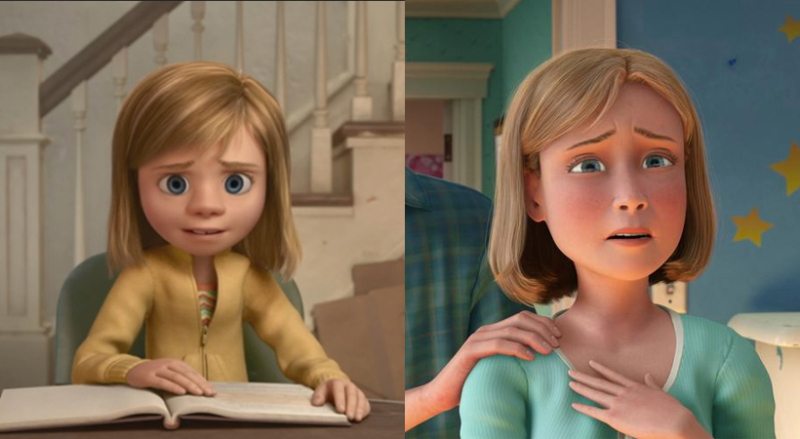
Some people even want to believe that Riley is Boo from Monsters Inc.,or Andy’s mom. Seriously. Look, Riley is Riley. She’s not anyone else, and trying to force these connections is missing the point. For example, the primary reason people think Riley is Boo is because when she’s shown as a toddler, she’s wearing the same hair tie/scrunchy thing that Boo wears in Monsters Inc.
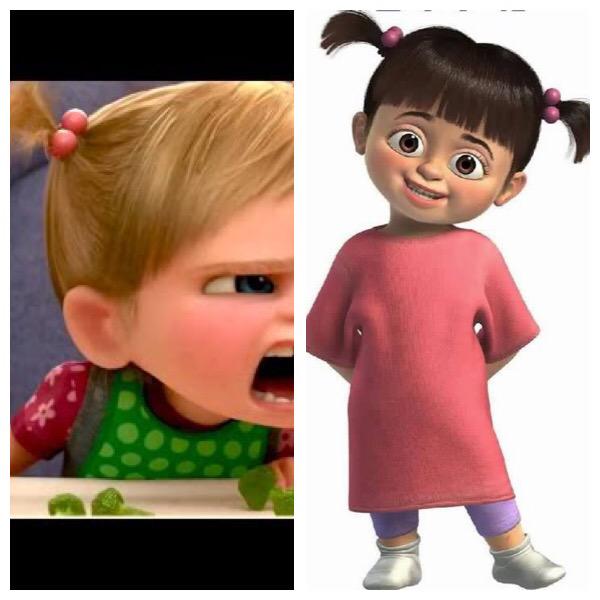
They both even have pig tails. If you’re fixated on them being one in the same, then you miss the cooler reveal, which is that Riley was growing up around the same time as Boo (Monsters Inc., takes place in the early 2000s), so of course that style and those hair ties were popular.
As for Riley being Andy’s mom…I mean that’s way too much of a stretch, even for a limo.
HUMANS ARE BATTERIES…
A main theme of the Pixar Theory is the idea that humans emit this strange energy that we see all throughout the films. In Monsters Inc., we learn that the laughter of a child can be harvested as energy for a society of creatures that mysteriously know how to use it. In The Incredibles, this energy is seen tangibly through the exploits of super-powered humans who can do amazing things.
Part of my Pixar Theory (the updated version) is that humans power the toys in Toy Story because they’re built to collect energy by the machines from The Incredibles. The book goes more into detail, but the basic idea is that the machines know how to use human energy as a battery, which carries on as a strategy all the way to the future, when monsters have to go back in time through doors to access this energy because no humans are left thanks to WALL-E.
But all this time, I’ve wondered why Pixar seems so infatuated with this idea of imagination being a raw power. And Inside Out addresses this pretty head on. The whole premise of the movie is that our emotions (as seen in Monsters Inc.,) are what truly power our actions. And the most powerful emotion for a child is Joy, as seen by Joy being the de facto leader of Riley’s emotions. Most of Riley’s memories are positive, and this is because Joy is inherently a strong emotion for many children.
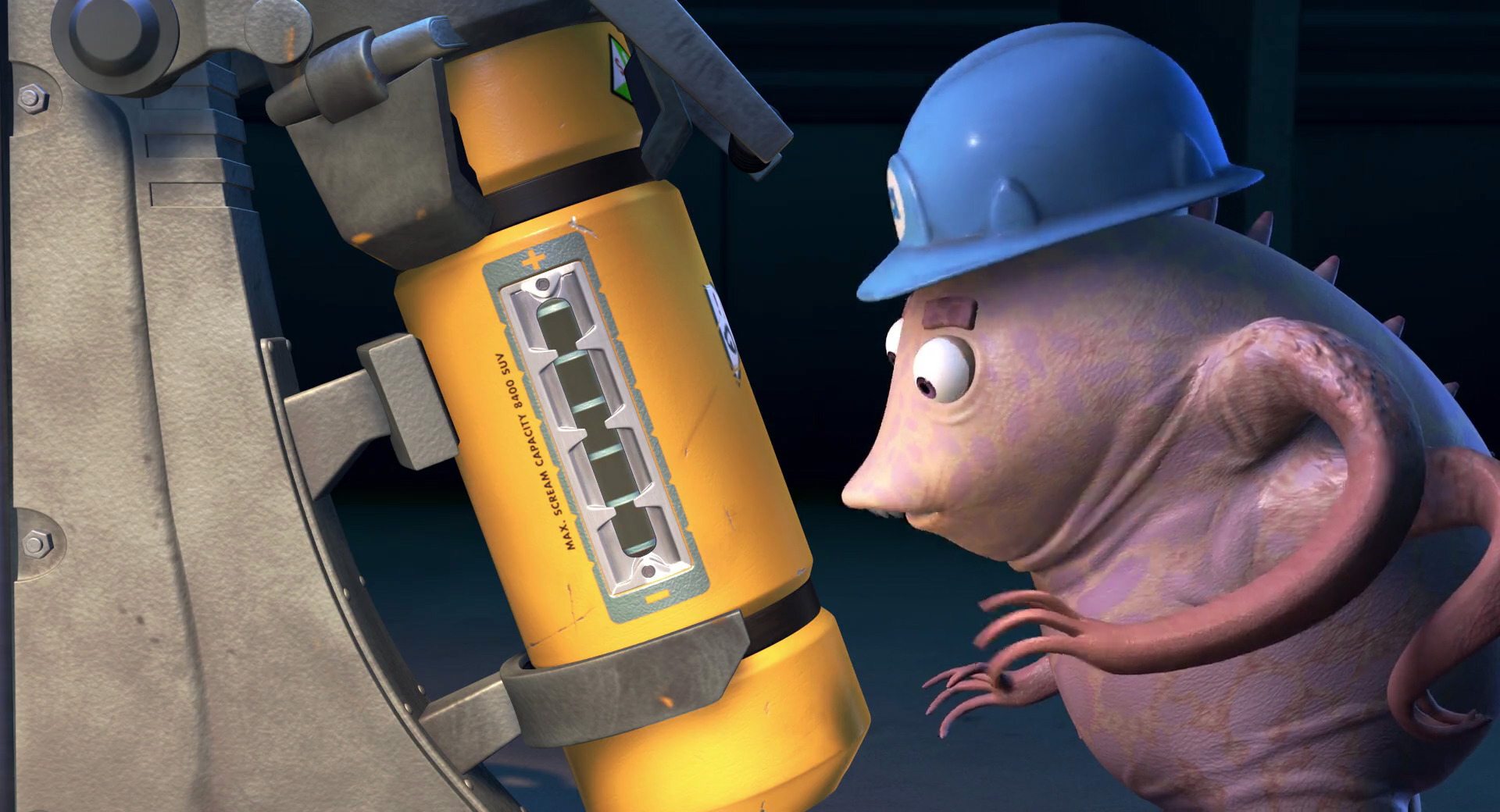
The monsters of Monsters Inc, use fear, which can be another strong emotion for some kids, to power their society, but they eventually learn that laughter from joy is far more effective. And why is that? Well, Inside Out explains that joy is one of the first emotions we experience. Joy, the character, is a literal light source. She’s fast, tough, and clever. And she’ll do anything to make Riley happy. The other emotions in comparison are much more passive.
A lingering question in Monsters Inc., is why adults are so difficult to scare. Inside Out sort of answers that by showing how the inside of adults’ minds work. They’re more emotionally balanced, for example, so you don’t see one emotion overpowering the others. When we see inside the heads of Riley’s parents, the emotions don’t bicker like they do in Riley’s head. Instead, they all work together to accomplish the same goal.
But that’s not all. No, no, no. There’s something even better hiding in the dark of this movie that serves as the biggest “Aha!” moment I’ve had since I carefully re-watched Brave and Monsters Inc., back to back.
And it has to do with this guy, Bing Bong.
BING BONG! BING BONG!

Bing Bong is Riley’s imaginary friend. Joy and Sadness meet him halfway through the movie, and he helps them navigate Riley’s mind as they try to return to Headquarters. When Riley was three, Bing Bong was her best friend. He’s part cat, part elephant, and part dolphin. He’s made of cotton candy and, naturally, cries candy. He even has a wagon that can fly when powered by songs…
(humans=batteries).
So what’s the big deal? Why is he important?
Simple. Bing Bong is an imaginary friend, yes. But he’s based on a monster. Riley’s monster from when she was three.
At the end of Monsters Inc., Sulley and Mike decide to make kids laugh instead of scream because it generates more energy and is less messed up. We even see Mike go through a door and perform standup comedy for a child.

But wouldn’t this leave a kid feeling traumatized? Imagine a monster coming through your door, making you laugh, and then disappearing forever. This would make no sense unless…children perceive these new monsters as their imaginary friends.
Bing Bong was a monster who went through Riley’s door and made her laugh when she was three. We know that monsters have animal characteristics, explaining his part-cat/part-elephant appearance. And of course Riley thinks he’s made of cotton candy. Why else would he be pink? I’d even argue that he makes dolphin noises to make Riley laugh, causing her to think he’s part dolphin, too.

This all makes perfect sense if we’re to believe that well-adjusted kids in Pixar movies grew up meeting monsters in their rooms late at night. And it’s further helped by the fact that in Riley’s subconscious, she’s afraid of clowns, not monsters.
And think of it this way. Isn’t it pretty easy to picture Bing Bong living in Monstropolis?
I have plenty more to say about all of this, but those are the major points. If you want to keep digging, you can read another exploration I did of this movie that goes somewhat more into detail. The gist of it is that Bing Bong is life.
There are more easter eggs for the movie listed at the bottom, but that’s the basic rundown of how Inside Out fits into the Pixar Theory. If you think of something interesting to add or have a compelling question to ask, fire away! Just please…don’t ask if Big Hero 6, a Disney movie, should be in the Pixar Theory…
Ready for more?
The conspiring doesn’t end here. Check out my other Pixar Theory posts from infinity to beyond:
- The Pixar Theory – the full book available on paperback and ebook via Kindle, Barnes and Noble, iBooks, or just a PDF. This will cover the entire theory and every movie in the Pixar universe, updated from what you just read.
EASTER EGG ISLAND!
- There’s a globe in Riley’s classroom that has been shown in every single Toy Story film.
- Some of the cars in San Francisco have bumper stickers from the Pixar movie, Cars.
- Bing Bong disturbs a cloud person in Imaginationland, and he looks a lot like the cloud from the Pixar short, “Partly Cloudy.”

- Also in Imaginationland, you can see a board game with a picture of Nemo that says “Find Me.”
- One of Riley’s classmates wears a camo shirt with Toy Story characters on it. Well, their silhouettes, at least. It even looks like Arlo from The Good Dinosaur is on there as well. There’s even a popular girl at the school with a skull t-shirt in the same fashion as Sid’s from Toy Story, just in a different color. The 90s are making a comeback!

- A banner in Riley’s hockey rink showcases a team from Tri-County, which is the setting for Toy Story. I explain this easter egg further in a different article.
- Blink and you’ll miss a “For the Birds” cameo during Riley’s road trip to San Francisco in the beginning of the movie. It’s just like their appearance in Cars.
- As always, the animators included ample A113 references. I’ve heard there’s more than one, but the only one I saw personally was A113 as the number of Riley’s classroom.
- If you look closely at Riley’s Chinese takeout box, you’ll notice it has the same design as the one from A Bug’s Life (pictured below). Those familiar with the theory know that this could be because the same restaurant exists in both movies, so naturally there’d still be remnants of these takeout boxes hundreds of years later during Flik and the gang’s adventures.

Not that it matters but that noodle box is also the same one from the restaurant Harryhausens in monsters inc
They’re the same colors, but not the same. Also, Harryhaunsen’s sells sushi, not Chinese food. Monsters Inc. pic: http://www.trespassmag.com/wp-content/uploads/2013/01/Monsters-Inc-image-2.jpg
i think if htere is gona be a second ratatuille movie where he enemy would be this chinese fast food
So, Emily from Toy Story is riley’s mom, and Riley is Andy’s mom. I think it’s possible
Emily is Andy’s mother. Riley was born around 2003, whereas Andy’s mother would have grown up in the eighties, where we see a lot of that style in Emily’s room. Riley seems to be closer in age to Andy than his mother, judging by the years in which they were set.
So I know that A113 refers to a classroom that the Pixar animators went to, but do you think there is an in-universe for this number showing up all over the place? Is there some sort of cosmic significance of this showing up all over the place for the characters?
Also I know you’ve been asked this before but do all of the Pixar shorts fit in the timeline? Like Lava, intelligent volcanoes? How would that fit? Maybe they are magical like Nomanisan island? Do you have a post somewhere where you address every Pixar short in light of the Pixar theory, or do you do that in your book possibly? I will be getting your book soon by the way, can’t pass that up!
Daniel I have begun formulating a theory that goes with the Pixar Theory and the shorts. I have yet to include all of the shorts, but here’s a few to start.
Lifted: The aliens are really monsters from pre-laughter Monsters Inc. that are collecting humans in order to see if they still fear monsters.
Red’s Dream: Red (the bicycle) is aware that he requires human love to survive, but also knows that he lacks it and may die.
Tin Toy: Tinny (the toy) is trying to receive all the attention he can from the human baby in order for him to survive. The other toys live in fear of the baby (similar to many toys in Toy Story 3)
For the Birds: The main, slightly antagonistic birds show signs of the evolution from the theory. Like many fish do to Dory, they shun the less intelligent larger bird.
Presto: Alec (the bunny) is showing signs of the animosity towards humans mentioned in the theory when he is denied the carrots he wants.
The Adventures of Andre and Wally B.: This short is in the time of Monsters Inc., with two characters that are obviously not human annoy each other.
Boundin’: The sheep is sheared by humans, causing him to be depressed. Eventually, though, with the help of a jackalope (possibly a monster) he becomes one of the animals that does not hate humans.
Lava: This is pretty important. The volcano, which has become somewhat of a machine, relies on the affection of another volcano rather than a human for energy. This keeps the volcano alive. This works similarly with Luxo Jr., Knick Knack, and The Blue Umbrella.
That’s it for now. If you have anything you’d like to say, please respond in the comments section.
I’m reading the book right now, and I found myself wondering: how does Pizza Planet connect with Buzz Lightyear’s TV show? The characters from the show are all over the place in the Planet, which is reminiscent of Chuck E. Cheese’s (but futuristic). Does the pizza place have corporate sponsorship from whatever show produces Buzz Lightyear? What’s the connection?
awesome sertyjfmr6ut5g
So as I was reading the article (great stuff by the way), I came across my own thought (although someone else could have easily thought of this). Did you ever think that the color of the container in Monster Inc shows its effectiveness? It makes sense that laughter/joy would be more effective (container is yelloe and joy is yellow). It could have been made as a reference that they were going to later use laughter to fill the containers. Also, what if the presence of a lot of these A113 is actually because they were all present in a similar location. Yes, the Pixar movies have been all around the place but what if they all had the same general location or geograpgical similarity that meant more than pixar’s childhood classroom? What if that A113 might be from a story they were told as kids and those stories were stored in computer databases which eventually changed into full-out robots? Yes it’s a lot of “what ifs” but it could definitely be possible. In the Pixar short (Lava) before Inside Out, two volcanos make a happy couple together. Could thie possibly be the creation of the land that Carl sets out to find in UP? Similar tree lines and such.
Lots of possibilities but theories emerge from possibilities which turn into fact later. Please leave me a reply about what you (Mr. Negroni) think as well as the rest of the community. I would love to see how you connect the future movies!
A113 is a class room a lot of the animators learnt how to animate, and that’s why you’ll see it in other franchises and not just Pixar. Fun fact though, Wall-E’s Title actually contains A113 if you remove the dash and w. (allE which becomes A113).
Mind. BLOWN.
Just because they don’t mention that Riley had family in San Francisco, dose not mean that there are no family their. Riley new she had family in San Francisco, so her parents didn’t need to tell her. So it is possible that Riley is related to Bonnie. As far as I know there is not enough evidence either way that Riley and Bonnie are related.
Super Carlin Brothers on Youtube regularly steal your content without crediting you at all. The most recent thing was from this article and it happened a few weeks ago. Here is the link.https://www.youtube.com/watch?v=rOuY87B-bMw
When I first saw this I thought this was them expanding on your theory by themselves, but it’s outright theft.
Many people call them “their theories” and on occasion they say “they will answer them” implying they are using their own knowledge.
I have subscribed to them and on their first Pixar Theory video, they gave full credit to Jon. Most of their fan base knows who invented it so they find useless to point it out every video. They usually add their own opinions on the theory as well, which occasionally differs from Jon’s opinion. And yes they do answer fan questions because they have the right too. Super Carlin Bros. isn’t stealing from Jon, but instead, uses his idea for a foundation to build upon.
That’s very good to know, thank you. I didn’t want them to be evil YouTubers whom I am forced to stop watching due to a moral dilemma, but I wanted to point this out to Jon so if he wasn’t okay with it he could stop it. I’m glad to know that they gave him credit. Thank you for replying.
Jon Negroni, I have a very important question that will resolve a debate that my sister and I have been having for a long time: Why did you create the Pixar Theory?
If you look at part one of the theory it says it’s because he watched the video from Cracked.com and it sparked his inters. They only connect 3 and then got stumped. It inspired him to connect them all.
Why not?
Aside from that, I was inspired by an episode of After Hours on Cracked. They tried to connect just a few of the movies and gave up. I love finishing things, so I took it upon myself to complete the job.
Will you ever mash the Pixar theory with the Disney animated classics films?
Spoilers,,,,
I found the pizza planet truck, front of the large island at the end of the movie
Whoa, whoa, whoa.
You FOUND the Pizza Planet truck?!?
That is a HUGE accomplishment! Dedicated Pixar fans have spent HOURS (or at least an hour and a half) searching for it!
Nice job! Hi-fives all around! 🙋
Baby Riley is adorable.
Hey, you’re probably going to hate me for bringing any of this up (either because there isn’t enough evidence, or you may have already covered it), but I had a few theories to add. Main one is that Riley is in fact related to Bonnie (from Toy Story 3), but not in the way you probably think. this is just speculation but the location last name and the look of Bonnie and Riley’s mom do give a hint that they might be sisters (setting Toy Story 3 in about 2020 when Riley’s parents may have had another kid). Again it’s all speculation at this point, but it doesn’t seem to far fetched that Riley’s parents had another kid, and had to move again for work. That probably ins’t true, but may have some standing. The second thing is just a statement, but the weird order of these films suggest that everything isn’t necessarily in the order they may appear to be in (as you have pointed out with the whole theory), so we can’t actually assume that The Good Dinosaur is in the past, it may be in the future after the monsters, or some time between the monsters and Wall-E (if you believe in de-evolution), I’m just saying keep an open mid to it. Last thing, which may sound crazy, but what if the desk lamp actually plays a part in this theory? I’m not 100% sure but I vaguely remember seeing it in one of the Toy Story movies as an Easter egg, but what if it is more then just that? what if it is one of the machines that is part of the uprising (super far fetched, but I’m just saying that there may in fact be a use for it in the theory). For all we know, this may be a clue hidden in plain sight. well that’s most of what I have, I’ll come back with any new ideas or proof.
Are the Pixar shorts part of this theory? I know that the shorts based on films, like the cars toons shorts, are part of it, and the short of the old man playing checkers by him self, he appears in Toy Story 2. What about the other shorts? Shorts like Tin Toy or Red’s Dream, are they part of the theory?
**Andersen, not Anderson.
Sorry I had to.
How do u explain Bing Bong being a monster if he plays with her outside in the day?!
Sorry to ruin your theory, BUUUTTT…
If children perceive the monsters as their imaginary friends after the monsters come through their door and make them laugh, why would Boo still be looking for Sully all those years later?
I feel that Boo’s experience with Monsters might have been much more stronger due to prolonged time around Sully that she would able to know that it wasn’t an imaginary friend but a real thing.
Riley could be their niece, but I dont know if Carl or Ellie had siblings
The chinese takeout box is also in Monsters Inc (from the Harryhausens restaurant) and Ratatoullie in Linguini’s fridge (I noticed that one after watching it twice)
and it is also on Toy Story 2 in the pizza planet truck
Hello, Jon. My boyfriend pointed out something that has got me thinking… And maybe you can give some input: As you can see in the teacher, mom and dad’s mind, all of the emotions are either masculine or feminine. My question is: Why does Riley have emotions that are BOTH masculine and feminine? Any ideas?
Easter eggs wise, I think there’s a dinosaur toy box next to the Finding Nemo box in Inside Out that’s a subtle reference to the Good Dinosaur? Also, I reckon the dinosaur on the t-shirt is Rex from Toy Story
I also found another Easter egg in the movie inside out. It occurs in Riley’s new classroom, on the back wall there is a poster that has a plant on it similar to the one seen in wall E and could also be linked to cars 2 with the company alinol
An interesting factor in this movie is the gendered emotions (In the case of Riley – Joy, Sadness and Disgust are feminine, while Anger and Fear are masculine).
However, inside other characters all emotions match their gender. Her father’s are all male, her mother’s are all female – as well as her teacher’s. This isn’t just an adult thing either as the boy Riley meets at the end has all male emotions.
Is it hinting towards RIley struggling with gender? I hope so, trans and genderqueer people need more representation! I’d love to hear your thoughts on this 😀
I’ve said this before, but one of the main issues with this is that your emotions don’t dictate your gender identity. Riley hasn’t gone through puberty yet, so it makes sense that she’s still a tomboy and has masculine-ish emotions that correspond with the ones seen dominant in her father, and vice versa for her mother. Even if her emotions remain this way after puberty, why does it mean that she’s somehow gender fluid or transsexual? I don’t see how that connects with sexual orientation or gender identity at all beyond, “well her emotions are more complicated.” Well, great! That’s what makes Riley more interesting.
Yeah, I see what you mean, I just thought that Pixar may have purposefully created it that way to allude to a confusion in regard to gender. Perhaps they just wanted an excuse to cast Bill Hader! Thanks for replying 😀
The makers of the film said they did for variety in the characters. They honestly didn’t think anyone would notice.
ah, so it was to cast Bill Hader! haha, thanks for clearing that up 😀