

Inception is rapidly becoming my favorite movie of all time. I first saw it during the midnight premiere back in 2010, and I enjoyed the heck out of it. I remember being mesmerized by its originality and unrelenting assault on my mind’s stamina.
It took another dozen viewings of the film, however, to persuade me that this is one of the best films of my lifetime, and the first truly great film of the 21st Century.
Let me explain.
For me, a truly great film isn’t really like a masterpiece. A masterpiece, after all, is more about critical praise and the apex of one’s career. Inception is great in a different way. It’s just smart. It didn’t receive universal, critical praise (though it got some) because it completely went over the heads of almost everyone.

For all of you who think you “get” the movie, I sincerely doubt that more than a handful actually caught everything that was going on in the story.
Here’s a test to see if you did: do you think the ending was a cliffhanger? Because if you did, you are dead wrong.
Let me be clear about something. I’ve seen this movie backward and forward, so what I’m about to get into is just a summary of what I’ve personally discovered, combined with some great insights provided by the research of others.
Spoilers ahead, so if you haven’t seen the movie, stop reading this and get that taken care of.
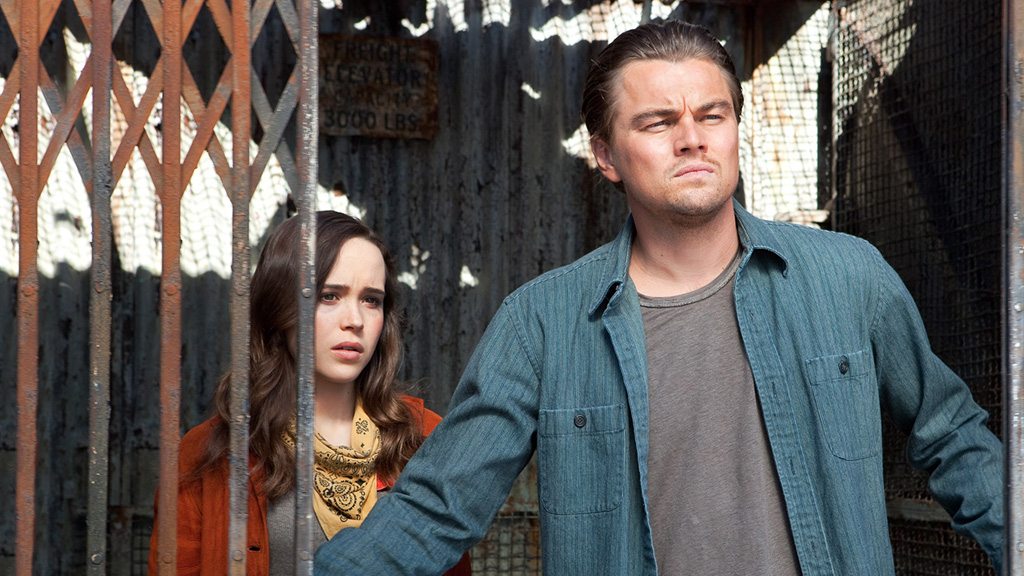
I believe the entire movie was a dream, and we are supposed to arrive at that conclusion. Nolan implants countless clues that point to this, but he works to make sure that even the clues themselves are ambiguous.
The first clue? To catch it, you have to watch the movie at least twice. There is a line in the movie when Cobb points out that our dreams always start in the middle of something, but not really the beginning. We never think about “how we got there” as he puts it.
Inception begins in the middle of Cobb’s story, as well as the middle of a dream heist. We aren’t introduced to Cobb, Arthur, or Saito. We are given a brief look at the end of the story, and then the movie just shifts seamlessly into the dream heist.
What does that remind you of? When we recall a dream, we typically start at the end (Cobb and “old” Saito) and try to remember how it actually started, but we can’t remember how it really started and just start somewhere in the middle.
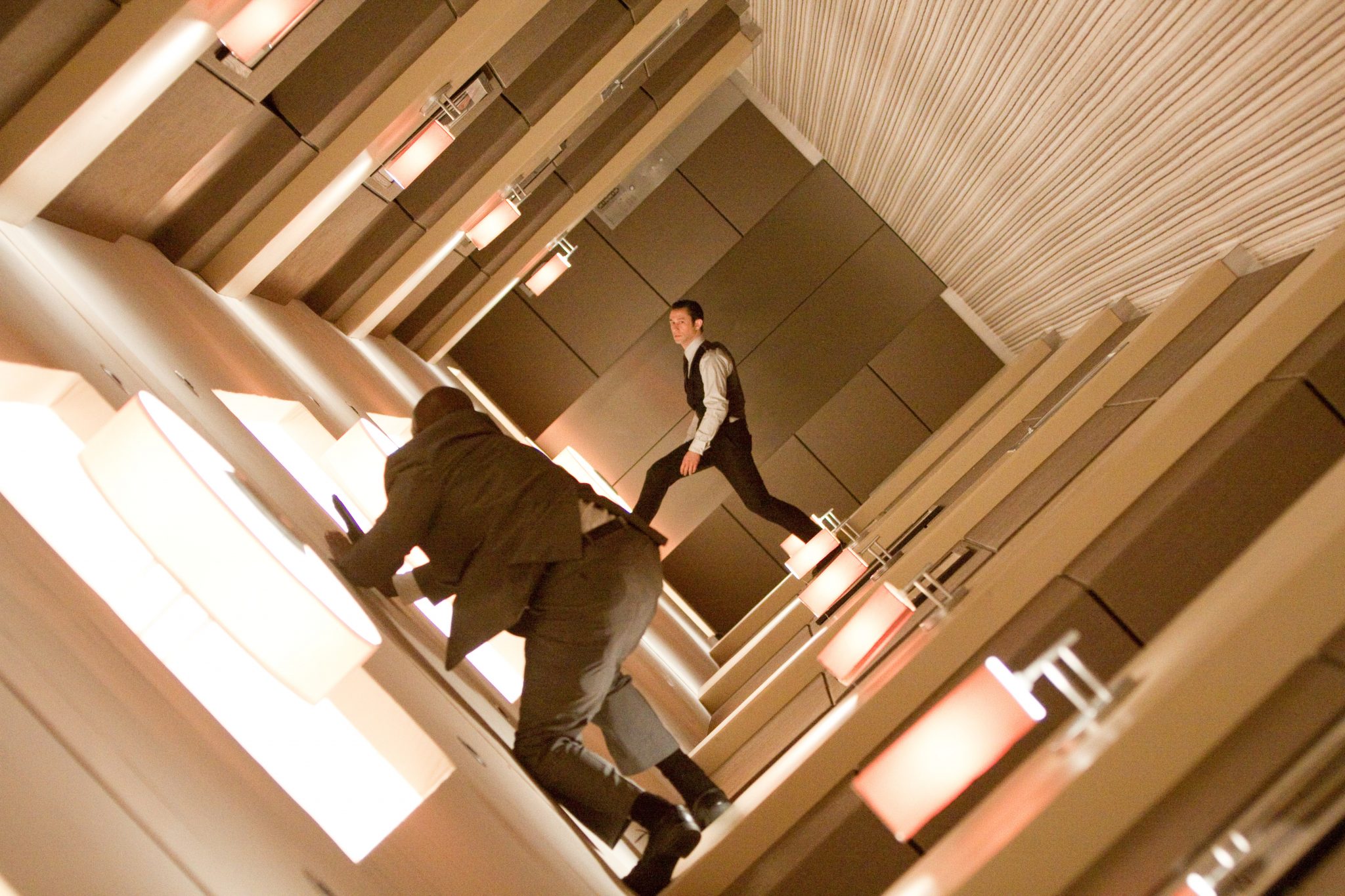
So, let’s say you buy that. The whole movie was a dream. Doesn’t that make you mad? Well here’s Nolan’s genius: that shouldn’t matter. We get mad that the movie was just a dream and say, “Why bother watching a movie that didn’t really happen–” and then you realize that the movie is fiction anyway.
That is just one example of why this movie is so amazing. It has scores of themes you didn’t even think were possible to associate with the film. And it takes work to sort this all out.
Back to the first statement that everything was a dream. Maybe you’re not convinced? I’ll give you more clues. The basis for the “It’s a dream” theory is based on how limbo works. When the “kick” happens, namely suicide here, you go one level up in the multi-level dreams.
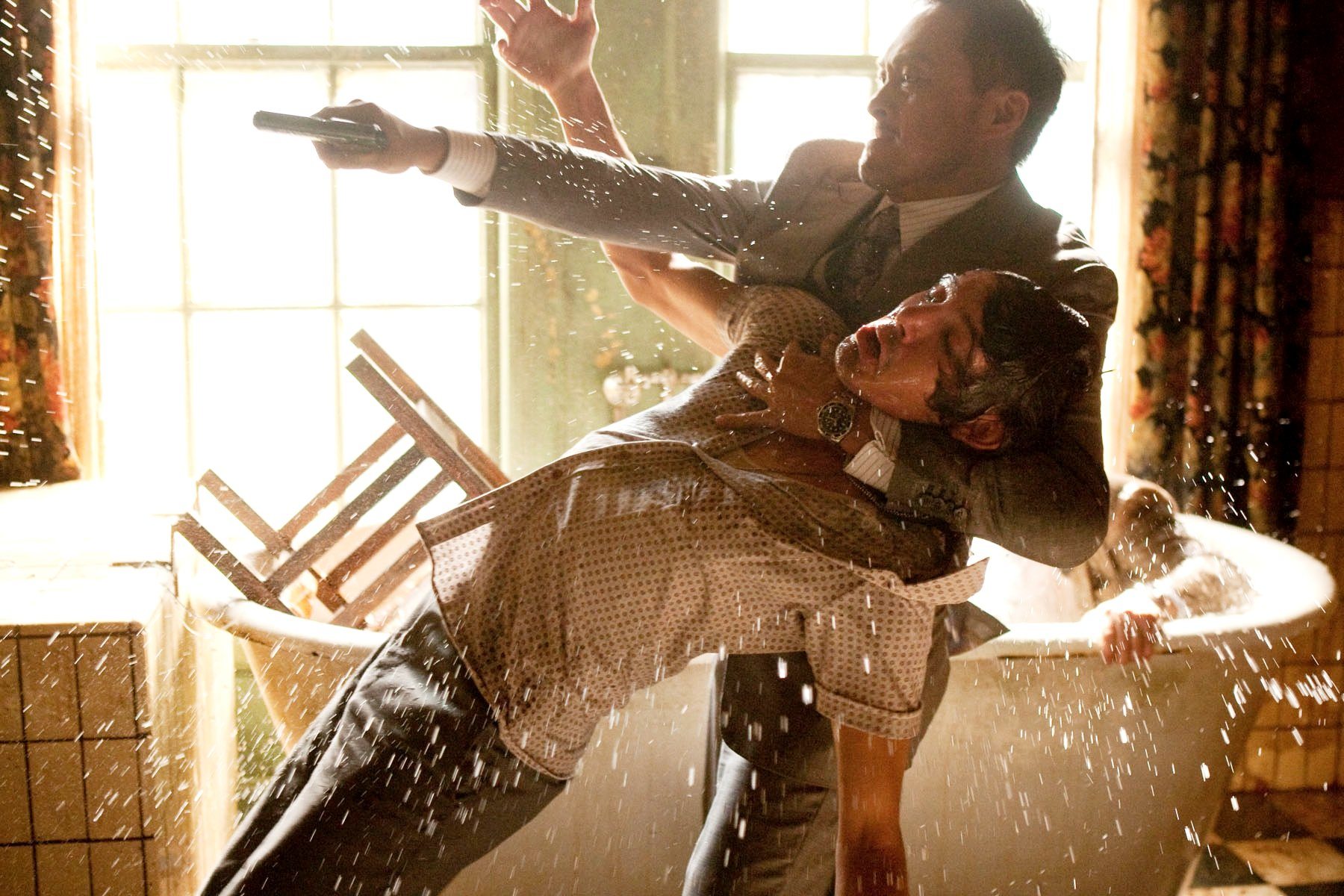
Cobb explains to Ariadne that he and Mal, his wife, ended up in their world-building limbo because they were experimenting with multi-dreams and Cobb pushed them too deep. He says they grew “old” together and eventually committed suicide on the train tracks to go back to reality. But here’s the thing…that would have sent them only one level up.
Cobb believes inception is the reason Mal went insane and killed herself, but it was actually true. If they died in limbo, it would be impossible for them to return to reality again unless they died again and again. Totems mean nothing here because the totem Cobb used was Mal’s, and he even broke the rules and explained how it works to Ariadne, compromising its purpose. (Talking about the totems alone would take up this entire article by the way)
Another clue that they were in a dream when Mal killed herself: She trashes the hotel room to make it look like Cobb killed her so that he will eventually join her, but when he approaches the window, she’s across the road in another hotel room. If you look closely, it’s the same hotel room, plus it would make no sense for her to go to the other side. Cobb even proves that he doesn’t catch how that’s odd when he tells her to come inside and motions for her to come into the window he’s currently at, even though she’s across the street.

One of the characteristics of a dream is that weird things happen that we don’t catch. When the dream was happening, strange things happened that we didn’t realize were major “plot holes” or illogical until we woke up and actually thought about it.
The entire movie is like this. The fast (and sloppy) editing, the one-dimensional characters all revolving around Cobb, the walls closing in on Cobb for no reason during the chase scene in Mombasa, bodyguards coming out of nowhere to attack him, Saito showing up just in time to save Cobb, and so many more examples all lead the diligent audience to believe that this is really just a dream.
After all, do we really believe that an energy tycoon that is smart about money would actually buy an entire airline just for the heck of it? And then said tycoon would risk his life in order to take part in the mission? It doesn’t really make sense the more you think about it.
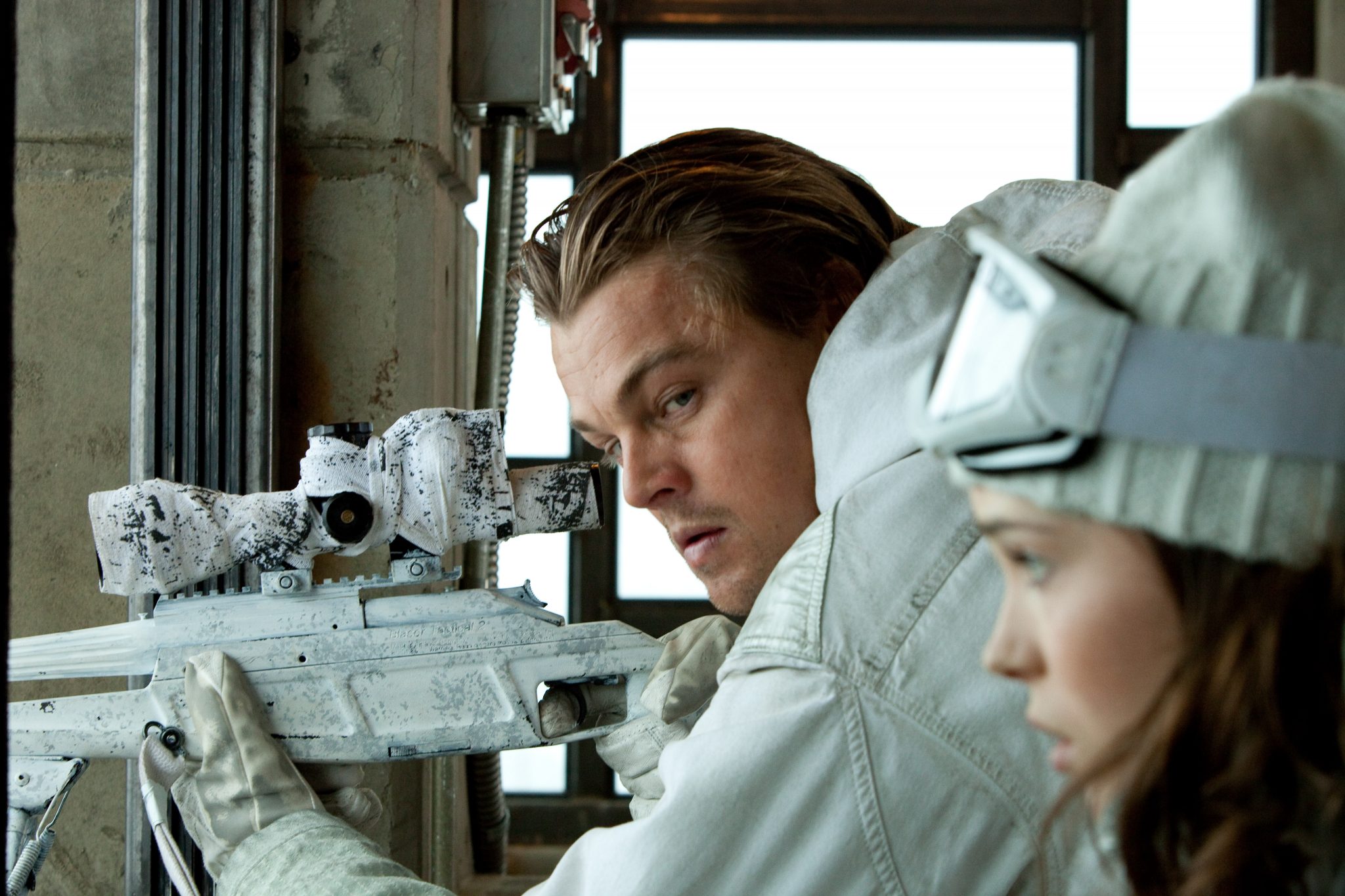
Watching the movie play out, it’s hard not to catch that it is clearly an allegory to filmmaking. When watch a movie, we are watching what is essentially a dream. Plot holes and the like exist because the director is trying to explain his “dream.”
Nolan himself has even admitted that he framed the characters around certain roles in filmmaking.
Cobb is the director: he leads the whole thing.
Arthur is the producer: he organizes everything.
Eames is the actor: he changes his appearance.
Ariadne is the screenwriter: she designs everything.
Yusuf is the special effects studio: he’s behind the technology to make everything work.
Saito is the bank-roller: he funds the project.
Robert is the audience: he’s the person they’re trying to plant an idea into.

Need more clues? We’re told during the movie that elements of a person’s subconscious creep up during the dreams. That’s why Robert’s number, 528491, appears so often in the movie. He initially guesses the number is a combination to his father’s safe. Later, the number shows up on a napkin, a hotel room, and eventually his father’s safe at the snow fortress.
This carries on throughout the whole movie. The number of the train that kills Cobb and Mal, when they are in limbo is 3502. The taxi number later on is 2305, and the hotel Mal trashes is in room 5302. This implies that Mal’s death happened during a dream. And in the image above, you can see 3502 on the train that appeared during Robert’s dream.
Here is the most important subconscious clue, since it has to do with the ending that ticked everyone off for being a supposed cliffhanger. The end scene when we watch to see if the totem will fall (and prove Cobb is in reality) is a red herring. A massive misdirection that serves to make us miss what’s going on in the background.
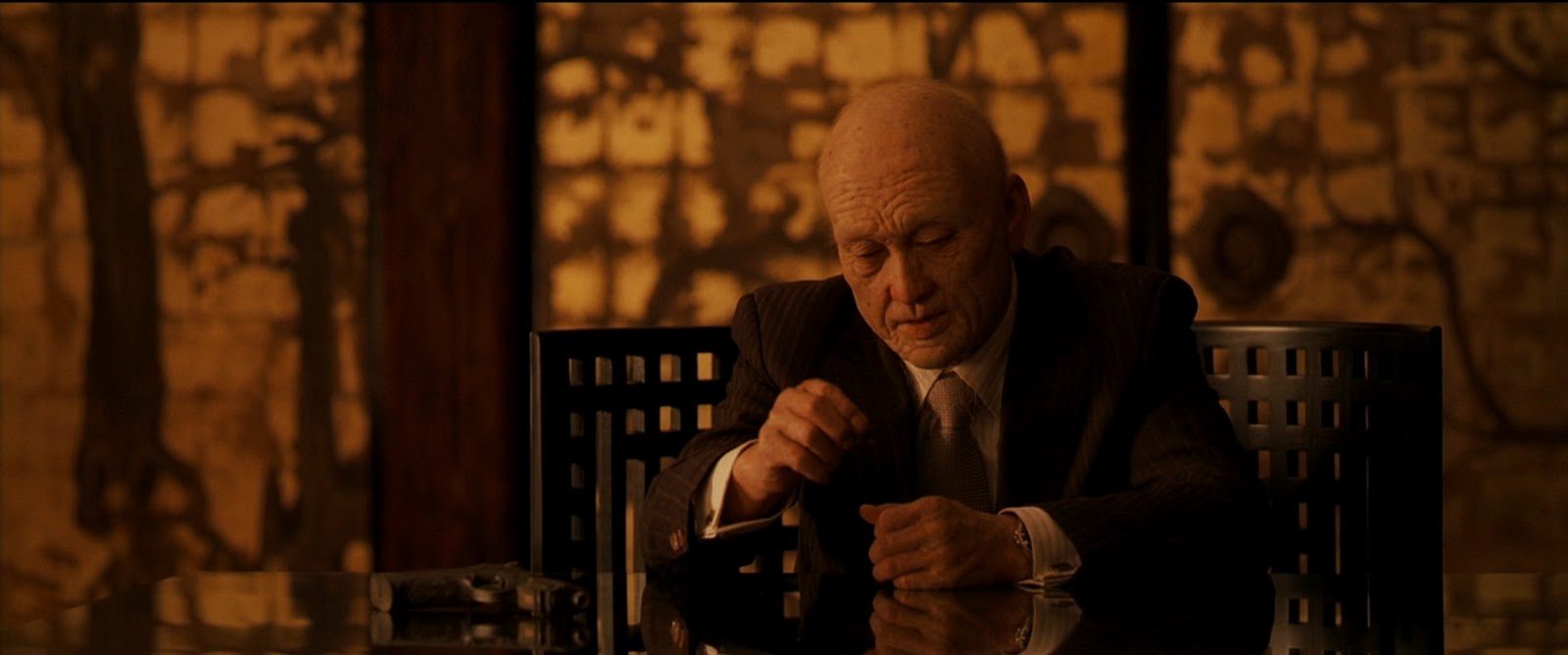
Remember, killing yourself only sends you one level up. We find “old” Saito and Cobb about to shoot themselves to escape limbo. If they did, then that means they would go back to the snow fortress. But wait, that was Fisher’s dream and Fischer received the “kick” already. If they went back a level up, that means there is nothing there. That means that the first person to die, Saito, would fill that dream with his subconscious, leading to the ending scene where Cobb supposedly reunites with his children.
How am I sure? Saito says that he always wanted a “house on a cliff.” In limbo, he is an old man living in a house on a cliff. At the very end when Cobb spins the totem and greets his kids, they say that they have just built a “house on a cliff.” This points to the whole thing taking place within Saito’s subconscious.
The beauty is how that can be a number of things. What if “house on a cliff” referred to Cobb’s subconscious being projected through Saito? That would mean Saito never existed. Honestly, there are countless ways to interpret this, but that’s not the point. The point is that this movie was designed in a way to make us understand that movies themselves are, well, inception.

I could go on and on about this movie, honestly. There are just so many ways to interpret and find new revelations within the narrative. That is why it is a truly great movie, and it pains me to see that so many people dismissed it because it went over their heads and a movie like this lost “Best Picture” to The King’s Speech.
I’ll leave you with some more crazy facts in case you’re interested:
DREAMS: Dom, Robert, Eames, Ariadne , Mal, Saito.
If you add Peter, Arthur, and Yusuf, it spells DREAMS PAY (their profession is to make money by stealing from others’ dreams).
Hanz Zimmer created the entire soundtrack for this movie using only one song that is slowed down and sped up: the song used to initiate a dream is over, which is “No Regrets (translated)” by Edith Piaf. Seriously, even the blaring trombone composition is taken from that song. Also, the very last word in the song is “mal” which coincidently refers to the character Mal.

The running time of the movie is exactly 2 hours and 28 minutes long, which is how long the song “No Regrets” is when translated to minutes and seconds.
Ariadne is a mythological princess who aids Theseus in escaping the Minotaur’s labyrinth. The name is also associated with Ariadne auf Naxos which is an opera that is essentially a “play within a play.”
The movie is based on Cobb’s mission to get home. His first name, Dom, literally means “home” in Latin (think domestic).
One last thought, a lot more about this subject can be found in this book, Inception and Philosophy, by Kyle Johnson. I haven’t read it myself, but I’ve been told it goes even deeper into the movie and what it all meant. Click here to check it out.
If Cobb and Mal really had only gone one level up, then the rest if the movie doesn’t follow. Cobb goes 2 levels into Saito’s head at the beginning. If he were in the third level, he would have gone past Limbo the second time in Saito’s dream, which we are told is impossible. There are lots of signs that Saito’s dream and Limbo are the same place, such as the house on the cliff, and Mal being in both places.
However, because they went down two levels (once in the architect’s dream, and once more in Saito’s), they would have had to go past Limbo if they were in the third level, which is not possible.
If this was all Cobb’s dream, and Saito didn’t exist, then Cobb is going into the dreams of his own projections. Isn’t that impossible? Or if Saito did exist, and in the end we’re in Saito’s dream, and Cobb is putting his own projections into the dream, wouldn’t it start to react violently? Or, Recognize the “foreign nature” of the dreamer? Saito couldn’t dream Cobb’s father, having never experienced him, and Cobb couldn’t project him, since he knows that his father doesn’t do that anymore, and if he did project him into Saito’s subconcious, things would have gotten noticeably unfriendly, and then hostile. (There was also no indication earlier that Cobb’s father would be at the airport to pick him up, or would make it to America before Cobb’s job was finished. Sure he gave him gifts, but that was to be for “when he gets a chance”.
There is support for the dream though, because if he were dreaming, he would have projected his dad because he knows that his dad is in reality, and how does his dad know to pick Cobb up, since there is no call besides Saito’s phone call? So if Cobb really is dreaming and putting in his own projections, he’s doing A VERY good job of it, since the whole ending of the film looks to be realistic.
Well. Let’s not get ahead of ourselves…
I admit that I came to this page because I just watched the movie and am completely confused. Not confused in a bad way but confused in that much of the movie happened without explanation. This seems to confirm Jon Negroni’s theory that the movie is supposed to be about a dream and dreams are – if anything – very jumbled and illogical.
Clearly, the final scene in which the token is still spinning confirms that Cobb is not awake. It’s not subtle and should be a tell-tale clue to all viewers that Cobb is still in the dream world. Whether he is in limbo or in Saito’s dream is essentially irrelevant because the bottom line is that he’s not awake (i.e. in reality).
The only criticism I would give is the excessive use of guns and ridiculous shoot outs, in which the heroes dodge machine-gun blasts. But, then again, if this is a dream, then that is entirely possible (although personally I have never in my life dreamt about a shoot-out).
Finally, this movie reminds me a lot (in different ways) to the movie Jacob’s Ladder (with Tim Robbins).
Hmmm… but what about that theory about the top not being Cobb’s totem? There must be a reason why Cobb is wearing a wedding ring in his dreams, while in “reality” he never has it on.
I always thought Cobb’s totem was his children’s faces.
He has a freak out when Mal tries to get him to look at his kids in the dream world, and it is the most secure totem: he absolutely knows that his kids cannot possibly look the way they do in his memories. He doesn’t want Mal to challenge that and distort how he remembers his children.
Then, at the end, when he’s sure enough that it’s not a dream, he abandons the spinning top to go look at his kids for confirmation. And the kids’ clothes are finally different.
Just out of curiosity, where are you getting Saito’s comment about his desire for a “house on a cliff”. Do you have a specific reference? As far as I remember, Kyle Johnson asserts that the two are the same, but this does not make sense in a visual reading of the film, and it is in conflict with Nolan’s statements that the castles at the beginning of the film represent something different from those at the end.
If you’re open-minded about things, maybe try thinking about the end sequence in symbolic terms. After Cobb takes a “leap of faith” when he rejects Mal, we get a baptismal plunge into water which typically symbolizes death and redemption. Cobb is transformed into a figurative Christ figure in his encounter with Saito, and he then awakens in the sky (a metaphorical heaven) restored to youth in the Christian tradition. We then get his judgment and the forgiveness of sins at immigration, his reunion with his father, the return to the heavenly garden, and the discovery that his real children (both named after apostles) are building a castle on rock (Matthew 7:24).
http://popupchinese.com/Inception.pdf
There is a paper here that outlines the approach in much more detail. I don’t think this disagrees with much of your reading, but it does deepen it. For while Inception clearly talks about how we never experience the beginning of dreams, it does so in the context of using the dream as a metaphor for life (“you have to die to wake up”). The idea that life is a dream is central theme in the film, alluded to in many other lines (pain is in the mind, you can’t die before your time, etc.), as well as the entire concept of a “shared dream”.
Anyway, hopefully you’ll enjoy the piece, since it suggests various interesting ways of reading scenes that I don’t think are obvious to those without a background in English lit (i.e. why Nash is a bad character) but that flow very logically from the literary references (the Fisher King story, etc.). There are also lots of smaller touches (such as the name of Saito’s company) which make sense in this reading but seem to baffle other critics.
After initially reading your article, I was frustrated and angry. I love Inception and have watched it countless times in theaters and afterwards at home. And I don’t agree with your thesis or theory, or even the title. I don’t think I have “missed” anything about Inception. I am glad you are passionate about this movie and love it so much to scour through the details to support your own personal theory. Many details also support various other theories. What bothers me is how you present your theory and state that others who haven’t reached the same conclusion are lumped into a group who enjoyed the movie but “it completely went over [their] heads”. Upon each viewing of Inception, I have caught something new, and understood what I feel the movie to mean, a little more. Every time I talk to someone about this movie, I present what I feel about the movie, and what it means to me, as opinion. I talk about what the movie means to me, not what it should mean to everyone else. I am passionate and love this movie, and I would enjoy discussing Inception more with you if you are interested.
I always wondered how the grandfather, who was in Paris working in his office when Cobbs visits, could give gifts to his children. The movie implies he is caring for them but they are still in the U.S. How is he pulling this off? In the end he is already waiting for Cobbs in L.A. Wasn’t he in Paris??
Inception is my favorite movie too. But what you mentioned are just plot holes. Nolan should thank you for representing his plot holes as the indicators for a big dream.
Having studied NLP I realised that inception can be done to people (it was essentially what I learned how to do to people on the 2 week NLP course). Utterly fascinating film and also pretty weird how it came out around the same time as I took course. Love it and also really enjoyed reading this post
While “mal” is featured as part of the lyrics in Edith Piaf’s song “Non, Je Ne Regrette Rien,” it is NOT the last word of the song; the last word of the song is actually “toi.” However, I believe it IS noteworthy that “mal,” as referenced in the song, is a French word meaning “bad,” “wrongly,” etc… pretty fitting since Mal represents the bad/dark side of Dom’s memories. Hmm, Mal & Dom… the “bad” is an obstacle to his returning safely “home.”
Also, the words of that song are SO appropriate as another clue to the movie’s themes, essentially saying, “I have no regrets; I carry nothing of the past with me… not the good nor the bad; Today, I’m starting over with you.” How appropriate as a cue to “wake up” and shake off the past, be it a past dream or a past reality. It’s also appropriate as it refers, possibly, to Dom’s redemption at the end of the movie… his new start with his children… carrying no remnants from the past. Fascinating.
Someone who thinks the song “No Regrets” is over 2 hours long is telling me Inception went over my head.What next?
Fixed. What I meant, of course, was:
“The running time of the movie is exactly 2 hours and 28 minutes long, which is how long the song “No Regrets” is when translated to minutes and seconds.”
“is when translated to minutes and seconds.” Did you just stop reading mid sentence? Nice try but you get big fat FAIL!
Well I should have scrolled a little more before commenting.
2 minutes 28 seconds.. not hours.
A common case of over analysis. Nolan is good for having people go deeper into his films than he does himself. People did the same with all his other films. Many things you identified are merely plot holes that are evident in ALL Nolan films (Seriously, check them out; they are all there). Not to say the movies are bad movies but they tend to have a habit of hooking thinkers into overanalization and hooking nonthinkers into overmesmerization. Or both! This was a good movie. It had a good story and a good soundtrack BUT it had MANY plot holes. Because of the idea of dreams being the primary focus of the film, the plot holes just escaped many viewers. Here are some that we may not consider
Time passes normally in a dream world; there are no specific rules about the brain there. If you are asleep for 6 hours, you can only dream for 6 hours (Which is not even that long because MOST dreams occur during REM sleep). Nolan altered this fact so that he could play with the idea of dreams within dreams.
Dying in a dream does NOT cause one to slip away and falling is NOT a kick. Many people have died in dreams (I have) and many have fallen in dreams (I have) and none of it is relevant to waking up or going deeper. Nolan altered this fact so that he could play with dreams within dreams.
Cobb’s totem was not his own AND Ariadne figured out what it was thus rendering it useless and Saito TOUCHED it and spun it so the ending was also irrelevant because the totem wouldn’t have any meaning anymore. The totem spinning at the end was not meant to tell us anything or leave us at a cliffhanger. It was meant to show that Cobb didn’t care whether he was dreaming or not. All he cared about was getting to his kids, whether he was dreaming or not. He spun it but did not analyze it to see if he was in a dream letting us know, “I don’t care anymore. My mission is accomplished either way.”
Cobb never actually woke up from testing out the dream sequence with the scientist who stated that there are people who just remain asleep so that dreams could become their reality. This could have been Cobb then and the rest of the movie could be Cobb’s dream as this plot hole is also not filled.
In the dream, they imagined BIGGER GUNS to match the fire power of the agents yet never again did they do this. In fact, they wasted MINUTES fighting against odds when they could have imagined bigger.
If a person has to urinate, the bladder stores it during sleep and uses body heat to keep the urine warm. It does not affect a dream in any way. Nolan added this as a fact in order to fuel the plot.
If Mal jumped out of her building to make it seem like Cobb killed her, an investigation in 1985 STILL would have been able to clear Cobb as none of his fingerprints were in the room, witnesses would have not been able to have heard any fighting prior, they were in two DIFFERENT BUILDINGS (A plot point you even pointed out that no one noticed so it must have been a dream…even though the reason Nolan did it was because he had to separate Cobb and Mal or else logic would have pointed out that Cobb could have simply grabbed her or inched his way over to her). And THESE are just off the top of my head and I haven’t seen the movie in a year.
The movie, like his Dark Knight series, was just so full of plot holes that it does not make it a movie that stands the test of time. It’s mesmerizing like his other movies but they do not keep the attention of the majority of fans who watch them for very long. Mind you, I thoroughly enjoyed the film! Not knocking it! I just noticed these things after watching more and more Nolan films; he has a GREAT ability to suspend disbelief. All great movie directors and writers can. Nolan just has a BETTER ability among fellow writers and directors.
You ever thought that inside a dream (like in a movie) you come up with your OWN RULES… That’s the whole idea Sherlock…
I don’t why people are so reluctant to see the truth in your article. I’m against the whole idea of “haters gonna hate” when someone disagrees with you, but honestly that’s the only possible reason for some people’s disbelief. Plot holes? Really? Nolan has been directing/producing for years. He doesn’t just leave plot holes. Get over yourselves and recognize the obvious. It was all a dream.
after looking for the answer to one simple question about the movie and finding so much discussion on it, AND after reading the OPs thoughts on it, it would seem as if Nolan was simply trying to display what THE CONCEPT of inception was through the movie. Because, as a result of making a movie about A) being able to plant an idea inside someone’s head so they believe it is their own, and B) allowing your beliefs to dictate what you believe is reality, he has accomplished both- both within the movie and outside the movie, via discussion boards such as this one.
Dying in dreams 1,2,3 and going to limbo were based on the sedative, so they would not have to ride the kick all the way to reality if the sedative had been turned of, which means that they would wake up by dying, just like the others and not fall into an alternate limbo.
Dom and Mal willingly went into Limbo. He performs inception on her, they commit suicide. (“We had our time together” – i.e. they did grow old, spent 50 years in Limbo) They wake up IN LEVEL 3. He gets stuck there. He loses track of reality. (Perhaps a consequence of having spent so long in Level 4.) Mal tries in vain to convince him to die in order to wake up – THEY STILL HAVE 2 LEVELS TO GO. She jumps off the hotel window. So Mal, in the current narrative, could be real; she could be joining him in his dreams trying in vain to get him to come back to reality. Since he’s in Level 3, he could be “scheduled” to wake up soon anyway, give or take 5 or so years have already passed. (Or is it 10 years in level 3? Have to watch it again…)
Anyway, essentially you are correct, and the only discussion I have found online with the same logical explanation I have come to, as to why the whole movie is a dream. Mal is alive in Level 0. She is not a projection; she is trying to wake him up.
You’re the only one fully right here. As I see it, Mal entered back his dream as Ariadne with the purpose of redeem him. She knows him well, and she knows he won’t let go.
Very intelligently written article that kept my interest and was a great read. However, the movie states killing oneself in a dream does not bring one up a level, but wakes them up. Kicks are what take them a level up. Therefore, the train did wake up Mal and Cobb, making the ending reality. But the point was that Cobb cared about his kids rather than the top’s spinning. The movie does not ask, “What is reality?” but shows the danger of doing so. Again, very well-written, I just thought I’d share that.
isnt that the same thing tho? waking up would lead them to the next level no?
I definitely think Nolan wanted the “The whole thing is a dream” interpretation to be available to the viewer to reach for, but I disagree that we are supposed to arrive at that conclusion and a failure to do so means you’ve interpreted the movie wrong. You’re right that Mal and Dom dying in limbo would only send them “one layer up”, but they don’t need to keep dying in order to get back to the “level” of reality, they only needed to wait. Dying is the way to make the dream end unnaturally, but the dream can also end by natural means when your body (in the next level up) is simply ready to wake up. One or two or even three levels in, the dream can simply be waited out, but limbo is so deep that time essentially becomes infinite, which is why you can lose yourself in limbo. It is the only level that requires death to be escaped from.
I don’t think it matters that by the time Cobb and Saito come out of limbo, previous layers of the dream no longer exist, and Saito is the proof of this. He dies in the first layer (ending that layer, and all the other layers with it, for him at least), but because the sedative is so powerful, this doesn’t wake him up. So the act of waking up from limbo would take him all the way to reality, as long as the sedative is no longer being applied. Cobb’s case is theoretically more complicated, because he would have been awake in all those layers, but the “kick” applied in all those layers likely would have killed his body anyway, so he’s kind of in the same boat at that point. I don’t think it matters either way though, because if Saito can go from limbo to waking, there’s no reason Cobb can’t do it as well, if the other layers of dreams have disappeared.
All that said, just because I don’t find your interpretation definitive doesn’t mean it isn’t compelling. You touched on the main reason I find it compelling with discussing the way the walls closed in on Cobb in Mumbai. I would expound on that to add the entire Mumbai sequence; Jumping from second story buildings, hand to hand combat with many private security guards, climbing over cars while dodging gunfire … it seems very, very convenient to me for a guy who (probably) spent most of his life as a simple architect and/or dream expert to have those kinds of skills. Juxtapose this with the way all the characters behave in the layers of the dream, regardless of expertise. The Chemist, who specifically states he doesn’t often go into the field, is still a super action hero with his van driving and gun fighting once he’s in the dream. Saito, an energy tycoon, is still repelling down mountains and throwing grenades while dealing with internal injuries. For that matter, so is Fischer, and he’s not even entering into the dream state with intentions to do something that might require action hero skills. All of this could very well be explained by the normal “deus ex machina” requirements of any action movie involving unlikely players. But it could also be a nod to the fantasy aspect of dreams, whereby we do amazing things in dreams because we dream that we can. Under the second interpretation, there is no significant difference in the level of realism between what happens in “the real world” and in the different dream layers we see throughout the movie.
In the end, though, I don’t think any one interpretation is meant to be definitive. Nolan wanted that ambiguity, wanted people to question what the movie’s reality was instead of knowing for sure, because it enhances the ideas and themes of the movie as a whole. That’s why he ended the movie with the cliffhanger, not as a distraction of the true meaning, but to emphasize the concept that a true meaning doesn’t exist, because “truth” is always relative.
After I saw the movie the first time I felt like I had just watched a foreign film without subtitles. I was just flat out confused! After seeing it a second time I understood it a little better. And after reading your article it all makes sense to me now. One of the first things I thought was odd was how the movie went right into the story with no explanation of what was going on, who the characters were, or what they were doing. Now I understand that it starts that way on purpose because the entire movie is a dream. Like Cobb points out in the movie, our dreams usually start out in the middle of a situation with no recollection of how we got there. There were several other things that didn’t add up to me until I realized the whole movie was a dream. Things that happen in a dream don’t have to add up or make sense.
i used to think cobb incepted himself so that he could allow himself to go home wih no regrets, a kind of daydream in which he is the hero. i believe mal is his main vehicle in this endeavor, making it very important that the totem is hers. if youve seen any of nolans films its hard to believe that the film would only work on two levels, is this a dream or is it not? the idea that any film is a shared dream between director and audience is solid and every time you see a new idea in a film you are “infected” with it, like this movie for example.
Your idea of the whole movie being a dream is the only justification I have read for the following problem (which occurred to me three days after seeing the film):
If the movie is not a dream, then dreams really occur at 20 times real time. At this speed, the brain is going at full speed. Therefore a dream within a dream can not go another 20 times faster since the physical brain, which is the only real brain, is already going at full speed.
Too bad.